Get 50% OFF All Premium 3D & STL Models!

In the rapidly evolving landscape of digital visualization, the demand for exceptionally detailed and versatile 3D assets has never been higher. From breathtaking cinematic sequences and immersive game worlds to cutting-edge architectural visualizations and advanced AR/VR experiences, high-quality 3D car models serve as the backbone for countless projects. These digital masterpieces are more than just static objects; they are complex constructs of geometry, textures, and data, meticulously crafted to bring virtual worlds to life.
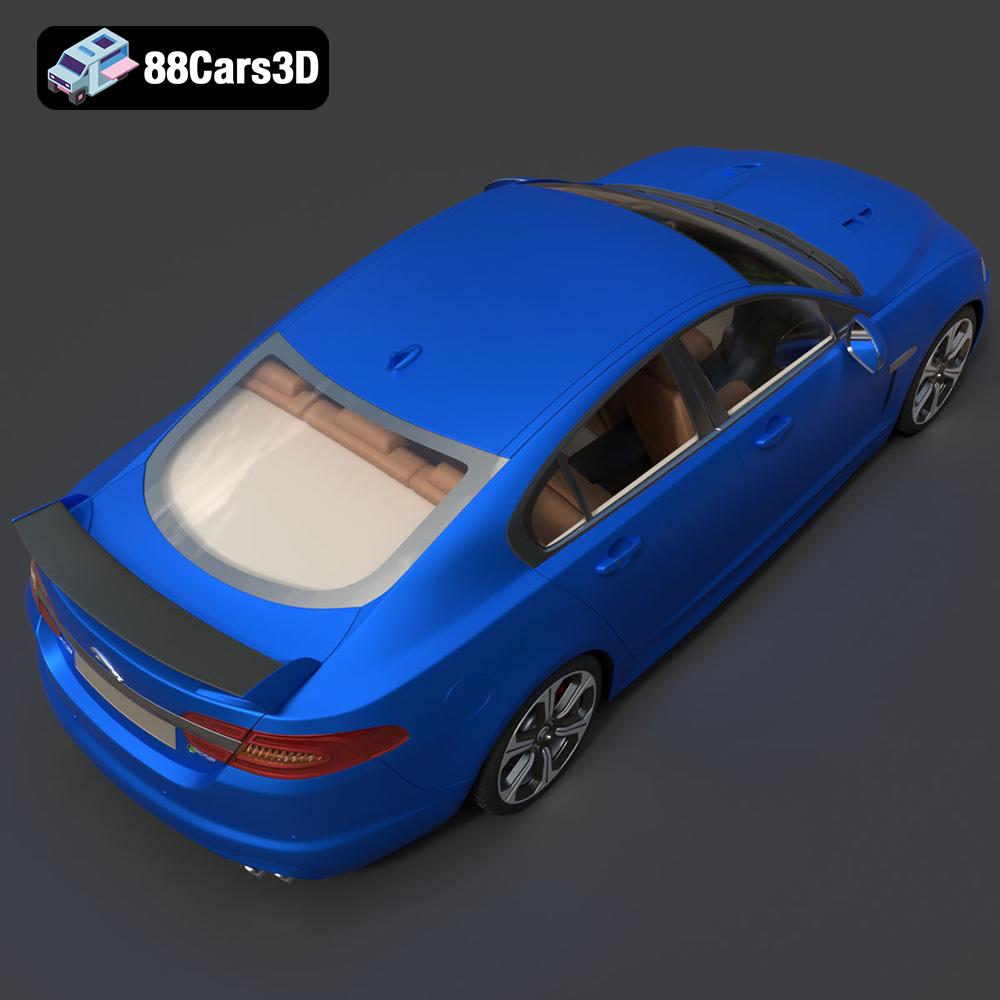
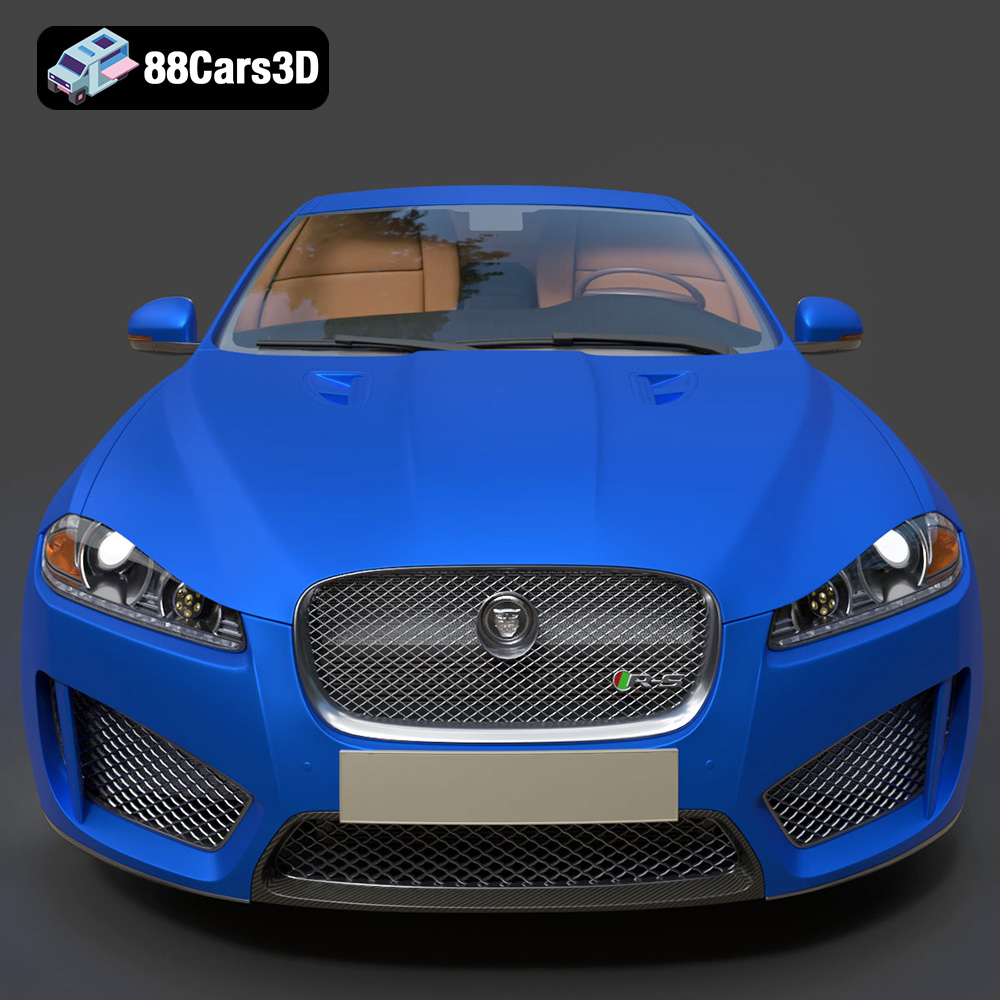
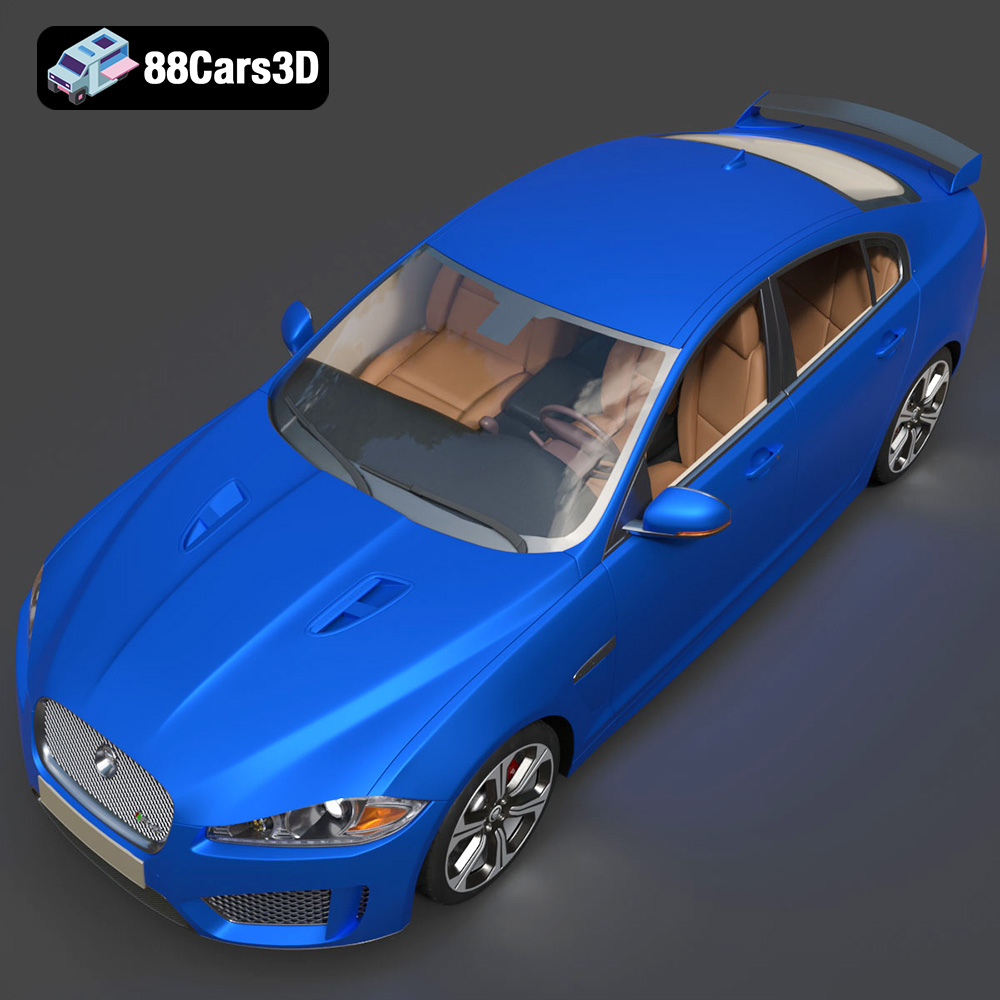
The essence of professional 3D production lies in efficiency without compromise on quality. This is where pre-made, high-grade assets truly shine, enabling artists and developers to focus on creative direction rather than starting from scratch. A prime example of such an asset is the Jaguar XFR-S 2014 3D Model. This particular model stands out for its meticulous attention to detail, accurately capturing the aggressive styling and luxurious performance characteristics of the real-world vehicle. With its clean geometry, realistic materials, and optimized polygon count, it offers a seamless integration into diverse production pipelines, proving invaluable for anyone looking to elevate their automotive rendering or game development projects.
Navigating the world of 3D modeling requires a fundamental understanding of the various file formats available, each tailored for specific workflows and applications. The versatility of a 3D model often hinges on the range of formats it supports, ensuring compatibility across different software and platforms. This is particularly true for complex assets like 3D car models, where detailed geometry, materials, and potential animations need to be preserved or adapted. The Jaguar XFR-S 2014 3D Model from 88cars3d.com exemplifies this multi-format approach, offering a comprehensive suite of files to meet virtually any professional need.
The .blend format is the native file type for Blender, the powerful open-source 3D creation suite. When you receive a .blend file, you’re getting a fully editable Blender scene, complete with materials, textures, lighting setups, and even animation data if present. This format is ideal for Blender users who want to dive deep into the model, make extensive modifications, adjust materials, re-rig, or integrate it into an existing Blender project with minimal fuss. It offers the highest degree of flexibility and control for artists working within the Blender ecosystem, allowing them to leverage all of Blender’s robust features, from Cycles and Eevee rendering to advanced geometry nodes.
.fbx (Filmbox) is arguably the most widely adopted interchange format in the 3D industry. Developed by Autodesk, it excels at transferring entire scenes, including meshes, materials, textures, animations, and even rigging information, between different software packages. Its strength lies in its ability to maintain scene hierarchy and complex data structures, making it the preferred format for exporting models to game engines like Unreal Engine and Unity, as well as for animation pipelines. The .fbx file for the Jaguar XFR-S 2014 3D Model would be game-engine ready, often with optimized meshes and PBR (Physically Based Rendering) materials configured for real-time performance.
.obj (Wavefront Object) is a universal 3D model format renowned for its simplicity and broad compatibility. It primarily stores geometric data (vertices, normals, texture coordinates, and faces) along with references to external material files (.mtl). While it doesn’t typically store advanced features like animation or rigging, its widespread support makes it an excellent choice for cross-software compatibility. If you need to import the Jaguar XFR-S into a legacy application or simply require the raw mesh data, .obj is a reliable option.
.glb (GL Transmission Format Binary) is the binary version of glTF, a royalty-free specification for the efficient transmission and loading of 3D scenes and models by applications. It packages all model data (geometry, materials, textures, animations) into a single file, making it incredibly convenient for web-based visualization, augmented reality (AR), and virtual reality (VR) applications. Its compact size and optimization for real-time rendering ensure fast loading and smooth performance, making the Jaguar XFR-S 2014 3D Model in .glb format perfect for interactive web configurators or mobile AR experiences.
.stl (Stereolithography) is the de facto standard file format for 3D printing. It represents a 3D model as a series of connected triangles, describing only the surface geometry of an object without color, texture, or other attributes. For anyone looking to bring the Jaguar XFR-S 2014 3D Model into the physical world, whether for prototyping or creating scale models, the .stl file provides the necessary data for slicing software to generate print paths. Clean and manifold geometry is crucial for .stl files to ensure a successful print, a characteristic inherent in professional assets like those found on 88cars3d.com.
.ply (Polygon File Format or Stanford Triangle Format) is a file format for storing three-dimensional data from 3D scanners or CAD systems. It can store a variety of properties, including color, transparency, and even normal vectors and texture coordinates, beyond just geometry. While less common for general 3D model distribution than .fbx or .obj, it is particularly useful for applications requiring precise mesh information for scientific analysis, reverse engineering, or quality control, offering a more robust data set for specific engineering or analytical tasks.
The .unreal designation typically refers to assets that are specifically packaged and optimized for direct import and use within Unreal Engine. This often means the model has been carefully prepared with proper scaling, collision meshes, LOD (Level of Detail) settings, and PBR material setups tailored to Unreal’s rendering pipeline. Having a pre-configured .unreal asset, such as the Jaguar XFR-S 2014 3D Model, significantly streamlines the workflow for game developers and real-time visualization artists, saving hours of setup time and ensuring optimal performance within the engine.
Similar to .blend for Blender, .max is the native file format for Autodesk 3ds Max, a leading software for 3D modeling, animation, rendering, and compositing. A .max file provides the complete scene file, allowing 3ds Max users full access to all aspects of the model, including modifiers, lighting, camera setups, and advanced V-Ray or Corona Renderer materials. This format offers unparalleled flexibility for artists deeply embedded in the 3ds Max ecosystem, providing a fully editable project ready for further refinement, animation, or integration into complex visualization scenes.
The availability of these diverse formats for assets like the Jaguar XFR-S 2014 3D Model from 88cars3d.com underscores the commitment to professional utility and cross-platform compatibility, making high-quality 3D car models accessible and efficient for every imaginable project.
Automotive rendering is a specialized field that blends technical precision with artistic vision to create stunningly realistic or stylized images and animations of vehicles. It’s a critical component for marketing, design reviews, and showcasing products long before they physically exist. High-quality 3D car models are paramount to achieving success in this area.
Photorealistic rendering demands meticulous attention to detail, not just in the model itself, but in how it interacts with its virtual environment. The Jaguar XFR-S 2014 3D Model, with its “meticulously crafted realistic materials,” provides an excellent foundation. Artists typically employ Physically Based Rendering (PBR) workflows, where materials like car paint, chrome, glass, and rubber are defined by real-world physical properties such as roughness, metallicness, and albedo. This ensures that light interacts with surfaces in a believable manner, regardless of the lighting conditions.
Lighting is another crucial element. High Dynamic Range Images (HDRIs) are frequently used to provide realistic ambient illumination and reflections, mimicking real-world lighting scenarios from sunny afternoons to moody sunsets. Complementary area lights can be strategically placed to highlight specific contours or create dramatic shadows. Render engines like V-Ray, Corona Renderer, Arnold, or Blender’s Cycles are then used to simulate these complex light interactions, producing images indistinguishable from photographs. The clean geometry of professional 3D car models ensures smooth reflections and accurate light bounces, which are essential for that showroom-quality finish.
Beyond still images, 3D car models are brought to life through cinematic animation. This involves not only animating the vehicle’s movement but also the cameras, environments, and even subtle details like suspension compression or wheel spin. A fully modeled interior, like that found in the Jaguar XFR-S 2014 3D Model, allows for engaging interior shots, dashboard details, and realistic passenger perspectives, adding depth to the narrative.
Workflows often begin with setting up a virtual studio or an exterior scene, complete with roads, landscapes, and dynamic weather effects. Camera movements are carefully choreographed to emphasize the car’s design, speed, and elegance, often mimicking professional automotive commercials. Advanced techniques such as motion blur, depth of field, and camera lens distortions are applied during rendering or in post-production to enhance realism and cinematic appeal. For optimal results, high-poly 3D car models are preferred for these detailed animations, ensuring that every curve and component holds up to close-up inspection as the camera sweeps around the vehicle.
The demand for immersive, interactive experiences means 3D car models are no longer just for pre-rendered visuals. They are vital game assets and central to augmented and virtual reality applications, requiring specific technical considerations.
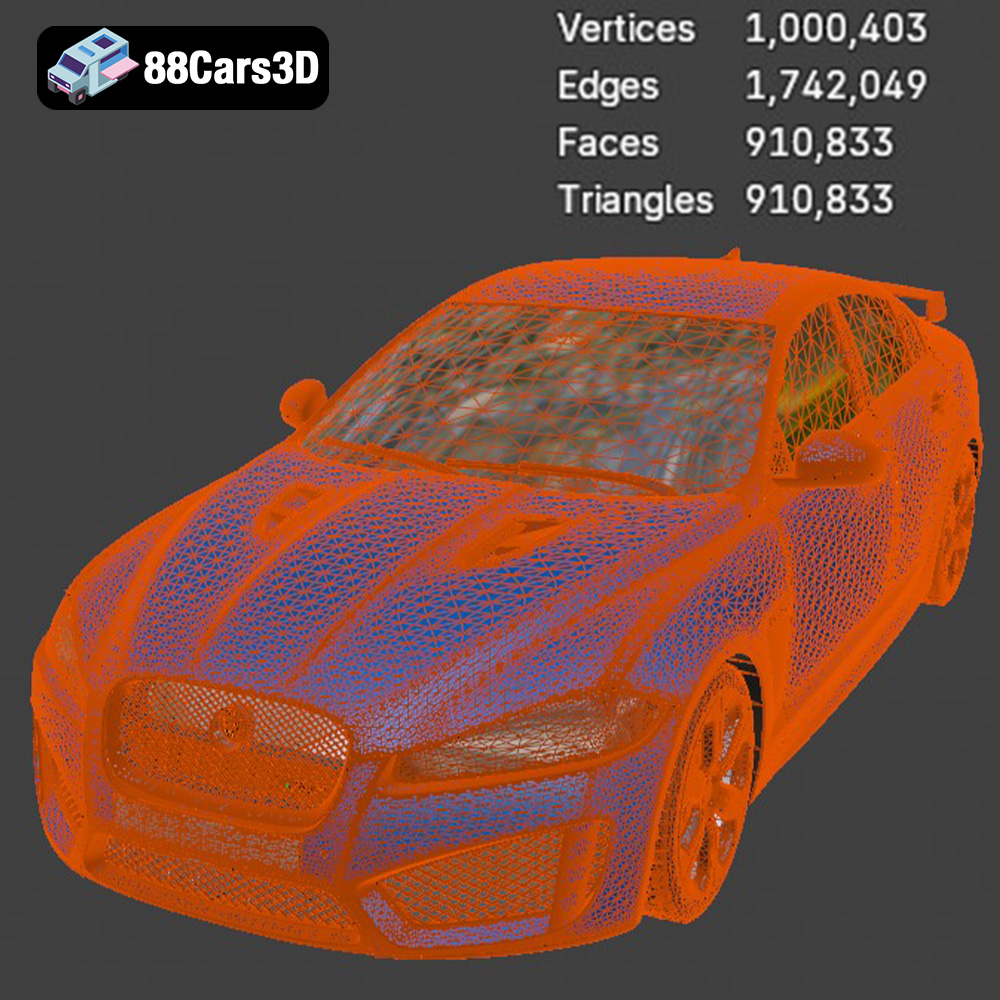
In game development, performance is king. High-quality 3D car models like the Jaguar XFR-S 2014 3D Model need to be rigorously optimized to run smoothly within real-time engines such as Unreal Engine and Unity. This starts with an “optimized polygon count.” While cinematic renders can handle millions of polygons, game engines require models to be efficient, often relying on techniques like Level of Detail (LODs), where simpler versions of the model are swapped in when the car is far from the camera.
Furthermore, proper UV mapping is critical for applying textures and lightmaps efficiently. Collision meshes, which are simplified proxy models, are essential for realistic physics interactions without taxing the engine with complex geometry calculations. The availability of formats like .fbx and specific .unreal files for the Jaguar XFR-S model directly addresses these needs, providing developers with assets that are already structured for quick import and robust performance. These meticulously prepared game assets save countless hours of optimization work, allowing teams to integrate high-fidelity vehicles directly into their interactive worlds.
AR/VR applications push the boundaries of real-time rendering, demanding both visual fidelity and extremely low latency to prevent motion sickness and create a believable experience. 3D car models in AR/VR often serve as central interactive elements, from virtual car configurators to immersive driving simulations. The “fully modeled interior and detailed exterior” of the Jaguar XFR-S 2014 3D Model ensures that users feel truly present within the virtual space, whether they’re peering at the dashboard or inspecting the exterior details.
Optimization for AR/VR is even more stringent than for traditional games, often requiring further polygon reduction, aggressive LODs, and mobile-friendly PBR materials. The .glb format, included with the Jaguar XFR-S 2014 3D Model, is particularly well-suited for these platforms due to its single-file nature and efficient loading. High-quality assets are crucial here, as even minor imperfections can break immersion in a virtual environment. The precision and detail offered by professional models ensure a premium, believable experience that keeps users engaged.
The utility of high-quality 3D car models extends far beyond digital screens. They play a significant role in physical prototyping, manufacturing, and even precise engineering analysis, bridging the gap between virtual design and tangible reality.
3D printing has revolutionized product development, allowing designers and engineers to quickly create physical prototypes and scale models directly from their digital designs. For automotive enthusiasts or designers, having a detailed 3D car model like the Jaguar XFR-S 2014 3D Model that is suitable for 3D printing opens up a world of possibilities. The .stl format, included with the model, is the industry standard for additive manufacturing. It represents the model’s surface as a tessellated mesh of triangles, which is then sliced into layers by printing software.
For successful 3D printing, the model’s geometry must be “manifold,” meaning it has no holes, self-intersecting faces, or disconnected edges – essentially, it must form a watertight volume. High-quality 3D car models from sources like 88cars3d.com are typically designed with this in mind, ensuring a clean and printable mesh. From creating detailed display models to rapid prototyping components, the ability to translate a complex digital car into a physical object offers immense value across various industries.
In more specialized industrial contexts, 3D car models serve as foundational data for engineering analysis, quality control, and reverse engineering. The “clean geometry” and “detailed exterior” of models such as the Jaguar XFR-S 2014 3D Model are critical here. Formats like .ply, also provided with this model, are often favored for applications where precise polygonal data is paramount. The .ply format can store a wider range of properties beyond simple geometry, including color, transparency, and often normal vectors, making it suitable for scientific and engineering visualization.
Engineers might use these precision meshes in Computer-Aided Design (CAD) software for further design iterations or to perform Finite Element Analysis (FEA), simulating how the car’s structure would react under various stresses and loads. They can also be used in metrology for comparing as-built parts to design specifications or in computational fluid dynamics (CFD) simulations to analyze aerodynamic performance. The accuracy and integrity of the mesh in professional 3D car models are non-negotiable for these demanding technical applications, making them invaluable tools for automotive design and development.
In a professional production environment, time is a precious commodity. Leveraging pre-made, high-quality 3D car models is a strategic advantage that significantly boosts efficiency and maintains consistent quality across projects. The Jaguar XFR-S 2014 3D Model is a prime example of an asset designed to seamlessly integrate into established pipelines, empowering artists and developers.
For artists working with industry-standard software, having native file formats is a tremendous boon. The inclusion of both .max and .blend files for the Jaguar XFR-S 2014 3D Model directly caters to professionals using Autodesk 3ds Max and Blender, respectively. In 3ds Max, the .max file provides a fully editable project, meaning users can directly access modifiers, adjust material parameters within renderers like V-Ray or Corona, set up custom animation rigs, or integrate the vehicle into complex architectural visualization scenes. This offers maximum flexibility for artists who need to tailor the model precisely to their project’s unique requirements, whether it’s for an automotive commercial or a sophisticated product showcase.
Similarly, the .blend file for Blender users provides an editable scene with materials and lighting setup. This allows for immediate rendering using Cycles or Eevee, further customization of textures, or integration into a larger Blender project. This direct access to the native scene file streamlines the workflow, eliminating the need for extensive conversion or re-setup that can often occur when relying solely on interchange formats. It empowers artists to take advantage of all the powerful features of their preferred software, building upon a solid, professionally built foundation.
The core advantage of sourcing high-quality 3D car models from platforms like 88cars3d.com lies in the significant time and resource savings. Creating a highly detailed and optimized 3D model like the Jaguar XFR-S 2014 3D Model from scratch can take hundreds of hours of a skilled artist’s time, encompassing modeling, UV unwrapping, texturing, material creation, and optimization for various outputs. By purchasing a pre-made asset, studios and individual artists can bypass this laborious initial phase, immediately jumping into creative integration and final production.
Furthermore, these models come with inherent quality assurance. They typically feature “clean geometry,” “meticulously crafted realistic materials,” and an “optimized polygon count,” ensuring professional-grade performance right out of the box. This consistency in quality means less troubleshooting, fewer performance bottlenecks in game engines, and more reliable results in rendering. Whether the goal is photorealistic automotive rendering, creating immersive game assets, or developing cutting-edge AR/VR experiences, high-quality, pre-optimized 3D car models like the Jaguar XFR-S 2014 3D Model provide an indispensable shortcut to achieving exceptional results efficiently and effectively.
The journey through the diverse applications and technical intricacies of high-quality 3D car models reveals their indispensable role in modern digital production. From crafting cinematic spectacles and powering interactive game worlds to facilitating physical prototyping and rigorous engineering analysis, these assets are the fundamental building blocks for countless innovations. The ability to seamlessly integrate such detailed models into varied pipelines, supported by a comprehensive array of file formats, is what defines true professional utility.
The Jaguar XFR-S 2014 3D Model stands as a testament to this versatility and precision. Its meticulous design, ranging from a fully modeled interior to an optimized exterior, coupled with the inclusion of essential formats like .blend, .fbx, .obj, .glb, .stl, .ply, .unreal, and .max, ensures it is ready for any challenge. Choosing a professionally crafted asset like this not only guarantees visual fidelity but also dramatically accelerates production workflows, freeing artists and developers to focus on pushing creative boundaries.
Whether you’re an automotive designer, a game developer, an architect, or a VR/AR specialist, investing in premium 3D car models from trusted sources like 88cars3d.com is an investment in efficiency, quality, and ultimately, the success of your projects. These assets are more than just digital files; they are gateways to new creative possibilities, driving the future of visualization forward.
The Jaguar XFR-S 2014 3D Model delivers an exceptionally realistic representation of the iconic performance sedan. Designed with precision, this asset captures the aggressive styling, aerodynamic profile, and distinct characteristics of the XFR-S. Featuring clean geometry, meticulously crafted realistic materials, and an optimized polygon count, this model ensures professional-grade performance. The fully modeled interior and detailed exterior make it versatile for close-up shots and expansive scenes. Perfectly suited for game development, architectural visualization, cinematic rendering, and AR/VR applications, it provides a seamless integration into any production pipeline.
$19.99
.arvr
.blend
.car3dmodel
.fbx
.gameasset
.glb
.jaguar
.luxurycar
.max
.obj
.ply
.rendering
.sedan
.simulation
.sportssedan
.stl
.unreal
.xfrs