Get 50% OFF All Premium 3D & STL Models!

In the dynamic world of digital content creation, the demand for photorealistic and technically sound 3D models has never been higher. From cinematic automotive rendering to immersive game development and sophisticated AR/VR experiences, high-quality assets form the bedrock of compelling visuals and realistic simulations. At the heart of this digital revolution are meticulously crafted 3D car models, which serve as the canvas for designers, animators, and developers alike.
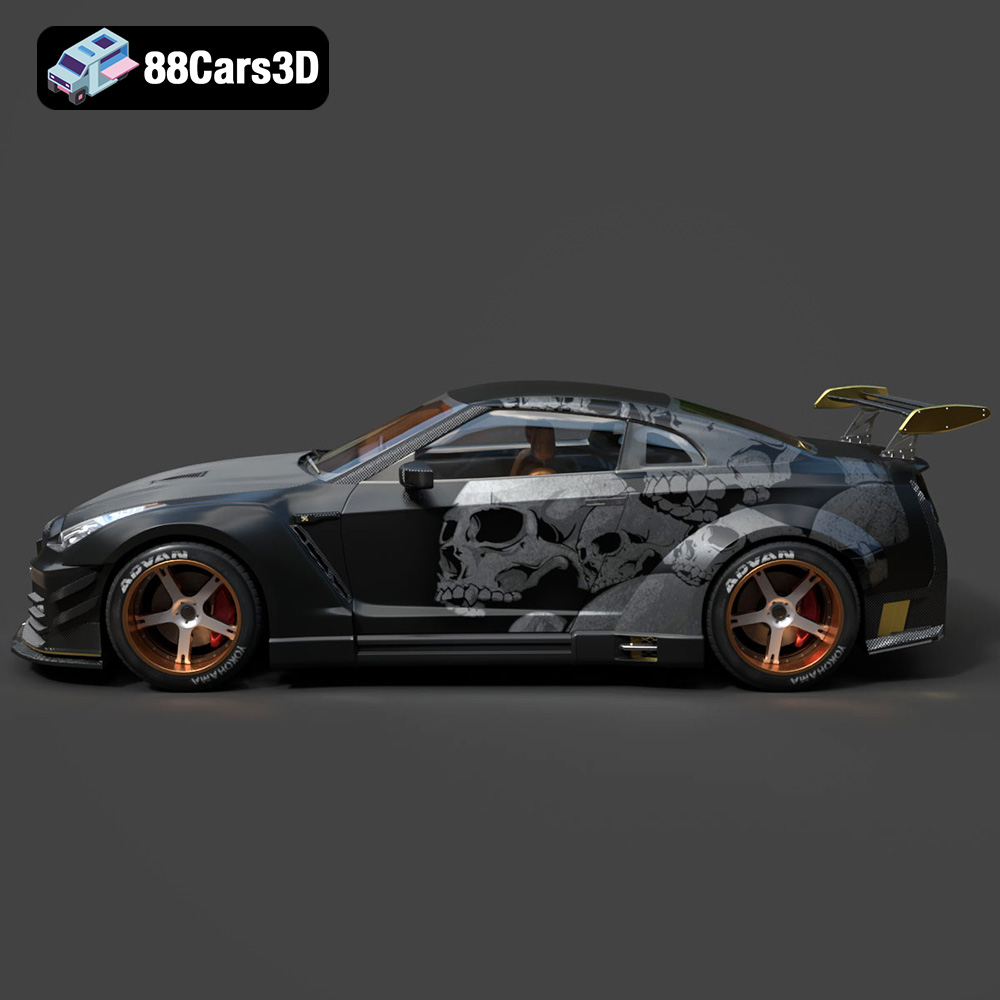
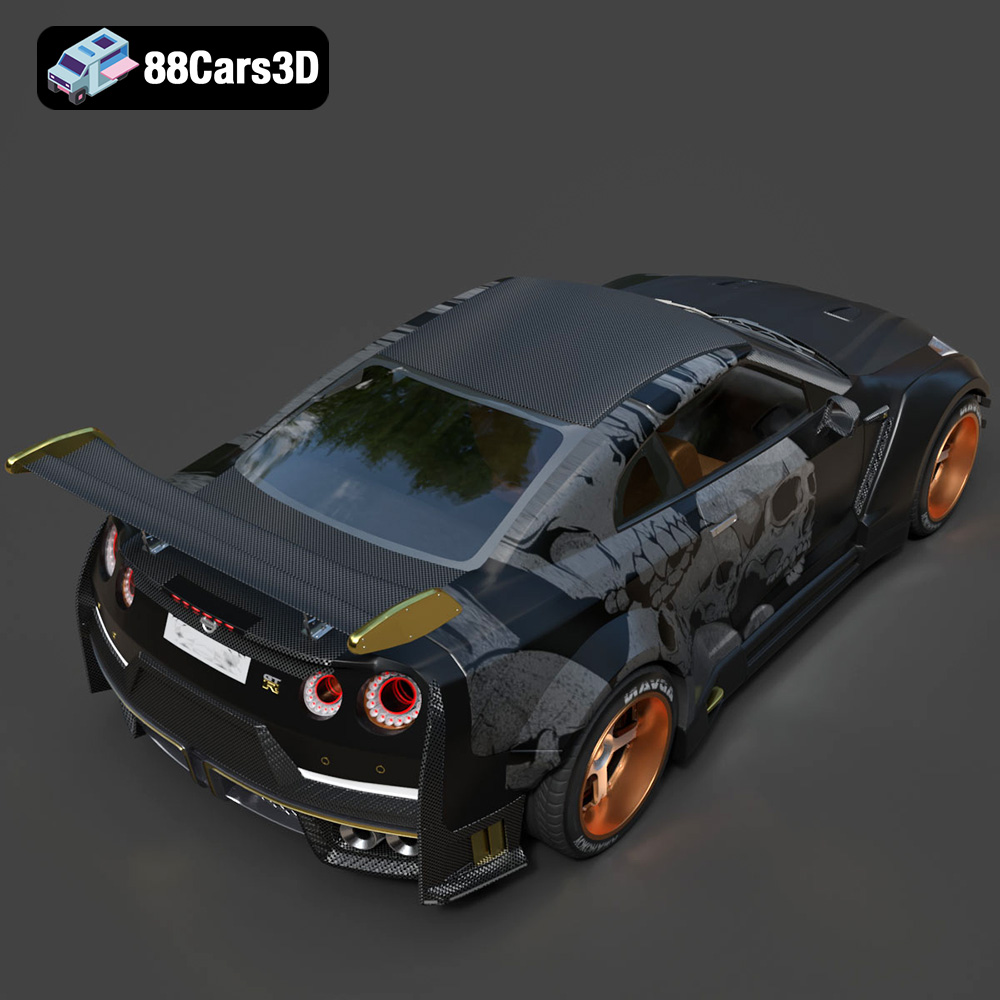
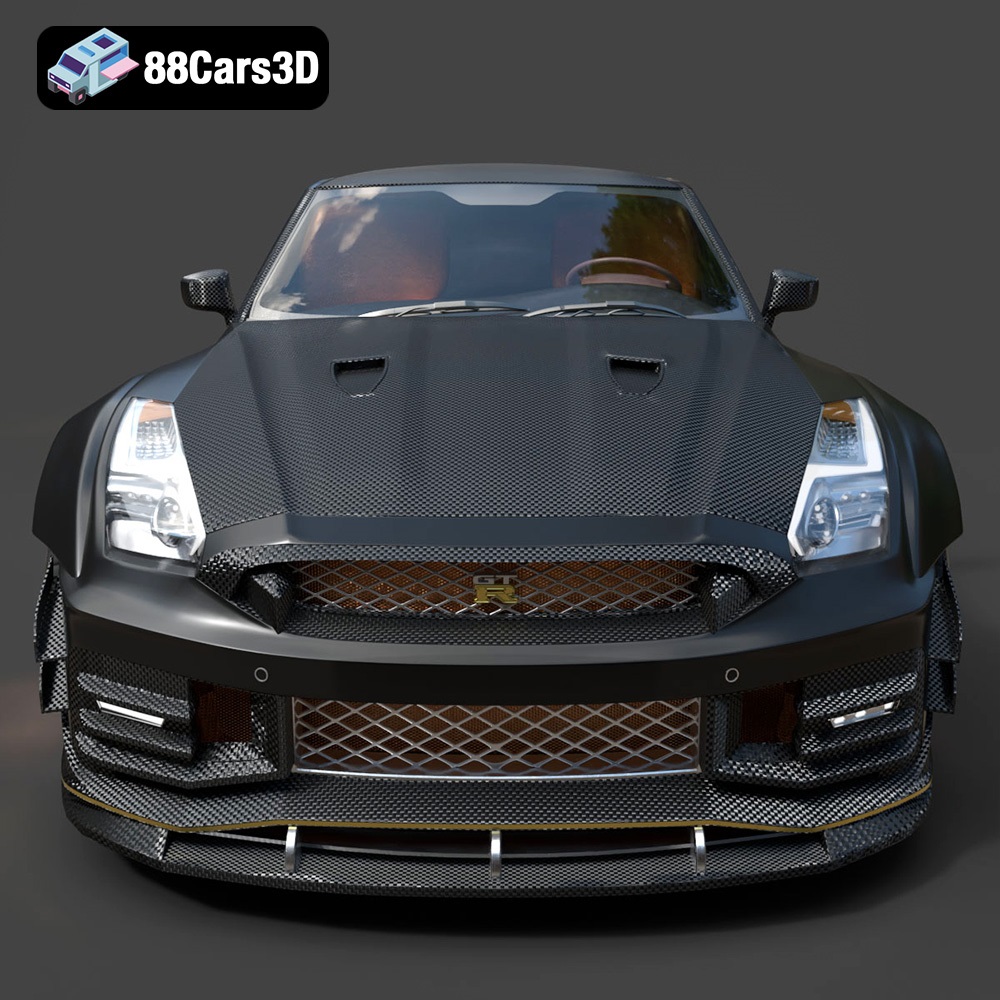
A prime example of such a professional-grade asset is the Nissan GTR R35 Nismo 3D Model. This model encapsulates the pinnacle of digital automotive design, offering an authentic representation of a legendary track-focused machine. Its aggressive aerodynamics, widened stance, and iconic design language are captured with an eye for precision that extends from the exterior shell to the fully modeled interior, carbon fiber components, and intricate wheel designs. Such models are not merely visual assets; they are engineering marvels in their own right, built to integrate seamlessly into diverse professional workflows and push the boundaries of digital realism.
This article will delve into the technical intricacies, practical applications, and crucial considerations when working with professional 3D car models, using examples like the Nissan GTR R35 Nismo 3D Model to illustrate how superior craftsmanship translates into tangible benefits across various industries. Whether you’re a seasoned professional or an aspiring artist, understanding the foundational principles and advanced techniques behind these assets is key to unlocking their full potential.
The versatility of a 3D car model is often defined by its compatibility across various software and platforms. This compatibility is driven by the range of file formats it supports, each tailored for specific use cases and technical requirements. A comprehensive package, like that offered with the Nissan GTR R35 Nismo 3D Model, provides multiple formats, ensuring seamless integration into any professional pipeline.
The .blend format is Blender’s native file type, offering a complete and editable scene. When you acquire a .blend file for a 3D car model, you’re not just getting the mesh; you’re often receiving the entire project setup, including materials, textures, lighting, camera angles, and even animation rigs. This is incredibly valuable for artists working within the Blender environment, as it provides a ready-to-render scene out of the box. Technical details include preserving modifier stacks, collection hierarchies, and node-based material setups (typically using Principled BSDF for PBR workflows). For fine-tuning renders or custom animations, the .blend format offers maximum flexibility without the need for extensive re-setup.
.fbx (Filmbox) is a proprietary file format developed by Autodesk, widely recognized as an industry standard for exchanging 3D data between various software applications, especially within game development. It efficiently stores 3D models, animation data, cameras, and lights. For game engines like Unreal Engine and Unity, .fbx is often the go-to format due to its robust support for mesh data, materials, PBR textures, bone rigging, and animation curves. When transferring a complex asset like the Nissan GTR R35 Nismo, the .fbx format ensures that UV maps, material assignments, and often even basic PBR setups are preserved, making it “game-engine ready” with minimal conversion.
The .obj (Wavefront Object) format is one of the oldest and most widely supported 3D file formats, making it a truly universal choice for cross-software compatibility. It stores geometry data (vertices, faces, UVs, normals) and can reference external .mtl (material) files for basic material properties and texture maps. While it doesn’t support advanced features like rigging or animations directly, its simplicity and ubiquity make it excellent for transferring static mesh data between almost any 3D application. For artists needing to import a model into less common software or simply requiring a clean mesh, .obj remains an indispensable format.
.glb (GL Transmission Format Binary) is the binary version of glTF, a royalty-free specification for the efficient transmission and loading of 3D scenes and models by applications. It packages all model data (geometry, materials, textures, animations) into a single compact file, making it ideal for web-based 3D viewers, augmented reality (AR), virtual reality (VR), and mobile applications. Its optimization for real-time rendering and small file size makes it perfect for interactive web experiences or embedding 3D models directly into digital environments without significant loading times. The Nissan GTR R35 Nismo 3D Model in .glb format would be perfect for a virtual showroom experience in a browser or a mobile AR app.
.stl (Stereolithography) is almost exclusively used for 3D printing and rapid prototyping. It describes only the surface geometry of a 3D object using a collection of triangular facets. It doesn’t store color, texture, or material information, focusing solely on the object’s form. While not directly relevant for rendering or animation, providing an .stl version of a car model allows for physical prototyping, scale model creation, or even custom part fabrication. The Nissan GTR R35 Nismo’s intricate details would translate well into a high-resolution 3D print for collectors or designers.
.ply (Polygon File Format or Stanford Triangle Format) is another format used for storing 3D data, particularly from 3D scanners or for CAD applications. It can store various properties beyond just geometry, such as color, transparency, and often normal information per vertex or per face. While less common for general artistic workflows compared to .fbx or .obj, it’s valuable for precise data exchange, scientific visualization, or when a highly accurate, raw mesh is required for analysis or specific engineering applications. For complex surface analyses of an automotive body, the .ply format can be quite useful.
The .unreal designation implies a model that has been specifically configured and optimized for direct import into Unreal Engine. This often means pre-setup materials with appropriate PBR values, correct scaling, collision meshes, and potentially even LOD (Level of Detail) variations ready to be dragged and dropped into a scene. This saves significant time and effort for game developers and real-time visualization artists, as the asset bypasses much of the initial setup phase. A Nissan GTR R35 Nismo provided in this format significantly streamlines the development process for high-performance automotive simulations or games.
Similar to .blend for Blender, the .max format is the native file type for Autodesk 3ds Max. It contains all scene data, including geometry, materials, lighting, cameras, animations, and render settings. For professionals working with 3ds Max, this format provides the most comprehensive and editable version of the model. It allows for advanced rendering with V-Ray or Corona, complex animation setups, and detailed modifications without any data loss during conversion. The .max file for the Nissan GTR R35 Nismo enables deep customization and high-end cinematic rendering.
Achieving photorealistic results in 3D automotive rendering requires more than just accurate proportions; it demands meticulous attention to technical details in the model’s construction. The Nissan GTR R35 Nismo 3D Model exemplifies these principles, showcasing the elements that separate a good model from an exceptional one.
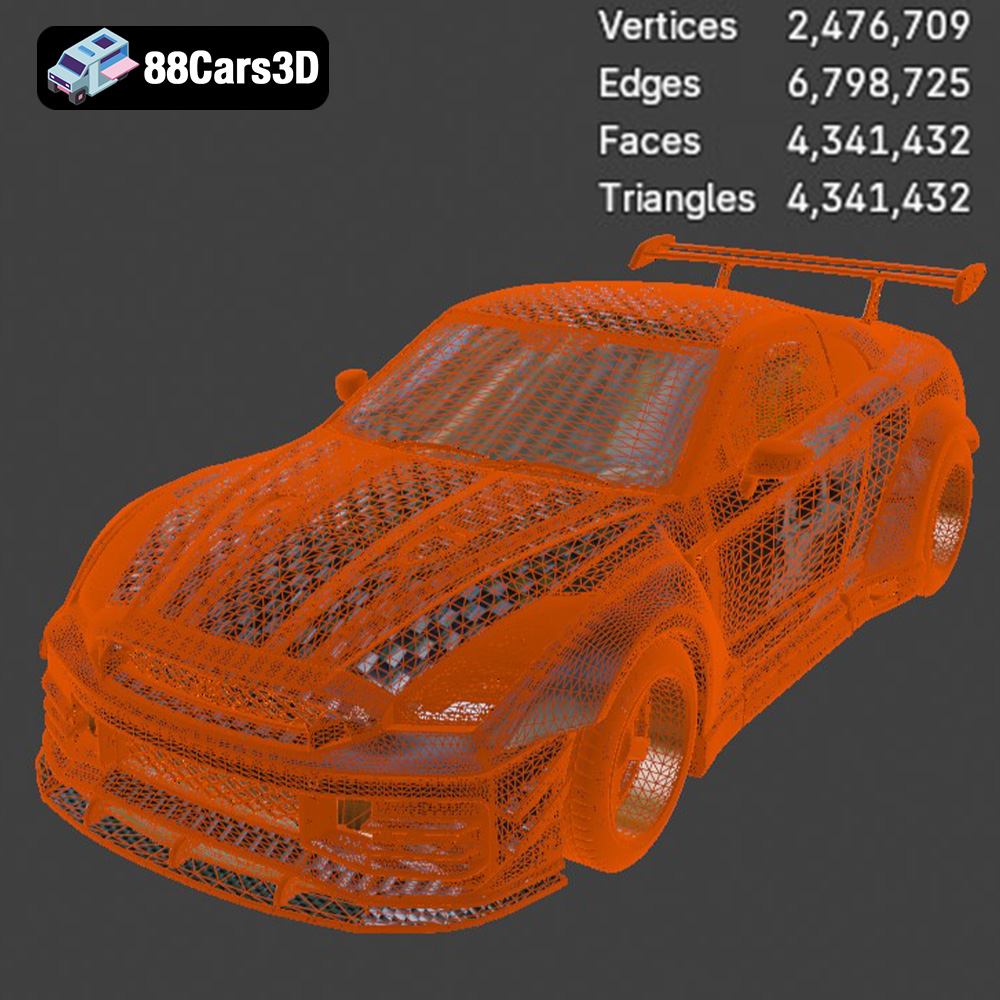
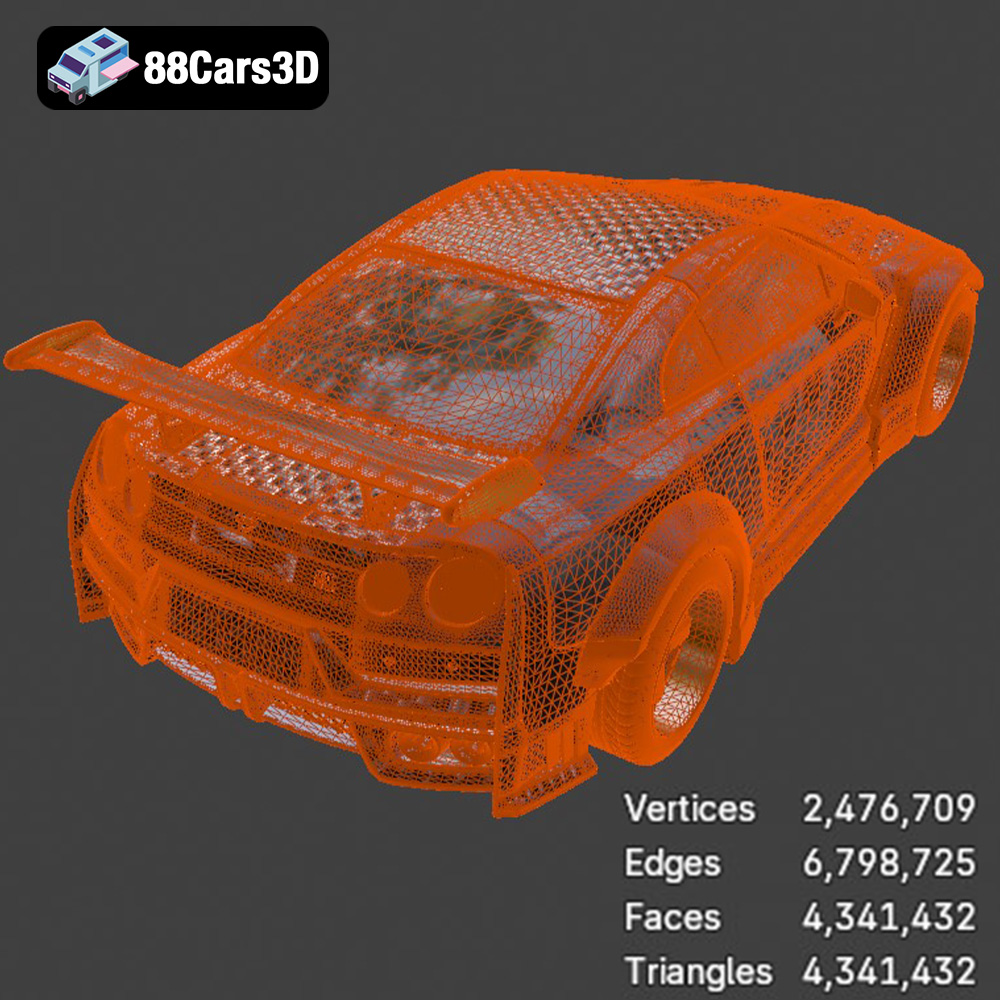
The foundation of any high-quality 3D model is its geometry. “Clean geometry” refers to a mesh that is well-structured, primarily using quads (four-sided polygons) with efficient edge flow. This ensures smooth subdivision, prevents shading artifacts, and simplifies UV mapping and deformation. For a car model like the Nissan GTR R35 Nismo, complex curves and aerodynamic surfaces necessitate precise topology to maintain their shape under various lighting conditions and close-up views. Optimized polygon structure means striking a balance between detail and efficiency – enough polygons to capture subtle contours, but not so many that it hinders real-time performance or unnecessarily inflates render times.
Modern rendering relies heavily on PBR workflows, which accurately simulate how light interacts with surfaces in the real world. This involves creating materials with specific properties like albedo (base color), roughness, metallicness, normal maps (for surface detail), and sometimes ambient occlusion. The Nissan GTR R35 Nismo 3D Model boasts “realistic materials” designed for PBR, meaning its paint, carbon fiber, glass, rubber, and metal components react credibly to light sources. High-resolution textures, often 4K or 8K, are essential to convey fine details, from the weave of carbon fiber to subtle imperfections in paintwork, contributing significantly to visual fidelity.
A truly professional automotive 3D model doesn’t just look good from the outside. Features like a “fully modeled interior” are critical for close-up shots, virtual reality experiences, and even gameplay where the player might view the cockpit. This includes detailed dashboards, seats, steering wheel, and cabin materials. While not always fully visible, elements like engine bay details or suspension components can be crucial for technical visualizations or even high-end cinematic sequences. The presence of these details in the Nissan GTR R35 Nismo model indicates its suitability for a wide range of demanding scenarios.
The true value of a high-quality 3D car model lies in its seamless integration into various professional pipelines. Whether it’s for breathtaking visual effects, interactive simulations, or immersive games, the journey of an asset from marketplace to final production involves distinct stages and software.
For advertising, film, and product visualization, maximum visual fidelity is paramount. Professionals often leverage software like Autodesk 3ds Max or Blender, paired with powerful render engines such as V-Ray, Corona Renderer, or Cycles. A model like the Nissan GTR R35 Nismo, available in both .max and .blend formats, provides a perfect starting point. Artists would import the model, verify UV mapping, and fine-tune PBR materials to specific lighting conditions. This often involves creating custom studio lighting setups, adding reflections, refractions, and depth of field effects. Animation might include dynamic camera moves, wheel spins, or even full car rigging for realistic suspension and steering movements. The clean geometry of such models ensures smooth deformation and pristine reflections, crucial for high-resolution output.
Game development demands a different set of optimizations, prioritizing performance alongside visual quality. The .fbx and .unreal formats provided with the Nissan GTR R35 Nismo 3D Model are specifically designed for this purpose. In Unreal Engine or Unity, developers import the optimized mesh, apply pre-configured PBR materials, and integrate the model into the game environment. This involves setting up collision meshes, creating LOD (Level of Detail) assets to optimize performance at varying distances, and configuring physics assets for realistic vehicle dynamics. The “optimized polygon structure” mentioned for the Nissan GTR R35 Nismo is crucial here, ensuring smooth framerates even with multiple vehicles on screen. High-quality game assets allow for believable racing simulations, open-world exploration, or interactive showroom experiences.
Augmented Reality (AR), Virtual Reality (VR), and web-based 3D applications represent an increasingly important frontier for automotive visualization. These platforms require highly optimized models that load quickly and perform efficiently on a range of devices, from powerful VR headsets to mobile phones. The .glb format for the Nissan GTR R35 Nismo is ideal here, offering a single, compact file containing all necessary data. Developers use engines like Babylon.js or Three.js for web-based applications, or dedicated AR/VR SDKs (e.g., ARCore, ARKit, OpenXR) to integrate the model. This allows for interactive car configurators, virtual test drives, or placing a virtual Nissan GTR R35 Nismo in a real-world environment through a smartphone camera. Accurate scaling, a feature of this model, is particularly important for realistic AR overlays.
The utility of high-fidelity 3D car models extends far beyond just making pretty pictures. They are critical tools in engineering, design validation, and innovative marketing strategies, enabling capabilities that were once either impossible or prohibitively expensive.
For automotive engineers and simulation specialists, accurately scaled 3D models are essential for virtual prototyping and performance analysis. A model like the Nissan GTR R35 Nismo, with its “accurate scaling,” can be used in computational fluid dynamics (CFD) simulations to analyze airflow and aerodynamics, or in finite element analysis (FEA) to test structural integrity and crashworthiness. While the model itself may not contain the internal engineering CAD data, its precise external geometry provides the necessary shell for these complex simulations, offering a cost-effective alternative to physical testing in early design stages. The clean, well-defined surfaces of a professional asset are paramount for reliable simulation results.
Modern car dealerships and manufacturers are increasingly adopting interactive digital solutions to showcase their vehicles. 3D car models form the core of these “interactive showroom displays” and online configurators. Customers can explore a car from every angle, customize paint colors, wheel options, and interior trims in real-time. The ability to switch between different materials and apply dynamic effects relies on the underlying quality and modularity of the 3D model. Such experiences, whether on large touchscreens or through VR headsets, greatly enhance the customer’s engagement and decision-making process, directly leveraging assets like those found on 88cars3d.com.
For designers and enthusiasts, 3D printing offers a tangible connection to digital assets. While not directly for visualization, the provision of an .stl format for the Nissan GTR R35 Nismo 3D Model opens up possibilities for creating physical scale models, custom parts, or even detailed collectibles. The “suitable for 3D printing and prototyping” aspect means the model’s mesh has been checked for manifold geometry (no holes or non-intersecting surfaces) and is watertight, which are critical requirements for successful 3D printing. This bridges the gap between the digital and physical realms, allowing for design iterations and tangible representations.
Achieving stunning visuals in 3D graphics often comes at the cost of performance, especially in real-time applications. Professional 3D artists and developers must constantly balance intricate detail with computational efficiency. This balance is inherent in high-quality 3D car models.
The “optimized polygon structure” of the Nissan GTR R35 Nismo 3D Model highlights a critical aspect of 3D asset creation. While a high poly count provides more detail, it demands more processing power. For cinematic renders, higher polygon counts are acceptable, even desirable. However, for games and AR/VR, managing this is crucial. This is where Level of Detail (LOD) comes into play. Multiple versions of a model are created, each with progressively lower polygon counts. As the camera moves further from the object, the engine switches to a lower LOD, reducing rendering overhead without a noticeable drop in visual quality. A professional model should be structured to facilitate easy LOD generation.
Texture resolution directly impacts visual fidelity, but higher resolutions consume more memory. Balancing this involves using appropriate resolutions for different parts of the car – higher for visible body panels, lower for hidden undercarriage components. Crucially, efficient UV mapping is essential. UVs are the 2D coordinates that tell the software how to project a 2D texture onto a 3D surface. “Clean geometry” often implies clean, non-overlapping UVs with consistent texel density, ensuring textures appear sharp and undistorted across the entire model. This also facilitates efficient texture packing and atlas creation, further optimizing memory usage.
PBR materials can be complex, involving multiple texture maps and intricate shader graphs. While these contribute to realism, overly complex shaders can impact performance. Optimization involves streamlining material setups, sharing materials where possible, and leveraging instancing. For real-time applications, designers often simplify shaders for distant objects or use baked lighting solutions to reduce dynamic calculations. The “realistic materials” of the Nissan GTR R35 Nismo are typically designed with this balance in mind, providing visual richness while remaining performant in various render contexts.
The landscape of 3D content creation is constantly evolving, driven by advancements in hardware, software, and rendering techniques. High-quality 3D car models are at the forefront of this innovation, continually pushing the boundaries of what’s possible in digital visualization and interaction.
With the advent of real-time ray tracing and path tracing capabilities in game engines like Unreal Engine 5, the line between cinematic rendering and real-time graphics is blurring. These technologies allow for incredibly accurate lighting, reflections, and global illumination, previously exclusive to offline renderers. Professional 3D car models, with their precise geometry and PBR materials, are perfectly positioned to take full advantage of these advancements, offering unparalleled realism in interactive environments. The attention to detail in a model like the Nissan GTR R35 Nismo ensures it shines under these advanced lighting paradigms.
While handcrafted models remain the gold standard for hero assets, procedural tools and photogrammetry are increasingly influencing workflow efficiency. Procedural techniques can generate variations of existing models or environmental details, while photogrammetry allows for scanning real-world objects into 3D. The integration of these techniques with high-quality base models can speed up asset creation and ensure consistency across large projects. However, the core asset, like a premium 3D car model, still requires expert manual refinement to achieve its detailed finish.
Platforms like 88cars3d.com play a crucial role in making professional-grade 3D car models accessible to a wider audience, from independent game developers to small architectural visualization studios. By providing meticulously crafted models such as the Nissan GTR R35 Nismo 3D Model in a variety of universal and engine-specific formats, these marketplaces empower creators to produce stunning work without investing months in modeling a vehicle from scratch. This accessibility fuels innovation and allows artists to focus on storytelling, animation, and environment design, rather than reinventing the wheel.
The world of 3D car models is a fascinating intersection of art and engineering, where meticulous craftsmanship meets cutting-edge technology. From the foundational understanding of diverse file formats to the intricate details of geometry, materials, and optimization, every aspect contributes to the creation of truly compelling digital assets.
As we’ve explored, a high-quality model like the Nissan GTR R35 Nismo 3D Model from 88cars3d.com is more than just a visual representation; it’s a versatile tool capable of elevating projects across cinematic rendering, game development, AR/VR, and engineering simulations. Its commitment to clean geometry, PBR materials, multi-format compatibility, and optimized performance ensures it meets the rigorous demands of professional production pipelines.
Investing in such assets not only saves valuable development time but also guarantees a level of authenticity and detail that is critical for success in today’s visually driven industries. As 3D technology continues to advance, the demand for expertly crafted digital vehicles will only grow, making the discerning choice of a professional-grade 3D model an increasingly vital decision for any digital creator.
Experience the precision and performance of a legendary track-focused vehicle with the Nissan GTR R35 Nismo 3D Model. Crafted with meticulous attention to detail, this digital asset perfectly captures the aggressive aerodynamics, widened stance, and iconic design language of the real-world counterpart. The authentic proportions and realistic exterior styling make it an essential addition to any professional digital automotive library.
This model boasts exceptionally clean geometry and is equipped with realistic materials to ensure a seamless integration into your projects. Built to professional standards, the optimized polygon structure guarantees efficient performance across various digital platforms without compromising visual fidelity. Every element, from the carbon fiber aero components to the intricate wheel designs and fully modeled interior, has been constructed with exacting precision.
Ideal for a multitude of applications, this vehicle asset is tailored for seamless use in game development, cinematic automotive rendering, immersive AR/VR experiences, and technical visualization. Its versatility and accurate scaling ensure it functions flawlessly in physics simulations and interactive showroom displays.
The package provides a comprehensive suite of file formats to guarantee full compatibility with your preferred creative software:
Tags: .nissan, .gtr, .r35, .nismo, .sportscar, .supercar, .coupe, .car3dmodel, .rendering, .simulation, .gameasset, .arvr, .blend, .fbx, .obj, .glb, .stl, .ply, .unreal, .max
$19.99
.arvr
.blend
.car3dmodel
.coupe
.fbx
.gameasset
.glb
.gtr
.max
.nismo
.nissan
.obj
.ply
.r35
.rendering
.simulation
.sportsCar
.stl
.supercar
.unreal