Get 50% OFF All Premium 3D & STL Models!

In the dynamic landscape of modern digital creation, the demand for high-fidelity 3D assets continues to escalate across industries. From stunning architectural visualizations to immersive game environments and interactive AR/VR experiences, the quality of a 3D model can define the success of a project. Automotive design, in particular, thrives on precision and realism, requiring digital representations that capture every nuance of a vehicle’s aesthetic and engineering.
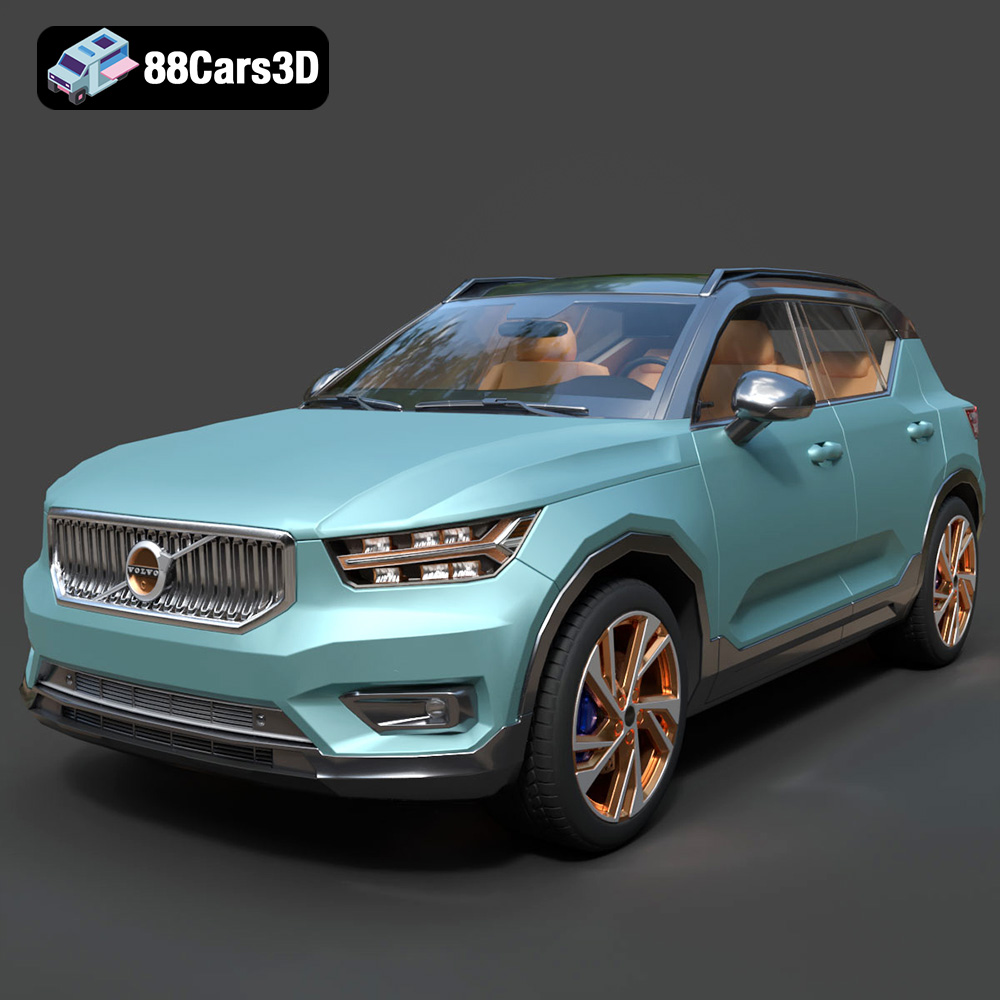
For professionals seeking to elevate their projects, a meticulously crafted 3D car model is not just an asset; it’s a foundation. It enables artists, developers, and designers to accurately portray concepts, demonstrate products, and build compelling virtual worlds. A prime example of such an indispensable asset is the Volvo XC40 Recharge (2020) 3D Model, a versatile and highly optimized digital twin of Volvo’s pioneering fully electric SUV. Available at 88cars3d.com, this model exemplifies the blend of technical excellence and visual fidelity necessary for today’s demanding creative pipelines, offering unparalleled adaptability for rendering, game development, 3D printing, and more.
The world of 3D modeling relies heavily on various file formats, each designed with specific purposes, compatibilities, and technical advantages. Choosing the correct format for a given project is crucial for efficiency, quality, and workflow integration. The Volvo XC40 Recharge (2020) 3D Model, for instance, is offered in a comprehensive suite of formats, ensuring its utility across diverse professional applications.
.blend – Fully Editable Blender Scene with Materials
The native file format for Blender, a powerful open-source 3D creation suite, .blend files encapsulate an entire scene. This includes not just the mesh geometry, but also materials, textures, lighting setups, cameras, animations, and even physics simulations. For artists deeply integrated into the Blender ecosystem, a .blend file offers the highest degree of editability and flexibility. The Volvo XC40 Recharge .blend file would come fully rigged with PBR materials, allowing for direct manipulation, custom scene creation, and advanced rendering using Cycles or Eevee without any loss of data during conversion.
.fbx – Ideal for Unreal, Unity, and Real-Time Pipelines
FBX (Filmbox) is arguably the most prevalent interchange format in the 3D industry, particularly within game development and animation studios. Developed by Autodesk, it supports geometry, skeletal animation, blend shapes, lights, cameras, and PBR materials, making it incredibly versatile. Its robust support in major game engines like Unreal Engine and Unity means that the Volvo XC40 Recharge .fbx model can be imported with minimal fuss, retaining its rigging, UVs, and material assignments. This format is the go-to for ensuring compatibility and ease of transfer between different software packages and real-time environments.
.obj – Universal Format for Cross-Software Compatibility
OBJ (or Wavefront OBJ) is a widely supported, simpler 3D format primarily used for static mesh geometry. While it doesn’t typically store advanced features like animation or complex material node setups directly, it’s an excellent choice for universal compatibility. Nearly every 3D application can import and export .obj files, making the Volvo XC40 Recharge .obj a reliable option for those needing raw geometry and basic UV mapping for retexturing or integration into niche software. It’s often paired with an accompanying .mtl file for material definitions and separate image files for textures.
.glb – Optimized for AR, VR, and Browser-Based Display
GLB (GL Transmission Format Binary) is a modern, efficient, and compact format specifically designed for web-based 3D, augmented reality (AR), and virtual reality (VR) applications. It bundles 3D model data (geometry, materials, textures, animations) into a single binary file, making it quick to load and display in browsers or mobile AR apps. For interactive digital showrooms or web-based car configurators featuring the Volvo XC40 Recharge, the .glb format offers unparalleled performance and accessibility, ensuring a smooth, real-time experience.
.stl – Suitable for 3D Printing Output
STL (Stereolithography) is the de facto standard format for 3D printing. It represents the surface geometry of a 3D object using a collection of triangular facets, completely ignoring color, texture, or other CAD attributes. For transforming the Volvo XC40 Recharge from a digital asset into a physical model, the .stl format is essential. It provides the necessary manifold (watertight) geometry for slicer software to generate print paths, enabling the creation of scale models or prototypes.
.ply – Precision Mesh Format for CAD or Analysis
PLY (Polygon File Format) is another widely used format for representing 3D scanner data and CAD models. Like OBJ, it focuses on geometry, but it can also store additional properties like color, transparency, and surface normals per vertex or face, offering more detail than STL for certain applications. For precise analysis or integration into specific CAD workflows, the Volvo XC40 Recharge .ply model would be a valuable asset.
.unreal – Engine-Ready Asset for Real-Time Environments
While not a standalone file extension in the traditional sense, “.unreal” typically signifies that an asset has been specifically pre-packaged, optimized, and tested for direct import and use within Unreal Engine. This often means the .fbx file has been imported, materials have been set up using Unreal’s PBR system, LODs (Levels of Detail) might be implemented, and perhaps even basic blueprints for functionality (like openable doors or drivable physics) have been configured. This format ensures a streamlined workflow for game developers and real-time visualization specialists using the Volvo XC40 Recharge.
.max – Editable 3ds Max Project for Animation and Rendering
The .max file is the native project format for Autodesk 3ds Max, a leading software for 3D modeling, animation, and rendering. Similar to .blend, it stores the entire scene data, including geometry, modifiers, materials, lighting, and animation curves. For professionals using 3ds Max for high-end automotive rendering or complex animation sequences, the Volvo XC40 Recharge .max file provides full access to the original scene setup, allowing for extensive customization and leveraging advanced renderers like V-Ray or Corona.
The availability of the Volvo XC40 Recharge (2020) 3D Model in these diverse formats underscores its versatility and the foresight in its creation, catering to virtually any professional workflow.
Automotive rendering is an intricate discipline, blending technical precision with artistic vision to create photorealistic images and animations of vehicles. A high-quality 3D car model, such as the Volvo XC40 Recharge (2020) 3D Model from 88cars3d.com, is the cornerstone of this process, enabling stunning visuals for a multitude of applications.
In architectural visualization, vehicles play a crucial role in contextualizing spaces, adding scale, realism, and a sense of life to renders. The Volvo XC40 Recharge, with its distinct modern EV styling and premium appeal, is an ideal candidate for populating high-end architectural scenes. Imagine a sleek, contemporary home with a drive adorned by this eco-conscious SUV, instantly elevating the visual narrative of luxury and sustainability. The model’s accurate proportions and geometry ensure it seamlessly integrates into any scene, whether it’s a suburban driveway bathed in sunlight or a bustling urban streetscape at dusk.
Artists utilizing software like 3ds Max with V-Ray or Corona Renderer, or Blender with Cycles, can leverage the model’s clean topology and PBR material setup to achieve breathtaking realism. The process involves importing the model, assigning detailed PBR textures (albedo, roughness, metallic, normal maps) to replicate paint, glass, and tire materials, and then setting up realistic lighting to highlight the vehicle’s contours and reflections. The signature “Thor’s Hammer” LED headlight clusters and distinctive vertical taillights can be illuminated with emissive materials, adding a dynamic touch to nighttime renders.
For automotive brands, advertising agencies, and product developers, high-quality 3D car models are indispensable tools for creating commercials, marketing materials, and interactive configurators without the need for physical prototypes or expensive photoshoots. The Volvo XC40 Recharge 3D Model is perfectly suited for these demanding applications.
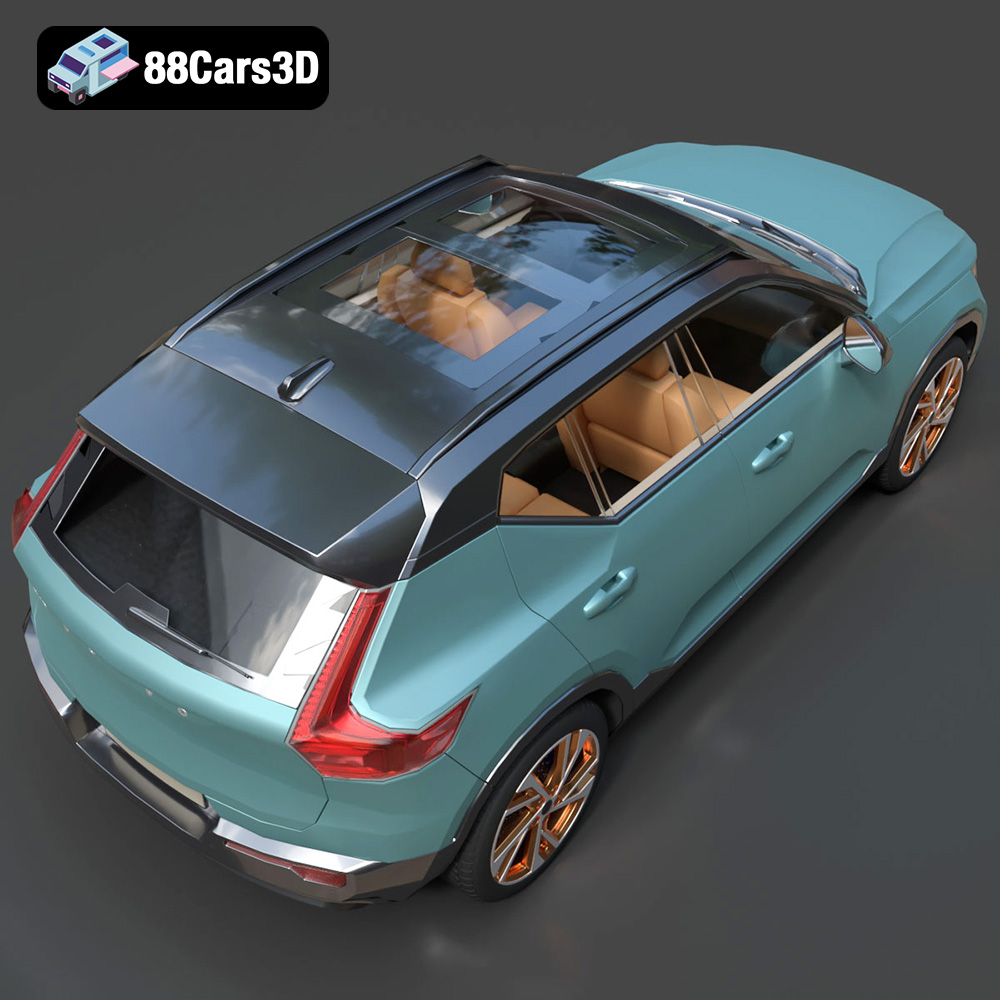
Its detailed exterior features, including the unique closed-off, body-color front grille – a hallmark of Volvo’s electric line – and the dynamic R-Design elements like the contrasting gloss black roof, translate beautifully into commercial renders. The model’s separate wheels, steering components, and doors are pre-configured for rigging and animation, allowing animators to craft dynamic sequences: a door opening to reveal the authentic Scandinavian minimalist cabin, wheels turning as the car cruises through a virtual city, or the steering wheel turning in a precise maneuver. This level of detail and animatability allows for truly engaging product visualizations that highlight the XC40 Recharge’s premium features and electric vehicle advancements.
Game development demands an intricate balance between visual fidelity and real-time performance. This is particularly true for vehicles, which often need to be highly detailed for close-up views while remaining lightweight enough to populate expansive open worlds without compromising frame rates. The Volvo XC40 Recharge (2020) 3D Model strikes this balance exceptionally well, making it a valuable asset for any game studio.
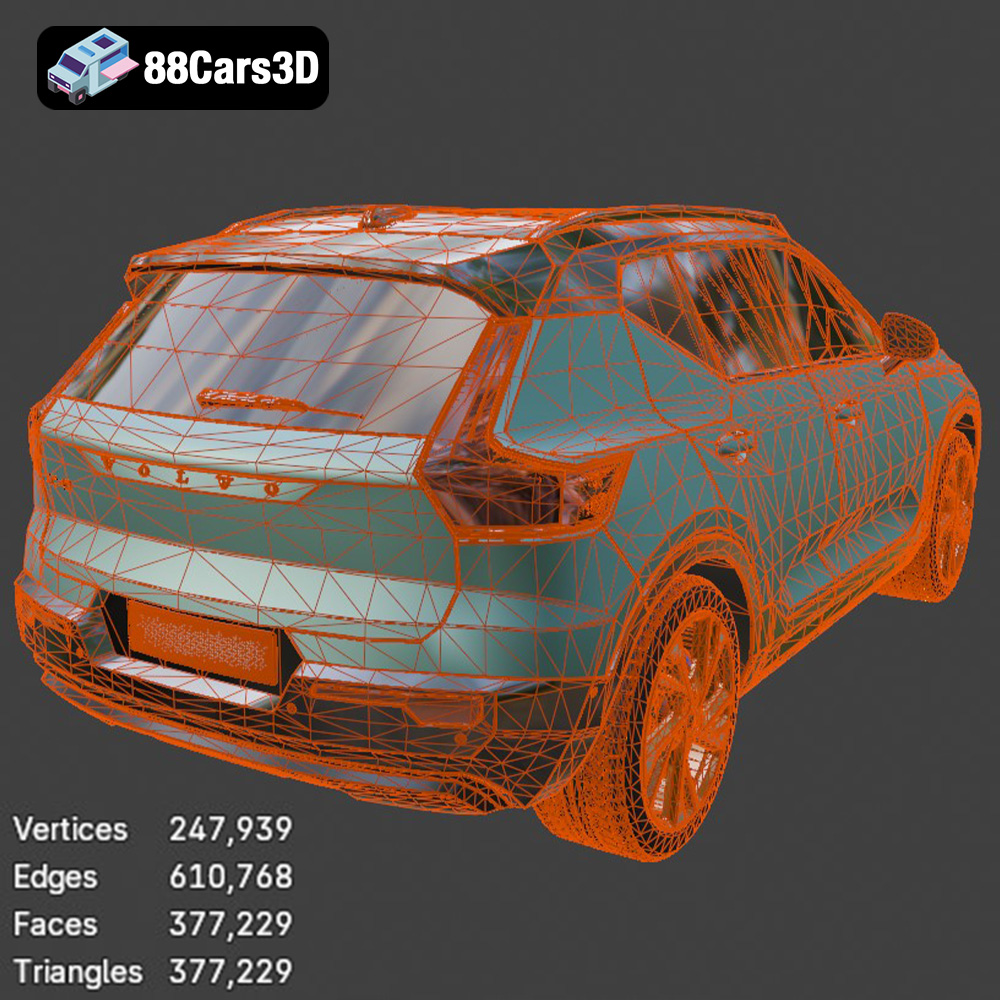
The technical specifications of the Volvo XC40 Recharge 3D Model are a testament to its optimization for real-time environments. With a polygon count of just over 377,000 triangles (Vertices: 247,939, Edges: 610,768, Faces/Polygons: 377,229), it falls into the “mid-polygon” category. This is a critical sweet spot: it’s high enough to provide crisp visual fidelity, even in foreground shots or as a drivable “hero” vehicle, ensuring details like the diamond-cut alloy wheels and sculpted body lines are clearly visible. Yet, it remains efficient enough to be duplicated many times over to create realistic traffic patterns in dense urban game environments without “choking” the game engine.
The model boasts a “beautifully clean, quad-heavy structure,” indicating a professional topology that is easy to UV map, texture, and deform if necessary. This clean geometry is paramount for avoiding rendering artifacts and ensuring smooth performance across various hardware configurations, from high-end PCs to more constrained mobile gaming platforms.
For developers working with industry-leading game engines like Unreal Engine or Unity, the Volvo XC40 Recharge 3D Model is designed for seamless integration. The inclusion of `.fbx` and `.unreal` (or Unreal-optimized) formats is key here. Developers can simply import the `.fbx` file, which typically carries over the model’s geometry, UVs, and skeletal data (for separate parts like wheels and doors). PBR (Physically Based Rendering) materials can then be quickly set up using the provided textures (albedo, normal, roughness, metallic maps) within the engine’s material editor, ensuring realistic surface properties under various lighting conditions.
For a fully “game-ready” asset, the model’s proper pivot setup for steering and wheel rotation significantly reduces setup time for vehicle physics and animation blueprints. Developers can easily attach wheel colliders, implement suspension systems, and connect steering input to create a fully drivable experience. Whether it’s for a high-speed racing simulation, a detailed open-world city builder, or a virtual reality car showroom, this optimized 3D model provides a robust foundation, allowing developers to focus on gameplay and immersive experiences rather than extensive asset cleanup.
The utility of a premium 3D model extends far beyond traditional screen-based rendering. Modern technologies like 3D printing, augmented reality (AR), and virtual reality (VR) unlock entirely new dimensions for interaction and physical manifestation, and the Volvo XC40 Recharge (2020) 3D Model is perfectly equipped for these frontiers.
For enthusiasts, designers, or anyone wanting a tangible representation of this groundbreaking EV, the Volvo XC40 Recharge 3D Model can be transformed into a physical object through 3D printing. The inclusion of the `.stl` format specifically caters to this application, providing a manifold (watertight) mesh ready for slicing software. This allows for the creation of display-scale modern SUV diecast models or unique automotive collectibles.
Achieving a high-quality print requires attention to specific settings:
This process demonstrates the versatility of 3D car models as not just virtual assets, but also as blueprints for physical manifestations.
The shift towards immersive experiences has opened new avenues for product presentation and interaction. The Volvo XC40 Recharge 3D Model is ideally suited for AR/VR applications, allowing users to experience the vehicle in new and exciting ways. The `.glb` format, optimized for web and real-time AR/VR environments, ensures efficient loading and smooth performance on various devices, from smartphones for AR to high-end VR headsets.
Imagine an interactive digital EV showroom where potential buyers can explore the XC40 Recharge in 3D, rotate it, change colors, or even open the doors and step into the “driver’s seat” in a virtual environment. Car configurators can leverage the model’s detailed interior geometry, which is “optimized interior geometry tailored to look authentic from the exterior or in VR,” allowing users to customize upholstery, dashboard layouts, and other cabin features. In augmented reality, the model can be projected onto a real-world surface, allowing users to “park” the XC40 Recharge in their driveway or office space and visualize its scale and presence before even visiting a dealership. This level of immersive engagement is transforming how consumers interact with automotive products, and high-quality 3D car models like this are at the forefront of that revolution.
At the heart of any truly valuable 3D asset lies a commitment to technical excellence and thoughtful design. The Volvo XC40 Recharge (2020) 3D Model embodies these principles, offering not just a visually appealing representation but also a robust and flexible foundation for a myriad of creative projects. Sourcing such high-quality 3D car models from marketplaces like 88cars3d.com provides professionals with a significant advantage, saving precious development time and ensuring consistent quality.
A deep dive into the technical specifications of the Volvo XC40 Recharge 3D Model reveals a commitment to performance and integrity:
These numbers, particularly the clean polygon count, highlight the model’s “highly optimized topology.” A “quad-heavy structure” is a hallmark of professionally built 3D car models, ensuring predictable subdivision, smooth deformations, and ease of modification. This efficiency means that despite its detailed appearance, the model is lightweight enough to be used in performance-critical applications like game engines without excessive computational overhead. Furthermore, its “real-world scale accuracy” based on Volvo factory dimensions guarantees that it will fit perfectly into any scene, maintaining true proportions alongside other assets. The “proper pivot setup for steering and wheel rotation” is a small but crucial detail that vastly streamlines the animation and rigging process, demonstrating the model’s readiness for immediate integration into complex workflows.
Beyond its inherent quality, a truly great 3D model offers flexibility for customization, allowing artists and designers to adapt it to their specific project needs. The Volvo XC40 Recharge 3D Model provides ample customization options:
These customization possibilities mean that while the base model from 88cars3d.com is of exceptional quality, it also serves as a versatile canvas, empowering creators to inject their unique vision and achieve truly bespoke results without having to build a complex asset from scratch.
The digital realm’s ever-growing sophistication places an undeniable premium on high-quality, technically sound 3D assets. The Volvo XC40 Recharge (2020) 3D Model stands as a prime example of an asset that not only meets but exceeds these contemporary demands. Its meticulous attention to detail, from the authentic EV styling to the optimized interior geometry, makes it an invaluable resource for a diverse array of professional applications.
Whether you are an architectural visualizer aiming for photorealistic renders, a game developer crafting immersive open worlds, an AR/VR specialist building interactive experiences, or even a hobbyist looking to 3D print a stunning scale model, this Volvo XC40 Recharge model offers unparalleled versatility. Its optimized topology ensures efficient performance, while the wide range of included file formats guarantees seamless integration into virtually any professional pipeline. By investing in such a high-caliber 3D car model, creators can significantly streamline their workflows, enhance visual fidelity, and ultimately deliver more compelling and memorable experiences.
For those seeking to elevate their projects with premium 3D car models, including this exceptional Volvo XC40 Recharge (2020) 3D Model, look no further than 88cars3d.com – your trusted source for automotive assets that truly drive creativity forward.
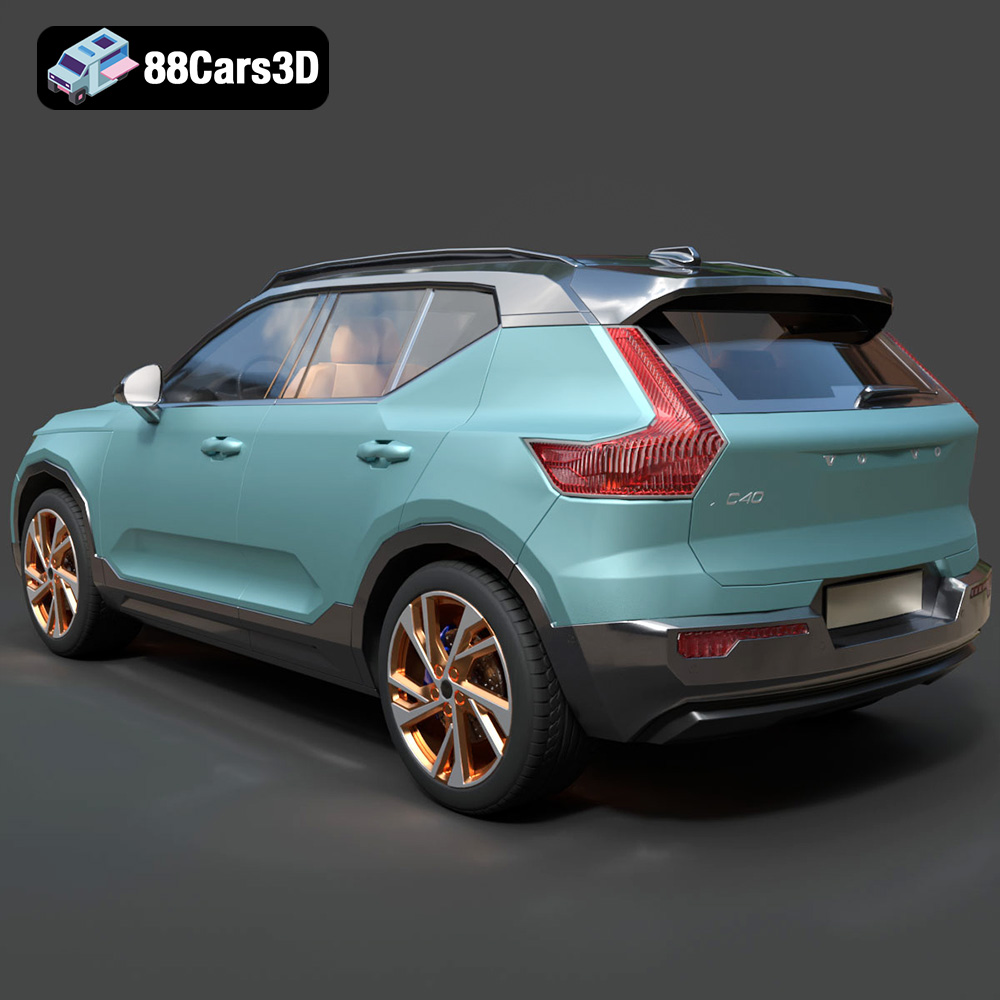
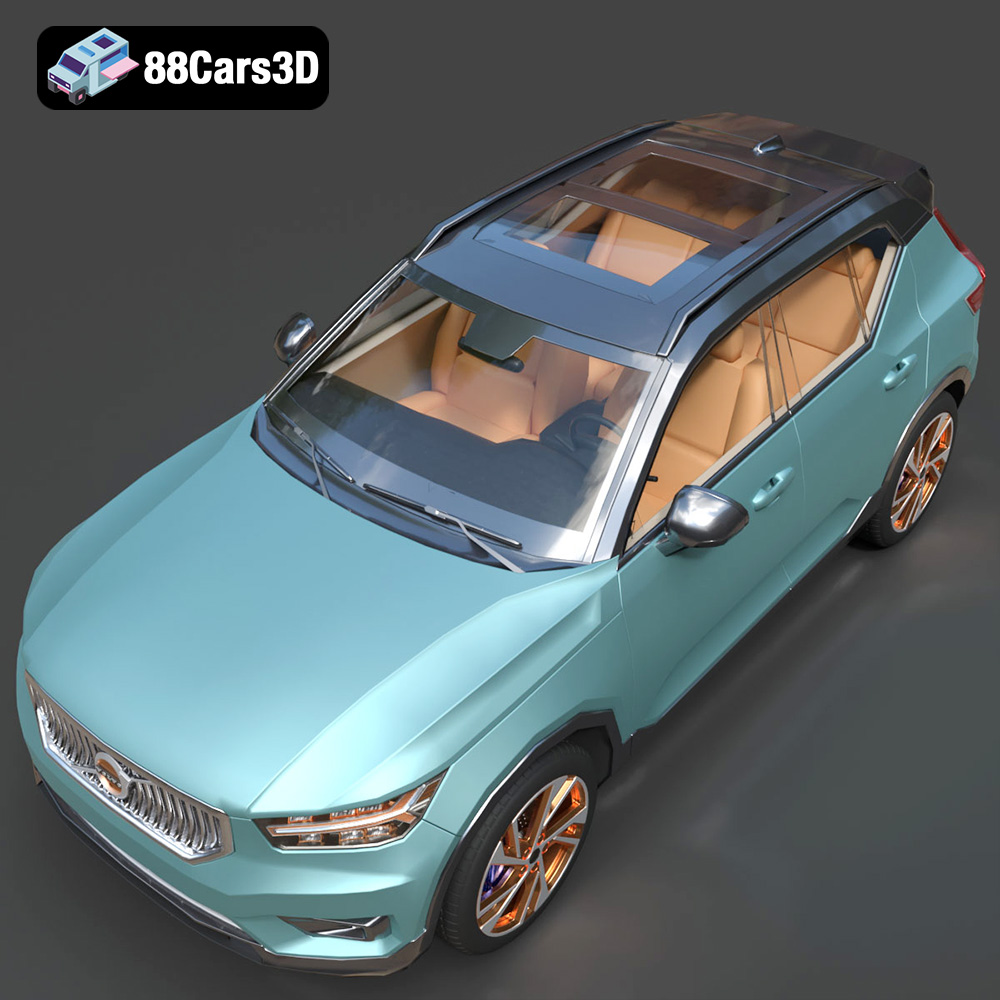
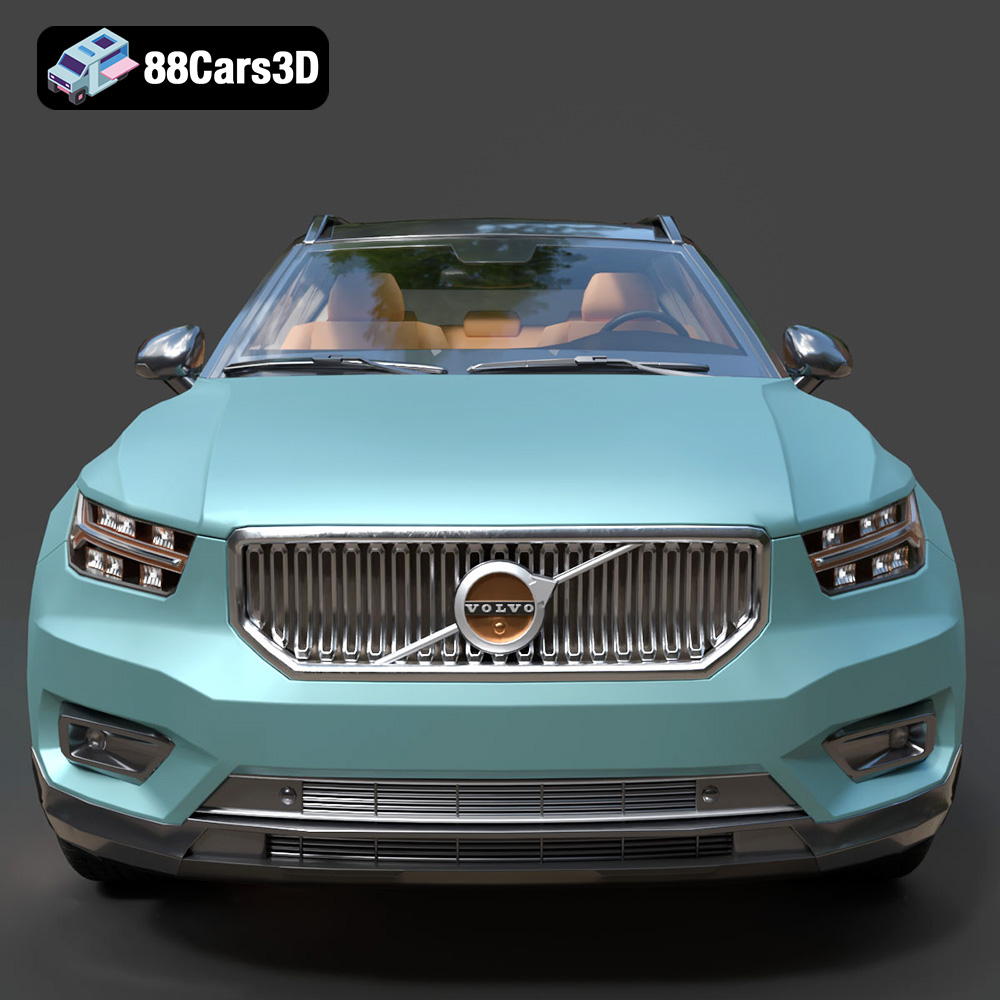
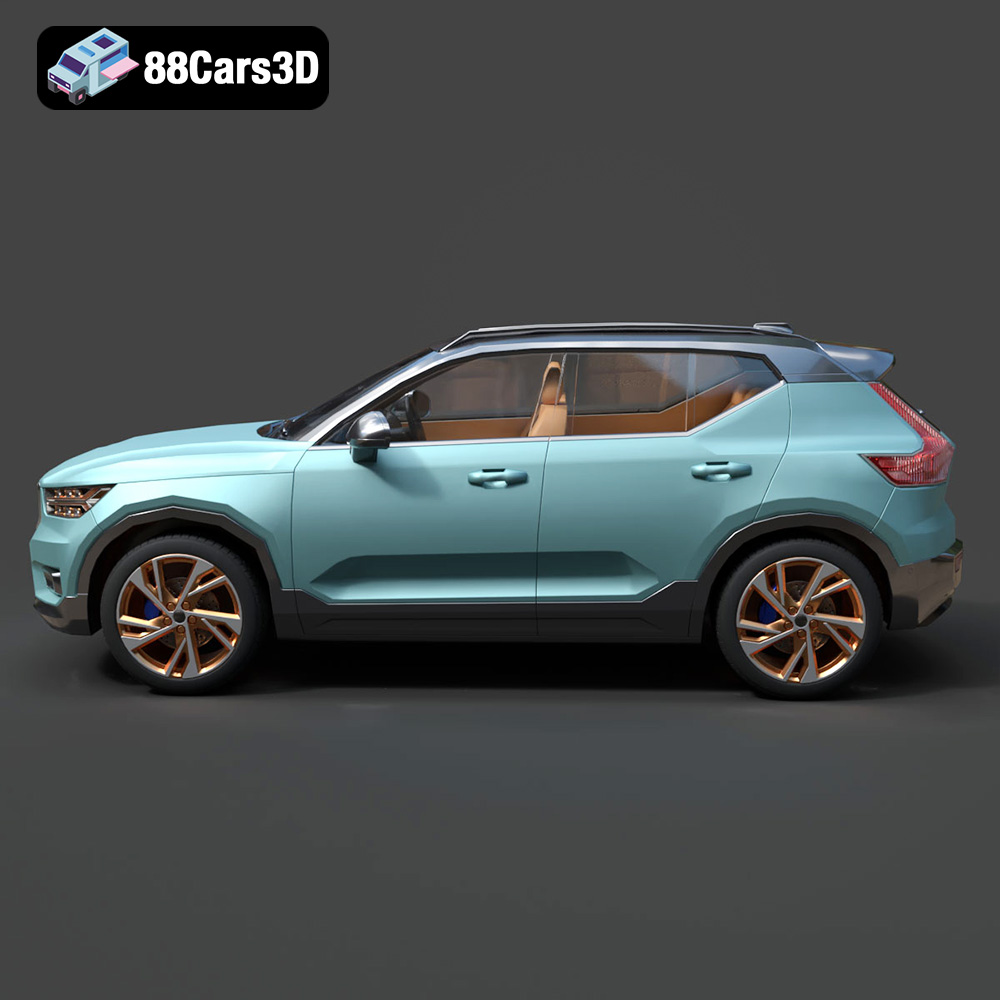
The Volvo XC40 Recharge (2020) 3D Model is an exceptionally accurate digital recreation of the Swedish brand’s groundbreaking first fully electric SUV. Marrying Volvo’s renowned commitment to safety and Scandinavian minimalism with a cutting-edge EV powertrain, the XC40 Recharge is a highly recognizable and premium compact crossover built on the CMA platform. This 3D model perfectly captures the distinct, modernized EV styling of the 2020 Recharge edition. It features the signature closed-off, body-color front grille (a hallmark of Volvo’s electric line), the iconic “Thor’s Hammer” LED headlight assemblies, an aerodynamic contrast-color roof, and the muscular yet compact crossover stance. Built with a highly efficient, impeccably clean mid-polygon topology (just over 377k triangles), it strikes the absolute perfect balance. It provides crisp visual fidelity for close-up automotive rendering while remaining lightweight enough to populate modern virtual environments, ArchViz driveways, and real-time game engines. Perfect for populating modern, eco-conscious street scenes, luxury architectural visualizations, electric vehicle commercial mockups, and mobile/PC game development.
$9.99
.archviz
.blend
.ev
.fbx
.obj
.rendering
.volvo
.xc40
car-3d-model
compact-suv
electric-vehicle
game-ready
mid-poly
Scandinavian design
SUV
traffic-car
xc40-recharge