Get 50% OFF All Premium 3D & STL Models!

In the dynamic world of 3D visualization, automotive design, and game development, the demand for exceptionally high-quality 3D car models has never been greater. Whether you’re a seasoned professional creating photorealistic renders for a marketing campaign, an indie developer crafting the next big racing title, or an AR/VR innovator building immersive experiences, the fidelity and versatility of your assets are paramount. Low-quality models can break immersion, hinder performance, and ultimately compromise the vision of your project. Conversely, a meticulously crafted 3D model serves as the backbone for stunning visuals and seamless integration.
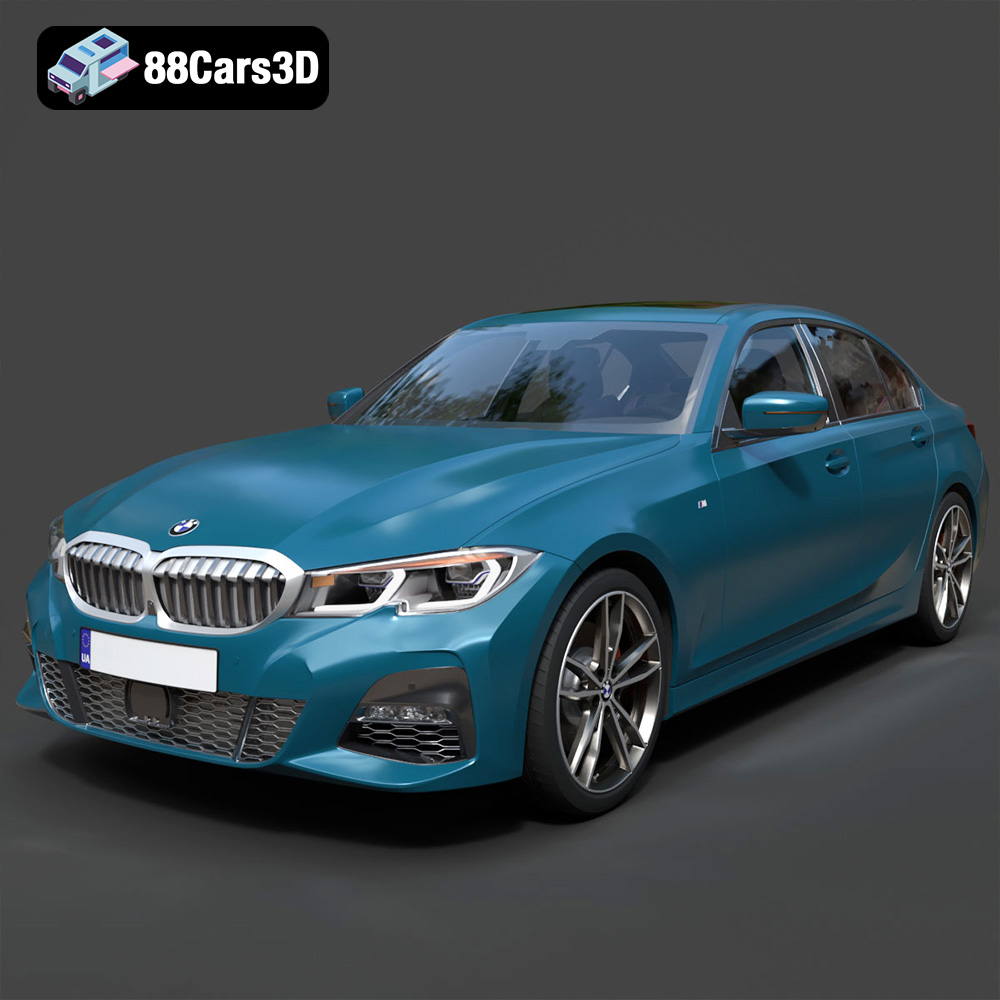
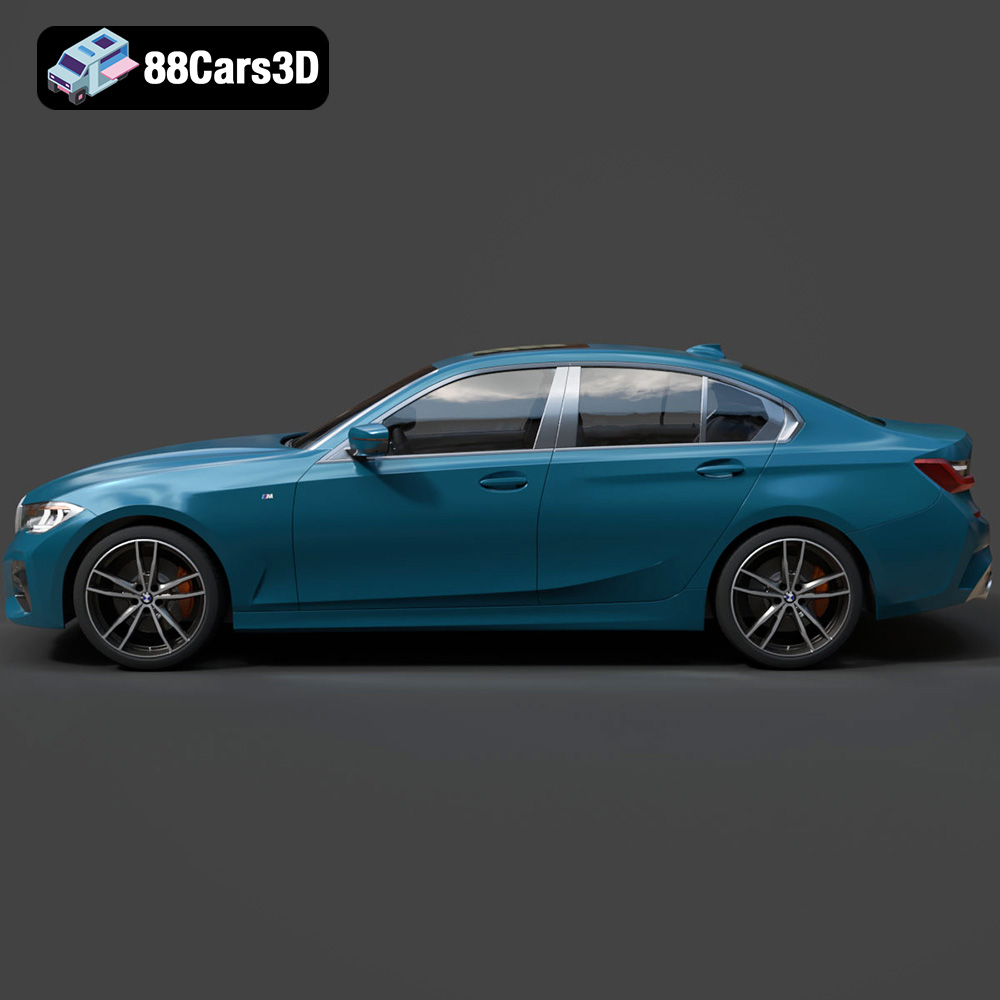
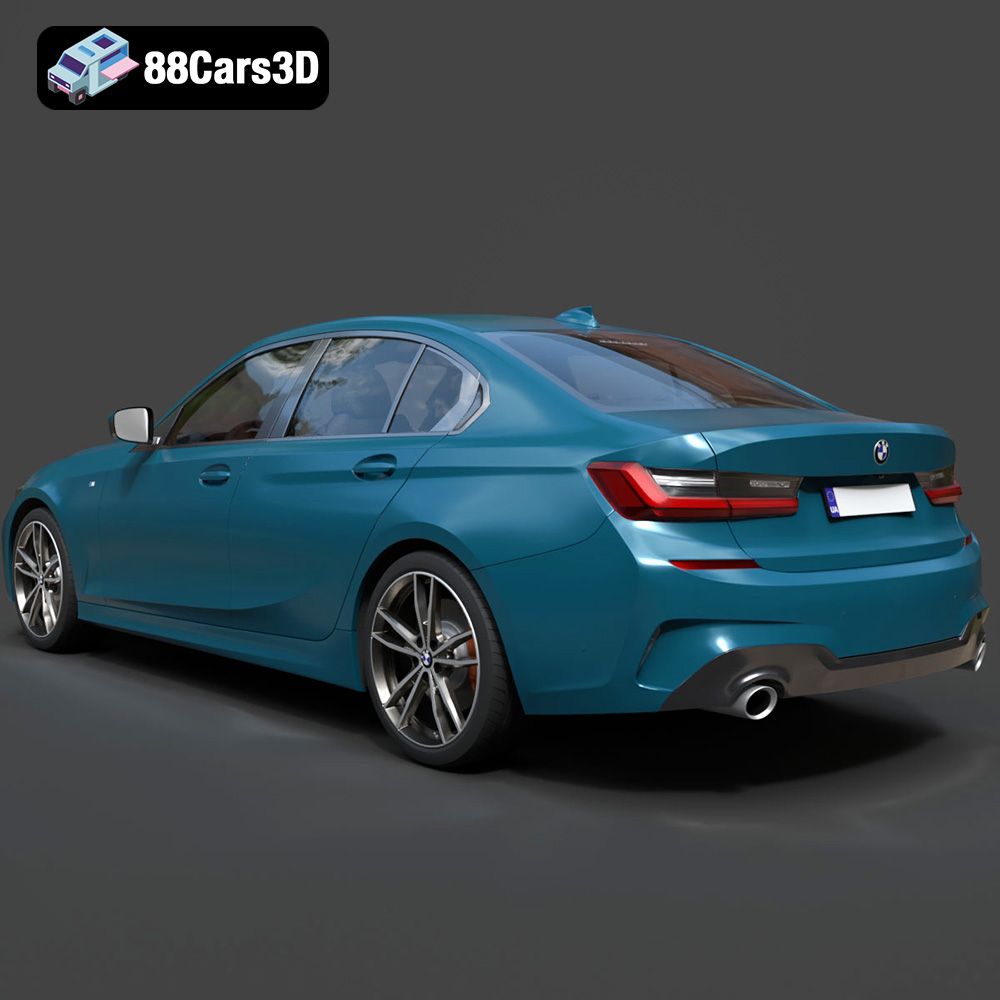
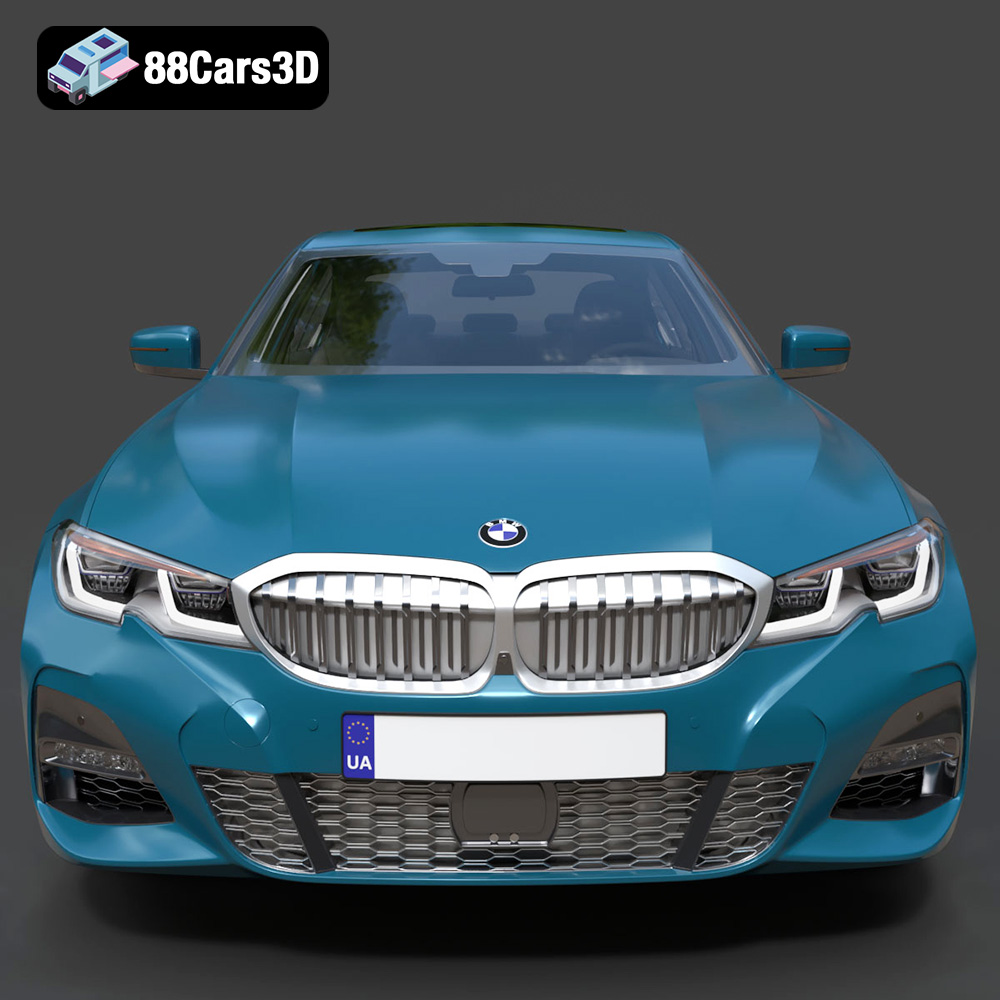
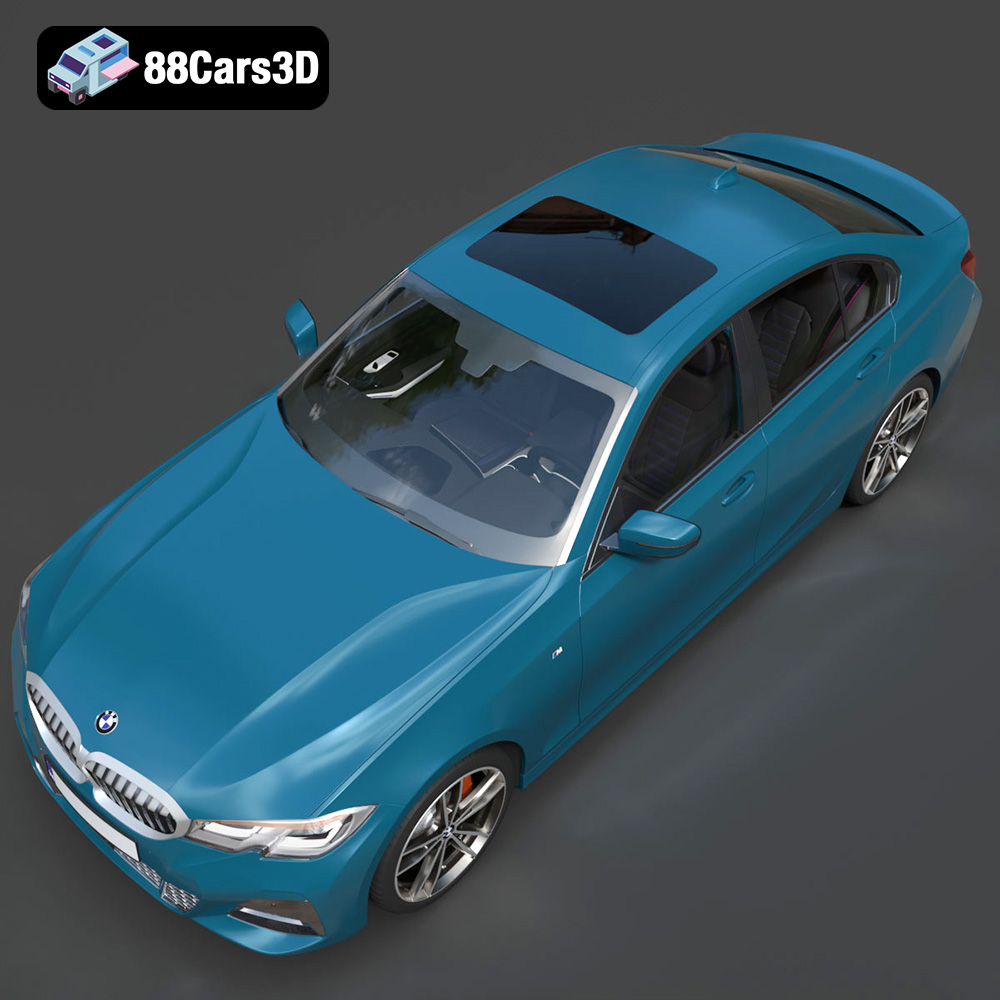
It is within this crucial context that models like the BMW 3 Series M-Sport Sedan 2019 3D Model truly shine. This particular asset, available on 88cars3d.com, exemplifies the pinnacle of digital automotive craftsmanship. It’s not just a generic car; it’s a detailed replica that captures the sophisticated contours, aggressive styling, and dynamic presence of the iconic luxury sports sedan with exacting precision. This level of detail and optimization ensures it’s ready for the most demanding digital environments, offering a robust foundation for a myriad of professional applications.
This article will delve deep into the technical aspects of leveraging such high-fidelity 3D car models, exploring workflows, file formats, and best practices across various industries. We’ll examine how a model with clean geometry, a fully modeled interior, and realistic materials—like the BMW 3 Series M-Sport Sedan 2019—can elevate your projects from good to extraordinary, ensuring professional standards are not just met, but exceeded.
The pursuit of realism in 3D visualization is a continuous journey, and for automotive projects, the quality of the 3D car model is the most critical starting point. A superior model isn’t just about looking good; it’s about providing a solid, adaptable foundation for complex production pipelines. From advertising agencies to architectural visualization firms, and from cinematic studios to game development houses, the core requirements remain consistent: precision, performance, and versatility.
A high-quality 3D car model, such as the BMW 3 Series M-Sport Sedan 2019, is built to exact specifications, replicating every curve, panel gap, and stylistic element of its real-world counterpart. This meticulous attention to detail is crucial for achieving photorealism. When clients demand accurate representations for product launches or marketing materials, anything less than perfect proportions and authentic detailing simply won’t suffice. The “sophisticated contours” and “aggressive styling” mentioned in the product description are not just buzzwords; they represent countless hours of careful modeling to ensure that the digital asset is indistinguishable from the physical vehicle under the right conditions.
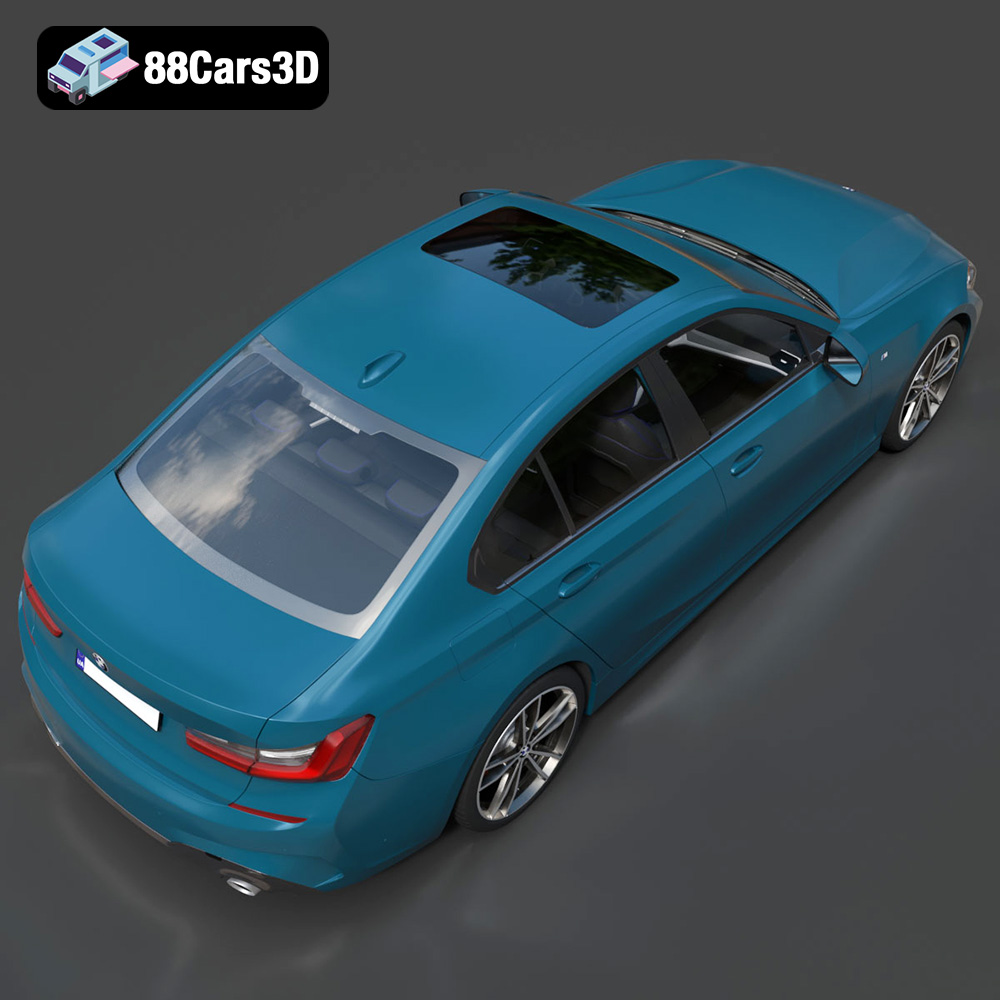
Furthermore, realistic materials that react naturally under various lighting conditions are integral. This involves accurate PBR (Physically Based Rendering) setups for paint, glass, chrome, and interior fabrics. The interaction of light with these surfaces is what truly sells the illusion of reality. A fully modeled interior, as featured in the BMW 3 Series M-Sport Sedan 2019 3D Model, adds another layer of immersion, essential for close-up shots, virtual showrooms, or in-car perspectives in games or VR.
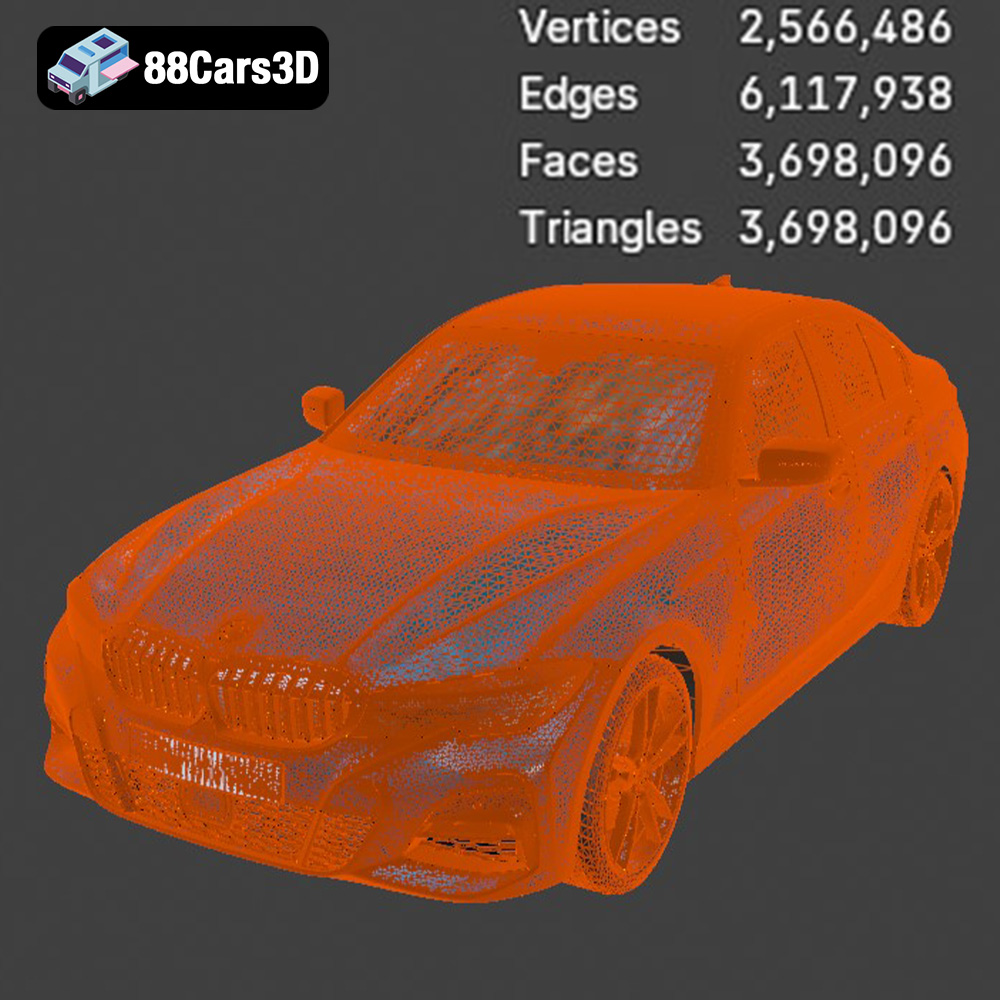
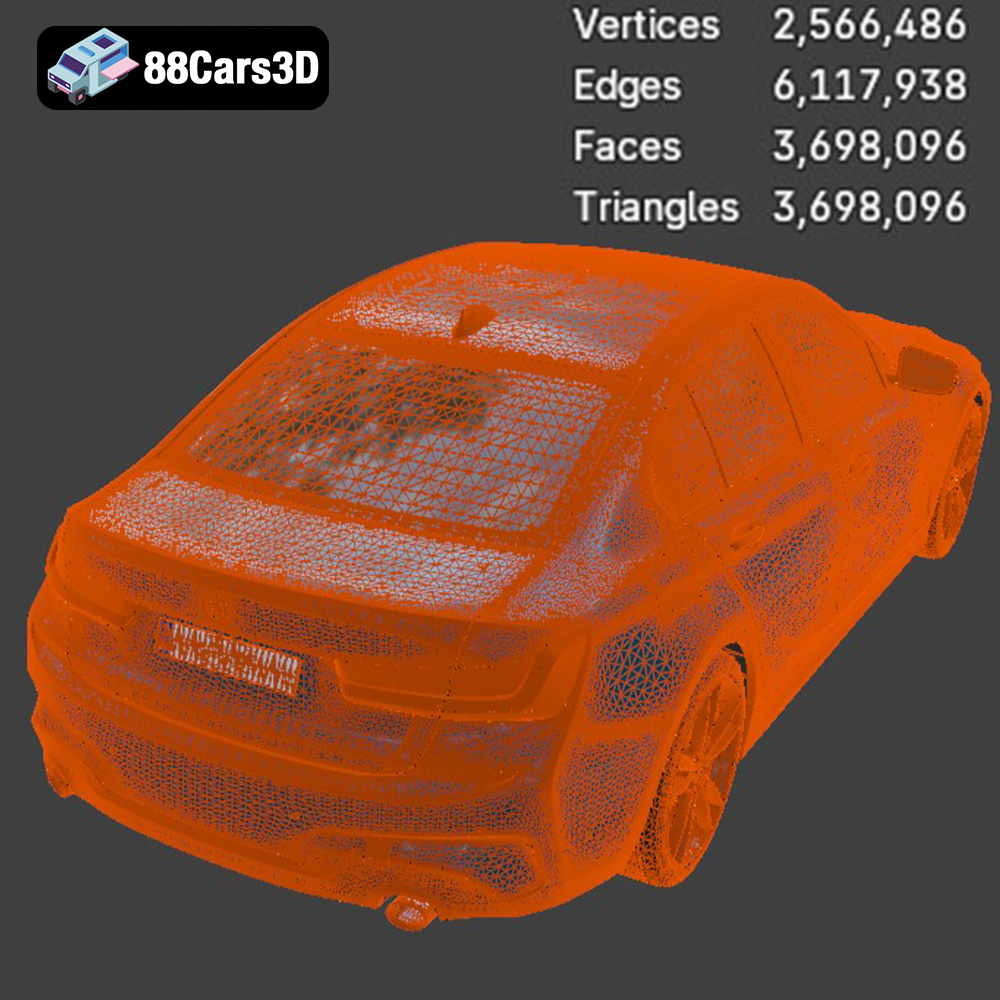
Beyond visual fidelity, a professional 3D car model must also be optimized for performance. This often involves a delicate balance between detail and efficiency. “Meticulously optimized clean geometry” and “precise edge flow” are indicators that a model has been built with downstream applications in mind. Clean geometry means fewer unnecessary polygons, leading to faster render times and smoother real-time performance. A logical hierarchy of components allows for easy manipulation, animation, and potential destruction or customization in interactive environments.
For game development, for instance, poly count optimization and efficient UV mapping are critical for maintaining high frame rates. In high-resolution rendering, good topology simplifies subdivision surfacing and ensures smooth reflections without artifacts. A versatile 3D asset like the BMW 3 Series M-Sport Sedan 2019 is designed for seamless integration, meaning it comes pre-prepared to fit into complex scenes without bogging down the entire project. This dual focus on aesthetic precision and technical performance is what truly defines a professional-grade 3D car model.
Navigating the diverse landscape of 3D software and applications requires a fundamental understanding of various file formats. Each format serves specific purposes, offering unique advantages for different stages of the 3D pipeline—from initial modeling and texturing to real-time rendering, animation, and even 3D printing. The BMW 3 Series M-Sport Sedan 2019 3D Model, available on 88cars3d.com, wisely includes a comprehensive suite of these formats, ensuring maximum compatibility and utility for professionals.
The
.blend
file is Blender’s native format and is ideal when Blender is your primary 3D software. It stores everything related to a Blender scene: meshes, materials, textures, animations, lighting setups, cameras, and even UI layouts. Its main advantage is that it’s fully editable, preserving all modifiers, constraints, and node-based material setups. This makes it perfect for artists who want to delve into the model’s construction, make extensive modifications, or integrate it into an existing Blender project with all its original settings intact. For the BMW 3 Series M-Sport Sedan 2019, the .blend file would provide an editable scene with its carefully configured materials and lighting, offering an excellent starting point for custom renders or animations within Blender.
The
.fbx
format, developed by Autodesk, is one of the most widely supported and robust formats for exchanging 3D data between different software applications and for use in game engines. It can store not just geometry, but also materials, textures, animations, skinning, and camera data. Its strength lies in its ability to maintain a strong level of fidelity across various platforms, making it the “game-engine ready format” for environments like Unreal Engine and Unity. When importing the BMW 3 Series M-Sport Sedan 2019 via FBX, you can expect its hierarchy, UVs, and basic material assignments to translate efficiently, requiring minimal setup for real-time applications.
The
.obj
(Wavefront OBJ) format is a universal standard, renowned for its simplicity and wide compatibility. It primarily stores geometric data (vertices, normals, UVs) and references to external material files (.mtl). While it doesn’t support animation or advanced material properties like PBR textures natively, its widespread adoption makes it a safe choice for cross-software compatibility. If you need a clean mesh to bring into almost any 3D package for further texturing or rendering, .obj is a reliable fallback. It’s the “standard 3D model format compatible with all major software” precisely because of this ubiquity.
The
.glb
(GL Transmission Format Binary) is increasingly popular, especially for web-based 3D, AR, and VR applications. It’s an efficient, single-file format that includes all necessary data—geometry, materials, textures, animations—making it perfect for fast loading and optimized delivery across various devices and platforms. For interactive AR/VR experiences or embedding 3D models directly into a browser, .glb offers superior performance and ease of use. The BMW 3 Series M-Sport Sedan 2019 in .glb format would be “optimized for AR/VR and web-based visualization,” delivering a smooth, interactive experience.
The
.unreal
designation typically refers to a proprietary asset package or a specifically optimized FBX import for Unreal Engine, potentially including pre-configured materials, collision meshes, or LODs (Levels of Detail). When a model is provided in an “.unreal” format, it signifies that it’s “pre-configured for Unreal Engine use,” saving developers significant time on setup and ensuring the model performs optimally within the engine’s ecosystem. This level of preparation is invaluable for game development and high-fidelity real-time visualization.
For those venturing into physical prototyping, the
.stl
(Stereolithography) format is the industry standard. It represents a 3D model as a series of connected triangles, defining only the surface geometry. It’s the go-to for 3D printing and rapid prototyping, ensuring that the digital model can be accurately translated into a physical object. The BMW 3 Series M-Sport Sedan 2019 .stl file is “suitable for 3D printing and prototyping,” allowing designers to create scale models or physical mock-ups of the vehicle.
The
.ply
(Polygon File Format), or Stanford Triangle Format, is primarily used for storing 3D data from 3D scanners, often including color information per vertex or face. It’s excellent for precision mesh data and can store a wide range of properties. While less common for general artistic exchange, it’s valuable for engineering analysis, scientific visualization, or when dealing with highly detailed point cloud or polygonal data where vertex color is important. As a “detailed polygon mesh for analysis and visualization,” it caters to specific technical needs.
Finally, the
.max
file is Autodesk 3ds Max’s native format, much like .blend for Blender. It contains the entire scene, including geometry, materials, lighting, cameras, animations, and scene settings specific to 3ds Max. For artists working within the 3ds Max ecosystem, the .max file provides full editability and preserves all proprietary features. It’s an “editable 3ds Max file for rendering and animation,” offering comprehensive control for advanced users and studios primarily utilizing this robust software.
Once you have a high-quality 3D car model like the BMW 3 Series M-Sport Sedan 2019, the next step is to breathe life into it through rendering. Automotive rendering is an art form that combines technical expertise with an aesthetic eye, aiming to produce images that are indistinguishable from photographs. This involves careful consideration of lighting, materials, camera angles, and post-processing.
3ds Max, often paired with powerful render engines like V-Ray or Corona Renderer, is a staple in professional automotive visualization. The .max file of the BMW 3 Series M-Sport Sedan 2019 provides an excellent starting point. The workflow typically begins with establishing a realistic lighting environment. This often involves using HDRI (High Dynamic Range Image) maps for environment lighting, which simulate real-world lighting conditions from various locations (e.g., sunny outdoor, studio environment). Additional photometric lights or area lights can be placed to highlight specific features, mimic studio setups, or create dramatic effects.
Materials are equally crucial. The “realistic materials that react naturally under various lighting conditions” of the BMW model mean much of the heavy lifting is already done. However, fine-tuning reflectivity, clear coat, car paint flakes, tire rubber, and glass properties is essential. Using PBR textures (Albedo, Normal, Roughness, Metallic maps) ensures physical accuracy. For instance, the car paint needs multiple layers of reflection and glossiness to simulate real-world clear coats, while tire rubber requires precise normal and roughness maps to convey its texture and wear. Setting up backplates and ground planes with realistic reflections further grounds the vehicle in the scene, enhancing immersion.
Blender has emerged as a formidable tool for automotive rendering, boasting two powerful render engines: Cycles and Eevee. The .blend file of the BMW 3 Series M-Sport Sedan 2019 comes with materials and lighting setup, making it immediately usable. Cycles, Blender’s path tracer, is renowned for its unbiased, physically accurate rendering, ideal for photorealistic stills and animations. The workflow mirrors 3ds Max in principle: use HDRI lighting, possibly augmented with mesh lights or area lights. Focus on fine-tuning material nodes for complex car paint shaders, realistic glass, and detailed tire textures.
Eevee, Blender’s real-time render engine, offers incredible speed and interactive feedback, making it perfect for quick previews, animations, or even game-like experiences. While not as physically accurate as Cycles, Eevee can produce stunning results with careful material and lighting setup. Optimizing materials for Eevee involves baking complex procedural textures and leveraging its screen-space reflections and ambient occlusion. Both engines benefit from the BMW model’s clean geometry and logical hierarchy, allowing for easy material assignment and performance optimization.
No render is truly finished without post-processing. Tools like Photoshop, GIMP, or even Blender’s compositor are invaluable. This stage involves color correction, adding atmospheric effects (like subtle haze or bloom), sharpening details, and introducing lens effects (depth of field, chromatic aberration) to mimic real-world camera optics. Compositing rendered passes (e.g., reflections, shadows, ambient occlusion) provides granular control over the final image. A well-executed render of the BMW 3 Series M-Sport Sedan 2019, combined with expert post-production, can be indistinguishable from a high-quality photograph, making it perfect for marketing and advertising campaigns.
The advent of powerful game engines like Unreal Engine and Unity has revolutionized real-time graphics, pushing the boundaries of what’s possible in interactive entertainment and simulations. For game developers and AR/VR creators, integrating high-quality 3D car models like the BMW 3 Series M-Sport Sedan 2019 is a critical step in building immersive and visually compelling experiences. This requires not just good looks, but also robust optimization and engine-specific preparation.
Unreal Engine is celebrated for its photorealistic rendering capabilities in real-time. The .fbx and .unreal formats of the BMW 3 Series M-Sport Sedan 2019 are tailored for seamless integration. The primary considerations for game assets are polygon count, texture resolution, and draw calls. While a high-fidelity model might start with millions of polygons for cinematic renders, game assets often require LODs (Levels of Detail) where the model automatically switches to a lower-poly version as the camera moves further away. This ensures performance without sacrificing visual quality up close.
Importing the BMW model into Unreal Engine involves setting up physically based materials, creating collision meshes (simple geometry used for physics interactions), and potentially rigging the wheels and suspension for animation. The “pre-configured for Unreal Engine use” nature of the .unreal file implies much of this setup may already be in place, significantly accelerating development time. Using Unreal’s powerful material editor, artists can fine-tune car paint shaders, glass, and interior fabrics, leveraging features like clear coat layers and complex reflection setups to achieve stunning realism, even in real-time environments.
Augmented Reality (AR) and Virtual Reality (VR) applications demand a unique balance of visual quality and extremely high performance to prevent motion sickness and ensure a smooth user experience. The .glb format, optimized for AR/VR, is particularly valuable here. When integrating the BMW 3 Series M-Sport Sedan 2019 into an AR/VR experience, developers must prioritize asset loading times, frame rates, and efficient resource management.
This often means further polygon reduction, aggressive LODs, and baking complex lighting information into textures (lightmapping) to reduce real-time calculations. The fully modeled interior of the BMW model becomes crucial for VR, where users can freely look around and interact within the car. Imagine a virtual showroom where potential buyers can explore the BMW 3 Series M-Sport Sedan 2019 in full 3D, customize its color and trim, and even “sit” inside, all powered by a meticulously optimized 3D asset. The precision and attention to detail ensure that these interactive experiences are believable and engaging.
In game development, 3D car models serve multiple roles. They are not just visual elements but interactive components that drive gameplay. For a racing game, the BMW 3 Series M-Sport Sedan 2019 3D Model would form the basis for physics simulations, damage models, and player customization. Its “precise edge flow and logical hierarchy” are invaluable for creating destructible parts or enabling dynamic paint changes. Accurate UV mapping is essential for applying custom liveries or wear and tear textures.
Beyond playable vehicles, 3D car models are essential for populating game worlds as background props, traffic, or part of environmental storytelling. Even for these static roles, the visual fidelity provided by a high-quality model adds significantly to the overall realism and immersion of the game. For any game developer looking to enhance their automotive library, sourcing pre-made, high-quality 3D car models like those on 88cars3d.com can save immense development time and resources, allowing them to focus on gameplay and core mechanics.
The utility of a robust 3D car model extends far beyond simple rendering or game integration. Its inherent versatility allows for applications in engineering, product design, cinematic production, and even physical prototyping. A model like the BMW 3 Series M-Sport Sedan 2019, built to professional standards, provides a reliable digital twin for a multitude of advanced professional tasks.
For engineers and product designers, a highly accurate 3D model can serve as a powerful tool for visualization and analysis. While not a CAD model, a mesh model built to “exact specifications” like the BMW 3 Series M-Sport Sedan 2019 can be used for design reviews, ergonomic studies, or to visualize how a new component might fit within the existing vehicle structure. The .ply and .stl formats are particularly relevant here. The .ply file, with its detailed polygon mesh, can be used for certain types of aesthetic analysis or precise surface measurements, while the .stl format is perfect for “3D printing and prototyping.” This allows designers to rapidly create physical models for hands-on evaluation, long before committing to expensive manufacturing processes.
Imagine using the BMW 3 Series M-Sport Sedan 2019 .stl file to 3D print a scale model for a wind tunnel test, or to visualize how a new aftermarket part would integrate with the car’s bodywork. This digital flexibility accelerates the design cycle and reduces potential errors in real-world production.
One of the significant advantages of a model with “meticulously optimized clean geometry” and “precise edge flow” is its ease of modification. Professionals often need to customize a base model for specific project requirements—be it altering body kits, adding accessories, or even creating concept variations. The logical hierarchy of components in the BMW 3 Series M-Sport Sedan 2019 3D Model simplifies this process. Individual parts like wheels, headlights, or bumpers can be easily selected, replaced, or modified without disrupting the entire mesh. This flexibility is crucial for automotive configurators, personalized advertising campaigns, or creating unique vehicle variants for game content.
Artists can use the .blend or .max files to dive deep into the model’s structure, applying new textures, sculpting additional details, or even adapting it to different vehicle types. This capability transforms a static asset into a dynamic toolkit for creative expression and problem-solving, ensuring seamless integration into complex scenes without compromising performance or artistic vision.
In cinematic animations, commercials, or VFX sequences, photorealistic 3D car models are indispensable. The “dynamic presence” of the BMW 3 Series M-Sport Sedan 2019 makes it ideal for leading roles in digital storytelling. Beyond static renders, cinematic production demands high-fidelity animation, intricate camera work, and detailed environmental integration. A model with a fully modeled interior allows for stunning cockpit shots, adding a layer of authenticity to driving sequences.
The “realistic materials” ensure that the car reacts convincingly to virtual camera lenses, dynamic lighting changes, and environmental effects like rain or dirt. Animators can rig the model for complex maneuvers, suspension compression, and wheel rotations, bringing the vehicle to life in a way that stock footage often cannot. From high-octane chases to elegant reveal shots, a top-tier 3D car model provides the creative freedom and visual quality necessary for truly impactful cinematic moments.
The journey from concept to a compelling visual or interactive experience in the 3D world is intricate, demanding tools and assets that rise to the occasion. As we’ve explored, the quality of a 3D car model is not merely about aesthetic appeal, but about foundational technical excellence that empowers diverse professional applications. Models built with precision, optimized geometry, and comprehensive file format support simplify complex workflows, save invaluable time, and ultimately elevate the final output.
The BMW 3 Series M-Sport Sedan 2019 3D Model exemplifies these crucial attributes. Its meticulous construction, fully modeled interior, and realistic materials make it an exceptionally versatile asset, whether for generating photorealistic automotive rendering, integrating into immersive video games, developing cutting-edge AR/VR experiences, or enabling precise engineering visualizations. The inclusion of industry-standard file formats—from .blend and .max for comprehensive editing to .fbx and .unreal for game engines, and .glb for web/AR/VR—ensures it’s ready for any professional pipeline.
In a field where details make all the difference, investing in high-quality 3D car models from reputable sources like 88cars3d.com is not just a choice, but a strategic advantage. It provides the reliable foundation needed for demanding digital projects, allowing artists and developers to focus on creativity and innovation, confident that their core assets will perform flawlessly. The BMW 3 Series M-Sport Sedan 2019 3D Model isn’t just a digital car; it’s a testament to the power of precision in professional 3D content creation.
Experience true realism with the BMW 3 Series M-Sport Sedan 2019 3D Model. Crafted to exact specifications, this digital vehicle replica captures the sophisticated contours, aggressive styling, and dynamic presence of the iconic luxury sports sedan. Designed for versatility, this model delivers precise proportions and authentic detailing suitable for demanding digital environments. Key features include meticulously optimized clean geometry, a fully modeled interior, and realistic materials that react naturally under various lighting conditions. Every component has been designed to meet professional standards, ensuring seamless integration into complex scenes without compromising performance. The precise edge flow and logical hierarchy allow for easy modifications and rendering. This versatile 3D asset is perfectly suited for a wide array of professional applications. Whether developing immersive video games, creating photorealistic automotive visualizations, producing cinematic animations, or designing interactive AR/VR experiences, this model provides the reliable foundation needed for demanding digital projects.
$19.99
.3series
.arvr
.blend
.bmw
.car3dmodel
.fbx
.gameasset
.glb
.luxurycar
.max
.msport
.obj
.ply
.rendering
.sedan
.simulation
.sportssedan
.stl
.unreal