Get 50% OFF All Premium 3D & STL Models!

In the fast-evolving landscape of digital media, the demand for incredibly detailed and authentic 3D assets is greater than ever. From blockbuster game titles and cinematic automotive rendering sequences to cutting-edge AR/VR experiences and precise engineering visualizations, the quality of a 3D model can significantly impact the final product’s realism and immersion. Automotive enthusiasts and digital artists alike often seek to replicate the raw power and aesthetic brilliance of legendary vehicles.
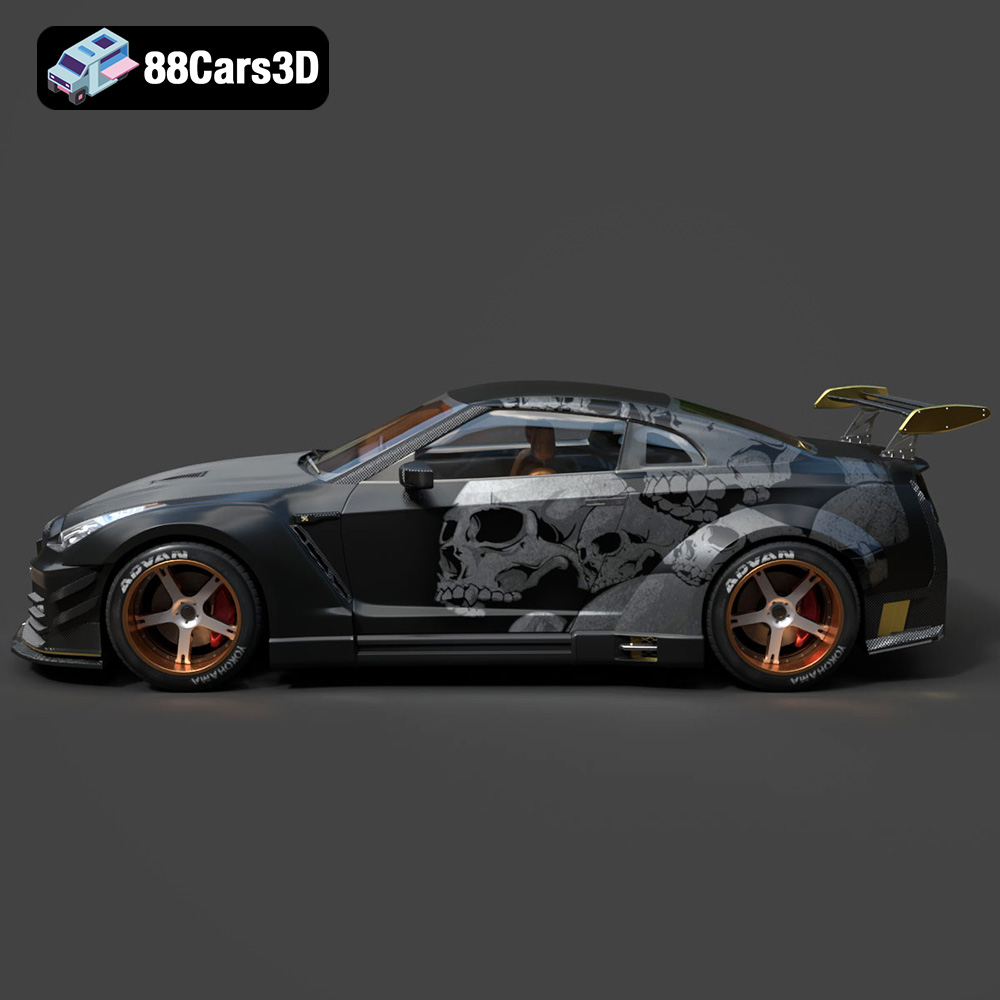
Few cars embody this spirit of precision engineering and track-honed performance quite like the Nissan GTR R35 Nismo. Its aggressive lines, functional aerodynamics, and iconic presence make it a prime candidate for digital recreation. For professionals seeking to integrate such a marvel into their projects, a pre-built, high-quality asset is invaluable. This is where the Nissan GTR R35 Nismo 3D Model from 88cars3d.com truly shines, offering an exquisitely crafted digital replica that meets the rigorous standards of modern production pipelines. This comprehensive article will delve into the technical intricacies of professional 3D car models, explore diverse workflows, and demonstrate how such a meticulously designed asset can become the cornerstone of your next digital automotive project.
The versatility of a 3D model often hinges on the array of file formats it supports. Each format serves specific purposes, catering to different software, platforms, and stages of a project. Understanding these distinctions is crucial for seamless integration and optimal performance, particularly when working with a complex asset like the Nissan GTR R35 Nismo 3D Model. Let’s break down the key formats provided with professional 3D car models and when to use them.
The .blend format is native to Blender, a powerful open-source 3D creation suite. When you receive a .blend file, it’s typically a complete scene, including the model, its materials, textures, lighting setups, and even camera configurations. This makes it ideal for Blender users who need full editability and want to dive directly into rendering or animation without extensive setup. For the Nissan GTR R35 Nismo 3D Model, the .blend file allows artists to meticulously inspect the topology, modify shaders, adjust lighting to match their specific scene, or even re-rig the vehicle for custom animations, all within a familiar environment.
Autodesk’s .fbx (Filmbox) format is an industry standard for interoperability, especially between different 3D software and game engines. It’s excellent at preserving a wide range of data, including geometry, materials (though often simplified), textures, animations, and skeletal data. For game developers working with Unreal Engine or Unity, the .fbx version of the Nissan GTR R35 Nismo 3D Model is typically the go-to. It provides a robust, optimized asset that can be imported directly, allowing for quick setup of collision meshes, physics, and real-time materials.
The .obj (Wavefront OBJ) format is one of the oldest and most universally supported 3D file formats. It primarily stores geometric data – vertices, normals, UV coordinates, and faces. While it can reference material files (.mtl), it doesn’t embed them, making it less robust for complex material setups compared to .fbx or .blend. However, its widespread compatibility makes it an excellent choice for transferring models between almost any 3D software package, ensuring that the core geometry of the Nissan GTR R35 Nismo 3D Model is accessible regardless of your preferred tool.
.glb (GL Transmission Format Binary) is a relatively newer format gaining rapid traction, particularly in the realms of Augmented Reality (AR), Virtual Reality (VR), and web-based 3D applications. It’s a binary container format that efficiently packages 3D model data, including geometry, materials, textures, and animations, into a single, self-contained file. This optimization makes it perfect for fast loading and rendering in real-time environments, such as embedding the Nissan GTR R35 Nismo in a web viewer or deploying it in a mobile AR experience.
The .stl (STereoLithography) format is the standard for 3D printing. It represents a 3D model as a collection of unconnected triangular facets, without any color or texture information. Its simplicity makes it ideal for defining the surface geometry for additive manufacturing. If your goal is to 3D print a physical replica of the Nissan GTR R35 Nismo, the .stl file provided is specifically prepared for this purpose, ensuring a watertight and manifold mesh suitable for fabrication.
.ply (Polygon File Format) is often used for storing 3D data from 3D scanners, CAD software, and other precision measurement tools. It can store not only geometric data but also properties like color per vertex, normal vectors, and transparency, making it suitable for scientific visualization, point cloud data, and precise technical analysis. While less common for general rendering, the .ply version of the Nissan GTR R35 Nismo 3D Model could be valuable for engineers or researchers needing highly detailed mesh data for simulations or reverse engineering studies.
The .unreal format, or more accurately, assets specifically configured for Unreal Engine, represents a highly optimized and pre-configured asset designed for direct import and use within Unreal Engine. This typically means the asset has been properly scaled, has collision setups, LODs (Levels of Detail), and materials configured to Unreal’s physically based rendering (PBR) system. For the Nissan GTR R35 Nismo, the .unreal file means significantly reduced setup time, allowing developers to drop the model into their scene and immediately begin iterating on gameplay or cinematic sequences.
Finally, the .max format is native to Autodesk 3ds Max, another industry-leading 3D software package. Similar to .blend, a .max file contains the complete scene data, including the model, materials, textures, lighting, cameras, and animations. Professionals using 3ds Max for high-end automotive rendering, animation, or architectural visualization will find the .max version of the Nissan GTR R35 Nismo 3D Model invaluable. It provides full control over every aspect of the scene for the most demanding rendering projects.
The inclusion of such a comprehensive suite of file formats for the Nissan GTR R35 Nismo 3D Model ensures unparalleled flexibility and compatibility, solidifying its status as a professional-grade asset ready for any pipeline.
Automotive rendering is more than just creating a pretty picture; it’s about crafting a narrative, evoking emotion, and showcasing design with hyper-realism. Professional 3D car models, like the Nissan GTR R35 Nismo from 88cars3d.com, provide the perfect foundation for achieving stunning visual fidelity in static renders and dynamic animations.
When it comes to producing photorealistic images of a vehicle, 3ds Max and Blender stand out as industry favorites. Both offer robust rendering engines and sophisticated material systems that can bring the Nissan GTR R35 Nismo to life with breathtaking detail. Artists utilize Physically Based Rendering (PBR) workflows to accurately simulate how light interacts with the car’s surfaces. This involves creating precise materials for the metallic paint, ensuring the correct sheen and reflectivity; crafting realistic glass with appropriate refractive qualities; and texturing carbon fiber components to capture their intricate weave and depth. Renderers like V-Ray and Corona for 3ds Max, or Cycles and Eevee for Blender, allow for meticulous control over lighting, global illumination, and environmental reflections. An artist can set up an HDRI (High Dynamic Range Image) environment to accurately simulate real-world lighting conditions, making the Nissan GTR R35 Nismo appear as though it’s parked under a specific sky or within a showroom, complete with subtle reflections and ambient occlusion.
The .max and .blend files included with the Nissan GTR R35 Nismo 3D Model are designed to jumpstart this process, often containing pre-configured materials and even basic lighting setups. This means less time spent on foundational setup and more time dedicated to refining artistic vision, adjusting camera angles, and experimenting with dramatic lighting scenarios to truly highlight the Nismo’s aggressive aesthetics.
Beyond static renders, animating 3D car models unlocks a world of storytelling possibilities. Cinematic automotive animation can showcase a vehicle’s performance, design details, and emotional impact. Imagine the Nissan GTR R35 Nismo drifting around a corner, its tires kicking up smoke, or meticulously panning across its iconic rear wing. AchievING this involves careful camera work, dynamic lighting changes, and sophisticated animation techniques.
Artists can animate camera paths to guide the viewer’s eye, utilizing techniques like tracking shots, dollies, and crane shots to create a sense of scale and motion. Advanced animation principles, such as motion blur to convey speed and depth of field to draw attention to specific details, are crucial for cinematic realism. Furthermore, animating environmental elements like passing clouds or changing time of day can add significant atmosphere. Simulating car movement, suspension compression, and even tire deformation requires careful rigging and sometimes even physics simulations, which are greatly aided by a clean and optimized mesh like that found in the Nissan GTR R35 Nismo 3D Model. The ability to import the model into animation powerhouses like 3ds Max (via .max) or Blender (via .blend) with clean topology and UVs streamlines the animation process, allowing animators to focus on the narrative and dynamic camera work rather than struggling with mesh integrity.
The immersive worlds of video games heavily rely on optimized, visually compelling 3D assets. For racing games, open-world environments, or even educational simulations, high-quality 3D car models are central to the player experience. The Nissan GTR R35 Nismo 3D Model is meticulously crafted to meet the stringent demands of game development pipelines.
Unreal Engine and Unity are the leading platforms for real-time interactive experiences, and both demand a specific approach to asset integration. When incorporating a complex vehicle like the Nissan GTR R35 Nismo, optimization is paramount. The .fbx and .unreal formats provided are specifically tailored for these engines. This means the model often comes with optimized polygon counts, achieved through careful topology and potentially multiple Levels of Detail (LODs). LODs automatically swap lower-polygon versions of the model as the camera moves further away, drastically improving performance without sacrificing visual quality up close.
Beyond geometry, game-ready assets require proper collision meshes – simplified versions of the model used for physics calculations – and sometimes even dedicated physics assets for wheels, suspension, and body components. Materials are configured for the engine’s real-time PBR shaders, often including textures for Albedo, Normal, Roughness, Metallic, and Ambient Occlusion. The “unreal” specific file format, in particular, streamlines this, providing a ready-to-use asset that plugs directly into Unreal Engine’s blueprint system or C++ code for vehicle dynamics, lighting, and visual effects.
Creating compelling interactive experiences means balancing stunning visuals with smooth frame rates across a range of hardware. A well-optimized 3D car model, such as the Nissan GTR R35 Nismo available on 88cars3d.com, is fundamental to this balance. Its optimized polygon structure ensures efficient rendering, even when multiple vehicles are present on screen. The clean geometry also makes it easier for developers to create accurate collision detection, tire physics, and realistic handling characteristics.
Scalability is another key consideration. A game might need to run on high-end PCs, consoles, and even mobile devices. Professional 3D car models are often built with scalability in mind, allowing developers to easily generate lower-resolution texture maps or simplify meshes further for less powerful platforms. The efficient UV layouts on the Nissan GTR Nismo model ensure that texture memory is used effectively and that lightmaps can be baked for static lighting, which is crucial for performance in many game environments. By utilizing a pre-optimized asset, game studios can significantly cut down development time and resources that would otherwise be spent on optimizing a model from scratch, allowing them to focus on gameplay mechanics and creative innovation.
The utility of high-quality 3D car models extends far beyond traditional rendering and game development, venturing into the cutting-edge fields of augmented reality, virtual reality, and even physical prototyping through 3D printing.
Augmented Reality (AR) and Virtual Reality (VR) are transforming how we interact with digital content. Imagine standing next to the Nissan GTR R35 Nismo in your living room via AR, or exploring its interior in a fully immersive VR showroom. These experiences demand lightweight yet visually rich 3D assets that can be rendered in real-time on various devices. The .glb format, specifically designed for efficient delivery and rendering in AR/VR applications and web-based displays, is perfectly suited for this. Its compact, self-contained nature ensures quick loading times and smooth performance on mobile phones, VR headsets, and web browsers.
For virtual showrooms, the accurate scaling and realistic materials of the Nissan GTR R35 Nismo 3D Model allow for precise interaction. Users can walk around the car, open doors, change paint colors, or even sit inside virtually. This level of detail and real-time capability provides an unparalleled sense of presence and allows automotive brands to offer interactive product showcases that transcend geographical limitations. The versatility of an asset like this allows for rapid deployment into various AR/VR platforms, making it an invaluable tool for marketing, training, and interactive design reviews.
While most applications keep 3D models purely digital, the ability to transition from virtual to physical is a powerful capability. 3D printing allows designers, engineers, and enthusiasts to produce tangible prototypes or scale models of their favorite vehicles. The .stl format, included with the Nissan GTR R35 Nismo 3D Model, is the universal standard for additive manufacturing.
When preparing a 3D model for printing, several technical considerations come into play: the mesh must be “watertight” (meaning it has no holes) and “manifold” (meaning every edge is shared by exactly two faces). The Nissan GTR R35 Nismo’s .stl file is provided in a clean, print-ready state, ensuring that it can be directly fed into a slicer software without extensive repair work. This allows users to create highly accurate physical scale models for display, rapid prototypes of specific parts for engineering analysis, or even custom accessories. The fidelity of the original digital model ensures that the 3D-printed output captures the aggressive aerodynamics and intricate details of the real-world Nismo, providing a valuable link between the digital and physical design processes.
The true value of a premium 3D asset lies not just in its visual appeal, but in the underlying technical quality that supports professional workflows. The Nissan GTR R35 Nismo 3D Model exemplifies this commitment to excellence, making it a reliable choice for demanding projects across various industries.
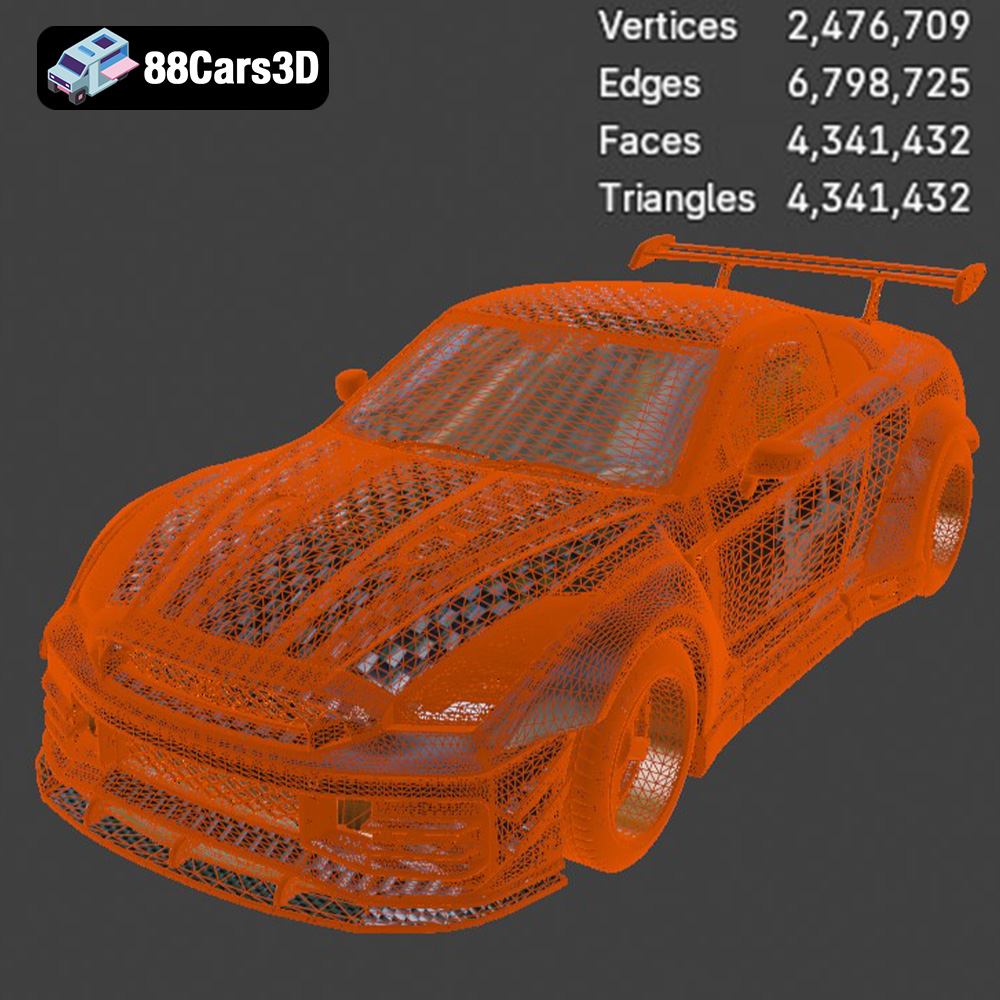
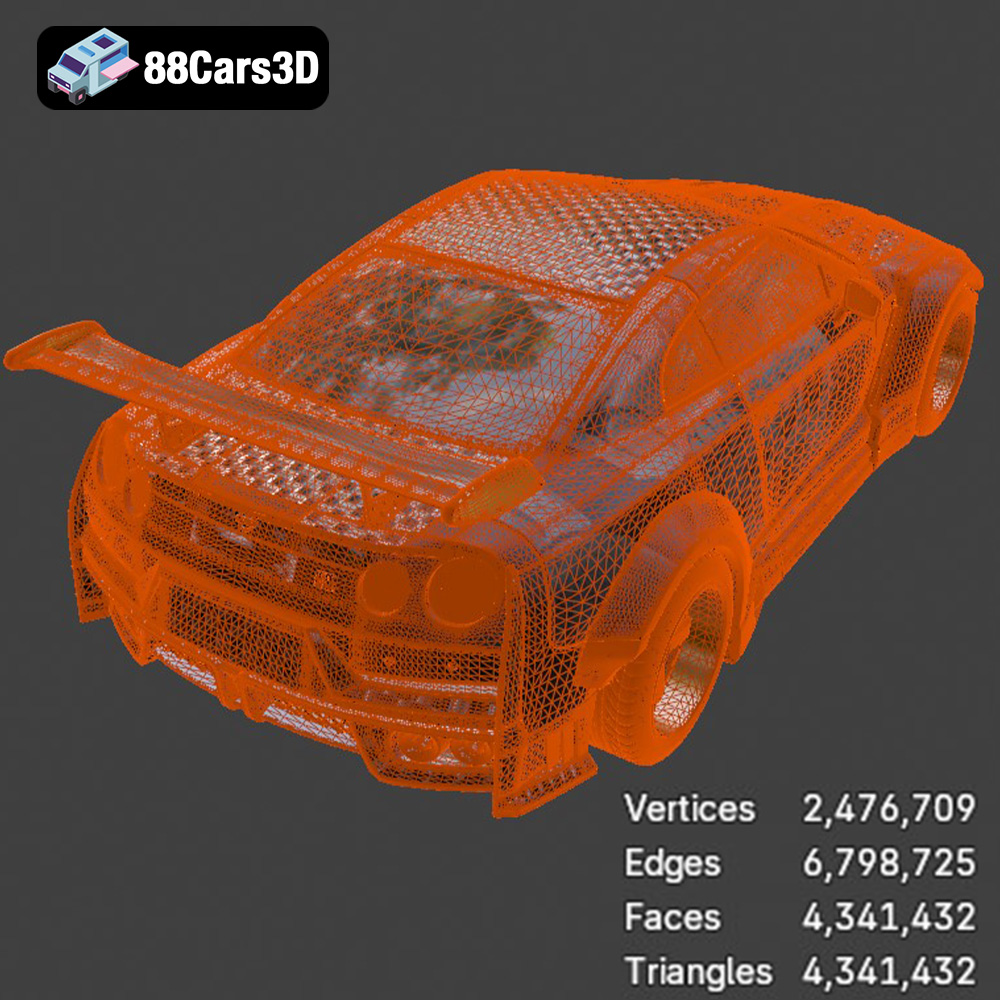
At the core of any high-quality 3D model is its geometry. The Nissan GTR R35 Nismo 3D Model boasts exceptionally clean geometry, typically characterized by quad-based topology. This ensures smooth deformations during animation, efficient subdivision for varying levels of detail, and predictable light interaction. Clean topology also simplifies the process of creating additional mesh details or modifying existing structures without introducing artifacts.
Equally critical are the texturing and UV mapping. Modern rendering relies heavily on Physically Based Rendering (PBR) workflows, which use texture maps (Albedo/Base Color, Normal, Roughness, Metallic, Ambient Occlusion, etc.) to define surface properties. The Nissan GTR R35 Nismo model comes with realistic materials and high-resolution textures that accurately capture the subtleties of automotive finishes, from the deep gloss of the paint to the intricate patterns of carbon fiber. Efficient UV layouts are essential for texture clarity and for minimizing seams. A well-laid-out UV map maximizes texture space, prevents stretching, and facilitates the baking of lightmaps and other environmental data, crucial for both rendering and real-time applications.
The detailed interior, intricate wheel designs, and carbon fiber aero components mentioned in the product description all point to a model where every polygon and pixel has been placed with exacting precision, adhering to professional standards for realism and performance.
In professional production environments, time is a critical resource. Developing a highly detailed, accurate 3D car model from scratch can take hundreds of hours of expert labor, involving extensive blueprint research, meticulous modeling, UV unwrapping, texturing, and material setup. This is where pre-built, professional-grade assets from marketplaces like 88cars3d.com become indispensable.
By integrating a ready-to-use asset like the Nissan GTR R35 Nismo 3D Model, studios and individual artists can dramatically reduce their production timelines and costs. Instead of spending valuable time on foundational modeling, they can immediately pivot to creative tasks such as scene composition, lighting design, animation, or game logic implementation. The guarantee of optimized polygon structure, realistic materials, and cross-software compatibility (via the comprehensive file formats) means less troubleshooting and more creative output. This efficiency allows projects to stay on schedule and within budget, enabling artists to focus on refining their artistic vision rather than wrestling with technical roadblocks. Ultimately, investing in high-quality 3D car models accelerates the entire production pipeline, leading to superior results faster.
The digital automotive landscape demands assets that are not only visually stunning but also technically robust and versatile across myriad applications. From the hyper-realistic demands of cinematic rendering to the performance-critical environments of game development, and the innovative frontiers of AR/VR, the foundation of any successful project lies in the quality of its 3D models.
The Nissan GTR R35 Nismo 3D Model stands as a testament to this philosophy, offering a meticulously crafted digital asset that embodies precision, performance, and unparalleled compatibility. Its clean geometry, realistic materials, and extensive range of file formats—from .blend and .max for comprehensive editing to .fbx and .unreal for game engines, .glb for web-based AR/VR, and .stl for 3D printing—ensure it seamlessly integrates into any professional workflow. This asset isn’t just a model; it’s a powerful tool that empowers artists and developers to bring their creative visions to life with efficiency and fidelity.
Whether you’re an automotive visualization specialist, a game developer, or an AR/VR innovator, the Nissan GTR R35 Nismo 3D Model from 88cars3d.com offers a robust solution for your high-quality 3D car models needs. It’s an investment in detail, compatibility, and ultimately, the success of your next digital venture. Explore the possibilities and elevate your projects with professional-grade assets found at 88cars3d.com.
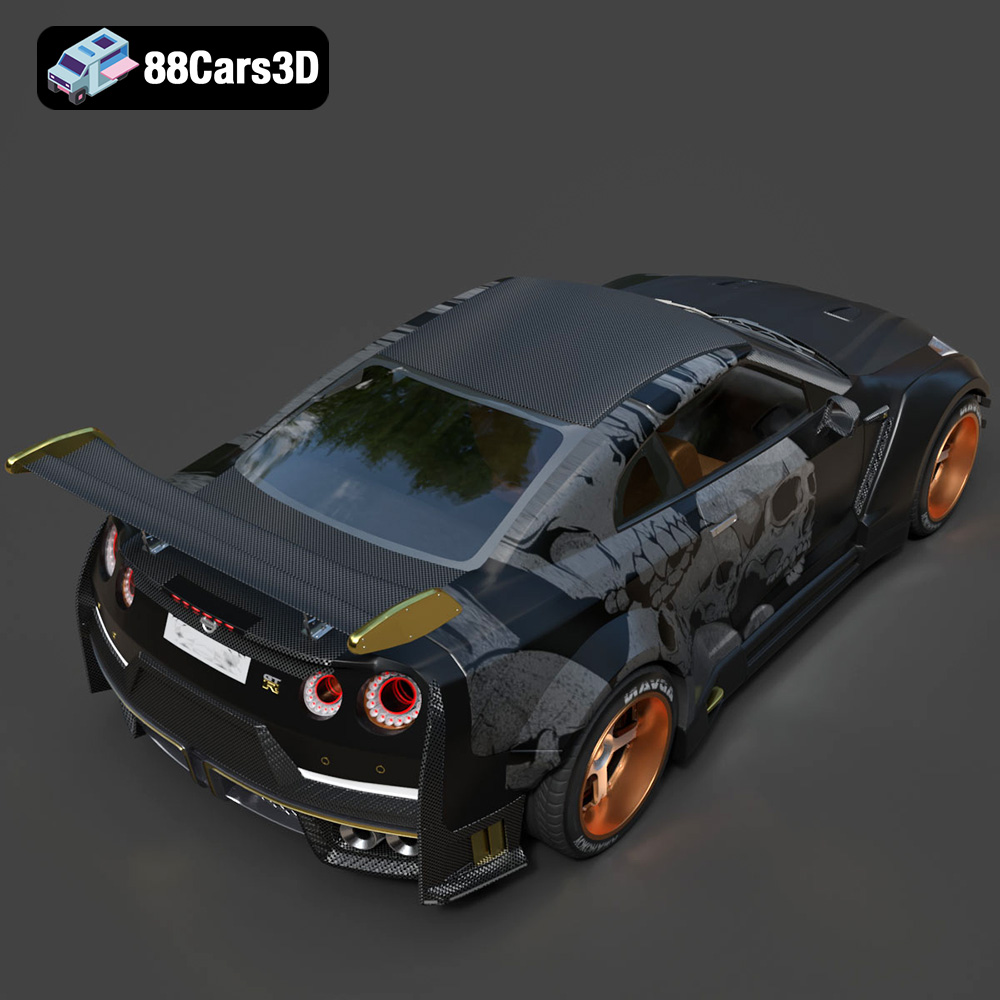
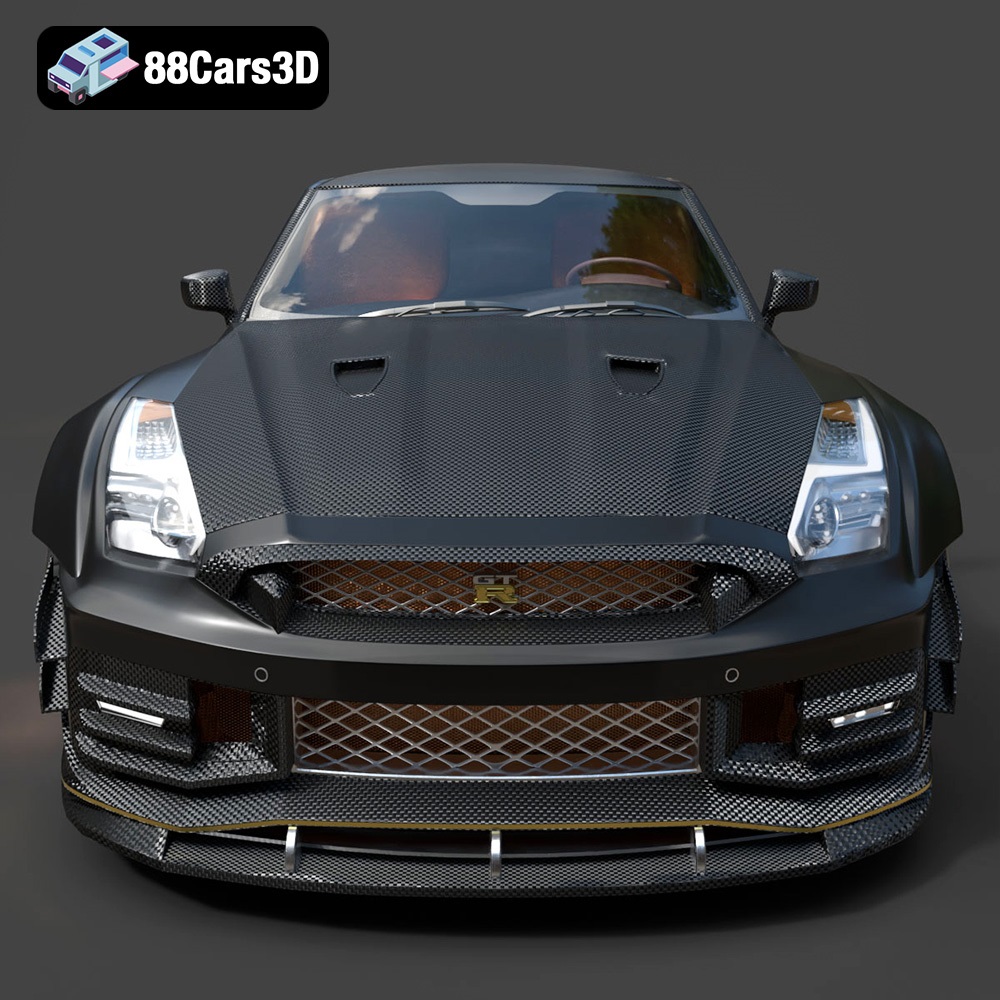
Experience the precision and performance of a legendary track-focused vehicle with the Nissan GTR R35 Nismo 3D Model. Crafted with meticulous attention to detail, this digital asset perfectly captures the aggressive aerodynamics, widened stance, and iconic design language of the real-world counterpart. The authentic proportions and realistic exterior styling make it an essential addition to any professional digital automotive library.
This model boasts exceptionally clean geometry and is equipped with realistic materials to ensure a seamless integration into your projects. Built to professional standards, the optimized polygon structure guarantees efficient performance across various digital platforms without compromising visual fidelity. Every element, from the carbon fiber aero components to the intricate wheel designs and fully modeled interior, has been constructed with exacting precision.
Ideal for a multitude of applications, this vehicle asset is tailored for seamless use in game development, cinematic automotive rendering, immersive AR/VR experiences, and technical visualization. Its versatility and accurate scaling ensure it functions flawlessly in physics simulations and interactive showroom displays.
The package provides a comprehensive suite of file formats to guarantee full compatibility with your preferred creative software:
$19.99
.arvr
.blend
.car3dmodel
.coupe
.fbx
.gameasset
.glb
.gtr
.max
.nismo
.nissan
.obj
.ply
.r35
.rendering
.simulation
.sportsCar
.stl
.supercar
.unreal