Get 50% OFF All Premium 3D & STL Models!

In the rapidly evolving landscape of digital visualization, the demand for unparalleled realism and technical precision in 3D assets has never been higher. From breathtaking cinematic sequences and immersive game environments to cutting-edge architectural visualizations and interactive AR/VR experiences, the quality of your 3D models forms the bedrock of your project’s success. Automotive design, in particular, thrives on exacting detail, where every curve, reflection, and material finish contributes to the overall authenticity. This is where truly professional 3D car models become indispensable, bridging the gap between imagination and a compelling digital reality.
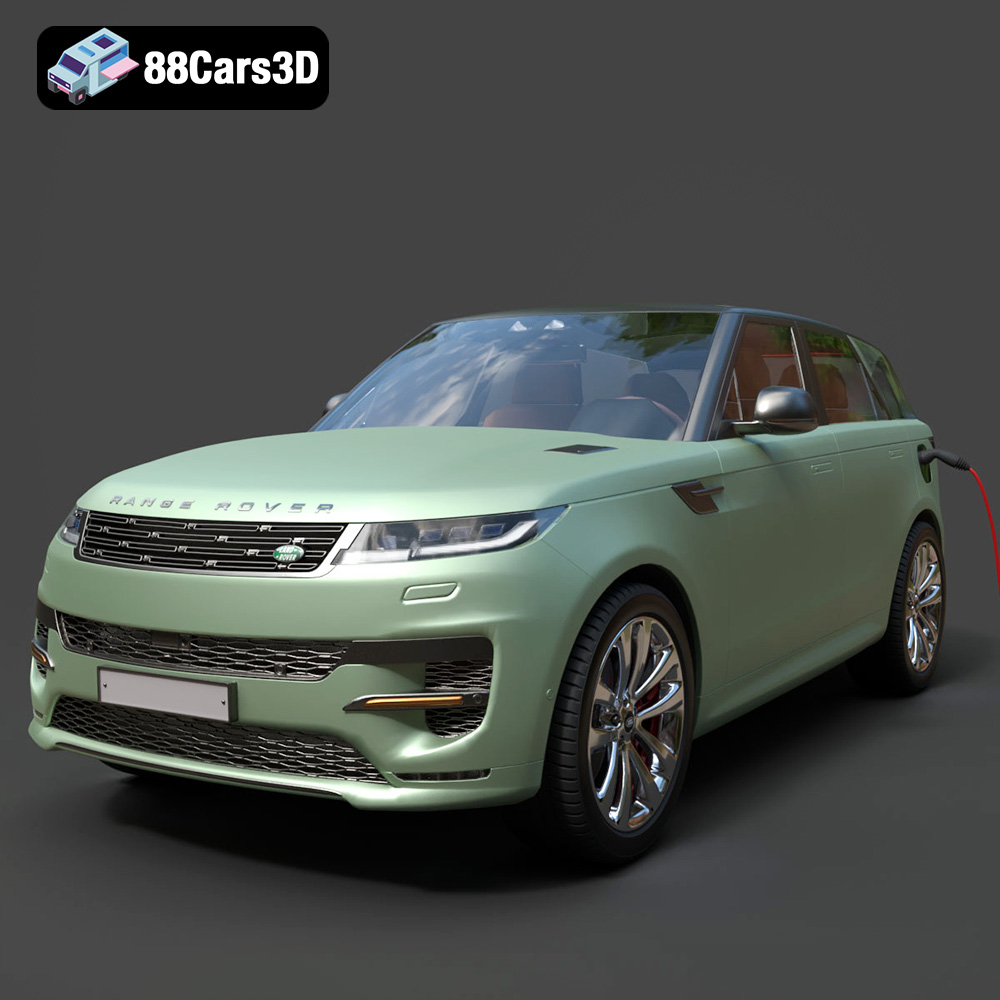
Among the standout examples of such craftsmanship is the Range Rover Sport Hybrid PHEV 2023 3D Model. This exceptional asset provides a ready-to-integrate solution for professionals seeking to elevate their projects with a vehicle that embodies both sophisticated design and advanced technology. Its meticulous detailing and thoughtful construction are precisely what allow creators to achieve photorealistic results and seamless integration into diverse digital pipelines.
The versatility and utility of a 3D model are often defined by the file formats it supports. Each format serves a specific purpose, optimized for different software environments, use cases, and stages of a production pipeline. Understanding these distinctions is crucial for anyone working with 3D car models, ensuring compatibility, efficiency, and optimal performance across projects. The Range Rover Sport Hybrid PHEV 2023 3D Model, for instance, comes equipped with a comprehensive suite of formats, catering to virtually every professional need.
The .blend file is Blender’s native project format, containing not just the mesh data but also materials, textures, lighting setups, camera positions, animations, and even scripts. For users deeply integrated into the Blender ecosystem, a .blend file offers the most comprehensive and editable starting point. It allows for direct manipulation of every aspect of the scene, making it ideal for customization, re-lighting, and extending the model’s functionality within Blender. When you receive a .blend file with materials and lighting pre-configured, it means you can often render high-quality images almost immediately after opening, significantly accelerating your workflow.
.fbx (Filmbox) is arguably the most widely used proprietary 3D exchange format, developed by Autodesk. Its strength lies in its ability to store not just geometry and material data, but also complex animation data, skeletal rigs, and even camera and light information. This makes it a gold standard for transferring assets between different 3D applications and, critically, for game development engines like Unreal Engine and Unity. The .fbx format is designed for efficiency and broad compatibility, making it an essential component for any real-time pipeline where performance and consistent asset transfer are paramount. Professional 3D car models destined for games almost always include an .fbx version.
The .obj (Wavefront OBJ) format is one of the oldest and most universal 3D file formats. It’s a simple, text-based format that primarily stores geometry (vertices, normals, UVs, and faces) and references external material files (.mtl). While it doesn’t support animation or rigging, its widespread support across virtually all 3D software makes it an excellent choice for basic mesh exchange and archiving. If you need to import a model into an obscure or specialized software package, .obj is often your safest bet, ensuring that the core geometric data remains intact and accessible.
.glb (GL Transmission Format Binary) is the binary version of glTF (Graphics Language Transmission Format). It’s a relatively newer, royalty-free format designed specifically for the efficient transmission and loading of 3D scenes and models in web and AR/VR applications. .glb files encapsulate all necessary data (geometry, materials, textures, animation) into a single file, making them incredibly streamlined for quick loading and display in browsers or mobile AR environments. Its optimization for real-time graphics makes it perfect for interactive product configurators, virtual showrooms, and augmented reality experiences.
The .stl (Stereolithography) format is the industry standard for 3D printing and rapid prototyping. It describes only the surface geometry of a 3D object using a mesh of triangular facets, without any color, texture, or material information. While not suitable for rendering or animation, an .stl file is crucial if your project requires physical fabrication or proof-of-concept models. High-quality 3D car models often include an .stl option for those who wish to produce miniature replicas or utilize them for physical design validation.
.ply (Polygon File Format) is another format for storing 3D data, particularly useful for scanned data, scientific visualizations, and applications where precise vertex and face information, along with additional properties like color, transparency, and normal vectors, are crucial. It can store complex topological data and is often used in fields like computer graphics research, CAD, and 3D scanning. For highly analytical or technical applications of 3D car models, .ply provides a robust data structure.
The .unreal file (or more accurately, a set of assets packaged for Unreal Engine) signifies that the model is pre-configured and optimized for direct import and use within Unreal Engine. This often means textures are properly packed, materials are set up with PBR (Physically Based Rendering) workflows, collision meshes might be included, and LODs (Levels of Detail) could be pre-generated. This level of preparation saves immense time for game developers and real-time visualization artists, allowing them to drop the asset into their scene and immediately begin working without extensive re-configuration.
Similar to .blend for Blender, the .max file is the native project format for Autodesk 3ds Max. It contains all aspects of a 3ds Max scene, including geometry, materials, lighting, cameras, animations, and render settings. For professionals working primarily in 3ds Max for architectural visualization, high-end rendering, or automotive design studios that rely on Autodesk products, the .max file offers the most flexibility for editing, re-texturing, re-lighting, and integrating the model into existing 3ds Max projects. It ensures full access to the original model’s hierarchy and properties.
The provision of such a comprehensive array of formats, exemplified by the Range Rover Sport Hybrid PHEV 2023 3D Model available at 88cars3d.com, is a testament to its professional-grade quality and versatility, enabling seamless integration into virtually any production pipeline.
The Range Rover Sport Hybrid PHEV 2023 3D Model is not merely a collection of polygons; it’s a meticulously crafted digital twin that captures the essence of its real-world counterpart. Its design reflects a deep understanding of automotive aesthetics and technical requirements, making it an invaluable asset for any project demanding high-fidelity vehicles.
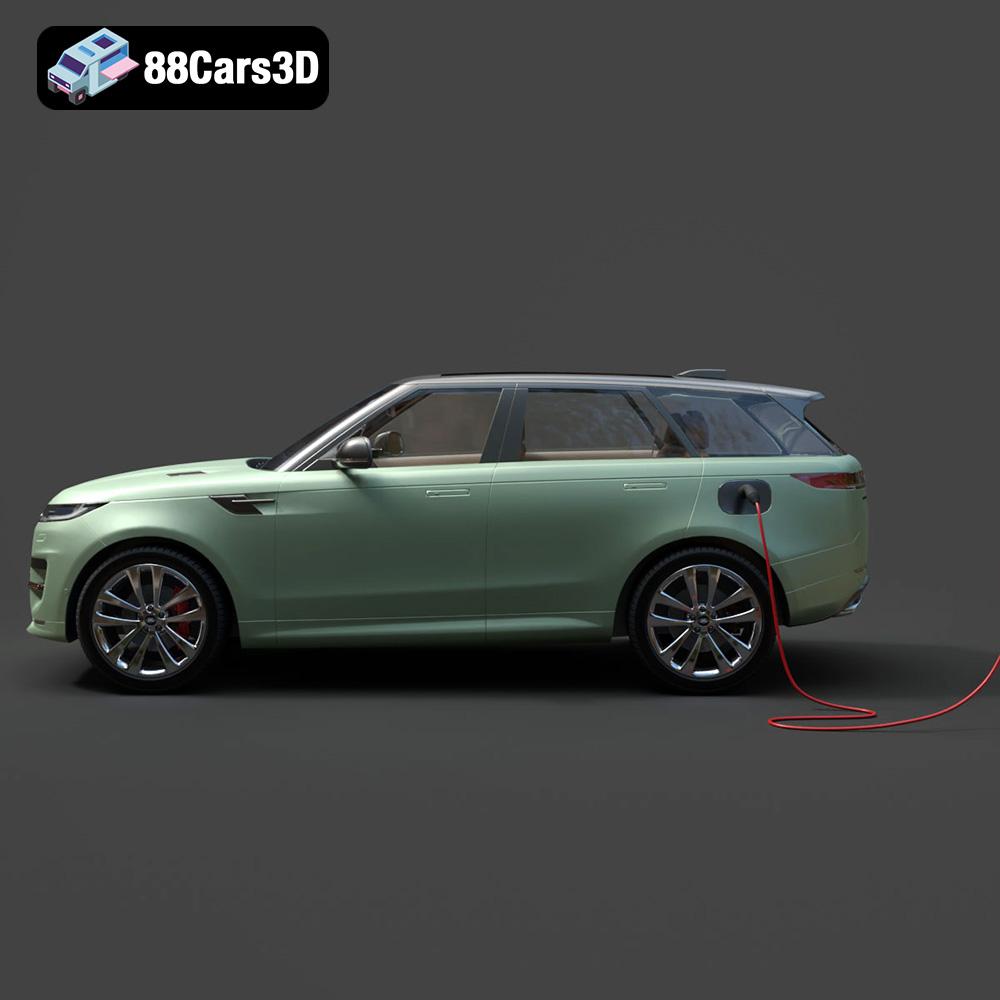
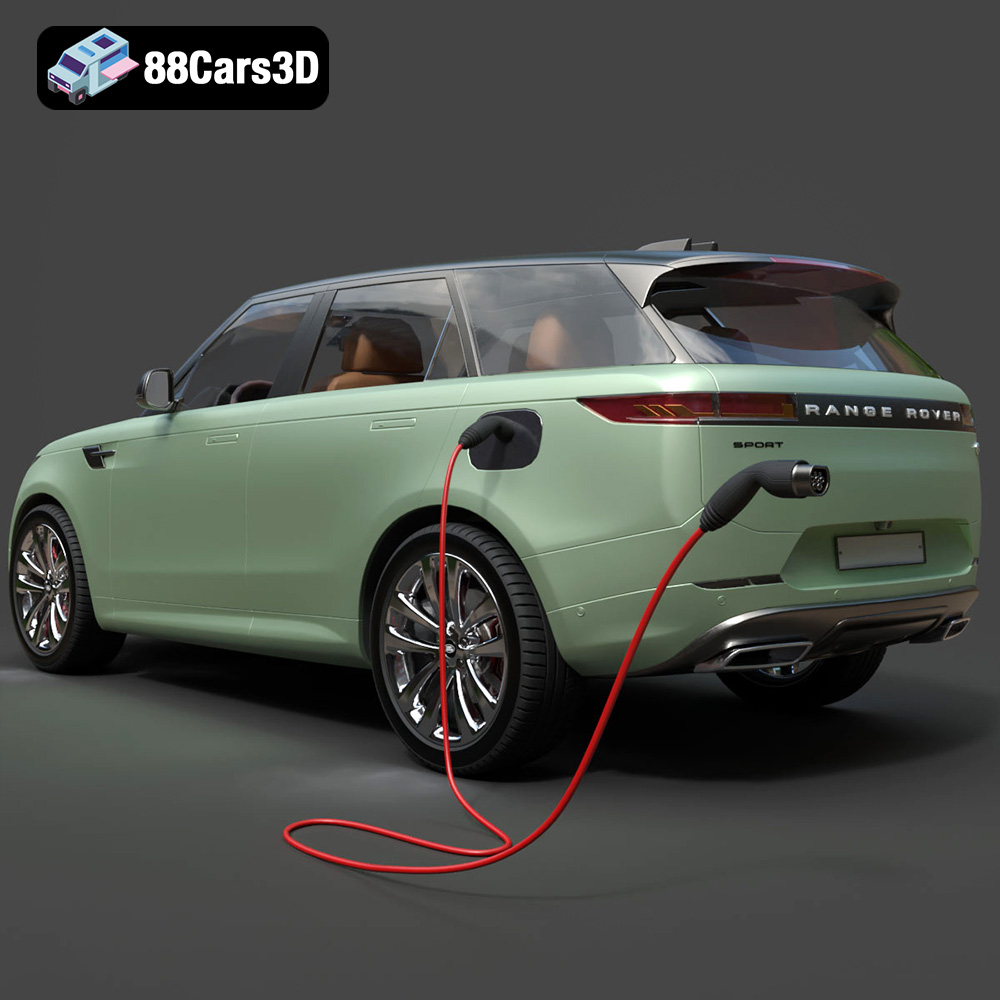
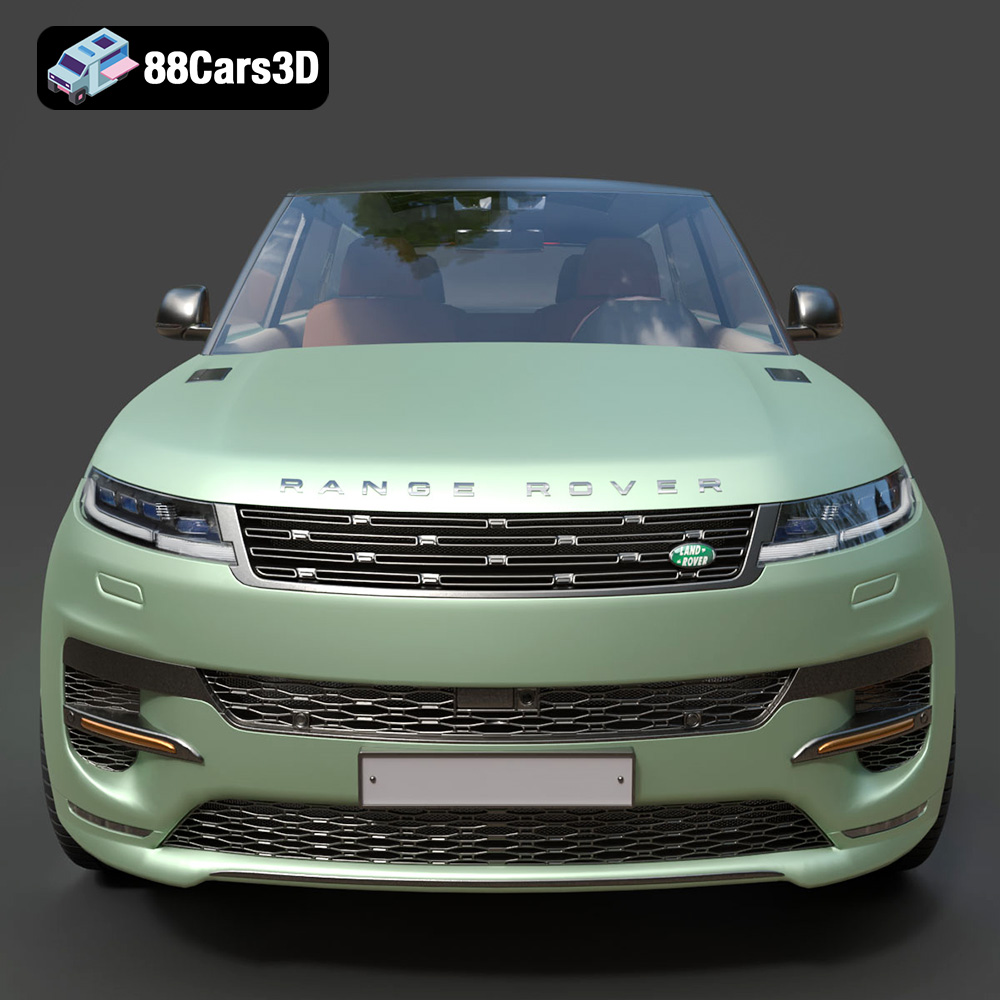
The exterior of this Range Rover model is a showcase of precision. From the iconic grille and sleek headlamps to the flowing body lines and aerodynamic elements, every aspect has been accurately modeled. The dynamic stance of the vehicle, a hallmark of the Range Rover Sport, is perfectly preserved, conveying a sense of power and elegance even in a static digital form. This level of detail is critical for close-up renders, cinematic shots, and any scenario where the vehicle is the primary focus, ensuring that shadows fall correctly and reflections behave realistically across its sculpted surfaces.
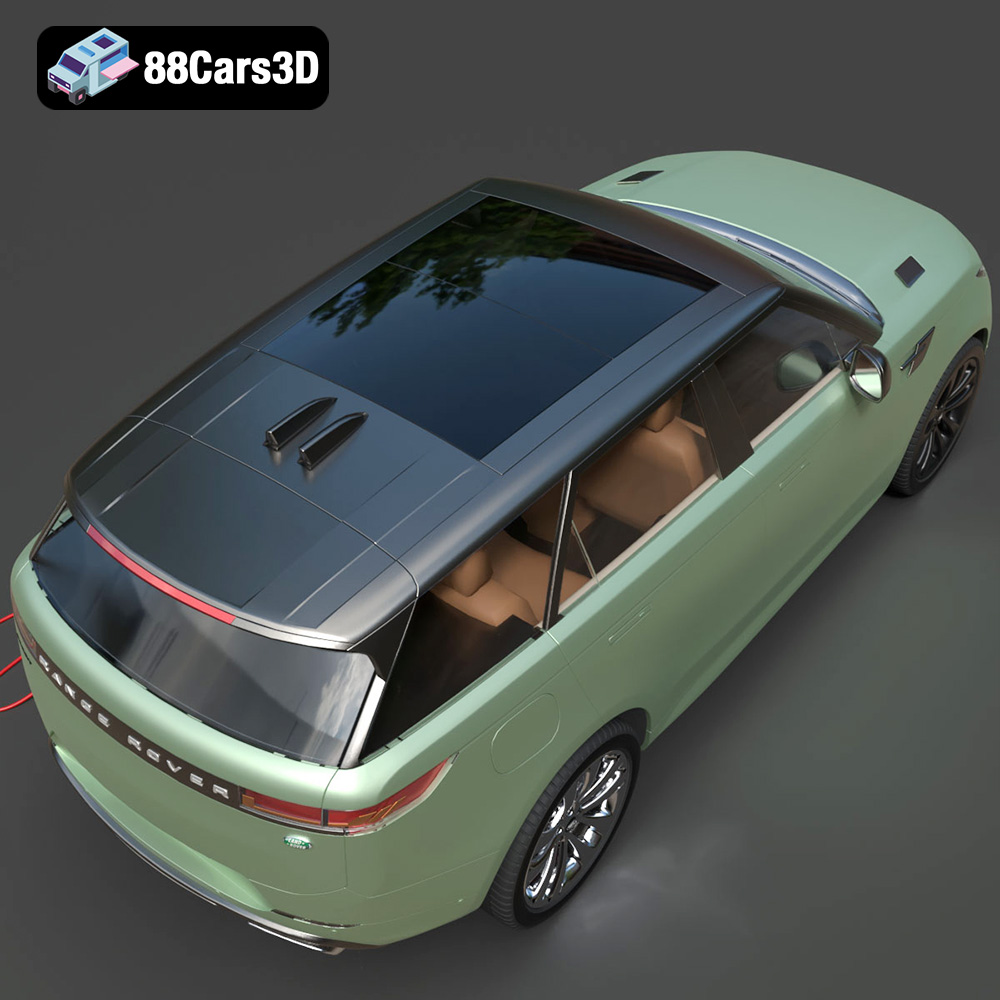
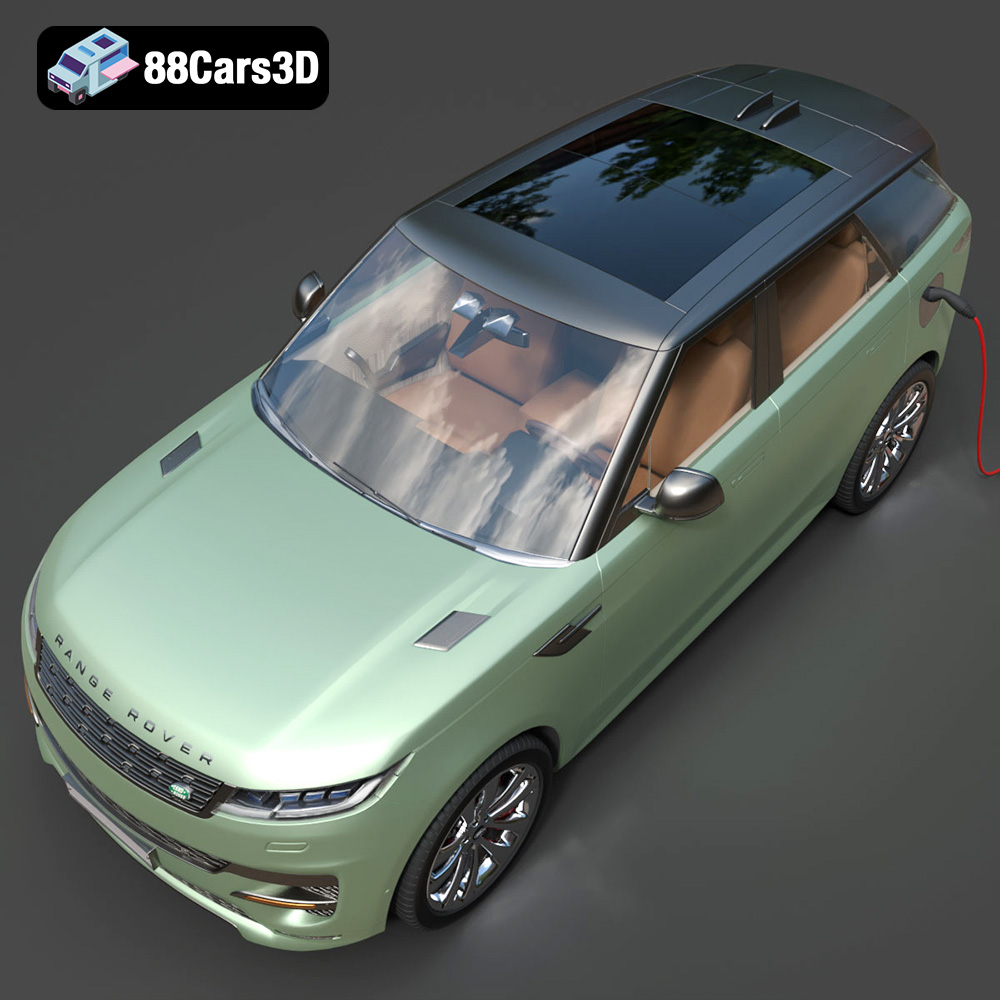
Unlike many 3D car models that provide only exterior detail, this Range Rover Sport Hybrid PHEV 2023 3D Model features a fully modeled interior. This is a game-changer for immersive experiences like AR/VR walkthroughs, interior renders, or driving simulations. Dashboards, seating, steering wheel, infotainment systems, and even intricate door panel details are accurately recreated. This allows for camera angles that peer inside the vehicle, enhancing storytelling and providing a more complete and believable digital environment. The attention to interior detail speaks volumes about the model’s professional quality and readiness for high-end applications.
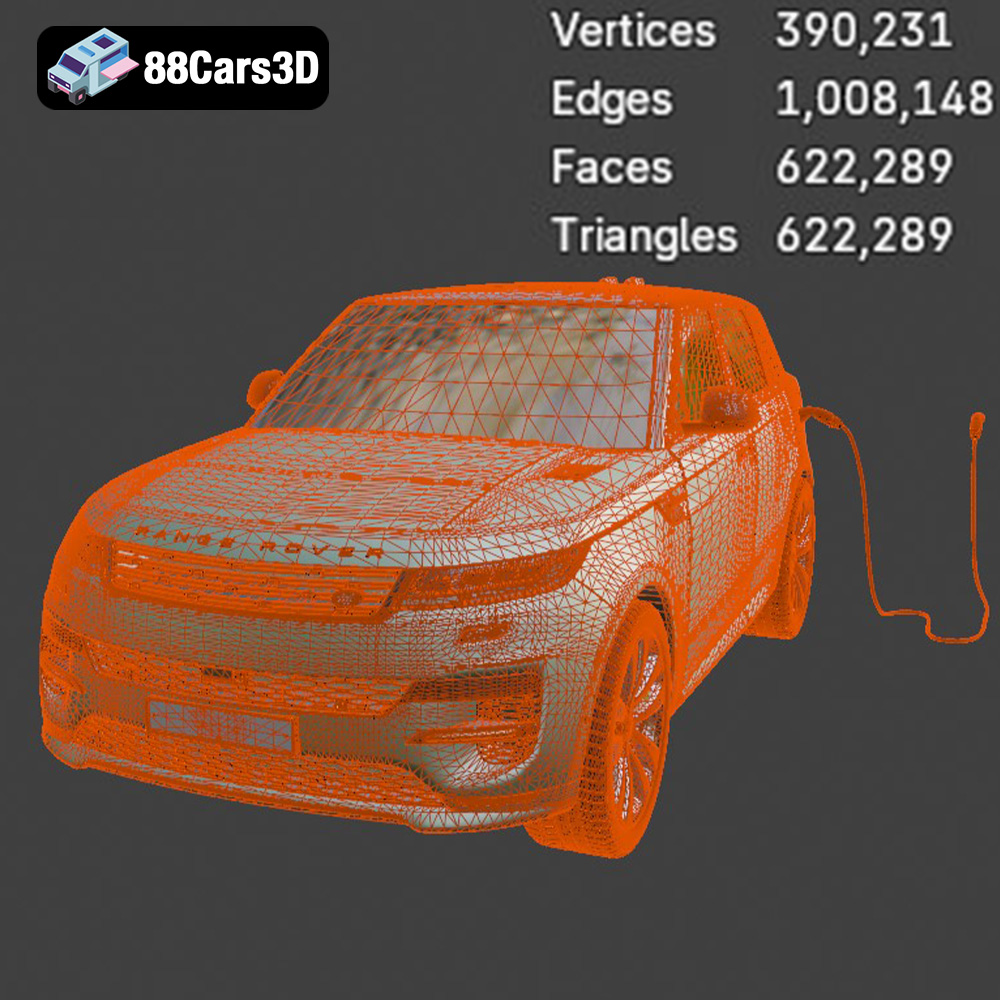
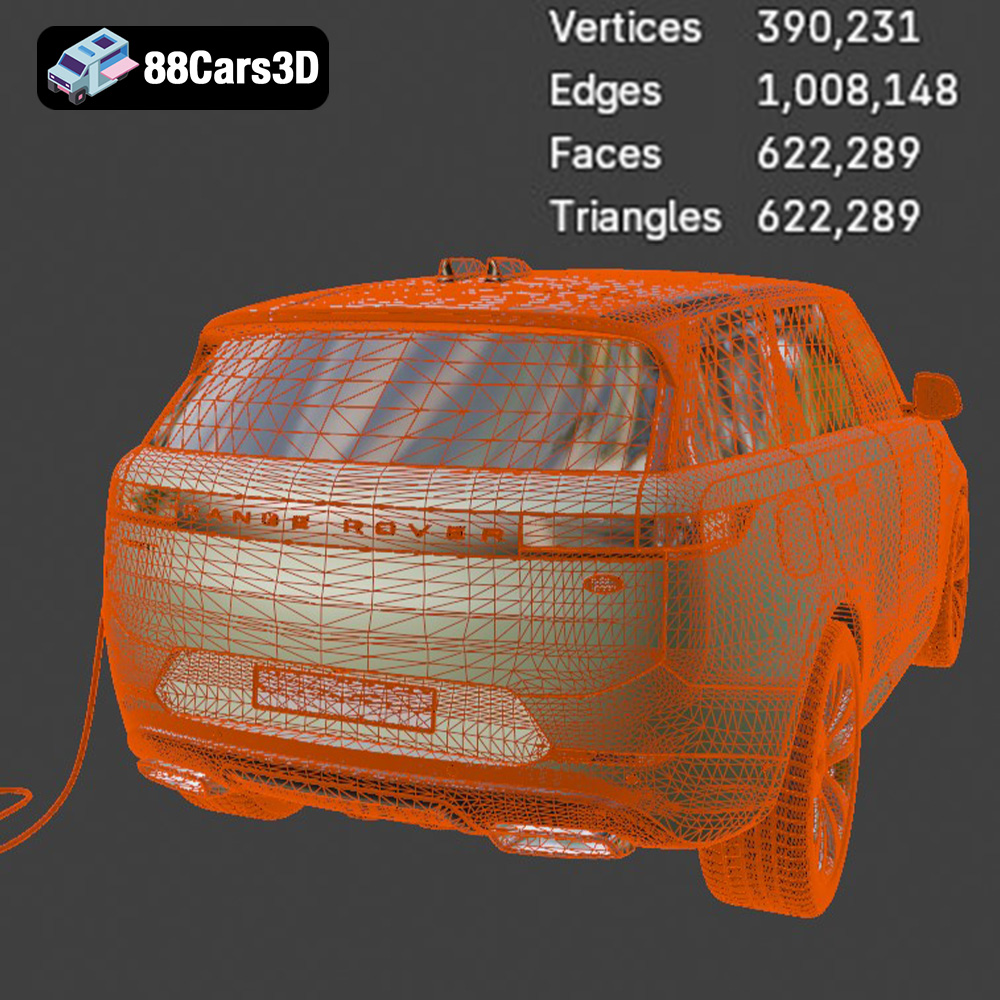
Underpinning the visual fidelity is clean geometry and professional-grade polygon topology. This technical foundation is crucial for optimal performance and flexibility. Clean topology means the mesh is well-organized, with quadrilaterals predominantly used, facilitating smooth subdivision, deformation, and UV unwrapping. This prevents rendering artifacts, ensures predictable deformation for animation, and makes the model easy to edit or optimize if necessary. Poor topology can lead to shading issues, difficulty in texturing, and inefficient performance, making professional models like this Range Rover Sport model a worthy investment.
The model comes fully equipped with realistic materials and detailed textures. This means it’s ready for rendering right out of the box, with physically accurate shaders that respond to light in a convincing manner. Paint finishes exhibit proper reflectivity and clear coat effects, tires have appropriate displacement for tread patterns, and interior fabrics and leathers show realistic grain and specularity. High-resolution textures, correctly mapped using optimized UV layouts, ensure that details remain sharp even in close-up shots, contributing significantly to the photorealistic potential of the asset. This meticulous material and texture work drastically reduces setup time for artists and designers.
The versatility of the Range Rover Sport Hybrid PHEV 2023 3D Model makes it suitable for a wide array of professional applications. Its robust construction and included file formats ensure smooth integration into various industry-standard pipelines, empowering artists and developers to achieve their creative visions.
For high-end automotive rendering, particularly in advertising, product visualization, and design reviews, 3ds Max remains a dominant force. With the included .max file, artists can seamlessly import the Range Rover model into their scenes. The professional topology and pre-configured materials are perfect for rendering with engines like V-Ray or Corona Renderer. Designers can quickly set up studio lighting environments, HDRIs, and complex shaders to produce photorealistic images and animations that showcase the vehicle’s design, paint finishes, and intricate details with unparalleled accuracy. This allows marketing teams to generate stunning visuals long before a physical prototype exists.
The demand for realistic vehicles in modern video games is immense. The .fbx and .unreal formats supplied with this Range Rover model are specifically tailored for game development. Developers can import the model into Unreal Engine or Unity, utilizing its clean geometry and optimized textures. For Unreal Engine users, the dedicated .unreal asset often means materials are already PBR-ready, and potential LODs (Levels of Detail) are in place, crucial for performance optimization in real-time environments. This significantly reduces the time spent on asset preparation, allowing teams to focus on gameplay mechanics and environmental design while having access to a visually stunning and performance-friendly vehicle asset.
In architectural visualization (ArchViz), vehicles are essential for populating scenes, providing scale, context, and a sense of realism. Placing a high-quality 3D car model like the Range Rover Sport Hybrid PHEV 2023 into an urban street scene, a driveway of a luxury home, or a showroom greatly enhances the overall realism and narrative. Its detailed exterior and interior mean that it looks convincing from any angle, whether it’s a distant background element or a foreground feature. The various file formats ensure compatibility with popular ArchViz software, making it an ideal choice for adding life and dynamism to architectural renders.
The burgeoning fields of Augmented Reality (AR) and Virtual Reality (VR) demand highly optimized yet visually rich 3D assets. The .glb format, optimized for web and AR/VR, makes this Range Rover model perfect for creating interactive showrooms, virtual test drives, or immersive product configurators. Developers can build compelling simulations where users can explore the vehicle’s interior and exterior, change colors, or interact with features in a truly immersive digital space. The clean geometry and efficient textures ensure smooth performance, preventing motion sickness and providing a fluid user experience.
Achieving both stunning realism and optimal performance in 3D projects requires a deep understanding of technical specifications. The Range Rover Sport Hybrid PHEV 2023 3D Model is built with these considerations in mind, making it a valuable foundation for demanding workflows.
While the product description highlights “professional-grade polygon topology,” actual polygon counts can vary depending on the level of detail. For game assets, managing polygon count is paramount. High-end models often begin with a very dense mesh for rendering, then are systematically optimized with LODs (Levels of Detail) for real-time applications. LODs are simplified versions of the model that swap in based on distance from the camera, drastically improving performance without sacrificing visual quality up close. A professional 3D car model provides a clean base mesh that allows developers to easily generate their own LODs or may even include pre-made LODs in game-ready formats like .fbx or .unreal, ensuring smooth performance across various hardware specifications.
Effective UV mapping is the invisible hero behind realistic texturing. Clean, non-overlapping UVs are essential for applying high-resolution textures without distortion. The Range Rover Sport model’s “detailed textures” imply that its UVs are meticulously laid out, allowing for seamless application of PBR (Physically Based Rendering) maps like albedo, roughness, metallic, normal, and ambient occlusion. High texture resolutions (e.g., 4K or even 8K for primary surfaces) ensure crisp details, from the weave of carbon fiber trim to the subtle imperfections on a paint surface, crucial for photorealistic automotive rendering.
The “realistic materials” mentioned in the description indicate adherence to a PBR workflow. This is the industry standard for achieving consistent and physically accurate shading across different lighting conditions and rendering engines. PBR materials simulate how light interacts with surfaces in the real world, relying on maps that define properties like base color, metallicness, roughness, and normal information. This ensures that whether rendered in Blender, 3ds Max, or real-time in Unreal Engine, the Range Rover Sport model will look consistent and believable, with materials responding correctly to environmental lighting.
While primarily a static model for rendering and visualization, a well-constructed 3D car model with clean geometry also lays the groundwork for rigging and animation. Independent moving parts such as doors, wheels, and steering components can be easily isolated and pivoted for opening, turning, or suspension animations. If required for advanced simulations or animated sequences, the professional topology of the Range Rover Sport allows for efficient rigging, enabling realistic suspension compression, wheel rotation, and body roll, adding another layer of dynamic realism to any project.
The practical applications of a high-fidelity 3D car model like the Range Rover Sport Hybrid PHEV 2023 are vast and impactful across various industries. Such assets are not just artistic creations; they are powerful tools driving innovation and efficiency.
Before a physical vehicle even rolls off the assembly line, 3D models are instrumental in generating stunning marketing materials. Automakers use these models for concept reveals, advertising campaigns, and online configurators. The Range Rover Sport model, with its photorealistic qualities, can be rendered in various virtual environments, showcasing different color options, wheel designs, and interior trims, providing potential customers with a detailed preview. This drastically reduces the cost and time associated with traditional photography and filming, while offering unparalleled creative flexibility.
The clean geometry and ready-to-use formats make this Range Rover model ideal for developing interactive configurators on websites or in showrooms. Customers can virtually “build” their dream car, selecting options and seeing them rendered in real-time. Beyond sales, these models are critical for training simulators used by dealerships for sales staff or by emergency services for driver training. Simulators offer a safe and cost-effective way to practice driving scenarios, leveraging realistic 3D car models for an immersive learning experience.
In the entertainment industry, 3D car models are a staple for visual effects (VFX) in films, television shows, and commercials. Whether it’s for creating impossible stunts, replicating vehicles for crowd scenes, or integrating them into futuristic environments, high-quality models are essential. The Range Rover Sport Hybrid PHEV 2023 3D Model could be seamlessly integrated into a digital set extension, animated for a chase scene, or even used for digital doubles in dangerous sequences, providing filmmakers with immense creative freedom without the logistical constraints and costs of physical vehicles.
The world of 3D visualization thrives on detail, accuracy, and efficiency. Investing in high-quality 3D car models is not just about aesthetics; it’s about empowering professionals to achieve their creative and technical goals with confidence. The Range Rover Sport Hybrid PHEV 2023 3D Model exemplifies this principle, offering an asset that combines meticulous design, professional-grade technical construction, and unparalleled versatility across a myriad of applications.
From rendering breathtaking marketing visuals in 3ds Max, to populating immersive game worlds in Unreal Engine, or crafting cutting-edge AR/VR experiences, this model provides the necessary foundation. Its comprehensive file format support ensures that creators, regardless of their preferred software or project type, can seamlessly integrate and leverage its capabilities. For those seeking to elevate their digital automotive projects, 88cars3d.com offers a curated selection of premium 3D models, where assets like the Range Rover Sport Hybrid PHEV 2023 stand ready to transform visions into stunning digital realities. It’s an indispensable asset for anyone serious about top-tier automotive rendering and game assets.
The Range Rover Sport Hybrid PHEV 2023 3D Model brings an incredible level of realism to your digital projects. Accurately modeled to reflect the sophisticated design and dynamic stance of the real vehicle, this asset features a meticulously detailed exterior and a fully modeled interior.
Designed with clean geometry and professional-grade polygon topology, this model ensures optimal performance across various platforms. It comes fully equipped with realistic materials and detailed textures, allowing for seamless integration into complex scenes without the need for extensive adjustments.
This versatile 3D asset is perfectly suited for a wide array of applications, including game development, architectural visualization, cinematic rendering, AR/VR experiences, and automotive simulations.
The following file formats are included:
Tags: .rangerover, .landrover, .sporthybrid, .phev, .sport, .suv, .hybrid, .luxurycar, .car3dmodel, .rendering, .simulation, .gameasset, .arvr, .blend, .fbx, .obj, .glb, .stl, .ply, .unreal, .max
Tags:
.rangerover, .landrover, .sporthybrid, .phev, .sport, .suv, .hybrid, .luxurycar, .car3dmodel, .rendering, .simulation, .gameasset, .arvr, .blend, .fbx, .obj, .glb, .stl, .ply, .unreal, .maxMercedes Benz CLS 500 3D Model 3D Printable STL
$19.99
.arvr
.blend
.car3dmodel
.fbx
.gameasset
.glb
.hybrid
.landrover
.luxurycar
.max
.obj
.phev
.ply
.rangerover
.rendering
.simulation
.sport
.sporthybrid
.stl
.unreal
SUV