Get 50% OFF All Premium 3D & STL Models!

In the dynamic world of 3D visualization, game development, and industrial design, the demand for high-fidelity, meticulously crafted 3D models is ever-present. Professionals across various sectors continuously seek assets that not only look stunning but are also technically robust, optimized, and ready for integration into complex workflows. From stunning cinematic renders to immersive virtual reality experiences, the foundation of any compelling digital project lies in the quality of its core assets. This is especially true for intricate subjects like vehicles, where precise detailing and accurate proportions are paramount.
The need for production-ready 3D car models is a cornerstone for automotive design studios, advertising agencies, game developers, and architectural visualization artists. They require models that can withstand close-up scrutiny, perform efficiently in real-time engines, and adapt seamlessly to different rendering pipelines. This pursuit of perfection often leads artists to dedicate countless hours to modeling, texturing, and optimizing. However, a smarter approach involves leveraging pre-existing, high-quality assets designed by experts, allowing creators to focus their energy on creative direction and project execution rather than foundational modeling tasks. It’s in this context that models like the Volvo Trucks Benz GT-001 3D Model shine, offering a sophisticated blend of realism and technical efficiency tailored for demanding professional environments.
The versatility of a 3D model often hinges on the range and quality of its supported file formats. Each format serves a specific purpose, catering to different software ecosystems, project requirements, and output destinations. Understanding these distinctions is crucial for selecting the right model and ensuring a smooth workflow. The Volvo Trucks Benz GT-001 3D Model provides a comprehensive suite of formats, ensuring maximum compatibility and utility across various professional pipelines.
The .blend format is the native file type for Blender, a powerful and increasingly popular open-source 3D creation suite. A .blend file typically includes not just the raw mesh data, but also materials, textures, lighting setups, camera positions, animations, and even rigging information. For Blender artists, this format offers the most complete and editable scene. It allows for direct manipulation of every aspect of the model, from tweaking vertex positions to adjusting shader nodes, making it ideal for those who wish to customize the asset extensively or integrate it into an existing Blender project with minimal fuss. The inclusion of a fully editable Blender scene with materials and lighting ensures that users can immediately start rendering or modifying the Volvo Trucks Benz GT-001 within their preferred environment.
The .fbx (Filmbox) format, originally developed by Kaydara and now owned by Autodesk, has become one of the most widely adopted interchange formats in the 3D industry. It supports not only geometry and materials but also animations, rigs, cameras, and lights, making it incredibly robust for transferring complex scenes between different 3D applications and game engines like Unreal Engine and Unity. Its strength lies in its ability to encapsulate a wide array of data while maintaining a relatively efficient file size. When working with real-time pipelines, .fbx is often the go-to choice due to its optimization features and broad compatibility, ensuring assets like the Volvo Trucks Benz GT-001 can be seamlessly imported and used in interactive experiences or game development.
The .obj (Wavefront OBJ) format is one of the oldest and most universally supported 3D file formats. It is primarily known for storing geometry (vertices, normals, texture coordinates, and faces) and can link to an associated .mtl (material) file for basic material properties. While it doesn’t support advanced features like animation or rigging, its simplicity and widespread compatibility make it an excellent choice for static mesh transfer between almost any 3D software. For artists needing a clean mesh to start from, or for integrating into less common applications, the .obj format of the Volvo Trucks Benz GT-001 ensures maximum reach.
.glb (GL Transmission Format Binary) is the binary version of the glTF format, designed for efficient transmission and loading of 3D scenes and models by engines and applications. It’s quickly becoming the standard for 3D web content, AR (Augmented Reality), and VR (Virtual Reality) experiences due to its compact size, single-file nature (embedding textures and other assets), and support for PBR (Physically Based Rendering) materials. For interactive visualizations of the Volvo Trucks Benz GT-001 in a browser, or for integration into AR/VR apps, .glb offers superior performance and ease of deployment.
The .stl (Stereolithography) format is the de facto standard for 3D printing and rapid prototyping. It describes only the surface geometry of a 3D object as a collection of unconnected triangles. While it doesn’t store color or texture information, its simplicity makes it ideal for manufacturing processes where a physical representation of the digital model is required. If a user needs to physically prototype or print the Volvo Trucks Benz GT-001, the .stl file ensures compatibility with virtually all 3D printers and slicing software.
The .ply (Polygon File Format or Stanford Triangle Format) is another format for storing 3D data, particularly useful for capturing and storing 3D scanned data. It supports properties such as color, transparency, normals, texture coordinates, and even reliability information for each vertex and face. It’s often used in scientific, engineering, and CAD applications where precise mesh data and additional per-vertex/per-face properties are critical. For detailed analysis or specialized visualization tasks of the Volvo Trucks Benz GT-001, the .ply format offers a robust data structure.
The .unreal designation implies a model specifically prepared and optimized for direct import into Unreal Engine. While typically this would be an .fbx file configured correctly, some marketplaces offer actual project assets or pre-setup content. This format typically means materials are set up with Unreal’s Physically Based Rendering (PBR) pipeline, textures are correctly linked, and potentially even LODs (Levels of Detail) or collision meshes are included. This significantly streamlines the integration process for game developers or virtual production artists utilizing Unreal Engine, offering an immediate head start with the Volvo Trucks Benz GT-001.
The .max format is the native file type for Autodesk 3ds Max, a leading software in architectural visualization, motion graphics, and game development. Similar to .blend, a .max file contains the complete scene, including geometry, materials, lighting, cameras, animations, and render settings. For professionals working within the 3ds Max ecosystem, this format provides full editability and access to all model components, making it perfect for high-end rendering and detailed animation projects involving the Volvo Trucks Benz GT-001.
Automotive rendering demands an unparalleled level of detail and realism. Whether for marketing campaigns, product showcases, or design reviews, the visual fidelity of the vehicle model can make or break a project. The Volvo Trucks Benz GT-001 3D Model, available on 88cars3d.com, exemplifies the kind of asset that elevates automotive rendering to cinematic quality.
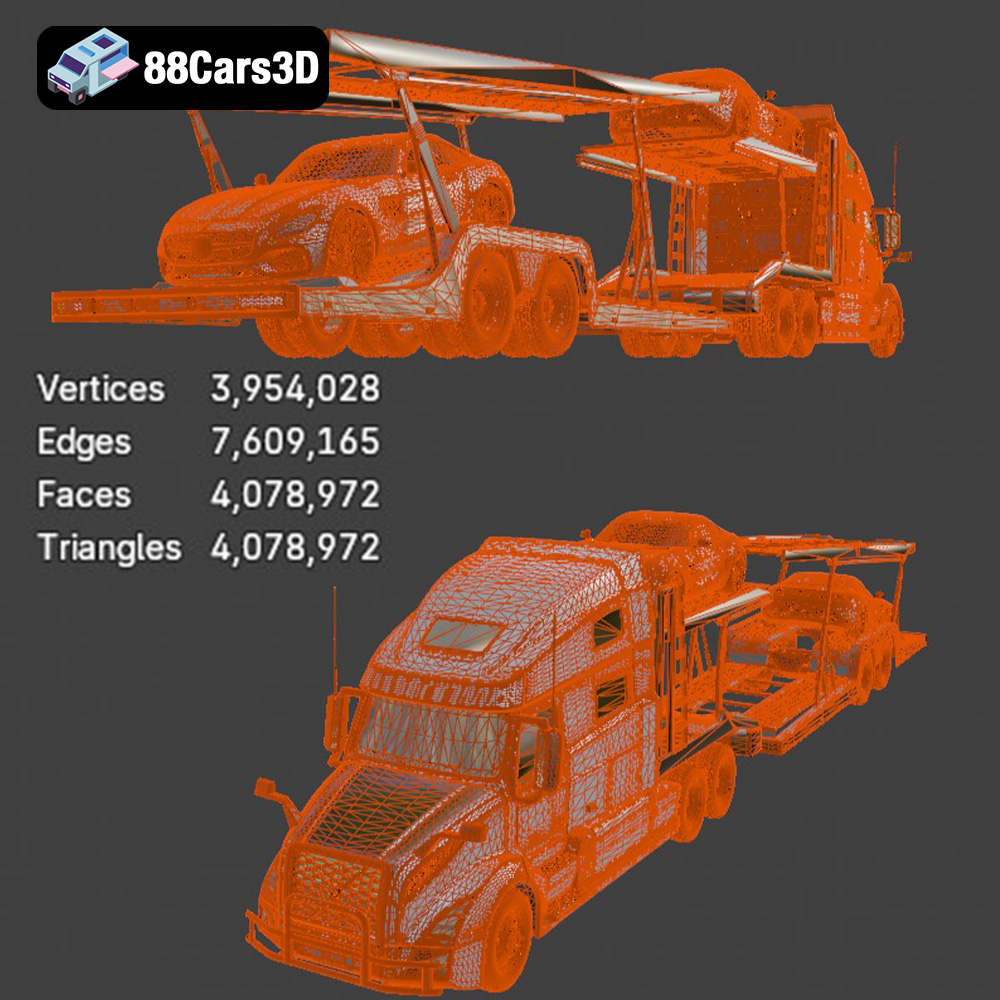
At the core of any high-quality render is clean, optimized geometry. The description of the Volvo Trucks Benz GT-001 highlights “clean geometry” and “authentic proportions,” which are critical. This means a well-structured mesh without unnecessary polygons, n-gons, or overlapping faces, ensuring smooth subdivisions and efficient rendering. Paired with realistic PBR (Physically Based Rendering) materials, which accurately simulate how light interacts with surfaces in the real world (using maps like Albedo, Normal, Roughness, Metalness, Specular, and Ambient Occlusion), the model can achieve breathtaking realism under various lighting conditions. These technical details translate directly into faster render times and more convincing visual output.
For artists working with industry-standard software like 3ds Max or Blender, the inclusion of native .max and .blend files simplifies the workflow immensely. In 3ds Max, for instance, users can open the scene, find the Volvo Trucks Benz GT-001 already set up with V-Ray or Corona materials, and integrate it directly into existing environments. They can manipulate the lighting, camera angles, and even add subtle animations to create dynamic visuals. Similarly, Blender users benefit from a pre-configured scene ready for Cycles or Eevee rendering, allowing for quick iteration and stunning results without the overhead of material conversion or UV remapping. This saves valuable production time and allows artists to focus on artistic direction rather than technical setup.
Achieving hyper-realistic automotive renders often involves sophisticated lighting and environment setups. With a model like the Volvo Trucks Benz GT-001, which features an accurately scaled and detailed design, artists can confidently place it within HDRI (High Dynamic Range Image) environments or construct custom studio lighting rigs. The model’s clean UV mapping ensures textures appear crisp and correctly aligned, allowing reflections and refractions to behave as expected on its surfaces. This level of preparation means studios can quickly produce high-impact visuals for clients, showcasing the vehicle in various scenarios, from a futuristic showroom to an open road landscape.
The real-time demands of game development and immersive AR/VR experiences introduce a different set of technical challenges. Performance is paramount, requiring models to be highly optimized without sacrificing visual quality. The Volvo Trucks Benz GT-001 3D Model is engineered to meet these rigorous requirements, making it an invaluable game asset.
In game development, managing polygon count is crucial for maintaining frame rates. While the Volvo Trucks Benz GT-001 is detailed, its “without unnecessary polygon overhead” design indicates thoughtful optimization. For truly demanding real-time scenarios, developers often implement Levels of Detail (LODs) – progressively simpler versions of the model that swap in as the camera moves further away. A well-constructed base model makes creating these LODs much easier. The model’s clean geometry is a perfect starting point for generating a robust LOD pipeline, ensuring consistent visual fidelity across varying distances.
The inclusion of .fbx and specific .unreal formats underscores the model’s readiness for leading game engines. For Unreal Engine, this means the asset is likely packaged with correctly assigned PBR materials, potentially even with material instances for easy color and property changes, and perhaps pre-built collision meshes. In Unity, the .fbx format imports seamlessly, allowing developers to set up materials, add interactive components, and integrate the truck into driving simulations or cinematic sequences. This pre-configuration significantly reduces the time and effort typically spent on asset preparation, allowing teams to quickly prototype and deploy interactive experiences featuring the Volvo Trucks Benz GT-001.
AR/VR projects and web-based 3D visualizations require highly optimized assets that load quickly and perform smoothly on diverse hardware. The .glb format, specifically designed for these contexts, makes the Volvo Trucks Benz GT-001 an ideal candidate. Whether developing a virtual showroom where users can explore the truck’s interior in VR, or creating an AR experience where the truck appears to sit on a real-world table, its optimized nature ensures a fluid, engaging user experience. The fully modeled interior further enhances its utility for first-person viewpoints in simulations and interactive setups.
What truly distinguishes a professional-grade 3D model from a basic one lies in its underlying technical quality. Beyond aesthetics, factors like topology, UV mapping, and material consistency dictate how versatile and “production-ready” an asset truly is. The Volvo Trucks Benz GT-001 3D Model sets a benchmark in these areas.
Good topology is the backbone of any deformable or subdivisible 3D model. It ensures that the mesh deforms predictably during animation and maintains its shape even when smoothed with subdivision surfaces. The “meticulously constructed” details and “clean geometry” of the Volvo Trucks Benz GT-001 suggest careful attention to edge flow, which means polygons are arranged logically to follow the contours and creases of the vehicle. This is crucial for high-fidelity renders where reflections need to appear smooth and unbroken, and for animations where parts might move or bend without artifacts.
Effective UV unwrapping is paramount for applying textures correctly and efficiently. The Volvo Trucks Benz GT-001 would feature well-organized UV layouts that minimize stretching and wasted texture space. This allows for the application of detailed PBR texture sets – including Albedo (color), Normal (surface detail), Roughness (micro-surface imperfections), Metalness (how metallic a surface is), and potentially emissive maps for lights. These textures, when combined with accurate materials, are what give the model its “exceptional digital realism,” making surfaces like paint, glass, and rubber react authentically to light.
The phrase “optimal performance across various platforms” is a key indicator of a truly professional asset. This isn’t just about low poly counts but about intelligent polygon distribution, efficient material setups, and potentially the inclusion of features like instances for repeated parts or well-defined mesh groups for modularity. A high-quality model is designed from the ground up to be scalable – capable of delivering stunning results in high-end cinematic renders while also being adaptable for real-time applications with minimal modification. This versatility makes the Volvo Trucks Benz GT-001 a cost-effective choice for studios with diverse project needs.
The utility of a robust 3D vehicle model extends far beyond static renders and interactive games. It forms the basis for complex simulations, virtual training scenarios, and even physical prototyping, opening up new avenues for its application.
For training simulators, autonomous vehicle testing, or logistics planning, accurate 3D models are indispensable. The “authentic proportions” and “functional features” of the Volvo Trucks Benz GT-001 make it suitable for these precise applications. In a simulation environment, accurate dimensions are critical for collision detection, pathfinding algorithms, and realistic physics interactions. A model with a fully modeled interior further enhances the realism for driver training or cabin layout evaluation, providing a truly immersive and effective virtual experience.
The inclusion of an .stl file format bridges the gap between the digital and physical realms. While designed for digital realism, the underlying clean geometry of the Volvo Trucks Benz GT-001 ensures a high-quality output for 3D printing. Designers can use this to create physical scale models for design reviews, aerodynamic testing (at a small scale), or simply as tangible representations of their digital work. This capability is invaluable in industrial design and automotive engineering, where rapid prototyping can significantly accelerate the design cycle and provide valuable tactile feedback.
The .ply format’s ability to store detailed polygon mesh data, including properties beyond just geometry, makes it valuable for analytical purposes. Engineers might use such a file to perform computational fluid dynamics (CFD) simulations, stress analysis, or detailed surface deviation inspections. The precision of the Volvo Trucks Benz GT-001 3D Model, represented in a format like .ply, means it can contribute to rigorous technical assessments, reinforcing its value as a tool for more than just visual appeal.
In today’s fast-paced creative industries, time is a critical commodity. Building a complex 3D model like a vehicle from scratch can consume hundreds of hours, diverting valuable resources from core creative tasks. This is where sourcing premium, production-ready assets like the Volvo Trucks Benz GT-001 3D Model from reputable marketplaces like 88cars3d.com offers a significant strategic advantage.
By investing in a high-quality, pre-built model, studios and individual artists can drastically cut down on production timelines. Instead of spending weeks on modeling, UV unwrapping, and initial texturing, they can immediately jump into scene composition, lighting, animation, and final rendering or engine integration. This reallocation of resources allows creative teams to focus on refining the artistic vision and delivering exceptional results under tighter deadlines, ultimately enhancing productivity and profitability.
Purchasing assets from a specialized platform like 88cars3d.com ensures a certain standard of quality. These models are typically crafted by experienced 3D artists who understand the technical requirements of various industries. This means consistent naming conventions, organized scene hierarchies, clean geometry, and properly prepared materials – all factors that contribute to a smooth integration and reliable performance. The Volvo Trucks Benz GT-001 3D Model embodies this professional standard, providing a dependable foundation for any project.
Access to a library of diverse, high-quality 3D car models empowers artists to explore more creative scenarios and tackle a wider range of projects. Whether it’s a futuristic concept truck, a classic car, or a modern sedan, having readily available assets allows for rapid prototyping of ideas and the ability to fulfill diverse client demands without proprietary modeling overhead. This flexibility is invaluable for studios looking to expand their service offerings and maintain a competitive edge.
The pursuit of digital realism and technical efficiency in 3D production is an ongoing journey. For professionals engaged in automotive rendering, game development, AR/VR experiences, or industrial visualization, the quality of their 3D assets is paramount. The Volvo Trucks Benz GT-001 3D Model stands out as an exemplary asset, meticulously crafted to meet and exceed these demanding professional standards. Its robust presence, intricate aesthetic, and fully modeled interior, combined with a comprehensive suite of industry-standard file formats – including .blend, .fbx, .obj, .glb, .stl, .ply, .unreal, and .max – ensure seamless integration into virtually any pipeline.
By providing clean geometry, authentic proportions, and realistic PBR materials, this model empowers artists to achieve stunning visual fidelity with optimal performance. Whether destined for a cinematic marketing campaign, an immersive game environment, or a precise 3D print, the Volvo Trucks Benz GT-001 offers the versatility and technical excellence required. Investing in such a high-caliber 3D model from a trusted source like 88cars3d.com is not just a purchase; it’s a strategic decision that saves time, ensures quality, and ultimately elevates the creative potential of any project.
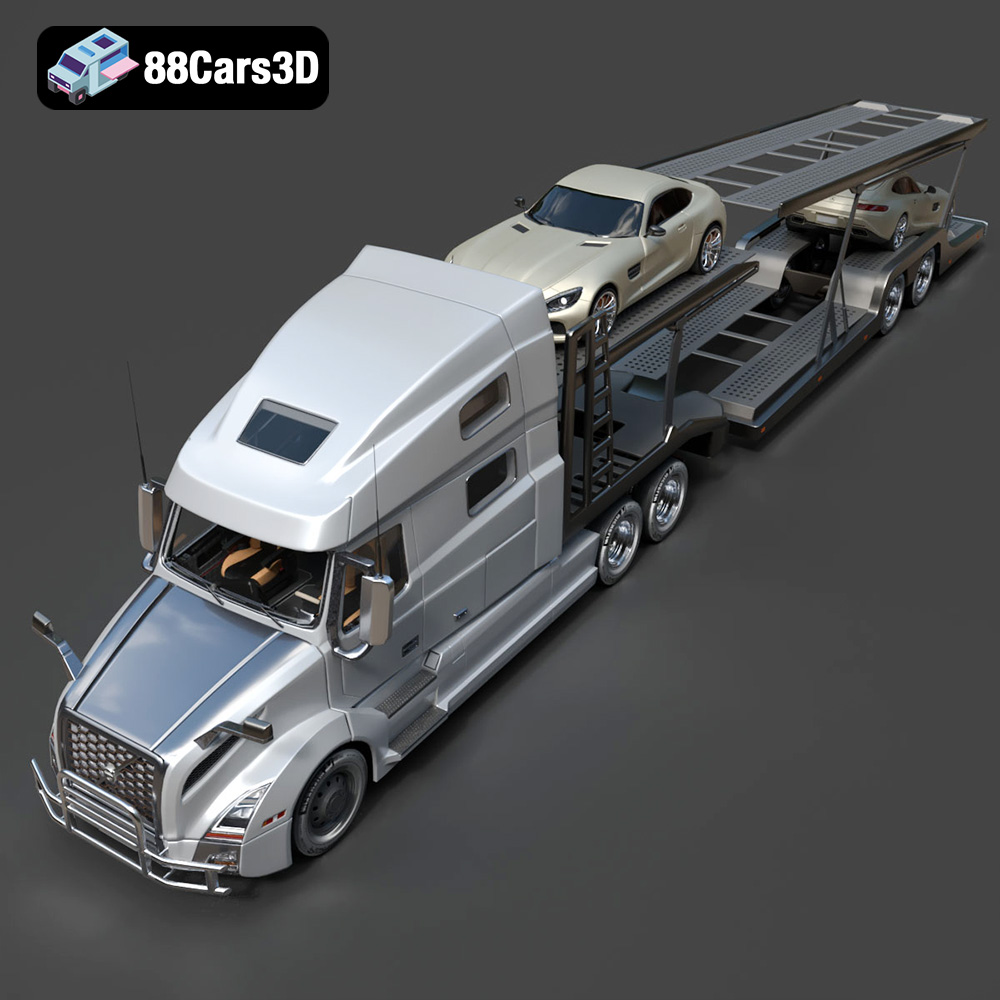
Discover exceptional digital realism with the Volvo Trucks Benz GT-001 3D Model, crafted for professionals seeking precision and accuracy in vehicle design. This model captures the robust presence and intricate aesthetic of the original vehicle, providing an incredible asset for your digital environment. Engineered with clean geometry, authentic proportions, and realistic materials, this model delivers a professional standard without unnecessary polygon overhead. Every detail is meticulously constructed to ensure optimal performance across various platforms. It perfectly highlights the modern design elements and functional features synonymous with premium truck concepts. Whether you are working on game development, creating cinematic rendering sequences, building interactive AR/VR experiences, or producing industrial visualizations, this versatile model provides the foundation you need. The inclusion of a fully modeled interior expands its utility for both external showcase shots and immersive first-person simulation setups. The package includes a comprehensive set of industry-standard file formats to guarantee seamless integration into any pipeline: .blend, .fbx, .obj, .glb, .stl, .ply, .unreal, .max.
$29.99
.arvr
.benz
.blend
.car3dmodel
.commercialvehicle
.concepttruck
.fbx
.gameasset
.glb
.gt001
.max
.obj
.ply
.rendering
.simulation
.stl
.truck
.unreal
.volvo
.volvotrucks