Get 20% OFF All Premium 3D & STL Models!

In the dynamic world of 3D visualization, the quality of your assets dictates the fidelity of your final output. From stunning cinematic renders to immersive real-time experiences, a meticulously crafted 3D model is the bedrock of success. Automotive design, in particular, demands an exceptional level of detail and accuracy. Recreating the complex curves, intricate interiors, and precise engineering of a vehicle requires not just artistic skill, but also a deep technical understanding of 3D pipelines and optimization.
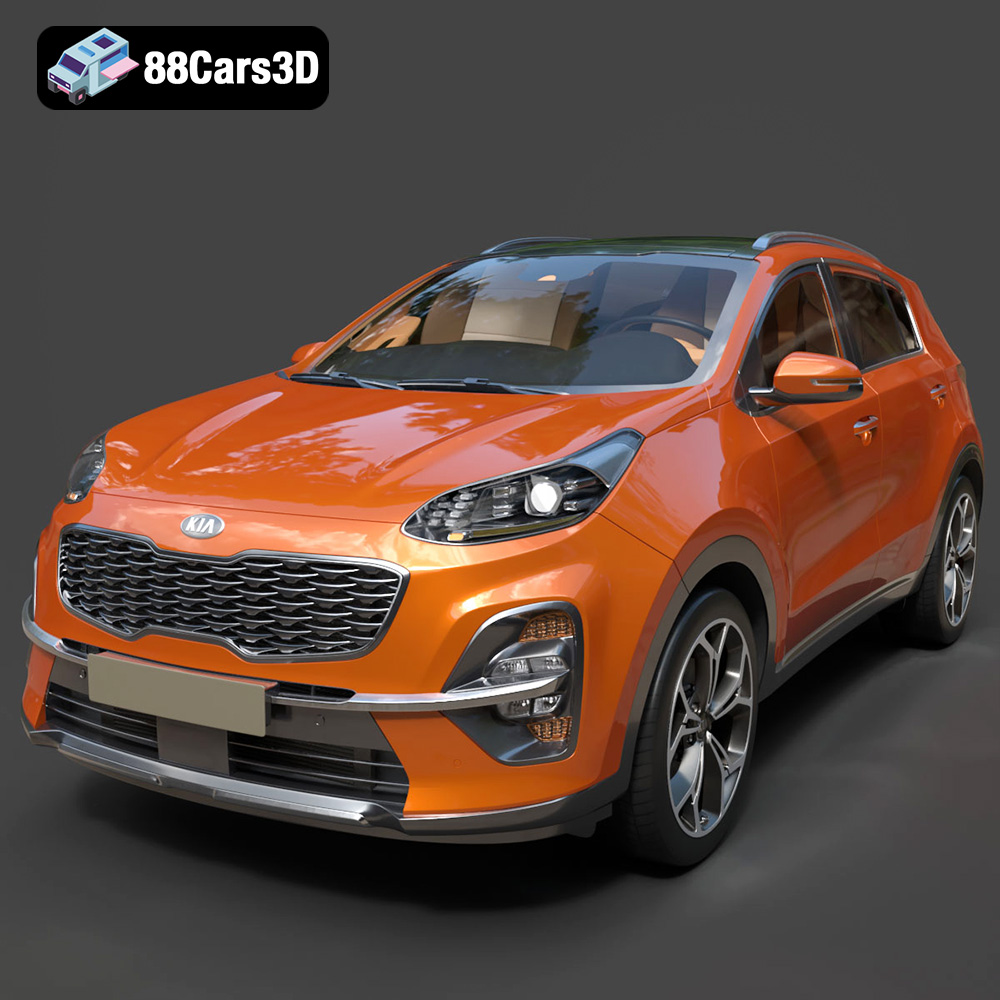
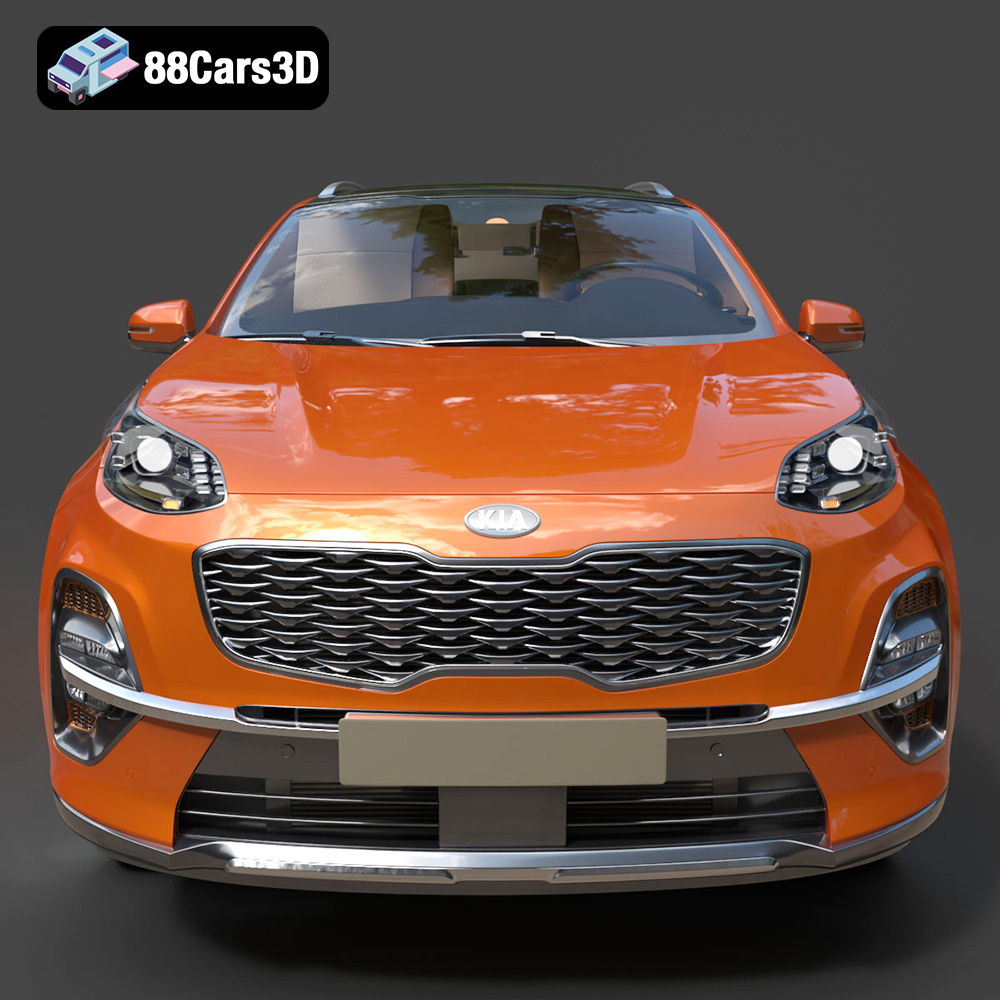
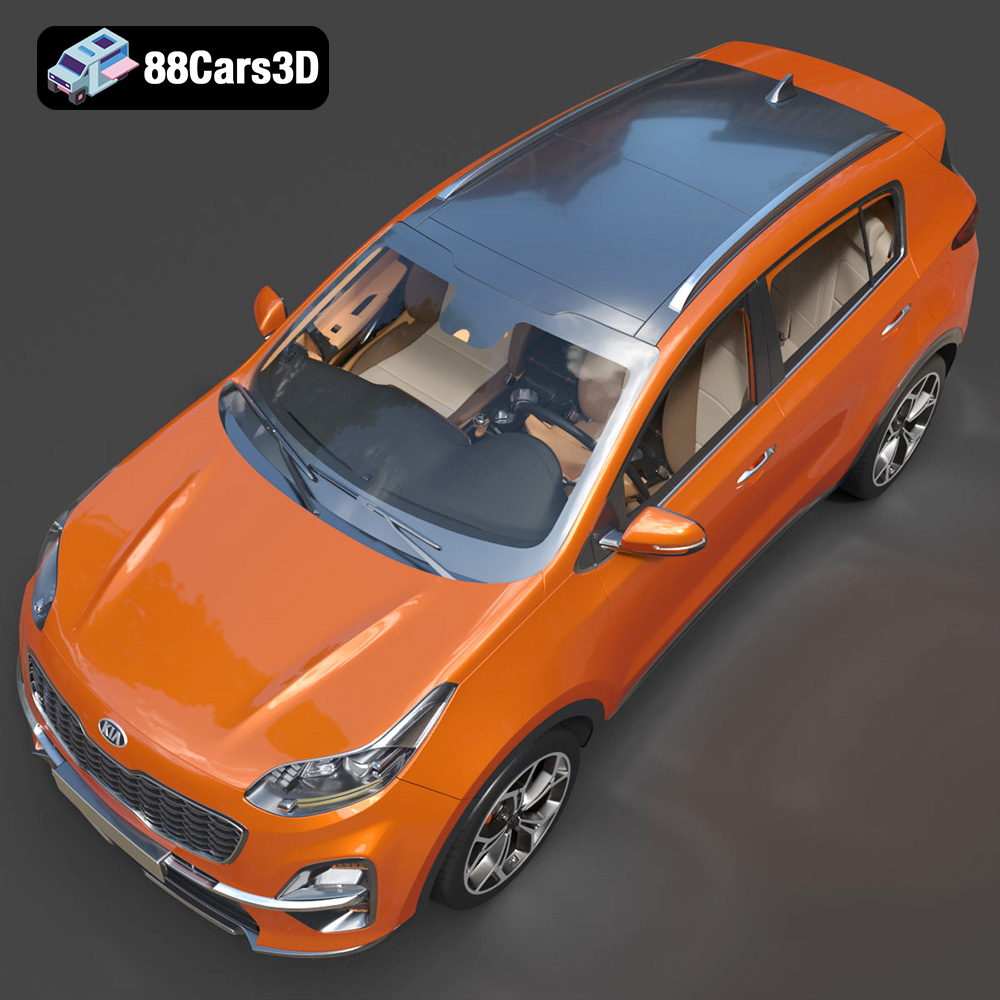
For professionals seeking to achieve unparalleled realism without the painstaking process of modeling from scratch, pre-made, high-quality 3D car models are invaluable. They offer a significant advantage, allowing artists and developers to jump straight into production with assets that meet rigorous industry standards. Consider the Kia Sportage 2019 3D Model – a prime example of an asset engineered for absolute precision, accurately representing the vehicle’s signature exterior design and intricate cabin elements. Its clean geometry, realistic materials, and optimized edge flow provide outstanding performance and accurate surface reflections, making it a versatile asset for a multitude of demanding applications. This model, like many others found on 88cars3d.com, empowers designers to focus on creativity and project delivery, rather than getting bogged down in foundational modeling.
The choice of a 3D model file format is critical, impacting everything from software compatibility and data integrity to rendering performance and specific application use cases. A professional 3D car model, such as the Kia Sportage 2019 3D Model, typically comes equipped with a suite of formats, each serving distinct purposes. Understanding these formats is paramount for any serious 3D artist or developer.
The .blend format is native to Blender, a powerful open-source 3D creation suite. When you receive a .blend file, you’re not just getting a model; you’re often getting a complete scene. This includes the fully editable mesh, carefully configured materials (PBR setups are common), textures, lighting, cameras, and even animation data. For those working within the Blender ecosystem, a .blend file offers maximum flexibility for modifications, scene integration, and leveraging Blender’s robust rendering engines like Cycles and Eevee. It’s the ideal starting point for detailed customizations and leveraging existing scene setups.
Autodesk’s .fbx (Filmbox) format has become the de facto standard for exchanging 3D data between different software applications and, crucially, for game engines like Unreal Engine and Unity. FBX excels at carrying complex scene data, including meshes, materials, textures, animations, skinning, and even camera and light information, with high fidelity. Its robustness makes it invaluable for real-time pipelines where consistent data transfer between modeling software (like 3ds Max or Maya) and game engines is essential. When optimizing for real-time, FBX allows for bake-down of complex materials and robust instance handling.
The .obj (Wavefront Object) format is one of the oldest and most widely supported 3D file formats. It’s a universal standard, compatible with virtually all 3D software. An OBJ file primarily stores geometry data (vertices, normals, texture coordinates, and faces) and references external material files (.mtl). While it lacks support for advanced features like animation or scene hierarchy, its simplicity and widespread compatibility make it an excellent choice for basic model exchange or when you need a clean mesh to start with in a new environment. For assets like the Kia Sportage 2019 3D Model, the .obj provides a solid base for cross-software integration.
.glb (GL Transmission Format Binary) is a relatively newer format, rapidly gaining traction for its efficiency and optimization for web-based 3D, augmented reality (AR), and virtual reality (VR) applications. GLB files are self-contained, embedding all textures and animations directly into a single binary file. This makes them incredibly lightweight and quick to load, perfect for streaming 3D content in browsers or deploying to mobile AR/VR platforms. Its PBR (Physically Based Rendering) material support ensures consistent visual quality across different platforms.
The .stl (Stereolithography) format is the standard for 3D printing. It represents a 3D model as a series of connected triangles, defining only the surface geometry without color, texture, or other advanced properties. While not suitable for rendering or animation, its simplicity and ubiquitous support in slicing software make it indispensable for physical prototyping and manufacturing. For those interested in creating physical models of the Kia Sportage 2019, the .stl variant provides a print-ready mesh.
.ply (Polygon File Format, or Stanford Triangle Format) is often used for storing 3D data from 3D scanners, CAD software, and scientific applications. It supports various properties like color, transparency, surface normals, and even confidence values. While less common in general rendering pipelines, its ability to store precise mesh information makes it valuable for specialized engineering, analysis, and detailed visualization where geometric accuracy is paramount.
The inclusion of an .unreal file (or specific Unreal Engine project assets) signifies a model optimized and often pre-configured for direct use within Unreal Engine. This typically means the model has been imported, materials set up using Unreal’s PBR system, LODs (Levels of Detail) generated, and collision meshes created. Such assets significantly reduce setup time for game developers and real-time visualization artists, ensuring the model performs optimally within the engine’s environment. The Kia Sportage 2019 3D Model’s .unreal package exemplifies this commitment to streamlined game development.
Native to Autodesk 3ds Max, the .max format holds a complete 3ds Max scene. Similar to .blend, it offers full editability, retaining all modifiers, complex material graphs, lighting setups, and animation data. 3ds Max is a powerhouse for architectural visualization, product rendering, and animation, making the .max file indispensable for studios that rely on its advanced features and robust rendering capabilities like V-Ray or Corona Renderer. For professionals leveraging 3ds Max for their automotive rendering projects, the Kia Sportage 2019 3D Model’s .max file is a ready-to-render solution.
Automotive rendering is a specialized discipline that marries artistic vision with technical precision. Achieving photorealism in a virtual car model requires a deep understanding of lighting, materials, and camera optics. High-quality 3D car models, such as those found on 88cars3d.com, are built from the ground up to excel in this demanding environment.
The visual appeal of any 3D car model largely hinges on its materials. For professional rendering, Physically Based Rendering (PBR) workflows are non-negotiable. This means creating materials that accurately simulate how light interacts with surfaces in the real world. For the Kia Sportage 2019 3D Model, this translates to metallic flake paints that shimmer under light, realistic rubber textures for tires, clear glass that refracts light correctly, and various interior finishes like plastics, leathers, and fabrics with appropriate roughness and specular values. Clean UV mapping is crucial here, ensuring that textures wrap seamlessly and without distortion, allowing for intricate details like panel gaps and logos to appear crisp and realistic.
Just as in photography, lighting can make or break an automotive render. Professional setups often utilize HDRI (High Dynamic Range Image) environments combined with targeted area lights to simulate complex real-world lighting conditions – from sunlit showrooms to moody evening streets. The camera’s perspective, focal length, and depth of field are also carefully controlled to accentuate the car’s design, highlight its features, and evoke a desired emotion. When working with a pre-built model like the Kia Sportage 2019, artists can immediately focus on these critical artistic elements, rather than spending hours on model preparation. They can experiment with different studio setups or outdoor scenes, knowing the underlying geometry and materials are robust enough to handle diverse lighting scenarios.
Game development presents a unique set of challenges for 3D assets, primarily revolving around performance optimization and real-time rendering. A high-quality 3D car model, destined for a game engine, must balance visual fidelity with polygon efficiency and engine compatibility.
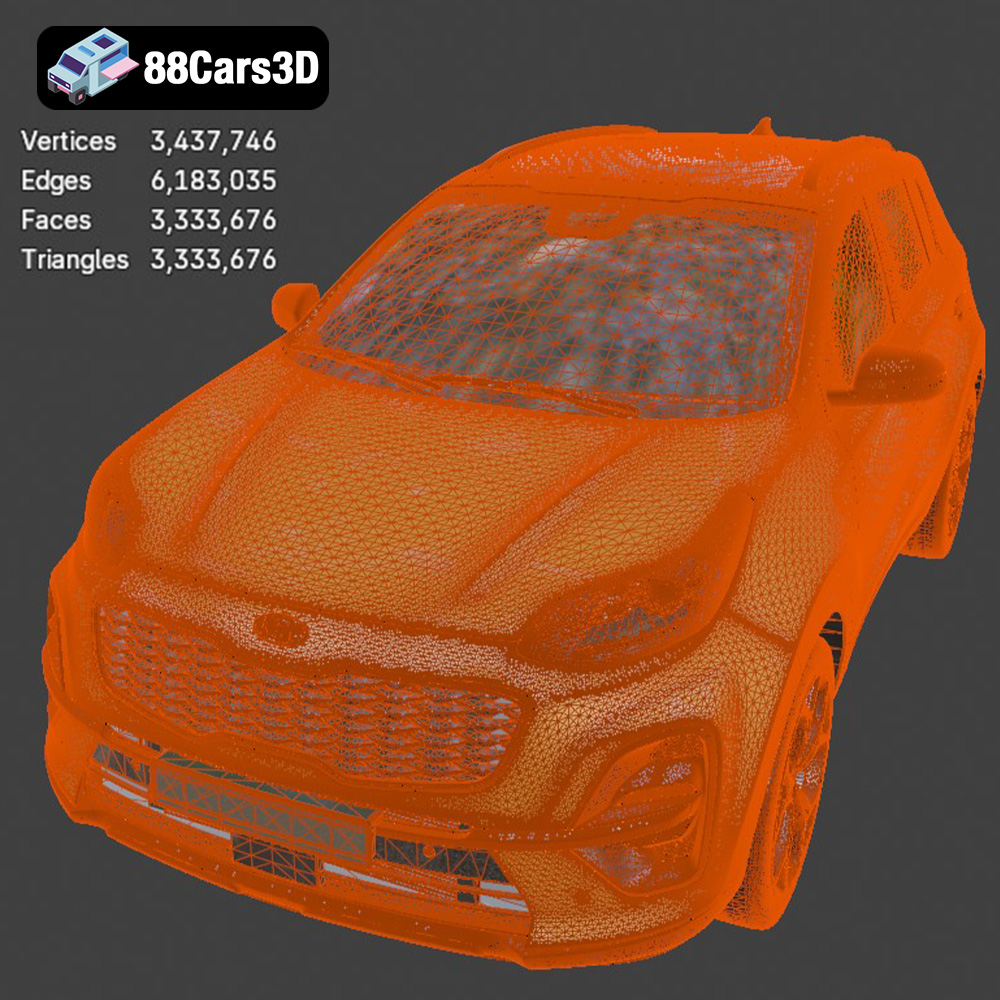
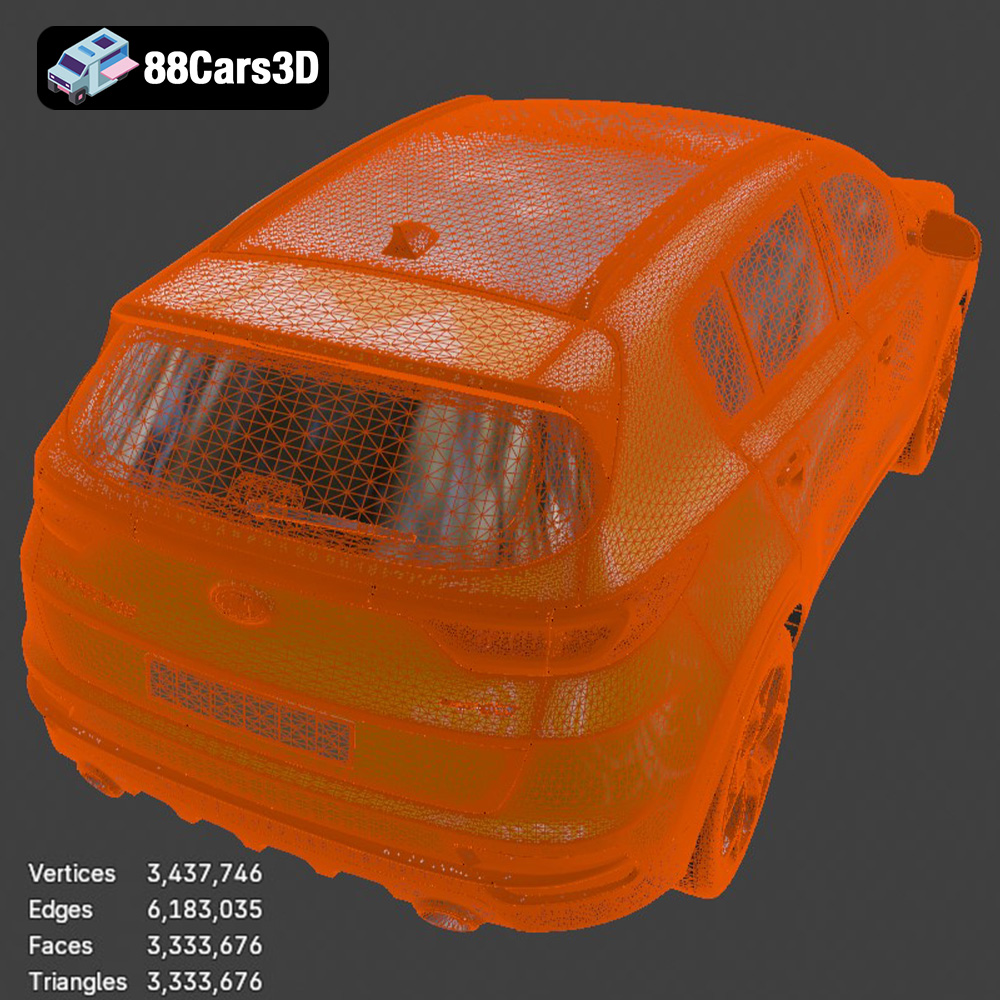
While cinematic renders can afford high poly counts, real-time game engines demand stringent optimization. This involves intelligent polygon reduction, often through the creation of LODs (Levels of Detail), where simpler versions of the model are swapped in as the camera moves further away. The Kia Sportage 2019 3D Model, optimized with clean geometry and careful topology, provides an excellent foundation for this process. Good edge flow ensures that even with aggressive poly reduction, the vehicle’s silhouette and key features remain intact. Additionally, efficient UV packing is crucial for texture memory management, and well-defined collision meshes are essential for realistic in-game physics interactions.
Game engines like Unreal Engine and Unity have specific requirements for asset ingestion. The .fbx format is the industry standard for importing models, animations, and skeletal data. For materials, game engines rely heavily on PBR texture maps (Albedo/Base Color, Normal, Roughness, Metallic, Ambient Occlusion). An asset like the Kia Sportage 2019, provided in an .unreal package or a well-structured .fbx, significantly streamlines the import process. It means materials are often already set up with appropriate textures, ready to be tweaked within the engine’s material editor, saving valuable development time and ensuring visual consistency across platforms.
The utility of professional 3D car models extends far beyond traditional rendering and game development, venturing into the exciting realms of augmented reality, virtual reality, and physical prototyping.
AR and VR technologies are transforming how we interact with digital content. For automotive applications, this means virtual showrooms, interactive car configurators, training simulations, and even virtual test drives. High-quality 3D car models are the core of these experiences. The Kia Sportage 2019 3D Model, optimized with efficient geometry and provided in formats like .glb, is perfectly suited for these platforms. The .glb format, with its self-contained and optimized nature, ensures smooth performance and quick loading times on AR/VR devices, offering users an immersive and realistic interaction with the vehicle. Imagine exploring every detail of the Kia Sportage’s interior in a virtual reality headset, or placing it in your driveway via an AR app.
For designers and engineers, the ability to rapidly prototype physical models is invaluable. While the primary use of a detailed car model might be digital, its clean topology also makes it suitable for conversion to 3D printable formats like .stl. This allows for the creation of scale models, concept verification, or even custom parts. The precision of the Kia Sportage 2019 3D Model’s geometry ensures that when converted to .stl, it maintains accurate dimensions and forms, enabling high-quality physical output. This bridges the gap between digital design and tangible creation, empowering professionals to visualize and test their concepts in new ways.
A high-quality 3D car model is designed to integrate seamlessly into various professional 3D software pipelines, offering flexibility regardless of an artist’s preferred toolkit.
Blender users benefit immensely from models provided in the native .blend format. When you open the Kia Sportage 2019 3D Model’s .blend file, you’re greeted with a fully set up scene – materials, textures, and potentially even a basic lighting rig. This allows artists to immediately start rendering with Cycles or Eevee, or quickly adapt the model for animation. Modifying the model, such as opening doors or adjusting elements, is straightforward due to the clean, editable geometry. Blender’s comprehensive toolset makes it ideal for everything from automotive configurators to short animation sequences showcasing the vehicle’s features.
For those entrenched in the Autodesk ecosystem, the .max file for the Kia Sportage 2019 3D Model offers similar advantages. 3ds Max, often paired with rendering engines like V-Ray or Corona, is a staple in architectural visualization and product rendering. Importing the .max file means retaining all scene data, including complex material graphs and sophisticated lighting setups. Artists can quickly set up intricate camera paths for cinematic fly-throughs, integrate the vehicle into architectural scenes, or create detailed advertising renders. The editable nature of the .max file allows for detailed adjustments, ensuring the model fits perfectly into any project’s specific requirements.
Unreal Engine’s real-time capabilities are unmatched for interactive experiences. The pre-configured .unreal file for the Kia Sportage 2019 3D Model simplifies the process of bringing a car into a virtual world. Developers can drag and drop the asset, and it’s largely ready to go. Materials are set up for Unreal’s PBR renderer, and often include LODs and collision meshes. From creating realistic driving simulations to interactive showrooms where users can customize the car in real-time, the engine-ready format accelerates development. This is where 88cars3d.com truly shines, providing assets that require minimal post-import tweaking, maximizing efficiency for real-time projects.
The journey of creating compelling 3D content, especially with something as complex as an automobile, is fraught with technical challenges. From the intricacies of polygon modeling and UV unwrapping to the nuances of material definition and lighting, every step demands expertise and precision. This is why investing in high-quality, professionally crafted 3D car models is not just a convenience, but a strategic decision for any serious artist, designer, or developer.
The Kia Sportage 2019 3D Model exemplifies the pinnacle of digital automotive asset creation. With its meticulously detailed interior, clean geometry, realistic materials, and robust optimization, it stands as a versatile tool ready for deployment across cinematic rendering, demanding game development, immersive AR/VR simulations, and professional visualizations. Its availability in a comprehensive suite of professional file formats ensures maximum compatibility, allowing seamless integration into diverse workflows, be it Blender, 3ds Max, or Unreal Engine.
By providing assets that meet industry standards out of the box, resources like 88cars3d.com empower creators to bypass the time-consuming foundational work and instead focus their energy on storytelling, innovation, and pushing the boundaries of visual fidelity. Whether you’re an automotive designer visualizing a new concept, a game developer populating a virtual world, or an architect integrating vehicles into a scene, a high-quality 3D car model is an indispensable asset that significantly accelerates your creative process and elevates the final output. Unlock your project’s full potential by starting with excellence.
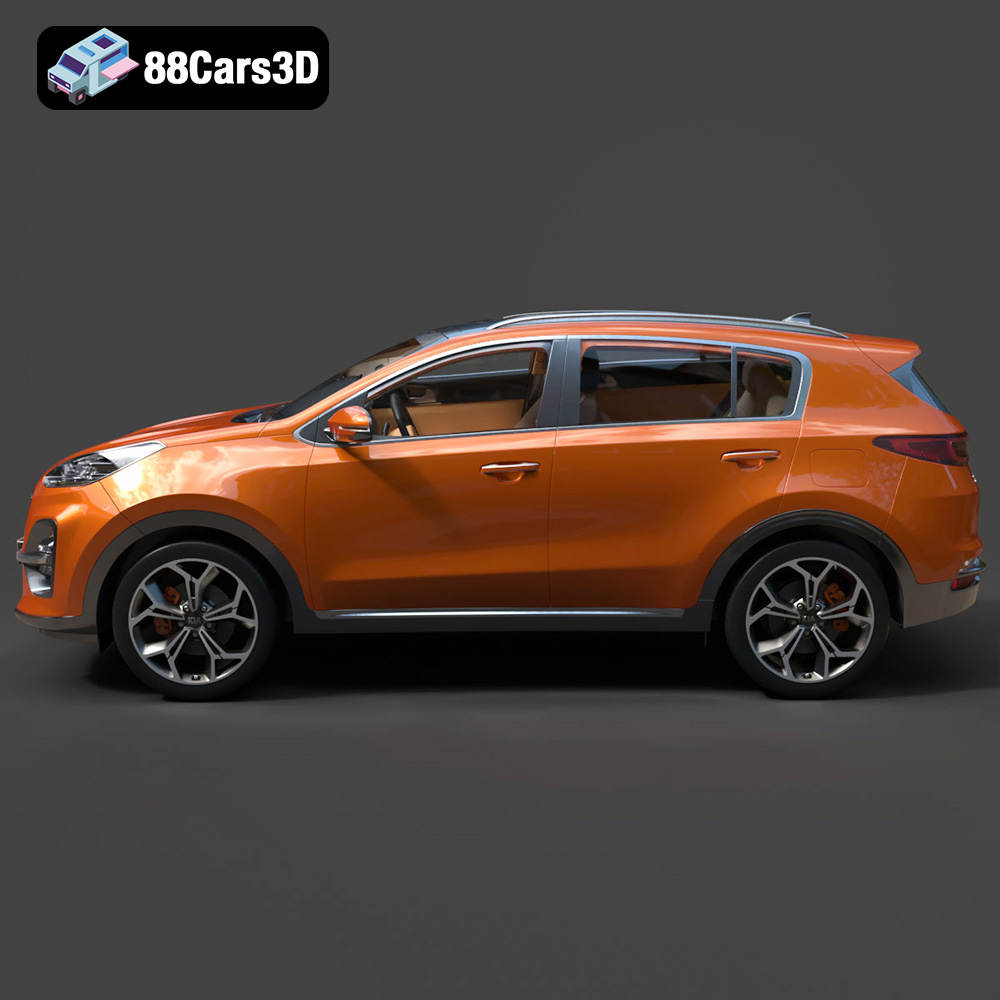
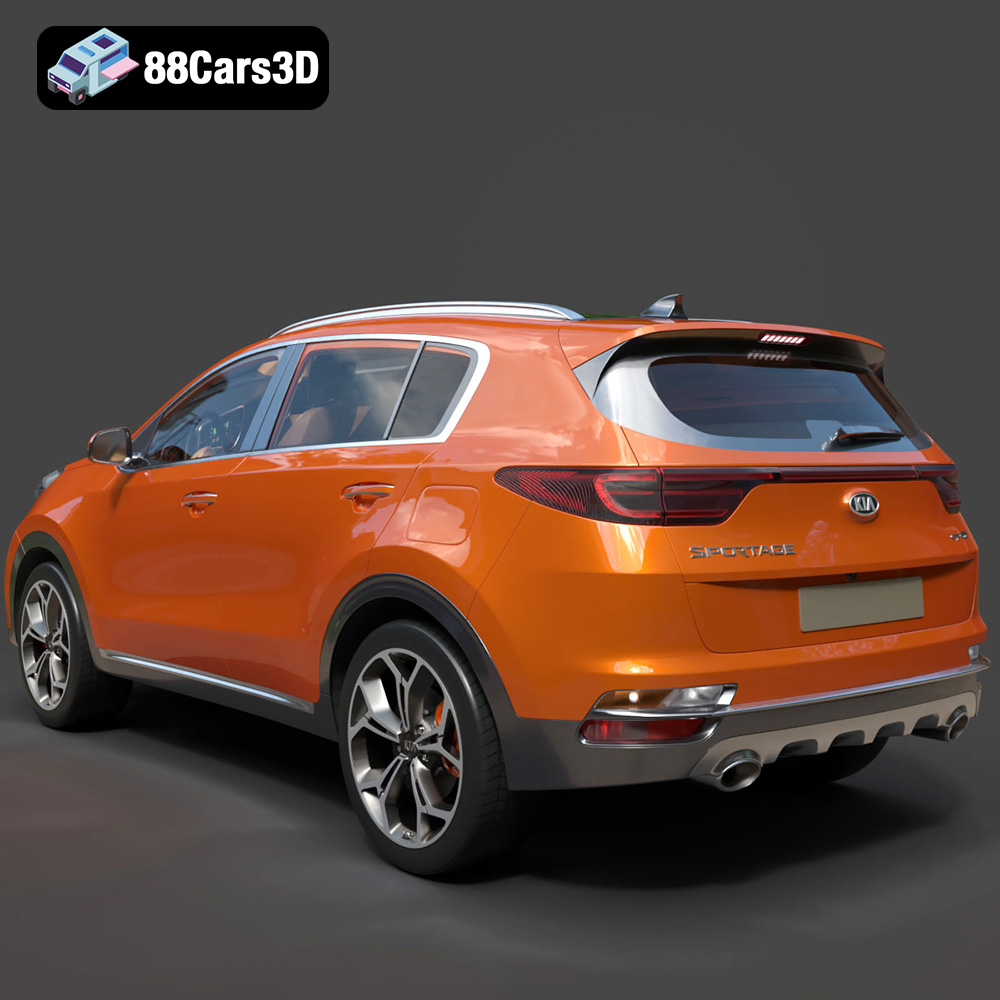
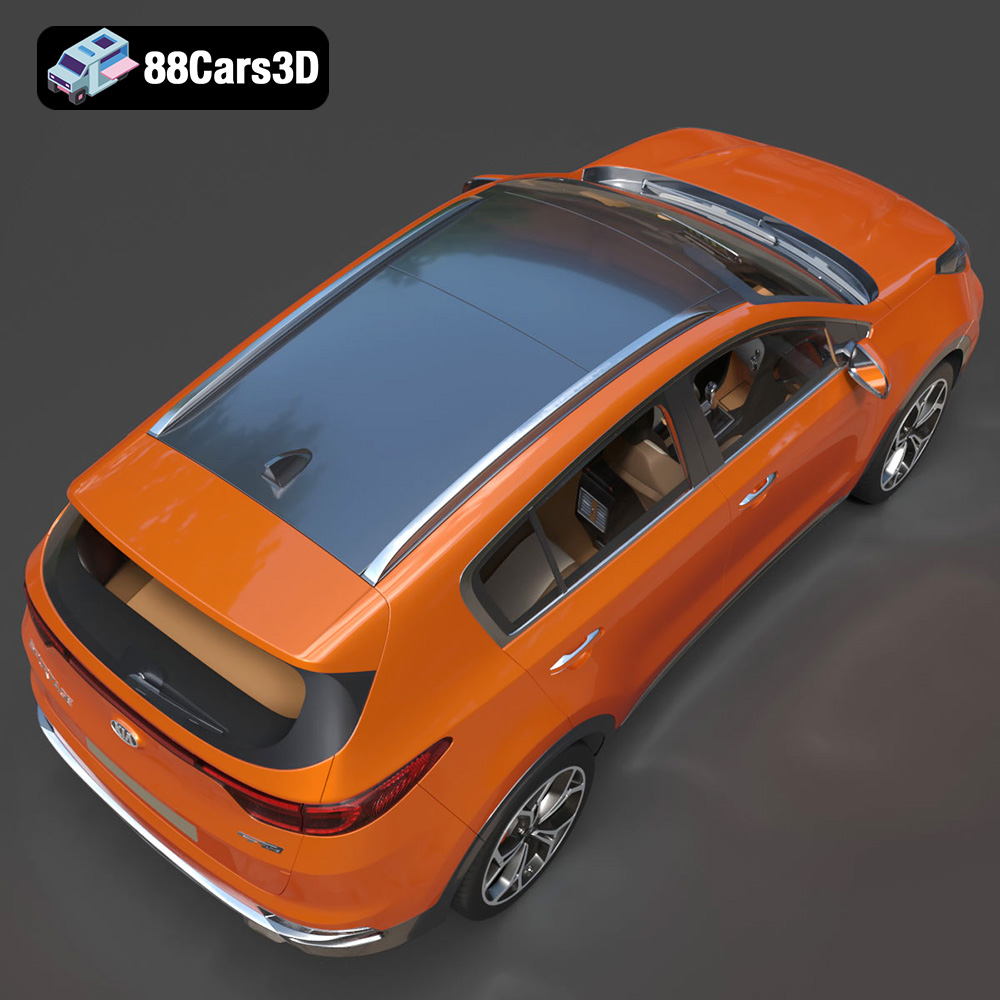
Experience unparalleled realism with the meticulously detailed Kia Sportage 2019 3D Model, complete with a fully replicated interior. Engineered for absolute precision, this digital asset accurately represents the vehicle’s signature exterior design and intricate cabin elements.
Built with professional standards in mind, this asset features clean geometry and realistic materials. The optimized edge flow and careful topology provide outstanding performance and accurate surface reflections, ensuring professional-grade visual fidelity.
This versatile asset is ready for a multitude of demanding applications. From advanced game development and cinematic rendering to immersive AR/VR simulations and professional visualizations, the model adapts seamlessly to any project requirement.
This package is provided in the following professional file formats for maximum compatibility:
$19.99
.arvr
.blend
.car3dmodel
.crossover
.fbx
.gameasset
.glb
.kia
.max
.obj
.ply
.rendering
.simulation
.sportage
.stl
.unreal
SUV