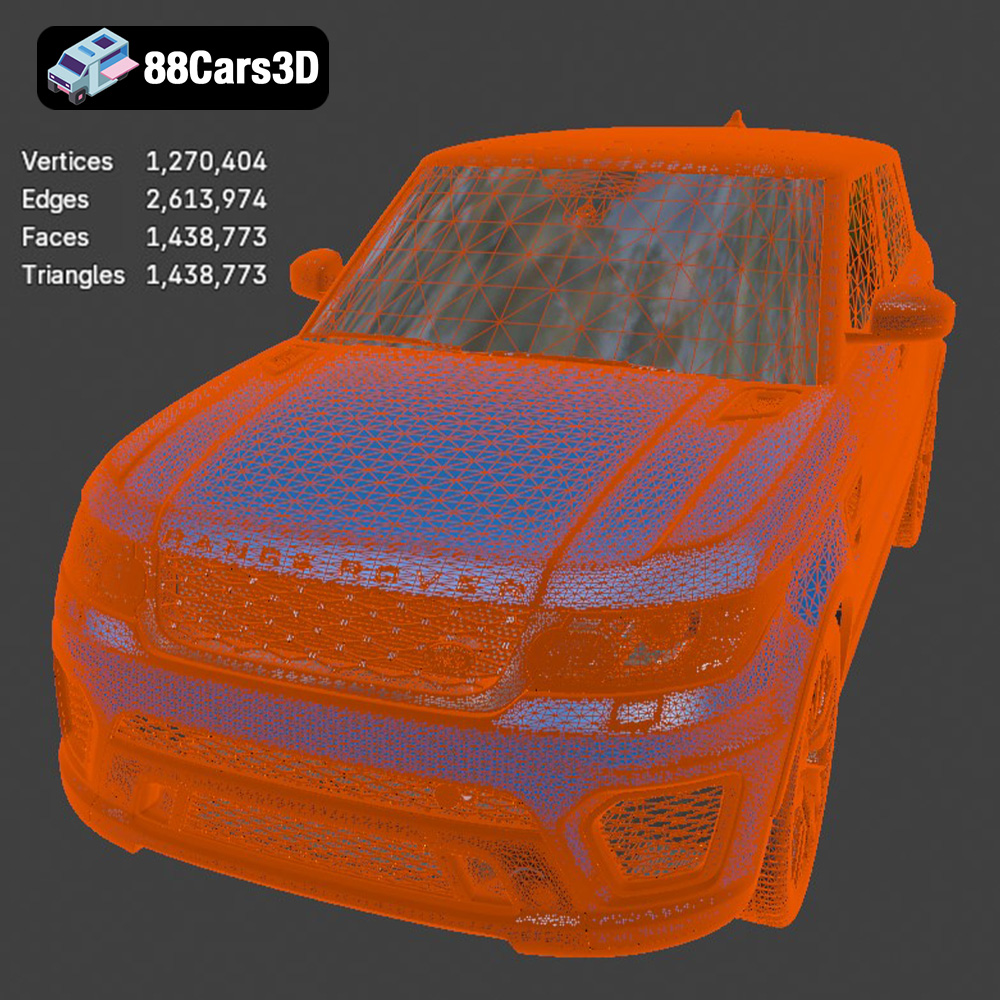
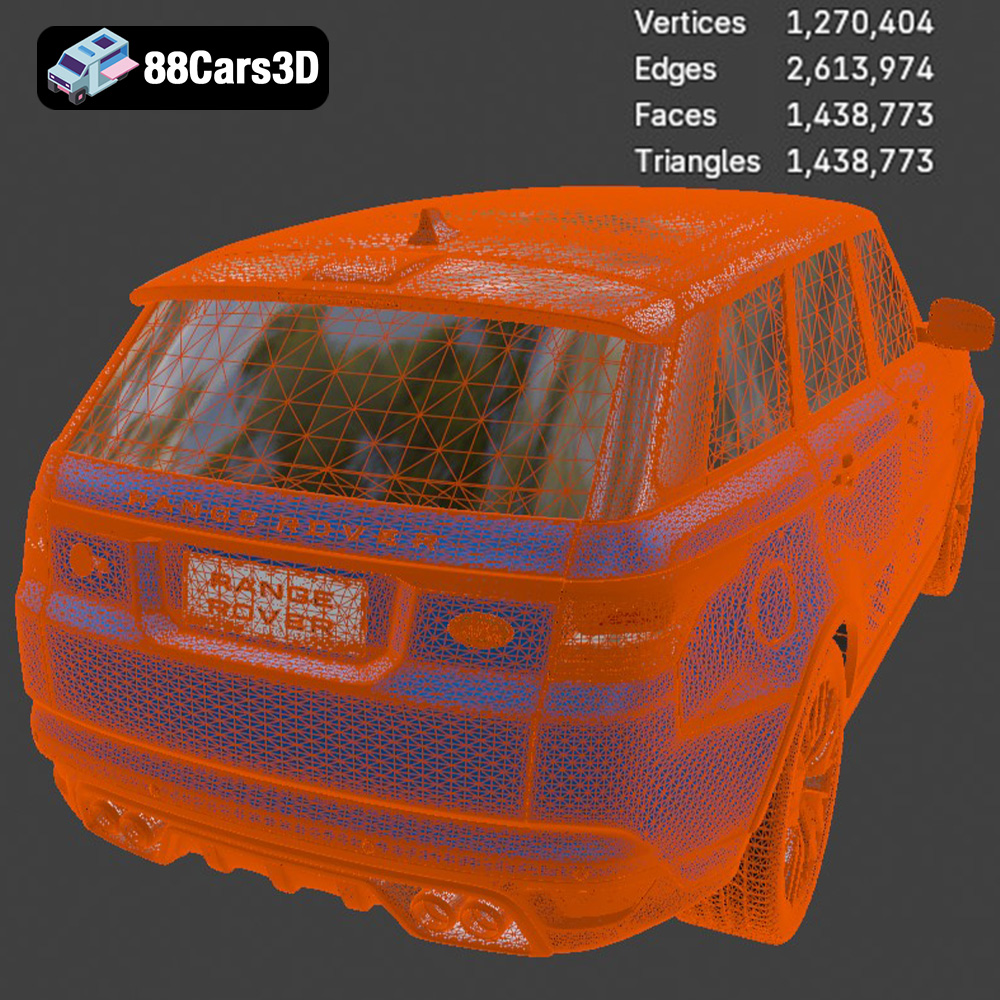
Get 20% OFF All Premium 3D & STL Models!

In the dynamic world of digital content creation, the demand for hyper-realistic and technically robust 3D assets continues to surge. From blockbuster video games and immersive AR/VR experiences to cutting-edge automotive design visualizations and compelling marketing campaigns, the quality of a 3D model can significantly impact the final output’s realism and effectiveness. Particularly in the automotive sector, where iconic designs and intricate engineering define luxury and performance, artists and developers require nothing less than perfection.
It is within this demanding landscape that the Land Rover Range Rover Sport SVR 2015 3D model distinguishes itself. This exceptional asset, available at 88cars3d.com, is engineered to meet the stringent requirements of professional pipelines, offering unparalleled realism, meticulous detail, and versatile file format support. Whether you’re an automotive designer seeking to visualize a concept, a game developer aiming for immersive realism, or an architect integrating vehicle assets into a scene, a model of this caliber serves as a cornerstone for success.
The digital frontier is constantly pushing the boundaries of what is possible, and at its heart lies the pursuit of realism. For any project involving vehicles, particularly high-performance or luxury cars, the 3D model must convey the essence of the real-world counterpart. This goes beyond mere aesthetics; it delves into the technical integrity of the asset.
For automotive designers and engineers, a high-fidelity 3D model like the Land Rover Range Rover Sport SVR 2015 is more than just a visual prop; it’s a critical tool for design review, iteration, and simulation. Accurate dimensions, precise surface curvature, and authentic material properties allow for realistic wind tunnel simulations, ergonomic studies, and even crash test visualizations in a virtual environment. The meticulously crafted geometry ensures that light interacts with the surfaces exactly as it would on a physical vehicle, providing crucial feedback on design aesthetics and manufacturing feasibility long before a physical prototype is built. This level of accuracy can significantly streamline development cycles and reduce costs.
Modern video games, especially racing simulations and open-world titles, thrive on visual authenticity. Players expect vehicles to look, feel, and react realistically. A premium 3D car model provides the foundational visual fidelity. Details such as accurate chassis lines, realistic tire tread, finely modeled interior elements, and correctly applied materials for paint, glass, and chrome make all the difference. The Land Rover Range Rover Sport SVR 2015 3D model, with its optimized polygon count and game-engine-ready formats, ensures that developers can integrate stunning visuals without compromising performance, delivering an immersive experience where every vehicle feels tangible.
Augmented Reality (AR) and Virtual Reality (VR) environments demand an even higher level of detail, as users are placed directly “inside” or “around” the digital content. Low-quality models with visible seams or unrealistic textures can shatter the illusion of presence. For applications ranging from virtual car showrooms to interactive driving experiences, a highly detailed model capable of seamless integration and real-time rendering is indispensable. The Land Rover Range Rover Sport SVR 2015, optimized for AR/VR, guarantees that users will perceive a robust, tangible, and believable vehicle, enhancing the sense of immersion exponentially.
The versatility of a professional 3D car model is often defined by the range and quality of its available file formats. Each format serves a specific purpose, catering to different software environments, project requirements, and output destinations. Understanding these distinctions is crucial for selecting the right asset for your workflow. The Land Rover Range Rover Sport SVR 2015 3D model, for instance, is a prime example of an asset prepared with a comprehensive array of formats, ensuring maximum utility across the industry.
The .blend format is native to Blender, a powerful open-source 3D creation suite. When you acquire a .blend file for the Land Rover Range Rover Sport SVR 2015, you’re not just getting the model; you’re often getting a fully editable Blender scene. This typically includes the model with its clean geometry, PBR (Physically Based Rendering) materials already set up, lighting configurations, and sometimes even basic animation rigs. This format is ideal for users deeply embedded in the Blender ecosystem, allowing for immediate rendering with Cycles or Eevee, further modifications, or integration into existing Blender projects without conversion hassles. It offers maximum flexibility for artists who want to delve into every aspect of the model.
The .fbx (Filmbox) format stands as one of the most widely adopted interchange formats in the 3D industry, particularly for game development and real-time applications. It supports geometry, materials, textures, animations, and rigs in a single file, making it incredibly efficient for transferring complex assets between different software and game engines like Unreal Engine and Unity. When a model like the Land Rover Range Rover Sport SVR 2015 is provided in .fbx, it signifies that it’s designed for broad compatibility and smooth integration into a production pipeline. Its robust support for hierarchies and instance data makes it perfect for optimizing scenes with multiple objects.
The .obj (Wavefront OBJ) format is a universal 3D model format, renowned for its broad compatibility across virtually all 3D software. It primarily stores geometric data (vertices, faces, normals, UV coordinates) and can reference external .mtl (material) files for color and texture information. While it doesn’t support advanced features like animation or rigging, its simplicity and widespread adoption make it an excellent choice for basic model exchange, archival purposes, or when you need to import a model into less common software. For the Land Rover Range Rover Sport SVR 2015, the .obj version ensures that regardless of your primary 3D application, you can access and utilize the core geometric data.
The .glb (GLB or glTF Binary) format is increasingly vital, especially for AR, VR, and web-based 3D applications. It’s an optimized, self-contained file format that includes 3D model data, textures, and animations in a single binary file. This makes it highly efficient for streaming and display on browsers or mobile devices, requiring fewer requests to download associated assets. For interactive 3D viewers, online showrooms, or augmented reality apps showcasing the Land Rover Range Rover Sport SVR 2015, the .glb format offers a lightweight yet visually rich solution, enabling fast loading and smooth performance.
The .stl (Stereolithography) format is the de facto standard for 3D printing. It represents a 3D model as a series of connected triangles, describing only the surface geometry without color or texture information. While not suited for rendering, an .stl file for a car model allows for physical prototyping, creating scaled-down replicas, or even custom parts. For the Land Rover Range Rover Sport SVR 2015, an .stl version empowers designers, hobbyists, or engineers to transform the digital model into a tangible object, perfect for physical design reviews or merchandising.
The .ply (Polygon File Format or Stanford Triangle Format) is another format for storing 3D data, particularly useful for high-resolution scan data and scientific applications. It can store not only geometry but also color, transparency, normals, texture coordinates, and other properties associated with vertices and faces. It’s often favored in academic and research settings, as well as for precise engineering analysis. For complex automotive surfaces like those on the Land Rover Range Rover Sport SVR 2015, a .ply file might offer a more granular level of data for specific computational analysis than other formats, especially when dealing with dense point clouds or intricate mesh structures.
The .unreal format, or rather assets specifically prepared and packaged for Unreal Engine, implies a high level of optimization and configuration. This isn’t a single file extension in the same way .fbx is, but rather a collection of assets (static meshes, materials, textures, blueprints) configured within an Unreal Engine project structure. An “unreal” specific asset for the Land Rover Range Rover Sport SVR 2015 means it’s pre-configured with Unreal’s material system (e.g., physically based materials), collision meshes, LODs (Levels of Detail), and potentially even basic animation states. This significantly reduces setup time for developers, ensuring immediate integration and optimal performance within the engine’s powerful real-time rendering environment.
The .max format is the native file type for Autodesk 3ds Max, a long-standing industry leader in 3D modeling, animation, and rendering. A .max file of the Land Rover Range Rover Sport SVR 2015 provides an editable project, complete with all scene data: geometry, modifiers, cameras, lights, materials (often V-Ray or Corona specific), and animation timelines. This format offers the highest degree of editability and control for users working in 3ds Max, allowing them to dissect the model, adjust its components, create bespoke animations, or render it using advanced renderers with all native settings preserved. It’s the ultimate choice for those seeking to fully leverage the power of 3ds Max for high-end rendering and detailed modifications.
Achieving photorealistic automotive rendering is an art form, demanding not only a powerful 3D model but also a deep understanding of lighting, materials, and composition. The Land Rover Range Rover Sport SVR 2015 3D model provides an exceptional foundation, built with clean geometry and realistic materials that make the rendering process significantly smoother.
For many automotive visualization professionals, 3ds Max combined with render engines like V-Ray or Corona Renderer is the tool of choice. With the .max file of the Land Rover Range Rover Sport SVR 2015, you gain access to a meticulously organized scene. The workflow typically involves setting up a detailed studio environment, or an outdoor HDRi (High Dynamic Range Image) map for realistic lighting. Material parameters like reflections (fresnel IOR, glossiness/roughness), metallic properties for the paint, and accurate glass shaders are crucial. The model’s clean topology ensures smooth subdivision (e.g., with TurboSmooth) and flawless reflection lines, essential for that “showroom” finish. Utilizing render passes for compositing allows for fine-tuning highlights, shadows, and reflections in post-production, elevating the final image to a professional standard.
Blender users can leverage the provided .blend file for the Land Rover Range Rover Sport SVR 2015 to achieve stunning results. Cycles, Blender’s physically based path tracer, excels at photorealistic rendering. Artists can utilize advanced node-based materials to fine-tune every aspect of the vehicle’s surfaces, from the clear coat on the paint to the intricate textures of the tires and interior fabrics. Eevee, Blender’s real-time renderer, offers a rapid preview of the final look, making lighting and material adjustments incredibly efficient. Combining HDRI lighting with studio lights and strategically placed bounce cards can dramatically enhance the car’s contours and highlights, bringing out the aggressive styling and aerodynamic precision of the SVR.
Regardless of the software, achieving true photorealism requires attention to advanced lighting and material techniques. This includes using Physically Based Rendering (PBR) workflows where materials accurately simulate real-world physics for light interaction. For a car model, this means precise metallic flakes in the paint, anisotropic reflections on brushed metals, intricate normal maps for tire treads, and realistic subsurface scattering for elements like rubber or leather. Global Illumination (GI) is essential to simulate how light bounces around the scene, illuminating areas indirectly. Volumetric lighting can add atmosphere, while depth of field can create cinematic focus. The inherent quality of the Land Rover Range Rover Sport SVR 2015 3D model’s UV mapping and material setup simplifies this process, providing a robust base for these advanced techniques.
The efficiency and visual fidelity of a 3D car model within real-time environments like game engines are paramount. The Land Rover Range Rover Sport SVR 2015 3D model is specifically designed as a game asset, ensuring optimal performance and stunning visuals.
Integrating the Land Rover Range Rover Sport SVR 2015 into Unreal Engine is streamlined thanks to its .fbx and dedicated .unreal formats. Unreal Engine’s robust physically based renderer (PBR) and advanced lighting systems allow for stunning visuals in real-time. Key steps include importing the .fbx mesh, ensuring correct scaling, and setting up PBR materials using the model’s provided textures (Albedo, Normal, Roughness, Metallic, AO maps). Implementing LODs (Levels of Detail) is critical for performance; the model’s optimized polygon count provides a solid base, and lower-polygon versions can be generated for distant views. Setting up collision meshes (simple or complex) and integrating the vehicle into a blueprint for drivability are essential. The high-quality base allows Unreal’s Lumen and Nanite technologies (for newer versions) to render it with incredible detail, even with a high polygon count, without sacrificing frame rates.
For Unity developers, the .fbx format of the Land Rover Range Rover Sport SVR 2015 offers similar ease of integration. Unity’s Universal Render Pipeline (URP) or High Definition Render Pipeline (HDRP) can be utilized to achieve visually impressive results. The workflow involves importing the .fbx, setting up PBR materials, and configuring light probes and reflection probes to accurately capture the environment’s lighting. Balancing visual detail with frame rate is key; Unity’s profiler helps identify bottlenecks. Utilizing occlusion culling, frustum culling, and proper LOD setup ensures that the powerful performance SUV renders efficiently across different target platforms, from mobile to high-end PCs.
When developing AR/VR applications, the .glb format of the Land Rover Range Rover Sport SVR 2015 becomes particularly valuable. This format is lightweight and optimized for web and mobile platforms, crucial for the performance demands of immersive experiences. In tools like Unity or Unreal Engine (with respective XR plugins), the model can be used to create interactive virtual showrooms, driving experiences, or educational simulations. Careful consideration of poly count, draw calls, and texture resolution is vital to maintain a smooth frame rate in VR headsets or on AR-enabled devices. The model’s clean geometry ensures that even when viewed up close in VR, details remain sharp and convincing, contributing significantly to user immersion.
The utility of a high-quality 3D car model like the Land Rover Range Rover Sport SVR 2015 extends across numerous professional domains, proving its value far beyond basic visualization.
In the competitive automotive industry, captivating visuals are crucial for marketing. Companies regularly use premium 3D car models to create stunning advertisements, brochures, and online configurators long before physical vehicles are available. Imagine a digital campaign where the Land Rover Range Rover Sport SVR 2015 is rendered in various environments—urban streets, off-road trails, a sleek studio—with different paint colors and wheel options, all without needing a single photoshoot. This not only saves immense costs but also provides unparalleled flexibility for creative directors to produce dynamic, high-impact visuals that resonate with their target audience. The precise reflections and detailed surfaces inherent in the 88cars3d.com model allow for truly photorealistic marketing collateral.
Professional driving simulators, used for driver training, e-sports, or research, rely heavily on accurate 3D vehicle models. A model that faithfully reproduces the Land Rover Range Rover Sport SVR 2015 in terms of dimensions, weight distribution (when combined with physics engines), and visual fidelity contributes directly to a realistic training experience. Emergency vehicle operators, racing drivers, or even test drivers can hone their skills in a safe, controlled virtual environment. The detailed interior of the SVR model enhances immersion for first-person cockpit views, making the simulation feel authentic and maximizing the learning transfer to real-world driving scenarios.
Beyond external aesthetics, 3D models are instrumental in the prototyping and design review process. Engineers and designers can utilize models like the Land Rover Range Rover Sport SVR 2015 to conduct virtual walk-arounds, explore interior ergonomics, or evaluate component fitment. With formats like .stl, physical prototypes can even be 3D printed for tactile review. This iterative design process, facilitated by robust 3D assets, allows for early detection of design flaws, validation of concepts, and comprehensive stakeholder review before committing to expensive physical tooling and manufacturing. The meticulous crafting of every curve and surface ensures that even the most critical design scrutiny yields valuable insights.
Investing in high-quality 3D assets is a strategic decision that pays dividends in production efficiency, visual quality, and overall project success. 88cars3d.com stands as a reliable source for such premium content, exemplified by the Land Rover Range Rover Sport SVR 2015 3D model.
The models available at 88cars3d.com, including this Land Rover Range Rover Sport SVR 2015, undergo rigorous quality checks. This means clean geometry, optimized polygon counts, accurate UV mapping, and realistic PBR materials that are ready for immediate use. This attention to technical excellence ensures that artists and developers spend less time fixing issues and more time on creative work. The commitment to delivering assets with flawless reflections and lighting interactions directly translates to superior final renders and real-time performance, minimizing headaches in demanding technical projects.
Time is a critical resource in any creative production. A pre-built, high-quality 3D model like the Land Rover Range Rover Sport SVR 2015 significantly streamlines workflows. Instead of spending countless hours modeling a vehicle from scratch, artists can focus on scene composition, lighting, animation, or game logic. The comprehensive range of file formats available (.blend, .fbx, .obj, .glb, .stl, .ply, .unreal, .max) means that regardless of your preferred software or target platform, you have a compatible, engine-ready asset at your fingertips, accelerating your project timelines and enhancing productivity.
A versatile 3D model is a long-term asset. The Land Rover Range Rover Sport SVR 2015 3D model’s adaptability across various applications – from high-end rendering and game development to AR/VR and 3D printing – provides immense value. Furthermore, sourcing assets from a dedicated marketplace like 88cars3d.com often comes with the assurance of ongoing quality and support, ensuring that your digital investments continue to serve your evolving project needs.
The digital landscape thrives on detail, realism, and efficiency. For professionals working in automotive design, game development, architectural visualization, or immersive media, the foundation of any compelling project lies in the quality of its 3D assets. The Land Rover Range Rover Sport SVR 2015 3D model epitomizes this excellence, offering a meticulously crafted, technically robust, and highly versatile solution for a multitude of applications. Its clean geometry, optimized performance, and extensive format support make it an indispensable tool for achieving unparalleled realism.
By leveraging such premium 3D car models from trusted sources like 88cars3d.com, artists and developers can significantly enhance their workflows, elevate the visual fidelity of their projects, and bring their creative visions to life with stunning accuracy. Whether you’re rendering a cinematic advertisement, populating a virtual world, or prototyping a design, this Land Rover Range Rover Sport SVR 2015 3D model stands ready to power your next project to success.
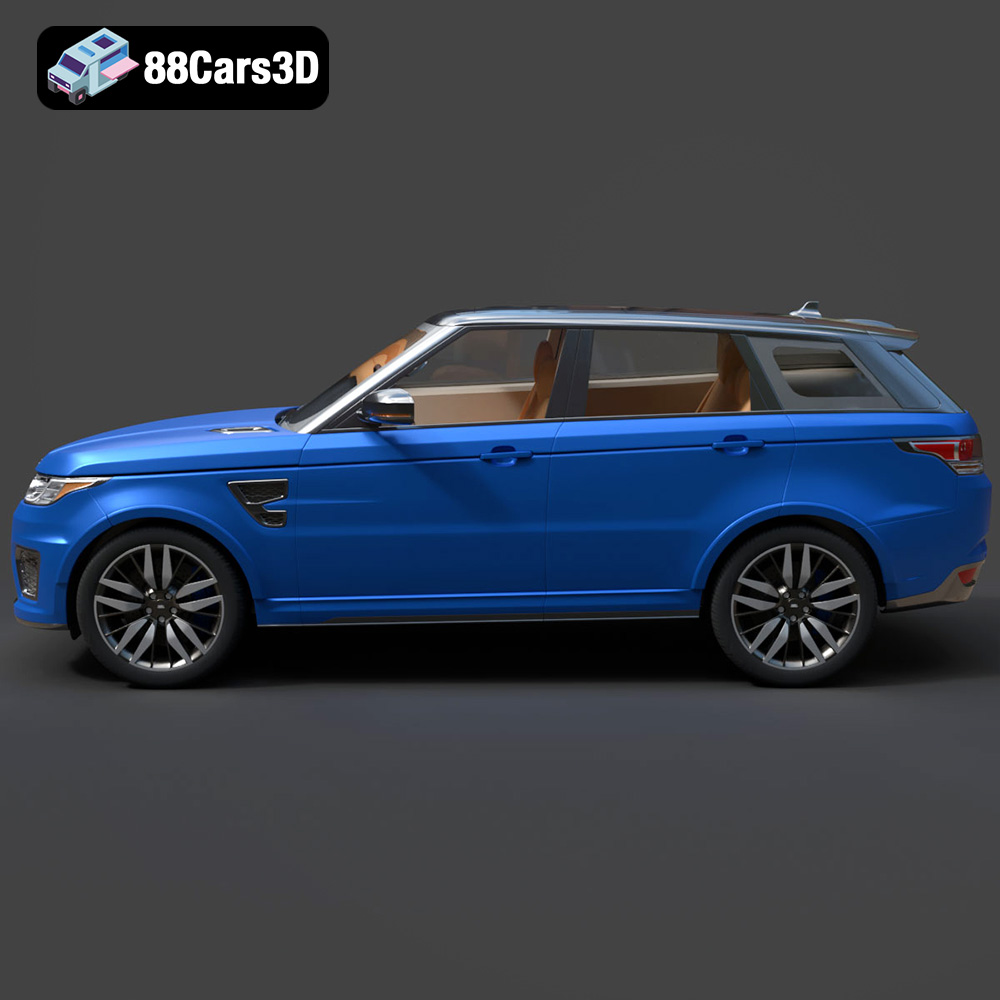
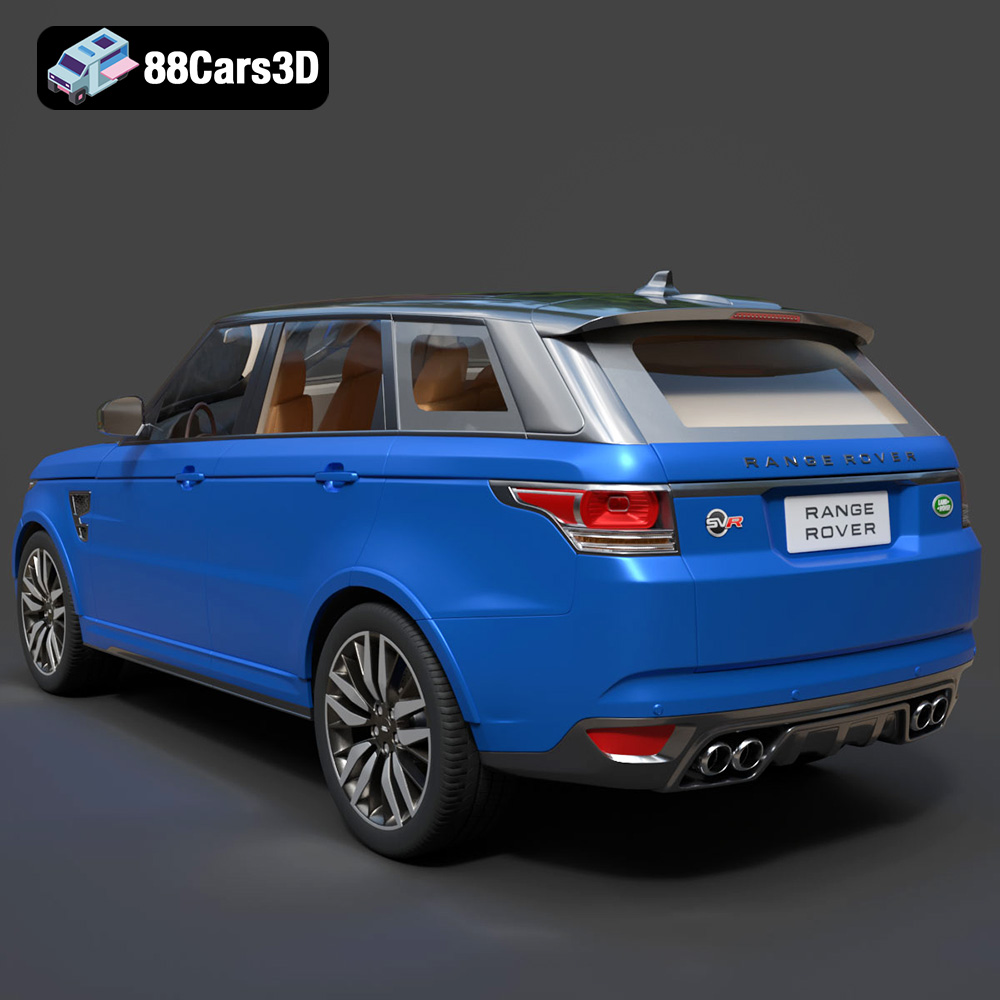
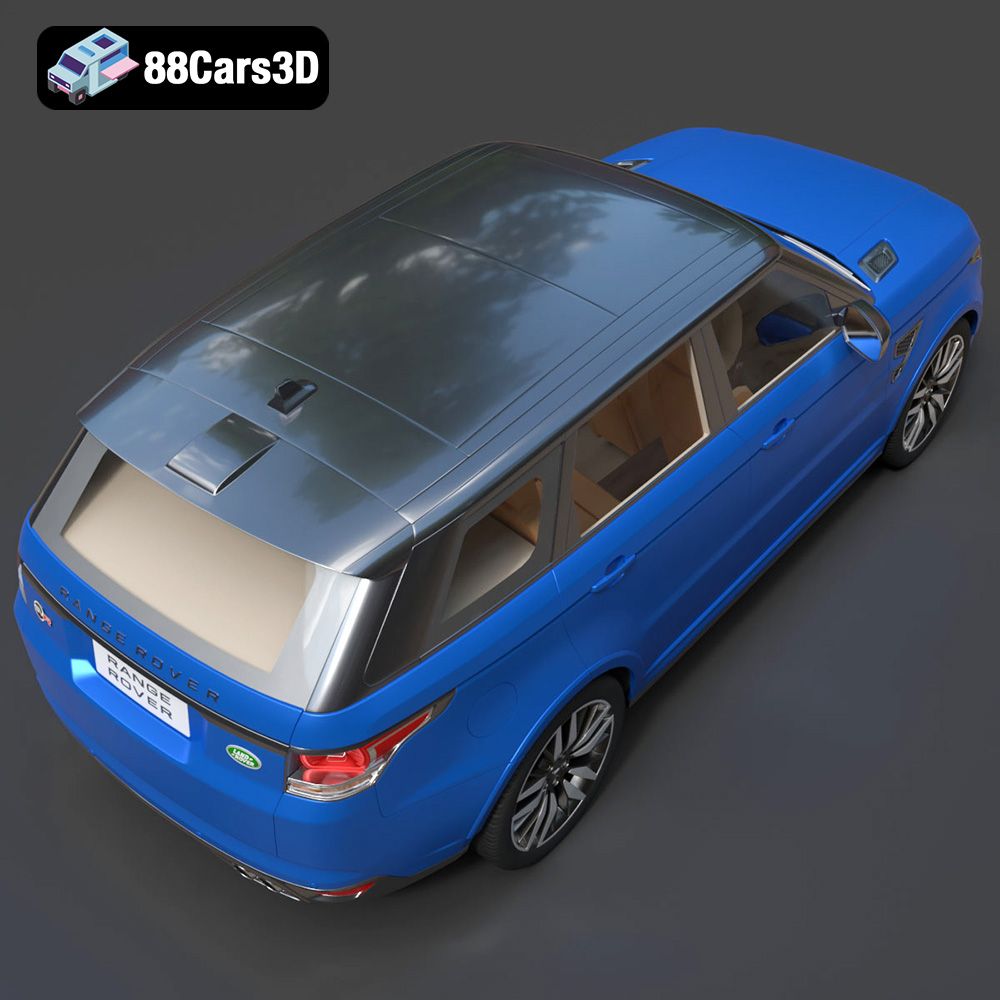
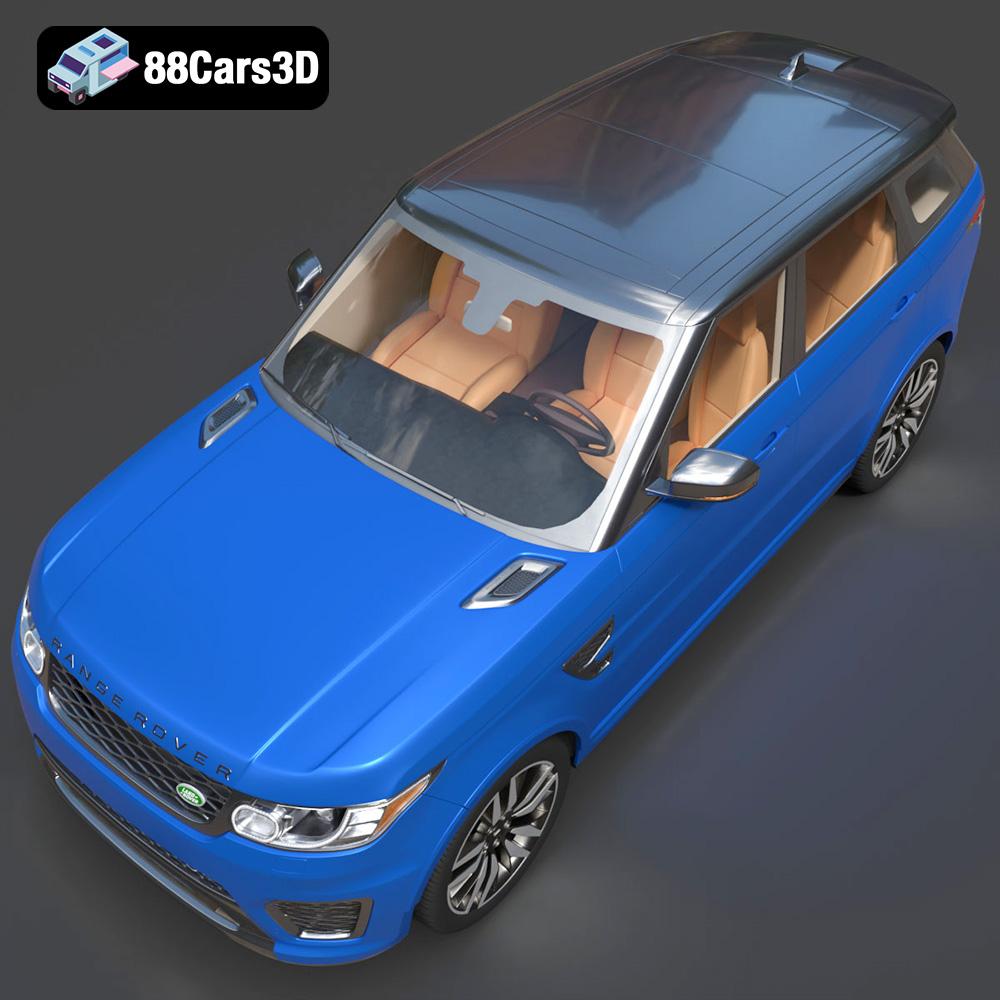
Experience unparalleled realism with the Land Rover Range Rover Sport SVR 2015 3D model. Designed to meet the demanding requirements of modern digital environments, this asset delivers an exceptionally accurate representation of the iconic performance SUV, capturing its aggressive styling, aerodynamic contours, and detailed interior. Built with professional quality in mind, the model features clean geometry, an optimized polygon count, and realistic materials. Every curve and surface has been meticulously crafted to ensure flawless reflections and lighting interactions, making it suitable for close-up shots and demanding technical projects. This versatile 3D model is perfect for a wide range of professional applications, including game development, automotive rendering, AR/VR experiences, simulation environments, and commercial visualizations. Available file formats include: .blend – Editable Blender file with materials and lighting setup, .fbx – Game-engine ready format for Unreal Engine and Unity, .obj – Standard 3D model format compatible with all major software, .glb – Optimized for AR/VR and web-based visualization, .stl – Suitable for 3D printing and prototyping, .ply – Detailed polygon mesh for analysis and visualization, .unreal – Pre-configured for Unreal Engine use, .max – Editable 3ds Max file for rendering and animation.
$19.99
.arvr
.blend
.car3dmodel
.fbx
.gameasset
.glb
.landrover
.luxurysuv
.max
.obj
.ply
.rangerover
.rendering
.simulation
.sport
.sportSUV
.stl
.svr
.unreal
SUV