Get 20% OFF All Premium 3D & STL Models!

In the rapidly evolving landscape of digital visualization, the demand for highly realistic and technically precise 3D assets has never been greater. From cinematic automotive advertisements to immersive virtual reality experiences and hyper-realistic video games, the quality of a 3D model directly impacts the final output. Creating these intricate digital vehicles from scratch is a time-consuming and complex endeavor, often requiring hundreds of hours of dedicated artistry and technical expertise.
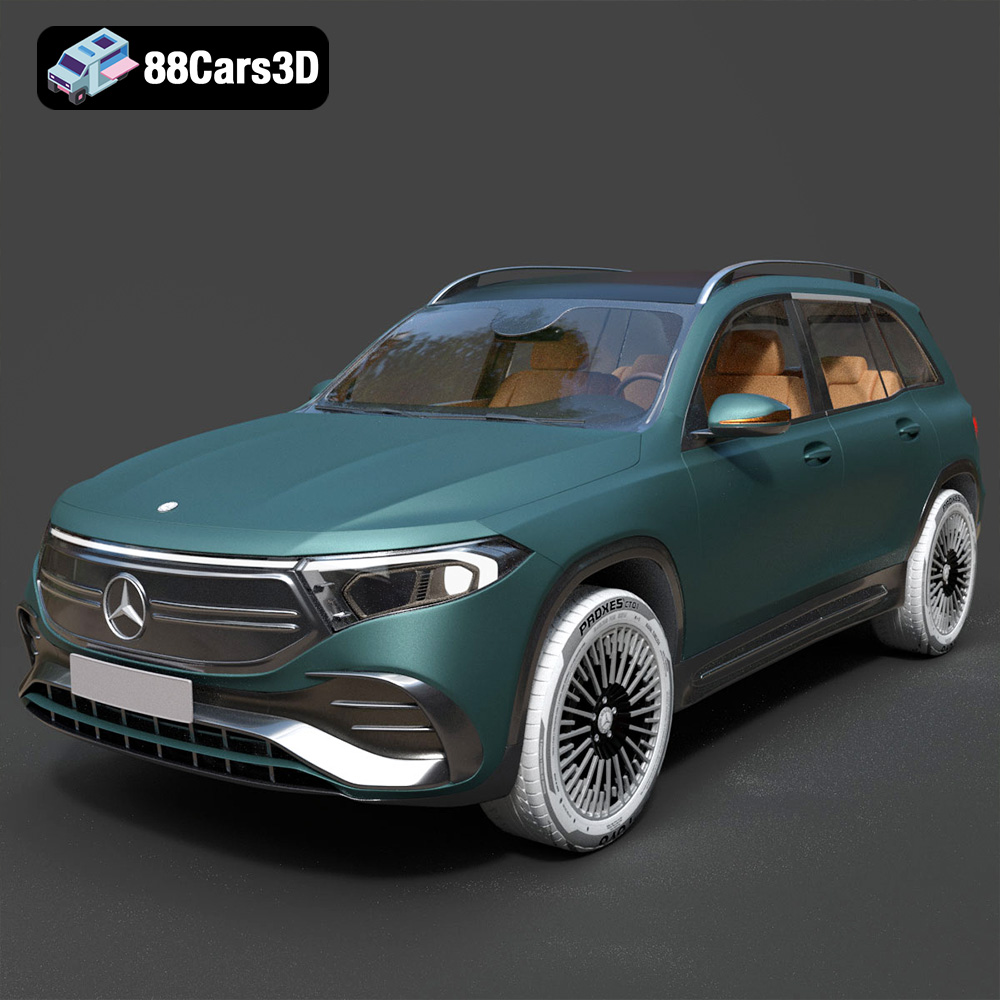
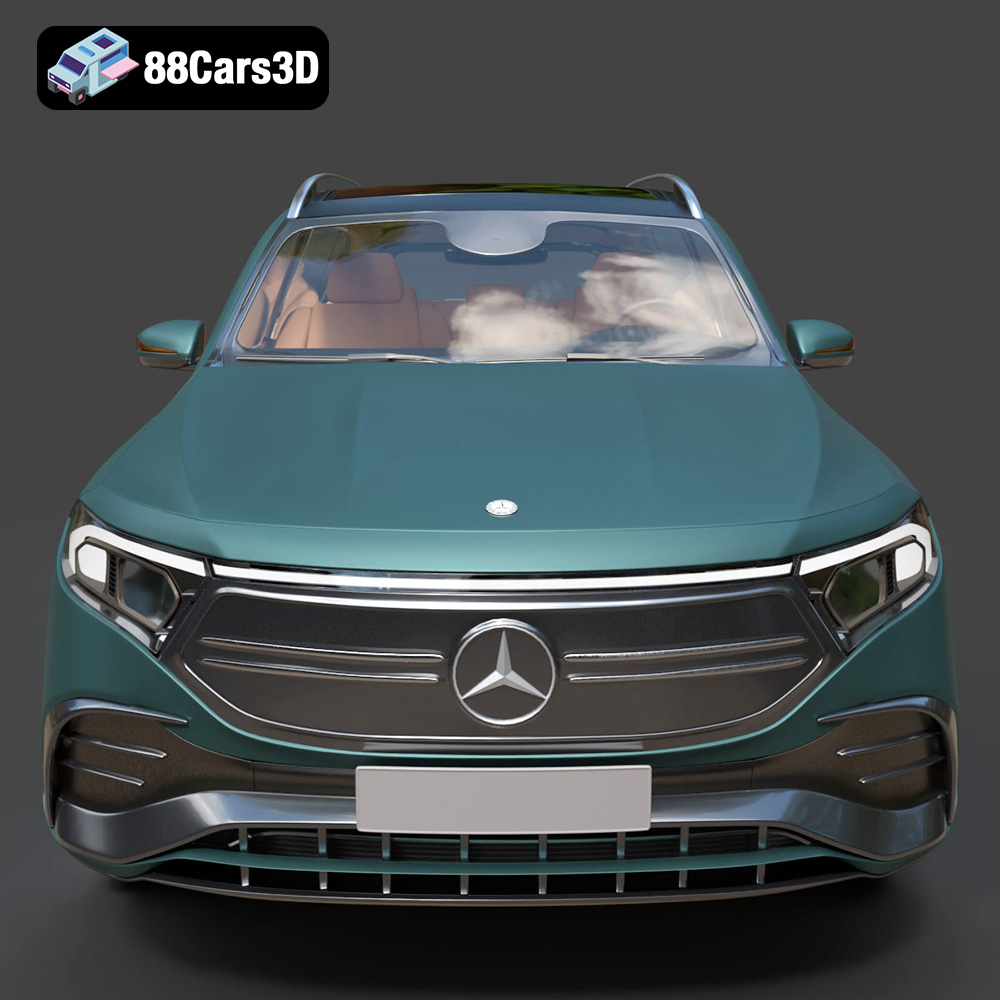
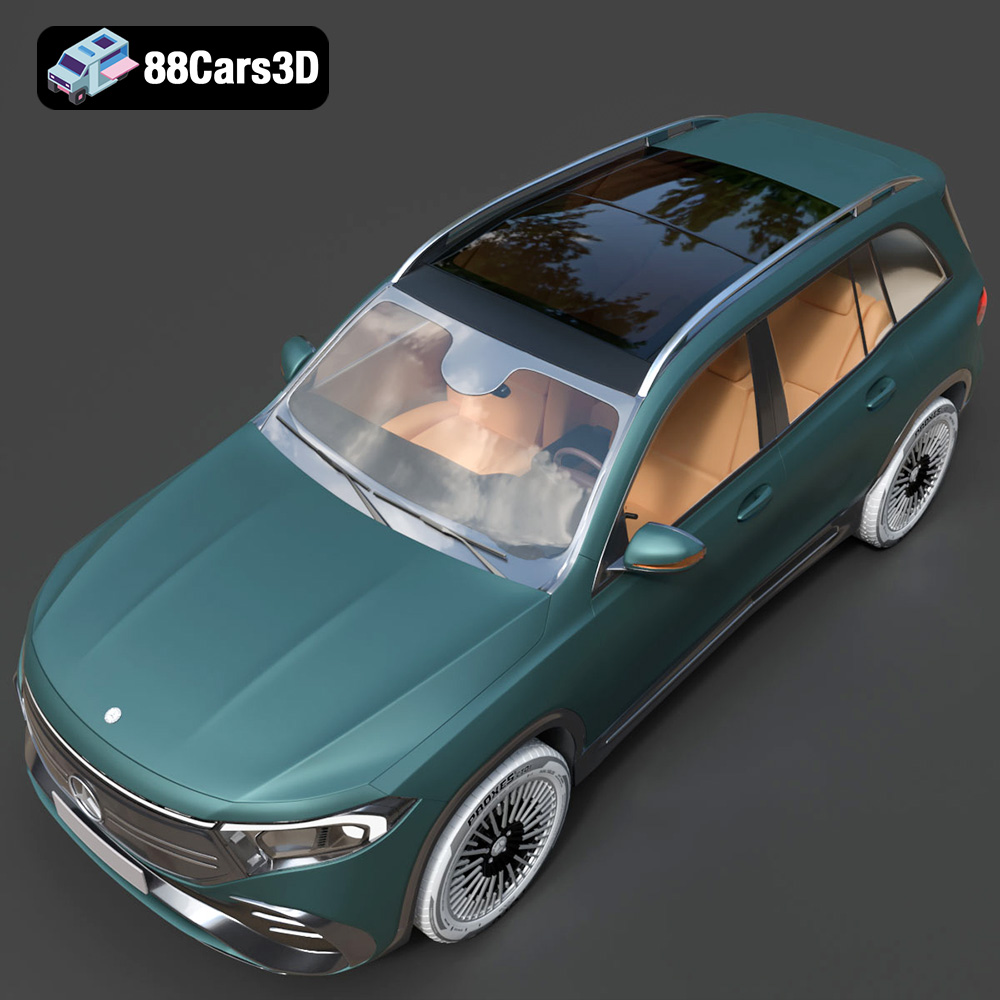
This is where expertly crafted, ready-to-use 3D car models become invaluable. They empower artists, developers, and designers to bypass the arduous modeling phase and jump straight into bringing their creative visions to life. Imagine the impact of seamlessly integrating a stunning, high-fidelity model into your project. Today, we delve into the world of professional 3D automotive assets, using the exceptional Mercedes-Benz EQB-001 3D Model as our prime example. This meticulously crafted asset, available on 88cars3d.com, embodies the pinnacle of detail and versatility, designed to elevate any digital production.
The choice of a 3D model file format is a critical decision that dictates compatibility, functionality, and performance across different software and pipelines. Understanding the nuances of each format is essential for any professional working with 3D car models, ensuring seamless integration and optimal results. The Mercedes-Benz EQB-001 3D Model offers a comprehensive suite of formats, catering to virtually every professional need.
The .blend format is the native file type for Blender, an increasingly popular open-source 3D content creation suite. A .blend file typically contains the entire scene: geometry, materials (often using Blender’s powerful node-based shader editor), textures, lighting setups, cameras, animations, and even physics simulations. Its strength lies in its completeness and flexibility, allowing users to fully edit every aspect of the model within Blender, from mesh topology to complex material graphs. For artists and studios heavily invested in the Blender ecosystem for automotive rendering or game asset creation, the .blend format offers the most direct and editable access to the original model data.
For professionals operating within Autodesk’s powerful 3ds Max environment, the .max file format is indispensable. Like .blend, it encapsulates a complete 3ds Max project, including detailed geometry, complex material definitions (often configured for rendering engines like V-Ray or Corona Renderer), lighting, cameras, and potential animation rigs. 3ds Max is renowned for its robust modeling tools, advanced rendering capabilities, and extensive plugin ecosystem, making the .max format ideal for high-end architectural visualization, advertising, and cinematic automotive rendering projects where full scene control and integration with professional rendering solutions are paramount.
Autodesk’s .fbx (Filmbox) format has become an industry standard for data exchange, particularly between digital content creation (DCC) tools and real-time game engines like Unreal Engine and Unity. It’s incredibly versatile, capable of storing not just mesh data but also materials, textures, animations, skinning, camera information, and even light data. The .fbx format is engineered for efficiency, making it the go-to choice for exporting game assets. When you need to get a 3D car model, such as the Mercedes-Benz EQB-001, into a game engine with its textures and basic materials intact, .fbx is often the most reliable and optimized option, streamlining the game development pipeline.
The .obj (Wavefront OBJ) format is one of the oldest and most universally supported 3D file formats. It’s a simple, text-based format that primarily stores geometric data – vertices, faces, UV coordinates, and normals. While it can reference external material files (.mtl), its strength lies in its widespread compatibility. Almost every 3D software application can import and export .obj files, making it an excellent fallback or a primary choice when only clean geometry is needed for cross-software compatibility. For basic transfer of 3D car models without complex scene data, .obj remains a reliable standard.
The .glb format is the binary version of glTF (Graphics Language Transmission Format), often dubbed the “JPEG of 3D.” It’s specifically designed for efficient transmission and loading of 3D scenes and models in web, augmented reality (AR), and virtual reality (VR) applications. A .glb file self-contains all necessary data – mesh, materials (PBR standard), textures, and animations – into a single, compact file. This optimization makes it perfect for displaying 3D car models like the EQB-001 interactively on websites or within AR/VR experiences without cumbersome loading times or external dependencies.
The .stl (Stereolithography) format is almost exclusively used for 3D printing and rapid prototyping. It represents a 3D model as a series of connected triangles (a triangulated mesh), defining only the surface geometry without color, texture, or material information. For designers and engineers looking to produce a physical prototype of the Mercedes-Benz EQB-001, the .stl format ensures that the geometric data is precisely defined and ready for a 3D printer’s slicing software. Clean, watertight geometry is crucial for successful .stl exports.
The .ply (Polygon File Format) is a versatile format capable of storing a wide range of information, including vertices, faces, normal vectors, color, and even transparency data for each vertex. It’s often used for scanned 3D data, CAD models, or scientific applications where precise and extensive mesh information is required. While less common for general purpose 3D car models than .fbx or .obj, its ability to store rich data per vertex can be valuable for specific analysis or high-fidelity visualization tasks.
While not a universal file type in the same vein as .fbx or .obj, the .unreal designation implies a model that is specifically pre-configured and optimized for direct import and use within Unreal Engine. This could mean a packed asset, a UDATASMITH file, or simply an .fbx that has been meticulously prepared with appropriate material setups, collision meshes, LODs (Levels of Detail), and potentially even blueprint integrations. This format minimizes setup time, allowing game developers and visualization artists to drop the Mercedes-Benz EQB-001 3D Model directly into their Unreal Engine projects and immediately begin working with an engine-ready asset, saving considerable time and effort in the game asset pipeline.
Automotive rendering is a specialized field that blends technical precision with artistic flair to create photorealistic images and animations of vehicles. It’s a critical component of marketing, design evaluation, and visualization across the industry. High-quality 3D car models, like the Mercedes-Benz EQB-001, are the foundation for achieving breathtaking results.
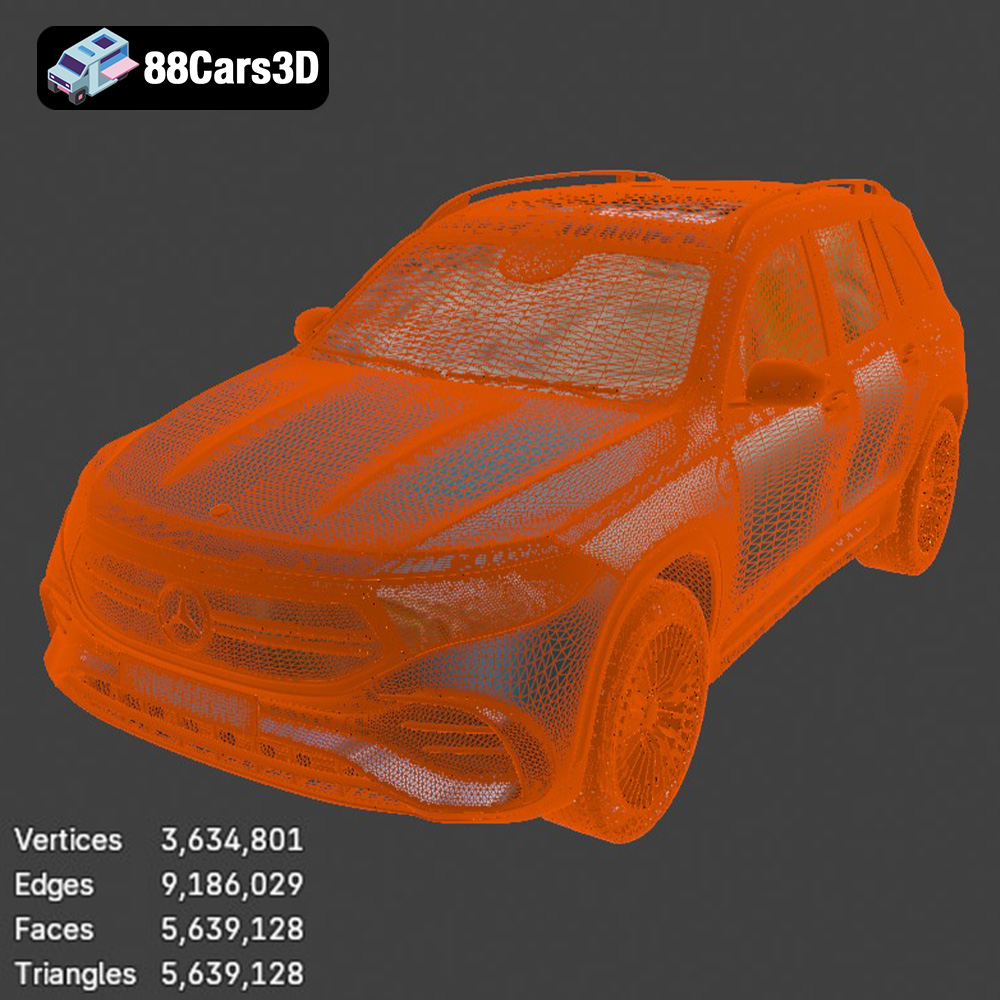
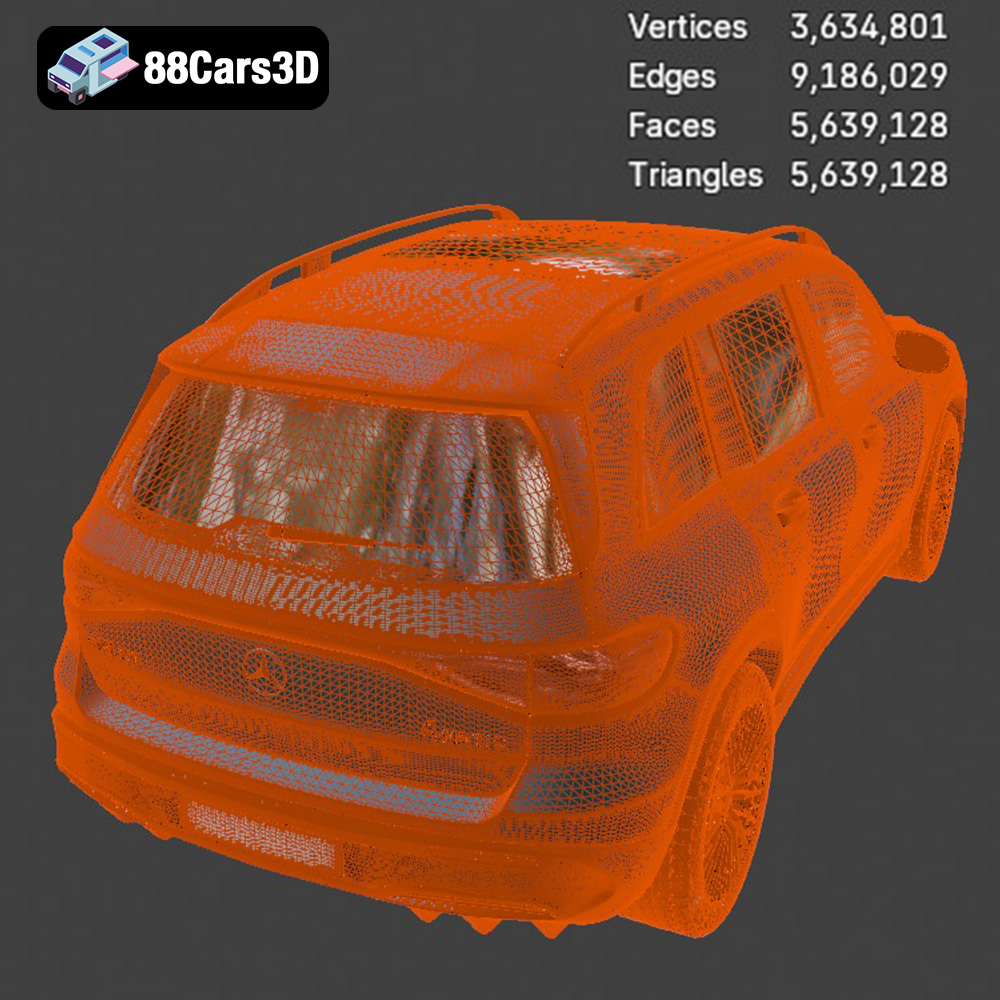
Photorealism in automotive rendering relies on a meticulous balance of lighting, materials, and environment. A vehicle’s surfaces – the reflective paint, the nuanced glass, the textured plastics, and the metallic trim – must react authentically to light. This demands a 3D model with clean, accurate geometry and a comprehensive material setup. Using advanced ray-tracing renderers like V-Ray or Corona in 3ds Max, or Cycles in Blender, artists simulate real-world light physics, capturing reflections, refractions, and global illumination. The Mercedes-Benz EQB-001 3D Model, with its “impeccably clean geometry” and “highly realistic materials,” provides the ideal starting point for crafting renders indistinguishable from photographs, whether for a static hero shot or a dynamic animation.
Physically Based Rendering (PBR) has become the standard for achieving realism in modern rendering. PBR materials simulate how light interacts with surfaces based on real-world physical properties, such as roughness, metallicness, and albedo. For complex automotive surfaces, this involves a sophisticated array of texture maps for various attributes. Clean UV maps are essential, ensuring textures are applied accurately without stretching or distortion. For the EQB-001, every exterior contour and interior element is precisely detailed, suggesting a robust PBR material setup that translates beautifully across different rendering engines. This attention to detail means less time spent on material tweaking and more time on creative iteration.
Professional rendering workflows often involve a combination of software. A model might be initially created in one application, then brought into another for final rendering. For instance, the Mercedes-Benz EQB-001 3D Model, with its .max and .blend formats, offers native project files for both 3ds Max users (often paired with V-Ray or Corona) and Blender users (leveraging Cycles or Eevee). This multi-format availability ensures that regardless of an artist’s preferred DCC tool, they can access an editable, production-ready asset. Setting up a scene involves meticulous placement of virtual studio lights, careful camera framing, and selection of realistic backplates or HDRI environments to immerse the vehicle in a believable context.
Game development presents a unique set of challenges and opportunities for 3D car models. Unlike static renders, game assets must perform in real-time, often under strict performance budgets while maintaining visual fidelity. The Mercedes-Benz EQB-001 3D Model is designed with these considerations in mind, making it an excellent game asset.
Achieving stunning visuals in games while maintaining smooth frame rates requires a delicate balance. High-polygon models, while detailed, can bog down game engines. Game developers often employ techniques like Level of Detail (LODs), where simpler versions of a model are rendered when it’s further from the camera. Optimized topology, efficient mesh flow, and careful texture atlas creation are paramount. The “clean geometry” of the EQB-001 suggests it’s built with performance in mind, potentially offering a solid base for creating LODs or being optimized further without significant loss of detail. This foresight in design saves countless hours in the optimization phase of game development.
Modern game engines like Unreal Engine and Unity offer powerful tools for importing and managing 3D car models. The .fbx format is the cornerstone for this, facilitating the transfer of mesh, materials, and even basic animations. For models like the Mercedes-Benz EQB-001, which also comes with a dedicated .unreal format, integration is even smoother. This means the model is likely pre-configured with appropriate material instances, collision meshes, and possibly even basic physics assets, allowing developers to quickly drop the asset into their game world. Setting up vehicle blueprints, handling physics, and integrating into gameplay logic becomes significantly faster when starting with an optimized and engine-ready asset from 88cars3d.com.
High-fidelity 3D car models serve multiple roles in game development. For stunning in-game cinematics and cutscenes, they can showcase breathtaking detail, leveraging the full power of the engine’s rendering capabilities like Unreal Engine’s Lumen and Nanite. In gameplay, these models form the core of interactive driving experiences, requiring robust physics, damage systems, and intricate interior detailing for first-person views. The “exceptionally immersive visual experience” promised by the EQB-001 model makes it perfect for both static background elements in a virtual garage and fully controllable vehicles in a driving simulator, enhancing player engagement and realism.
The utility of professional 3D car models extends far beyond traditional rendering and game development, opening doors to cutting-edge applications in augmented reality, virtual reality, 3D printing, and various simulation fields.
Augmented Reality (AR) and Virtual Reality (VR) environments demand highly optimized 3D assets to maintain real-time performance and immersion. Models need to be lightweight yet visually appealing, with efficient texture usage. The .glb format, specifically mentioned for the Mercedes-Benz EQB-001 3D Model, is a prime choice for these applications. Its compact, self-contained nature makes it ideal for quick loading in mobile AR apps or interactive VR showrooms. Imagine a potential customer exploring the EQB-001 in their driveway via AR, or a designer reviewing a new color scheme in a collaborative VR space – the detailed and optimized nature of this 3D model facilitates such cutting-edge experiences, providing “an excellent choice for… AR/VR experiences.”
For industrial design, engineering, and even bespoke collector’s items, 3D printing offers the ability to translate digital designs into physical objects. The .stl format provided with the Mercedes-Benz EQB-001 is crucial here. An .stl file represents the model as a triangulated surface, ready for slicing software to prepare it for a 3D printer. For successful 3D printing, the model’s mesh must be “watertight” – meaning it has no holes or inverted normals – to ensure a solid, manufacturable object. A professionally crafted model like the EQB-001 is likely to meet these requirements, making it suitable for generating high-fidelity scale models or rapid prototypes for physical evaluation.
Beyond entertainment, high-quality 3D car models are integral to various simulation and visualization domains. In automotive engineering, they can be used for virtual wind tunnel tests (though often requiring specific CAD data rather than visual meshes), crash simulations, or ergonomic studies within a virtual cockpit. For architectural visualization, a photorealistic 3D car model can elevate a scene, providing context, scale, and a sense of life to a building rendering. The Mercedes-Benz EQB-001, with its “precision and authenticity,” makes it an excellent asset for training simulations, urban planning visualizations, or even forensic reconstruction, where accuracy is paramount.
In a professional environment, efficiency and quality are non-negotiable. The availability of high-quality, pre-made 3D assets can dramatically impact project timelines, budgets, and final output.
The most significant advantage of acquiring professional 3D car models like the Mercedes-Benz EQB-001 is the immense time saving. Instead of dedicating hundreds of hours to modeling, UV mapping, texturing, and rigging a vehicle, artists and developers can instantly integrate a polished asset. This allows teams to focus their resources on other critical aspects of a project, such as scene composition, animation, coding, or interactive elements. For studios operating under tight deadlines, a library of reliable 3D car models, such as those found on 88cars3d.com, becomes an invaluable resource, accelerating project completion without compromising on quality.
The Mercedes-Benz EQB-001 3D Model exemplifies what a premium digital asset should be. Its “meticulously clean geometry” ensures smooth deformation and accurate reflections, crucial for realistic renders and robust game physics. The “seamless mesh flow” indicates proper retopology, which is vital for animation and subdivision surfaces. Furthermore, the inclusion of “highly realistic materials” minimizes the need for extensive shader setup, allowing for immediate integration into various rendering pipelines. The availability of multiple formats (.blend, .max, .fbx, .obj, .glb, .stl, .ply, .unreal) underscores its versatility, making it a truly universal asset for professionals across different industries and software preferences. This attention to detail and multi-format support positions the EQB-001 as a cornerstone asset for any digital production requiring a modern electric vehicle.
For professionals seeking reliability and excellence in 3D car models, marketplaces like 88cars3d.com stand out. They curate a selection of assets that meet stringent quality standards, ensuring that what you purchase is truly “professional quality.” This translates to models with clean topology, accurate scale, well-organized scene files, and production-ready materials. By sourcing 3D models from a trusted platform, designers, animators, and game developers can have confidence in the integrity and usability of their assets, empowering them to deliver superior results in automotive rendering, game asset creation, or any other visualization project.
The digital realm continues to expand its influence across every facet of design, entertainment, and technology. At the heart of this expansion lies the critical need for high-quality 3D assets. The Mercedes-Benz EQB-001 3D Model serves as a testament to the power of meticulously crafted digital content, offering unparalleled detail, technical precision, and multi-format versatility for a vast array of applications.
Whether you are a seasoned professional in automotive rendering, a game developer pushing the boundaries of realism, an AR/VR innovator, or an architect striving for compelling visualizations, investing in premium 3D car models significantly enhances your workflow and elevates your final output. Models like the EQB-001 are more than just static objects; they are dynamic tools that unlock creative potential and accelerate production. Explore the possibilities and discover the next level of digital excellence by visiting 88cars3d.com to find the perfect 3D car models for your next groundbreaking project.
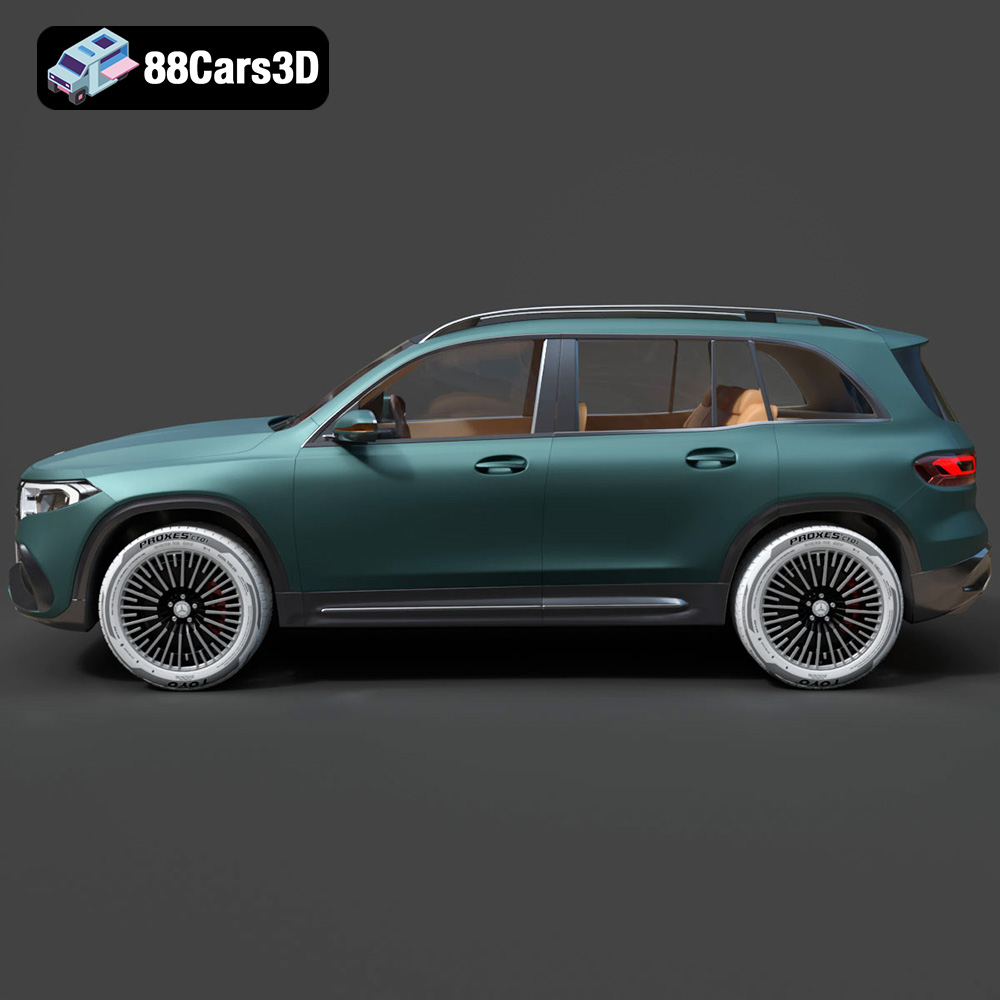
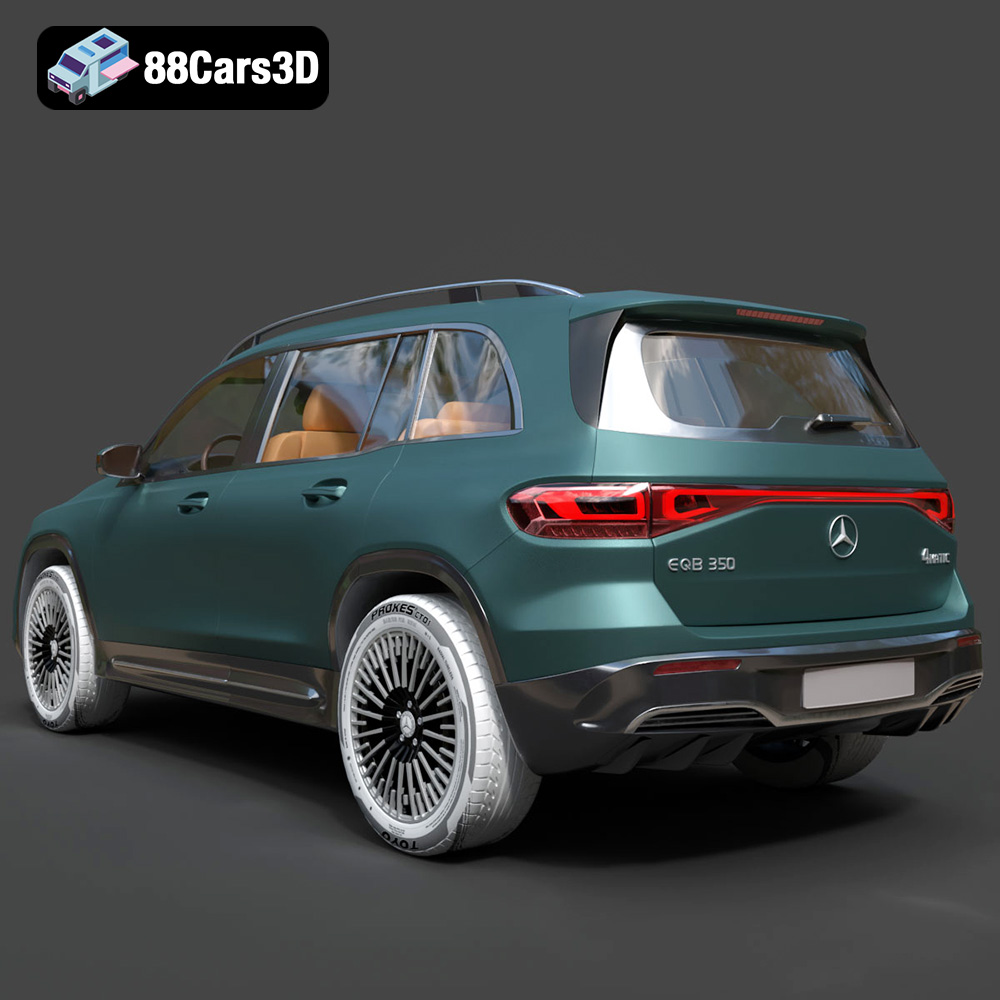
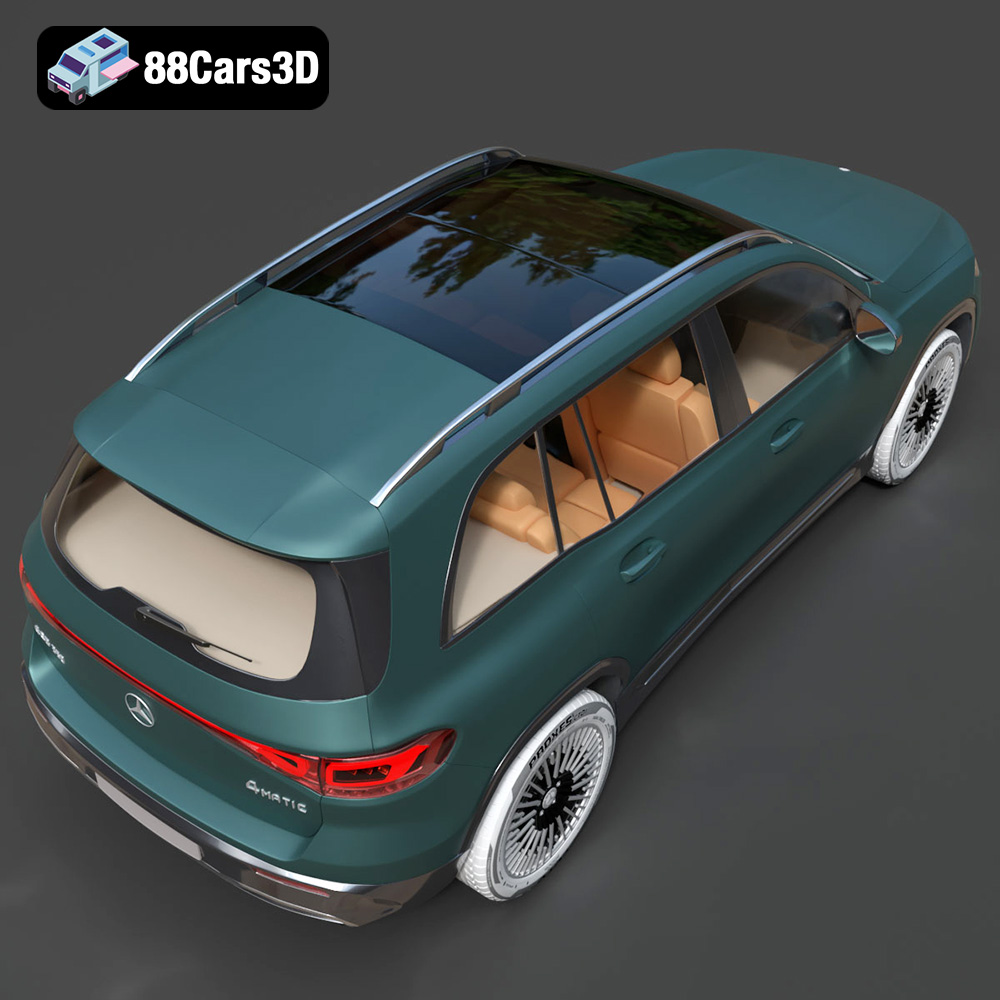
Discover the ultimate level of detail and realism with the Mercedes-Benz EQB-001 3D Model. Carefully crafted to replicate the true design of this modern vehicle, this model ensures precision and authenticity for any digital project.
Engineered with professional quality in mind, the 3D model features impeccably clean geometry, seamless mesh flow, and highly realistic materials. Every exterior contour and interior element is precisely detailed to provide an exceptionally immersive visual experience.
Perfect for a wide range of applications, this vehicle is an excellent choice for video game development, cinematic rendering, architectural visualization, and AR/VR experiences. Whether you are building an interactive simulation or generating photorealistic marketing materials, this 3D model seamlessly integrates into your workflow.
Available file formats include:
Tags: .mercedesbenz, .mercedes, .eqb, .eqb001, .suv, .electriccar, .ev, .car3dmodel, .rendering, .simulation, .gameasset, .arvr, .blend, .fbx, .obj, .glb, .stl, .ply, .unreal, .max
Tags:
.mercedesbenz, .mercedes, .eqb, .eqb001, .suv, .electriccar, .ev, .car3dmodel, .rendering, .simulation, .gameasset, .arvr, .blend, .fbx, .obj, .glb, .stl, .ply, .unreal, .max
$19.99
.arvr
.blend
.car3dmodel
.electriccar
.eqb
.eqb001
.ev
.fbx
.gameasset
.glb
.max
.mercedes
.mercedesbenz
.obj
.ply
.rendering
.simulation
.stl
.unreal
SUV