Get 20% OFF All Premium 3D & STL Models!

In the dynamic world of 3D visualization, game development, and immersive experiences, the quality of your digital assets can make or break a project. From breathtaking automotive renders to responsive real-time environments, the foundation of success lies in meticulously crafted 3D models. The pursuit of photorealism and optimal performance demands assets that are not just visually appealing, but also technically robust and versatile across various platforms.
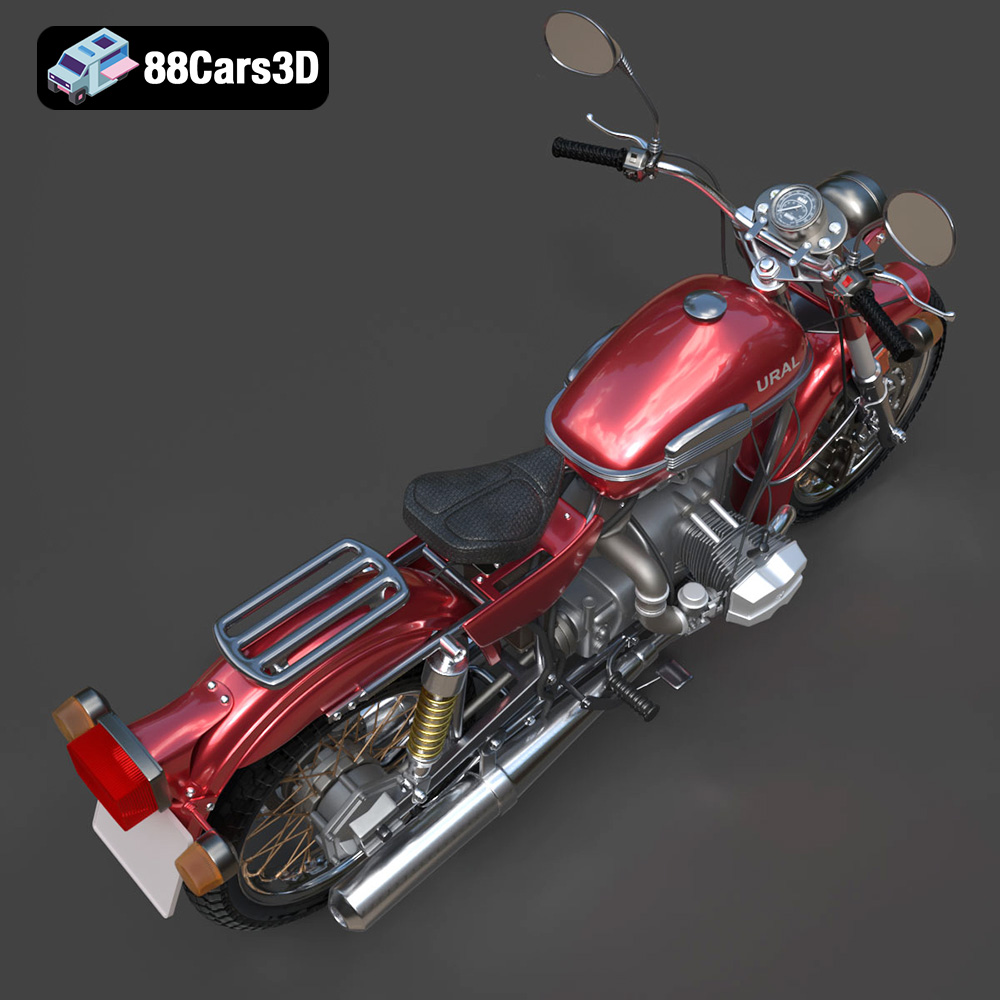
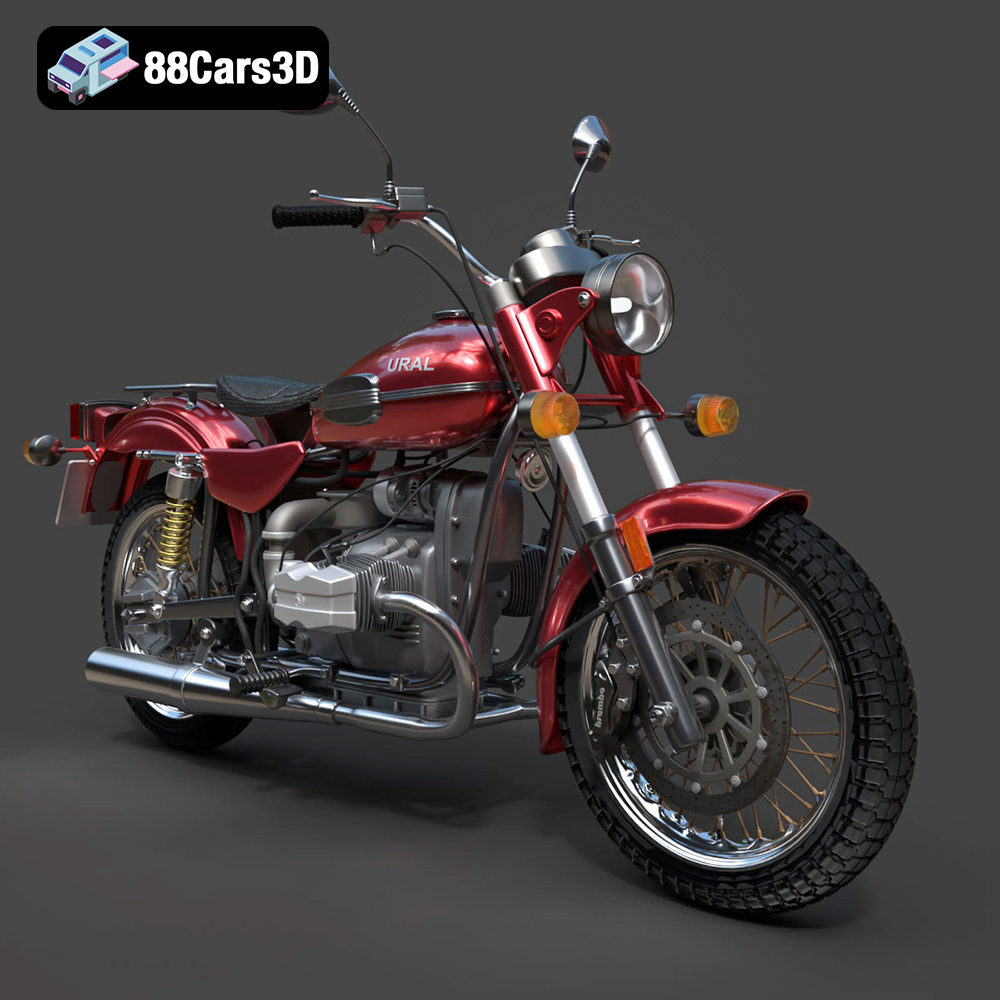
Whether you’re an automotive designer, a game developer, an architect visualizing a scene, or an AR/VR innovator building interactive worlds, the need for exceptional vehicles is constant. This is where specialized platforms like 88cars3d.com shine, offering a curated selection of premium 3D models designed to meet professional standards. Today, we’ll explore the intricate details that elevate a good 3D model to an indispensable asset, using the highly detailed Ural Solo sT 3D Model as our prime example. This carefully crafted digital asset captures the rugged design and iconic presence of the Ural Solo sT, delivering exceptional detail for your projects, making it an ideal candidate for both close-up shots and expansive environments.
The quest for realism in 3D is a continuous journey, and it starts with the model itself. A high-quality 3D model isn’t merely about aesthetics; it’s about the underlying structure, efficiency, and adaptability that allows it to perform flawlessly in diverse digital pipelines.
For automotive rendering, precision is paramount. Every curve, every weld, and every material nuance must be accurately represented to achieve photorealism. A poorly modeled vehicle, even with advanced shaders, will betray its digital origins. High-quality 3D car models feature clean, quad-based topology, accurate proportions, and meticulously sculpted details that respond correctly to light and shadow. This ensures that when the scene is rendered, reflections are crisp, surfaces appear authentic, and the vehicle sits believably within its environment, whether it’s a studio setup or an outdoor landscape.
In real-time applications like video games, augmented reality (AR), and virtual reality (VR), the demands shift from pure polygon count to optimization and performance. While detail is still crucial, it must be balanced with poly budget efficiency. High-quality game assets, such as the Ural Solo sT 3D Model, are built with optimized poly counts, clean UV mapping for texture efficiency, and often come with multiple levels of detail (LODs). This allows developers to use high-fidelity versions for close-ups and simpler versions for distant shots, ensuring smooth frame rates without sacrificing visual integrity. The goal is an immersive experience where the user doesn’t encounter visual hitches or jarring asset pop-ins.
Time is a valuable commodity in any production pipeline. Creating a complex 3D car model from scratch can take hundreds of hours, from concept sculpting to retopology, UV unwrapping, texturing, and rigging. Investing in a professional, ready-to-use asset like those found on 88cars3d.com instantly provides a high-quality foundation. This allows artists and developers to focus their efforts on creative direction, scene assembly, lighting, and animation, significantly accelerating project timelines and reducing overhead costs. The reliability of pre-built, clean geometry also minimizes troubleshooting, letting teams integrate assets seamlessly and get to production faster.
The versatility of a 3D model often comes down to the file formats it supports. Different pipelines and applications have distinct requirements, and a truly professional asset provides options. The Ural Solo sT 3D Model, for instance, is offered in a comprehensive suite of formats, each serving a specific purpose. Understanding these formats is crucial for selecting the right tool for your project, ensuring compatibility, and maximizing efficiency.
The provision of such a comprehensive array of formats for the Ural Solo sT 3D Model underscores its versatility and value, allowing creators to choose the perfect format for their specific needs, whether for rendering, gaming, AR/VR, or 3D printing.
The Ural Solo sT 3D Model exemplifies what a truly professional 3D asset should be. It’s not just a collection of polygons; it’s a testament to skilled digital craftsmanship, built to perform and impress across a multitude of applications.
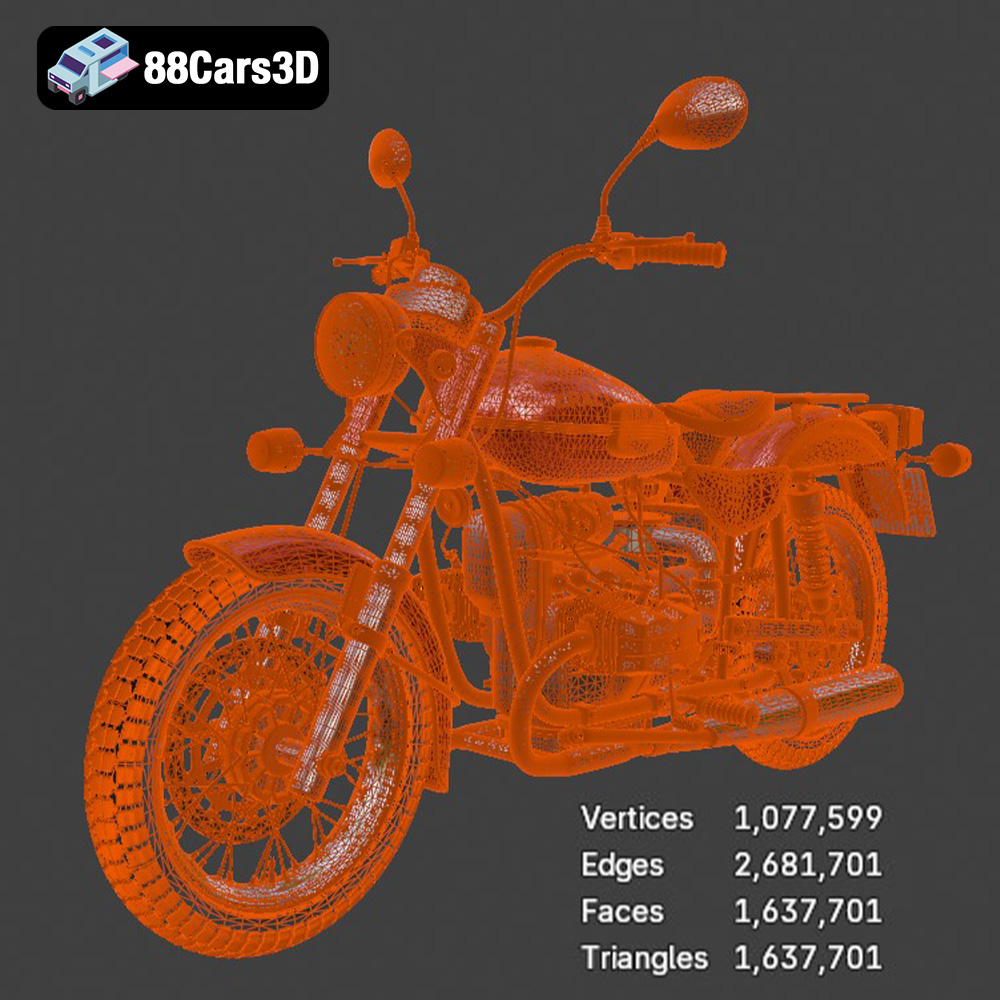
At the heart of any high-quality 3D model is its topology – the arrangement of polygons. The Ural Solo sT 3D Model boasts clean, quad-based geometry, which is crucial for smooth subdivision, deformation, and consistent shading. This means when you apply subdivision surfaces (like TurboSmooth or OpenSubdiv), the model retains its original form without pinching or artifacts, producing an impeccably smooth final render. Furthermore, optimized topology ensures that the model is efficient, balancing detail with polygon count, making it suitable for both high-end cinematic renders and real-time game engines. The structural precision is authentic, reflecting the real-world vehicle’s design.
Beyond the mesh, the materials and textures breathe life into the model. The Ural Solo sT features realistic materials that accurately represent metal, rubber, chrome, and other surfaces found on the actual motorcycle. This involves detailed PBR (Physically Based Rendering) workflows, where textures for albedo, roughness, metallic, normal, and sometimes even ambient occlusion are meticulously crafted. These maps ensure that the model reacts realistically to various lighting conditions, creating convincing reflections, subtle surface imperfections, and an overall sense of tactile realism. The carefully crafted textures enhance the model’s presence, whether viewed up close or from a distance.
A truly versatile 3D model must be scalable. The Ural Solo sT 3D Model is built with this in mind. Its clean geometry and optimized structure allow it to be easily adapted for different levels of detail (LODs). For an automotive rendering project requiring extreme close-ups, the model can be subdivided further, revealing exquisite detail. For a game engine, lower poly versions or baked normal maps can be utilized to maintain performance while preserving visual fidelity. This adaptability means you acquire an asset that can serve a wide range of purposes, from high-resolution marketing visuals to interactive mobile experiences, all stemming from the same high-quality source.
The true value of a premium 3D model like the Ural Solo sT from 88cars3d.com lies in its seamless integration into established professional pipelines. Let’s explore how it fits into common industry workflows.
For artists focused on stunning visuals, the Ural Solo sT 3D Model is a dream. In Autodesk 3ds Max, the provided .max file offers immediate access to a scene configured for high-fidelity rendering engines like V-Ray or Corona. Artists can drop the model into their scene, set up studio lighting, and achieve photorealistic results with minimal effort. Similarly, the .blend file provides a native Blender experience, leveraging its powerful Cycles renderer for unbiased, physically accurate renders, or Eevee for fast, real-time feedback. The clean geometry and PBR materials ensure that reflections, refractions, and global illumination behave as expected, bringing out the true beauty of the Ural Solo sT in any lighting scenario.
Game developers demand performance and visual quality. The Ural Solo sT, available in .fbx and specific .unreal formats, is perfectly poised for integration into Unreal Engine. The .fbx file, with its embedded materials and animations (if present), imports smoothly, allowing developers to create material instances and apply textures efficiently. The “unreal” specific asset further streamlines this, often coming with pre-configured materials, LODs, and collision meshes, significantly reducing setup time. This allows for rapid iteration and deployment, whether the motorcycle is a playable vehicle, an environmental prop, or part of a cinematic in-game sequence. The optimized topology ensures that the model contributes positively to frame rates while maintaining a high level of detail, critical for immersive gameplay.
The utility of the Ural Solo sT 3D Model extends beyond traditional screens. For AR/VR experiences, the .glb format is invaluable. Its lightweight, self-contained nature makes it ideal for real-time mobile and headset applications. Developers can quickly integrate the model into AR frameworks like Apple’s ARKit or Google’s ARCore, allowing users to place a virtual Ural Solo sT into their real-world environment. For VR, the optimized geometry ensures that the model renders efficiently within a VR headset, preventing motion sickness and delivering a smooth, immersive view. Furthermore, the .stl file opens the door to physical prototyping and collectibles. Designers can send the model directly to a 3D printer, bringing the digital asset into the physical realm for concept review, miniature production, or custom fabrication.
High-quality 3D car models are the backbone of countless successful projects across various industries. The versatility and fidelity offered by assets like the Ural Solo sT 3D Model make them indispensable tools for creative professionals.
Automotive visualization studios frequently rely on highly accurate 3D models to create marketing materials, virtual showrooms, and configurators for real-world car manufacturers. Imagine a studio tasked with showcasing a classic motorcycle in a variety of environments, from a gritty urban setting to a serene natural landscape. Using the Ural Solo sT 3D Model, they can quickly populate scenes, adjust lighting to emphasize design features, and render hyper-realistic images and animations. The clean topology ensures that reflections on the chrome and painted surfaces are flawless, and the accurate proportions make the bike feel tangible. This efficiency allows studios to deliver high-impact visuals on tight deadlines, showcasing the product effectively without the need for physical prototypes or elaborate photo shoots.
Independent game developers often operate with limited budgets and timelines, making ready-to-use game assets a game-changer. Consider a small team developing an open-world racing game or an adventure title set in a post-apocalyptic world. Populating their environment with unique, high-quality vehicles is crucial for immersion. The Ural Solo sT 3D Model, with its optimized geometry and game-engine-ready formats, allows these developers to quickly integrate a visually stunning motorcycle. They can then focus their resources on gameplay mechanics, AI, and narrative, rather than spending months modeling a single vehicle from scratch. The robust construction of models available at 88cars3d.com means fewer glitches and more reliable performance, a critical factor for indie studios.
Beyond entertainment, professional 3D models play a vital role in training and simulation. Industries like defense, logistics, and emergency services utilize highly realistic digital environments to train personnel for complex scenarios. For instance, a military simulation might require accurate vehicle models for virtual reconnaissance or vehicle maintenance training. A detailed model like the Ural Solo sT could be used to simulate vehicle operations, practice repair procedures, or even assess environmental impact without the risks and costs associated with real-world training exercises. The precision and realism of the model enhance the training’s effectiveness, allowing participants to interact with lifelike digital representations, improving decision-making and preparedness.
The journey from concept to a stunning 3D visualization or an immersive interactive experience is paved with meticulous detail and technical prowess. The importance of high-quality 3D models cannot be overstated, as they form the very fabric of our digital worlds. From the foundational precision of their geometry and materials to their seamless integration into diverse professional workflows, these assets are crucial for achieving realism, optimizing performance, and accelerating production.
The Ural Solo sT 3D Model stands as a prime example of such an indispensable asset. Its carefully crafted design, robust technical specifications, and comprehensive range of file formats make it an exceptionally versatile tool for automotive rendering, game development, AR/VR experiences, and even 3D printing. By choosing premium assets like the Ural Solo sT, available at 88cars3d.com, creators, designers, and developers empower themselves with the foundation needed to bring their most ambitious visions to life. Explore the potential and elevate your next project with assets built for professional excellence.
Experience true realism with the Ural Solo sT 3D Model. This carefully crafted digital asset captures the rugged design and iconic presence of the Ural Solo sT, delivering exceptional detail for your projects. Ideal for both close-up shots and expansive environments, this model brings authentic structural precision to any scene.
$19.99
.arvr
.blend
.car3dmodel
.cruiser
.fbx
.gameasset
.glb
.max
.motorcycle
.obj
.ply
.rendering
.simulation
.solost
.stl
.unreal
.ural