Get 20% OFF All Premium 3D & STL Models!

In the dynamic world of digital creation, the demand for high-quality 3D assets continues to escalate across industries. From blockbuster game titles and cinematic visual effects to cutting-edge automotive design visualization and immersive AR/VR experiences, precision and realism are paramount. Professionals constantly seek robust, versatile models that can integrate seamlessly into diverse pipelines without compromising on detail or performance. This is where meticulously crafted 3D car models become indispensable, serving as the foundational building blocks for ambitious projects.
Understanding the intricate balance between aesthetic accuracy and technical efficiency is crucial. A truly exceptional 3D vehicle model not only captures the visual essence of its real-world counterpart but also boasts clean geometry, optimized materials, and broad compatibility. It’s an investment that pays dividends in saved production time, enhanced visual fidelity, and expanded creative possibilities. Today, we delve deep into the technical intricacies and broad applications of such assets, focusing on how a model like the Volvo Trucks Benz GT-001 3D Model exemplifies the pinnacle of professional-grade 3D design, ready to elevate any digital environment.
The versatility of a 3D model is largely defined by the array of file formats it supports. Each format is designed with specific use cases in mind, offering unique advantages for different stages of a production pipeline. A comprehensive package, like the Volvo Trucks Benz GT-001 3D Model available at 88cars3d.com, provides a suite of formats, ensuring seamless integration into virtually any professional environment. Understanding these formats is key to maximizing efficiency and achieving your desired output.
The .blend format is native to Blender, the powerful open-source 3D creation suite. When you receive a .blend file, you’re getting a complete Blender scene, often including the fully editable mesh, materials, textures, lighting setups, cameras, and even animation data. This format is ideal for users working primarily in Blender who need to modify the model, re-rig it, set up custom renders using Cycles or Eevee, or integrate it into existing Blender projects. Its primary advantage is retaining all the scene information, offering maximum flexibility and control over every aspect of the asset.
.fbx (Filmbox) is a proprietary file format developed by Autodesk, widely regarded as the industry standard for exchanging 3D data between different software applications. It excels in transferring models, animation, cameras, and lights, making it ideal for game development (Unreal Engine, Unity), visual effects, and architectural visualization. The .fbx format is particularly robust for real-time pipelines due to its efficient handling of mesh data, PBR materials, and skeletal animations. Its widespread adoption ensures excellent compatibility, making it a go-to for professionals moving assets between programs like 3ds Max, Maya, Blender, and game engines.
The .obj (Wavefront Object) format is one of the oldest and most universally supported 3D file formats. It’s a simple, text-based format primarily used for transferring geometric data (vertices, normals, UV coordinates). While it doesn’t typically store animation or rigging information, it’s excellent for static mesh exchange across virtually all 3D software. The .obj format is highly reliable for ensuring cross-software compatibility for the core mesh of your 3D car models, often accompanied by an .mtl (material library) file defining basic material properties and texture references.
.glb (GL Transmission Format Binary) is the binary version of glTF, a royalty-free specification for the efficient transmission and loading of 3D scenes and models by engines and applications. Developed by the Khronos Group, .glb is designed specifically for modern web-based applications, AR (Augmented Reality), and VR (Virtual Reality). It packages all necessary data (geometry, materials, textures, animations) into a single, self-contained binary file, optimizing for fast loading and rendering. For interactive product configurators, social media filters, or mobile AR experiences involving a sophisticated asset like a concept truck, .glb is the format of choice.
.stl (STereoLithography) is a standard file format widely used for 3D printing and computer-aided manufacturing. It represents a 3D model as a series of connected triangles, describing the surface geometry without color or texture information. While simple, its ubiquity makes it essential for anyone looking to physicalize their digital designs. For a concept vehicle like the Volvo Trucks Benz GT-001, an .stl file would be crucial for creating scale models or rapid prototypes through additive manufacturing.
The .ply (Polygon File Format) is another format used for storing 3D data, particularly from 3D scanners. It can store a wider range of properties than .obj or .stl, including color, transparency, and sometimes even surface normal information, for each vertex or face. While less common for everyday artistic exchange, .ply is valued in fields requiring precise mesh data for CAD, reverse engineering, scientific visualization, or detailed analysis of geometric structures.
The inclusion of an .unreal file (often a .uasset or content package specific to Unreal Engine) signifies that the model has been pre-configured and optimized specifically for the Unreal Engine environment. This means materials are set up using Unreal’s PBR workflow, textures are correctly linked, and potentially even collision meshes or LODs (Levels of Detail) are integrated. This dramatically speeds up development for game assets, architectural walkthroughs, or cinematic sequences within Unreal, allowing artists to drop the asset directly into their project with minimal setup.
The .max file format is native to Autodesk 3ds Max, a leading software for 3D modeling, animation, rendering, and visualization. Like .blend, a .max file contains the complete scene data, including editable geometry, complex material networks (e.g., V-Ray, Corona), lighting setups, animation rigs, and render settings. For professionals operating within a 3ds Max pipeline, this format provides full control over the asset, enabling intricate modifications, advanced rendering setups, and seamless integration into architectural or product visualization projects. It’s an indispensable format for high-fidelity automotive rendering.
The availability of such a diverse range of formats with the Volvo Trucks Benz GT-001 3D Model underscores its professional-grade utility, ensuring that whether your project demands detailed offline rendering, real-time interactive experiences, or physical prototyping, you have the right tools at your disposal.
Achieving true digital realism goes far beyond simply replicating shapes. It involves a meticulous approach to every technical facet of the 3D model, ensuring that the asset not only looks authentic but also performs optimally across various applications. The Volvo Trucks Benz GT-001 3D Model stands out as a prime example of this philosophy, designed to meet the rigorous standards of professional production.
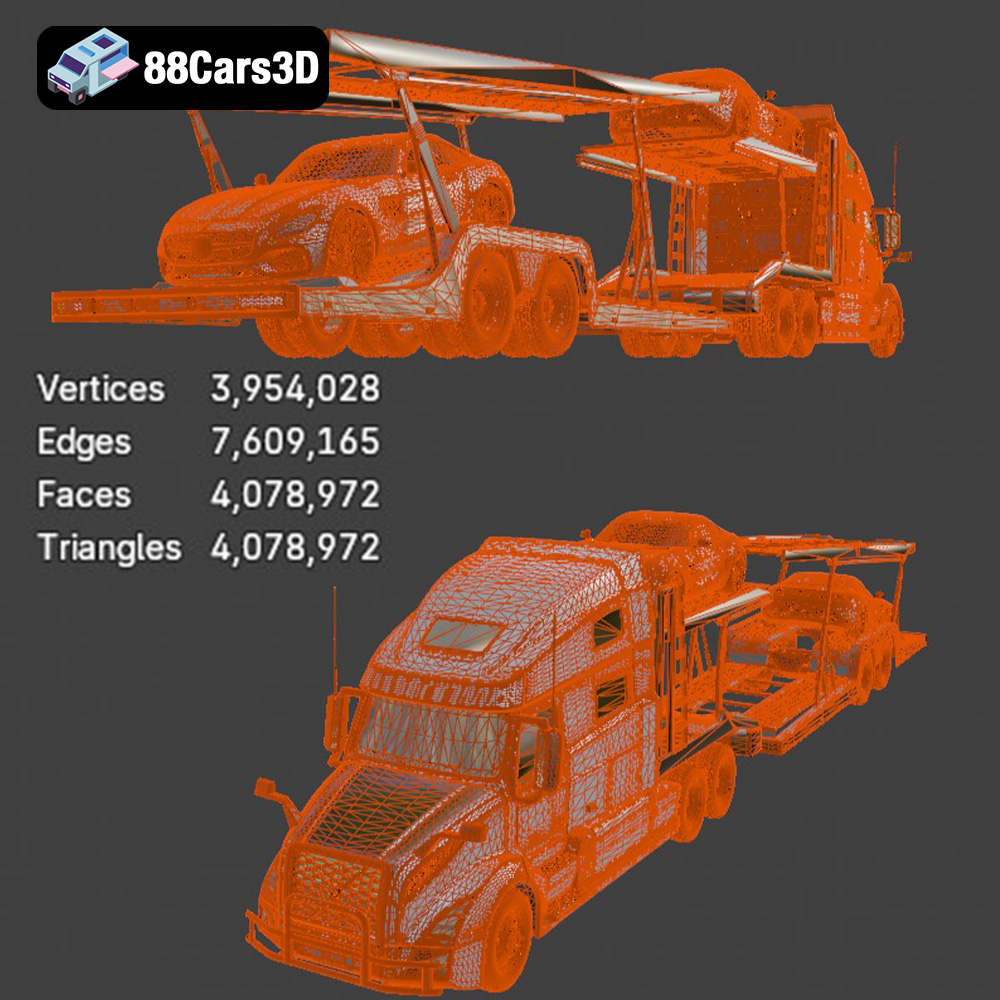
At the core of any high-quality 3D car model is its geometry and topology. The Volvo Trucks Benz GT-001 boasts “clean geometry” and “authentic proportions,” which are critical indicators of a professionally constructed asset. Clean geometry implies a well-organized mesh, predominantly composed of quads (four-sided polygons), which are ideal for subdivision smoothing, deformation, and animation. This prevents shading artifacts and allows for smooth transitions and surfaces, essential for replicating the sleek curves and robust lines of a modern concept truck.
Furthermore, “without unnecessary polygon overhead” is a key advantage. This means the model is optimized for performance. While detail is captured, redundant polygons are eliminated, ensuring the model is efficient for real-time applications like game engines and AR/VR, where frame rates are paramount. For high-fidelity rendering, this clean topology also makes it easier to apply subdivision surfaces, adding detail only where needed, thus managing render times effectively.
Realistic materials and textures are what breathe life into a 3D model. The Volvo Trucks Benz GT-001 features “realistic materials,” indicative of a Physically Based Rendering (PBR) workflow. This means the model’s surfaces are set up with textures for albedo (color), roughness, metallic, normal, and possibly ambient occlusion, allowing light to interact with the surfaces in a physically accurate manner. This ensures that the truck looks convincing under various lighting conditions, whether in a studio render or a dynamic outdoor scene.
Accurate UV mapping is also implicitly crucial here. Every surface of the model must have well-laid-out UVs to ensure textures wrap correctly without stretching or distortion. This attention to detail is what allows for the faithful reproduction of vehicle paint, glass reflections, tire tread, and other intricate surface details. Coupled with “authentic proportions,” the model guarantees that the truck not only looks good up close but also maintains its imposing presence and accurate scale when viewed from a distance or alongside other assets.
Many 3D vehicle models focus solely on the exterior, limiting their utility. However, the Volvo Trucks Benz GT-001’s “fully modeled interior” significantly expands its application. For cinematic rendering, this allows for dynamic camera angles peering into the cabin, enhancing storytelling. In game development and simulation, a detailed interior is indispensable for first-person views, making driving experiences more immersive and realistic. For AR/VR, it allows users to ‘sit inside’ the vehicle, offering a deeper sense of presence and interaction. This level of comprehensive detailing showcases a commitment to versatility, making the model valuable for a wider spectrum of professional projects.
The true value of a high-quality 3D car model like the Volvo Trucks Benz GT-001 lies in its seamless integration into diverse professional workflows. Whether you’re a visualization artist, a game developer, or an industrial designer, this model provides a solid foundation, saving countless hours of initial modeling and allowing you to focus on the creative aspects of your project.
For stunning, photorealistic automotive rendering, software like 3ds Max and Blender are industry powerhouses. The inclusion of native .max and .blend files with the Volvo Trucks Benz GT-001 streamlines this process dramatically. In 3ds Max, artists can load the model, which often comes with pre-configured V-Ray or Corona materials, ready for advanced lighting setups. This allows for intricate scene building, environmental effects, and detailed camera work to create breathtaking promotional imagery or animated sequences. Similarly, Blender users can leverage the .blend file directly, utilizing Cycles or Eevee for equally impressive renders. This direct compatibility means less time spent on importing, re-texturing, and fixing geometry, and more time on artistic direction, resulting in superior “automotive rendering.”
The gaming and real-time visualization sectors thrive on efficiency and visual fidelity. The Volvo Trucks Benz GT-001 3D Model, with its .fbx and .unreal formats, is perfectly tailored for game development. Importing the .fbx into Unreal Engine or Unity is straightforward, allowing developers to set up materials, add collision meshes, and implement LODs (Levels of Detail) for optimal performance across different hardware configurations. The dedicated .unreal file takes this a step further, often providing a pre-configured asset ready to drop into an existing Unreal project, complete with proper material instances and texture assignments. This significantly reduces setup time for artists developing interactive experiences, simulations, or immersive walkthroughs.
Beyond entertainment, high-quality 3D car models play a vital role in industrial design and visualization. The Volvo Trucks Benz GT-001 can be integrated into product development cycles for design reviews, stakeholder presentations, and even virtual prototyping. Using software like 3ds Max or Blender, designers can visualize the truck in various contexts, experiment with different finishes, or even modify certain design elements. The .stl and .ply formats also facilitate physical prototyping, allowing for the creation of scale models to evaluate ergonomics, aesthetics, and overall presence before committing to expensive physical builds. This capability makes the model an invaluable tool for accelerating the design process and reducing costs associated with traditional prototyping methods.
The utility of a high-quality 3D car model extends far beyond static renders. Its robust construction and versatile file formats open doors to dynamic interactive experiences, immersive virtual worlds, and even physical manifestations. The Volvo Trucks Benz GT-001 3D Model exemplifies this multi-faceted potential, making it a truly valuable asset across a spectrum of modern digital and physical applications.
For game developers, 3D car models are the backbone of virtual fleets. The Volvo Trucks Benz GT-001 is designed with “game asset” requirements in mind. Its clean geometry and optimized polygon count are essential for maintaining stable frame rates in fast-paced game environments. The inclusion of .fbx and .unreal files means it’s ready for immediate integration into game engines like Unreal and Unity. Developers can easily create Levels of Detail (LODs) from the base mesh to ensure the truck renders efficiently whether it’s in the foreground or distant scenery. With its fully modeled interior, it’s perfect for driving simulators, open-world games, or even realistic combat scenarios, offering an immersive player experience from both external and internal perspectives. The robust construction allows for realistic physics simulations, damage models, and interactive components that bring the vehicle to life in the digital realm.
Augmented Reality (AR) and Virtual Reality (VR) are revolutionizing how we interact with digital content, offering unparalleled immersion. The Volvo Trucks Benz GT-001, particularly with its .glb format, is a perfect candidate for AR/VR applications. The .glb file is optimized for quick loading and efficient rendering in real-time AR/VR environments, even on mobile devices. Imagine an AR app where a user can place the concept truck in their driveway, walk around it, and even “step inside” the fully modeled interior to explore its features. In VR, the model could be part of an interactive showroom, a futuristic city simulation, or a training module for commercial vehicle operations. The high fidelity and optimized nature of the model ensure a smooth, believable, and engaging experience, making it invaluable for product showcases, interactive marketing, and advanced simulation in immersive environments.
The journey of a 3D model doesn’t always end on a screen. For industrial design, education, or even hobbyists, converting a digital asset into a physical object via 3D printing is a powerful capability. The inclusion of .stl and .ply formats with the Volvo Trucks Benz GT-001 makes it suitable for “3D printing” and physical prototyping. Designers can print scale models of the concept truck to evaluate its physical presence, proportions, and aesthetic details in a tangible form. This is particularly useful for design reviews where stakeholders might prefer a physical object to interact with. Educational institutions can use printed models for engineering studies or design courses. While 3D printing requires careful consideration of scale, wall thickness, and material properties, having a clean, watertight mesh in .stl ensures a smooth transition from digital design to physical reality.
In professional 3D production, it’s not enough for a model to simply look good. It must also be efficient and adaptable, capable of performing flawlessly across a range of platforms and quality settings. This emphasis on optimization and scalability is what truly distinguishes a professional-grade asset like the Volvo Trucks Benz GT-001 3D Model from lesser quality offerings. These considerations are fundamental for any demanding project, from real-time game engines to high-resolution cinematic renders.
Levels of Detail (LODs) are crucial for managing performance, especially in real-time applications and large-scale scenes. An ideal 3D car model should be structured in a way that allows for easy creation of multiple LODs. While the Volvo Trucks Benz GT-001 offers clean geometry, hinting at an optimized base mesh, the ability to generate simplified versions of the model for distant views or less powerful hardware is paramount. This process involves reducing the polygon count of the mesh while retaining as much visual fidelity as possible. For instance, a game engine might swap out a highly detailed version of the truck for a much simpler one when it’s far away, saving valuable processing power without a noticeable loss in quality for the player. Efficient asset management also involves proper naming conventions, logical grouping of objects, and a well-structured scene hierarchy, all contributing to ease of use and scalability in complex projects.
Modern PBR (Physically Based Rendering) workflows rely heavily on efficient texture sets and intelligent material management. A professional 3D car model, such as those found on 88cars3d.com, typically comes with optimized texture maps (albedo, normal, roughness, metallic, ambient occlusion, etc.) that are correctly sized and formatted. This ensures high visual quality without excessive memory consumption. Furthermore, the use of material instances in game engines like Unreal allows artists to create variations of a base material (e.g., different paint colors, levels of wear) without duplicating textures. This saves VRAM, reduces package size, and simplifies iteration, offering immense flexibility to customize the Volvo Trucks Benz GT-001 without extensive re-texturing work. Proper UV mapping is also critical here, ensuring textures are utilized efficiently across the mesh, avoiding wasted space or distorted projections.
In the fast-paced world of 3D production, time is a valuable commodity. Building every asset from scratch is often impractical, especially when dealing with complex objects like vehicles. This is where specialized marketplaces for high-quality 3D models become indispensable resources. 88cars3d.com stands out as a premier destination for professionals seeking top-tier 3D car models that adhere to industry standards, offering a significant advantage in efficiency and quality.
The primary benefit of sourcing assets from a reputable platform like 88cars3d.com is the assurance of quality. Each model, including the impressive Volvo Trucks Benz GT-001 3D Model, undergoes a rigorous vetting process to ensure it meets professional standards. This means artists can trust that the models come with clean, optimized geometry, accurate proportions, realistic PBR materials, and comprehensive UV mapping. Such attention to detail prevents common pitfalls like messy topology, stretching textures, or incorrect scale, which can derail a project and require extensive cleanup work. By providing assets that are “crafted for professionals seeking precision and accuracy,” 88cars3d.com empowers creators to integrate models directly into their pipelines with confidence, knowing they are working with robust and reliable data.
The most tangible benefit of purchasing pre-made, high-quality 3D car models is the immense saving in time and resources. Modeling a complex vehicle from the ground up, with a fully detailed exterior and interior, accurate proportions, and optimized topology for multiple uses, can take hundreds of hours for even experienced artists. By acquiring a model like the Volvo Trucks Benz GT-001, these hours are instantly converted into productive time for rendering, animation, scene development, or game logic. The upfront investment in a quality asset is significantly less than the cost of commissioning a custom model or allocating internal resources to create one from scratch. This efficiency allows studios and individual artists to meet tighter deadlines, take on more projects, and allocate their creative energy to higher-level design and storytelling, ultimately enhancing overall project profitability and artistic output.
The digital landscape of 3D creation is continuously evolving, demanding assets that are not only visually stunning but also technically robust and versatile. High-quality 3D car models are more than just pretty visuals; they are fundamental tools that empower professionals across industries to bring their visions to life with unparalleled efficiency and fidelity. From the intricate demands of automotive rendering and immersive game development to the cutting-edge requirements of AR/VR and the practicalities of 3D printing, a well-constructed model is a cornerstone of success.
The Volvo Trucks Benz GT-001 3D Model stands as a testament to this commitment to excellence. Its clean geometry, authentic proportions, realistic materials, and the provision of a comprehensive suite of industry-standard file formats – from .blend and .max for deep editing to .fbx, .unreal, and .glb for real-time applications, and .stl/.ply for physical output – ensure its adaptability across virtually any professional pipeline. This model offers an incredible foundation for diverse projects, whether you’re creating cinematic sequences, building interactive simulations, or crafting the next generation of game assets.
Platforms like 88cars3d.com play a crucial role in democratizing access to such premium assets, enabling artists and studios to bypass time-consuming initial modeling and jump straight into creative production. By choosing a model like the Volvo Trucks Benz GT-001 from a trusted source, you’re not just buying a 3D file; you’re investing in quality, efficiency, and the seamless integration necessary to elevate your projects to the highest professional standards. Embrace the power of meticulously crafted 3D assets and unlock the full potential of your digital environments.
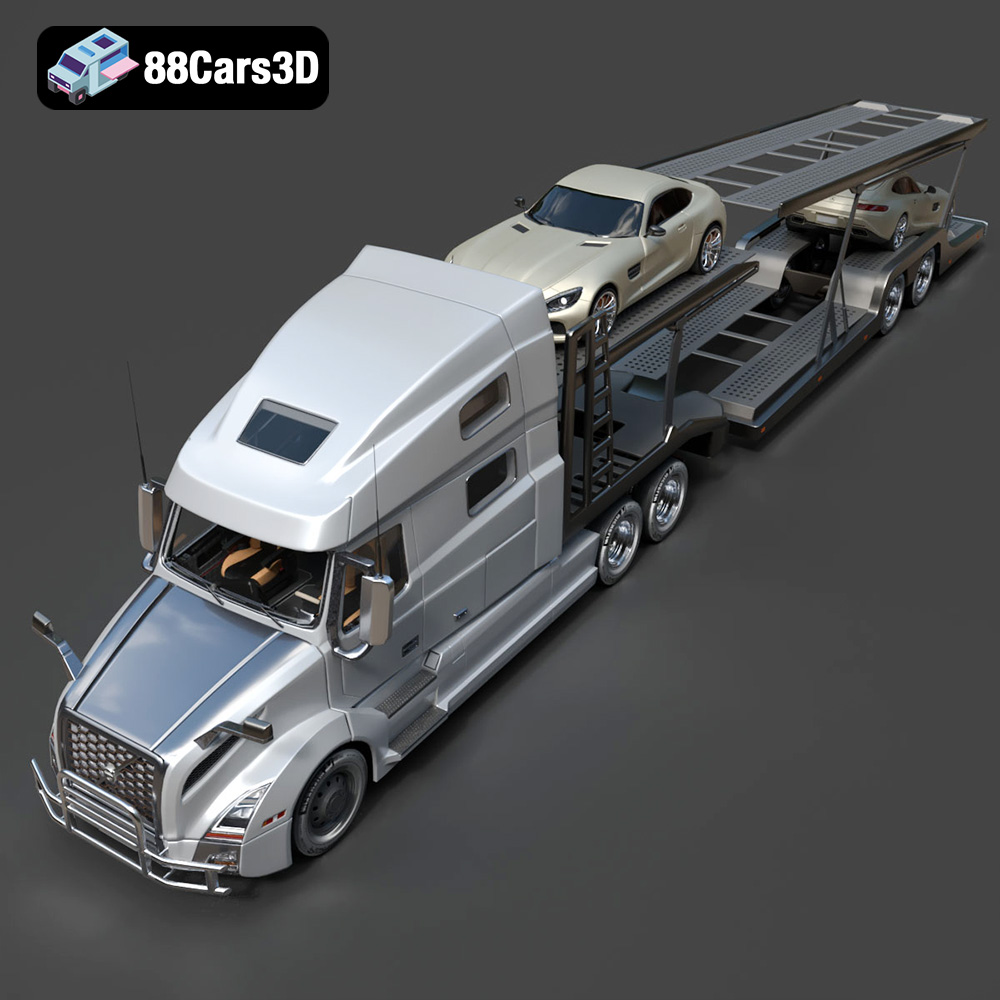
Discover exceptional digital realism with the Volvo Trucks Benz GT-001 3D Model, crafted for professionals seeking precision and accuracy in vehicle design. This model captures the robust presence and intricate aesthetic of the original vehicle, providing an incredible asset for your digital environment. Engineered with clean geometry, authentic proportions, and realistic materials, this model delivers a professional standard without unnecessary polygon overhead. Every detail is meticulously constructed to ensure optimal performance across various platforms. It perfectly highlights the modern design elements and functional features synonymous with premium truck concepts. Whether you are working on game development, creating cinematic rendering sequences, building interactive AR/VR experiences, or producing industrial visualizations, this versatile model provides the foundation you need. The inclusion of a fully modeled interior expands its utility for both external showcase shots and immersive first-person simulation setups. The package includes a comprehensive set of industry-standard file formats to guarantee seamless integration into any pipeline: .blend, .fbx, .obj, .glb, .stl, .ply, .unreal, .max.
$29.99
.arvr
.benz
.blend
.car3dmodel
.commercialvehicle
.concepttruck
.fbx
.gameasset
.glb
.gt001
.max
.obj
.ply
.rendering
.simulation
.stl
.truck
.unreal
.volvo
.volvotrucks