Get 20% OFF All Premium 3D & STL Models!

In the exhilarating world of automotive design, visualization, and interactive media, the demand for hyper-realistic and technically sound 3D car models is paramount. Artists, developers, and engineers alike constantly seek assets that not only capture the aesthetic essence of a vehicle but also provide the underlying technical integrity required for demanding projects. Few cars encapsulate this pursuit of perfection quite like the Ferrari SF90 Stradale, a groundbreaking hypercar that blends blistering performance with cutting-edge hybrid technology.
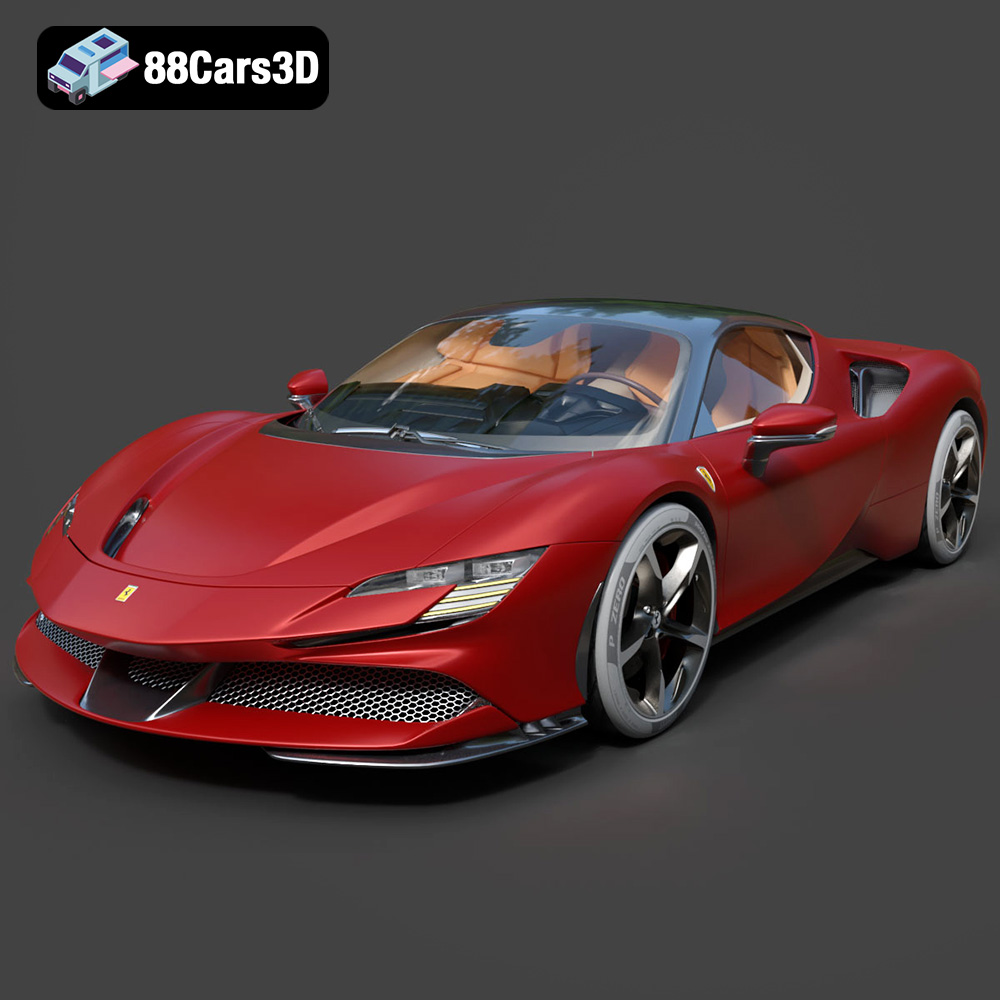
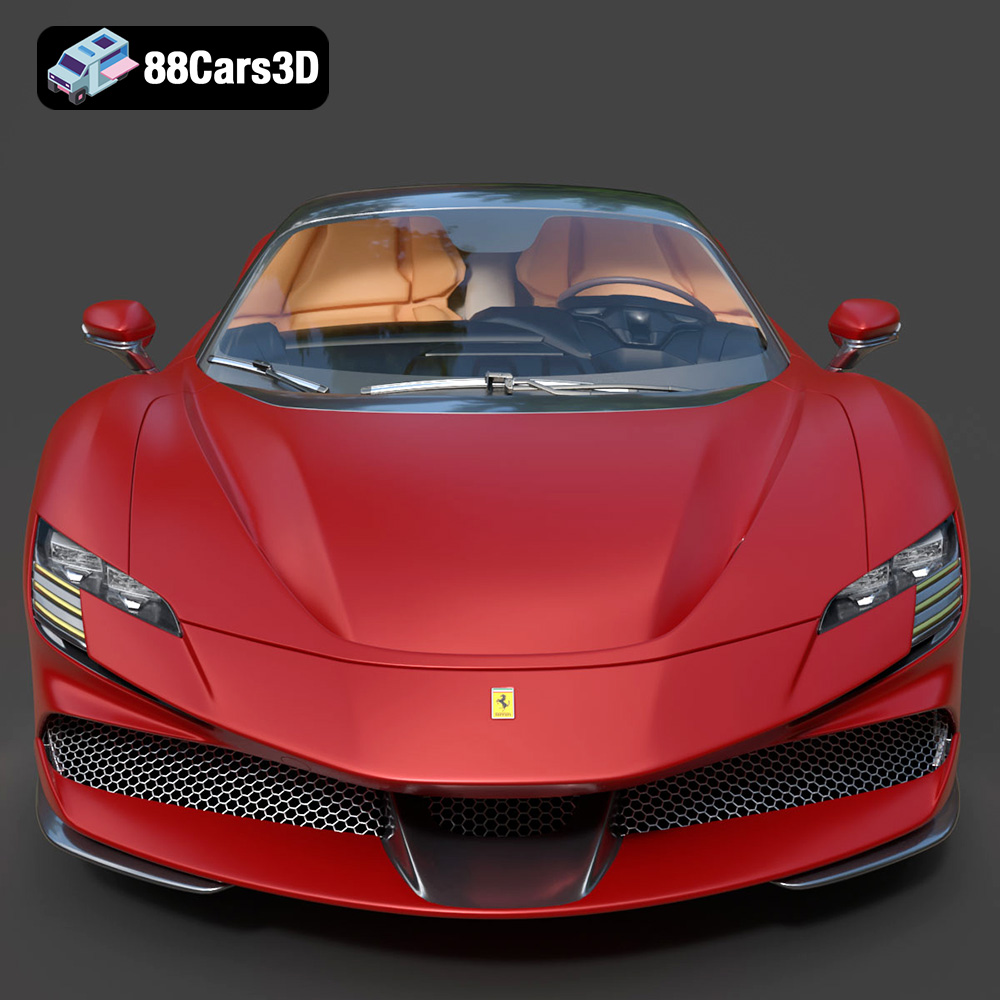
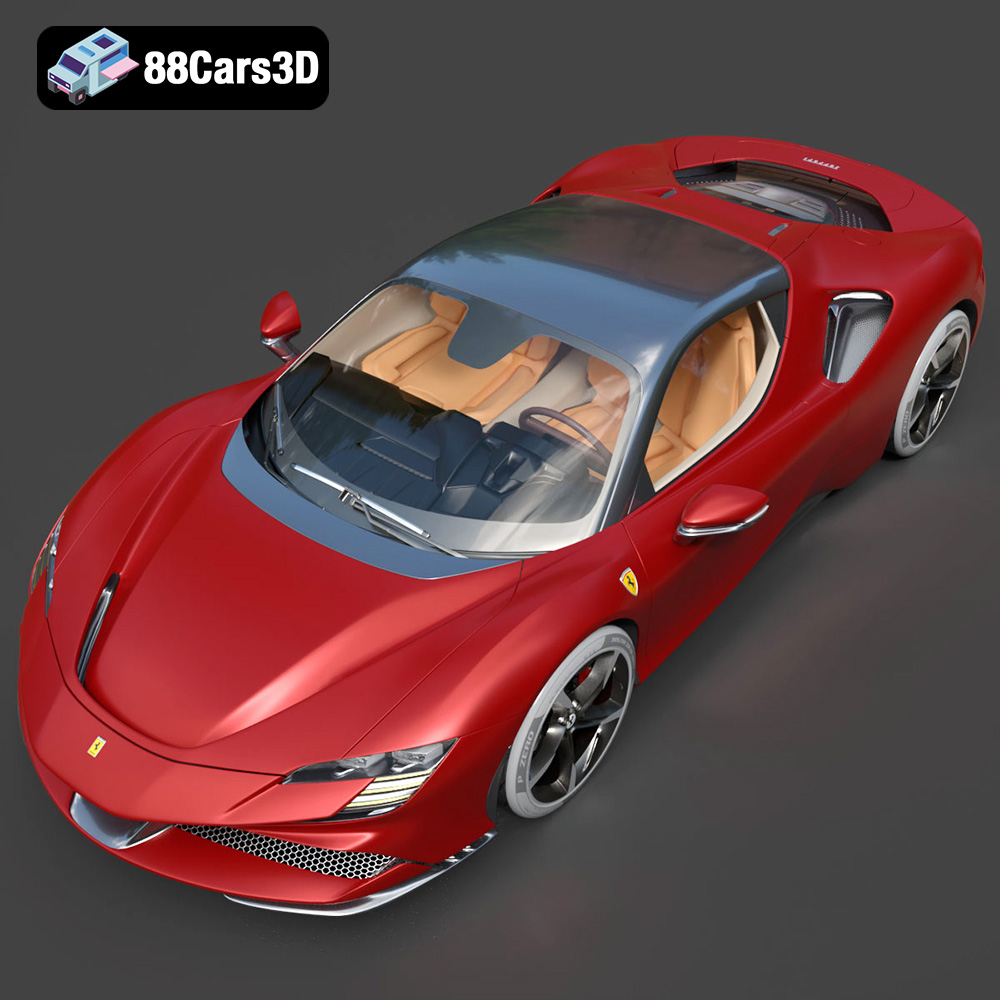
Imagine being able to integrate this icon of automotive engineering into your next project – whether it’s a high-fidelity render, an immersive virtual reality experience, or a fast-paced game. This is precisely where a meticulously crafted Ferrari SF90 Stradale 2020 3D Model becomes an indispensable tool. Offered on platforms like 88cars3d.com, such a model isn’t just a digital replica; it’s a gateway to accelerating workflows, achieving unparalleled realism, and delivering professional-grade results across a spectrum of applications. With its clean geometry, realistic materials, and robust file format support, this model empowers creators to bring the SF90’s formidable presence to any digital canvas.
The versatility of a high-quality 3D model often hinges on the range and integrity of its provided file formats. Each format serves specific purposes, offering advantages in terms of compatibility, features, and optimization for various software and pipelines. Understanding these distinctions is crucial for anyone working with 3D car models, ensuring smooth integration and optimal performance in diverse projects.
The .blend file format is Blender’s native project file. When you acquire a .blend file, you’re not just getting the mesh; you’re often getting a complete scene. This includes not only the meticulously modeled Ferrari SF90 Stradale but also its materials, textures, lighting setup, camera angles, and even animation data if present. For Blender users, this means instant access to an editable project with all dependencies correctly linked. It’s ideal for artists who wish to dissect the model, learn from its construction, or customize it extensively within the Blender ecosystem, making it a fantastic starting point for any rendering or animation project.
As one of the most widely supported 3D file formats, .fbx (Filmbox) is the backbone for data exchange between various 3D applications, and crucially, between 3D software and real-time game engines like Unreal Engine and Unity. It efficiently stores not just geometry but also materials, textures, animations, skinning, and even camera and light data. Its robust nature makes it the go-to choice for importing complex animated scenes. For game development, .fbx is invaluable for its ability to package everything needed for an asset, ensuring the Ferrari SF90 Stradale 3D model retains its visual fidelity and animation capabilities when moved into a game environment.
The .obj (Wavefront Object) format is a highly universal and widely compatible standard for exchanging 3D geometry data. While it excels at storing mesh data (vertices, normals, texture coordinates), it typically references external .mtl (material) files for material properties and texture maps. Its simplicity and widespread support make it an excellent choice for basic cross-software compatibility, ensuring that virtually any 3D application can open and display the Ferrari SF90 Stradale model. It’s perfect for static renders or as a base for further detailing in a new software environment.
.glb (GL Transmission Format Binary) is the binary version of the glTF format, specifically designed for efficient transmission and loading of 3D scenes and models in web and AR/VR applications. It’s a “self-contained” format, embedding all assets like textures and animations directly into a single file, which streamlines deployment. For showcasing the Ferrari SF90 Stradale in a browser-based configurator or an augmented reality app, the .glb format offers optimal performance and ease of use, delivering high-quality visuals with minimal loading times.
The .stl (Stereolithography) format is almost exclusively associated with 3D printing and rapid prototyping. It describes only the surface geometry of a 3D object using a collection of triangular facets, without any color, texture, or material information. While not suitable for rendering, the .stl file of the Ferrari SF90 Stradale is essential for designers and enthusiasts who wish to bring a physical manifestation of the hypercar into existence, whether for detailed scale models or functional prototypes.
The .ply (Polygon File Format) is another format used for storing 3D data, particularly from 3D scanners. It’s capable of storing various properties beyond just geometry, such as color, transparency, and normal vectors for each vertex or face. This makes it a precise mesh format often utilized in CAD, scientific visualization, and analysis applications where detailed geometric information is critical. For those needing an extremely accurate representation of the SF90’s surface for engineering or research, .ply is an excellent option.
The inclusion of an .unreal file (or an Unreal Engine project package) signifies that the Ferrari SF90 Stradale 3D model has been specifically prepared and optimized for Unreal Engine. This often means textures are correctly configured as PBR materials, LODs (Levels of Detail) are set up, collision meshes might be included, and the asset is ready to be dropped directly into an Unreal project with minimal fuss. This saves countless hours for game developers and real-time visualization artists, ensuring the model performs optimally within the engine’s demanding environment.
Similar to .blend for Blender, the .max file is the native project format for Autodesk 3ds Max. This file provides a fully editable scene, including the SF90 Stradale model, materials, textures, lighting, cameras, and animation data. For professionals relying on 3ds Max for high-end architectural visualization, product rendering, or animation, the .max file offers the ultimate flexibility for customization, rigging, and integration into complex production pipelines. It’s a complete package for those entrenched in the Autodesk ecosystem.
Automotive rendering is a specialized field that blends technical precision with artistic vision. It’s about more than just replicating a car; it’s about evoking emotion, highlighting design philosophy, and showcasing engineering prowess. A high-quality 3D car model like the Ferrari SF90 Stradale is the foundation upon which breathtaking visuals are built, allowing artists to create images indistinguishable from photographs.
The magic of photorealistic rendering often lies in the materials. For a car as sophisticated as the Ferrari SF90 Stradale, accurately simulating its metallic paint, carbon fiber weave, intricate leather stitching, and reflective glass is crucial. The provided Ferrari SF90 Stradale 2020 3D Model, with its realistic and high-resolution materials, serves as an excellent starting point. In software like 3ds Max or Blender, artists utilize physically based rendering (PBR) workflows, defining properties such as roughness, metallicness, normal maps, and clear coat layers. Each surface reacts to light precisely as it would in the real world, creating dynamic reflections and subtle highlights that define the vehicle’s form. This attention to material detail is what transforms a simple mesh into a compelling visual statement.
Even the most detailed 3D model will fall flat without expert lighting and thoughtful composition. Studio lighting setups, often mimicking real-world photographic environments, are essential for revealing the SF90 Stradale’s sculpted lines and aggressive aerodynamics. HDR (High Dynamic Range) environment maps can be used to simulate complex outdoor lighting scenarios, casting realistic shadows and reflections that ground the car in its environment. Compositing techniques, akin to post-processing in photography, further enhance the final image, adjusting color grades, adding depth of field, and subtle atmospheric effects. An artist working with the Ferrari SF90 Stradale model from 88cars3d.com can quickly iterate on different lighting schemes and camera angles, producing a portfolio of stunning renders that captivate audiences.
While cinematic renders aim for absolute fidelity, game development requires a delicate balance between visual quality and performance. High-quality game assets must look superb while maintaining optimal frame rates, a challenge particularly acute for complex vehicles like the Ferrari SF90 Stradale. The professional-grade quality and optimization inherent in the 88cars3d.com model are crucial here.
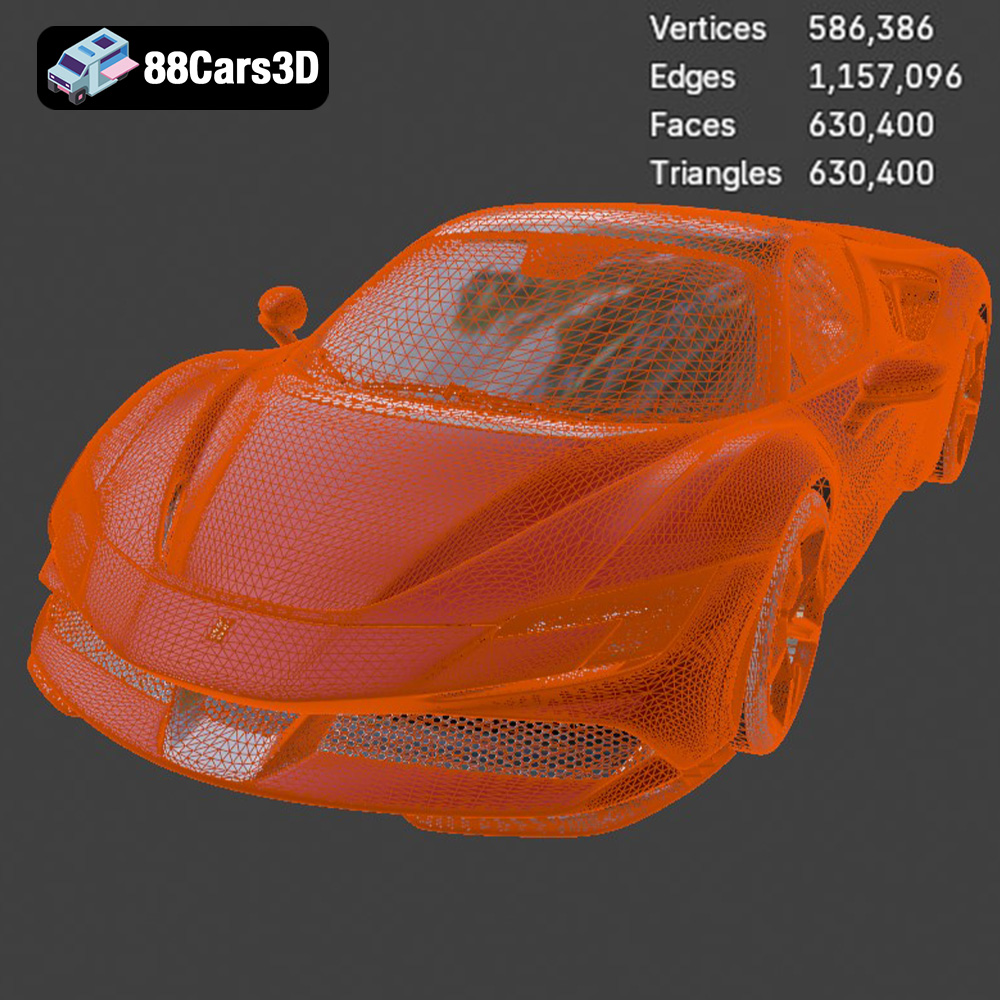
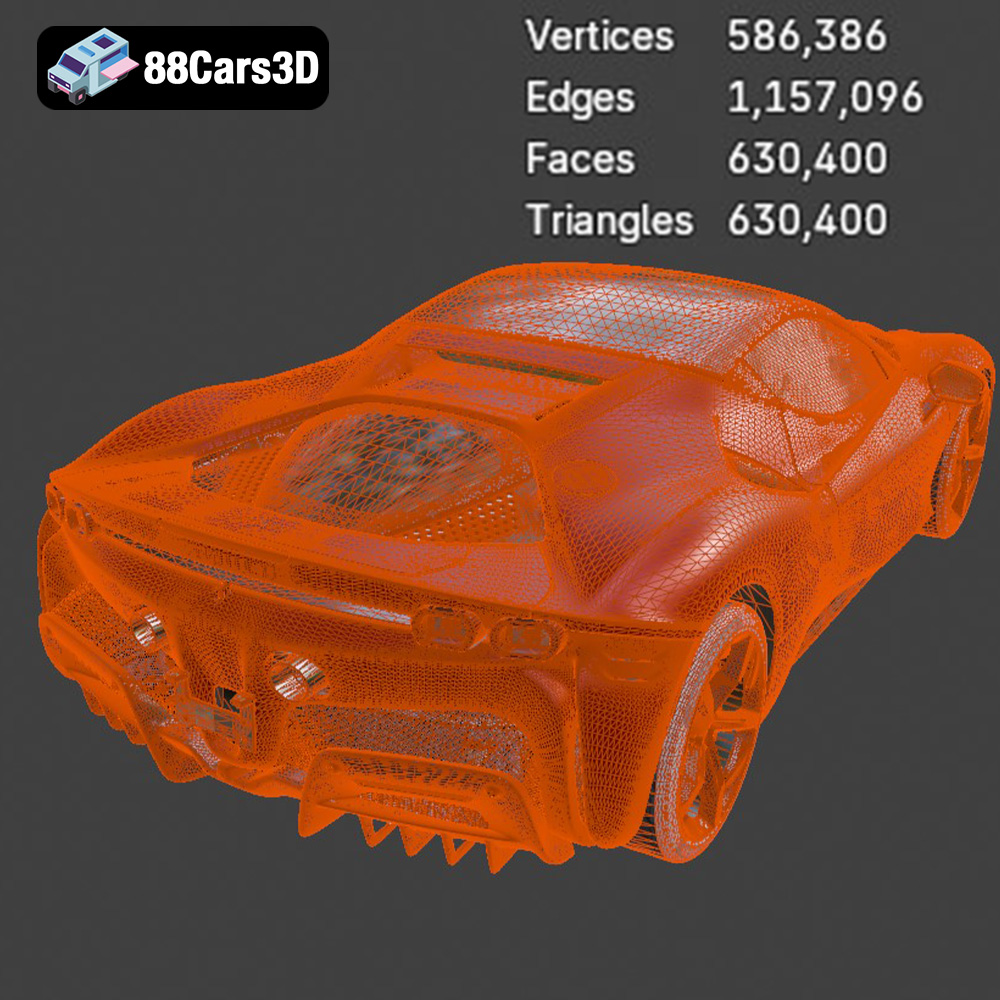
Game engines like Unreal Engine and Unity need efficient models. This means careful management of polygon counts. The “clean and efficient geometry” of the Ferrari SF90 Stradale model is a significant advantage. Developers often employ techniques such as Level of Detail (LOD) generation, where lower-polygon versions of the model are automatically swapped in when the car is further from the camera. This ensures that resources are only spent on the detail that is visible. Additionally, proper mesh optimization, removal of unnecessary vertices, and clean topology contribute directly to smoother performance in real-time simulations and interactive experiences.
For realistic appearance in games, PBR (Physically Based Rendering) texture sets are standard. The Ferrari SF90 Stradale model would come with albedo (color), normal, roughness, metallic, and ambient occlusion maps. These textures tell the game engine how light interacts with every surface. To further optimize, texture atlases—combining multiple smaller textures into one larger image—reduce draw calls, significantly boosting performance. The provided .fbx and .unreal formats of the SF90 model are specifically designed to facilitate these workflows, ensuring that the car looks stunning whether it’s speeding across a virtual track or parked in a garage configurator.
The utility of a premium 3D car model extends far beyond traditional rendering and game development. The Ferrari SF90 Stradale 2020 3D Model, with its diverse file format support, opens doors to cutting-edge applications in augmented reality (AR), virtual reality (VR), advanced simulation, and even physical manufacturing through 3D printing.
Augmented Reality allows users to place a digital object into their real-world environment, while Virtual Reality transports them entirely to a digital one. Imagine interacting with the Ferrari SF90 Stradale in AR, scaling it down to inspect its details on your desk, or walking around a life-sized version in your driveway. In VR, you could sit inside the cockpit, manipulate controls, or even “drive” it in a hyper-realistic simulation. The .glb file format, optimized for AR/VR and web-based display, is particularly valuable here, allowing for seamless integration into platforms like WebXR or dedicated AR/VR applications. This isn’t just entertainment; it’s a powerful tool for marketing, product demonstration, and even driver training simulations.
While the digital model excels in virtual realms, the .stl format included with the Ferrari SF90 Stradale 3D Model allows for its transformation into a tangible object. Engineers and designers can utilize this for rapid prototyping, creating physical models to evaluate form factors, scale, and ergonomic aspects before committing to costly full-scale production. Educators can use 3D printed models to demonstrate complex automotive structures, and enthusiasts can simply enjoy a highly detailed physical replica. This bridge between the digital and physical realms highlights the comprehensive utility of such a versatile 3D asset.
In a professional production environment, efficiency and quality are paramount. Sourcing pre-made, high-quality 3D car models dramatically reduces development time and costs, allowing teams to focus on creative execution rather than foundational modeling. The Ferrari SF90 Stradale 2020 3D Model from 88cars3d.com exemplifies an asset designed to seamlessly integrate into demanding professional workflows.
Modeling a vehicle as complex and iconic as the Ferrari SF90 Stradale from scratch can take hundreds of hours for an experienced artist. This includes meticulous blueprint matching, sculpting, retopology, UV unwrapping, and material creation. By purchasing a professional-grade, ready-to-use 3D model, studios can skip these labor-intensive steps entirely. This accelerates project timelines, reduces labor costs, and ensures a consistent level of quality across different projects. For architectural visualizations needing a hero car, or game studios rapidly populating a virtual world, this efficiency is invaluable.
While the model is ready to use, professional workflows often require adaptation. The inclusion of fully editable files like .blend and .max means artists have complete control. They can modify specific components, create custom liveries, adapt the model for specific rigging requirements (e.g., car physics in a game engine), or integrate it into complex scene compositions. The clean geometry of the Ferrari SF90 Stradale model ensures that such modifications are straightforward and non-destructive, empowering artists to make it perfectly fit their unique vision without compromising the asset’s underlying integrity. This balance of out-of-the-box readiness and deep editability is what defines a truly valuable professional asset.
The digital realm continues to expand its boundaries, demanding ever-increasing levels of realism and versatility from its assets. The Ferrari SF90 Stradale, a testament to automotive innovation, deserves a 3D representation that matches its real-world prowess. A high-quality Ferrari SF90 Stradale 2020 3D Model is not merely a collection of polygons and textures; it is a meticulously crafted digital tool engineered to meet the rigorous demands of modern creative and technical pipelines.
From stunning automotive rendering and dynamic game asset creation to immersive AR/VR experiences, scientific visualization, and even tangible 3D prints, this model provides an unparalleled foundation. Its comprehensive suite of file formats – .blend, .fbx, .obj, .glb, .stl, .ply, .unreal, and .max – ensures maximum compatibility and optimization for any project, giving artists and developers the freedom to choose their preferred software and application without compromise. By leveraging such professional-grade assets, creators can focus their energy on innovation and storytelling, confident that the underlying quality of their 3D car models will elevate their final output. For those seeking to integrate the pinnacle of automotive design into their next digital endeavor, exploring the meticulously crafted Ferrari SF90 Stradale 3D Model available at 88cars3d.com is an essential step.
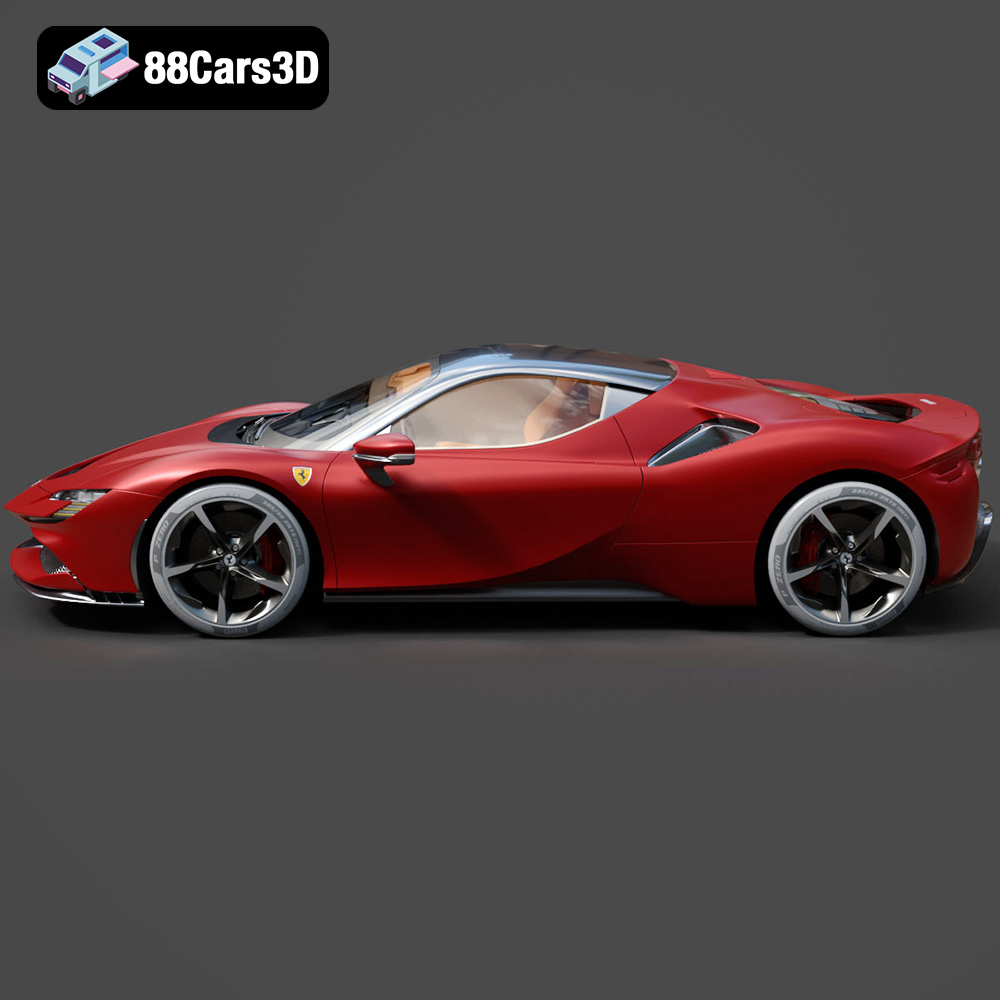
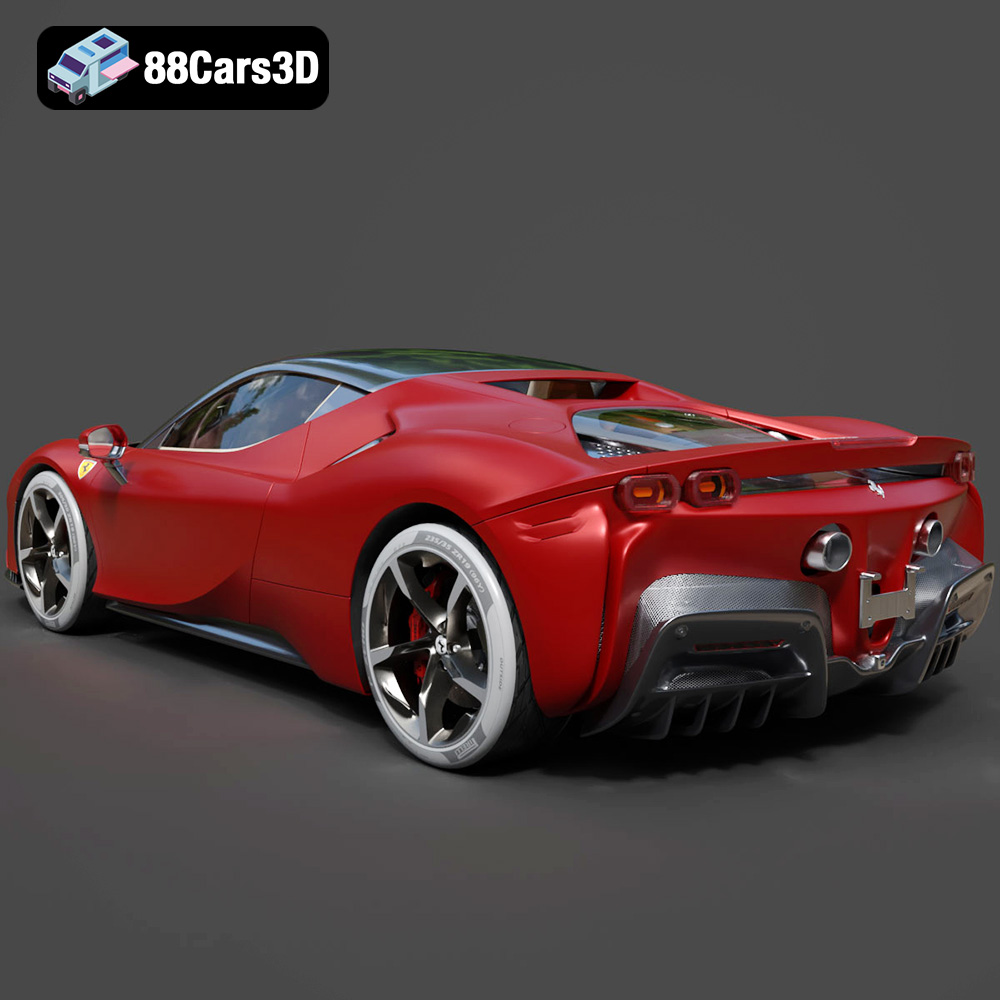
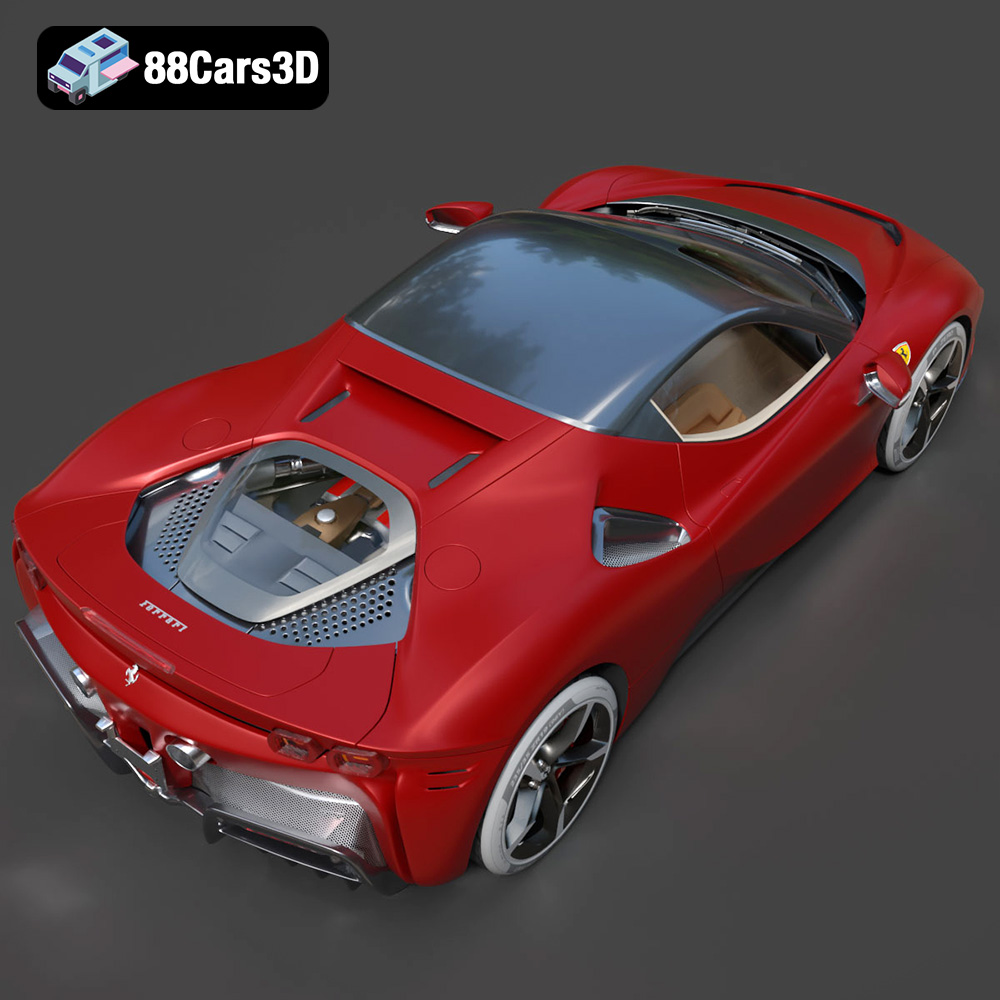
Experience the pinnacle of automotive engineering with our meticulously crafted 3D model of the Ferrari SF90 Stradale. This model embodies the perfect fusion of hypercar performance and cutting-edge technology, capturing every detail of the iconic Italian masterpiece with stunning accuracy.
Our 3D model features clean geometry, ensuring seamless integration into any project. Realistic materials and textures enhance the visual fidelity, delivering a lifelike representation that stands out in any application. Created with professional quality in mind, this model is optimized for a variety of uses, from game development to high-end rendering.
Key Features:
Provided File Formats:
$19.99
.arvr
.blend
.car3dmodel
.fbx
.ferrari
.gameasset
.glb
.max
.obj
.ply
.rendering
.sf90
.sf90stradale
.simulation
.sportsCar
.stl
.stradale
.unreal