Get 20% OFF All Premium 3D & STL Models!

In the expansive and ever-evolving landscape of digital content creation, the bedrock of truly immersive experiences and compelling visuals lies in the quality of its 3D assets. From the intricate detailing of a hyper-realistic automotive render to the fluid performance of a complex environment in a real-time game, the demand for precision-engineered 3D models has never been higher. Professionals across industries—be it architectural visualization, cinematic production, or cutting-edge AR/VR development—understand that a high-quality asset isn’t just a convenience; it’s a fundamental requirement for achieving visual excellence and efficiency. This pursuit of digital perfection is epitomized by models like the Helicopter UH-40 3D Model, an exceptional asset that embodies the blend of technical accuracy and aesthetic detail necessary to meet the rigorous standards of today’s visualizers and developers.
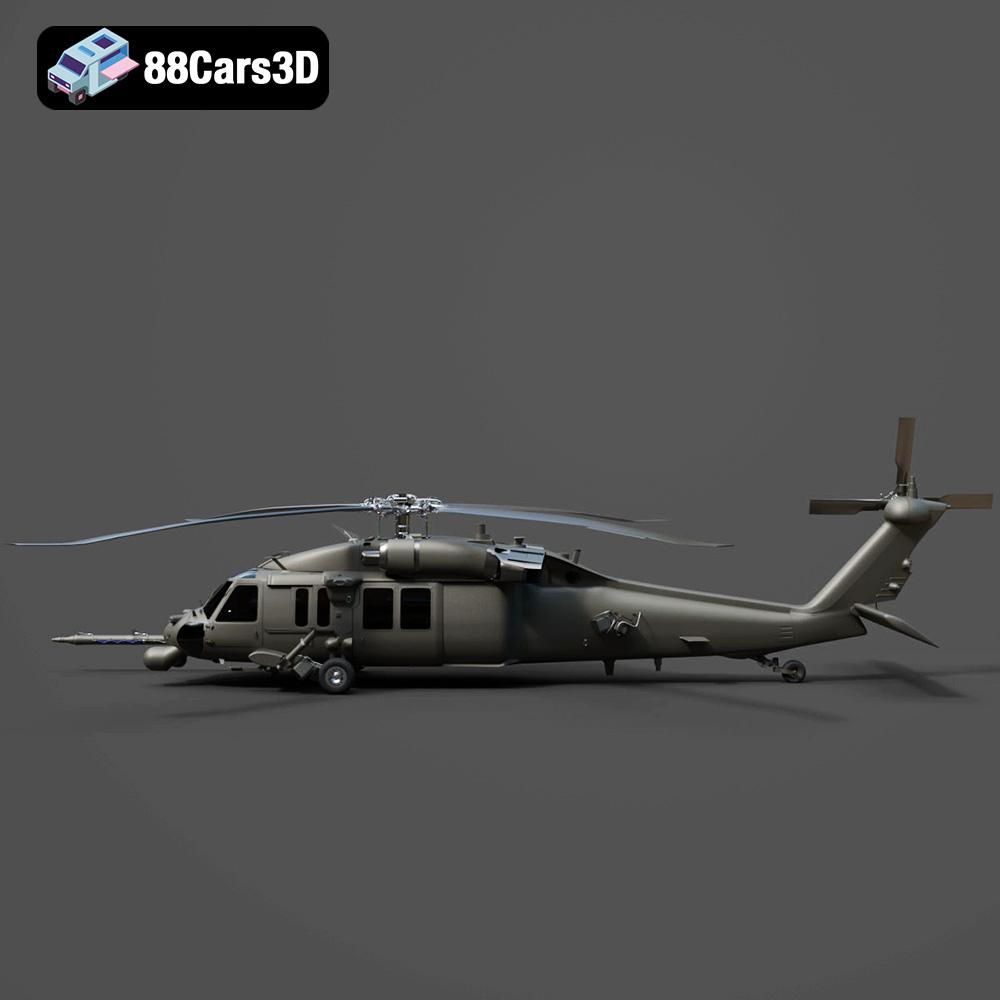
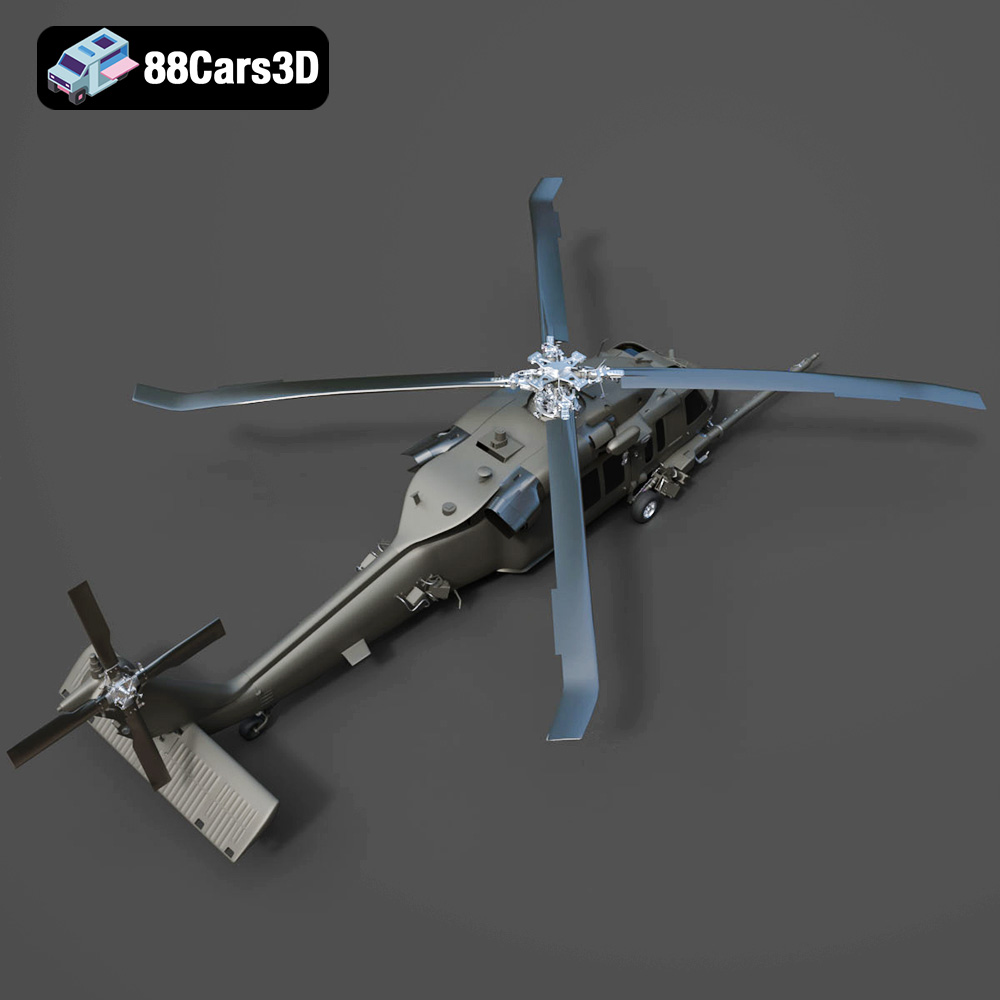
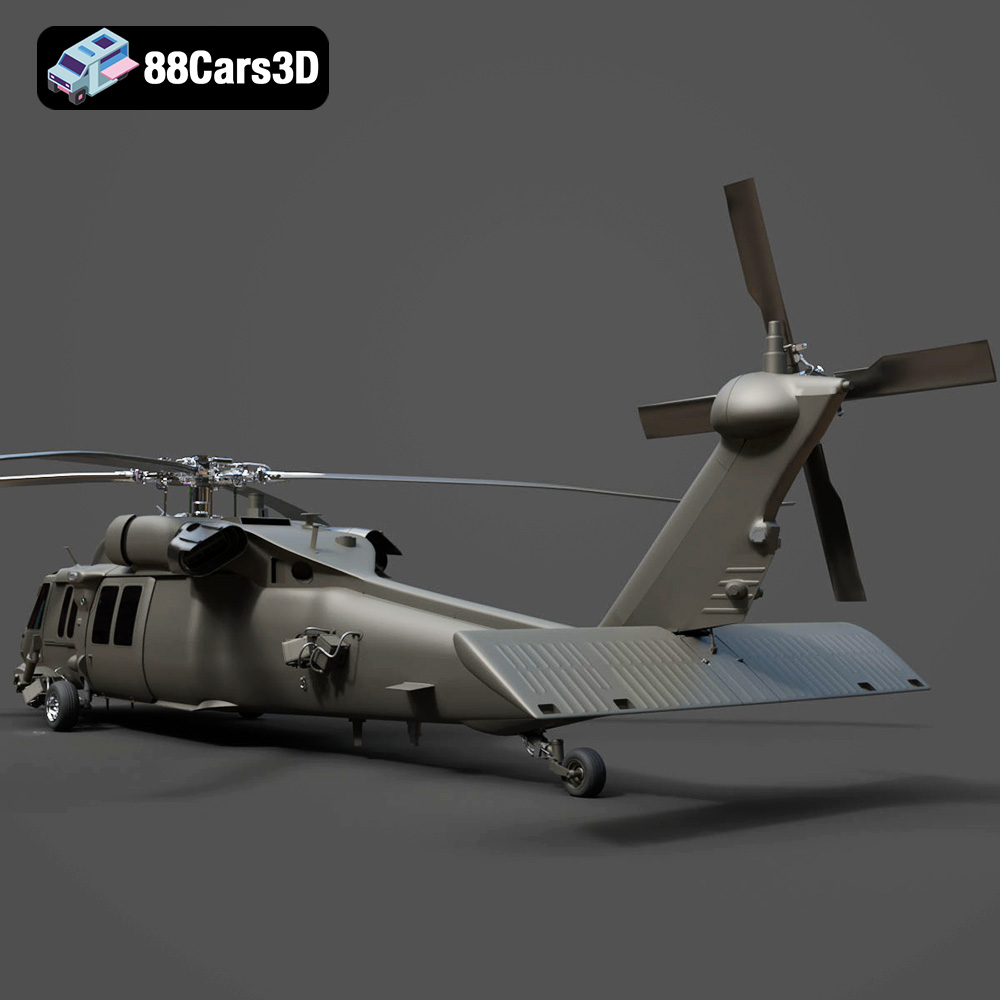
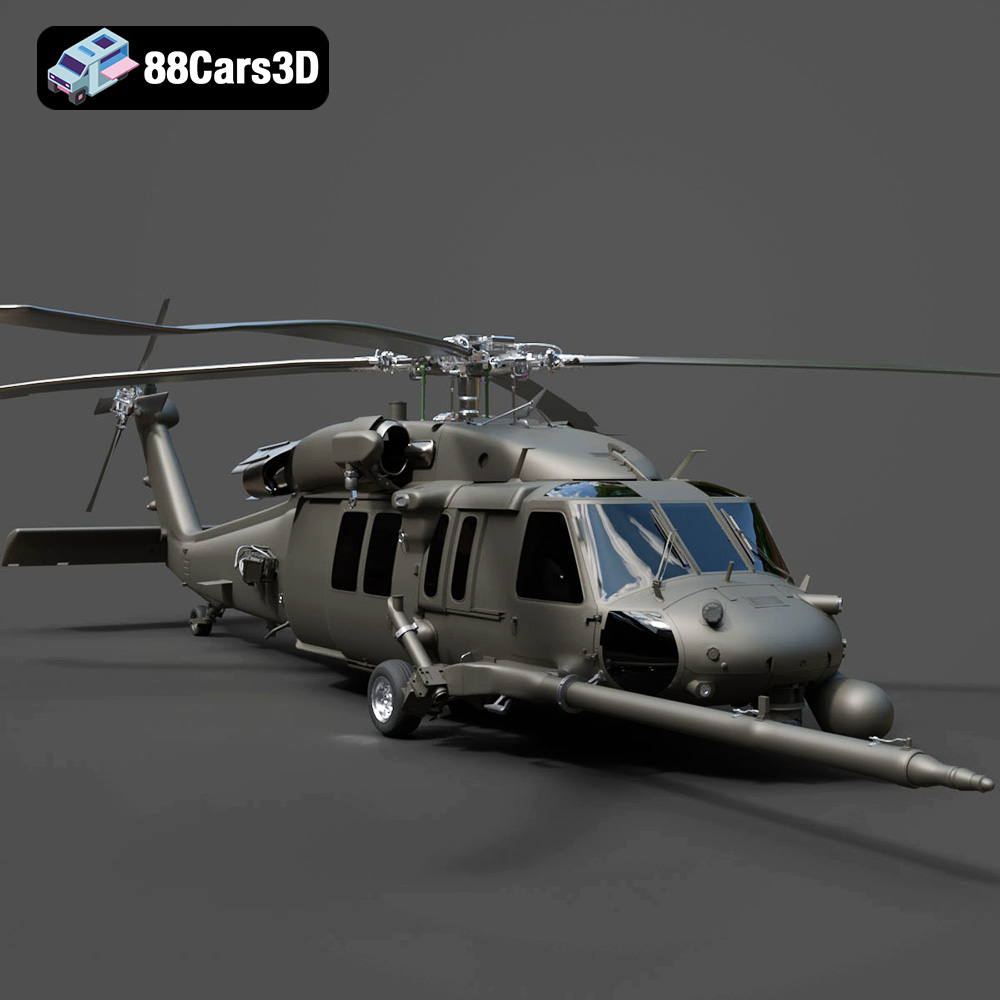
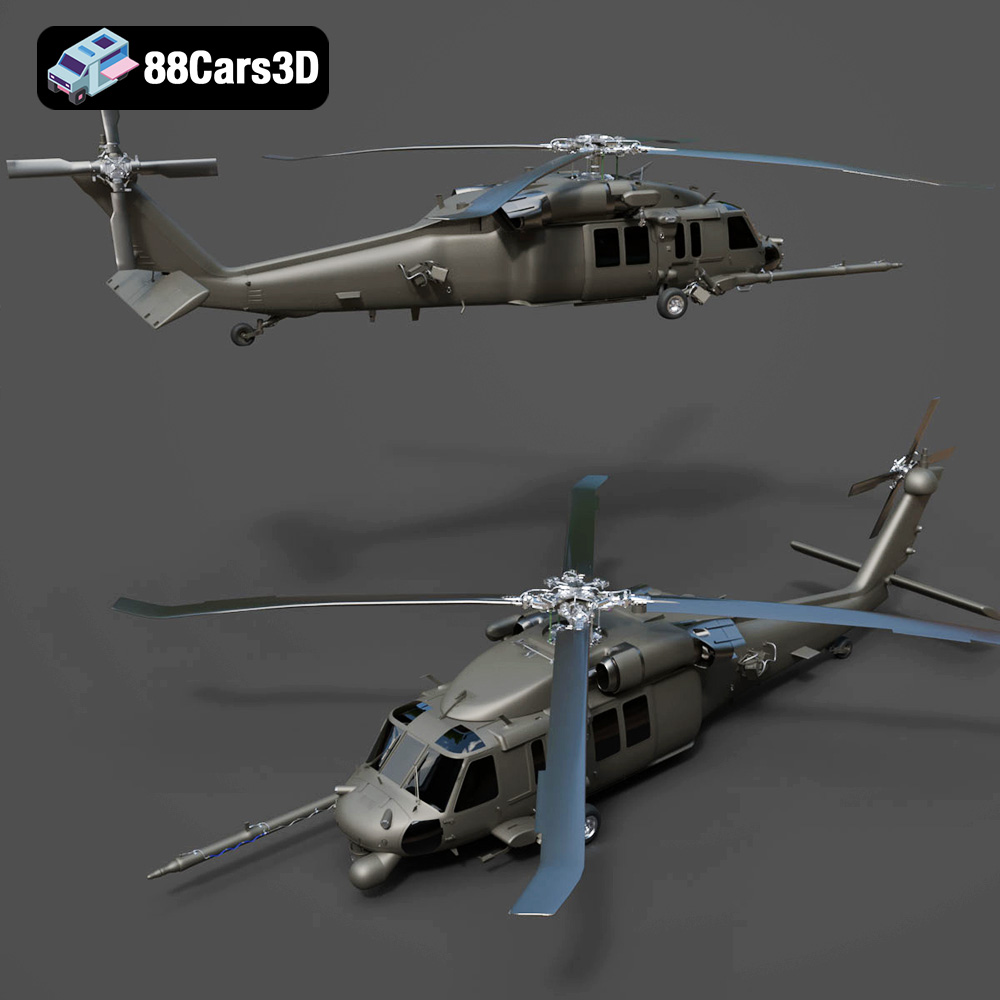
The Helicopter UH-40 3D Model is more than just a collection of polygons; it’s a meticulously crafted digital replica, designed from the ground up to offer unparalleled fidelity. Whether you’re aiming to populate a vast virtual battlefield, create a dramatic cinematic sequence, or develop an interactive training simulation, this model provides the robust foundation you need. Its precise structural accuracy, fully modeled interior, and optimized topology make it a versatile tool, ready to integrate seamlessly into a myriad of professional workflows. In the following sections, we will delve into the critical technical considerations of 3D asset development and explore how such premium models can transform your projects, illustrating the crucial role of versatile and high-quality assets in any digital endeavor.
The versatility and utility of any 3D model are intrinsically linked to the file formats it supports. In a fragmented digital ecosystem, understanding these formats is paramount for ensuring seamless integration, optimal performance, and broad compatibility across different software and platforms. The Helicopter UH-40 3D Model, recognizing this crucial need, comes with a comprehensive suite of industry-standard file formats, each serving specific purposes within various professional pipelines.
The .blend format represents a fully editable Blender scene. For users deeply integrated into the Blender ecosystem, this is often the most desirable format. It encapsulates not just the geometry but also materials, textures, lighting setups, camera positions, animations, and even physics simulations. Working with a .blend file offers maximum flexibility, allowing artists to modify every aspect of the model, from adjusting mesh details to tweaking shader parameters or re-rigging components. It’s ideal for artists who require extensive customization or wish to integrate the model into a Blender-centric rendering or animation project, benefiting from Blender’s powerful Cycles or Eevee render engines.
.fbx (Filmbox) is a proprietary file format owned by Autodesk, but it has become a universal exchange format in the 3D industry, particularly for animation, game development, and real-time visualization. It supports geometry, materials, textures, animations, skinning, and camera data, making it highly versatile. For integrating models into game engines like Unreal Engine and Unity, .fbx is often the go-to choice due to its robust support for these complex data types. While not always fully editable in the same way a native project file is, it excels at retaining critical animation and rigging data, ensuring that the Helicopter UH-40 3D Model transitions smoothly into interactive environments.
The .obj (Wavefront Object) format is one of the oldest and most widely supported 3D file formats. It is revered for its simplicity and universality, capable of storing geometric data (vertices, normals, texture coordinates, and faces) and referencing external material files (.mtl). While it doesn’t support animation or rigging, its cross-software compatibility is unmatched, making it an excellent choice for basic mesh exchange between virtually any 3D application. When the primary need is to import clean, static geometry into a new software environment for rendering or further modification, .obj files are incredibly reliable. The UH-40 in .obj format provides a robust base for any 3D artist.
.glb (GL Transmission Format Binary) is the binary version of glTF, a royalty-free specification for the efficient transmission and loading of 3D scenes and models by applications. It’s often referred to as the “JPEG of 3D” due to its optimization for web-based applications, augmented reality (AR), and virtual reality (VR). A single .glb file can contain models, textures, animations, and PBR (Physically Based Rendering) materials, all packaged into a single, compact binary file. This makes it ideal for rapid loading and display in browsers or mobile AR/VR experiences, ensuring the Helicopter UH-40 3D Model can be showcased interactively on the web or in mobile apps with ease.
The .stl (Stereolithography) format is the standard file type for 3D printing and rapid prototyping. It describes only the surface geometry of a 3D object using a mesh of interconnected triangles, without any color, texture, or material information. For designers and engineers looking to physicalize the Helicopter UH-40 3D Model, the .stl format is essential. It provides a precise tessellated representation of the model’s surface, ready to be sliced and sent to a 3D printer. This allows for tangible scale models or prototype parts to be created, directly bridging the digital and physical realms.
.ply (Polygon File Format, also known as Stanford Triangle Format) is another format for storing 3D data, particularly known for its ability to store properties beyond just geometry, such as color, transparency, surface normals, and even confidence values. It can represent both point clouds and polygonal meshes. While less common for general interchange than .obj or .fbx, .ply is frequently used in scientific applications, CAD, and 3D scanning, where high precision and additional data attributes are critical. For detailed technical analysis or niche visualization requiring specific data attributes of the UH-40, .ply offers a robust solution.
The inclusion of a .unreal file (often referring to a .uasset or an explicitly configured project file/asset within the Unreal Engine environment) signifies that the model is pre-configured and optimized specifically for Unreal Engine. This means the model comes with appropriate material setups, collision meshes, LODs (Levels of Detail), and potentially even skeletal meshes or animations directly imported and set up within an Unreal project. This dramatically reduces the integration time for developers, allowing them to drop the Helicopter UH-40 3D Model directly into their Unreal projects with minimal setup, maximizing efficiency for game development, virtual production, and architectural visualization projects within the engine.
Finally, the .max format is the native file type for Autodesk 3ds Max. Similar to .blend for Blender, a .max file contains a complete 3ds Max scene, including geometry, materials (with complex shaders like V-Ray or Corona), lighting, cameras, animation, and scene organization. For artists using 3ds Max for high-end rendering, animation, or visual effects, the .max file provides full editability and access to all the powerful tools within the software. It allows for fine-tuning of every visual aspect of the UH-40, leveraging 3ds Max’s robust rendering capabilities for breathtaking static images or dynamic animations.
This comprehensive array of formats ensures that the Helicopter UH-40 3D Model is not just a high-quality asset but a universally adaptable one, catering to the diverse needs of professionals across the entire spectrum of 3D production. This commitment to versatility underscores the value proposition from marketplaces like 88cars3d.com, which prioritize delivering assets ready for any challenge.
Creating a 3D model as complex and detailed as the Helicopter UH-40 requires a meticulous blend of artistic vision and technical mastery. It’s a process that goes far beyond simply pushing polygons; it involves careful research, precision modeling, and sophisticated material authoring to achieve true realism.
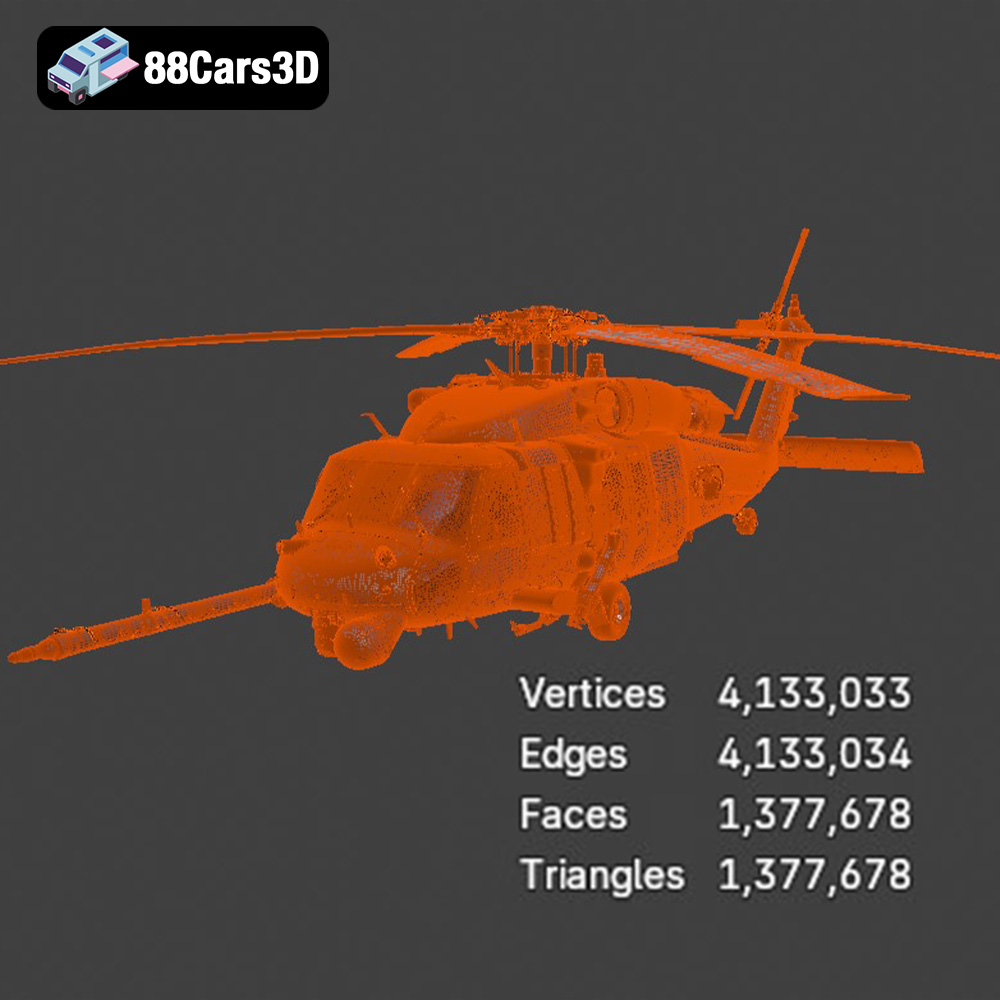
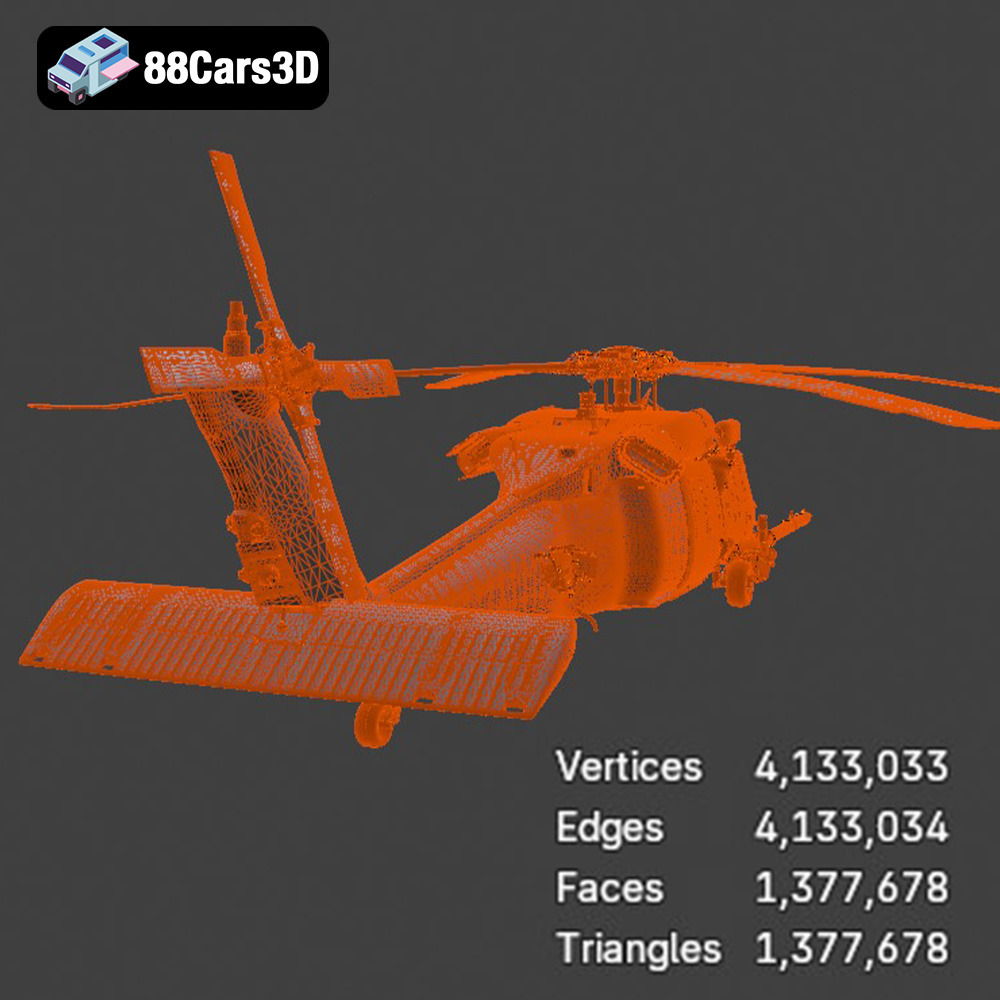
At the heart of any high-fidelity model is its geometry. For the UH-40, this means replicating the aircraft’s robust aerodynamics and intricate mechanical components with exacting accuracy. This process involves careful attention to edge flow, ensuring clean quad-based topology that facilitates smooth deformations during animation and provides crisp details when subdivided. Optimized topology is crucial for performance, especially in game engines where poly count directly impacts frame rates. A well-constructed mesh minimizes errors during rendering and allows for efficient UV unwrapping, which is vital for texture application. The Helicopter UH-40 3D Model boasts clean geometry, meaning artists can confidently modify, animate, or render it without encountering common topological pitfalls.
Beyond the mesh, textures and materials bring a model to life. Modern 3D rendering heavily relies on Physically Based Rendering (PBR) workflows, which mimic how light interacts with real-world surfaces. This involves creating a suite of textures—Albedo (color), Normal (surface detail), Roughness (specularity), Metallic (reflectivity), and Ambient Occlusion (contact shadows)—that accurately represent the UH-40’s weathered metal, glass, rubber, and interior fabrics. High-resolution texture maps, often 4K or even 8K, are painstakingly painted or generated to capture every scratch, rivet, and panel line. The realistic materials included with the UH-40 model ensure it reacts correctly to light in various rendering environments, from subtle hangar lighting to bright outdoor scenes, contributing significantly to its visual depth.
The pursuit of accuracy for a model like the UH-40 begins long before any vertex is placed. Extensive research into the actual aircraft—studying blueprints, photographic references from various angles, and operational details—is fundamental. This forensic approach ensures that every curve, every vent, and every cockpit dial accurately reflects the real-world counterpart. For the Helicopter UH-40 3D Model, this translates into precise structural accuracy on the exterior and a fully modeled internal layout. Such dedication to authenticity not only satisfies demanding visualizers but also enhances the immersion for users in simulations or interactive experiences, making the digital model a true representative of the physical machine.
The true value of a versatile 3D asset like the Helicopter UH-40 3D Model comes from its ability to seamlessly integrate into diverse professional pipelines, offering significant advantages in terms of quality and efficiency.
While the UH-40 is an aircraft, the principles of high-quality rendering apply universally. In automotive rendering, designers strive for photorealism in vehicle presentations, often placing cars in detailed environments. Similarly, in architectural visualization, realism is key to presenting structures convincingly. A highly detailed background element, such as a UH-40 helicopter landing on a helipad atop a skyscraper or stationed beside a premium vehicle in a dramatic scene, can elevate the entire composition. The robust aerodynamics and detailed interior of the UH-40 ensure that it holds up under close scrutiny, complementing the primary focus of the scene, whether that’s a luxury sedan or a cutting-edge building design. Platforms like 88cars3d.com specialize in providing a wide array of high-quality 3D car models, but the same standards of fidelity are applied to diverse vehicle types, ensuring that all assets meet demanding rendering requirements.
For game developers, performance is as critical as visual fidelity. The Helicopter UH-40 3D Model is optimized for performance, featuring clean geometry and efficient UVs, which are essential for maintaining high frame rates in demanding game engines like Unreal Engine and Unity. The inclusion of .fbx and .unreal formats significantly streamlines the import process, often providing pre-configured materials, collision meshes, and even Levels of Detail (LODs) that automatically swap out higher-resolution meshes for simpler ones at a distance. This “game-engine ready” approach saves countless hours of optimization work, allowing developers to focus on gameplay and interaction rather than asset preparation, making the UH-40 an invaluable game asset for simulations, open-world games, or military-themed titles.
Augmented Reality (AR) and Virtual Reality (VR) demand highly optimized assets that can be rendered in real-time on a variety of devices, often with strict polygon budgets. The .glb format, specifically designed for web and immersive experiences, ensures that the Helicopter UH-40 3D Model can be easily deployed in AR/VR applications. Its optimized topology and efficient material setup mean that it will perform well even on mobile AR platforms, providing smooth, interactive experiences. Imagine a virtual tour where users can interact with a realistic UH-40 in their living room via AR, or a VR training module where pilots can practice controls within a highly detailed virtual cockpit. The UH-40’s detailed interior further enhances these immersive possibilities.
Exploring real-world (or highly plausible) applications helps illustrate the transformative power of premium 3D assets. The Helicopter UH-40 3D Model offers a wealth of opportunities across various creative and technical fields.
In the realm of film and television, achieving photorealistic visual effects (VFX) often hinges on the quality of source models. A studio developing a military action film or a documentary series on aviation could integrate the Helicopter UH-40 3D Model for various sequences. Its detailed exterior captures the robust aerodynamics needed for breathtaking aerial shots, while the fully modeled interior allows for compelling close-ups of pilots and crew within the cockpit. Imagine a scene where the UH-40 is banking sharply over a rugged landscape, or a tense shot within the cabin as soldiers prepare for deployment. The model’s clean geometry and realistic materials ensure it blends seamlessly with live-action footage, providing a high level of fidelity that holds up under the intense scrutiny of the big screen.
Accuracy and realism are paramount in military simulations. For training pilots, ground crew, or tactical units, a highly accurate digital replica of an aircraft like the UH-40 is indispensable. Flight simulators can use the model’s detailed interior to replicate the cockpit environment, allowing trainees to familiarize themselves with controls and instrumentation in a safe, virtual space. For ground crew, an interactive simulation might involve virtual maintenance procedures, where the precise structural accuracy of the exterior and internal components allows for realistic interaction and understanding. The UH-40 model serves as a foundation for developing immersive and effective training scenarios, minimizing costs and risks associated with real-world exercises.
Beyond visual media, highly detailed 3D models play a crucial role in engineering and product development. Engineers or defense contractors might use the Helicopter UH-40 3D Model for technical visualization, exploring potential upgrades, modifications, or logistical planning. The inclusion of formats like .stl and .ply supports prototyping efforts, allowing for the physical creation of scale models or specific components using 3D printing. For example, an aerospace firm could print a scale model to test aerodynamic principles or visualize new sensor placements. The precise polygon mesh of the .ply format also lends itself to detailed analysis, making the UH-40 model a valuable tool for research and development.
Investing in premium 3D models extends benefits far beyond a single project. It’s about building a robust digital library that empowers creators to tackle any challenge with confidence and efficiency.
The digital landscape is constantly evolving, with new rendering engines, game platforms, and visualization tools emerging regularly. High-quality 3D assets, built with clean topology and PBR materials, are inherently more adaptable to these changes. The Helicopter UH-40 3D Model, with its industry-standard formats and optimized structure, is designed to be future-proof. It ensures that your investment today will continue to deliver value in tomorrow’s projects, regardless of the software or engine you choose to work with. This long-term viability is a hallmark of professional-grade assets.
Time is a valuable commodity in any production pipeline. Custom-building every asset from scratch is often impractical and cost-prohibitive. Ready-to-use, high-quality models like the UH-40 significantly streamline production. They eliminate the need for extensive modeling, texturing, and optimization from the ground up, allowing artists and developers to integrate assets quickly and focus their efforts on creative direction, animation, or interactive logic. This efficiency translates directly into faster project completion times and reduced labor costs, making premium assets an intelligent investment for any studio or freelancer.
Finding reliable sources for high-quality 3D models can be a challenge. Marketplaces like 88cars3d.com are dedicated to curating and providing a diverse range of top-tier assets, from intricate environments to highly detailed vehicles like the Helicopter UH-40 3D Model and a wide selection of 3D car models. The emphasis on clean geometry, realistic materials, and comprehensive file format support ensures that artists and developers receive assets that are not only visually impressive but also technically sound and production-ready. This commitment to quality empowers creators to elevate their projects without compromising on performance or workflow efficiency.
The Helicopter UH-40 3D Model stands as a testament to the power of meticulously crafted digital assets in modern production. Its precise structural accuracy, fully modeled interior, and comprehensive file format support position it as an indispensable tool for professionals across cinematic rendering, game development, AR/VR experiences, and technical visualization. From ensuring seamless integration into varied software environments through its robust file format suite (including .blend, .fbx, .obj, .glb, .stl, .ply, .unreal, and .max) to delivering unparalleled visual fidelity for close-up renders and immersive simulations, the UH-40 embodies the highest standards of 3D modeling.
As the demands for digital realism continue to grow, the strategic integration of such high-quality assets becomes not just an advantage, but a necessity. By choosing production-ready models from trusted sources like 88cars3d.com, creators can streamline their workflows, enhance their visual output, and ultimately deliver more compelling and immersive experiences. The Helicopter UH-40 3D Model is more than just a digital asset; it’s a foundation for innovation, ready to lift your projects to new heights of realism and impact.
Enhance your digital hangar with the detailed Helicopter UH-40 3D Model. Designed to meet the demands of visualizers and developers, this model delivers precise structural accuracy. The exterior captures the robust aerodynamics of the UH-40 aircraft, while the internal layout provides a fully modeled interior, ensuring it stands up to close-up renders and immersive experiences. Built with optimized topology, this model features clean geometry and realistic materials that integrate seamlessly into your workflow. Whether you are crafting cinematic sequences, producing military simulations, or developing interactive applications, this versatile asset elevates the visual fidelity of your projects. Ideal for game development, rendering, AR/VR experiences, and detailed technical visualization, the Helicopter UH-40 3D Model is optimized for performance without sacrificing visual depth. It includes a comprehensive suite of industry-standard file formats.
$19.99
.aircraft
.arvr
.aviation
.blend
.car3dmodel
.fbx
.gameasset
.glb
.helicopter
.max
.military
.obj
.ply
.rendering
.simulation
.stl
.uh40
.unreal