Get 20% OFF All Premium 3D & STL Models!

In today’s fast-paced digital landscape, the demand for immersive and photorealistic content across various industries has never been higher. From cutting-edge video games and compelling marketing campaigns to sophisticated architectural visualizations and virtual training simulations, 3D models serve as the fundamental building blocks of engaging digital experiences. The quality of these assets directly impacts the realism, performance, and overall impact of a project.
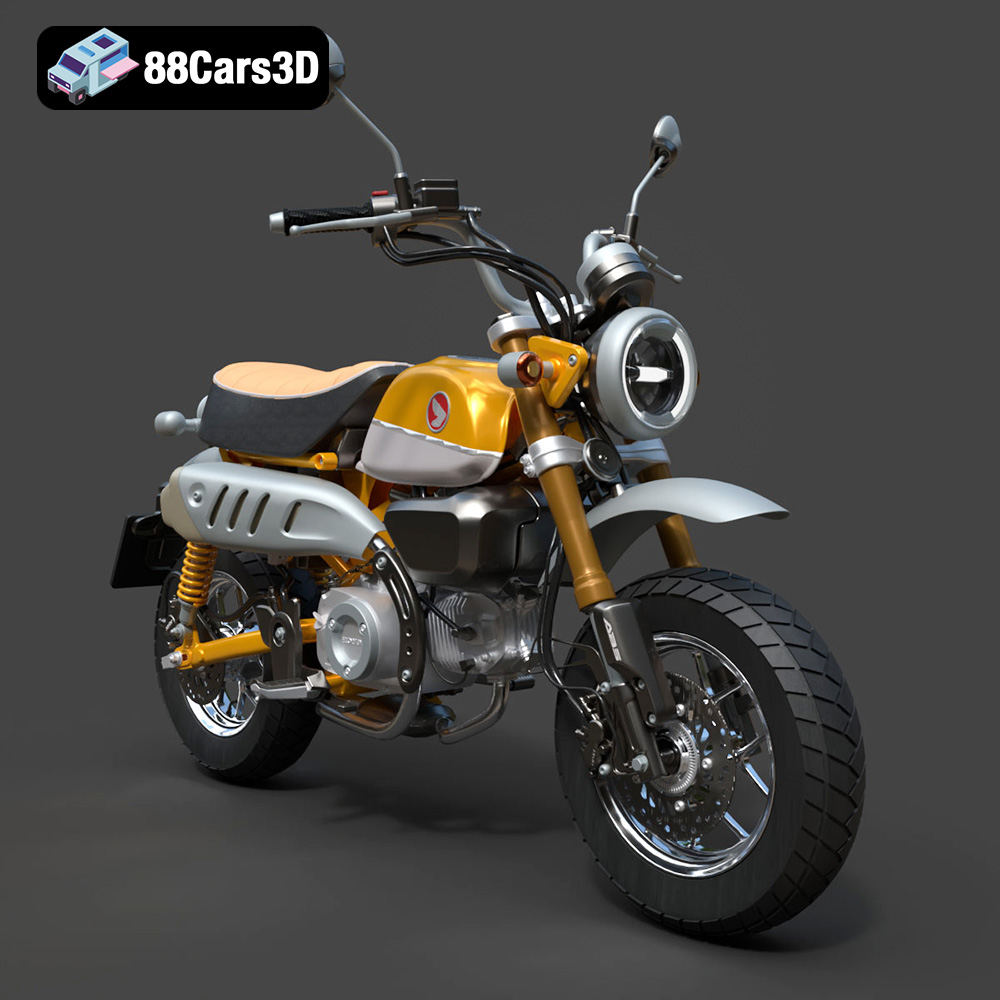
Achieving truly professional results hinges on starting with meticulously crafted 3D car models that offer clean geometry, accurate proportions, and optimized textures. This is where specialized assets, like the exceptional Honda Monkey 125 2019 3D Model, prove invaluable. This digital asset stands as a testament to the precision and attention to detail required to capture the iconic essence of a real-world vehicle, providing a robust foundation for any serious project, whether it’s for high-fidelity automotive rendering or integration into a dynamic game environment.
The pursuit of realism in 3D visualization is an intricate dance between artistic vision and technical execution. At its core, the quality of the underlying 3D model dictates the upper limit of what can be achieved. A low-quality model, riddled with errors or poorly optimized, can derail even the most ambitious projects, leading to longer development times, compromised visual fidelity, and frustrating performance issues.
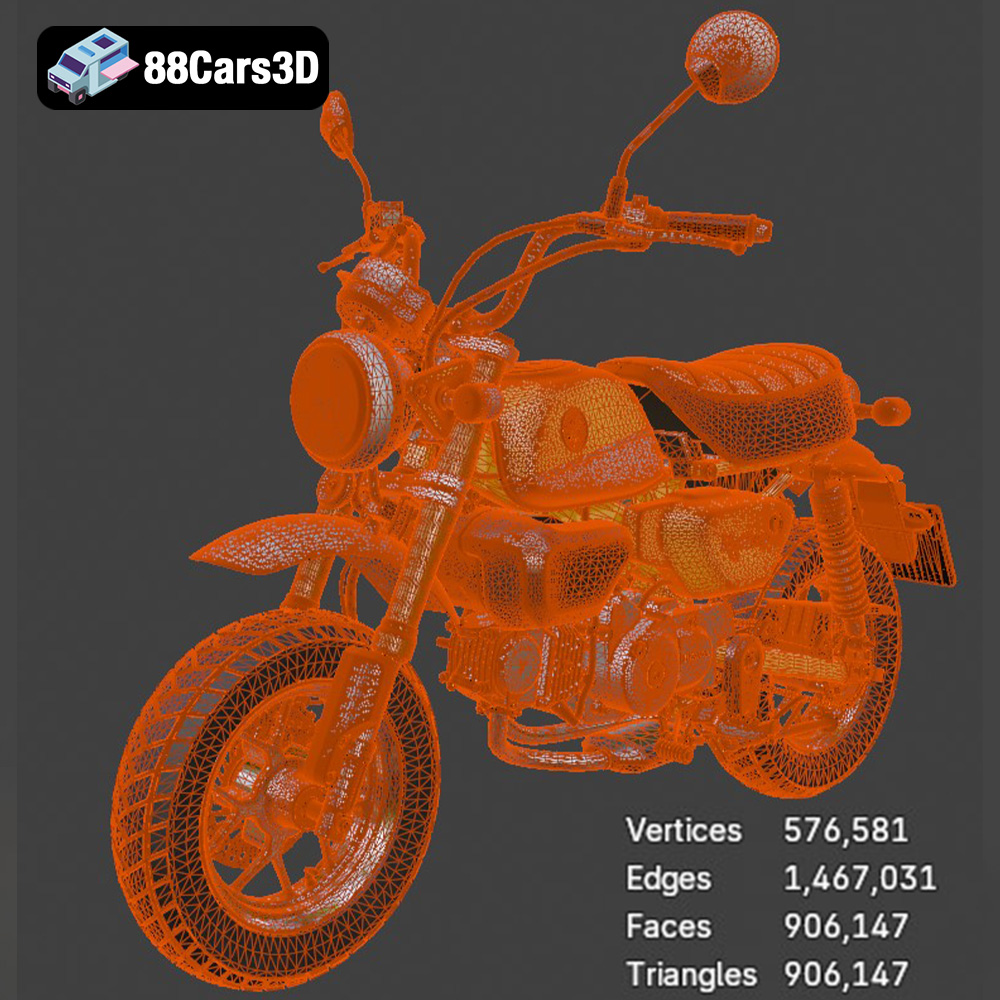
While visual appeal is paramount, a professional 3D model must also be technically sound. This means possessing clean geometry – a well-ordered mesh free from flipped normals, overlapping vertices, or unnecessary polygons. An optimized polygon count is crucial for maintaining real-time performance in game engines or ensuring manageable render times in offline renderers. Furthermore, properly laid out UVs (mapping coordinates for textures) are essential for applying realistic materials and avoiding unsightly seams or stretching. The Honda Monkey 125 2019 3D Model, for instance, emphasizes these technical excellences, ensuring it’s not just beautiful but also efficient and easy to work with.
Accurate 3D models act as digital twins, allowing designers, engineers, and marketers to visualize products with unparalleled precision before physical prototypes are even created. For automotive design, this means evaluating aesthetics, ergonomics, and even simulated performance in a virtual environment. For marketing, it enables the creation of stunning product configurators or virtual showrooms. High-quality 3D car models accurately convey the designer’s intent, fostering clear communication and informed decision-making throughout the development lifecycle.
The applications for high-quality 3D models are incredibly diverse. A single well-made asset can be a cornerstone for multiple project types. For game development, these models serve as vehicles, props, or environmental elements. In professional rendering, they become subjects for photorealistic imagery used in advertisements or product showcases. For AR/VR experiences, they provide interactive elements that immerse users in virtual worlds. And in 3D printing, they transform digital concepts into tangible objects. The Honda Monkey 125 2019 3D Model exemplifies this versatility, ready for deployment across a broad spectrum of creative and technical endeavors.
Navigating the world of 3D asset creation and integration often involves understanding a multitude of file formats, each with its own strengths, weaknesses, and specific use cases. The ability of a professional asset, such as the Honda Monkey 125 2019 3D Model, to be delivered in multiple formats is a significant advantage, ensuring maximum compatibility and flexibility for artists and developers working across diverse software environments and pipelines. Let’s delve into the specifics of the most common and critical formats provided with premium 3D models.
The .blend format is the native file type for Blender, the popular open-source 3D creation suite. When you receive a .blend file, you’re not just getting the model; you’re typically getting a fully editable Blender scene. This includes the mesh data, materials (often set up using Blender’s sophisticated node-based shader editor), lighting setups, camera positions, and sometimes even animation data or modifiers. This format is ideal for users deeply integrated into the Blender ecosystem, allowing for direct modification, rendering, and further customization without any loss of fidelity during import/export. It provides the most comprehensive starting point for Blender users, offering full access to the artist’s original workflow and settings.
FBX (Filmbox) is a proprietary file format owned by Autodesk and has become an industry-standard for exchanging 3D data between various software applications, especially in game development and animation. Its strength lies in its ability to store a wide range of data, including geometry (meshes), materials (often basic parameters or texture paths), textures, bones, skinning information, camera data, and animation curves. This makes .fbx an excellent choice for transferring rigged characters or animated vehicles, like a dynamic Honda Monkey 125 in motion, into game engines such as Unreal Engine or Unity, or between DCC applications like Maya, 3ds Max, and Blender. Its robust support for complex data types makes it indispensable for real-time pipelines.
OBJ (Object) is one of the oldest and most widely supported 3D file formats. It’s a simple, text-based format primarily used to define geometry – vertices, UV coordinates, normals, and faces. While it can reference external material definition files (.mtl) for basic color and texture map information, it doesn’t store complex material properties, rigging, or animation data. Its universality is its greatest asset; virtually every 3D software can import and export .obj files. This makes it an excellent choice for basic mesh exchange, especially when maximum compatibility across different software is a priority, or for when you only need the raw geometric data of a 3D car model.
GLB (GL Transmission Format Binary) is the binary version of glTF, an open-standard format designed for efficient transmission and loading of 3D scenes and models by engines and applications. GLB packs all assets (geometry, textures, animations, and PBR materials) into a single file, making it incredibly convenient for web-based 3D, AR (Augmented Reality), and VR (Virtual Reality) applications. It’s optimized for real-time rendering and is quickly becoming the “JPEG of 3D” for browser-based display, interactive product viewers, and lightweight AR experiences. For showcasing a Honda Monkey 125 interactively on a webpage or in an AR app, .glb is the format of choice.
STL (Stereolithography) is the de facto standard file format for 3D printing. It represents a 3D model as a series of connected triangles (a triangulated mesh), defining only the surface geometry without any color, texture, or material information. The key requirement for an STL file is that the mesh must be “watertight” – meaning it has no holes or gaps, forming a completely enclosed volume, which is essential for successful 3D printing. The Honda Monkey 125 2019 3D Model, when provided in .stl, is ready to be scaled, sliced, and sent to a 3D printer for physical prototyping or model creation.
PLY (Polygon File Format or Stanford Triangle Format) is another format used to store 3D data, particularly from 3D scanners. It can store a wider range of properties than .obj, including color, transparency, normals, texture coordinates, and even reliability information for each vertex and face. It supports both ASCII and binary representations and is often favored in scientific applications, CAD, and situations requiring higher precision mesh data or point cloud data for analysis and visualization.
While not a universal file extension in the same way .fbx or .obj are, an “.unreal” asset typically refers to a model that has been specifically prepared and configured for direct use within Unreal Engine. This might involve optimized mesh geometry, pre-set materials (PBR ready), LODs (Levels of Detail), collision meshes, and sometimes even blueprint setups for interactive functionality. This format streamlines the import process significantly, allowing developers to drop the Honda Monkey 125 directly into their Unreal Engine projects with minimal setup, ensuring optimal performance and visual quality within that specific engine environment.
Similar to .blend for Blender, .max is the native file format for Autodesk 3ds Max, a leading software for 3D modeling, animation, and rendering. A .max file contains the complete scene data, including geometry, materials (potentially complex setups using V-Ray, Corona, or Arnold renderers), lighting, cameras, animation, modifiers, and scene organization. This format is indispensable for users working in 3ds Max, offering the highest level of editability and direct access to all original scene components. It’s ideal for high-end automotive rendering, detailed scene composition, and intricate animation sequences.
A premium 3D asset like the Honda Monkey 125 2019 3D Model is designed to seamlessly integrate into various professional pipelines, offering significant time and resource savings. Understanding how it fits into established workflows is key to maximizing its potential.
For photorealistic automotive rendering, 3ds Max combined with renderers like V-Ray or Corona is an industry standard. The provided .max file for the Honda Monkey 125 is a direct gateway into this powerful ecosystem. Artists can immediately load the model, which typically comes with well-defined geometry, accurate UVs, and often pre-configured materials that can be easily adapted to specific rendering engines. The workflow involves setting up studio lighting environments, defining realistic shaders for paint, chrome, and rubber, and composing dynamic camera angles to showcase the vehicle’s design. This is perfect for creating high-resolution images for marketing, advertising campaigns, or product visualization, allowing the Honda Monkey 125 to shine in virtual environments before it even hits the showroom floor.
In game development, performance and visual fidelity must strike a delicate balance. The .fbx and .unreal formats of the Honda Monkey 125 3D Model are specifically tailored for real-time engines like Unreal Engine and Unity. The workflow typically involves importing the model, applying PBR (Physically Based Rendering) materials, and creating LODs (Levels of Detail) to ensure optimal performance as players move closer to or further away from the asset. Collision meshes are also crucial for player interaction. Whether used as a rideable player vehicle, a background prop in an urban environment, or an interactive element in a racing game, this carefully optimized model ensures smooth integration and excellent visual quality within the constraints of real-time rendering, making it a valuable game asset.
Augmented Reality and Virtual Reality demand highly optimized assets due to the stringent performance requirements of mobile devices and VR headsets. The .glb format is particularly well-suited for these applications. The workflow involves importing the .glb into a development environment (e.g., Unity, Unreal, or web frameworks like A-Frame), then adding interactivity, spatial tracking, and UI elements. Imagine placing the Honda Monkey 125 2019 3D Model directly in your living room via an AR app, or exploring its intricate details in a virtual showroom. The model’s clean geometry and optimized textures are critical for maintaining high frame rates and a truly immersive user experience.
Beyond digital visualization, the Honda Monkey 125 3D Model also serves tangible applications through its .stl and .ply formats. For 3D printing, the workflow involves preparing the .stl file in a slicing software, where it’s scaled, oriented, and broken down into layers for the printer. This allows for the creation of physical prototypes, scale models, or even custom parts. Engineers can use the .ply format for more detailed analysis or reverse engineering tasks, leveraging its precision mesh data for comprehensive examination. This capability transforms a purely digital asset into a tool for physical creation and detailed study.
Crafting a high-quality 3D car model is a fusion of artistic skill and technical expertise. It goes far beyond simply pushing vertices around; it demands a deep understanding of vehicle design, material science, and rendering principles. The attributes of the Honda Monkey 125 2019 3D Model reflect this intricate process, ensuring it meets the rigorous standards of professional use.
The foundation of any realistic 3D vehicle model lies in its accuracy. This starts with extensive reference gathering – blueprints, photographs, and real-world measurements. Artists meticulously model every curve, panel gap, and component to match the original vehicle’s proportions and details. Techniques like subdivision modeling ensure smooth, curvature-continuous surfaces, while maintaining clean topology is crucial for deformation and rendering. The “exceptional detailing” and “accurate proportions” of the Honda Monkey 125 3D Model are direct results of this demanding process, allowing it to hold up under close-up scrutiny.
Modern rendering relies heavily on Physically Based Rendering (PBR) workflows. This involves creating texture maps that accurately represent how light interacts with different surfaces. For an automotive model, this means crafting metallic, roughness, normal, and diffuse maps for elements like paint, chrome, rubber, and glass. These textures, combined with sophisticated shader networks, allow the model to react realistically to varying lighting conditions, achieving true photorealism. The “realistic materials” of the Honda Monkey 125 2019 3D Model ensure it looks convincing whether rendered in a virtual studio or placed in a dynamic game world.
While detail is important, a model must also be optimized for its intended use. This involves strategic polygon reduction without sacrificing crucial detail, efficient UV unwrapping to minimize texture distortion, and baking high-resolution details into normal maps for performance. For game assets, creating multiple Levels of Detail (LODs) is essential to reduce polygon count as the object moves further from the camera, ensuring smooth frame rates. The “optimized polygon count” and “clean geometry” of the Honda Monkey 125 3D Model are key indicators that it has undergone this rigorous optimization process, making it suitable for both high-end rendering and real-time interactive experiences.
The practical utility of high-quality 3D car models extends across numerous industries, revolutionizing how products are designed, marketed, and experienced. The Honda Monkey 125 2019 3D Model, as a versatile asset, fits perfectly into many real-world scenarios.
The automotive industry heavily relies on 3D models for marketing. Companies conduct virtual photoshoots, creating stunning promotional imagery and animated commercials without needing physical vehicles or expensive location shoots. Interactive product configurators allow customers to customize a vehicle, like the Honda Monkey 125, in real-time, choosing colors, accessories, and exploring features from every angle. This not only cuts costs but also accelerates time to market, offering unparalleled flexibility in presenting new models to consumers. High-quality 3D models from 88cars3d.com enable agencies to deliver superior visual content efficiently.
For training, 3D vehicle models are integral to developing realistic simulators. This includes driving simulators for new drivers, heavy machinery operator training, or even mechanic training programs where virtual models allow for hands-on experience without risk or wear-and-tear on real equipment. Imagine a simulation where mechanics can virtually disassemble and reassemble the engine of the Honda Monkey 125, learning its intricacies in a safe, repeatable environment. These applications leverage the model’s accuracy to create highly effective and immersive learning experiences.
In the early stages of product development, 3D models are indispensable. Designers use them to visualize concepts, conduct ergonomic studies, and refine aesthetics virtually. The ability to iterate rapidly on a digital model saves immense time and resources compared to traditional physical prototyping. For manufacturers, a precise 3D model allows for virtual assembly checks and clash detection, catching potential design flaws before production. The Honda Monkey 125 3D Model could be used in design studies for accessories or custom modifications, showcasing its utility even beyond its original intent.
In the competitive world of 3D content creation, time is often a critical factor. Building complex assets like an entire vehicle from scratch is a monumental undertaking that requires specialized skills and considerable time investment. This is where marketplaces like 88cars3d.com provide immense value, offering ready-to-use, professionally crafted 3D models.
Investing in pre-made 3D models offers several compelling advantages. Firstly, it’s a significant time-saver, allowing artists and developers to bypass the arduous modeling and texturing phases and jump straight into scene composition, animation, or game integration. Secondly, it’s often more cost-effective than commissioning custom work or spending internal resources on asset creation, especially for detailed automotive models. Finally, purchasing from a reputable source guarantees consistent quality and technical robustness, ensuring the assets are optimized and compatible with industry-standard software.
88cars3d.com specializes in providing a curated selection of high-quality 3D car models and game assets, built to professional standards. The emphasis is on delivering models with clean geometry, realistic materials, and diverse file format compatibility, as exemplified by the Honda Monkey 125 2019 3D Model. Each asset undergoes rigorous quality checks to ensure it meets the demands of various professional applications, from high-fidelity rendering to real-time game environments. This dedication to quality empowers creators to focus on their vision, rather than wrestling with subpar assets.
Integrating assets from 88cars3d.com into your workflow enhances your creative arsenal, allowing you to tackle more ambitious projects with confidence. Whether you need a realistic vehicle for an advertising campaign, a robust model for a driving simulator, or a highly detailed prop for an AR experience, the ready availability of professional-grade 3D car models like the Honda Monkey 125 streamlines your pipeline. It allows you to deliver exceptional results efficiently, meeting tight deadlines and exceeding client expectations.
The digital frontier continues to expand, driven by the ceaseless demand for engaging and immersive visual content. At the heart of this evolution lies the indispensable role of high-quality 3D models. They are the bedrock upon which stunning automotive rendering, captivating game worlds, and revolutionary AR/VR experiences are built.
The Honda Monkey 125 2019 3D Model stands as a prime example of an expertly crafted asset that meets the rigorous demands of modern production pipelines. With its exceptional detailing, clean geometry, realistic materials, and comprehensive file format support (including .blend, .fbx, .obj, .glb, .stl, .ply, .unreal, and .max), it offers unparalleled versatility for professionals across industries. From accelerating game development to powering photorealistic marketing visuals and enabling innovative prototyping, this model embodies the efficiency and quality creators seek.
By leveraging premium 3D models like this from trusted sources such as 88cars3d.com, artists and developers can save invaluable time, ensure technical reliability, and ultimately elevate the visual fidelity and impact of their projects. Embrace the power of professional 3D car models and transform your creative vision into breathtaking digital realities.
Experience superior realism with the Honda Monkey 125 2019 3D Model. This carefully crafted digital asset delivers exceptional detailing, capturing the iconic essence and unique design of the original vehicle.
The model features clean geometry and realistic materials, ensuring a professional standard for any project. Every component is meticulously structured, offering accurate proportions and an optimized polygon count for seamless integration into complex scenes.
Perfect for a wide range of applications, this versatile 3D model is ideal for game development, professional rendering, AR/VR experiences, and immersive visual simulations. Whether you are creating a dynamic cinematic sequence or an interactive showroom, this asset provides the reliability and visual fidelity required.
$19.99
.arvr
.blend
.car3dmodel
.fbx
.gameasset
.glb
.honda
.max
.minibike
.monkey125
.motorcycle
.obj
.ply
.rendering
.simulation
.stl
.unreal