Get 20% OFF All Premium 3D & STL Models!

In the dynamic realm of digital content creation, the bedrock of any successful project—be it a blockbuster cinematic sequence, a cutting-edge video game, an immersive AR/VR experience, or a detailed engineering visualization—is the quality of its 3D assets. Professionals across industries understand that a high-fidelity 3D model is not merely an aesthetic choice; it is a critical investment that streamlines workflows, enhances visual integrity, and ultimately defines the perceived value of the final product. Generic or poorly optimized models can lead to insurmountable technical debt, compromise artistic vision, and waste invaluable production time. Conversely, a meticulously crafted asset, engineered for versatility and performance, becomes a cornerstone for innovation.
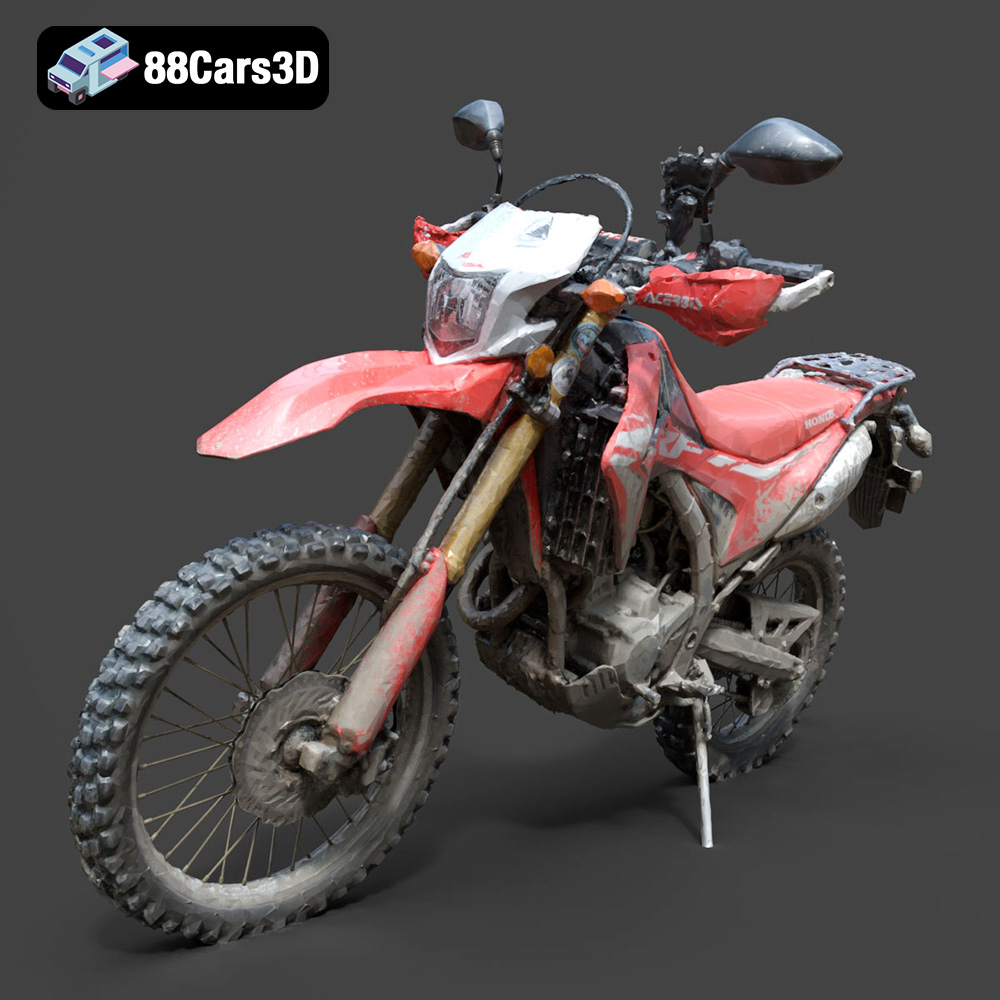
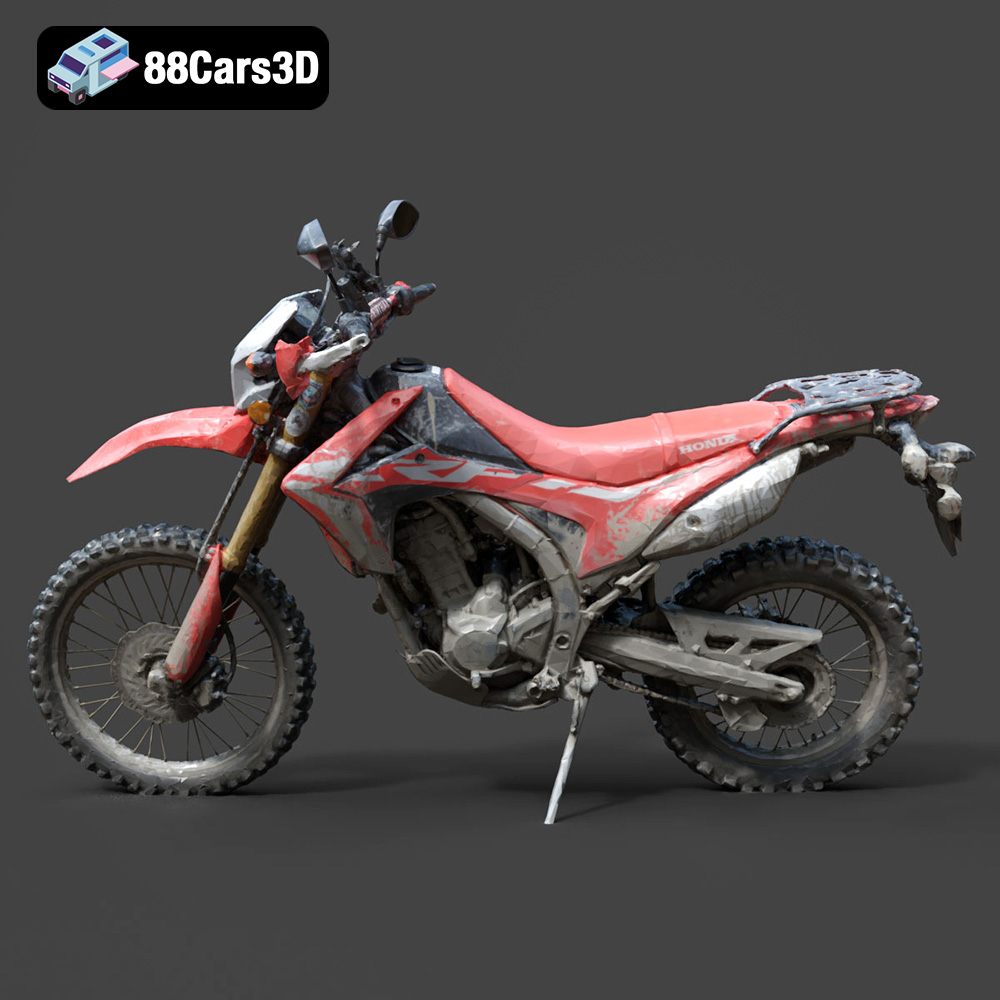
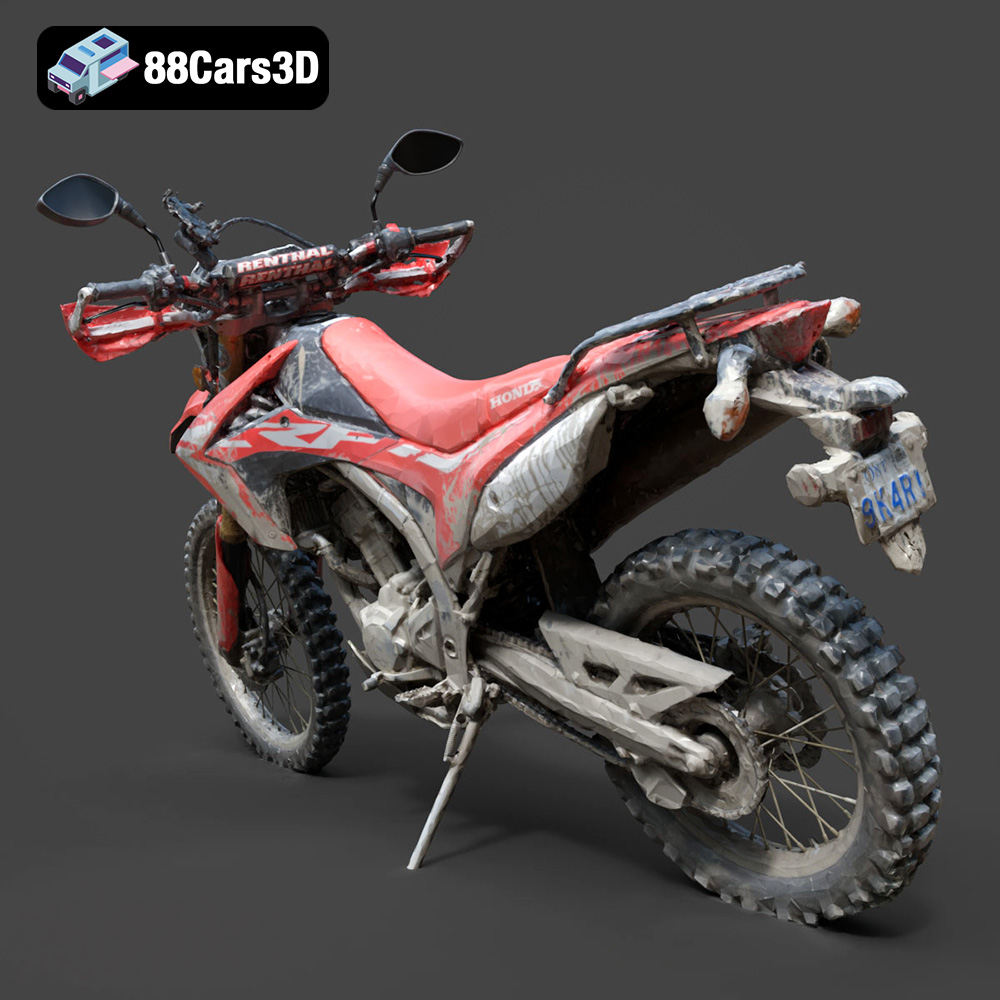
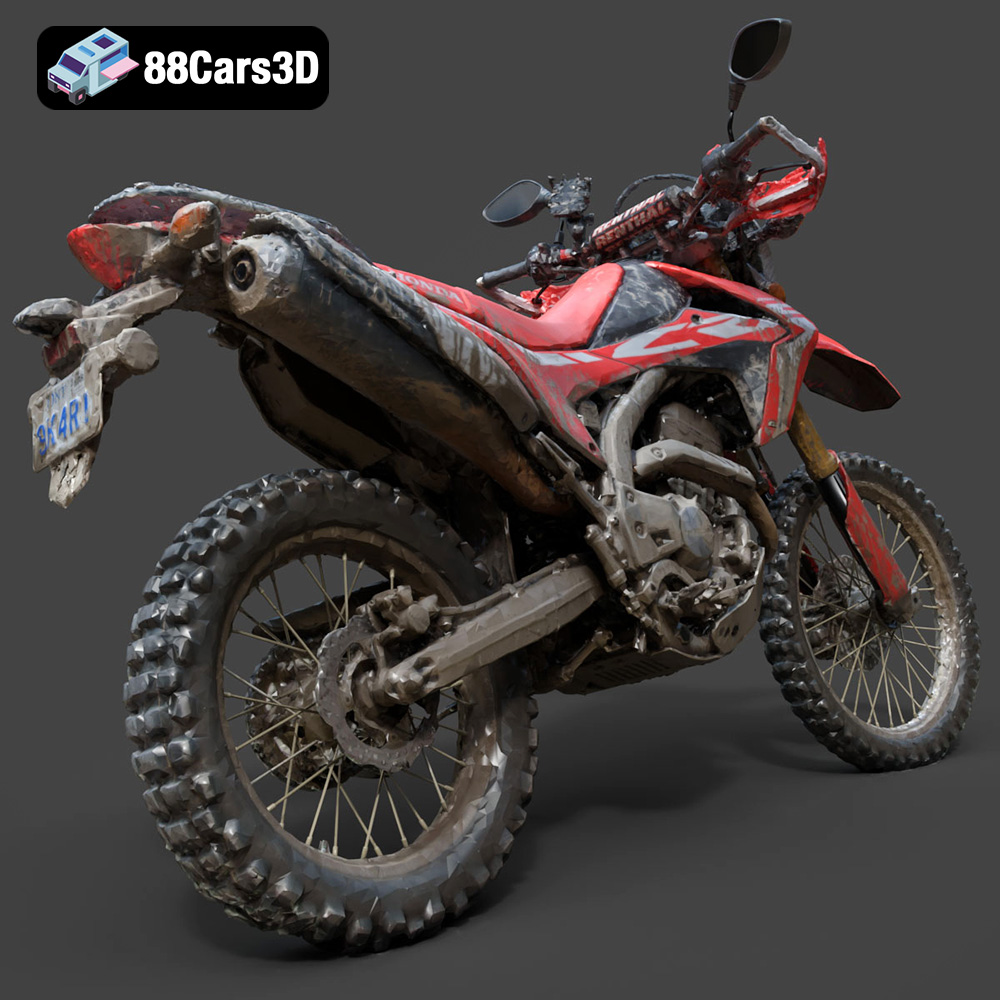
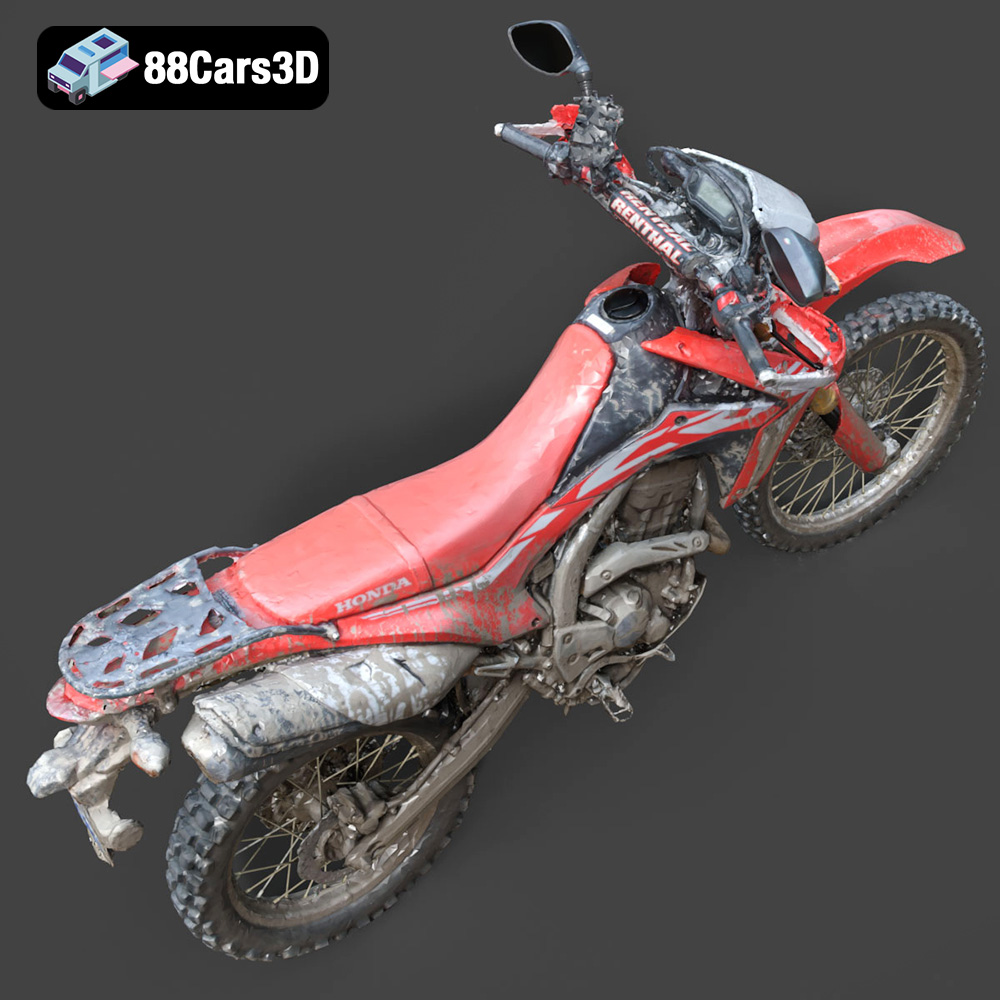
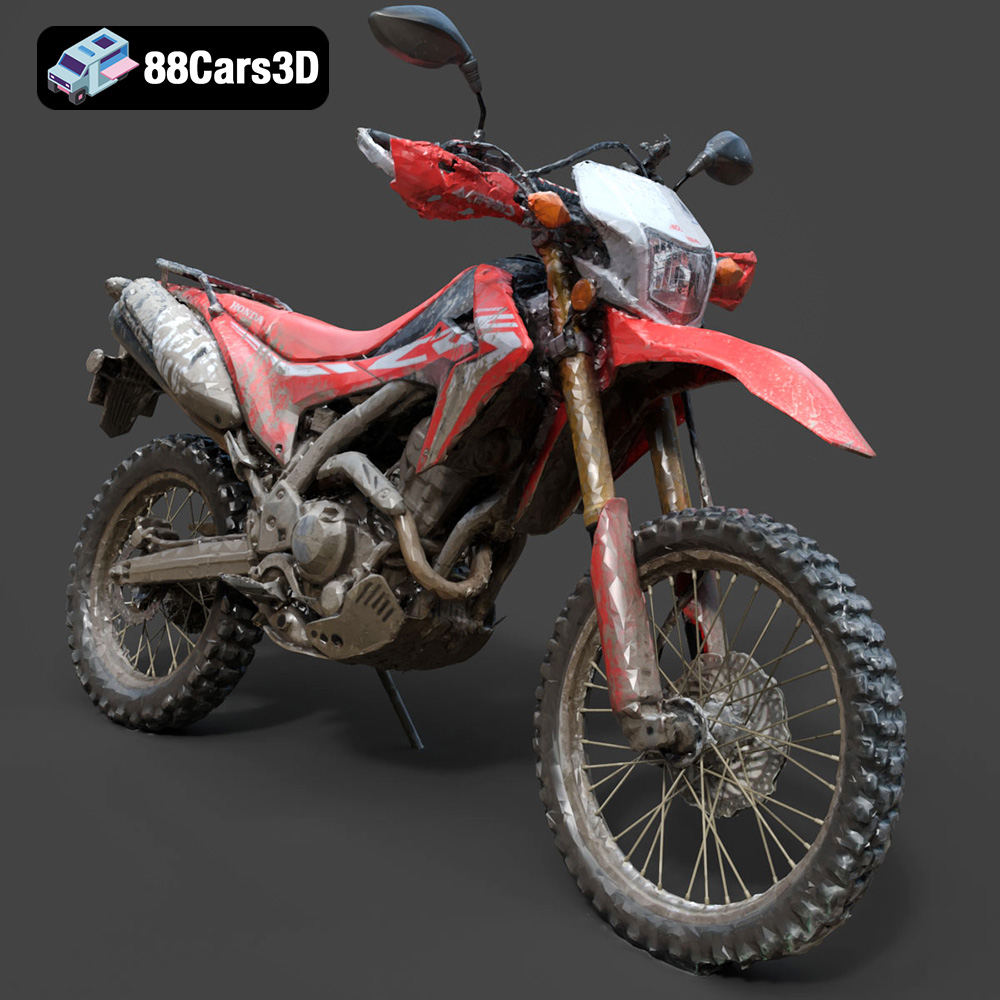
Today, we delve into the intricate world of professional 3D asset utilization, exploring how superior models empower creators to achieve unparalleled realism and efficiency. We’ll examine the technical underpinnings, workflow considerations, and diverse applications that elevate projects from good to extraordinary. As a prime example of such a professional-grade asset, we will frequently reference the Honda Motorcycle-001 3D model from 88cars3d.com – a meticulously constructed digital twin designed to meet the rigorous demands of modern digital pipelines, from advanced game development to striking cinematic rendering.
The choice of a 3D model file format is far more than a simple preference; it dictates compatibility, data integrity, and workflow efficiency. Professional 3D artists and developers must possess a deep understanding of each format’s strengths and limitations to ensure seamless integration and optimal performance. The Honda Motorcycle-001 3D model, for instance, is offered in a comprehensive suite of industry-standard formats, providing unparalleled flexibility for diverse projects. Let’s explore these essential formats:
The .blend format is Blender’s native file type, encompassing not just the raw mesh data but also all aspects of a complete Blender scene. This includes materials, textures, lighting setups, cameras, animations, rigging, modifiers, and even scripts. For users deeply integrated into the Blender ecosystem, a .blend file offers maximum editability and immediate access to a professionally configured scene. It’s ideal for artists who want to dissect the model’s construction, adapt its materials, or integrate it into an existing Blender project with minimal setup. The Honda Motorcycle-001 provided as a .blend file means users get a ready-to-render asset straight out of the box, with all PBR (Physically Based Rendering) materials and lighting intelligently pre-configured.
Autodesk’s .fbx (Filmbox) format has become the de facto standard for exchanging 3D data between different software applications, especially prominent in game development. It efficiently stores not only geometry and UV maps but also animations, rigs, skinning data, and material assignments. Its robust support in game engines like Unreal Engine and Unity makes it the go-to choice for importing complex animated assets. When using an .fbx version of a 3D car model or motorcycle, developers can expect a smooth transfer of the model’s core attributes, ensuring that the asset is game-engine ready for real-time applications where performance and fidelity are equally crucial.
The Wavefront .obj format is arguably one of the most widely supported 3D file formats. It’s a simple, text-based format primarily used to store 3D geometry – vertices, UVs, normals, and face information. While it doesn’t typically store complex scene data like lighting or animation, it often comes accompanied by an .mtl (material library) file that defines basic material properties and references texture maps. Its universality makes it excellent for cross-software compatibility, ensuring that the Honda Motorcycle-001 3D model can be opened and worked on in virtually any 3D modeling application, from 3ds Max to Maya to Cinema 4D, providing a foundational mesh for further customization.
.glb (GLB format, derived from glTF, the GL Transmission Format) is an increasingly vital format, particularly for web-based 3D, augmented reality (AR), and virtual reality (VR) applications. It’s a self-contained, binary format that efficiently bundles 3D model data, textures, and animations into a single file, optimized for fast loading and rendering in browser environments and across various devices. The Honda Motorcycle-001 in .glb format is perfect for developers aiming to integrate the model into a web-based configurator, an AR app on a smartphone, or a lightweight VR scene, delivering excellent visual fidelity with uncompromised performance.
The .stl (STereoLithography) format is synonymous with 3D printing. It represents a 3D model as a series of connected triangles (a triangulated mesh) without any color, texture, or material information. Its simplicity makes it universally compatible with 3D printers and slicing software. For architectural visualization firms creating physical models, or automotive designers wanting to prototype parts of the Honda Motorcycle-001, the .stl file provides the precise geometric data necessary for additive manufacturing processes, ensuring the digital design translates accurately into a tangible object.
The .ply (Polygon File Format or Stanford Triangle Format) is often used for storing 3D data from 3D scanners, particularly point clouds and polygon meshes. It can store a wider range of properties than .obj or .stl, including color, transparency, normals, texture coordinates, and even reliability information for each vertex or face. While not as universally used for general asset exchange, its precision and ability to handle complex data make it suitable for technical visualizations, scientific analysis, and reverse engineering workflows where accurate data representation of a complex shape like a motorcycle is paramount.
The .unreal format, or more accurately, assets pre-configured for Unreal Engine, implies more than just an .fbx import. It refers to a model that has been optimized, had its materials set up using Unreal’s PBR system (e.g., textures assigned to Base Color, Normal, Roughness, Metallic, AO maps), and potentially includes blueprints, LODs (Levels of Detail), and collision meshes, all ready for immediate drag-and-drop use within an Unreal Engine project. This significantly accelerates development for game studios or real-time configurators, making the Honda Motorcycle-001 an engine-ready asset for high-performance interactive environments.
For many veteran 3D artists, particularly in architectural visualization and automotive rendering, .max is the native file format for Autodesk 3ds Max. Similar to .blend, a .max file contains the complete scene, including geometry, materials (often V-Ray, Corona, or Arnold materials), lighting, cameras, animations, and render settings. It offers the highest degree of editability and control within the 3ds Max environment. The Honda Motorcycle-001 provided as a .max file means artists can leverage the full power of 3ds Max for intricate animations, detailed photorealistic renders, and complex scene compositions without any import-related issues or material conversions.
In today’s visually driven world, the distinction between a passable 3D model and a truly high-fidelity asset can make or break a project. This holds especially true for detailed subjects like vehicles, where precise engineering and aesthetic nuance are paramount. A top-tier 3D car model, or in our case, a motorcycle model, isn’t just about high polygon counts; it’s about intelligent design, optimized topology, and a deep understanding of PBR principles.
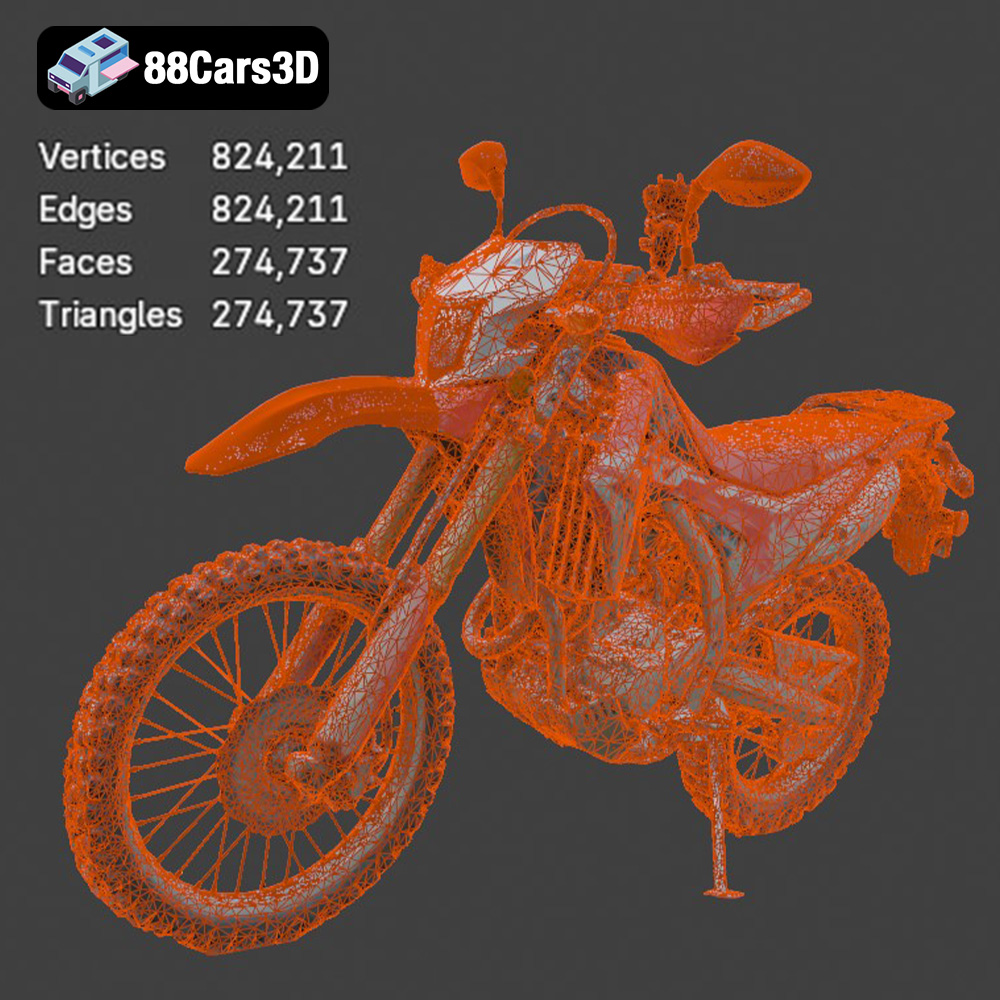
The core benefit of a high-fidelity model lies in its ability to withstand scrutiny. For cinematic close-ups or high-resolution marketing imagery, every curve, every seam, and every material reflection must be perfect. Low-quality models often suffer from poor topology, which leads to artifacts, jagged edges, and incorrect lighting responses. Furthermore, while visual fidelity is critical, performance cannot be sacrificed, especially in real-time applications. Professional models strike a balance, offering stunning visuals without excessive overhead, often achieved through meticulous optimization, efficient UV layouts, and well-managed poly counts. The Honda Motorcycle-001, with its clean geometry and accurate topological structuring, exemplifies this balance, guaranteeing seamless integration and robust performance.
High-fidelity 3D models are indispensable tools throughout the design and development lifecycle. Before a single physical prototype is built, digital models allow designers to iterate rapidly, visualize changes in real-time, and present concepts with unparalleled realism. Automotive designers use such models to evaluate aerodynamics, ergonomics, and aesthetics. Marketers utilize them to create compelling advertisements and configurators. Engineers employ them for simulations and technical documentation. A model like the Honda Motorcycle-001 facilitates this entire process, serving as an authoritative digital twin for demanding professional projects, enabling stakeholders to make informed decisions long before production begins.
Automotive rendering stands as one of the most demanding disciplines in 3D visualization, requiring an intricate blend of artistic skill and technical precision. Achieving photorealism for vehicles, whether a sleek sports car or a powerful motorcycle, depends heavily on the quality of the 3D model and the rendering pipeline. The Honda Motorcycle-001 3D model offers an excellent foundation for achieving stunning visual results.
3ds Max, often paired with renderers like V-Ray or Corona Renderer, remains a powerhouse for photorealistic automotive rendering. When starting with a high-quality .max file, artists benefit from expertly crafted geometry and ready-to-use materials. The key to realism lies in precise lighting, nuanced material definitions, and meticulous camera work. V-Ray and Corona offer advanced features like physically accurate global illumination, sophisticated reflection models, and powerful material editors that allow artists to fine-tune paint reflectivity, tire rubber texture, and chrome finishes, ensuring every detail on the Honda Motorcycle-001 interacts realistically with light.
Blender has rapidly ascended as a leading 3D software, with its integrated Cycles and Eevee renderers offering powerful solutions for diverse rendering needs. Cycles, Blender’s path-tracing renderer, excels at photorealism, providing physically accurate lighting and intricate material interactions. Eevee, a real-time renderer, is perfect for quick previews, animations, and stylized renders. A .blend file for the Honda Motorcycle-001, complete with materials and lighting setup, allows Blender artists to dive straight into rendering, leveraging the software’s extensive toolset to create breathtaking images and animations, from dynamic action shots to showroom-quality renders.
Regardless of the software, the trifecta of lighting, shading, and camera techniques is crucial. For automotive rendering, understanding studio lighting setups, HDRI (High Dynamic Range Imaging) environments for realistic reflections, and cinematic camera angles is paramount. Shaders must accurately represent various materials – metallic flakes in paint, the subtle roughness of rubber, the crisp reflections on glass, and the detailed textures of engine components. A high-quality model like the Honda Motorcycle-001, with its meticulously modeled individual components and realistic materials, provides the perfect canvas for artists to apply these techniques, ensuring that the final renders are not just visually appealing but also technically accurate and convincing.
The demands of real-time environments, such as video games, AR/VR experiences, and interactive configurators, present a unique set of challenges for 3D assets. Performance is paramount, requiring careful optimization without sacrificing visual fidelity. The Honda Motorcycle-001 3D model is engineered with this versatility in mind, making it an ideal choice for advanced game development.
One of the primary considerations for game assets is polygon count. While high-fidelity models for cinematic renders can have millions of polygons, real-time applications require a more judicious approach. Game developers employ Level of Detail (LOD) strategies, where multiple versions of a model exist, each with a progressively lower polygon count. The highest LOD is used when the model is close to the camera, while lower LODs are swapped in as the model moves further away. This optimization significantly reduces GPU strain, maintaining high frame rates. A well-constructed model, even one initially designed for high fidelity, is built with clean topology that facilitates easy LOD creation, ensuring it delivers excellent visual fidelity and uncompromised performance across platforms, as described for the Honda Motorcycle-001.
Physically Based Rendering (PBR) is the industry standard for creating realistic materials in real-time engines. PBR workflows rely on a set of texture maps (Base Color/Albedo, Normal, Roughness, Metallic, Ambient Occlusion) that simulate how light interacts with surfaces in a physically accurate manner. Game engines like Unreal Engine and Unity are built around PBR principles, making it essential for 3D models to come with corresponding PBR-ready textures. The Honda Motorcycle-001’s “realistic materials” and “professional grade setup” imply a PBR workflow, ensuring it looks consistent and high-quality whether integrated into an Unreal Engine environment via its .unreal format or imported into Unity using the .fbx file.
Integrating a complex 3D car model or motorcycle into a game engine requires more than just importing a file. It involves setting up collision meshes, ensuring proper scaling, configuring materials within the engine’s shader system, and potentially creating blueprint classes or prefabs for interactive elements. For Unreal Engine users, the availability of a dedicated .unreal file for the Honda Motorcycle-001 drastically simplifies this process, as it comes pre-configured for direct use. For Unity developers, the .fbx format provides the geometry and UVs, allowing for straightforward material setup using Unity’s Standard PBR shader. This direct integration saves countless hours of development time, allowing teams to focus on gameplay and user experience rather than asset preparation.
The utility of high-quality 3D models extends far beyond traditional screen-based rendering and real-time game environments. They are increasingly crucial for tangible applications like 3D printing and for novel interactive experiences such as AR and VR, enabling new forms of engagement and utility.
3D printing transforms digital models into physical objects, a process that relies heavily on the geometric integrity of the source file. The .stl format is the industry standard, and preparing a model for 3D printing involves ensuring it is watertight (no open edges), has appropriate wall thickness, and is scaled correctly. While the Honda Motorcycle-001 3D model is designed for visual fidelity, its clean geometry makes it suitable for conversion and preparation for 3D printing. For instance, an engineer might print a scaled model of the motorcycle for a wind tunnel test, or a hobbyist might create a display piece. Understanding the nuances of .stl files and mesh integrity is key to successful physical fabrication, demonstrating the model’s versatility even for tactile output.
Augmented Reality (AR) and Virtual Reality (VR) are revolutionizing how we interact with digital content. For these immersive platforms, lightweight yet visually rich models are paramount to ensure smooth performance on a wide range of devices, from high-end VR headsets to mobile phones. The .glb format is specifically optimized for this purpose, bundling all necessary textures and mesh data into a single, compact file ideal for web-based AR/VR viewers or mobile applications. Imagine showcasing the Honda Motorcycle-001 directly on a webpage, allowing potential customers to view it in 3D, or even placing it in their living room via AR, all powered by an efficient .glb asset. This capability significantly enhances marketing, e-commerce, and educational applications, making the model incredibly valuable for forward-thinking businesses.
High-fidelity models are also critical for advanced interactive visualizations and simulations. This could involve using the Honda Motorcycle-001 in a virtual training simulator for mechanics, allowing them to practice maintenance procedures in a risk-free environment. Or it could be part of an interactive product presentation, where users can explore the motorcycle’s features in detail, customize colors, and view it from any angle. Such applications demand not only visual accuracy but also robust, performant models that respond smoothly to user input. The versatility of the Honda Motorcycle-001 across various formats ensures it can be adapted for these complex interactive scenarios, providing rich and engaging user experiences.
For professionals seeking to enhance their projects with exceptional 3D assets, marketplaces like 88cars3d.com play a crucial role. They provide a curated selection of high-quality models that meet stringent industry standards, offering a significant advantage over creating assets from scratch or relying on subpar alternatives.
The cornerstone of a reputable 3D marketplace is its commitment to quality. 88cars3d.com focuses on delivering models that boast “clean geometry and accurate topological structuring,” “realistic materials,” and a “professional grade setup.” These aren’t just buzzwords; they represent a promise of meticulously crafted assets. This means models are built with proper edge loops, optimized poly counts, non-overlapping UVs, and PBR-ready textures. Such technical precision ensures that models like the Honda Motorcycle-001 will render flawlessly, animate predictably, and integrate seamlessly into any professional workflow, minimizing post-purchase headaches and maximizing creative potential.
Time is a valuable commodity in any creative industry. Developing a complex 3D car model or motorcycle from scratch, complete with multiple LODs, PBR textures, and various file format exports, can take hundreds of hours of expert labor. By purchasing a ready-to-use, high-fidelity asset from 88cars3d.com, professionals can instantly acquire a project-ready model. This allows them to allocate their time and resources to other critical aspects of their projects, such as scene composition, animation, lighting, or gameplay development, significantly accelerating production timelines and reducing overall costs. The Honda Motorcycle-001 3D model is a prime example of an asset designed to be a time-saving solution for demanding studios.
Investing in professional-grade 3D assets offers long-term value. A well-built model can be reused across multiple projects, adapted for different applications (rendering, games, AR/VR, 3D printing), and easily updated or modified as project requirements evolve. The availability of the Honda Motorcycle-001 in a comprehensive suite of industry-standard file formats (.blend, .fbx, .obj, .glb, .stl, .ply, .unreal, .max) ensures its versatility and future-proofing. This scalability means that a single purchase can serve a wide range of current and future needs, making it a smart and economical choice for studios and freelancers alike, ensuring that their digital assets grow with their ambitions.
The journey through the intricacies of high-fidelity 3D models underscores their indispensable role in modern digital production. From the nuanced choice of file formats to the demanding requirements of photorealistic rendering and real-time performance, a meticulously crafted 3D asset forms the backbone of success across diverse industries. We’ve explored how a model’s underlying structure, material setup, and format versatility directly impact everything from cinematic quality to game engine efficiency and even physical prototyping.
The Honda Motorcycle-001 3D model stands as a testament to this philosophy, offering an exceptional level of realism and technical robustness. Its clean geometry, accurate topology, realistic materials, and availability in a comprehensive suite of formats — including .blend, .fbx, .obj, .glb, .stl, .ply, .unreal, and .max — position it as an authoritative digital twin for any demanding professional project. Whether you’re a game developer seeking engine-ready assets, a visualization artist aiming for stunning renders, or an AR/VR creator building immersive experiences, this model provides the necessary foundation for excellence.
For professionals who refuse to compromise on quality and efficiency, sourcing such meticulously engineered 3D car models and vehicle assets from trusted marketplaces like 88cars3d.com is not just a convenience; it’s a strategic advantage. It empowers creators to focus on their artistic vision and project goals, confident that their foundational assets are built to the highest standards, ready to unleash their full digital potential.
Experience an exceptional level of realism with the Honda Motorcycle-001 3D model. Meticulously constructed to capture the exact engineering, sleek aesthetic, and dynamic profile of this renowned motorcycle, it serves as an authoritative digital twin for demanding professional projects.
This model features clean geometry and accurate topological structuring, guaranteeing seamless integration into a wide range of digital pipelines. Boasting realistic materials, a professional grade setup, and meticulously modeled individual components, it stands as a reliable asset for both macro close-ups and wide dynamic shots.
Engineered for versatility, this asset is an ideal choice for advanced game development, striking cinematic rendering, immersive AR/VR environments, and technical visualizations. It delivers excellent visual fidelity and uncompromised performance across platforms.
Available in a comprehensive suite of industry-standard file formats to suit any workflow:
$19.99
.arvr
.bike
.blend
.car3dmodel
.fbx
.gameasset
.glb
.honda
.max
.motorcycle
.motorcycle001
.obj
.ply
.rendering
.simulation
.stl
.streetbike
.twowheeler
.unreal