Get 20% OFF All Premium 3D & STL Models!

In the rapidly evolving landscape of 3D design, the demand for high-fidelity automotive models has never been greater. From cinematic quality renders that capture the glint of chrome to real-time game assets that fuel immersive virtual worlds, the foundation of any successful project lies in the quality of its 3D assets. Professionals across industries – automotive design, architectural visualization, game development, and AR/VR experiences – consistently seek models that offer precision, versatility, and optimal performance.
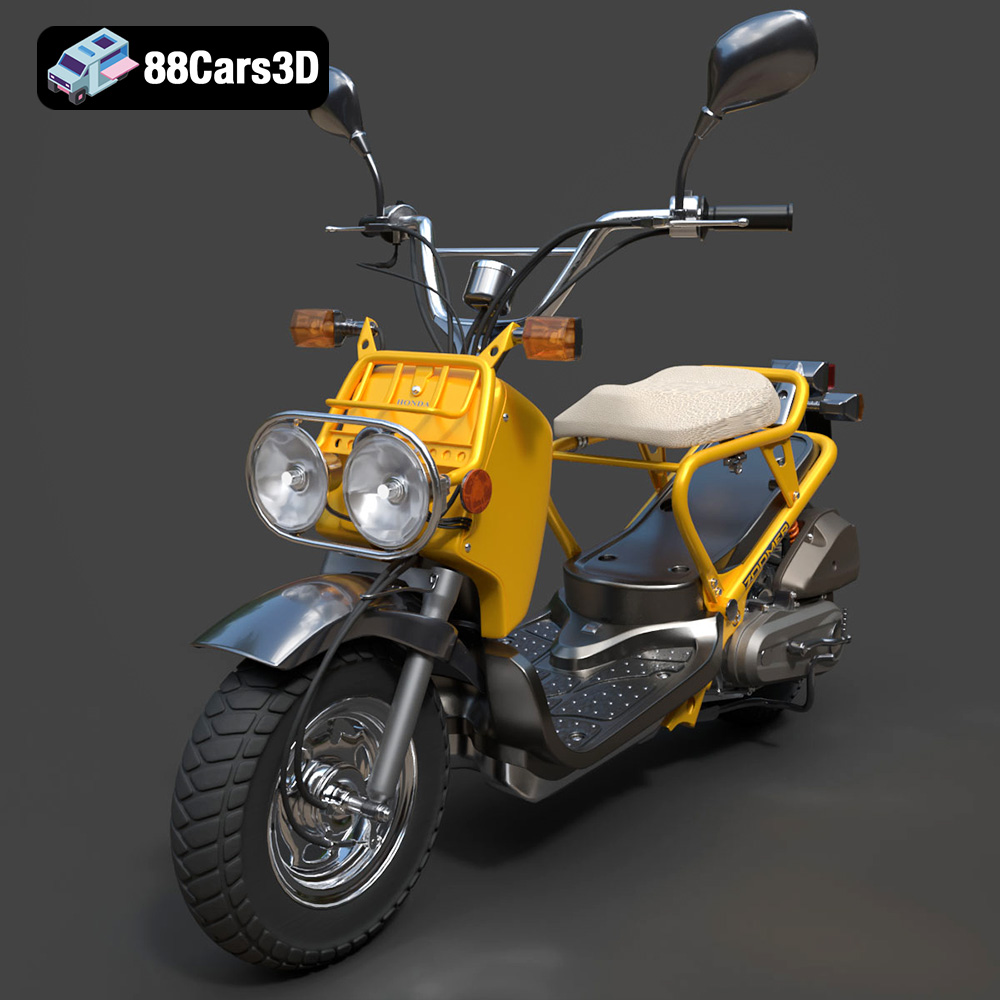
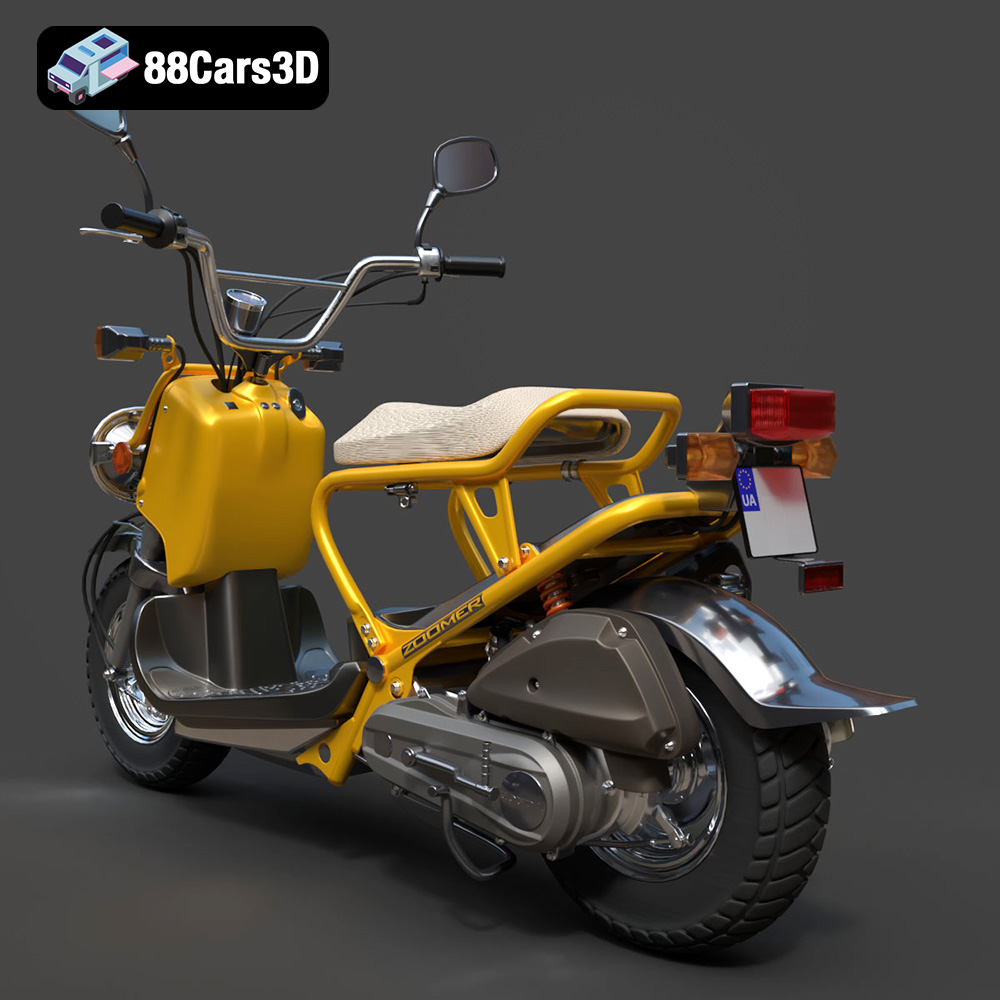
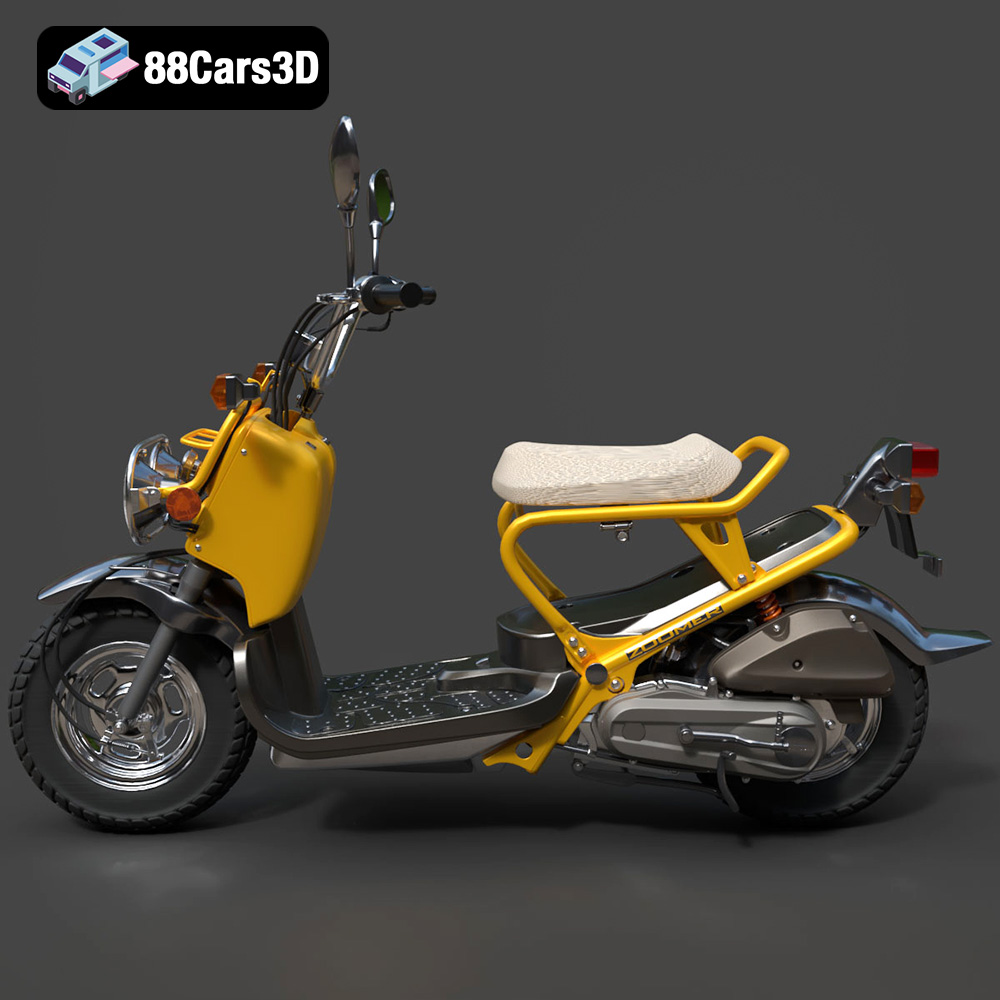
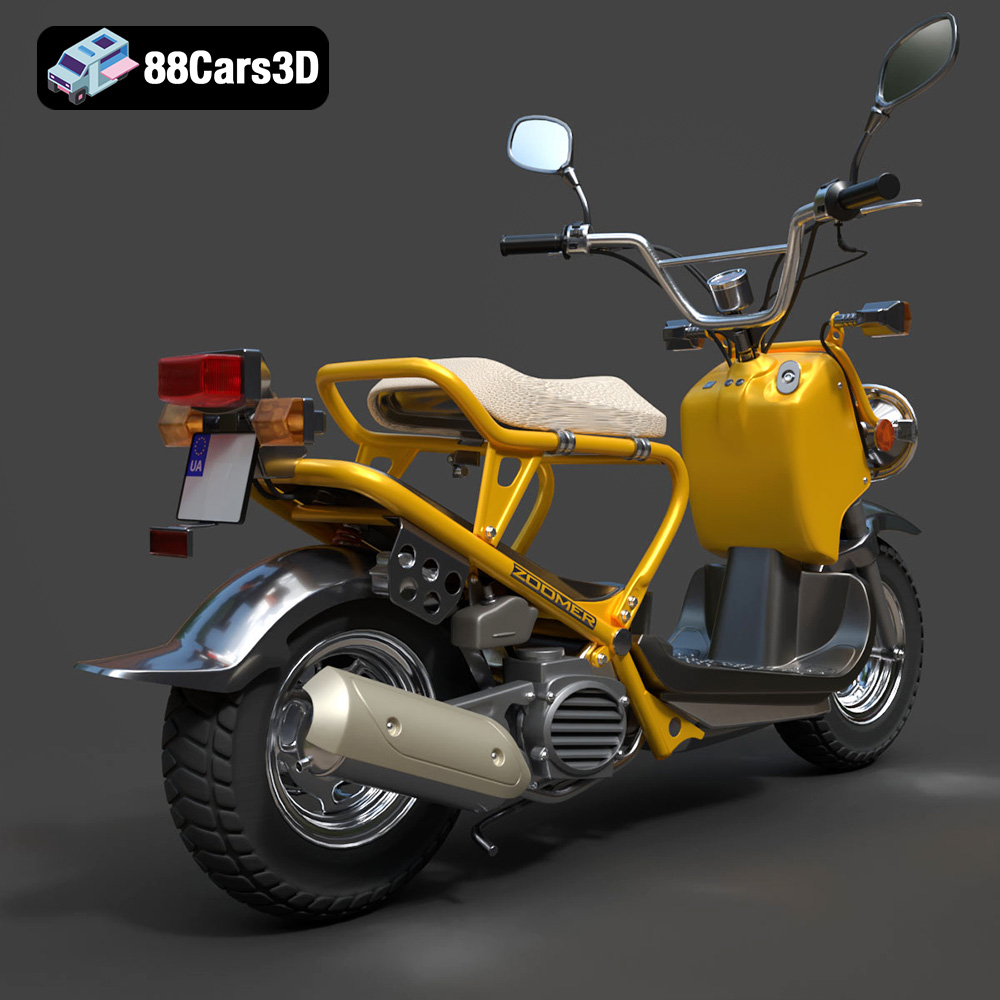
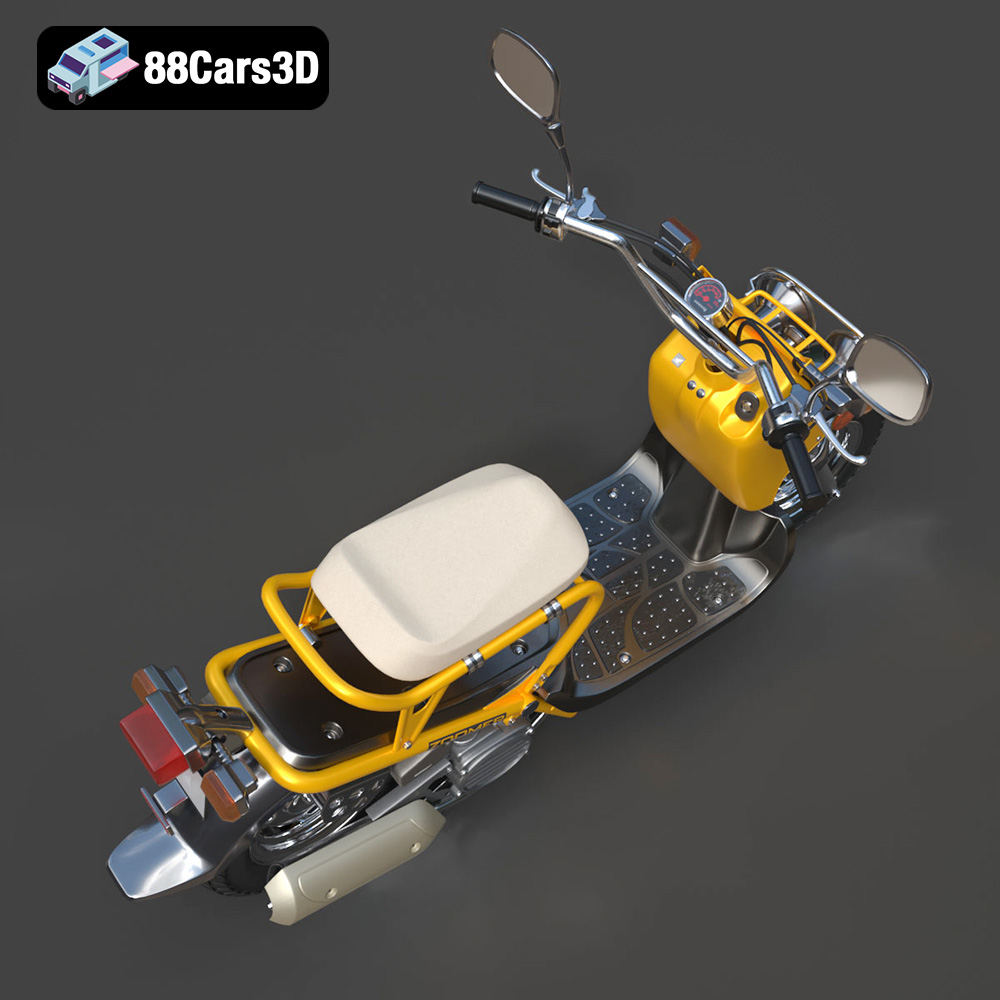
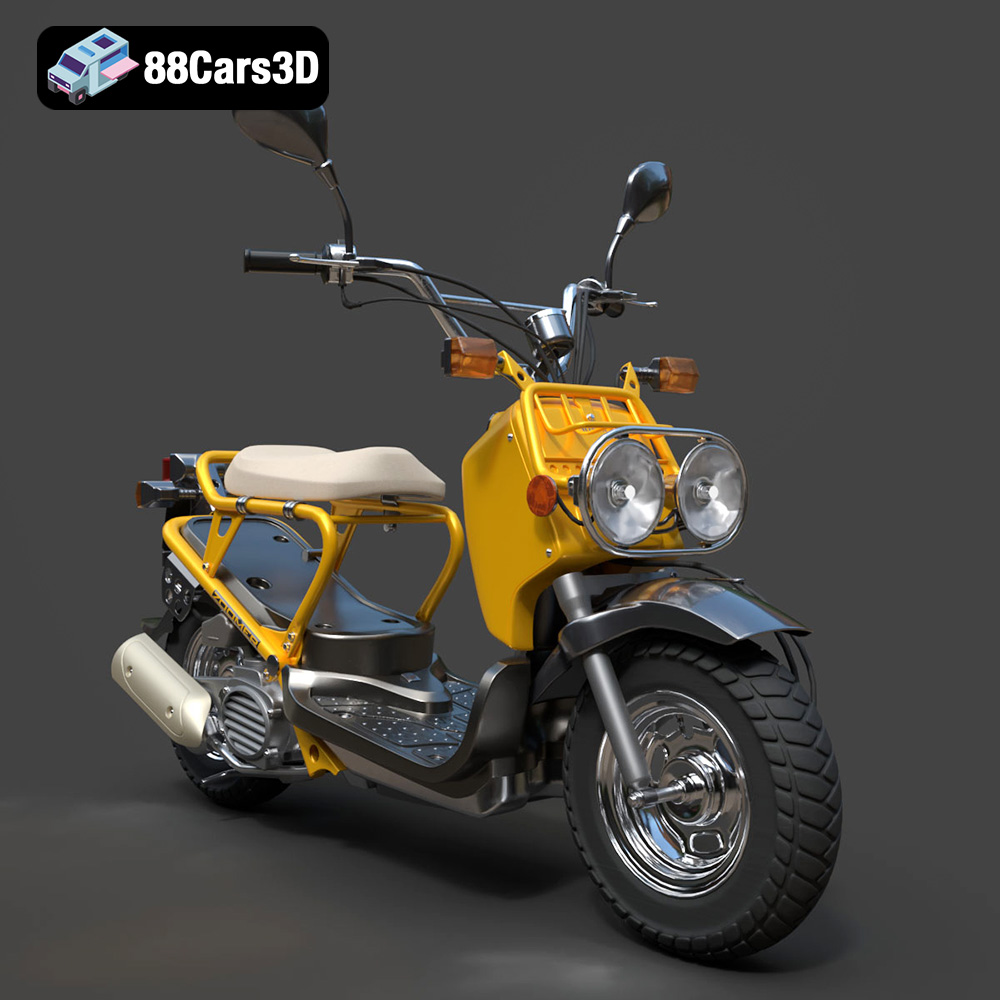
This pursuit of excellence often leads artists and developers to specialized marketplaces where quality is paramount. Enter the realm of meticulously crafted 3D car models, such as the impressive Honda Zoomer 50 2005 3D Model. This particular asset stands as a testament to the level of detail and professional quality that can elevate any project. It’s not merely a representation; it’s a digital twin, ready to be integrated into the most demanding workflows, offering clean geometry, realistic materials, and seamless compatibility across various software environments. In this comprehensive guide, we’ll explore the intricate world of 3D automotive assets, dissecting the technical considerations, workflow advantages, and diverse applications, with the Honda Zoomer 50 2005 3D Model serving as our benchmark for excellence.
The success of any 3D project often hinges on selecting the correct file format. Each format possesses unique characteristics, making it suitable for specific stages of a workflow or particular end applications. A high-quality model, like the Honda Zoomer 50 2005 3D Model available at 88cars3d.com, typically comes with a suite of formats, ensuring maximum flexibility for artists and developers.
The .blend format is the native file type for Blender, an incredibly powerful open-source 3D creation suite. When you acquire a .blend file, you’re not just getting the raw geometry; you’re often receiving a fully editable Blender scene complete with materials, textures, lighting setups, and sometimes even animation rigs. This makes .blend ideal for artists who primarily work within Blender, allowing for direct modification, custom rendering, and further development without compatibility issues. For the Honda Zoomer 50, the .blend file provides a ready-to-render scene, making it perfect for custom shot creation or integrating into existing Blender projects with minimal effort.
.fbx (Filmbox) is a proprietary file format owned by Autodesk, widely regarded as the industry standard for 3D data exchange, especially in game development and animation. Its strength lies in its ability to store a comprehensive range of 3D data, including geometry, materials, textures, animations, skinning, and camera information. This makes .fbx incredibly versatile for transferring assets between different 3D software (like 3ds Max, Maya, Blender, Cinema 4D) and directly into game engines such as Unreal Engine and Unity. When integrating the Honda Zoomer 50 into a real-time environment, the .fbx format is almost always the preferred choice due to its robust support for game-engine-ready assets.
The .obj (Wavefront OBJ) format is another highly universal exchange format. While it’s older than .fbx and doesn’t support advanced features like animation or scene hierarchy as robustly, it excels in storing geometric data (vertices, normals, texture coordinates, and faces). Its simplicity and wide adoption make it compatible with virtually all 3D software packages. For models like the Honda Zoomer 50, the .obj version ensures that regardless of your primary 3D application, you’ll be able to import, manipulate, and render the core mesh data effectively. It’s an excellent fallback or starting point for projects requiring only raw mesh information.
.glb (GL Transmission Format Binary) is an increasingly important format, especially for web-based 3D, AR (Augmented Reality), and VR (Virtual Reality) applications. It’s a compact, self-contained file that includes all necessary data (geometry, materials, textures, animations) within a single binary file. This optimization makes .glb ideal for fast loading and efficient streaming in environments where file size and performance are critical, such as interactive web viewers or mobile AR experiences. The Honda Zoomer 50 in .glb format is perfect for developers looking to quickly deploy the model into a WebGL viewer or an AR application.
.stl (Stereolithography) is the de facto standard file format for 3D printing. It represents a 3D model as a series of connected triangles, describing only the surface geometry of an object without color, texture, or other properties. While not suitable for rendering or animation, its simplicity and ubiquity in the additive manufacturing world make it indispensable for physical prototyping. If your project involves creating a tangible model of the Honda Zoomer 50, the .stl version is precisely what you need to prepare it for a 3D printer.
.ply (Polygon File Format or Stanford Triangle Format) is another popular format for storing 3D data from 3D scanners, CAD applications, or other digital sources. Like .obj, it primarily focuses on mesh data but can also store properties like color, transparency, and normals per vertex or face. It’s often used in academic and research settings for precision mesh representation and analysis. For complex visualization or reverse engineering tasks involving the Honda Zoomer 50, the .ply format offers a robust and detailed polygon mesh.
The .unreal format, often referring to assets specifically packaged or configured for Unreal Engine, provides unparalleled integration into real-time environments. These files typically contain not just the mesh but also optimized materials, textures, collision data, and possibly Blueprints, ensuring the asset is truly “engine-ready” with minimal setup. The Honda Zoomer 50’s .unreal file means developers can drop it directly into their Unreal projects, saving significant time on asset preparation and optimization.
Finally, .max is the native file format for Autodesk 3ds Max, one of the leading software packages for 3D modeling, animation, and rendering. Similar to .blend, a .max file offers a fully editable scene within its native environment. It’s crucial for projects deeply embedded in the Autodesk ecosystem, allowing for advanced rendering setups, complex animations, and integration with other Autodesk tools. For professionals relying on 3ds Max for high-end rendering or animation, the .max version of the Honda Zoomer 50 2005 3D Model provides the highest level of control and fidelity, leveraging all the features of this powerful software.
Understanding these formats is key to maximizing the utility of any 3D asset, especially diverse ones like the Honda Zoomer 50 2005 3D Model from 88cars3d.com, which is designed to cater to a broad spectrum of professional needs.
Automotive rendering is an intricate discipline, blending artistic vision with technical precision to create photorealistic images and animations. It’s about more than just a good model; it’s about how light interacts with surfaces, the subtlety of reflections, and the atmospheric mood. With a high-quality base like the Honda Zoomer 50 2005 3D Model, artists have an exceptional starting point to produce stunning visuals.
At the heart of modern realism lies Physically Based Rendering (PBR). PBR materials mimic how light behaves in the real world, based on physical properties of surfaces. For the Honda Zoomer 50, this means meticulously crafted textures for metallic components, rubber tires, plastic panels, and the subtle wear and tear that gives a vehicle character. A PBR workflow typically involves maps such as Albedo/Base Color, Metallic, Roughness, Normal, and Ambient Occlusion. These maps, when correctly applied in a renderer like V-Ray, Corona, or Cycles, ensure that the scooter reacts realistically to light, whether it’s the metallic sheen of the handlebars or the diffuse texture of the seat. The professional quality construction of the Honda Zoomer 50 ensures these material definitions are robust and ready for PBR integration.
Effective lighting is paramount. In 3ds Max, artists might use a combination of V-Ray Dome Lights with HDRIs (High Dynamic Range Images) for realistic global illumination, complemented by target lights for specific highlights. For the Honda Zoomer 50, an outdoor HDRI can simulate a sunny day, casting realistic shadows and reflections on the bodywork. In Blender, similar principles apply using Cycles or Eevee, leveraging sky textures, area lights, and volumetric effects to create depth. The meticulous detail in the Honda Zoomer 50 2005 3D Model truly shines when placed under a thoughtfully designed lighting scheme, revealing its clean geometry and the nuances of its various components. Positioning key lights, fill lights, and rim lights can emphasize contours and material properties, bringing out the iconic ruggedness of the scooter.
Rendering is often just the beginning. Post-processing in software like Adobe Photoshop or Affinity Photo adds the final layer of polish. This can involve color grading to set a mood, adding depth of field for focus, applying subtle lens flares, or compositing render passes for greater control over reflections and shadows. For a Honda Zoomer 50 render, post-processing might enhance the vibrancy of its paint, add a subtle dust overlay to its tires for a more “street scene” feel, or introduce atmospheric haze to create a sense of distance. The goal is to move beyond mere rendering to create a compelling visual narrative that highlights the model’s precision and realism, making it suitable for high-end advertising, product showcases, or detailed visualizations.
While photorealistic renders are one facet, game development and real-time applications present a unique set of challenges and requirements. Performance is king, and even the most detailed 3D car models must be optimized to run smoothly in interactive environments. The Honda Zoomer 50 2005 3D Model, being game-engine ready, is built with these considerations in mind.
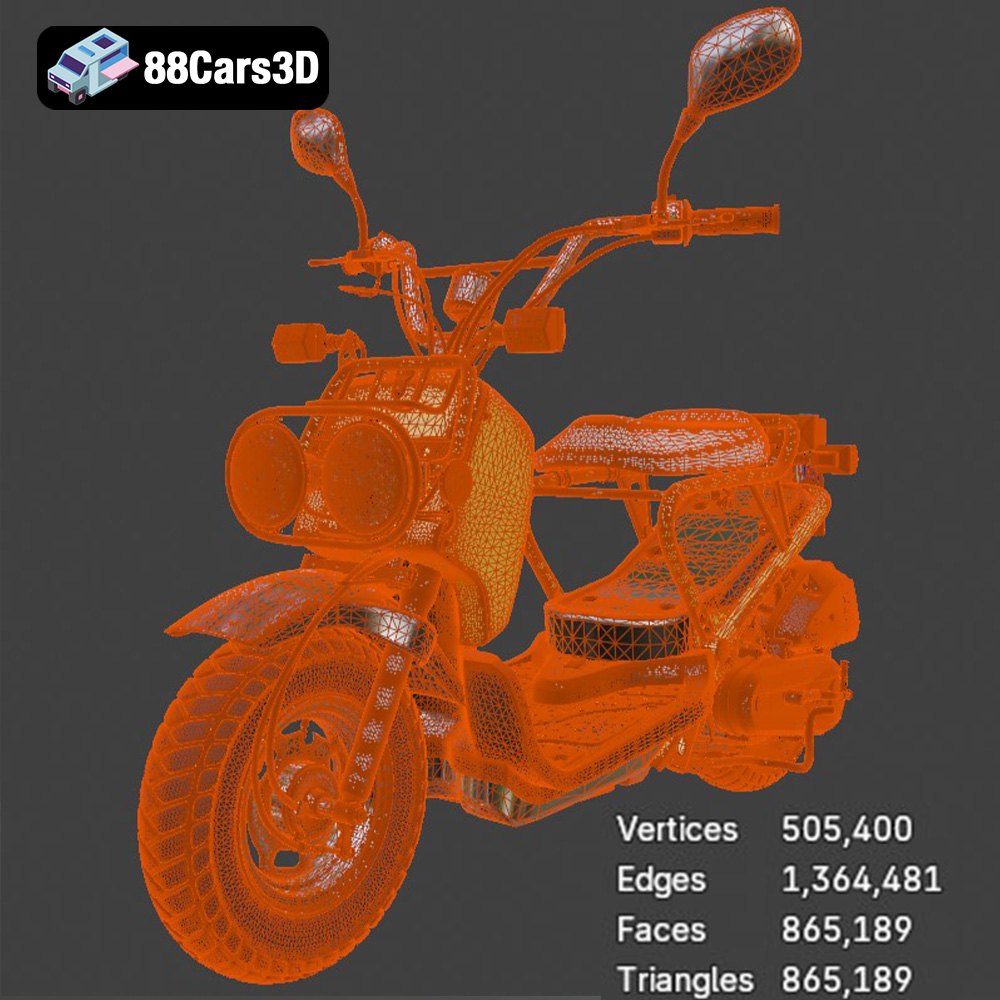
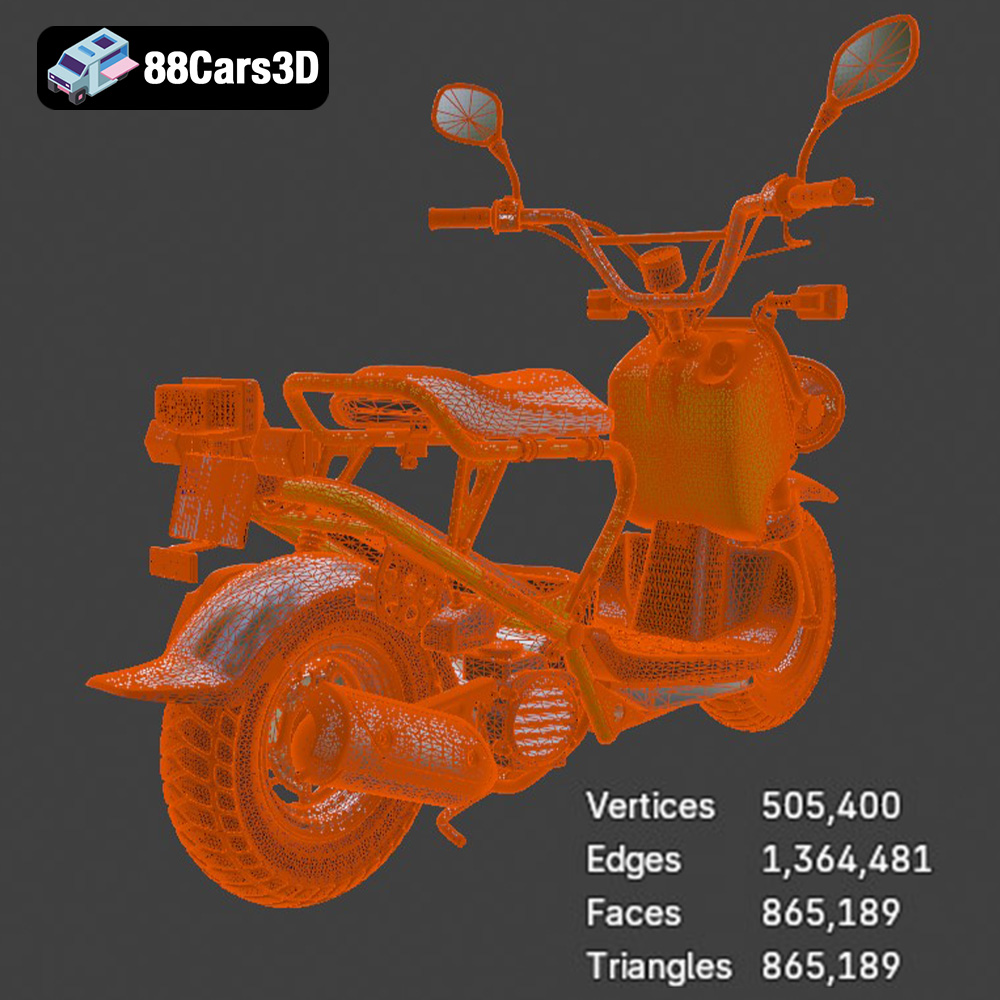
Poly count (polygon count) is a critical metric for real-time performance. High-resolution models, while excellent for cinematic renders, can cripple game framerates. Professional game assets utilize Level of Detail (LOD) systems. This means creating multiple versions of the same model, each with a progressively lower poly count. For the Honda Zoomer 50, a detailed main model might have tens of thousands of polygons, but LODs would reduce this to a few thousand or even hundreds for distant views. The .fbx and .unreal formats of the Honda Zoomer 50 from 88cars3d.com are typically structured to facilitate this, allowing developers to implement LODs efficiently, ensuring the scooter looks great up close but doesn’t burden the rendering pipeline when far away.
Efficient UV mapping is essential for real-time assets. UVs are the 2D coordinates that tell a 3D program how to apply textures to a model’s surface. “Clean geometry” in the Honda Zoomer 50 implies well-unwrapped UVs, minimizing stretching and maximizing texture space utilization. Texture atlasing is a technique where multiple smaller textures (e.g., for different parts of the scooter) are combined into a single, larger texture sheet. This reduces draw calls, a significant performance booster in game engines. A well-optimized Honda Zoomer 50 would leverage texture atlases for its various components, from the seat fabric to the engine block, ensuring textures are loaded and rendered efficiently.
With its .fbx and dedicated .unreal file, the Honda Zoomer 50 2005 3D Model is primed for integration into the leading game engines. In Unreal Engine, developers can import the .unreal asset directly, complete with materials and potentially collision meshes. They can then set up material instances to allow for easy color variations or wear-and-tear customization. For Unity, the .fbx file is similarly straightforward to import. Artists would then recreate the PBR materials within Unity’s shader system, ensuring the textures are correctly linked and rendered. Both engines allow for the implementation of advanced features like ray tracing (for higher-end hardware) or custom shader graphs to enhance the visual fidelity of the Honda Zoomer 50, making it a dynamic part of any interactive experience, whether it’s an open-world game or a driving simulator.
The utility of a high-quality 3D model extends far beyond traditional rendering and game development. The Honda Zoomer 50 2005 3D Model exemplifies how a versatile asset can be leveraged across emerging technologies and specialized visualization tasks, opening up new avenues for engagement and creation.
Augmented Reality (AR) and Virtual Reality (VR) are transforming how we interact with digital content, bringing 3D models into our physical spaces or immersing us in entirely new ones. The .glb format, explicitly designed for AR/VR and web-based visualization, makes the Honda Zoomer 50 an ideal candidate for these applications. Imagine placing a lifelike 3D Honda Zoomer 50 on your driveway via an AR app on your phone, examining its details from every angle before a potential purchase. Or, in a VR showroom, users could walk around and even “sit” on the scooter. The optimized nature of .glb ensures quick loading times and smooth interaction, crucial for delivering compelling, lag-free AR/VR experiences. The model’s “unparalleled precision” is fully appreciated when viewed in an interactive 1:1 scale within these immersive environments.
Beyond digital displays, the Honda Zoomer 50 2005 3D Model offers tangible possibilities through 3D printing. The inclusion of an .stl file means that the model’s geometry is ready for conversion into a physical object. While 3D printing typically requires careful consideration of mesh integrity, wall thickness, and manifold geometry, a professionally constructed model significantly reduces preparation time. Engineers or designers could print miniature prototypes of the Zoomer 50 for concept validation, educational purposes, or even collectible figurines. This bridges the gap between the virtual and physical, demonstrating the extensive utility of a well-structured 3D asset from 88cars3d.com.
The Honda Zoomer 50 is not just a standalone vehicle; it’s an element that can enrich broader visualization projects. In architectural visualization, a detailed scooter can breathe life into a street scene, an urban park, or a garage render, adding a touch of realism and human scale. Its “seamless integration into varied environments” is a key advantage here. For product visualization, the model could be showcased alongside other automotive accessories or lifestyle products, demonstrating compatibility or enhancing the overall brand narrative. Imagine the Honda Zoomer 50 parked outside a trendy café in an architectural rendering, or being used in a marketing campaign for a helmet manufacturer. These real-world applications underscore the value of investing in high-quality, versatile 3D car models that can serve multiple purposes across different creative and commercial endeavors.
The true mark of a professional-grade 3D model lies not only in its visual fidelity but also in how easily it integrates into existing professional workflows. The Honda Zoomer 50 2005 3D Model, with its comprehensive suite of file formats, is designed to be a cornerstone asset rather than a project bottleneck, offering designers and artists maximum flexibility and efficiency.
For those deeply entrenched in the Autodesk ecosystem, the .max file of the Honda Zoomer 50 is an invaluable resource. 3ds Max is renowned for its robust animation tools and its capability to handle complex visual effects (VFX) pipelines. With the .max file, artists can access the original scene setup, potentially including hierarchy, pivots, and possibly even basic rigging. This allows for advanced animation sequences, such as the scooter driving through a cityscape, performing stunts, or being disassembled for a technical demonstration. Leveraging 3ds Max’s powerful rendering engines like V-Ray or Corona, combined with the detailed structural components of the Honda Zoomer 50, enables the creation of cinematic-quality visuals for commercials, films, or detailed technical breakdowns.
Blender users benefit immensely from the native .blend file. This format provides complete artistic freedom to modify, re-texture, or even re-model parts of the Honda Zoomer 50 to fit a specific aesthetic or project requirement. Whether it’s changing the paint scheme to a custom color, adding dirt and grime for a post-apocalyptic scene, or integrating it into a complex environment with Blender’s Cycles renderer, the editable nature of the .blend file is crucial. Artists can quickly experiment with different lighting setups, integrate custom assets, or animate the scooter using Blender’s rigging and animation tools, making it an incredibly versatile base for creative exploration and production within the Blender ecosystem.
Time is a critical resource in professional 3D production. Creating a model of the complexity and precision of the Honda Zoomer 50 from scratch would require hundreds of hours of work for an experienced artist. The availability of such “professional quality construction” assets, ready to be dropped into a scene, translates directly into significant time and cost savings. Marketplaces like 88cars3d.com specialize in providing these production-ready 3D car models, ensuring that designers, game developers, and visualization artists can focus on creativity and project execution rather than foundational asset creation. The meticulous crafting, clean geometry, and realistic materials of models like the Honda Zoomer 50 mean less cleanup, fewer optimization headaches, and a faster turnaround for any project requiring high-quality automotive rendering or game assets.
The journey through the intricacies of 3D car models, from understanding diverse file formats to mastering advanced rendering techniques and optimizing for real-time applications, underscores a fundamental truth: the quality of your base asset dictates the quality and efficiency of your final output. The Honda Zoomer 50 2005 3D Model exemplifies this principle, offering an unparalleled level of precision, clean geometry, and realistic materials that make it a versatile cornerstone for any professional endeavor. Whether your goal is to create breathtaking automotive rendering, develop immersive game assets, deploy models in AR/VR experiences, or even prepare for 3D printing, this model provides the technical foundation for success.
Its comprehensive file format support — from editable .blend and .max files for deep customization to optimized .fbx, .glb, and .unreal files for seamless engine integration — ensures that it fits perfectly into virtually any professional workflow. In a world where visual fidelity and performance are non-negotiable, investing in expertly crafted 3D car models like the Honda Zoomer 50 from 88cars3d.com is not just a choice; it’s a strategic advantage, empowering creators to focus on their vision and deliver exceptional results.
Discover the realistic Honda Zoomer 50 2005 3D Model, meticulously crafted to represent the iconic rugged scooter. This model delivers unparalleled precision, making it an excellent choice for detailed visualizations and dynamic projects. Key features include clean geometry, realistic materials, and professional quality construction. The structural components are modeled with strict attention to detail, ensuring seamless integration into varied environments. This 3D model is perfect for diverse applications, including game development, rendering, AR/VR experiences, and visualization. Whether used in a street scene simulation or a dedicated showcase, it provides exceptional results.
$19.99
.arvr
.blend
.car3dmodel
.fbx
.gameasset
.glb
.honda
.max
.moped
.motorcycle
.obj
.ply
.rendering
.scooter
.simulation
.stl
.unreal
.zoomer50