Get 20% OFF All Premium 3D & STL Models!

“`html
For 3D printing enthusiasts and hobbyists diving into the world of creating physical objects from digital designs, understanding the STL file format is absolutely crucial. STL, short for Stereolithography, has become the de facto standard for representing 3D models in additive manufacturing. Whether you’re sourcing printable car models from platforms like 88cars3d.com or designing your own creations, knowing how STL files work under the hood will empower you to optimize your prints and troubleshoot potential issues. This comprehensive guide will break down the inner workings of STL files, exploring the mesh structure, the role of triangles, the importance of precision, and practical tips for ensuring your models translate flawlessly from the digital realm to the physical world. We’ll cover everything from basic concepts to advanced techniques, providing you with the knowledge you need to master the art of 3D printing.
In this guide, you’ll learn about the structure of STL files and how they define 3D geometry. You’ll understand the significance of triangles in representing complex shapes and the impact of resolution on print quality. We’ll also dive into essential techniques for repairing and optimizing STL files before sending them to your 3D printer, covering topics like manifold mesh correction and support structure generation. Finally, we’ll explore real-world examples and best practices to help you achieve stunning results with your 3D printed car models and other projects.
At its core, an STL file is a simple yet powerful way to represent the surface geometry of a 3D object. It describes the outer shape of an object using a collection of interconnected triangles. Unlike other file formats that might store information about color, texture, or material properties, STL files focus solely on the 3D geometry.
STL files come in two primary formats: ASCII and Binary. The ASCII format represents the triangle data in human-readable text. This format is easier to understand and debug manually but results in significantly larger file sizes. A simple cube, for example, can easily balloon to several megabytes. The binary format, on the other hand, stores the triangle data in a compact binary representation. This leads to much smaller file sizes and faster processing, making it the preferred format for most 3D printing applications. While ASCII files can be helpful for debugging, binary files are more practical for larger, more complex models, especially when downloading models from marketplaces such as 88cars3d.com.
Each triangle in an STL file is referred to as a “facet.” Each facet is defined by three vertices (corner points) and a normal vector. The vertices specify the spatial coordinates of the triangle’s corners, while the normal vector indicates the direction the triangle is facing. The normal vector is crucial for determining the “inside” and “outside” of the object. Slicing software uses this information to correctly interpret the model and generate the appropriate toolpaths for the 3D printer. If the normals are inconsistent or flipped, it can lead to printing errors or unexpected results. The coordinates of the vertices are typically stored as floating-point numbers, determining the precision of the model. Using single-precision floating-point numbers (32-bit) is common, but higher-precision formats (64-bit) can be used for extremely detailed models.
Triangles are the fundamental building blocks of STL files. Any complex 3D shape can be approximated by a mesh of interconnected triangles. The more triangles used to represent the surface, the more accurately the STL file captures the original geometry. However, a higher triangle count also means a larger file size and increased processing time during slicing. Finding the right balance between accuracy and efficiency is key.
The process of approximating a curved surface with triangles is called tessellation. The density of the triangle mesh determines the resolution of the STL file. A coarse tessellation (fewer triangles) results in a faceted appearance, where the individual triangles are clearly visible. A finer tessellation (more triangles) produces a smoother surface that more closely resembles the original curved shape. In your CAD software, you can often control the tessellation level when exporting to STL format. For example, in SolidWorks, you can adjust the “Deviation” and “Angle” settings to control the fineness of the mesh. Lower deviation and angle values result in a higher triangle count and a smoother surface. It’s generally recommended to experiment with these settings to find the optimal balance for your specific model and printer capabilities. For printable car models from 88cars3d.com, ensure the resolution matches your desired print quality.
The size of the triangles in the STL file directly impacts the print quality. Smaller triangles can capture finer details and curves, leading to smoother surfaces in the printed object. However, extremely small triangles can also lead to increased file sizes and processing times without a significant improvement in print quality. Furthermore, very small triangles might introduce vulnerabilities, requiring meticulous slicing settings to achieve successful prints. The ideal triangle size depends on the size and complexity of the model, the layer height used during printing, and the capabilities of the 3D printer. As a general rule, the triangle size should be significantly smaller than the layer height to avoid stair-stepping artifacts on curved surfaces.
The slicing process converts the STL file into a series of layers that the 3D printer can understand. Slicing software, such as Cura, PrusaSlicer, or Simplify3D, takes the STL file as input and generates G-code, which contains the instructions for the printer’s movements, extrusion, and temperature settings. Optimizing slicing parameters is essential for achieving high-quality prints and minimizing print time and material usage.
Layer height is one of the most crucial slicing parameters. It determines the thickness of each layer in the printed object. Lower layer heights result in smoother surfaces and finer details, but they also increase the print time. Higher layer heights reduce the print time but can lead to more visible layer lines, especially on curved surfaces. A common starting point is a layer height of 0.2mm, but you can adjust it based on the specific model and desired print quality. Print speed also plays a significant role in print quality and overall print time. Faster print speeds can reduce the print time but may compromise the print quality, especially for intricate details and overhangs. It’s often recommended to start with a moderate print speed (e.g., 50-60 mm/s) and fine-tune it based on your printer’s capabilities and the specific material you’re using. These two settings are intertwined, with slower speeds often allowing for finer layer heights.
Infill density determines the amount of material used to fill the interior of the printed object. A higher infill density results in a stronger and more solid object, but it also increases the print time and material usage. A lower infill density makes the object lighter and faster to print but reduces its strength. The infill pattern also affects the strength and weight of the object. Common infill patterns include grid, honeycomb, gyroid, and triangles. Each pattern has its own advantages and disadvantages in terms of strength, weight, and print time. For example, a gyroid infill provides excellent strength-to-weight ratio and isotropic properties (equal strength in all directions), while a honeycomb infill is lightweight and easy to print. For models like car chassis or functional parts, a higher infill density (e.g., 50-75%) and a strong infill pattern are recommended. For purely aesthetic models, a lower infill density (e.g., 10-20%) may be sufficient.
Support structures are temporary structures that are printed to support overhanging features and prevent them from collapsing during printing. They are essential for printing complex geometries with overhangs exceeding 45 degrees. Slicing software automatically generates support structures based on the model’s geometry and the chosen support settings. Understanding how to generate and remove support structures effectively is crucial for achieving successful prints.
There are several types of support structures, each with its own characteristics and applications. Common support types include tree supports, linear supports, and grid supports. Tree supports are branching structures that provide support with minimal material usage and easy removal. Linear supports are simple vertical structures that are suitable for supporting flat overhangs. Grid supports are dense structures that provide strong support but can be more difficult to remove. The choice of support type depends on the geometry of the model and the desired balance between support strength and ease of removal. Experiment with different support types in your slicer to determine what works best for a specific car model’s features.
The placement and settings of support structures are crucial for successful printing. Supports should be placed strategically to provide adequate support to overhanging features without interfering with the model’s surface. The support settings, such as support density, support overhang angle, and support interface, also affect the strength, stability, and ease of removal of the support structures. A higher support density provides stronger support but can be more difficult to remove. A larger support overhang angle allows for printing more aggressive overhangs but requires more support material. A support interface creates a thin layer between the support and the model, making it easier to remove the support without damaging the model’s surface. When removing support structures, use appropriate tools such as pliers, cutters, or scalpels to carefully detach the supports from the model. Be patient and avoid applying excessive force, which can damage the model. Consider using dissolvable support materials (e.g., PVA for PLA) for complex geometries that are difficult to reach with manual tools.
STL files can sometimes contain errors or imperfections that can lead to printing problems. Common issues include non-manifold geometry, flipped normals, holes in the mesh, and self-intersecting faces. Fortunately, several software tools are available to repair and optimize STL files before printing. These tools can automatically detect and fix common errors, ensuring that the STL file is printable and produces a high-quality result.
Mesh repair software, such as Meshmixer, Netfabb, or Blender, can be used to identify and fix various errors in STL files. These tools typically provide automated repair functions that can fix non-manifold geometry, fill holes, and correct flipped normals. In Meshmixer, the “Make Solid” function can be used to convert a hollow or non-manifold mesh into a solid, printable object. Netfabb offers a powerful suite of repair tools, including automatic fixing and manual editing capabilities. Blender, while primarily a 3D modeling software, also provides excellent mesh repair tools through its edit mode and sculpting features. Before sending an STL file to the slicer, it’s always a good practice to run it through a mesh repair tool to ensure that it’s free of errors and ready for printing. For complex car models, this step is crucial for achieving a successful and accurate print.
Manifold geometry is a fundamental requirement for 3D printing. A manifold mesh is one that represents a closed, watertight surface. In other words, it has no holes, edges that belong to more than two faces, or self-intersecting faces. Non-manifold geometry can cause slicing errors, unexpected print behavior, and even print failures. When encountering printing issues, check the STL file for non-manifold geometry using a mesh repair tool. The software will highlight any problematic areas, allowing you to fix them manually or automatically. For example, you can use Blender’s “Select Non-Manifold” tool to quickly identify and correct any non-manifold edges or faces in the mesh. Ensuring a manifold mesh is essential for achieving consistent and reliable 3D prints.
Post-processing is the final step in the 3D printing workflow. It involves a series of techniques used to improve the appearance, finish, and functionality of the printed object. For 3D printed car models, post-processing can transform a rough, unfinished print into a polished and professional-looking replica.
Sanding and smoothing are common post-processing techniques used to remove layer lines and improve the surface finish of 3D printed objects. Start with coarse sandpaper (e.g., 120 grit) to remove any major imperfections and layer lines. Then, gradually move to finer grits (e.g., 220, 400, 600 grit) to achieve a smoother surface. Wet sanding can help to reduce dust and prevent the sandpaper from clogging. For intricate details and hard-to-reach areas, use small sanding sponges or files. After sanding, you can use a smoothing agent, such as XTC-3D or acetone vapor (for ABS), to further reduce layer lines and create a glossy finish. When using acetone vapor smoothing, be sure to follow safety precautions and work in a well-ventilated area. Remember to always wear appropriate safety gear, such as a dust mask and gloves, when sanding and smoothing 3D printed objects.
Painting and finishing are essential for creating realistic and visually appealing 3D printed car models. Start by applying a primer to the sanded surface to create a smooth and uniform base for the paint. Choose a primer that is compatible with the 3D printing material. Then, apply several thin coats of paint, allowing each coat to dry completely before applying the next. Use high-quality acrylic paints or enamel paints for the best results. For a glossy finish, apply a clear coat after the paint has dried. You can also use masking tape to create intricate paint schemes and details. For realistic details, consider using weathering techniques, such as dry brushing or washes, to simulate dirt, grime, and wear. Finally, apply decals or stickers to add logos, markings, and other details to the car model. With careful painting and finishing, you can transform a simple 3D printed car model into a stunning work of art.
Understanding the intricacies of STL files is essential for achieving high-quality 3D prints. From the fundamental mesh structure and the role of triangles to the importance of slicing parameters and post-processing techniques, mastering these concepts will empower you to create stunning 3D printed car models and other projects. By paying attention to details such as file resolution, support structures, and mesh repair, you can overcome common printing challenges and achieve consistent, reliable results. Remember to experiment with different settings and techniques to find what works best for your specific printer, materials, and desired outcomes. Don’t be afraid to explore resources like online forums, tutorials, and the communities surrounding platforms such as 88cars3d.com to expand your knowledge and skills. As you continue your journey in 3D printing, the knowledge gained from understanding STL files will serve as a solid foundation for your future success. So, dive in, experiment, and enjoy the process of transforming digital designs into tangible objects!
“`
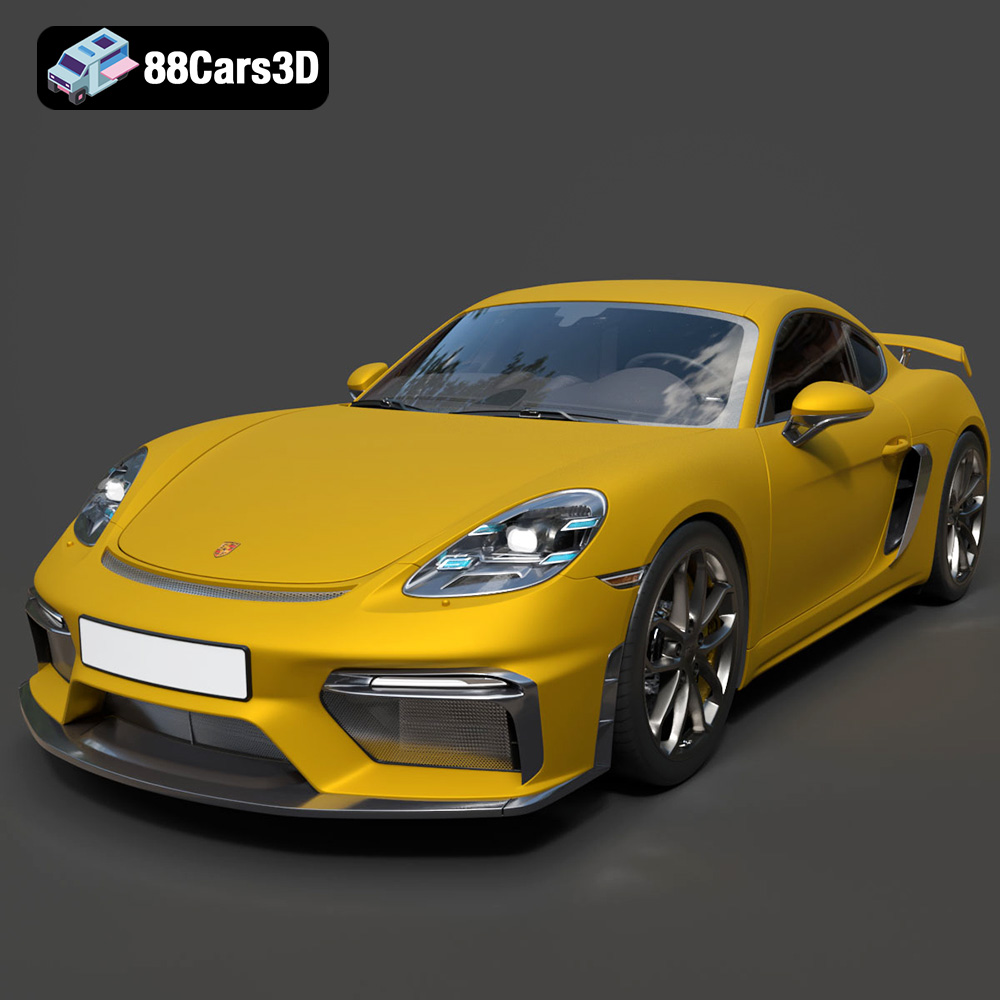
Texture: Yes | Material: Yes
Download the highly detailed, game-ready Porsche 718 Cayman GT4 2020 3D Model. Features an aggressive fixed rear wing, distinctive side air intakes, and a track-focused stance. Includes .blend, .fbx, .obj, .glb, .stl, .ply, .unreal, and .max formats for game development, AR/VR, and rendering.
Price: $19.99

Texture: Yes | Material: Yes
Download the highly detailed, game-ready Polestar 2 2020 3D Model. Features minimalist Scandinavian fastback styling, pixel LED lighting, and an accurate electric vehicle profile. Includes .blend, .fbx, .obj, .glb, .stl, .ply, .unreal, and .max formats for game development, AR/VR, and rendering.
Price: $19.99
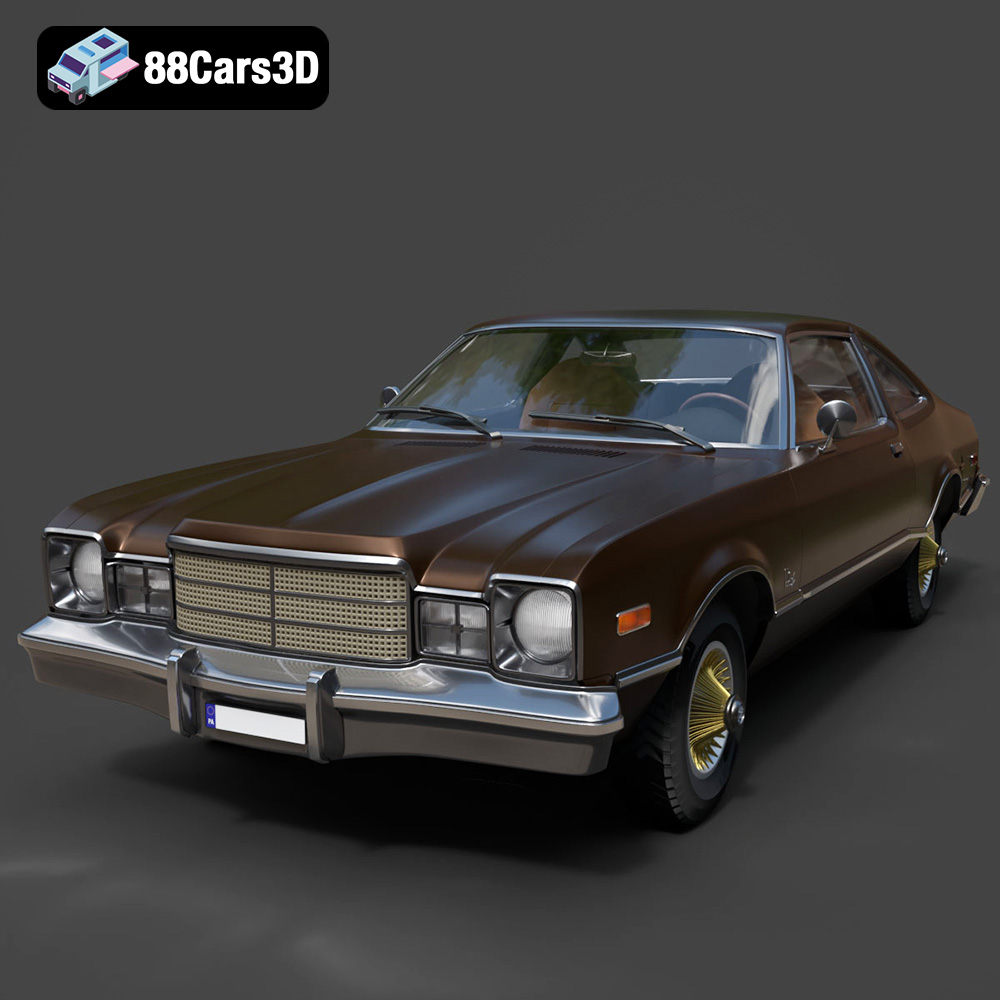
Texture: Yes | Material: Yes
Download the highly detailed, game-ready Plymouth Volare Coupe 1977 3D Model. Features classic F-body styling, detailed chrome trim, and an accurate vintage interior. Includes .blend, .fbx, .obj, .glb, .stl, .ply, .unreal, and .max formats for game development, AR/VR, and rendering.
Price: $19.99

Texture: Yes | Material: Yes
Download the highly detailed, game-ready Peugeot 208 2020 3D Model. Features aggressive ‘fang’ LED DRLs, sporty hatchback proportions, and aerodynamic alloy wheels. Includes .blend, .fbx, .obj, .glb, .stl, .ply, .unreal, and .max formats for game development, AR/VR, and rendering.
Price: $19.99

Texture: Yes | Material: Yes
Download the highly detailed, game-ready MV Agusta Brutale 1090 R 3D Model. Features an exposed trellis frame, distinctive teardrop headlight, and muscular naked bike styling. Includes .blend, .fbx, .obj, .glb, .stl, .ply, .unreal, and .max formats for game development, AR/VR, and rendering.
Price: $19.99
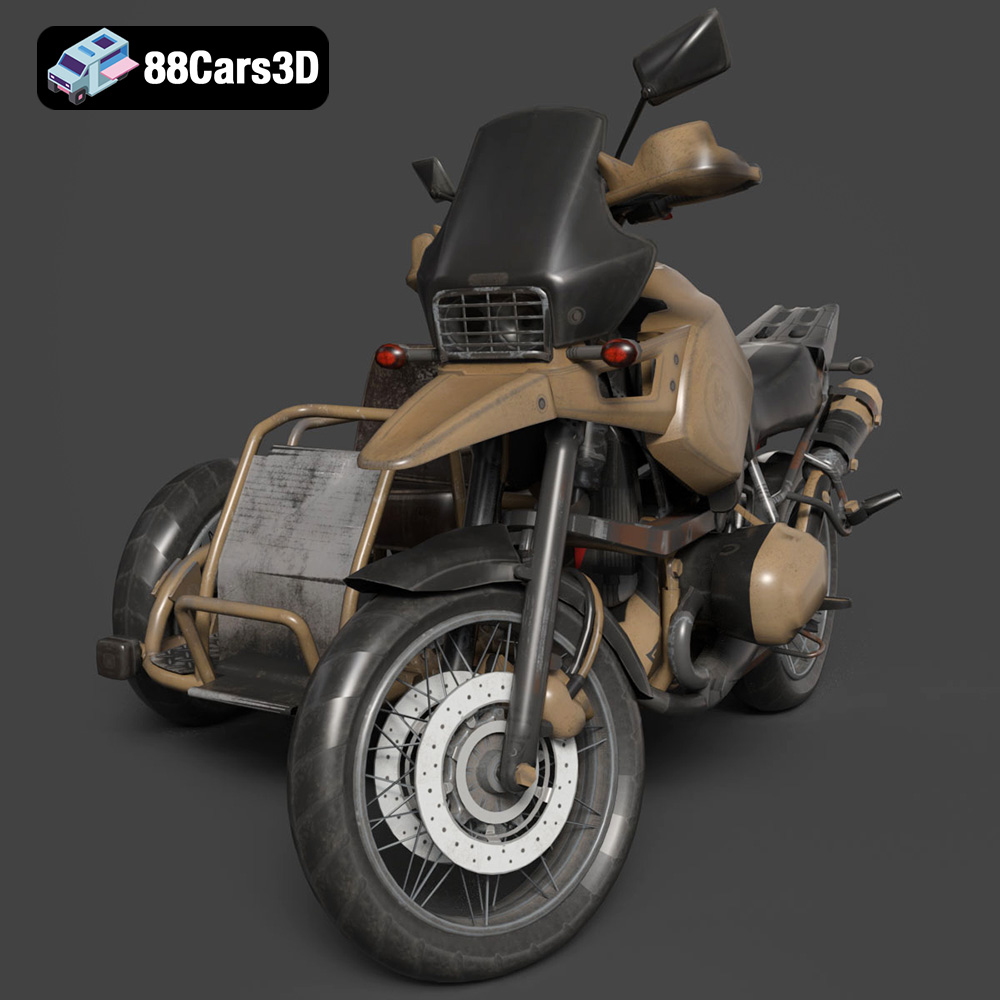
Texture: Yes | Material: Yes
Download the highly detailed, game-ready Custom Off-Road BMW R1150GS Adventure Sidecar 3D Model. Features rugged all-terrain suspension, an attached passenger sidecar, and off-road knobby tires. Includes .blend, .fbx, .obj, .glb, .stl, .ply, .unreal, and .max formats for game development, AR/VR, and rendering.
Price: $19.99

Texture: Yes | Material: Yes
Download the highly detailed, game-ready Mitsubishi Outlander GT 2010 3D Model. Features the aggressive Lancer-inspired front grille, accurate exterior styling, and high-fidelity alloy wheels. Includes .blend, .fbx, .obj, .glb, .stl, .ply, .unreal, and .max formats for game development, AR/VR, and rendering.
Price: $19.99
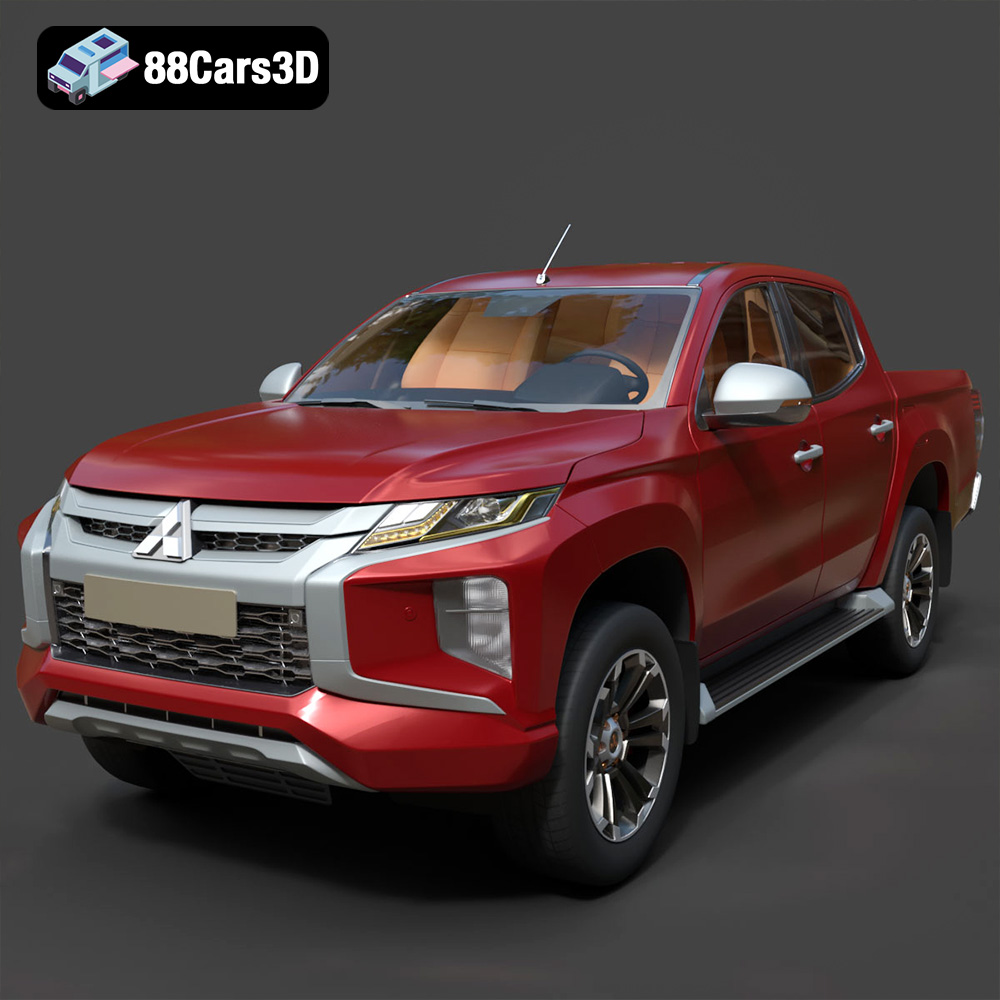
Texture: Yes | Material: Yes
Download the highly detailed, game-ready Mitsubishi L200 Crew Cab 2019 3D Model. Features the iconic Dynamic Shield front fascia, rugged cargo bed, and a spacious crew cab interior. Includes .blend, .fbx, .obj, .glb, .stl, .ply, .unreal, and .max formats for game development, AR/VR, and rendering.
Price: $19.99
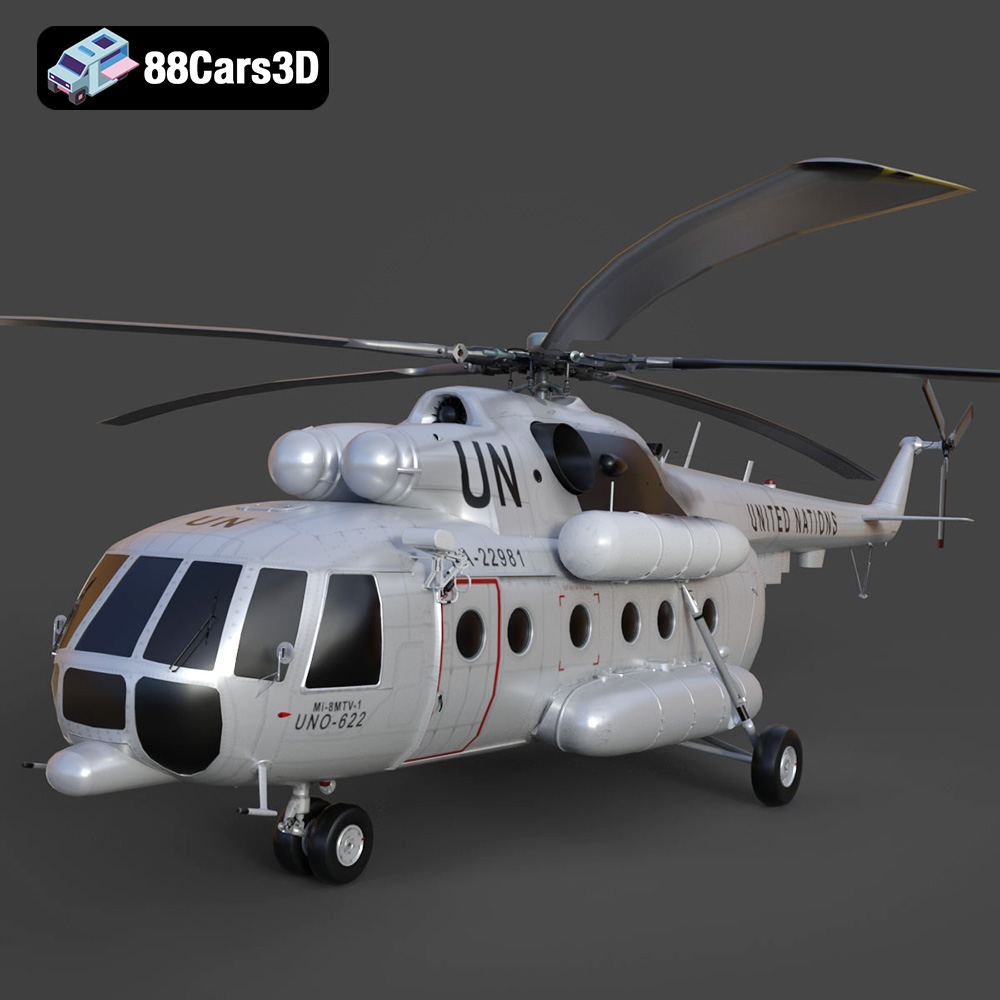
Texture: Yes | Material: Yes
Download the highly detailed, game-ready Mil Mi-8MTV-UN 3D Model. Features the iconic United Nations white livery, detailed twin turboshaft engines, and fully articulated rotor assemblies. Includes .blend, .fbx, .obj, .glb, .stl, .ply, .unreal, and .max formats for game development, AR/VR, and rendering.
Price: $19.99
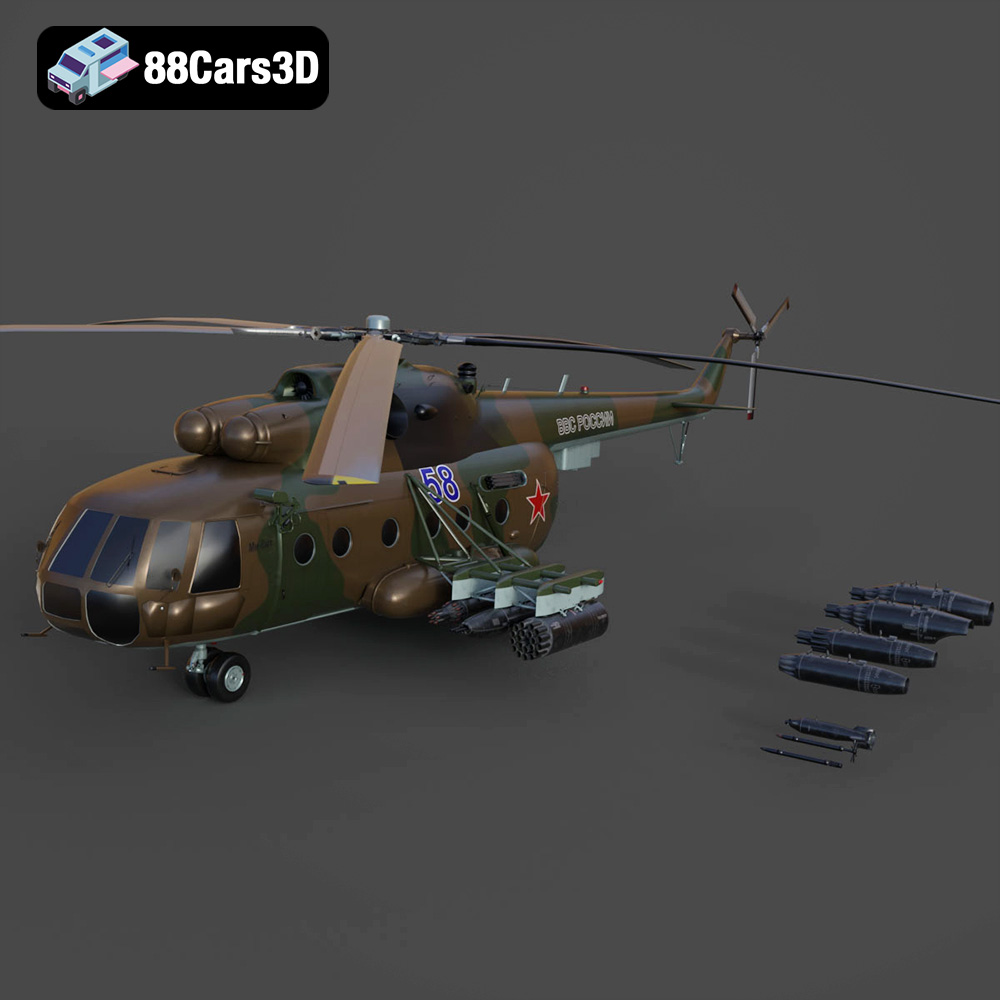
Texture: Yes | Material: Yes
Download the highly detailed, game-ready Mil Mi-8MT Helicopter 3D Model. Features twin-turbine engine housings, a detailed 5-blade main rotor, and authentic cockpit instrumentation. Includes .blend, .fbx, .obj, .glb, .stl, .ply, .unreal, and .max formats for game development, AR/VR, and rendering.
Price: $19.99

