Get 20% OFF All Premium 3D & STL Models!

In the dynamic world of digital content creation, the demand for realistic and technically sound 3D models has never been higher. From breathtaking automotive renders that grace magazine covers to immersive game environments and cutting-edge AR/VR experiences, the quality of a 3D asset forms the bedrock of visual excellence. Professional artists, designers, and developers understand that starting with a meticulously crafted model saves invaluable time, ensures consistency, and elevates the final product.
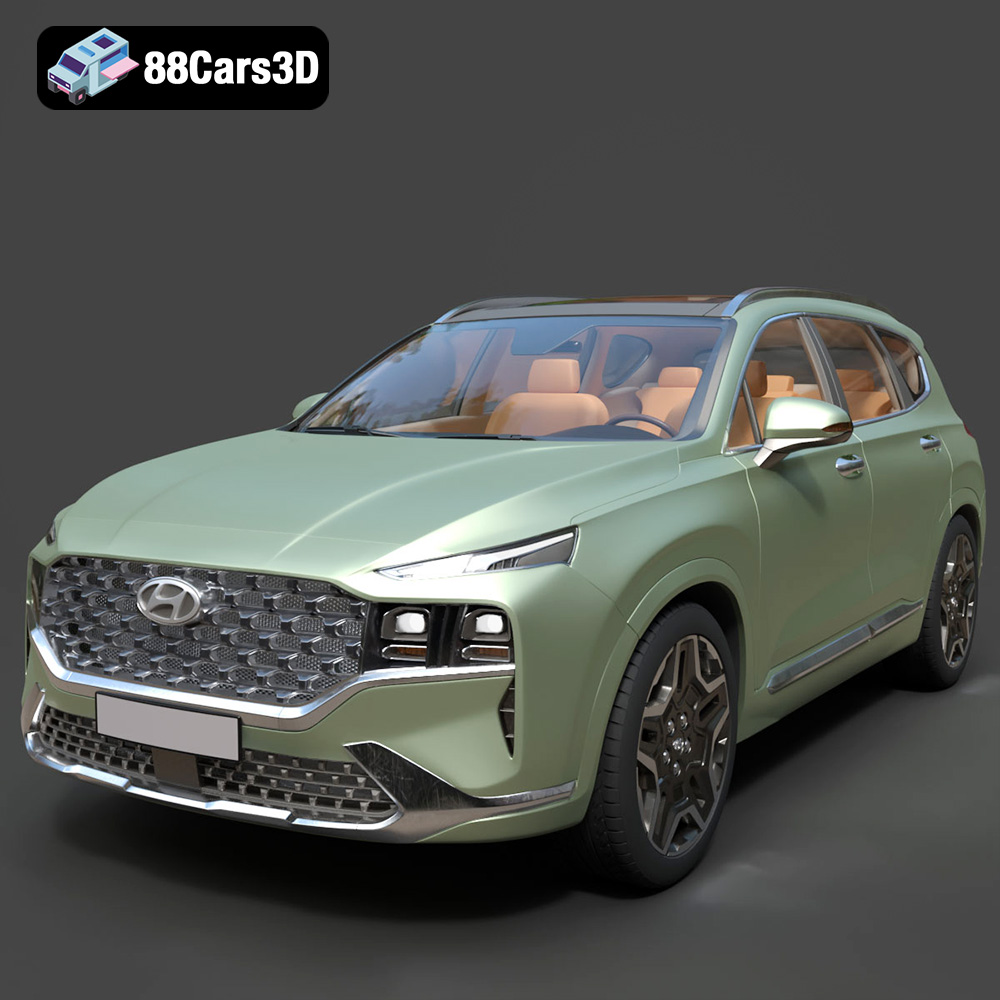
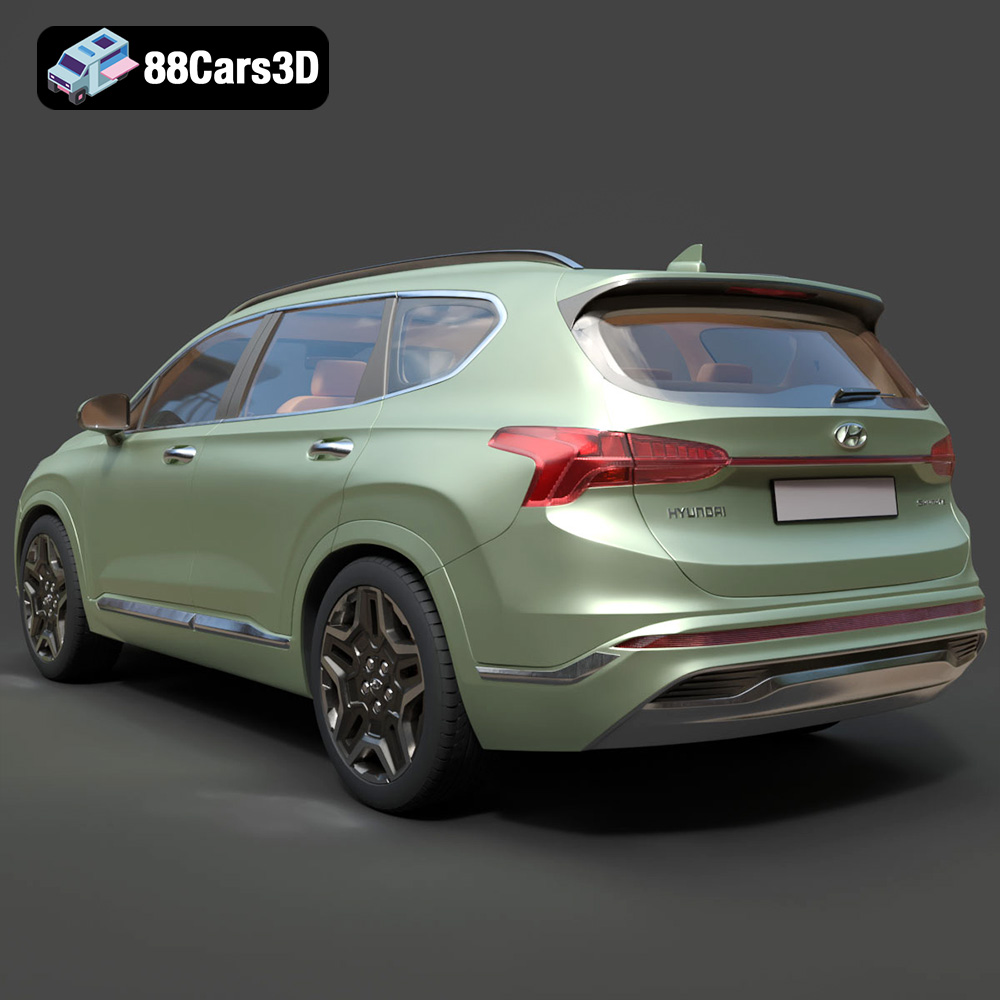
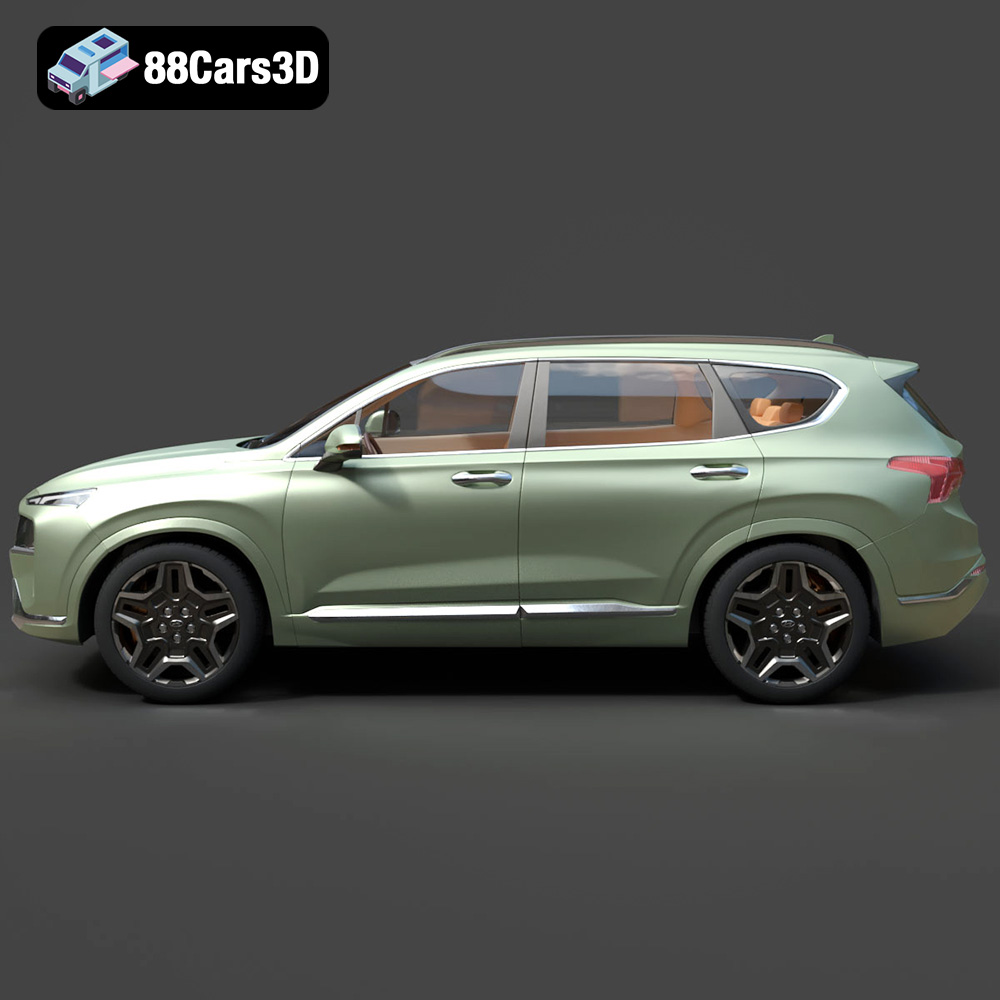
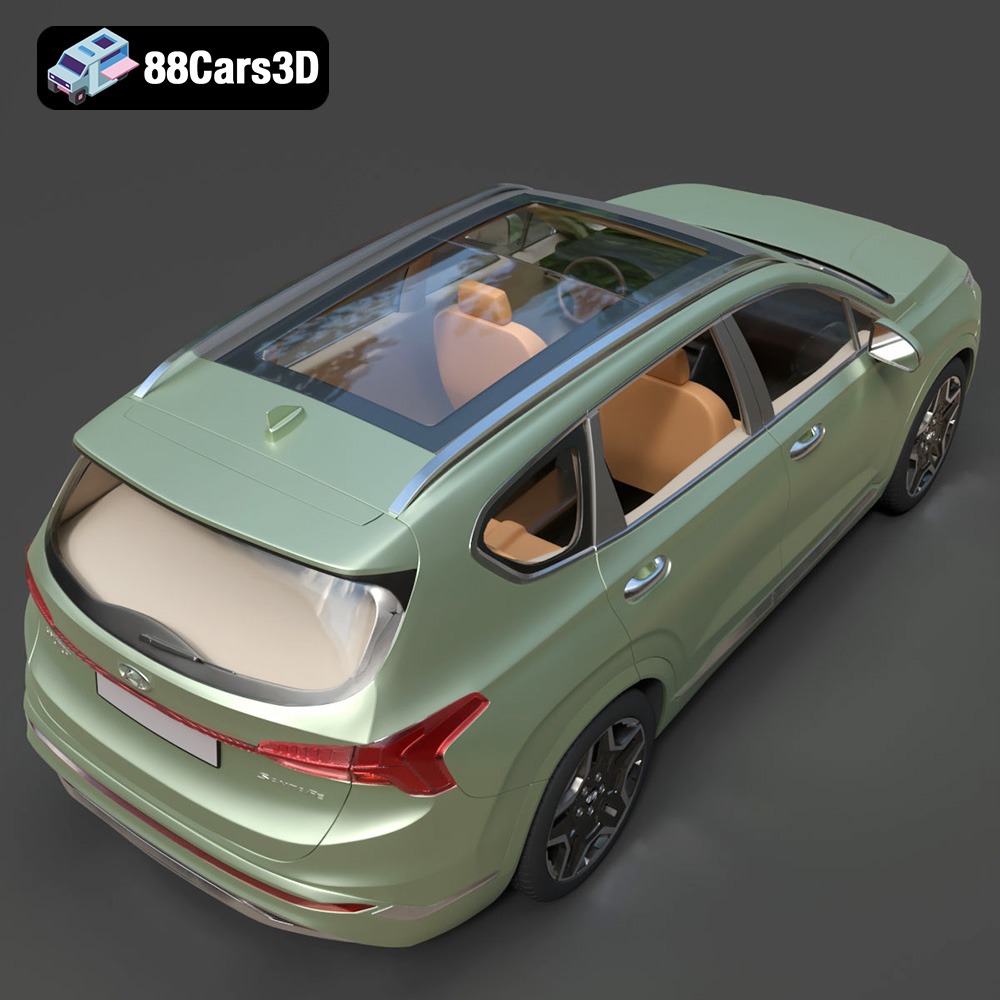
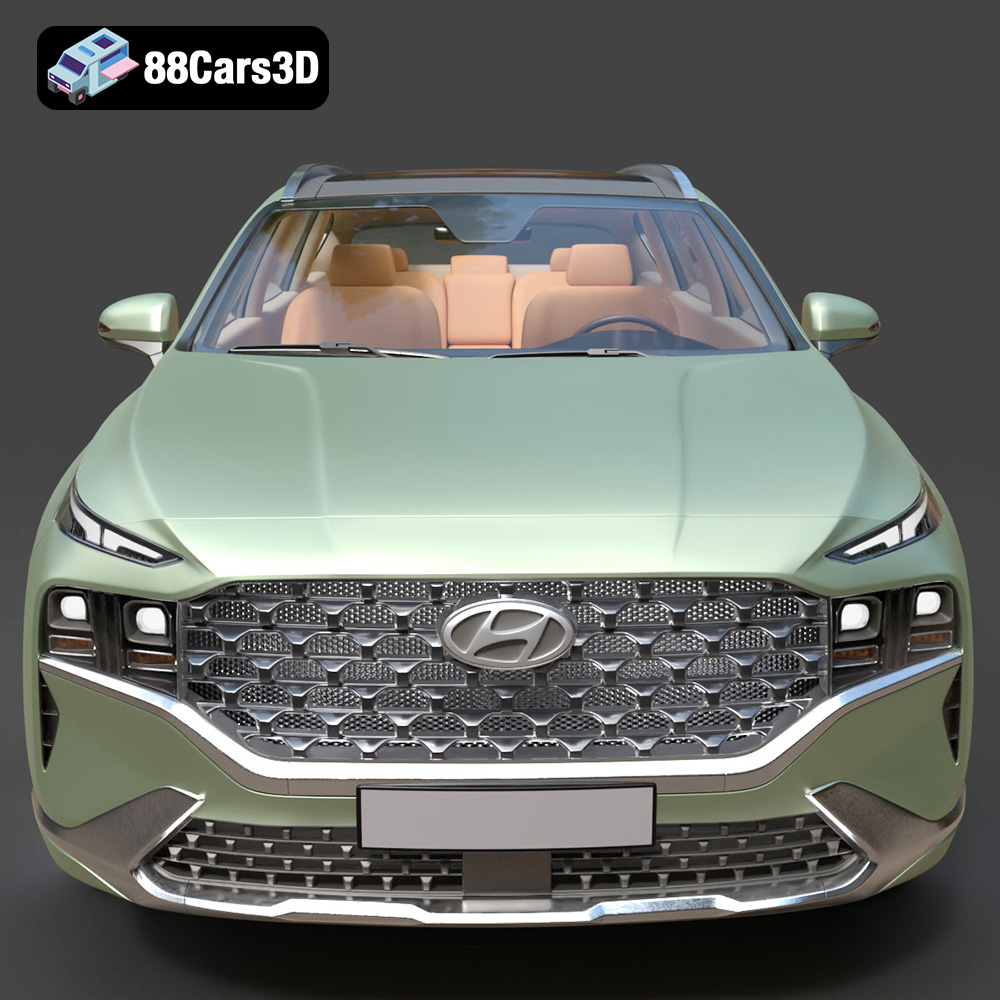
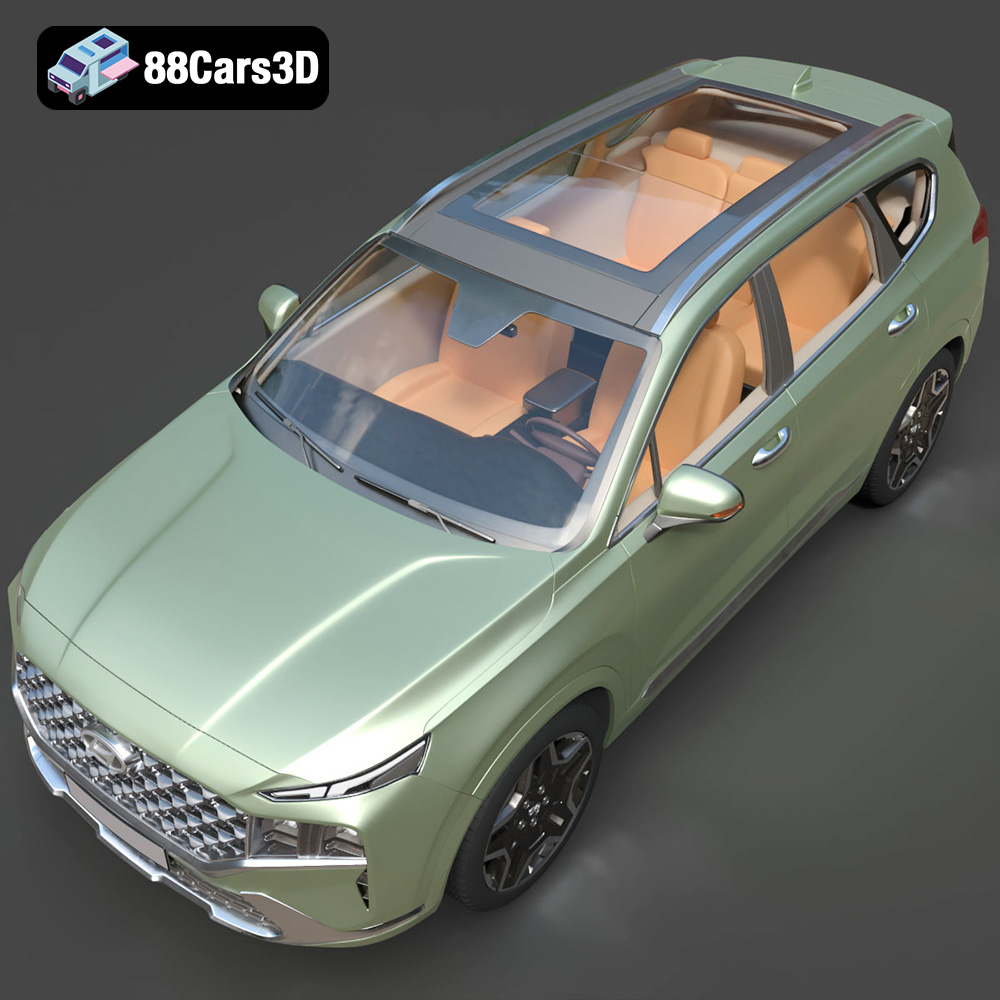
Imagine showcasing a vehicle with photorealistic accuracy, allowing viewers to explore every curve and detail before it even hits the showroom. Or envision a virtual world where cars behave and look exactly as they would in reality, enhancing player engagement and simulation fidelity. This level of detail and authenticity is precisely what a premium asset like the Hyundai Santa Fe 2021 3D Model offers. Developed with clean geometry, realistic materials, and a professional-grade design, it stands as a testament to the meticulous craftsmanship available to elevate any project. Whether you’re an automotive visualization expert, a game developer, or pushing the boundaries of AR/VR, investing in high-fidelity 3D car models from marketplaces like 88cars3d.com is a strategic move towards achieving unparalleled realism and efficiency.
The transition from concept to digital reality hinges on the quality of 3D assets. For automotive design, game development, and immersive experiences, a poorly constructed model can lead to endless headaches, from rendering artifacts and performance issues to a general lack of credibility. High-quality 3D car models are not just about aesthetics; they are about technical precision, optimized performance, and versatility across various digital pipelines.
Automotive rendering demands an almost obsessive level of detail and accuracy. Every reflection, every subtle curve, and every material characteristic must be perfectly replicated to convince the viewer of the vehicle’s real-world presence. A high-quality 3D model, such as the Hyundai Santa Fe 2021 3D Model, provides the essential foundation for this. It ensures that the topology is clean, allowing for smooth subdivision and perfect reflections. Realistic materials, carefully calibrated for parameters like roughness, metallicness, and clear coat, react convincingly to virtual lighting setups, producing stunning, photorealistic images that are indistinguishable from professional photography.
In game development and AR/VR, performance is paramount. High-fidelity visuals must be delivered at high frame rates to maintain immersion. This requires 3D car models that are not only visually rich but also highly optimized. Clean geometry, efficient UV mapping, and well-structured material setups are critical for real-time rendering. A model designed for these applications will feature appropriate polygon counts, LOD (Level of Detail) setups, and physically based rendering (PBR) materials that integrate seamlessly into game engines like Unreal Engine and Unity, ensuring a smooth and visually appealing experience without taxing system resources. The Hyundai Santa Fe 2021 3D Model, with its game-engine-ready formats, is a prime example of an asset built for these demanding environments.
The utility of 3D car models extends beyond purely digital realms. For product development, rapid prototyping, and even collectible fabrication, models designed for 3D printing are invaluable. These models require watertight meshes, manifold geometry, and often specific file formats like .stl or .ply. While visualization models may sometimes need adjustments for 3D printing, a well-structured model built with clean topology can often be adapted with minimal effort, offering a tangible representation of a digital design. This bridging of the digital and physical worlds highlights the multi-faceted value of a robust 3D asset.
The digital ecosystem for 3D assets is vast and varied, with numerous file formats each serving distinct purposes. Understanding these formats is crucial for ensuring compatibility, optimizing workflows, and maximizing the utility of your 3D models. The Hyundai Santa Fe 2021 3D Model from 88cars3d.com is provided in a comprehensive suite of formats, catering to almost any professional requirement.
.blend (Blender): This format represents a fully editable Blender scene file. For users of Blender, this is often the most valuable asset. It includes not just the mesh data, but also materials, textures, lighting setups, cameras, and even animations if present. Having a .blend file allows for complete flexibility: modifying the geometry, adjusting materials, tweaking lighting for specific renders, or integrating the model seamlessly into an existing Blender project. It’s ideal for artists who want full control over the asset and intend to perform further customizations or create unique render compositions within Blender.
.max (3ds Max): Similar to .blend, the .max format is native to Autodesk 3ds Max. This file contains the entire 3ds Max scene, including geometry, modifiers, materials (often V-Ray or Corona setups), lighting, and camera data. For studios and artists who rely on 3ds Max for high-end rendering, animation, and architectural visualization, having the native .max file is indispensable. It ensures that all original settings are preserved, making it easy to integrate into complex production pipelines and leverage 3ds Max’s powerful rendering capabilities.
.fbx (Filmbox): Developed by Autodesk, FBX is widely regarded as the industry standard for interoperability between different 3D software packages and game engines. It supports geometry, materials, textures, animations, and skeletal data. For the Hyundai Santa Fe 2021 3D Model, the .fbx file is explicitly “game-engine ready,” making it ideal for direct import into Unreal Engine, Unity, and other real-time pipelines. Its ability to package complex scene data efficiently makes it a cornerstone for collaborative workflows and asset transfer.
.obj (Wavefront OBJ): The OBJ format is one of the oldest and most universally supported 3D file formats. It is a simple, text-based format that primarily stores geometry (vertices, normals, UV coordinates, and faces) and references external material definition files (.mtl). While it doesn’t support animation or rigging, its widespread compatibility makes it an excellent choice for cross-software transfers when the primary concern is the mesh itself. Virtually every 3D application can import and export .obj files, ensuring broad accessibility for the Hyundai Santa Fe model.
.glb (GL Transmission Format Binary): GLB is the binary version of glTF, a royalty-free specification for the efficient transmission and loading of 3D scenes and models by applications. It’s highly optimized for web-based 3D, AR, and VR experiences, packing all model data (geometry, materials, textures, animations) into a single file. Its efficiency and widespread support in browsers and mobile platforms make the .glb version of the Hyundai Santa Fe model perfect for interactive 3D viewers, augmented reality apps, and online product configurators.
.unreal (Unreal Engine Asset): This isn’t a general file format but rather signifies a pre-configured asset specifically for Unreal Engine. It means the model has likely been imported into Unreal, had its materials set up, LODs configured, and possibly even collision meshes generated, making it engine-ready for immediate use. This drastically reduces setup time for Unreal Engine developers, allowing them to drag-and-drop the Hyundai Santa Fe directly into their projects and focus on scene building rather than asset preparation.
.stl (Stereolithography): STL is the de facto standard file format for 3D printing. It represents a 3D model as a series of connected triangles, describing only the surface geometry of an object without color, texture, or other CAD attributes. For anyone looking to physically prototype or 3D print the Hyundai Santa Fe model, the .stl file is the go-to choice. It’s clean, robust, and universally accepted by 3D slicing software and printers.
.ply (Polygon File Format): The PLY format, also known as the Stanford Triangle Format, is used to store 3D data from 3D scanners. It can store a variety of properties, including color, transparency, surface normals, and range data, in addition to geometry. It’s particularly useful for precision mesh applications, scientific visualization, CAD, and analysis where detailed surface information is critical. The .ply version of the Hyundai Santa Fe model would be valuable for engineers or analysts needing a highly detailed polygon mesh for simulations or measurements.
The “Hyundai Santa Fe 2021 3D Model” isn’t just a collection of polygons; it’s the result of meticulous technical artistry, aimed at providing an asset that performs as well as it looks. The emphasis on clean geometry, realistic materials, and professional design ensures its versatility and quality across demanding applications.
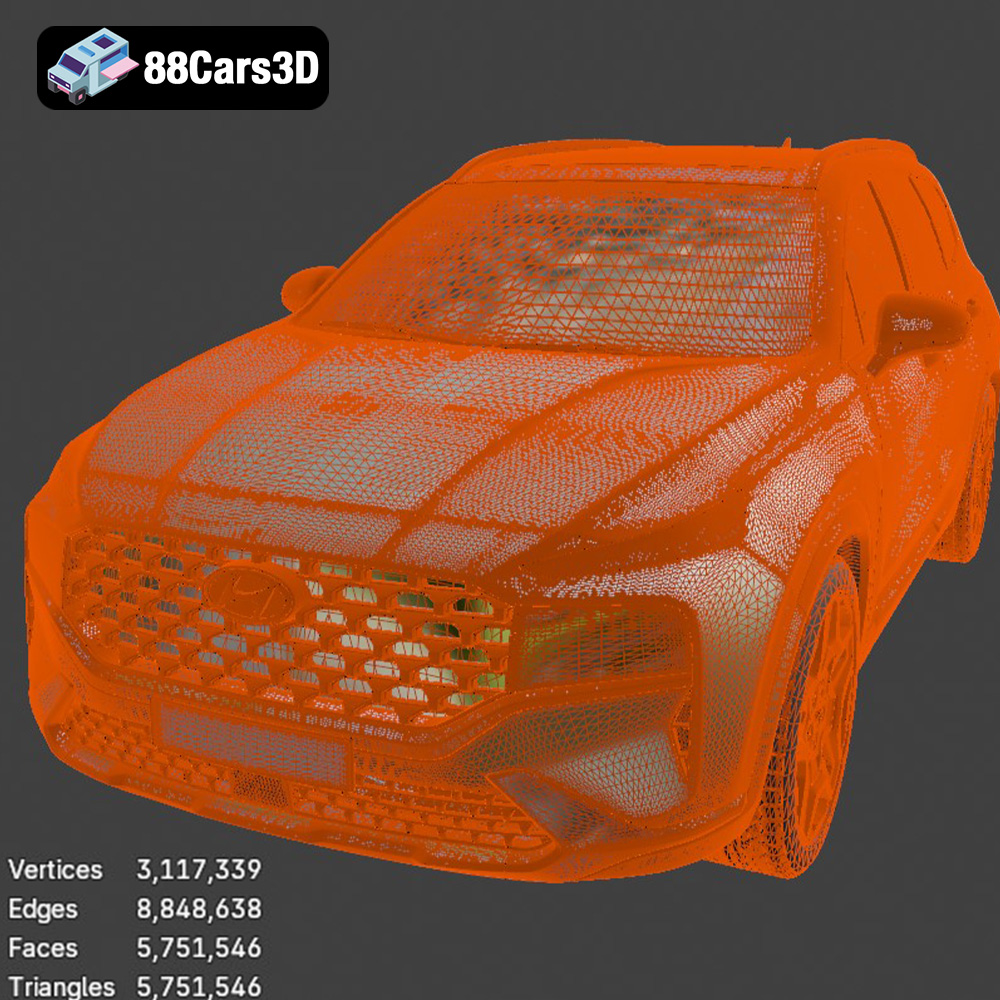
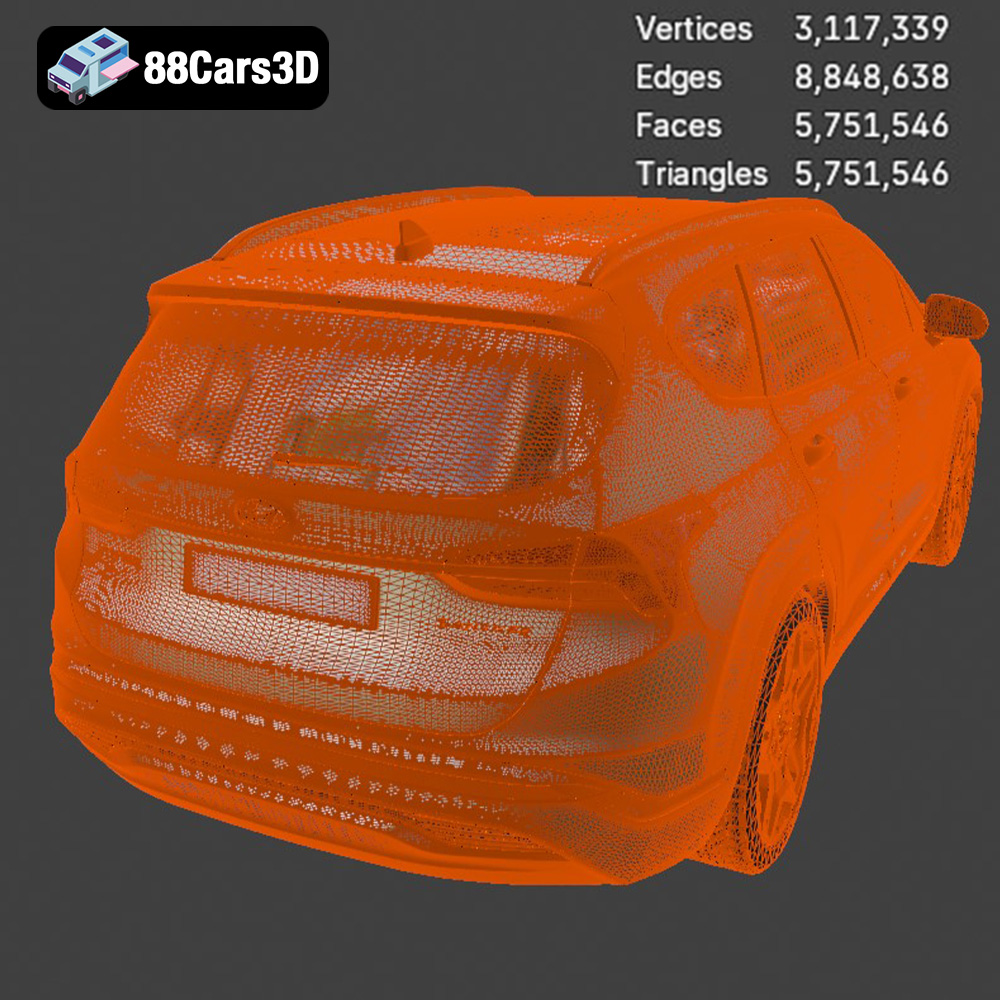
At the heart of any professional 3D model is its geometry. The Hyundai Santa Fe 2021 3D Model boasts “clean and optimized geometry,” which is crucial for several reasons. Clean topology, primarily composed of quadrilaterals, allows for smooth subdivision, preventing unsightly pinching or artifacts when modifiers like Subdivision Surface (Blender) or TurboSmooth (3ds Max) are applied. This is vital for automotive surfaces where subtle curves and reflections play a significant role. Optimized geometry means that polygon counts are managed intelligently, providing sufficient detail where needed (e.g., body lines, wheel arches) without excessive and unnecessary polygons that can burden real-time performance or increase render times. This balance ensures the model is both visually accurate and highly efficient.
The visual appeal of any 3D car model largely depends on its materials and textures. The Hyundai Santa Fe 2021 3D Model features “realistic and high-resolution materials.” This implies the use of Physically Based Rendering (PBR) workflows, where material properties like albedo (base color), metallicness, roughness, normal maps, and perhaps clear coat maps are carefully authored. High-resolution textures ensure that details like paint flake, tire tread, and interior fabrics remain sharp even under close inspection or high-resolution rendering. These materials are configured to interact correctly with various lighting conditions, producing accurate reflections, refractions, and absorption effects, which are essential for true automotive rendering. The quality of these materials significantly contributes to the model’s overall photorealism.
A truly professional 3D asset is scalable and optimized for a wide array of uses. The Hyundai Santa Fe 2021 3D Model is designed for “accuracy and detail,” yet its inclusion of game-engine-ready formats like .fbx and .unreal suggests a smart approach to optimization. This could involve careful poly reduction strategies for lower LODs, efficient UV unwrapping to maximize texture space and minimize seams, and robust material setups that can be easily translated between renderers or engines. This forethought in design ensures that whether the model is being used for a cinematic automotive visualization in 3ds Max or a mobile AR application, it performs optimally while maintaining its visual integrity.
The true power of a high-quality 3D car model, such as the Hyundai Santa Fe 2021, is realized through its seamless integration into various professional workflows. Different industries leverage these assets in unique ways, each demanding specific technical considerations and software expertise.
For high-end automotive rendering, 3ds Max remains a dominant choice, often paired with renderers like V-Ray or Corona. The .max file included with the Hyundai Santa Fe 2021 3D Model is invaluable here. Artists can import the model, which likely comes with pre-configured V-Ray or Corona materials, into their scene. The workflow typically involves setting up a realistic studio or outdoor environment, carefully placing lights (HDRI lighting is common for automotive), and adjusting camera angles. Technical considerations include fine-tuning material parameters for paint, glass, and chrome, ensuring accurate reflections and refractions. Clean mesh topology is critical for achieving smooth reflections on the car’s body panels. Render passes can then be used for compositing in software like Photoshop or Nuke, allowing for greater control over the final image. The model’s clean geometry and high-resolution textures directly contribute to achieving photographic realism in these demanding renders.
Game development requires a balance of visual fidelity and performance. The .fbx and .unreal formats of the Hyundai Santa Fe 2021 3D Model are specifically designed for game engines. In Unreal Engine, developers can import the .unreal asset directly, complete with materials and potentially LODs. The workflow involves placing the vehicle in the game world, setting up physics assets for realistic driving behavior, and integrating it with the game’s lighting and shadow systems. For performance, artists may utilize Unreal’s LOD system to switch between high-detail and low-detail versions of the model based on distance from the camera. Material instances can be used to easily change car colors without creating new textures. Similarly, in Unity, the .fbx file provides a robust starting point. Developers would import the FBX, set up PBR materials within Unity’s shader graph, configure colliders, and attach scripts for vehicle control. The optimized geometry and clean UVs ensure efficient texture sampling and reduced draw calls, critical for maintaining high frame rates in interactive game environments.
Blender has emerged as a powerhouse for independent artists and studios alike, offering a comprehensive suite of tools for modeling, texturing, rigging, animation, and rendering. The .blend file for the Hyundai Santa Fe 2021 3D Model provides full access to its internal structure. Artists can open the scene, which often includes a basic lighting setup, and immediately begin customizing. For pre-visualization, Blender’s Eevee real-time renderer can quickly generate high-quality images and animations, allowing designers to iterate rapidly on concepts. For final renders, the Cycles path tracer delivers photorealistic results, benefiting greatly from the model’s high-resolution PBR materials. Technical artists can modify the mesh, add custom decals, animate opening doors, or integrate the vehicle into complex scene compositions using Blender’s robust toolset. The editable nature of the .blend file makes it incredibly flexible for a wide range of creative applications.
High-quality 3D car models are no longer a luxury; they are a necessity across various industries. Their application spans from high-impact marketing to crucial simulation and even tangible manufacturing, demonstrating their multifaceted value.
In the fiercely competitive automotive market, captivating visuals are key to attracting customers. Leading manufacturers and advertising agencies frequently utilize 3D car models for product launches, brochures, online configurators, and television commercials. Instead of expensive physical photoshoots, which are limited by location, weather, and logistics, a digital 3D model allows for infinite creative possibilities. Agencies can render the Hyundai Santa Fe 2021 in any environment – from a futuristic cityscape to a serene mountain pass – with perfect lighting and camera angles, all from the comfort of their studio. This flexibility significantly reduces costs, speeds up production, and enables stunning, photorealistic results that can be updated or adapted instantly for different markets or campaigns. The “Hyundai Santa Fe 2021 3D Model” with its professional-grade design is perfectly suited for such high-stakes marketing endeavors.
Beyond entertainment, 3D car models play a vital role in practical applications like simulation and training. Driver training simulators, autonomous vehicle development, and virtual test drives all rely on accurate 3D representations of cars and their environments. The precision and detail of models like the Hyundai Santa Fe 2021 provide a realistic foundation for these simulations, allowing developers to test vehicle dynamics, sensor performance, and user interaction in a safe, controlled virtual space. Engineering firms use these models for aerodynamic studies or crash simulations, while logistics companies might train drivers in virtual truck simulators. The “gameasset” tag associated with the Hyundai Santa Fe 2021 3D Model highlights its readiness for such rigorous, performance-critical simulation environments.
The utility of 3D models extends into tangible manufacturing and prototyping. Automotive designers often use 3D printing to create scale models or prototypes of new vehicle components long before physical production begins. This allows for early error detection, design refinement, and cost reduction. The .stl format of the Hyundai Santa Fe 2021 3D Model directly supports this. Imagine a design studio creating a physical miniature of the Santa Fe to evaluate its form factor or even to test interior component layouts. This process, known as rapid prototyping, significantly accelerates the product development cycle, moving from a digital concept to a physical object within hours or days, fostering innovation and precision in design.
The journey from a digital concept to a photorealistic render, an immersive game, or a tangible prototype is paved with the quality of your foundational assets. High-quality 3D car models are not just aesthetic enhancements; they are critical technical components that streamline workflows, ensure consistency, and elevate the final output across diverse industries. From automotive rendering and game development to AR/VR experiences and 3D printing, the technical precision and versatility embedded in a professionally crafted model like the Hyundai Santa Fe 2021 3D Model are indispensable.
With its clean geometry, realistic materials, and comprehensive suite of file formats – from editable native files like .blend and .max to game-engine-ready .fbx and .unreal, and specialized formats like .glb and .stl – this model provides a robust solution for any creative challenge. Investing in such an asset from a trusted source like 88cars3d.com ensures that your projects are built on a solid foundation of quality, saving you time and resources while empowering you to achieve unparalleled levels of digital realism. Take your projects to the next level by leveraging the power of professional 3D car models today.
Experience the realism of the Hyundai Santa Fe 2021 3D Model, meticulously crafted for exceptional detail and accuracy. This model offers clean geometry, realistic materials, and a professional-grade design, making it ideal for a wide range of applications.
Key features of this 3D model include:
This 3D model is perfect for various applications, including:
The following file formats are included:
Tags:
.hyundai, .santafe, .hyundaisantafe, .suv, .car3dmodel, .rendering, .simulation, .gameasset, .arvr, .blend, .fbx, .obj, .glb, .stl, .ply, .unreal, .max
Tags:
.hyundai, .santafe, .hyundaisantafe, .suv, .car3dmodel, .rendering, .simulation, .gameasset, .arvr, .blend, .fbx, .obj, .glb, .stl, .ply, .unreal, .max
$19.99
.arvr
.blend
.car3dmodel
.fbx
.gameasset
.glb
.hyundai
.hyundaisantafe
.max
.obj
.ply
.rendering
.santafe
.simulation
.stl
.unreal
SUV