Get 20% OFF All Premium 3D & STL Models!

In the fast-evolving landscape of digital visualization, automotive design remains at the forefront of pushing boundaries. From photorealistic cinematic sequences to immersive virtual reality experiences and high-octane game environments, the demand for exceptionally detailed and accurate 3D car models has never been higher. These digital assets are not merely decorative elements; they are the bedrock upon which entire virtual worlds are built, demanding a blend of artistic fidelity and technical precision.
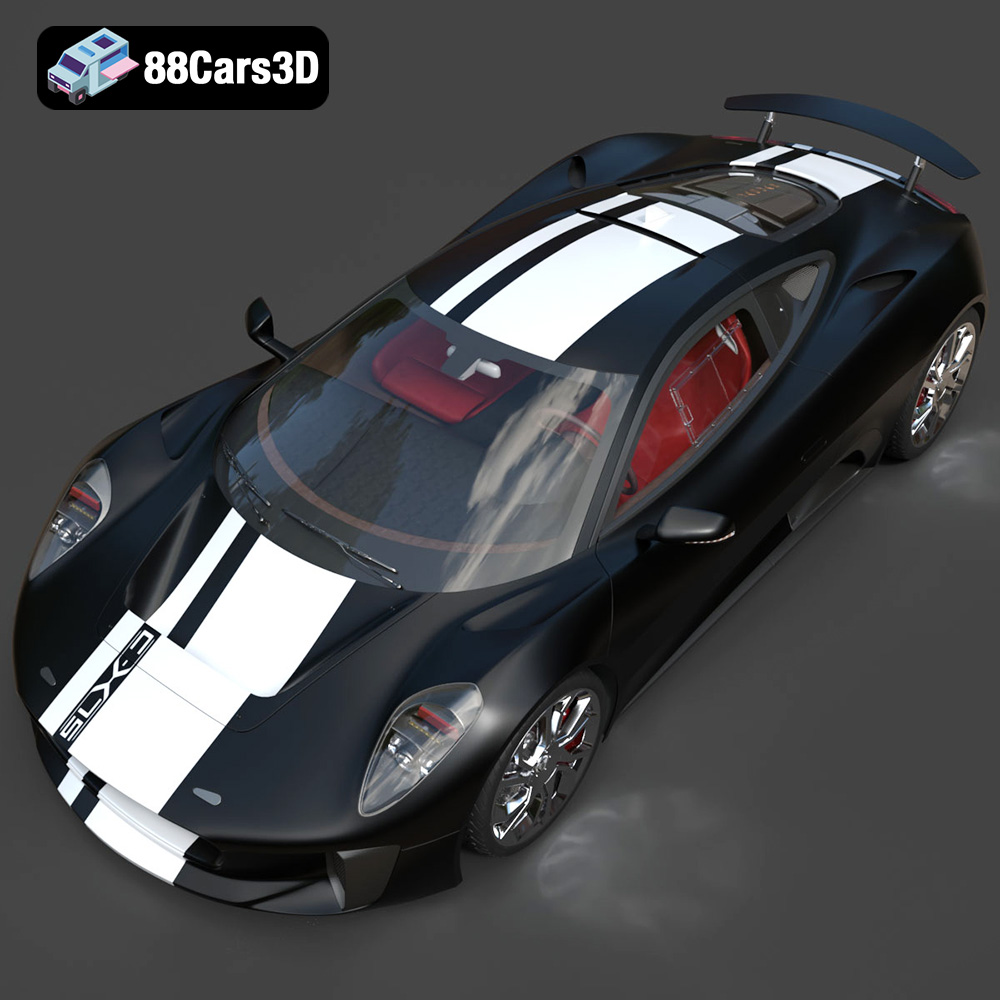
Consider the Jaguar C-X75 2014. A marvel of modern hybrid-electric concept design, it embodies a futuristic vision of performance and aesthetics. Replicating such an intricate vehicle in the digital realm requires more than just a surface-level interpretation. It demands meticulous attention to every curve, every aerodynamic vent, and every interior detail. This is precisely what the Jaguar C-X75 2014 3D Model offers: an unparalleled level of realism and technical robustness, making it an indispensable asset for professionals across various industries.
Whether you are an automotive designer visualizing future concepts, a game developer crafting the next-generation racing title, an architect integrating vehicles into sprawling cityscapes, or an AR/VR innovator building interactive experiences, the quality of your 3D car models directly impacts the final output. This article will delve into the critical aspects of professional 3D asset creation, exploring workflows, technical specifications, and real-world applications, demonstrating how premium models like the Jaguar C-X75 from 88cars3d.com empower creators to achieve their most ambitious visions.
The versatility and utility of a 3D car model largely depend on the file formats it supports. Each format is designed with specific use cases and software ecosystems in mind, offering unique advantages in terms of compatibility, data retention, and optimization. Understanding these differences is crucial for any professional working with 3D assets, ensuring smooth integration into diverse production pipelines. The Jaguar C-X75 2014 3D Model from 88cars3d.com is supplied in a comprehensive array of industry-standard formats, providing maximum flexibility.
The .blend format is the native file type for Blender, a powerful and increasingly popular open-source 3D creation suite. A .blend file typically contains the complete scene data, including geometry, materials, textures, lighting setups, cameras, animations, and even physics simulations. For artists working primarily in Blender, this format offers the most flexibility, allowing full editing capabilities, seamless integration with Blender’s extensive toolset, and direct access to all material nodes and modifiers. It’s ideal for those who wish to customize, re-texture, animate, or render the model within Blender’s native environment, leveraging its Cycles or Eevee render engines.
.fbx (Filmbox) is a proprietary file format owned by Autodesk, widely adopted as an industry-standard interchange format, especially for game development and real-time applications. It excels at transferring 3D model data, including meshes, materials (often simplified or baked), animations, rigging, and even camera data, between different 3D software applications and game engines like Unreal Engine and Unity. Its robust support for skeletal animations makes it invaluable for animated assets. For the Jaguar C-X75, the .fbx version is optimized for efficient import into game engines, usually with materials set up for Physically Based Rendering (PBR) workflows.
The .obj (Wavefront OBJ) format is one of the oldest and most widely supported 3D file formats. It’s known for its simplicity and universal compatibility, making it an excellent choice for transferring geometric data (vertices, normals, UV coordinates) between almost any 3D software. While it handles geometry and UVs very well, its material support is basic, typically referencing an accompanying .mtl (material library) file that defines diffuse color, specular color, and texture map paths. It doesn’t support complex shaders, animation, or rigging. The .obj version of the C-X75 is perfect for foundational integration when you need pure mesh data to build upon in a new software environment.
.glb (GL Transmission Format Binary) is the binary version of glTF, an open-standard 3D file format developed by the Khronos Group. It’s specifically designed for efficient transmission and loading of 3D scenes and models by applications, especially those on the web, in AR (Augmented Reality), and VR (Virtual Reality) environments. A .glb file packages all necessary data—geometry, materials, textures, animations, and scene graph—into a single, compact binary file, making it highly suitable for web browsers, mobile apps, and experiences where quick loading and real-time performance are paramount. The C-X75 as a .glb is primed for interactive showcases and cutting-edge digital experiences.
.stl (STereoLithography) is the de facto standard format for 3D printing. It represents a 3D model as a series of connected triangles, defining only the surface geometry without color, texture, or material information. Its primary purpose is to convey the shape of an object to 3D printers and additive manufacturing software. When using the C-X75 .stl, designers can create physical prototypes or miniature replicas of the concept car, bridging the gap between digital design and tangible output. This format requires a watertight mesh to print correctly.
The .ply (Polygon File Format or Stanford Triangle Format) is a versatile format for storing 3D data, particularly scan data and point clouds. It can store various properties for each vertex (such as color, normals, transparency, range data) and face (such as color), making it suitable for scientific visualization, CAD applications, and precise mesh analysis. While less common for general 3D asset exchange than .fbx or .obj, its ability to store detailed mesh properties makes it valuable for specialized engineering or analytical workflows involving the Jaguar C-X75 model.
The .unreal designation typically refers to assets specifically prepared and optimized for direct import or even pre-packaged within Unreal Engine projects. This often means the mesh has been correctly scaled, pivoted, UV-mapped, and includes PBR materials already configured with textures for Unreal’s rendering pipeline. It implies that the asset adheres to Unreal Engine’s best practices for real-time performance, potentially including collision meshes, level of detail (LOD) setups, and material instances. The .unreal version of the C-X75 saves significant setup time for developers working within the Unreal Engine environment.
.max is the native file format for Autodesk 3ds Max, a long-standing industry leader in 3D modeling, animation, and rendering. A .max file contains the complete scene, including all geometry, modifiers, materials (V-Ray, Corona, Arnold, etc.), textures, lights, cameras, animation data, and rendering settings. It offers the most comprehensive editing capabilities for users of 3ds Max, allowing for deep customization, complex animation sequences, and high-fidelity renderings with professional-grade renderers. The .max file for the C-X75 ensures full control for those integrating it into advanced visualization and animation projects.
By offering the Jaguar C-X75 2014 3D Model in this diverse range of formats, 88cars3d.com ensures that professionals can seamlessly integrate this premium asset into virtually any production pipeline, regardless of their preferred software or final application.
Photorealistic automotive rendering is an exacting discipline, demanding not only a powerful 3D model but also a deep understanding of lighting, materials, and composition. The goal is to create images that are indistinguishable from photographs, capturing the subtle nuances of paintwork, reflections, and environmental interaction. A high-quality base model, such as the Jaguar C-X75 2014 3D Model, is the absolute foundation for achieving such results.
The realism of a rendered car largely hinges on its materials. Modern rendering workflows rely heavily on Physically Based Rendering (PBR), which accurately simulates how light interacts with surfaces in the real world. This involves meticulously crafted texture maps:
The Jaguar C-X75 model, with its exceptionally clean geometry and realistic materials, is designed with these PBR principles in mind. Its accurate UV mapping ensures that textures align perfectly, avoiding distortions and allowing for high-resolution detail that stands up to extreme close-ups.
Lighting is the soul of any render. For automotive visualization, it’s about showcasing the car’s form, reflections, and materials. High Dynamic Range Images (HDRIs) are often used to simulate real-world lighting environments, providing realistic reflections and ambient light. Additionally, strategic use of virtual studio lights can highlight specific features, create dramatic shadows, and emphasize the car’s lines. The interplay of light on the C-X75’s aggressive styling and aerodynamic curves is paramount. Achieving this requires a model that is geometrically sound, allowing light to fall and reflect naturally, revealing its true design intent.
Game development presents a unique set of challenges for 3D car models. While visual fidelity is critical, performance in real-time environments is equally important. Game assets must be optimized for efficient rendering, low poly counts (without sacrificing detail), and seamless integration into game engines like Unreal Engine and Unity.
High-polygon models suitable for cinematic renders are often too heavy for real-time games. This is where Level of Detail (LOD) comes into play. LODs are multiple versions of the same model, each with a progressively lower polygon count. The game engine dynamically switches between these versions based on the distance from the camera, ensuring optimal performance while maintaining visual quality where it matters most. Collision meshes are simplified versions of the car’s geometry, used by the physics engine to calculate collisions, allowing for realistic driving mechanics without taxing the CPU with complex mesh calculations. The C-X75 2014 3D Model, provided with game-engine ready formats like .fbx and .unreal, is prepped for these optimizations.
Integrating a premium 3D car model into a game engine involves several steps. First, the model (typically in .fbx format) is imported. Next, PBR materials need to be configured, linking the various texture maps (albedo, normal, roughness, metallic) to the engine’s shader graphs. Collision geometry must be added, and often, basic rigging is applied for wheels and suspension. The .unreal format of the Jaguar C-X75 2014 3D Model offers a significant advantage here, as it’s often pre-configured, saving valuable development time and ensuring engine-specific best practices are followed right out of the box. This allows developers to focus on gameplay and interaction rather than asset setup.
The utility of a high-quality 3D car model extends far beyond traditional rendering and gaming. Augmented Reality (AR), Virtual Reality (VR), architectural visualization, and 3D printing are all burgeoning fields that benefit immensely from precise and versatile digital assets.
AR and VR offer unprecedented ways to interact with 3D models. Imagine placing the Jaguar C-X75 in your driveway via an AR app on your phone, or sitting inside its meticulously modeled interior in a VR headset. These applications demand highly optimized models that load quickly and perform smoothly in real-time, often on less powerful mobile hardware. The .glb format of the C-X75 3D Model is specifically optimized for these use cases, providing a compact, single-file solution perfect for web-based AR experiences or VR showrooms. This opens up new possibilities for automotive marketing, design reviews, and interactive demonstrations.
In architectural visualization, cars are essential elements for adding scale, context, and life to exterior and interior scenes. A high-fidelity model like the Jaguar C-X75 can elevate a visualization from good to exceptional, lending a sense of luxury and dynamism to an urban streetscape or a modern garage. Similarly, in product visualization, placing a highly detailed vehicle alongside other products can create compelling lifestyle imagery. The clean geometry and accurate proportions of the C-X75 model ensure it integrates seamlessly into complex scenes without looking out of place or artificial, whether rendered in 3ds Max or Blender.
The ability to transform a digital model into a physical object via 3D printing is a powerful tool for designers and enthusiasts alike. The .stl format provided with the Jaguar C-X75 2014 3D Model makes this process straightforward. Designers can print detailed scale models of the concept car for display, prototyping, or even as part of a physical model kit. For this, the model must have a “watertight” mesh – a completely enclosed surface without any gaps or holes – which is a hallmark of professionally crafted 3D assets. This bridge from digital precision to physical form demonstrates the true versatility of premium 3D car models.
In the world of professional 3D, “beauty” is more than skin deep. The underlying technical construction of a 3D model, its geometry, UVs, and material setup, dictates its flexibility, performance, and ultimate value. A model with clean geometry and optimal polygon count, like the Jaguar C-X75 2014 3D Model from 88cars3d.com, provides a superior foundation for any project.
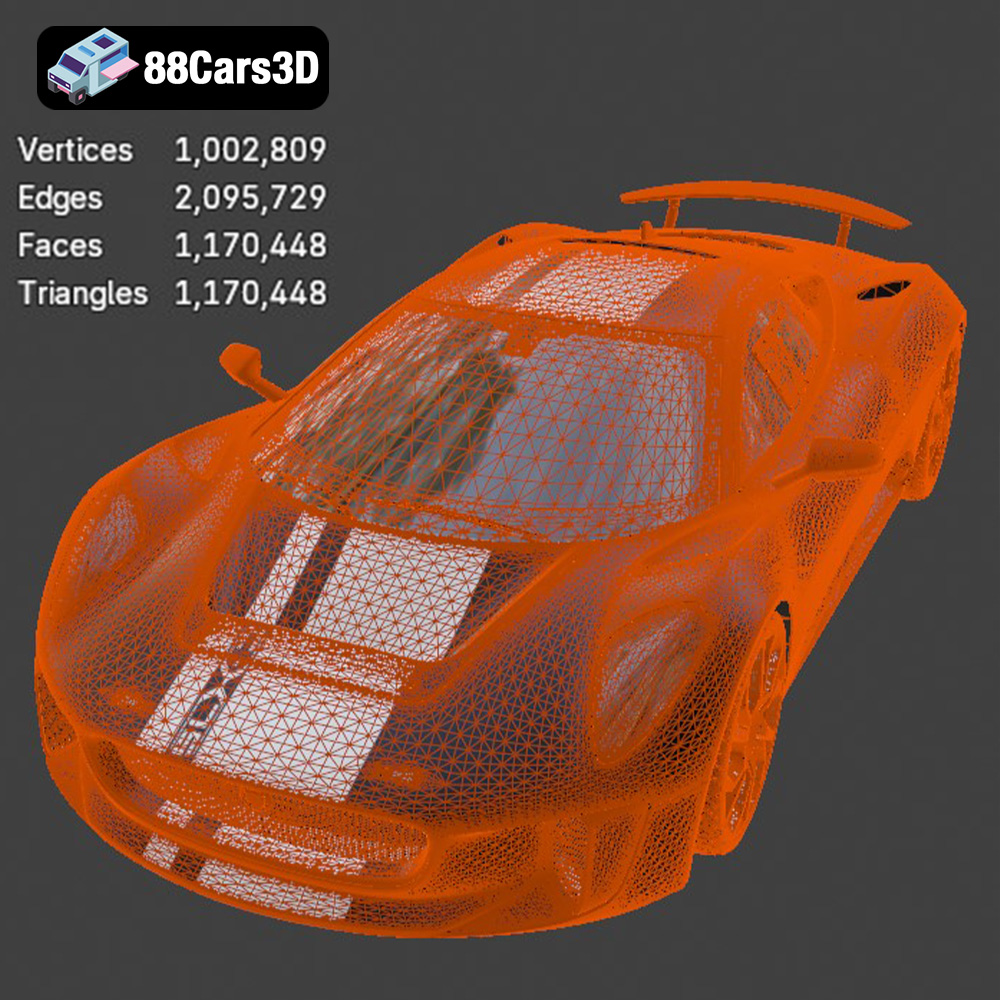
Clean topology refers to a mesh constructed primarily with quadrilaterals (quads), rather than triangles (tris) or N-gons (polygons with more than four sides). Quads are preferred because they deform smoothly during animation, are easier to subdivide (e.g., using a TurboSmooth or Subdivision Surface modifier) for higher detail without artifacts, and are simpler to UV map. An optimal polygon count means the model has enough detail where it’s needed but isn’t excessively dense, which would lead to poor performance. The Jaguar C-X75 model is engineered with pristine edge flow and optimal polygon count, ensuring it is a reliable asset for intense production pipelines, allowing for both high-end renders and real-time game optimization.
UV mapping is the process of unfolding the 3D mesh into a 2D space, allowing textures to be applied accurately. Flawless UV mapping ensures that textures appear without stretching, pinching, or seams where they shouldn’t be. Non-overlapping UVs are crucial for baking lighting, ambient occlusion, or normal maps, and for achieving clean results in game engines. Efficient texture packing, where multiple smaller texture maps are combined into a single larger one (an atlas), can improve performance by reducing draw calls. The meticulous crafting of the C-X75 model ensures that its UVs are ready for high-resolution texturing and efficient material application across all formats.
To illustrate the practical application of a premium 3D car model, let’s consider a common professional workflow, starting from initial design iteration or customization in a DCC (Digital Content Creation) tool like 3ds Max or Blender, and culminating in a real-time interactive experience in Unreal Engine.
A project often begins in a comprehensive 3D application. For users of 3ds Max, the .max file of the Jaguar C-X75 2014 3D Model provides full access to the editable geometry, materials, and scene setup. This allows for:
Similarly, for Blender users, the .blend file offers identical levels of flexibility and control within its native environment, harnessing the power of Cycles or Eevee.
Once customizations are complete or if the model is used as-is, the next step for game development is to export the model in a game-engine friendly format. The .fbx format is the go-to choice. Before export, it’s essential to ensure:
The Jaguar C-X75 2014 3D Model is provided in a game-engine ready .fbx, significantly streamlining this preparation phase.
With the optimized .fbx (or even the .unreal specific file) in hand, integration into Unreal Engine is the final step. The workflow typically involves:
This seamless pipeline, facilitated by the multi-format availability of the Jaguar C-X75 2014 3D Model, allows creators to move from high-fidelity rendering to interactive real-time experiences with efficiency and professional quality.
The world of 3D content creation is complex and demanding, requiring assets that are not only visually stunning but also technically robust and versatile. As we’ve explored, whether you’re aiming for cinematic photorealism, responsive game environments, immersive AR/VR experiences, or physical prototypes, the underlying quality of your 3D models is paramount.
The Jaguar C-X75 2014 3D Model stands as a testament to this principle. Its exceptional detail, clean geometry, accurate materials, and availability in multiple industry-standard formats (from .blend and .max for comprehensive editing, to .fbx and .unreal for game engines, and .glb for web/AR/VR, alongside .stl and .ply for specialized applications) make it an invaluable asset for any professional. This model embodies the precision and versatility required to excel in today’s diverse digital production pipelines.
For designers, developers, and artists seeking to elevate their projects with unparalleled realism and technical excellence, investing in premium 3D car models is a strategic choice. Resources like 88cars3d.com offer a curated selection of such high-quality assets, ensuring that your creative vision is never limited by the tools at your disposal. Equip your digital garage with the best, and watch your projects accelerate into a new dimension of realism and engagement.
Experience unparalleled realism with the Jaguar C-X75 2014 3D Model. This exceptionally detailed digital replica captures the essence of the renowned hybrid-electric concept car, offering automotive enthusiasts and professionals an immaculate asset for their digital projects. Engineered with precision, this model brings the stunning aerodynamics and aggressive styling of the C-X75 to your virtual environments.
Designed with professional standards in mind, the model features exceptionally clean geometry and realistic materials. Every exterior curve and aerodynamic element has been meticulously crafted to reflect the authentic vehicle, complemented by a fully modeled interior. This dedication to accuracy ensures pristine edge flow and optimal polygon count, making it a reliable asset for intense production pipelines.
Whether you are developing next-generation racing games, producing photorealistic cinematic renderings, creating interactive AR/VR experiences, or generating architectural visualizations, this Jaguar C-X75 model delivers outstanding performance. Its versatile build ensures seamless integration into major production software and real-time engines.
To provide maximum flexibility, the model is supplied in multiple industry-standard formats:
$19.99
.arvr
.blend
.c-x75
.car3dmodel
.conceptcar
.cx75
.fbx
.gameasset
.glb
.hybrid
.hypercar
.jaguar
.max
.obj
.ply
.rendering
.simulation
.sportsCar
.stl
.unreal