Get 20% OFF All Premium 3D & STL Models!

In the fast-evolving landscape of digital content creation, the demand for hyper-realistic and meticulously detailed 3D models is at an all-time high. From blockbuster game titles and captivating automotive advertisements to immersive virtual reality experiences and precise architectural visualizations, the quality of a 3D asset directly impacts the final output. Among these, 3D car models stand as a pinnacle of complexity and aesthetic expectation, requiring a blend of artistic skill and technical precision to truly shine.
A superior 3D car model isn’t just a static object; it’s a versatile digital twin capable of conveying motion, luxury, and performance across diverse platforms. It serves as the cornerstone for designers, animators, and developers striving for authenticity and efficiency. This pursuit of perfection is exemplified by models such as the Jaguar XFR-S 2014 3D Model, an asset that marries aggressive styling with technical robustness, ready to be integrated into the most demanding professional pipelines. Understanding the intricacies of such models and their suitable file formats is crucial for anyone looking to elevate their digital projects.
At the heart of any compelling visual project lies the quality of its assets. For automotive subjects, this is particularly true. A poorly modeled car can instantly detract from an otherwise well-crafted scene, whereas a high-fidelity 3D car model elevates the entire production, lending credibility and visual appeal.
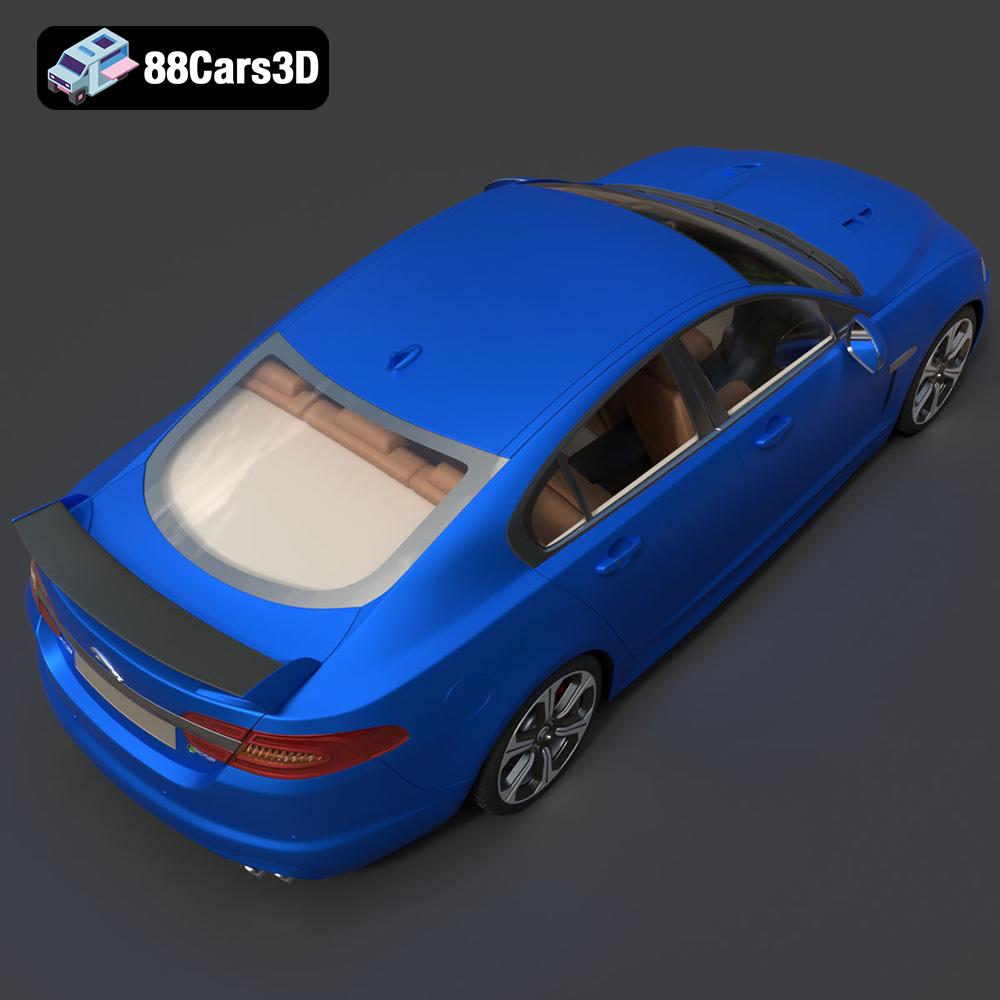
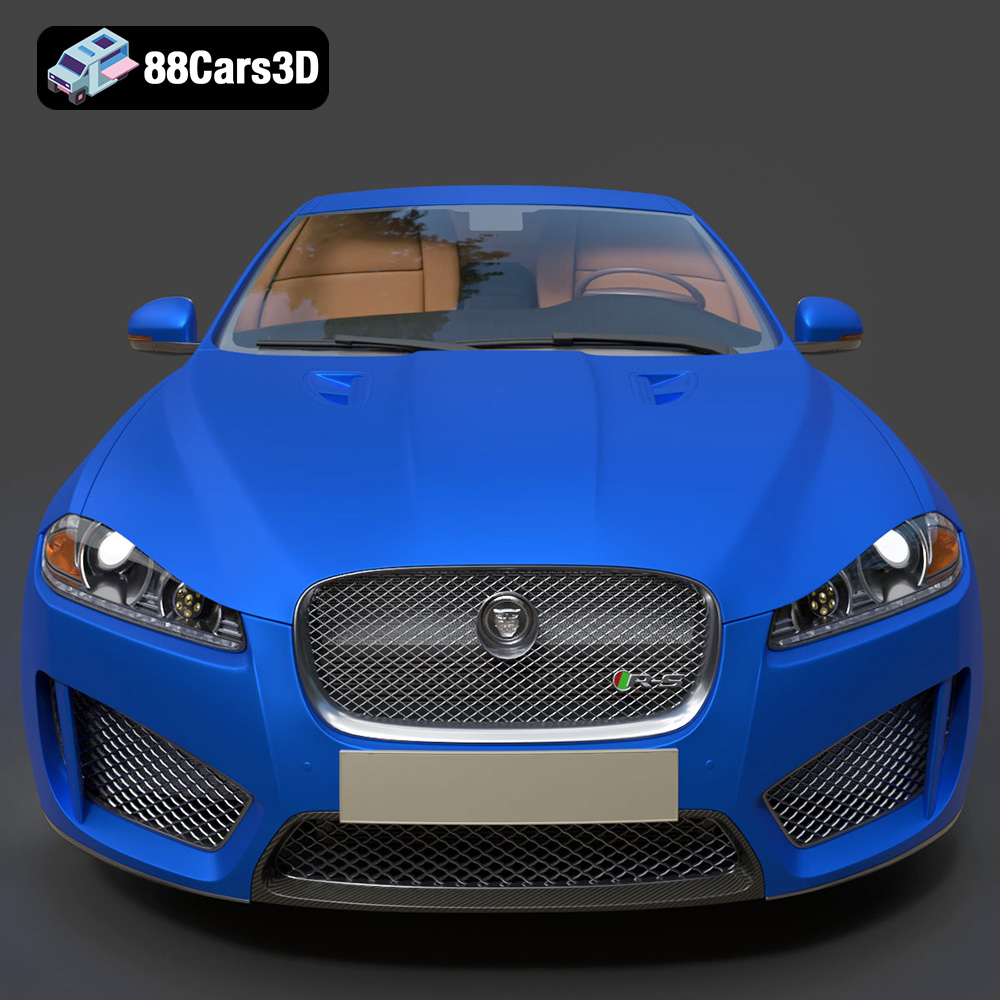
Achieving photorealism in 3D rendering and real-time engines hinges on accurate geometry and exquisite material definition. High-quality 3D car models, like the Jaguar XFR-S 2014 3D Model, are built from the ground up with precise blueprints and extensive reference material. This ensures that every curve, panel gap, and intricate detail—from the aggressive front fascia to the distinctive rear spoiler—is faithfully recreated. Such attention to detail is critical not only for static renders but also for dynamic animations where slight inaccuracies can become glaring. The integrity of the model’s topology also influences how light interacts with its surfaces, directly impacting the realism of reflections and refractions, making it indispensable for automotive rendering professionals.
Time is a valuable commodity in any production environment. Starting with a pre-built, production-ready 3D car model dramatically cuts down on development time and costs. Instead of spending weeks or even months on modeling, UV unwrapping, texturing, and rigging, artists can focus on scene composition, lighting, animation, or interactive elements. This efficiency is particularly beneficial for studios working on tight deadlines for game development, advertising campaigns, or virtual product launches. A model like the Jaguar XFR-S 2014, with its clean geometry and optimized polygon count, ensures that performance remains high across various applications, from real-time game engines to high-end cinematic rendering setups.
Navigating the diverse world of 3D applications requires a solid understanding of file formats. Each format has its strengths, weaknesses, and intended use cases, making the right choice critical for a smooth workflow. The Jaguar XFR-S 2014 3D Model from 88cars3d.com offers a comprehensive suite of formats, ensuring maximum compatibility and utility for any project.
The true measure of a professional 3D car model lies in its technical underpinnings. The Jaguar XFR-S 2014 3D Model from 88cars3d.com is engineered for versatility and performance, meeting the rigorous demands of various production pipelines.
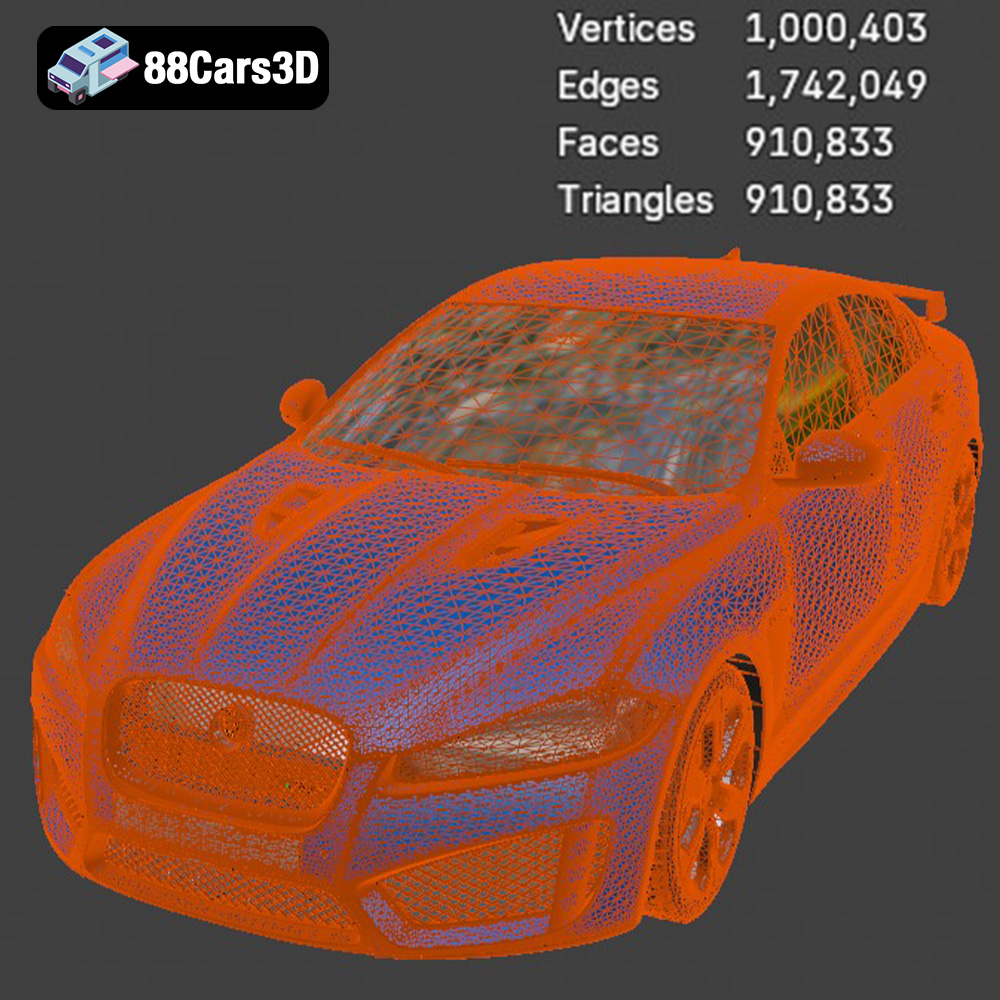
A “clean geometry” is paramount. This means the mesh is well-optimized, free of N-gons (polygons with more than four sides), inverted normals, or overlapping vertices. Such an optimized polygon count ensures that the model renders efficiently without unnecessary computational overhead, crucial for real-time applications and complex cinematic scenes. The Jaguar XFR-S 2014 model’s geometry is designed to strike a balance between high detail for close-up shots and manageability for larger scenes.
Beyond raw polygon count, the integrity of UV (Unwrap UVW) mapping is equally vital. Proper UVs ensure that textures can be applied without stretching, distortion, or seams, providing a canvas for photorealistic materials. The model features meticulous UVs, allowing artists to easily apply custom liveries, decals, or high-resolution texture maps, maximizing flexibility for automotive rendering projects.
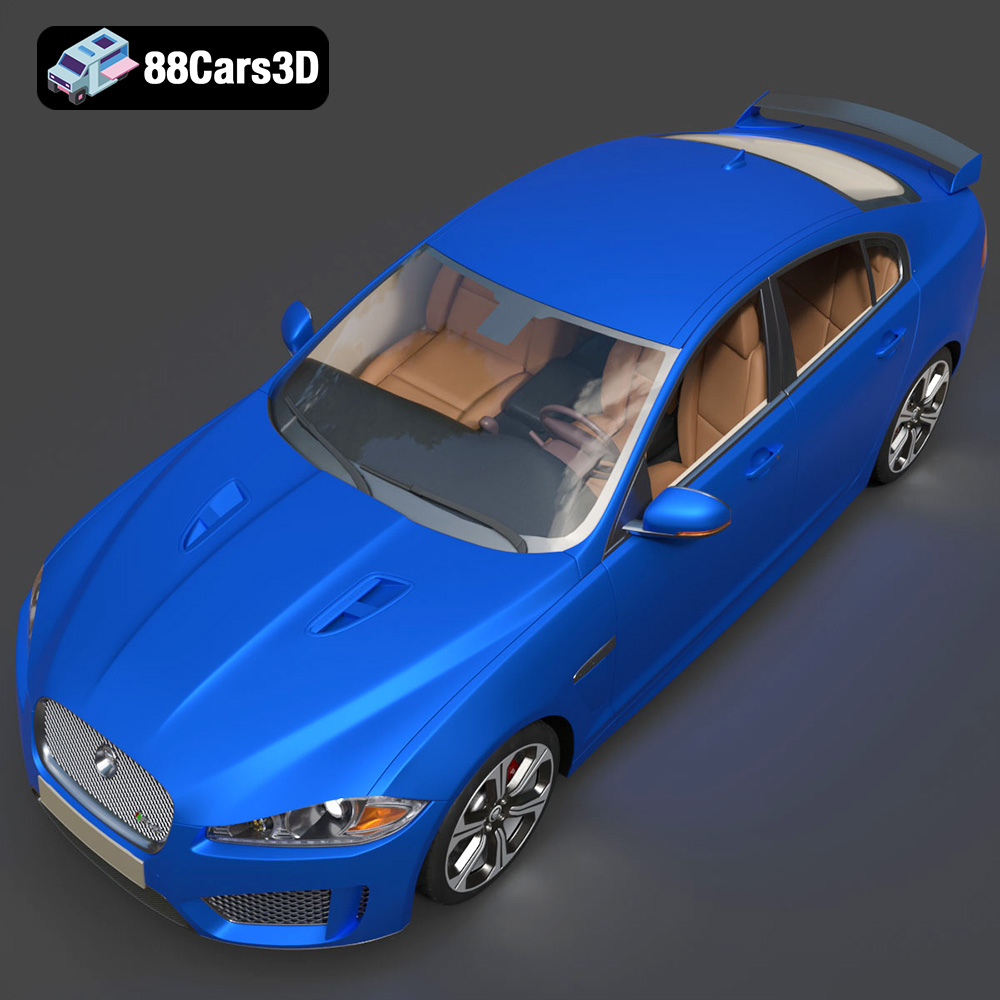
Realistic materials transform a wireframe into a lifelike object. The Jaguar XFR-S 2014 3D Model boasts meticulously crafted materials that simulate real-world properties such as metallic paint, glass, rubber, leather, and chrome. These materials are often PBR (Physically Based Rendering) compliant, meaning they behave realistically under varying lighting conditions, a necessity for modern renderers like V-Ray, Corona, and game engines like Unreal and Unity. The fully modeled interior, complete with dashboard details, seating, and console elements, ensures that even interior shots maintain the highest level of fidelity, offering incredible depth and versatility for any scene.
The versatility of a high-quality 3D car model like the Jaguar XFR-S 2014 extends across numerous industries, proving its value in diverse professional contexts.
For car manufacturers and advertising agencies, premium 3D car models are indispensable. They allow for the creation of stunning promotional imagery and animations long before a physical prototype exists. Imagine a high-gloss advertisement for the XFR-S, showcasing its sleek lines and aggressive stance under dramatic studio lighting. Using 3ds Max or Blender with a powerful renderer like V-Ray or Cycles, artists can produce photorealistic renders for print, web, and television commercials. The Jaguar XFR-S 2014 3D Model, with its detailed exterior and interior, allows for cinematic camera angles, close-ups of luxury features, and dynamic action shots that would be prohibitively expensive or impossible to capture with a real vehicle.
In the realm of gaming, a high-quality game asset is crucial for immersion. Whether it’s a racing simulator, an open-world adventure, or an interactive virtual showroom, the visual fidelity of the vehicles directly impacts player engagement. The Jaguar XFR-S 2014 3D Model, provided in optimized .fbx and .unreal formats, is built for seamless integration into game engines like Unreal Engine or Unity. Its optimized polygon count and clean UVs ensure excellent real-time performance, allowing for smooth frame rates even in graphically intensive environments. Game developers can use it as a driveable vehicle, a background prop in a city scene, or an object for virtual photography modes within their games.
Architects and urban planners often incorporate vehicles into their visualizations to provide scale, context, and a sense of realism. Placing a luxury sedan like the Jaguar XFR-S 2014 in front of a modern building rendering instantly enhances the scene’s dynamism and relatability. Furthermore, with the rise of AR/VR, these models are becoming vital for immersive experiences. Using the .glb format, a client could view the Jaguar XFR-S 2014 augmented into their driveway via a smartphone, or explore its interior details in a virtual reality showroom. The model’s quality ensures these interactive experiences are convincing and engaging.
Integrating a premium 3D car model into a specific software workflow is a fundamental skill for any 3D artist. Here, we’ll outline how the Jaguar XFR-S 2014 3D Model can be utilized effectively in industry-standard applications.
For high-end architectural and product visualization, 3ds Max remains a dominant force. When working with the Jaguar XFR-S 2014 .max file, the process is streamlined:
The clean geometry and carefully crafted materials of the Jaguar XFR-S 2014 3D Model ensure that these steps yield professional results with minimal tweaking.
For real-time applications and game development, Unreal Engine offers unparalleled visual fidelity. The .unreal or .fbx format for the Jaguar XFR-S 2014 is tailored for this environment:
The optimized geometry and thoughtful organization of the Jaguar XFR-S 2014 3D Model simplify these steps, making it a highly efficient game asset.
Blender’s comprehensive toolset makes it ideal for artists seeking full creative control. With the Jaguar XFR-S 2014 .blend file:
The Jaguar XFR-S 2014 3D Model provides a solid foundation for any Blender artist looking to create stunning automotive visuals.
In a competitive digital marketplace, the decision to invest in high-quality 3D assets is not merely about aesthetics; it’s a strategic business move.
Building complex 3D car models from scratch is an incredibly labor-intensive and time-consuming process, requiring specialized skills that come at a premium. By acquiring a professional-grade asset like the Jaguar XFR-S 2014 3D Model from a reputable marketplace like 88cars3d.com, studios and freelancers can drastically reduce their project timelines and overheads. This allows them to allocate resources to other critical aspects of production, leading to faster project completion and higher profit margins.
Consistency in visual quality is crucial for any brand or project. Premium 3D assets guarantee a level of detail, accuracy, and optimization that off-the-shelf or lower-quality models simply cannot match. This consistency is particularly important when developing a series of visuals or assets, ensuring a unified and professional look across the board. The meticulous crafting of the Jaguar XFR-S 2014 model means it will seamlessly integrate with other high-quality assets in a scene, maintaining overall visual fidelity and enhancing project cohesion. For any automotive rendering or game asset project, starting with excellence provides an undeniable advantage.
The world of 3D content creation is driven by quality, efficiency, and versatility. High-fidelity 3D car models are more than just digital replicas; they are essential tools that empower artists and developers to achieve breathtaking realism and streamline complex production pipelines. From the fundamental understanding of file formats to the intricate technical specifications and diverse real-world applications, choosing the right asset is paramount.
The Jaguar XFR-S 2014 3D Model stands as a prime example of such an indispensable asset. Its exceptional realism, meticulously optimized geometry, production-ready materials, and comprehensive suite of file formats (including .blend, .fbx, .obj, .glb, .stl, .ply, .unreal, and .max) ensure it is perfectly suited for game development, architectural visualization, cinematic rendering, and cutting-edge AR/VR applications. By investing in such a quality asset from 88cars3d.com, creators can elevate their projects, save invaluable time, and consistently deliver stunning visual experiences that capture the essence of automotive excellence.
The Jaguar XFR-S 2014 3D Model delivers an exceptionally realistic representation of the iconic performance sedan. Designed with precision, this asset captures the aggressive styling, aerodynamic profile, and distinct characteristics of the XFR-S. Featuring clean geometry, meticulously crafted realistic materials, and an optimized polygon count, this model ensures professional-grade performance. The fully modeled interior and detailed exterior make it versatile for close-up shots and expansive scenes. Perfectly suited for game development, architectural visualization, cinematic rendering, and AR/VR applications, it provides a seamless integration into any production pipeline.
$19.99
.arvr
.blend
.car3dmodel
.fbx
.gameasset
.glb
.jaguar
.luxurycar
.max
.obj
.ply
.rendering
.sedan
.simulation
.sportssedan
.stl
.unreal
.xfrs