Get 20% OFF All Premium 3D & STL Models!

In the dynamic world of 3D visualization, the demand for highly detailed and technically accurate assets is paramount. Whether you’re crafting a cutting-edge video game, producing a hyper-realistic architectural walkthrough, or developing an immersive AR/VR experience, the quality of your 3D models dictates the authenticity and impact of your final output. Professionals understand that time is a valuable commodity, and starting with a pre-built, production-ready asset can dramatically accelerate project timelines while maintaining top-tier quality.
This is precisely where specialized marketplaces like 88cars3d.com shine, offering a curated selection of premium 3D models that meet rigorous industry standards. Among their impressive collection, the JCB Excavator-001 3D model stands out as a prime example of meticulous craftsmanship. This model isn’t just a digital representation; it’s a testament to precision engineering, designed to integrate seamlessly into diverse professional workflows. Its intricate detailing, clean geometry, and realistic materials make it an indispensable asset for anyone serious about elevating their digital projects. Let’s delve into the technical depths of why such an asset is crucial for modern 3D production.
The versatility of a 3D model is often defined by the range and quality of its included file formats. Each format serves a specific purpose, optimized for different software, engines, or end-use applications. Understanding these distinctions is critical for any 3D professional, ensuring smooth integration and optimal performance. The JCB Excavator-001 3D model provides a comprehensive suite of formats, catering to virtually every need.
The .blend file is Blender’s native format, offering a complete, editable scene. For the JCB Excavator-001, this means a fully set up Blender project, complete with materials, textures, and often a lighting rig. Artists using Blender benefit from immediate access to the model’s modifiers, UV maps, PBR material nodes, and potentially even rigging for animation. This format is ideal for customization, allowing users to tweak every aspect, from geometry details to shader properties, or to integrate it into complex scene compositions directly within Blender.
.fbx (Filmbox) is arguably one of the most widely used exchange formats in the 3D industry, particularly for game development. Its robust support for geometry, materials, animations, and rigs makes it ideal for transferring assets between different 3D software packages like Maya, 3ds Max, Blender, and directly into game engines like Unreal Engine and Unity. The JCB Excavator-001’s .fbx version is typically optimized for real-time environments, featuring efficient polygon counts and clean UVs, ensuring it’s “game-engine ready” and performs well under strict performance budgets.
The .obj (Wavefront Object) format is a universal standard, renowned for its simplicity and broad compatibility. It primarily stores geometry information (vertices, normals, UVs, faces) and references external material files (.mtl). While it doesn’t support advanced features like rigging or animation, its widespread adoption makes it an excellent fallback for ensuring cross-software compatibility. If you need to import the JCB Excavator-001 into a less common 3D application or simply need the raw mesh data, .obj is your go-to.
.glb (GLB, a binary version of glTF) is a relatively newer format rapidly gaining traction, especially for augmented reality (AR), virtual reality (VR), and web-based 3D applications. It efficiently packages 3D model data – including geometry, materials, textures, and animations – into a single, compact file. This optimization for lightweight, real-time rendering makes the .glb version of the JCB Excavator-001 perfect for interactive web viewers, AR apps on mobile devices, or VR experiences where file size and loading times are critical.
The .stl (Stereolithography) format is the de facto standard for 3D printing. It represents a 3D model as a collection of triangular facets, defining the surface geometry without color or texture information. For the JCB Excavator-001, the .stl file would be suitable for creating physical prototypes, educational models, or even detailed scale models for architectural planning. While not visually rich, its precision in defining manifold geometry is essential for successful additive manufacturing.
.ply (Polygon File Format) is another format for storing 3D data, particularly known for its ability to store properties beyond just geometry, such as color, transparency, and often more robust normal information per vertex or face. It’s frequently used in scientific applications, 3D scanning, CAD, and computational analysis where precise mesh data and attribute storage are important. The .ply version of the JCB Excavator-001 offers a detailed polygon mesh that can be valuable for engineering analysis or highly precise visualization tasks.
The inclusion of an .unreal file (often meaning a pre-packaged asset or project file) indicates that the JCB Excavator-001 3D model has been specifically prepared and configured for optimal use within Unreal Engine. This could involve pre-imported meshes, correctly set up materials with appropriate PBR nodes, collision meshes, LODs (Levels of Detail), and possibly even basic blueprints or scene setups. This format dramatically reduces setup time for Unreal Engine developers, allowing them to drop the asset directly into their projects with minimal fuss.
Finally, the .max file is the native format for Autodesk 3ds Max, one of the leading software packages for 3D modeling, animation, and rendering. The .max version of the JCB Excavator-001 provides an editable project file, giving 3ds Max users full control over the model. This includes access to all modeling data, material setups (e.g., V-Ray, Corona), lighting, and animation rigs if present. It’s the ultimate format for high-resolution rendering, complex animations, or integrating the model into existing 3ds Max scenes for demanding visualization projects.
High-quality 3D models are the foundation, but rendering is where they truly shine. For industrial equipment like the JCB Excavator-001, achieving photo-realism is about more than just a detailed mesh; it’s about the interplay of materials, lighting, and environmental context. This is equally true for high-end 3D car models or architectural renders.
The JCB Excavator-001 3D model boasts “realistic materials that mimic the real-world appearance.” This strongly implies the use of Physically Based Rendering (PBR) workflows. PBR materials accurately simulate how light interacts with surfaces in the real world, accounting for properties like albedo (base color), metallicness, roughness, normal mapping for fine details, and ambient occlusion. These maps ensure that whether the excavator is placed under a harsh desert sun or in a dimly lit industrial shed, its surfaces—be it the worn metal, the rubber tires, or the glass cabin—respond to light in a convincing manner.
Beyond materials, skilled rendering involves sophisticated lighting setups. Studio lighting, HDRI (High Dynamic Range Image) environments, and carefully placed area lights can dramatically enhance the perceived realism of any 3D model. For the JCB Excavator, integrating it into a construction site environment requires precise global illumination and reflections to ensure it feels grounded and part of the scene, rather than merely composited. This attention to detail elevates renders for marketing collateral, engineering reviews, or even cinematics.
The world of interactive media, from console games to mobile applications, demands incredible efficiency. A professional-grade asset like the JCB Excavator-001 3D model is designed with these constraints in mind, often offering “clean geometry for efficient rendering” and being “game-engine ready.”
For game development, poly count is always a critical consideration. While high-resolution models are excellent for pre-rendered cinematics, real-time applications require optimized meshes. “Clean geometry” refers to efficient polygon distribution, avoiding unnecessary complexity where it’s not visible, and ensuring good topology for deformation. Furthermore, implementing Levels of Detail (LODs) is crucial. A well-prepared asset will include multiple versions of the model, each with progressively lower polygon counts, which the game engine can swap in and out depending on the camera’s distance, ensuring performance without sacrificing visual quality up close. The .fbx and .unreal formats are specifically tailored for this.
Beyond visual fidelity, game assets require functionality. Collision meshes, simplified invisible geometries, allow players or physics engines to interact with the model realistically without processing the full visual mesh. For an excavator, this means players can walk around it, its bucket can interact with the ground, or it can be physically simulated. Additionally, an asset like the JCB Excavator-001 might be pre-rigged for animation, allowing developers to quickly integrate digging, swiveling, or driving animations directly into their game, greatly reducing development time. This level of preparation is a hallmark of premium game assets found on platforms like 88cars3d.com.
Augmented Reality (AR), Virtual Reality (VR), and advanced simulation environments represent the cutting edge of interactive visualization. These platforms push the boundaries of realism and immersion, making high-quality, optimized 3D assets indispensable. The JCB Excavator-001 3D model is perfectly suited for these demanding applications.
Imagine training excavator operators in a fully immersive VR environment without the need for physical machinery. A highly accurate 3D model like the JCB Excavator-001 makes this possible. With its realistic materials and precise geometry, it can be integrated into a VR simulation to teach control mechanics, safety procedures, or complex digging techniques in a safe, controlled, and cost-effective manner. The .glb and .unreal formats are particularly valuable here, offering efficient delivery and engine compatibility, respectively.
AR offers compelling ways to visualize heavy machinery in real-world contexts. A construction company could use an AR app to project the JCB Excavator-001 onto a building site plan, allowing stakeholders to visualize its footprint, reach, and how it would operate within the space before any physical equipment arrives. The optimized .glb format ensures smooth performance on mobile devices, making such interactive marketing or planning tools feasible and highly engaging. This extends to other domains, too, like showcasing a new line of 3D car models in AR.
While often associated with digital screens, 3D models also serve a crucial role in physical production. 3D printing, in particular, has revolutionized prototyping, manufacturing, and even the creation of educational tools. The inclusion of .stl and .ply formats for the JCB Excavator-001 underscores its utility in this realm.
The .stl file for the JCB Excavator-001 allows for direct 3D printing. Engineers could print a scale model to assess design ergonomics, test component fit, or present a tangible representation of equipment for client pitches. Architectural firms might print a miniature excavator to populate a physical site model, adding a layer of realism to their presentations. The accuracy of the digital model translates directly into the precision of the printed object.
Beyond prototyping, 3D printed models can serve as invaluable educational tools. Intricate components of the excavator could be printed separately for hands-on learning about mechanical systems. In certain specialized scenarios, if a particular small, non-critical part of the excavator needed replacement, and traditional sourcing was difficult, the .stl or .ply file could potentially be adapted for on-demand manufacturing using industrial 3D printers, demonstrating the practical, real-world utility of high-fidelity digital assets.
The true power of a professional 3D model lies in its ability to integrate seamlessly into an artist’s or developer’s preferred workflow. The JCB Excavator-001 3D model, with its array of native and exchange formats, empowers users across various software ecosystems.
For artists working in 3ds Max, the included .max file is a goldmine. It allows full access to the model’s hierarchy, enabling complex rigging for animation, material adjustments for specific render engines like V-Ray or Corona, or integration into a larger scene with other detailed assets, including detailed 3D car models. Similarly, the .blend file provides Blender users with a fully editable scene, perfect for creating custom animations, modifying textures, or optimizing the model further within their native environment. This flexibility saves countless hours that would otherwise be spent on modeling from scratch.
Game developers benefit immensely from the .fbx and .unreal formats. The .fbx can be imported into Unity or Unreal Engine, often with materials and textures correctly assigned, accelerating the asset integration process. The .unreal package offers an even smoother experience for Unreal Engine users, potentially providing a drag-and-drop solution with pre-configured settings. This rapid deployment capability is crucial for meeting tight development deadlines and iterating quickly on game levels or interactive simulations.
Regardless of the chosen software or engine, the core quality of the JCB Excavator-001 3D model ensures consistent results. Its clean geometry and well-prepared materials mean that whether it’s being rendered in 3ds Max for a high-resolution print ad, animated in Blender for a cinematic sequence, or integrated into an Unreal Engine game as a static or interactive element, the visual integrity and performance remain top-notch. This multi-platform readiness underscores the value of investing in professionally crafted assets from reliable sources like 88cars3d.com.
In the competitive landscape of 3D production, the difference between good and great often comes down to the quality and versatility of your assets. The JCB Excavator-001 3D model is more than just a digital object; it’s a meticulously engineered solution designed to meet the rigorous demands of professional workflows across game development, architectural visualization, AR/VR, simulation, and even 3D printing. Its comprehensive range of file formats – from editable .blend and .max projects to game-ready .fbx and .unreal packages, and web-optimized .glb – ensures seamless integration and optimal performance in virtually any application.
By providing clean geometry, realistic PBR materials, and thoughtful optimization, this model empowers artists and developers to achieve unparalleled realism and efficiency. Whether you’re enhancing a construction site visualization, developing an immersive training simulation, or creating compelling marketing visuals, the JCB Excavator-001 3D model provides a robust foundation. Investing in high-quality 3D assets, much like those found on 88cars3d.com, is a strategic decision that saves time, elevates visual fidelity, and ultimately drives the success of your digital projects. Explore the potential and integrate this exceptional model into your next masterpiece.
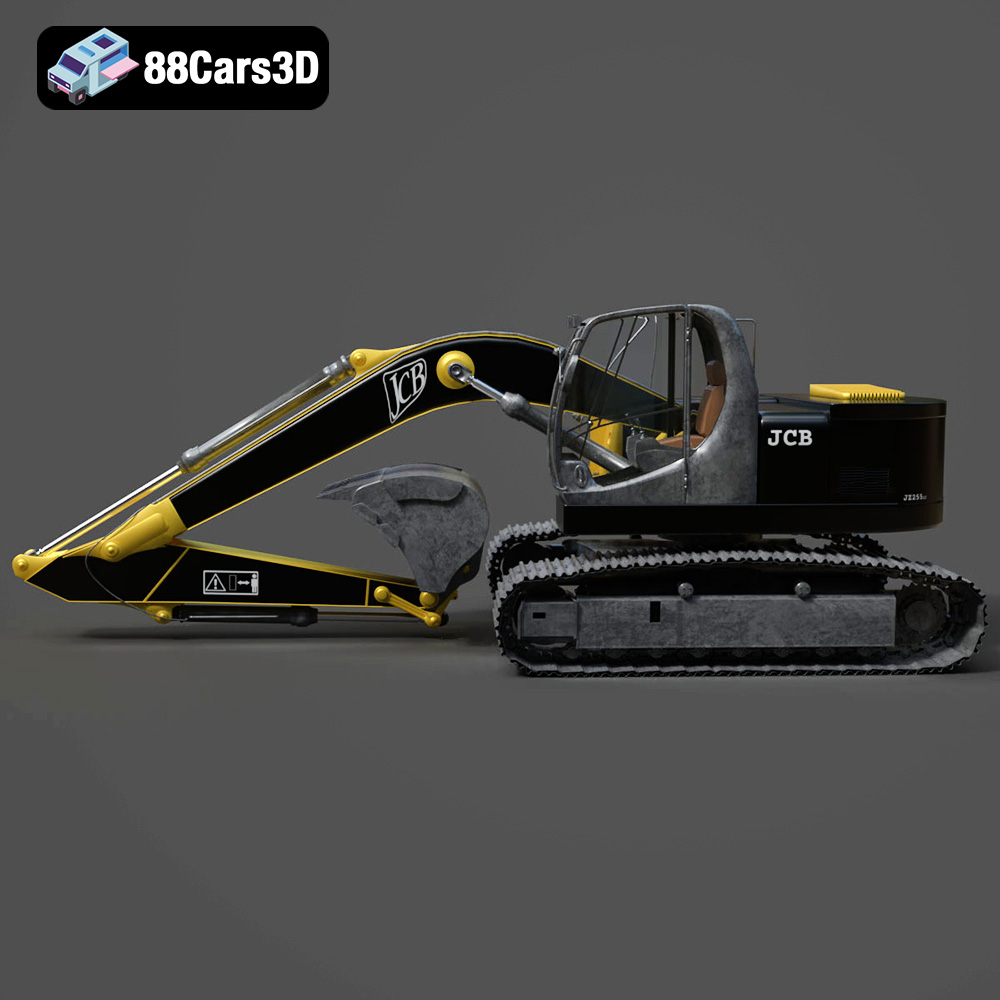
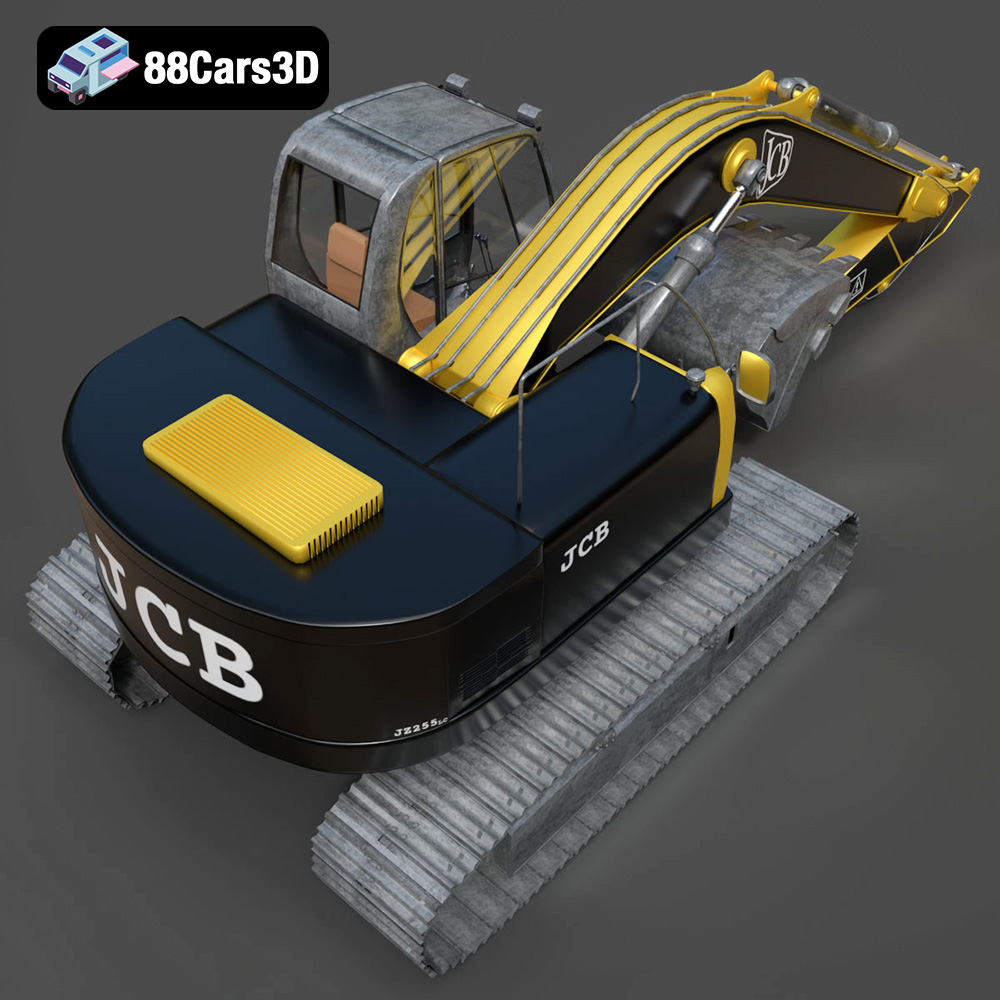
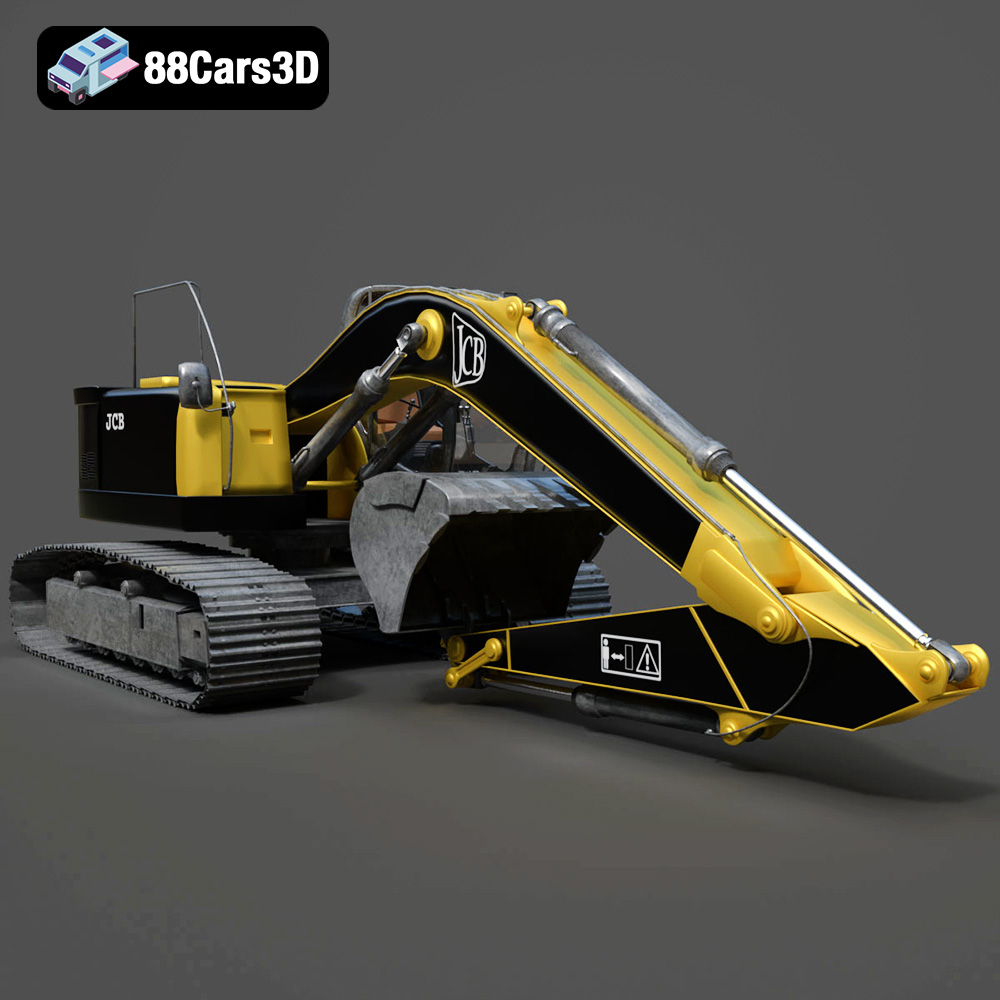
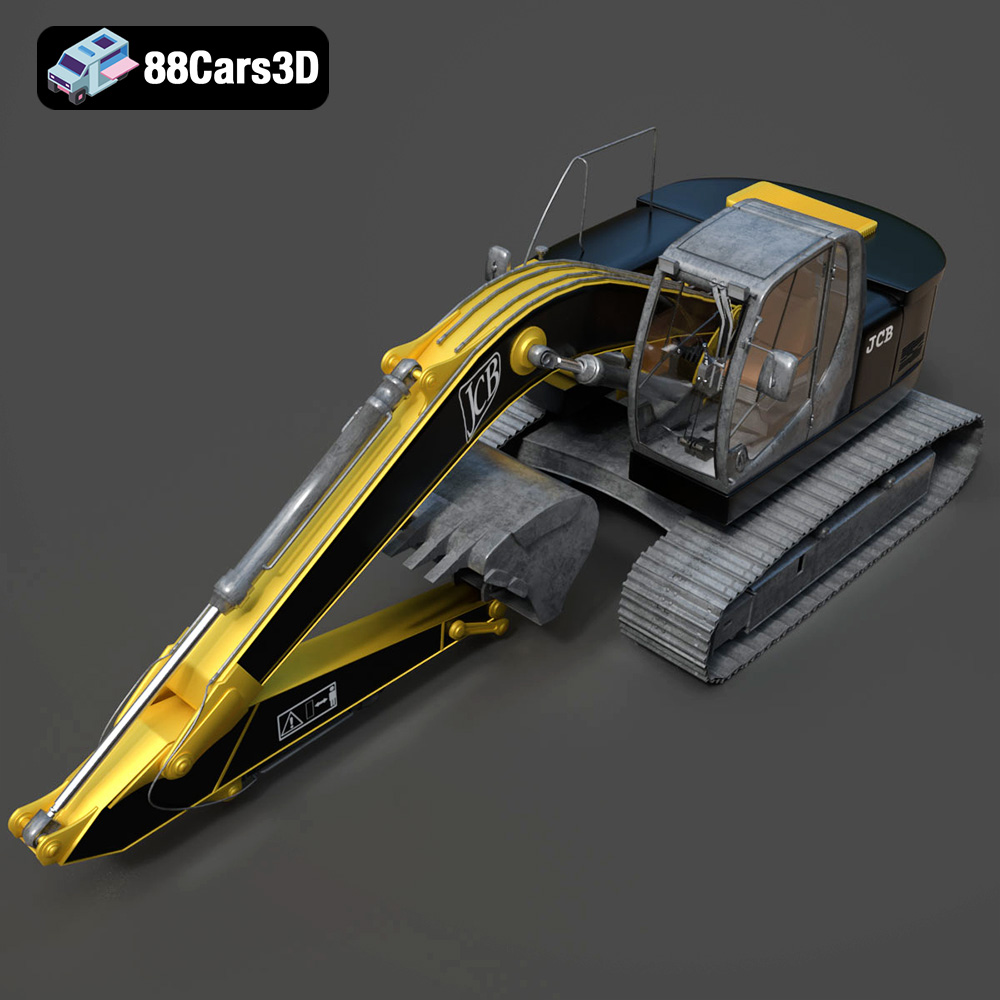
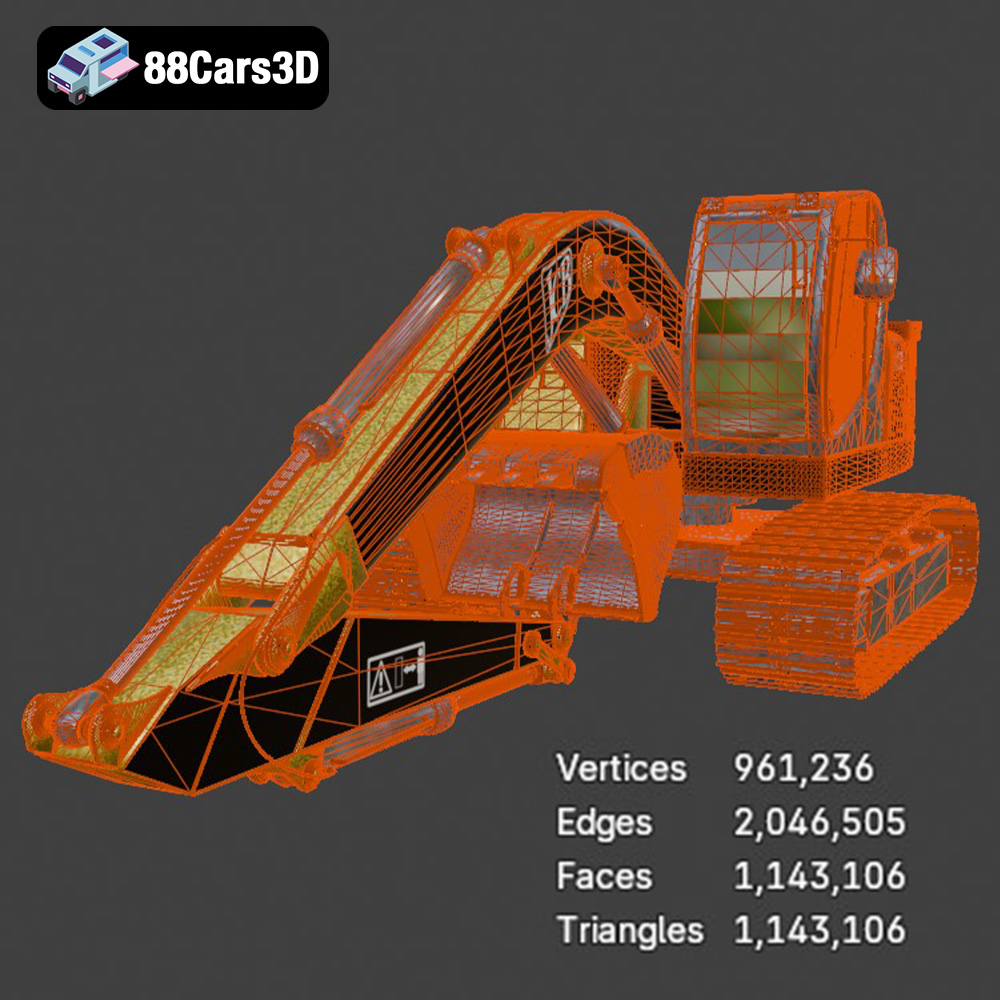
Immerse yourself in the intricate detailing of the JCB Excavator-001 3D model. This meticulously crafted model delivers unparalleled realism, capturing every aspect of the iconic construction equipment with precision.
Key features include clean geometry for efficient rendering, realistic materials that mimic the real-world appearance, and professional-grade quality suitable for a variety of applications.
Perfect for game development, architectural visualization, high-resolution rendering, augmented reality (AR), virtual reality (VR), and simulation projects, this 3D model elevates the quality and authenticity of your creations.
The following file formats are included:
$19.99
.arvr
.blend
.car3dmodel
.constructionequipment
.excavator
.excavator001
.fbx
.gameasset
.glb
.jcb
.max
.obj
.ply
.rendering
.simulation
.stl
.unreal