Get 20% OFF All Premium 3D & STL Models!

In today’s fast-paced digital landscape, the demand for breathtaking visual content is at an all-time high. From cinematic game sequences and photorealistic product showcases to immersive augmented reality experiences, the backbone of any successful project is the quality of its 3D assets. Professionals across industries understand that starting with a meticulously crafted 3D model not only streamlines workflows but also elevates the final output to a level of unparalleled realism.
Enter the realm of specialized assets, where models are not just shapes but finely tuned digital blueprints. A prime example of such an asset is the Kawasaki Motorcycle-001 3D Model, a product designed with precision and versatility at its core. This model isn’t just an aesthetic representation; it’s a technical marvel engineered for seamless integration into diverse professional pipelines, offering clean geometry, realistic materials, and a range of industry-standard file formats. Whether you’re a game developer seeking authentic vehicles, a visualization artist aiming for photorealistic automotive rendering, or an AR/VR creator building immersive worlds, the foundation of your project hinges on choosing assets that meet the highest technical standards.
The visual fidelity of any digital project is directly proportional to the quality of its underlying 3D models. Generic or poorly optimized assets can introduce a myriad of issues, from rendering artifacts and performance bottlenecks to a complete lack of aesthetic appeal. Professional-grade 3D models, such as the Kawasaki Motorcycle-001 3D Model, are built with specific technical considerations that ensure efficiency, realism, and compatibility.
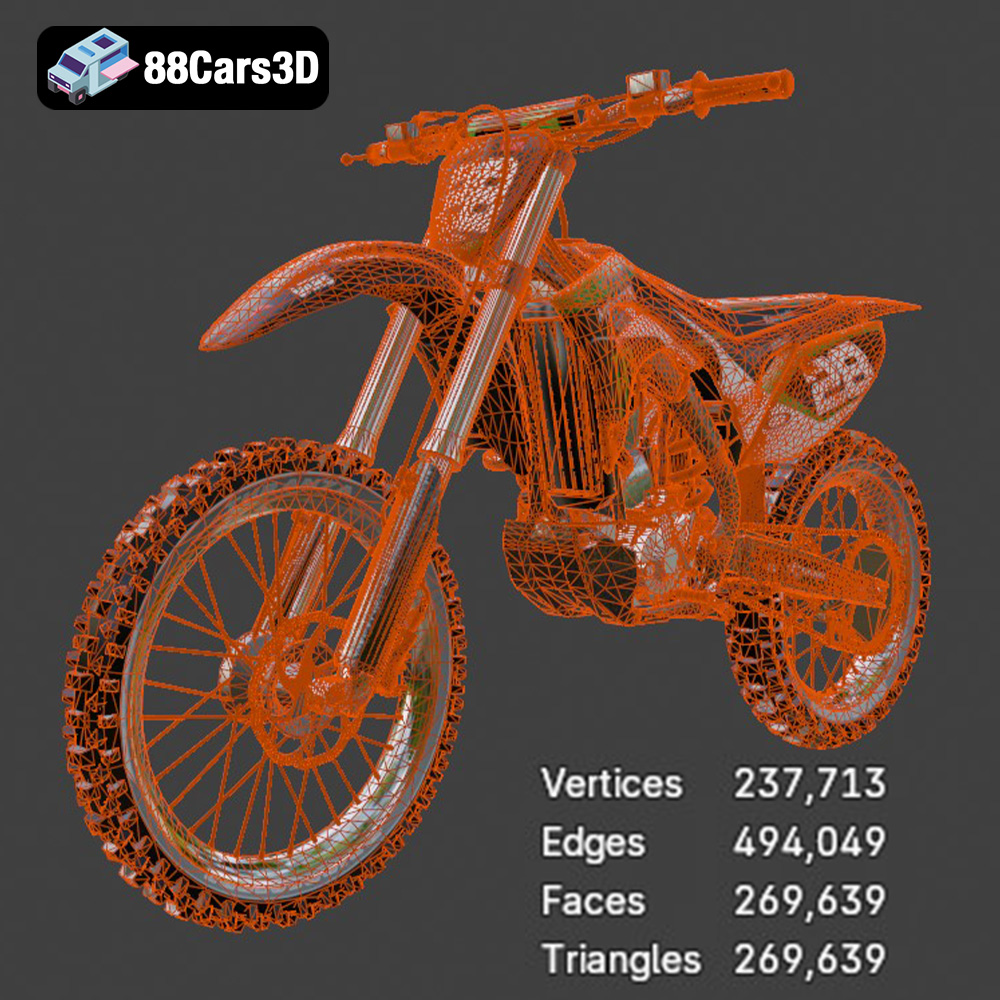
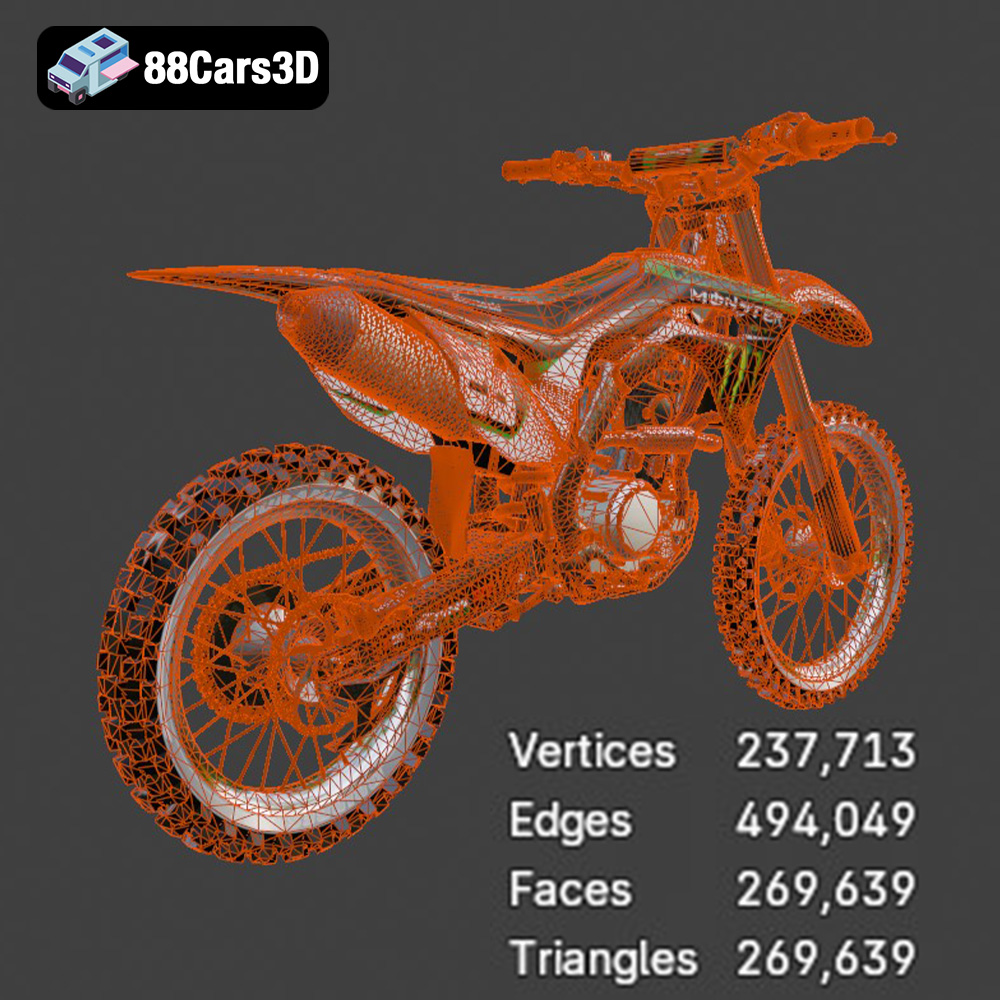
At the heart of any high-quality 3D model is its geometry. Clean, optimized topology is crucial for smooth deformations, efficient rendering, and proper subdivision surfacing. The Kawasaki Motorcycle-001 3D Model boasts clean geometry, meaning it has a well-structured mesh free of extraneous vertices, intersecting faces, or non-manifold edges. This not only makes the model lighter and faster to process but also ensures that it looks correct from every angle, without visual glitches or shading errors.
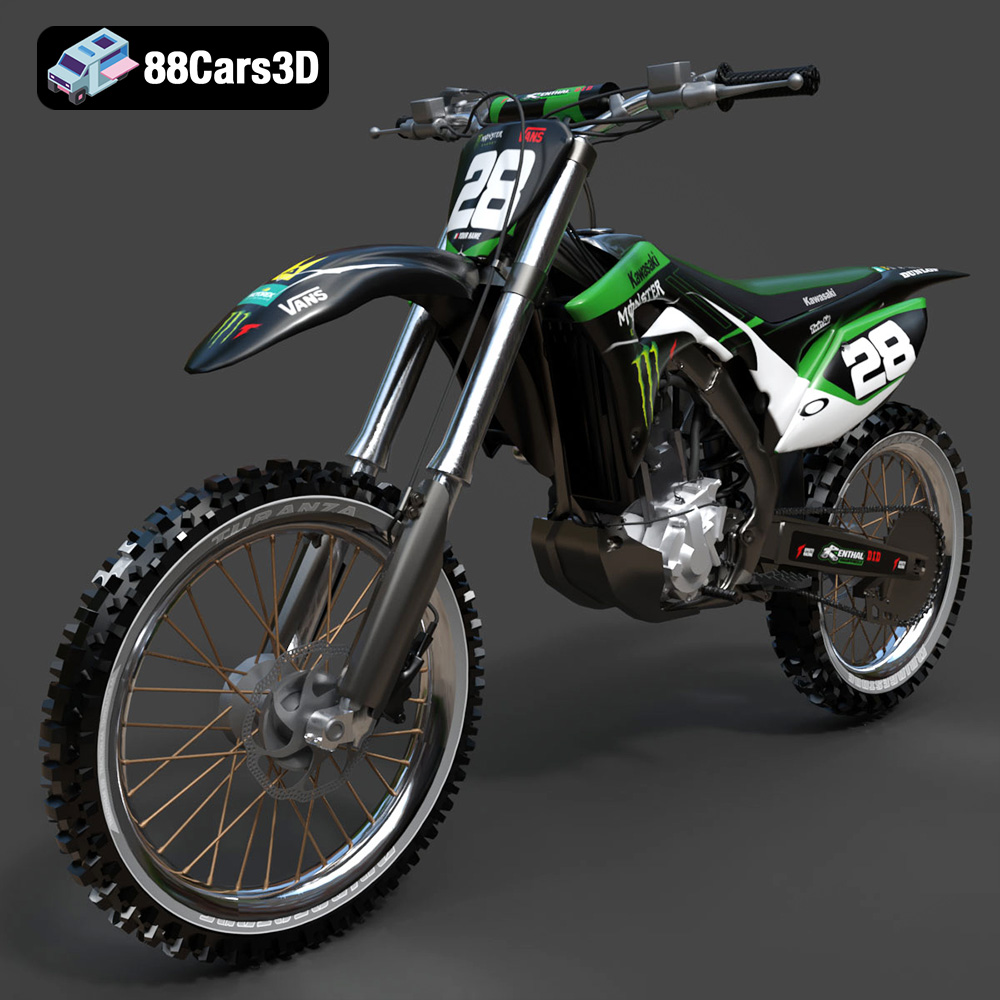
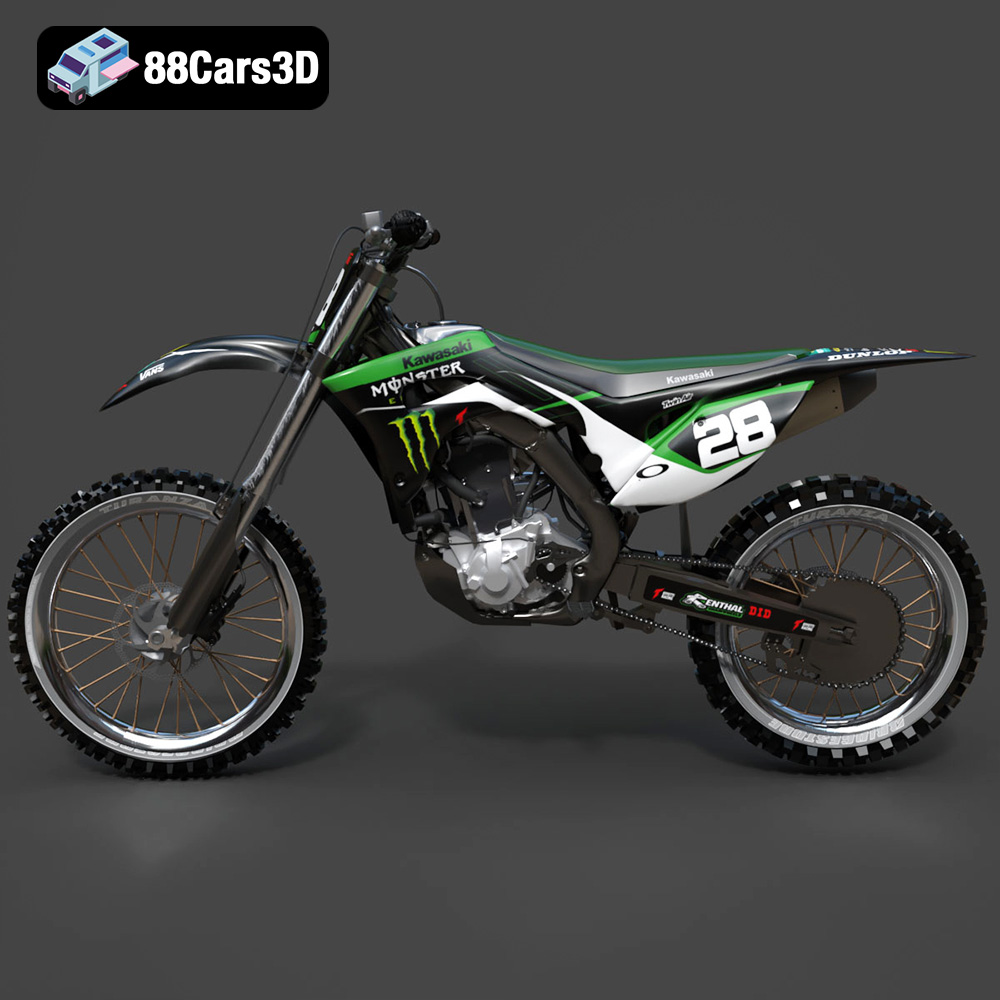
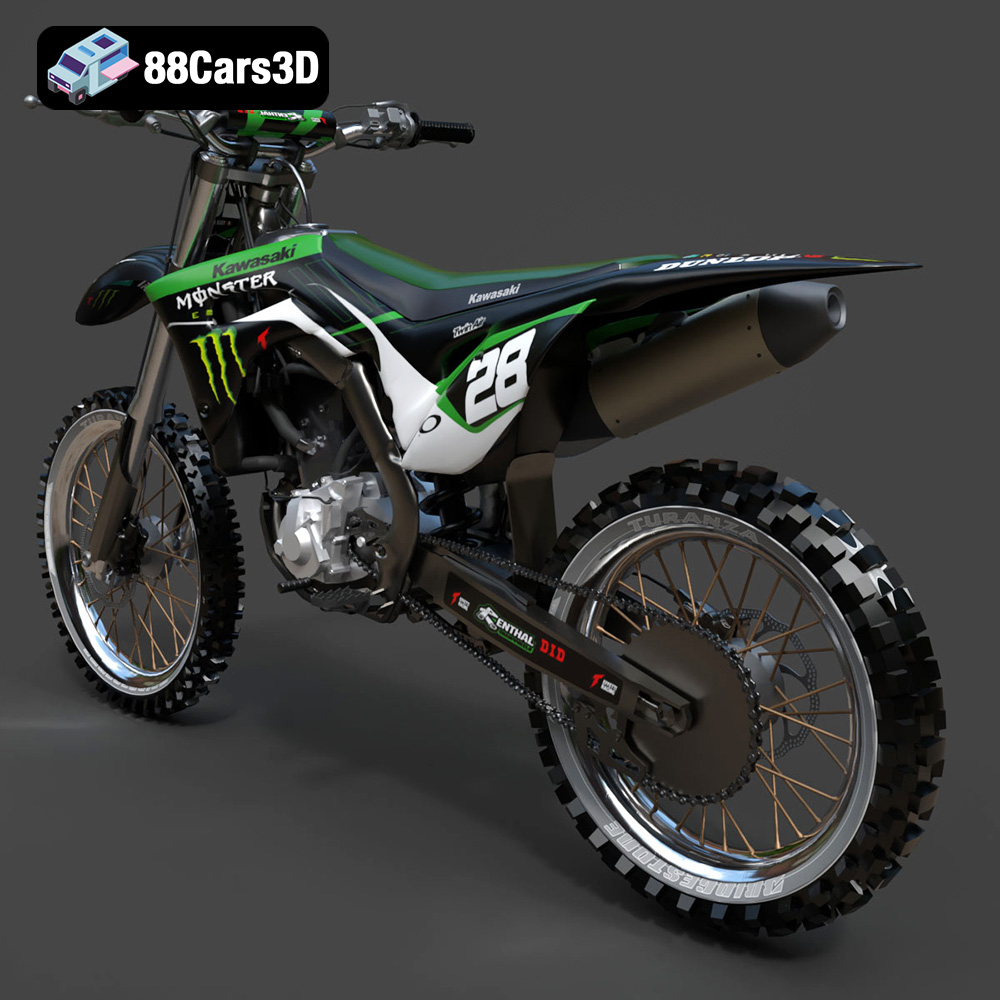
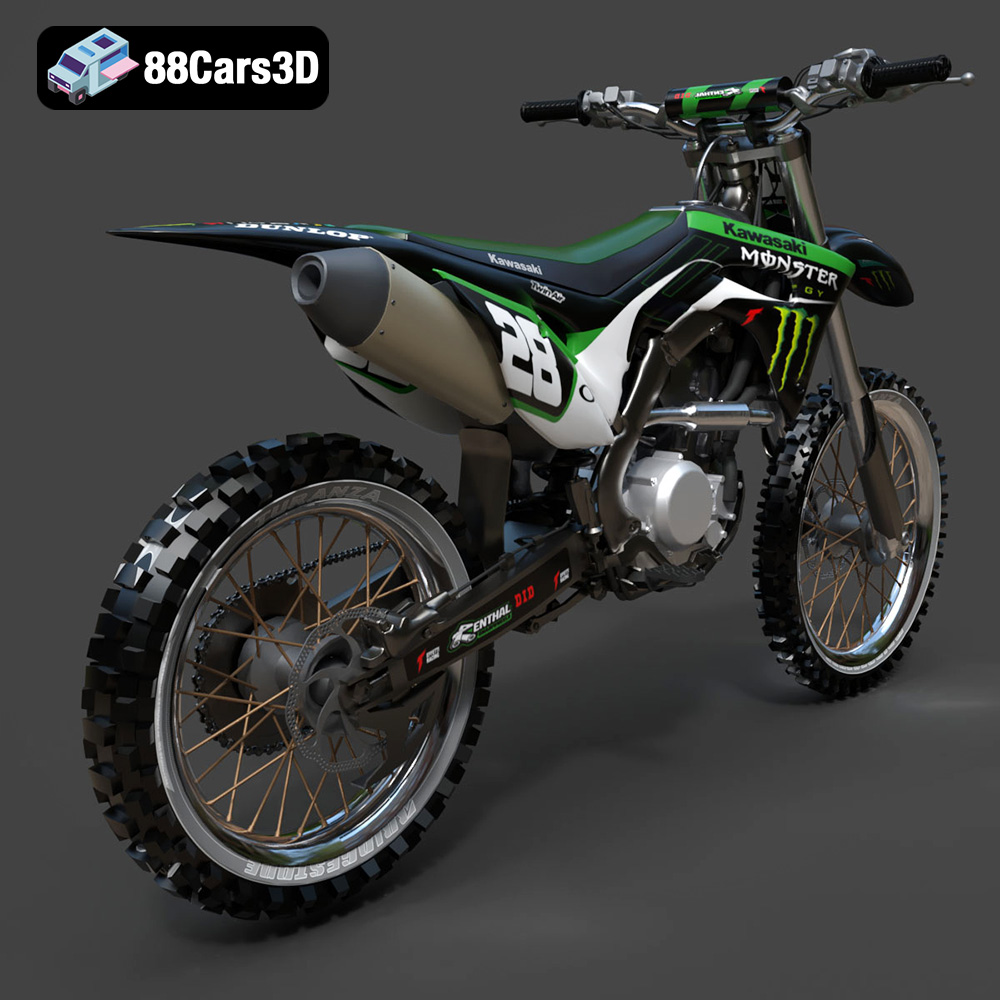
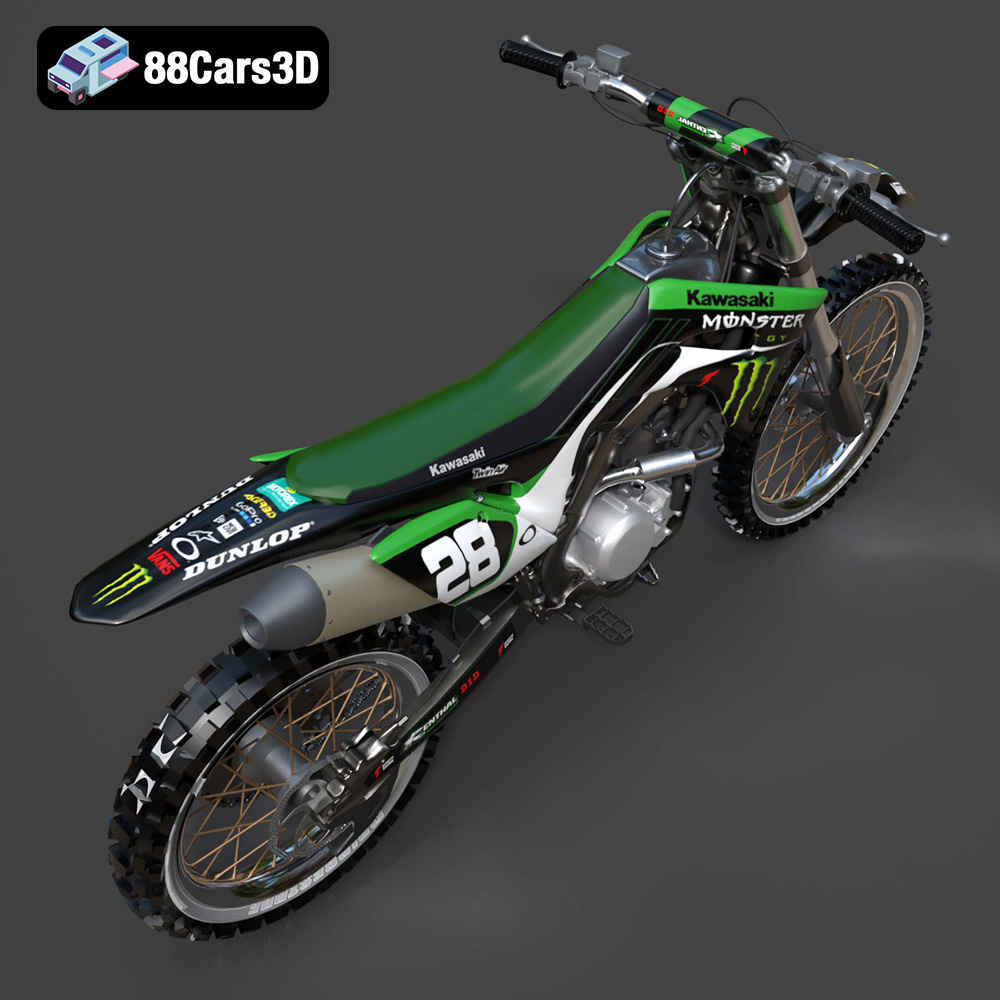
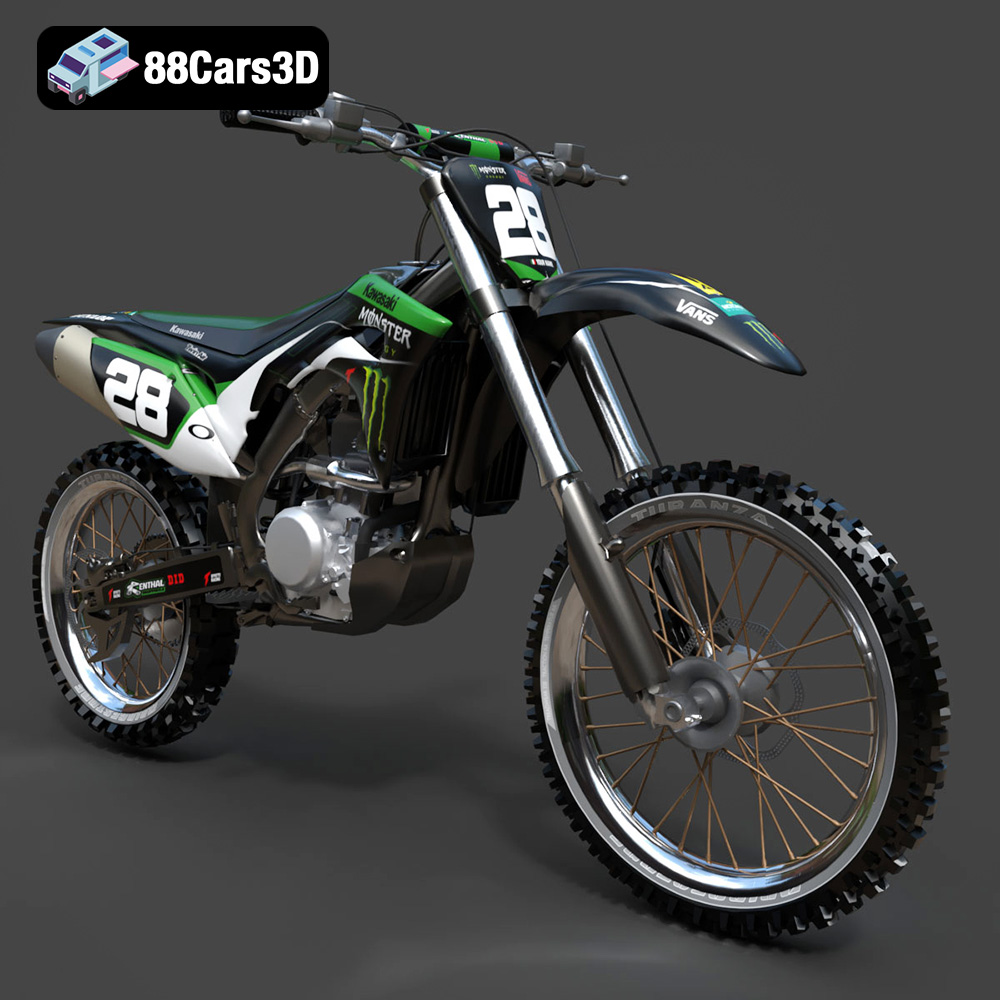
Equally vital are realistic materials and textures. A raw mesh, no matter how perfect, remains lifeless without a sophisticated material setup. High-quality models are typically accompanied by physically based rendering (PBR) materials, which accurately simulate how light interacts with surfaces in the real world. This includes detailed texture maps for albedo (color), roughness, metallicness, normal, and ambient occlusion, allowing for incredibly lifelike finishes. For the Kawasaki Motorcycle-001, these realistic materials are paramount, allowing artists to achieve stunning automotive rendering results that truly capture the intricate finishes of a real motorcycle, from its gleaming paintwork to its textured tires and metallic engine components.
A truly valuable 3D model is one that transcends a single application. The Kawasaki Motorcycle-001 3D Model exemplifies this versatility, serving as a robust asset across multiple industries. In game development, optimized models with LODs (Levels of Detail) and efficient materials are critical for maintaining high frame rates while delivering visual richness. For architectural visualization, these models can populate scenes, adding a layer of dynamic realism to otherwise static environments. In AR/VR, lightweight yet detailed models are essential for smooth, immersive experiences on various devices.
Furthermore, specialized applications like scientific visualization, simulation, and even 3D printing benefit immensely from models built with precision. The availability of diverse file formats and a focus on clean, professional-grade quality ensures that an asset like the Kawasaki Motorcycle-001 can be seamlessly integrated into virtually any professional pipeline, providing exceptional value and reducing the need for costly custom modeling.
The world of 3D modeling is rich with various file formats, each designed for specific purposes and boasting unique advantages. Choosing the correct format is crucial for workflow efficiency, data integrity, and compatibility across different software and platforms. The Kawasaki Motorcycle-001 3D Model from 88cars3d.com stands out by providing an extensive array of formats, ensuring it’s ready for any project.
The .blend file is the native format for Blender, a powerful and popular open-source 3D creation suite. When you acquire a .blend file, you’re not just getting the model; you’re often receiving a fully editable Blender scene, complete with materials, textures, lighting setups, and sometimes even animation or rigging. This format is ideal for Blender users who want full control over the asset, allowing for easy modifications, re-texturing, or integration into existing Blender projects without the hassle of re-importing and re-configuring components. For the Kawasaki Motorcycle-001, this means direct access to its meticulously arranged scene.
Autodesk’s .fbx (Filmbox) format is arguably the most widely adopted interchange format in the 3D industry. It’s a robust format capable of storing not just geometry and UVs, but also materials (though often simplified), animations, rigging, camera data, and lighting. The .fbx format is the industry standard for game development, making it perfect for importing into real-time engines like Unreal Engine and Unity. Its ability to encapsulate complex scene data efficiently makes it a go-to for character animations, vehicle rigs, and other dynamic game assets. For the Kawasaki Motorcycle-001, the .fbx file ensures it’s game-engine ready, with geometry and basic material assignments optimized for performance.
The .obj (Wavefront OBJ) format is one of the oldest and most universally supported 3D file formats. It’s a simple, text-based format that primarily stores vertex positions, UV coordinates, normals, and face information. While it doesn’t typically store advanced scene data like animation or complex material properties (these are usually in a companion .mtl file), its widespread compatibility makes it an excellent choice for basic mesh transfer between virtually any 3D software application. If you need a reliable, bare-bones model that can be opened and worked with anywhere, the .obj version of the Kawasaki Motorcycle-001 is your best bet.
.glb (GL Transmission Format Binary) is a modern, royalty-free format designed for the efficient transmission and loading of 3D scenes and models in web and real-time applications. It’s an optimized, self-contained binary version of the .gltf format, meaning it bundles all assets (geometry, materials, textures, animations) into a single file. This makes it ideal for augmented reality (AR), virtual reality (VR), and browser-based 3D viewers where performance and compact file size are paramount. The .glb version of the Kawasaki Motorcycle-001 is perfect for creating interactive web experiences or integrating into mobile AR applications.
.stl (Stereolithography) is the most common file format used for 3D printing. It represents a 3D model as a collection of unconnected triangles that define its surface geometry, essentially a tessellated approximation of the model’s form. The .stl format does not store color, texture, or material information, focusing solely on the object’s shape for additive manufacturing. When utilizing the Kawasaki Motorcycle-001 for physical prototyping or model making, the .stl file ensures compatibility with virtually all 3D printers and slicing software.
The .ply (Polygon File Format) is a file format for storing 3D data from 3D scanners, CAD applications, or other precision modeling software. Like .obj, it can store vertex positions, normals, and face data, but it also supports additional properties like color, transparency, and even specific confidence values for scanned points. It’s often used in scientific visualization, reverse engineering, and applications requiring highly detailed and precise mesh data, often for analysis rather than artistic rendering. The .ply version of the Kawasaki Motorcycle-001 offers a highly accurate mesh representation for specialized applications.
While not a universal file format in the traditional sense, a .unreal file typically refers to a pre-configured asset package or a direct import within the Unreal Engine environment. This often means the model has already been imported, scaled, had its materials set up with Unreal’s PBR system, and potentially includes collision meshes, LODs, and basic Blueprint functionality. For professionals working extensively within Unreal Engine, an .unreal asset like the Kawasaki Motorcycle-001 saves significant time on setup, allowing for immediate integration into game worlds or real-time simulations.
The .max file is the native format for Autodesk 3ds Max, a leading software for 3D modeling, animation, rendering, and visualization. Similar to the .blend file for Blender, a .max file contains the complete scene data, including all geometry, materials, lighting, cameras, animation timelines, and render settings. This format is indispensable for 3ds Max users who require full editability, advanced rendering capabilities (especially with V-Ray or Corona Renderer), and complex animation workflows. The .max version of the Kawasaki Motorcycle-001 provides the ultimate flexibility for high-end automotive rendering and animation projects.
The true measure of a high-quality 3D asset lies in its seamless integration into established professional pipelines. The Kawasaki Motorcycle-001 3D Model is engineered precisely for this, providing the necessary technical specifications and format versatility to fit into a range of complex production environments, from blockbuster games to hyper-realistic advertising campaigns.
For game developers, efficiency and optimization are paramount. The Kawasaki Motorcycle-001, provided in .fbx and pre-configured .unreal formats, is an ideal game asset. When integrating into Unreal Engine or Unity, developers can directly import the .fbx file, which typically includes the base mesh and UV maps. The next steps involve setting up PBR materials using the provided texture maps, creating appropriate collision meshes for physics interactions, and generating Levels of Detail (LODs) to optimize performance across various viewing distances. The clean geometry of the Kawasaki Motorcycle-001 ensures that LOD generation is smooth and efficient, preventing visual popping or artifacts. For Unreal Engine users, the dedicated .unreal file further streamlines this process by offering a pre-configured asset, saving valuable time on initial setup and allowing for immediate placement and testing within a game environment. Reliable marketplaces like 88cars3d.com prioritize offering such game-ready assets, understanding the demands of real-time rendering.
For artists focused on cinematic visuals and photorealistic automotive rendering, the .max and .blend files of the Kawasaki Motorcycle-001 are invaluable. In 3ds Max, the native .max file allows for complete control over every aspect of the scene. Artists can leverage powerful renderers like V-Ray or Corona, fine-tune materials, set up complex lighting scenarios (HDRI, studio lights), and craft bespoke camera animations. The high detail and realistic materials of the motorcycle model shine in these environments, allowing for stunning close-ups and dynamic motion blur effects. Similarly, Blender artists benefit from the editable .blend file, utilizing Cycles or Eevee for rendering. They can integrate the motorcycle into complex scenes, animate its components, or even customize its look entirely, all within a familiar and powerful environment. These workflows demand assets with robust topology and meticulously crafted materials, exactly what the Kawasaki Motorcycle-001 delivers for professional automotive rendering.
The scope of 3D models extends far beyond static images or pre-rendered animations. With advancements in technology, high-quality assets like the Kawasaki Motorcycle-001 3D Model are finding critical roles in emerging fields such as augmented reality, virtual reality, and even physical manufacturing through 3D printing.
Augmented Reality (AR) and Virtual Reality (VR) applications demand a unique blend of visual fidelity and performance optimization. Models need to be detailed enough to convey realism but light enough to render smoothly on diverse hardware, from high-end VR headsets to mobile smartphones. The .glb format of the Kawasaki Motorcycle-001 is specifically optimized for these use cases. It bundles all necessary data – geometry, textures, and materials – into a single, compact file, making it incredibly efficient for web-based AR experiences (like those found in e-commerce or product visualization) or integration into mobile AR/VR apps. Developers can place the motorcycle in real-world environments via AR or create expansive virtual showrooms in VR, allowing users to interact with a lifelike representation of the vehicle. The model’s clean geometry and efficient UVs are crucial here, minimizing draw calls and maximizing frame rates for a truly immersive experience.
The journey of a 3D model can culminate in a tangible object through 3D printing. The .stl format provided for the Kawasaki Motorcycle-001 3D Model is the industry standard for additive manufacturing. When preparing the model for 3D printing, careful consideration of scale, wall thickness, and manifold geometry (ensuring a solid, watertight mesh) is essential. The clean topology of a professionally made model simplifies this process significantly, reducing the likelihood of errors during slicing and printing. Beyond basic printing, the .ply format also offers value, particularly for precision applications or reverse engineering. It can store highly detailed mesh data, which might be useful for analyzing the digital model’s form for specific engineering or design-validation purposes before committing to physical production. This dual-purpose utility highlights the comprehensive nature of a well-prepared 3D car model, even when it’s a motorcycle.
In the competitive world of digital content creation, time is a precious commodity. While custom modeling offers unparalleled control, it’s also a significant investment of resources. Sourcing high-quality, pre-made 3D assets presents a compelling alternative, offering both efficiency and guaranteed quality for professionals.
Creating a complex 3D model like the Kawasaki Motorcycle-001 from scratch can take hundreds of hours of dedicated work from a skilled artist, encompassing everything from blueprint analysis and modeling to texturing, material setup, and optimization for various platforms. By leveraging professional-grade 3D car models (or, in this case, a motorcycle) from marketplaces like 88cars3d.com, artists and studios can drastically cut down on development time and costs. This allows teams to allocate their resources to other critical aspects of a project, such as scene composition, lighting, animation, or interactive logic, rather than reinventing the wheel. The immediate availability of a meticulously detailed model means projects can move from concept to execution much faster.
Purchasing assets from reputable sources provides an assurance of quality that can be difficult to achieve when modeling in-house, especially under tight deadlines. Marketplaces like 88cars3d.com curate their offerings, ensuring that assets like the Kawasaki Motorcycle-001 3D Model adhere to professional standards. This typically includes clean, optimized topology, accurate UV mapping, properly configured PBR materials, and comprehensive file format support. Such consistency in quality is vital for maintaining a high standard across multiple projects and ensuring that assets integrate seamlessly without requiring extensive cleanup or re-work. Investing in a professional 3D model means you’re acquiring an asset that is ready for immediate use, contributing to a polished and professional final product in any context, from game assets to automotive rendering.
The modern digital landscape thrives on high-quality 3D assets that are both visually stunning and technically robust. Whether you’re a game developer building an immersive world, an architect visualizing a future design, or an artist crafting a photorealistic render, the foundational quality of your 3D models dictates the success and efficiency of your projects. The Kawasaki Motorcycle-001 3D Model stands as a testament to this principle, offering meticulously crafted geometry, realistic materials, and unparalleled versatility across a multitude of file formats, ready for any professional application.
From seamless integration into game engines via .fbx and .unreal, to generating breathtaking automotive rendering in 3ds Max and Blender with .max and .blend files, and even extending to cutting-edge AR/VR experiences with .glb or physical prototyping with .stl, this model provides the essential building blocks for digital excellence. By choosing professional-grade 3D models like the Kawasaki Motorcycle-001, artists and studios can save invaluable time, maintain consistent quality, and focus on pushing the boundaries of creativity. Explore the full range of possibilities and elevate your projects today by visiting 88cars3d.com for premium 3D models that truly deliver.
This meticulously crafted 3D model captures the essence of the Kawasaki Motorcycle-001, delivering a high level of realism and detail. Every component is modeled with precision to mirror the actual motorcycle, making it ideal for a variety of applications.
Key features of this 3D model include clean geometry for efficient rendering, realistic materials that accurately represent the textures and finishes of the motorcycle, and professional-grade quality suitable for commercial projects. Whether you’re creating a video game, producing a high-resolution rendering, or developing an augmented reality application, this model is designed to meet your needs.
This 3D model is versatile and can be used across various industries, including:
The following file formats are included:
$19.99
.arvr
.blend
.car3dmodel
.fbx
.gameasset
.glb
.kawasaki
.max
.motorcycle
.motorcycle001
.obj
.ply
.rendering
.simulation
.stl
.unreal