Get 20% OFF All Premium 3D & STL Models!

In the vibrant world of digital creation, where imagination meets engineering, the demand for high-fidelity 3D assets continues to escalate. From blockbuster game titles and cinematic sequences to cutting-edge AR/VR experiences and intricate product visualizations, the foundational element remains a meticulously crafted 3D model. For enthusiasts and professionals alike, capturing the essence of iconic machinery, especially in the automotive and motorcycle sectors, requires assets that embody precision, realism, and versatility.
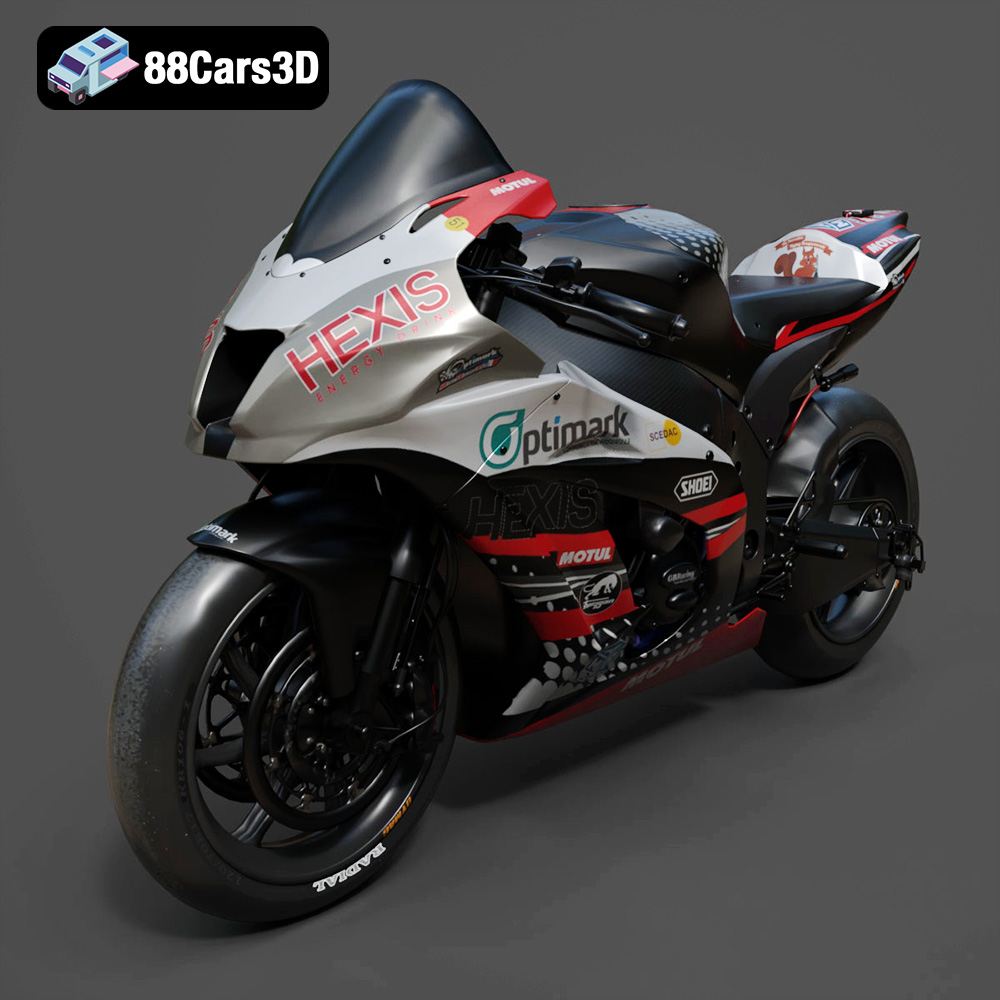
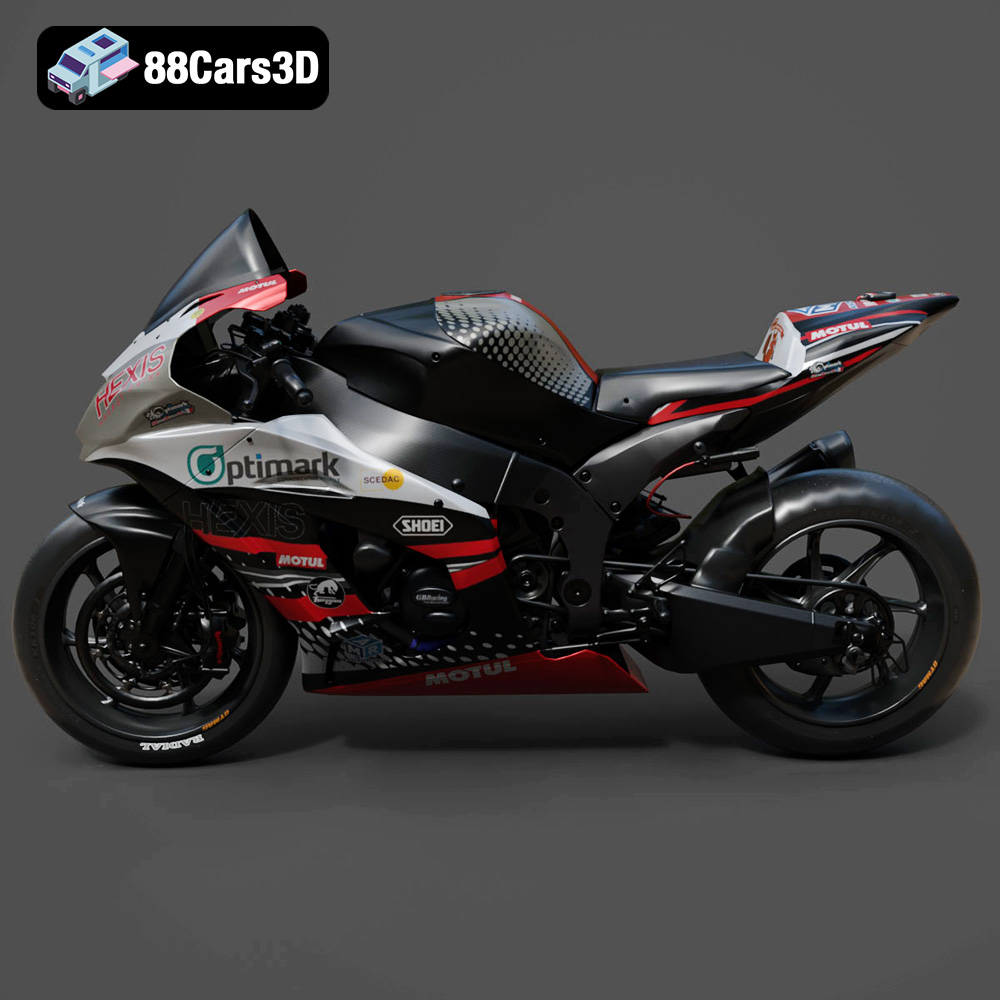
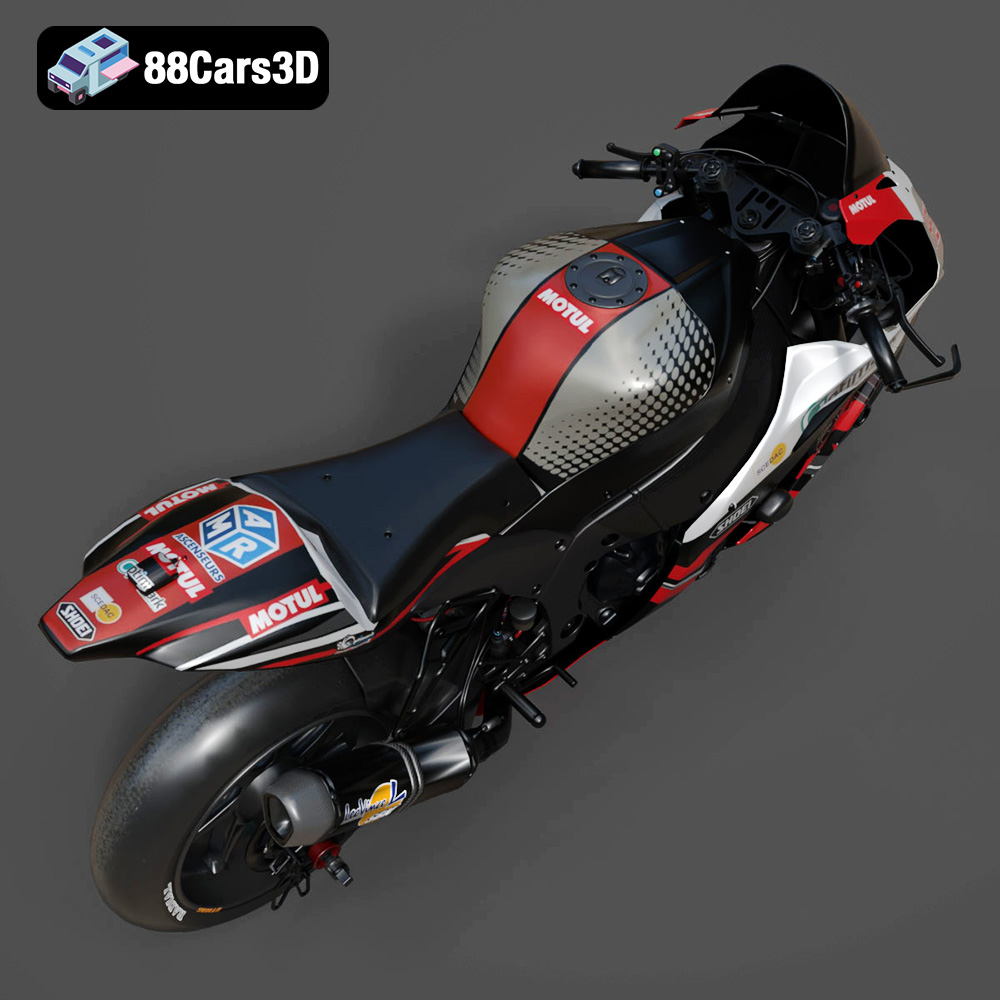
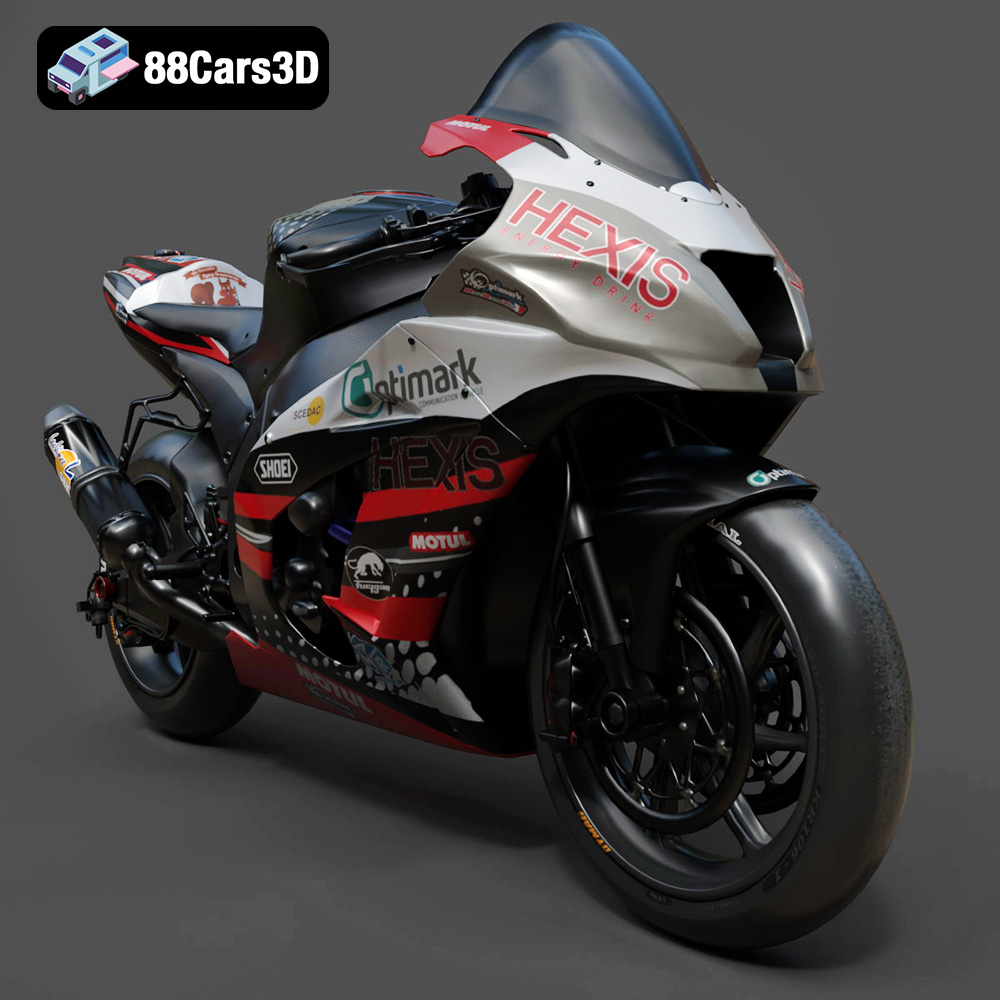
Today, we delve into the realm of high-performance digital motorcycles, specifically focusing on a prime example of digital craftsmanship: the Kawasaki ZX-10R 3D Model. This exceptional asset is not merely a collection of polygons; it’s a testament to the art of 3D modeling, designed to bring dynamic realism and aggressive styling to any digital project. Its intricate mechanical components, aerodynamic profile, and professional-grade construction make it an indispensable tool for creators seeking absolute precision in their virtual environments. As we explore the facets of this model, you’ll discover how a well-engineered 3D asset can elevate your projects, whether you’re developing the next big racing simulator, crafting a stunning promotional render, or conceptualizing a new product.
The versatility of a 3D model is often determined by the range and quality of its available file formats. Each format serves specific purposes, catering to different software, pipelines, and end-use scenarios. Understanding these distinctions is crucial for selecting the right asset for your project and maximizing compatibility. The Kawasaki ZX-10R 3D Model offered at 88cars3d.com exemplifies this versatility by providing a comprehensive suite of industry-standard formats, each tailored for distinct applications.
The .blend format is the native file type for Blender, a powerful open-source 3D creation suite. When you acquire the Kawasaki ZX-10R in this format, you’re not just getting the model; you’re receiving a fully editable Blender scene. This typically includes pre-configured materials, textures, lighting setups, and even basic scene organization. For artists working within the Blender ecosystem, this means immediate access to a production-ready asset. You can dissect the mesh, modify materials, adjust lighting, and even begin animating the model without the need for extensive import/export processes or material recreation. Its comprehensive nature makes it ideal for complex projects requiring deep customization and iterative design within Blender.
The .fbx (Filmbox) format, developed by Autodesk, is arguably the most widely used proprietary 3D file format for data exchange between various 3D applications and game engines. It is a robust container for geometry, materials, textures, animations, and rigs. For real-time pipelines, particularly in Unreal Engine and Unity, .fbx is the go-to format due to its excellent preservation of scene hierarchy, skinning, and animation data. The Kawasaki ZX-10R 3D Model, when supplied as .fbx, is often optimized for game engines, ensuring efficient poly counts and proper UV mapping for texture application. This makes it perfect for developers integrating high-quality 3D car models and motorcycle assets into interactive experiences.
The .obj (Wavefront OBJ) format is a universal standard, widely recognized for its simplicity and broad compatibility across virtually all 3D software. It primarily stores geometry (vertices, normals, texture coordinates, and faces) and references external material files (.mtl) for surface properties. While it lacks support for advanced features like animation or rigging, its widespread acceptance makes it an excellent choice for cross-software compatibility. If you need to import the Kawasaki ZX-10R into a less common 3D application or simply require a clean mesh without additional scene data, .obj is often the most reliable option.
The .glb (GL Transmission Format Binary) is an increasingly vital format, especially for modern interactive applications. It’s an efficient, self-contained binary format that encapsulates 3D models, textures, and animations into a single file. Optimized for web-based applications, augmented reality (AR), and virtual reality (VR) experiences, .glb ensures fast loading times and efficient rendering. For showcasing the Kawasaki ZX-10R in a web viewer, integrating it into a mobile AR app, or creating immersive VR demonstrations, the .glb format offers unparalleled performance and ease of deployment.
The .stl (Stereolithography) format is synonymous with 3D printing. It represents a 3D model as a series of connected triangles, forming the surface geometry without any color, texture, or material information. While not suitable for rendering or animation, it is the standard input for most 3D printers and CAD software. The Kawasaki ZX-10R 3D Model, when provided as an .stl, opens up possibilities for physical prototyping, creating scale models, or even crafting custom parts. Ensure the model has been made “watertight” and has sufficient wall thickness for successful printing.
The .ply (Polygon File Format) is another format primarily used for storing 3D data from 3D scanners, CAD applications, or for scientific visualization. It can store a variety of properties including color, transparency, normals, texture coordinates, and even reliability information. While less common for general rendering compared to .fbx or .obj, it’s a precision mesh format valuable for detailed analysis, reverse engineering, or integrating into specialized CAD/CAM pipelines where data integrity and specific mesh attributes are paramount. The inclusion of .ply for the Kawasaki ZX-10R highlights its suitability for technical visualization.
The .unreal format, or more accurately, assets packaged or directly usable within Unreal Engine, signifies a model that is pre-configured for the engine’s ecosystem. This could mean a native Unreal Engine project file, a uasset file, or an .fbx specifically exported and optimized with Unreal Engine conventions in mind. It ensures that materials are correctly set up, textures are properly linked, and potential scaling issues are addressed, allowing for seamless integration into a real-time environment. For game developers and architects utilizing Unreal Engine for high-fidelity interactive experiences, this format for the Kawasaki ZX-10R is a significant time-saver, reducing setup time and accelerating development.
The .max format is the native file type for Autodesk 3ds Max, a leading software for 3D modeling, animation, rendering, and visualization. Similar to the .blend format for Blender users, a .max file of the Kawasaki ZX-10R 3D Model grants users full access to the original project file. This includes scene hierarchy, modifiers, cameras, lighting, materials, and potential animation setups. It’s invaluable for professionals working in architectural visualization, product design, or cinematic rendering who rely on 3ds Max for its robust toolset and rendering capabilities. The editable nature of the .max file allows for extensive customization and integration into complex scenes.
The availability of such a diverse array of formats for the Kawasaki ZX-10R 3D Model underscores its professional-grade design and the foresight of creators at 88cars3d.com, ensuring it meets the demands of virtually any digital workflow.
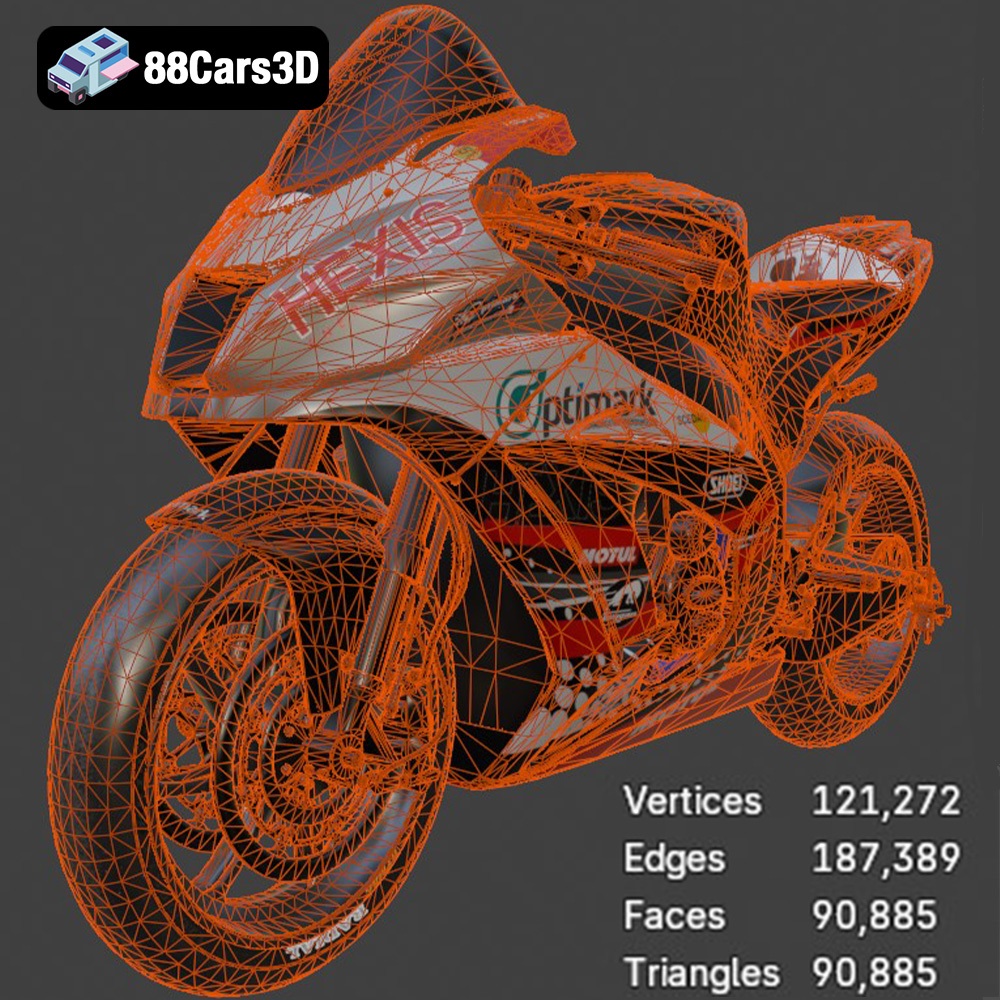
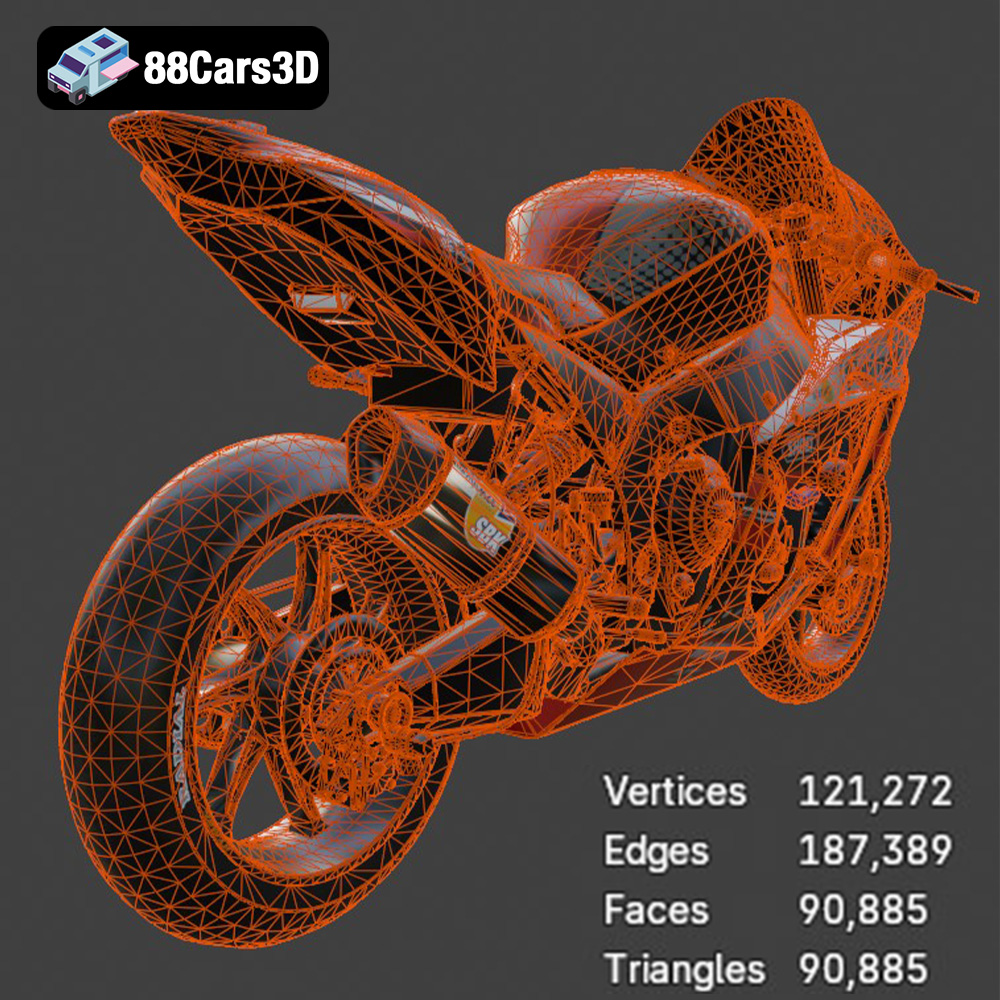
The true power of a meticulously crafted 3D asset, like the Kawasaki ZX-10R 3D Model, shines brightest in photorealistic rendering. Achieving breathtaking visuals in automotive rendering involves more than just a good model; it requires a deep understanding of materials, lighting, and camera techniques. This superbike model, with its “clean geometry, optimized polygon count, and realistic materials,” provides an excellent foundation for stunning visual output.
Modern rendering pipelines heavily rely on Physically Based Rendering (PBR) to simulate how light interacts with surfaces in a physically accurate manner. The “realistic materials” promised with the Kawasaki ZX-10R model imply a PBR workflow. This means textures are provided for properties like Albedo (base color), Metallic (reflectivity), Roughness (micro-surface detail affecting reflections), Normal maps (fine surface detail), and potentially Ambient Occlusion. When applied correctly, these PBR textures allow the model to react believably to diverse lighting conditions, from the glossy sheen of the paintwork to the subtle texture of the tires and the metallic gleam of the engine components. Expertly crafted PBR materials are crucial for achieving that “photorealistic finish,” ensuring that every curve and chassis component looks authentic, whether it’s reflecting a studio light or the harsh midday sun.
Even the best 3D car models or motorcycle assets can look flat without proper lighting. High Dynamic Range Images (HDRIs) are a game-changer here, providing complex, real-world lighting and reflections that instantly elevate realism. By using an HDRI of a specific environment – a racetrack, a city street, or a studio – the Kawasaki ZX-10R will not only be illuminated realistically but will also reflect its surroundings, grounding it within the scene. Beyond HDRIs, strategic use of virtual studio lights, area lights, and spotlights can highlight specific features, emphasize design lines, and create dramatic shadows, further enhancing the model’s visual impact. Techniques like global illumination (GI) and ambient occlusion (AO) contribute to soft, natural lighting and contact shadows, making the bike feel truly present in its environment.
For game developers, a high-quality 3D model like the Kawasaki ZX-10R is more than just an aesthetic component; it’s a critical performance asset. The description mentions its suitability for “advanced game development” and its “game-engine ready format for Unreal Engine and Unity,” emphasizing its optimized nature for real-time environments.
Game development demands a careful balance between visual fidelity and performance. An “optimized polygon count” for the Kawasaki ZX-10R 3D Model is key here. While a high-detail render might use millions of polygons, a game asset needs to be efficient. This often involves creating multiple Levels of Detail (LODs) – progressively simpler versions of the model that swap in and out based on the camera’s distance. This ensures that players always see a detailed model up close, but simpler versions are rendered for distant objects, saving valuable GPU resources. Proper UV mapping is also paramount for game assets, ensuring textures are applied efficiently without distortion and that texture atlases can be used to minimize draw calls. The clean geometry mentioned in the product description implies that the model is well-suited for these optimization techniques.
Beyond visual representation, game assets need to interact with the game world. For a motorcycle model, this means accurate collision geometry and integration with a physics engine. Collision meshes, often simplified versions of the visual model, define the physical boundaries of the Kawasaki ZX-10R, allowing it to collide with other objects, detect ground surfaces, and respond to impacts. Furthermore, integrating the model with a vehicle physics system in engines like Unreal or Unity requires setting up parameters for suspension, tire grip, mass, center of gravity, and engine power. The detailed mechanical components of the model, while primarily visual, provide excellent reference points for creating an immersive and believable riding experience within a simulation or racing game.
Professional pipelines often require more than just an out-of-the-box model. The “editable 3ds Max file” and “editable Blender file” of the Kawasaki ZX-10R 3D Model provide the flexibility needed for extensive customization and seamless integration into complex production workflows.
For cinematic rendering, product showcases, or interactive experiences, the Kawasaki ZX-10R might need to be animated. This could involve simple camera fly-arounds, complex riding sequences, or showcasing specific mechanical functions. With an editable .max or .blend file, artists can rig the motorcycle – creating a skeletal structure with controls – to easily articulate components like wheels, suspension, handlebars, and even the kickstand. This allows for realistic movement and poses, adding dynamic storytelling to any scene. Animating the braking system, the rotation of the wheels, or the lean of the bike during a turn can transform a static image into a compelling narrative.
No two projects are exactly alike, and the ability to customize an asset is invaluable. With the provided native files, artists can easily modify the Kawasaki ZX-10R 3D Model: changing paint schemes, adding custom decals, swapping out components, or even adapting it for specific fictional racing teams. The clean geometry ensures that these modifications are straightforward, maintaining the model’s integrity. Furthermore, professional studios often have established asset pipelines. The versatile file formats (.fbx, .obj, .max, .blend) ensure that the Kawasaki ZX-10R can be smoothly imported, processed, and optimized within existing workflows, whether it’s being prepared for a large-scale game production or a high-end commercial rendering project. This flexibility is what makes a premium asset from 88cars3d.com a sound investment for any creative studio.
The utility of a high-quality 3D model extends far beyond traditional screens. With the accelerating adoption of immersive technologies and rapid prototyping, assets like the Kawasaki ZX-10R 3D Model are finding new and exciting applications.
Augmented Reality (AR) and Virtual Reality (VR) are transforming how we interact with digital content. The “optimized for AR/VR” .glb format for the Kawasaki ZX-10R is specifically designed for these platforms. Imagine being able to place a life-sized virtual Kawasaki ZX-10R in your driveway via an AR app, inspecting it from all angles before a purchase. Or, within a VR showroom, you could sit on the bike, experience its cockpit, and even customize its colors in real-time. These immersive experiences require models that are not only visually rich but also highly optimized for performance on mobile devices and VR headsets. The meticulous detail of this model, combined with its efficient formats, makes it an ideal candidate for creating compelling, interactive AR/VR showcases that blur the lines between the digital and physical worlds.
While digital visualization is powerful, sometimes a tangible, physical model is required. The inclusion of the .stl format for the Kawasaki ZX-10R enables direct 3D printing. This opens up possibilities for creating detailed scale models for collectors, crafting physical prototypes for design reviews, or even manufacturing custom accessories for existing physical bikes. Engineers can use the .stl data for fitment tests or aerodynamic analysis of physical prototypes. The precision of the 3D model translates directly into the accuracy of the printed object, making it a valuable tool for bridging the gap between digital design and physical realization. It’s a testament to the model’s fidelity that it can serve both high-fidelity rendering and physical fabrication needs with equal proficiency.
From the intricate details of its engine components to the aggressive sweep of its aerodynamic fairings, the Kawasaki ZX-10R 3D Model stands out as a premier asset for any digital creator. We’ve explored its versatility across numerous applications – from the demanding environments of game development and the artistry of photorealistic rendering to the cutting edge of AR/VR and the practicalities of 3D printing.
The thoughtful provision of diverse, industry-standard file formats – including .blend, .fbx, .obj, .glb, .stl, .ply, .unreal, and .max – ensures that this model can seamlessly integrate into virtually any professional workflow. Whether you’re a Blender enthusiast, a 3ds Max veteran, or a game developer targeting Unreal Engine, this model offers the compatibility and quality you need. Its optimized geometry, realistic PBR materials, and overall professional construction make it a foundational element for achieving stunning visual fidelity and immersive experiences.
In a world where visual excellence dictates engagement, investing in high-quality 3D car models and motorcycle assets is paramount. The Kawasaki ZX-10R 3D Model available at 88cars3d.com is more than just a purchase; it’s an enhancement to your creative toolkit, promising precision, performance, and limitless possibilities for your next project. Elevate your digital endeavors and bring the thrill of this legendary superbike to life.
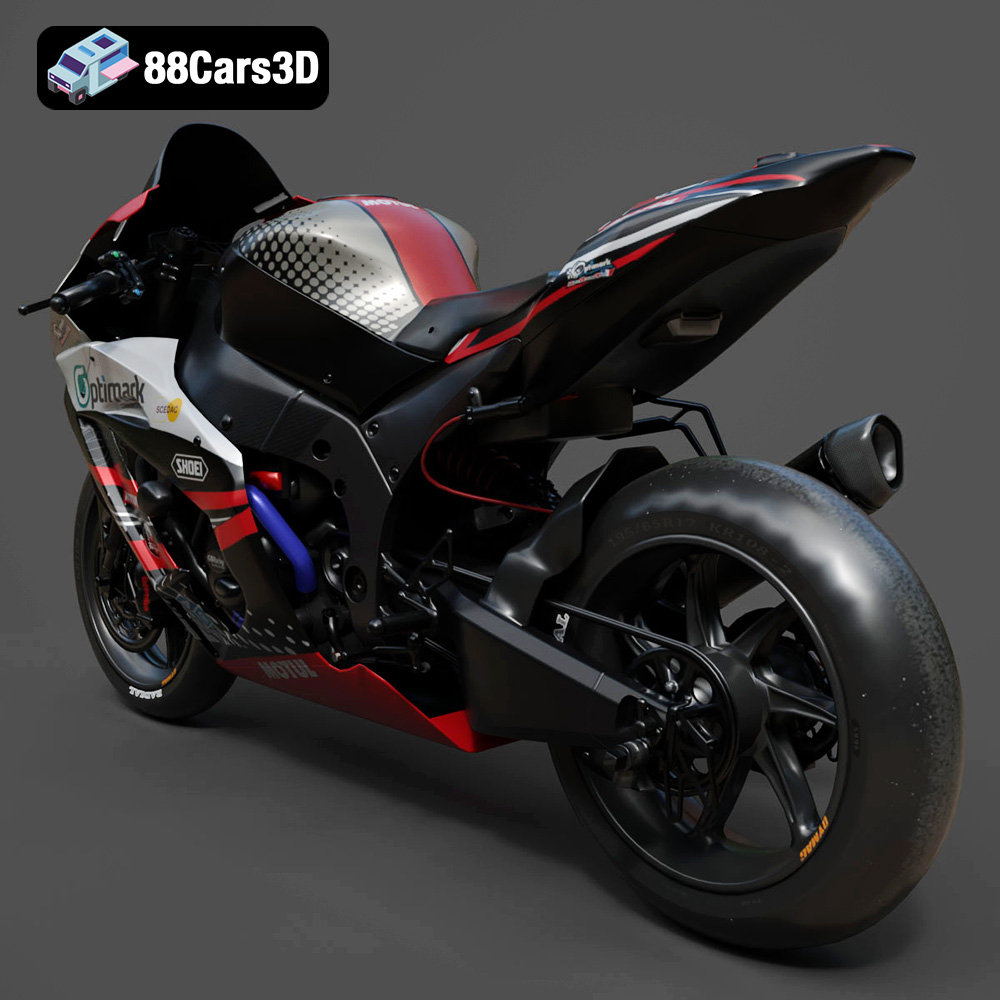
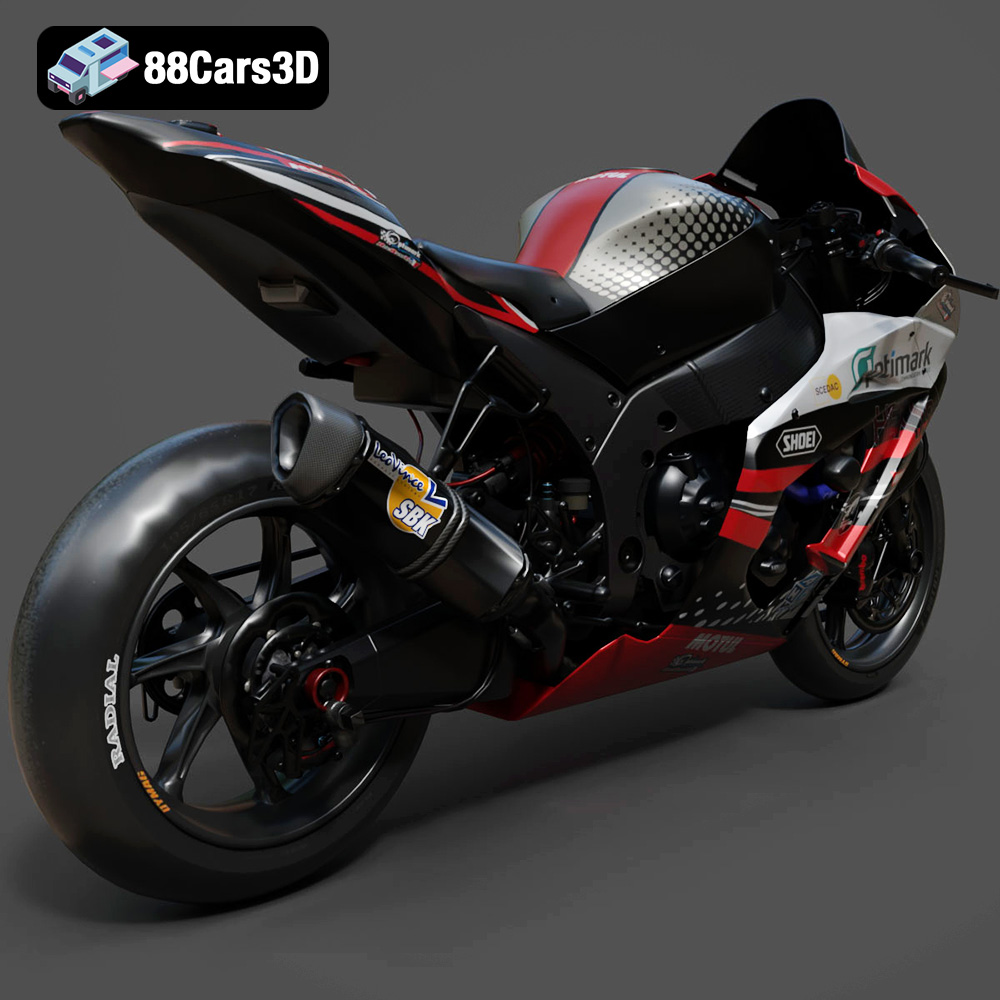
Bring dynamic realism to your digital projects with the Kawasaki ZX-10R 3D Model. This exceptionally detailed replica captures the aggressive styling, aerodynamic profile, and intricate mechanical components of the legendary superbike, making it an essential asset for digital environments requiring absolute precision. Built with professional quality in mind, this model features clean geometry, an optimized polygon count, and realistic materials. Every curve, chassis component, and texture is expertly crafted to provide a photorealistic finish, ensuring seamless integration into any scene. This versatile 3D model is perfect for a wide range of applications, including advanced game development, stunning cinematic rendering, interactive AR/VR experiences, and technical visualization. Whether used for racing simulators or promotional media, it delivers exceptional performance and visual fidelity. The package includes multiple industry-standard file formats to ensure maximum compatibility: .blend – Editable Blender file with materials and lighting setup; .fbx – Game-engine ready format for Unreal Engine and Unity; .obj – Standard 3D model format compatible with all major software; .glb – Optimized for AR/VR and web-based visualization; .stl – Suitable for 3D printing and prototyping; .ply – Detailed polygon mesh for analysis and visualization; .unreal – Pre-configured for Unreal Engine use; .max – Editable 3ds Max file for rendering and animation.
$19.99
.arvr
.blend
.car3dmodel
.fbx
.gameasset
.glb
.kawasaki
.max
.motorcycle
.obj
.ply
.rendering
.simulation
.sportbike
.stl
.superbike
.unreal
zx10r