Get 20% OFF All Premium 3D & STL Models!

In the dynamic world of 3D visualization, the demand for high-quality, meticulously crafted automotive models is constantly accelerating. Whether you’re a game developer striving for photorealistic open worlds, an architectural renderer creating immersive luxury scenes, or a product designer showcasing future vehicles, the foundation of your project lies in the quality of your 3D assets. A premium 3D car model isn’t just about aesthetics; it’s about optimized topology, accurate real-world scale, and versatility across diverse platforms.
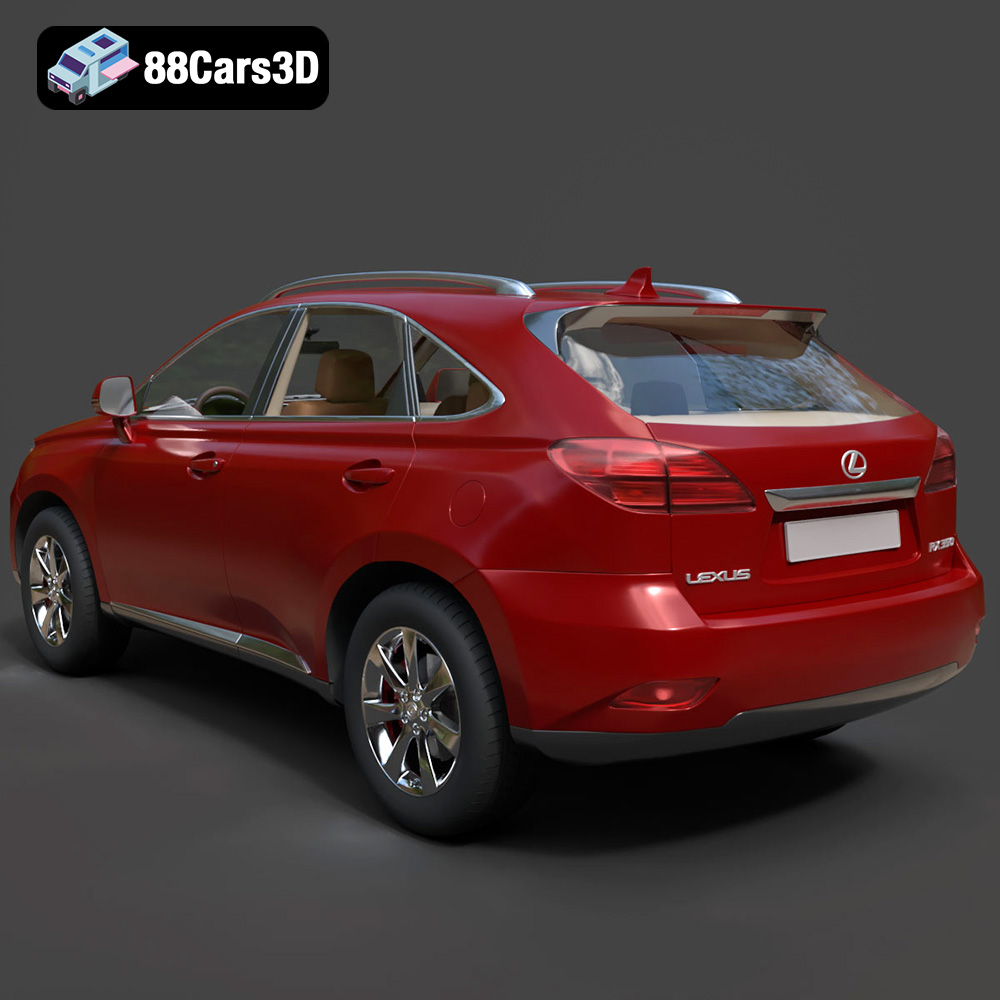
Today, we’re diving deep into the intricate processes behind creating and utilizing such assets, highlighting how a well-engineered model like the Lexus RX350 2010 3D Model exemplifies the pinnacle of professional 3D design. This definitive representation of the luxury crossover SUV segment brings together refined elegance and robust versatility, making it an invaluable tool for a myriad of applications. From its sweeping lines to its distinctive front grille, every detail is considered, ensuring it’s not just a model, but a robust digital asset ready for anything from a fast-paced game environment to a detailed cinematic render.
Choosing the correct file format for your 3D car models is paramount, dictating compatibility, performance, and the scope of manipulation. High-quality marketplaces like 88cars3d.com often provide models in a suite of formats to cater to varied professional workflows. Each format serves a specific purpose, optimized for different stages of the 3D pipeline.
The .blend format is Blender’s native file type, offering a comprehensive and fully editable scene. When you acquire a .blend file, you’re not just getting a model; you’re getting the entire working environment from which it was created. This includes all geometry, materials, textures, lighting setups, cameras, animations, modifiers, and even custom scripts. For artists primarily working in Blender, this is often the most convenient format as it requires no import/export translation, preserving every nuance of the original artist’s intent. It allows for deep customization, from adjusting complex node-based materials to fine-tuning mesh topology or even dismantling the model for bespoke parts. For instance, with the Lexus RX350 2010 3D Model in .blend format, you can easily access its separate wheels, suspension, and steering components for animation directly within Blender.
.fbx (Filmbox) is arguably the most widely adopted proprietary file format for 3D data exchange, especially within the game development and animation industries. Developed by Autodesk, FBX excels at preserving a wide range of data, including mesh geometry, materials (with some limitations on complex shaders), textures, animations (skeletal and transform), cameras, and lights. It is the ideal format for moving assets between different 3D software packages (e.g., 3ds Max to Maya, or Blender to Unreal Engine/Unity). Its robust support for animation makes it a go-to for character and vehicle rigging. For game-ready assets like the Lexus RX350 2010 3D Model, .fbx ensures that pivot points, hierarchical structures, and any pre-baked animations are correctly transferred to game engines.
The .obj (Wavefront OBJ) format is a venerable and highly compatible format, often considered the “universal language” for 3D geometry. It stores vertex positions, UV coordinates, normals, and polygon faces, often accompanied by a separate .mtl (material library) file for basic material properties like color and texture maps. While .obj is excellent for transferring static mesh data between almost any 3D software without loss of geometric integrity, it does not support animations, rigging, or complex material shaders. It’s a clean, reliable choice when you need the core mesh data for further processing or if your target application has limited import options. It’s perfect for importing the Lexus RX350 2010 3D Model’s geometry into niche renderers or CAD software.
.glb (GL Transmission Format Binary) is the binary version of glTF, specifically designed for efficient transmission and loading of 3D scenes and models in web and real-time applications. It packages all necessary data—geometry, materials, textures, animations—into a single, self-contained file. This makes .glb incredibly efficient for AR/VR experiences, mobile applications, and displaying 3D models directly in web browsers without needing complex setups. Its optimization for size and runtime performance makes it an excellent choice for deploying interactive virtual showrooms or AR experiences featuring the Lexus RX350 2010 3D Model.
.stl (Stereolithography) is the de facto standard format for 3D printing. It represents a 3D model as a collection of unconnected triangular facets, defining only the surface geometry without color, texture, or material information. While simple, its ubiquity ensures compatibility with virtually all 3D printers and slicer software. When preparing a model like the Lexus RX350 2010 for 3D printing, converting it to .stl is the first step, followed by ensuring it’s a “manifold” (watertight) mesh ready for fabrication.
The .ply (Polygon File Format or Stanford Triangle Format) is often used for storing 3D data from 3D scanners. It can store not only XYZ coordinates but also color, transparency, normals, texture coordinates, and other data for each vertex or face. While less common for general asset exchange, .ply is a precision mesh format valuable for applications requiring high-fidelity geometric data or scientific analysis, often bridging the gap between physical scanning and digital modeling.
The .unreal format, or more accurately, assets directly packaged or imported into an Unreal Engine project, signifies an asset specifically prepared and optimized for Epic Games’ powerful real-time engine. While not a standalone file format in the traditional sense like .fbx, when a provider lists “.unreal,” it implies the model has been thoroughly pre-processed, has its materials, textures, and possibly blueprints (for interactive elements) set up correctly within an Unreal project. This dramatically reduces setup time for developers, offering a plug-and-play solution for integrating assets like the Lexus RX350 2010 3D Model directly into a game or visualization project.
Similar to .blend for Blender, .max is the native file format for Autodesk 3ds Max, a leading software for 3D modeling, animation, and rendering. A .max file contains all scene information, including geometry, materials, textures, lighting, cameras, animation keyframes, and modifiers specific to 3ds Max. It offers full editability and access to all parameters set by the original artist. For those working within a 3ds Max pipeline, the .max version of the Lexus RX350 2010 3D Model provides the most flexibility for detailed adjustments, complex rendering setups, or integrating it into larger architectural visualization projects.
Creating a high-quality 3D car model that excels in both visual fidelity and performance is a delicate balance. For real-time applications like games or AR/VR, every polygon and texture map must justify its existence. The Lexus RX350 2010 3D Model exemplifies this principle, meticulously engineered to be “game-ready” without sacrificing the luxurious detail expected from a premium vehicle.
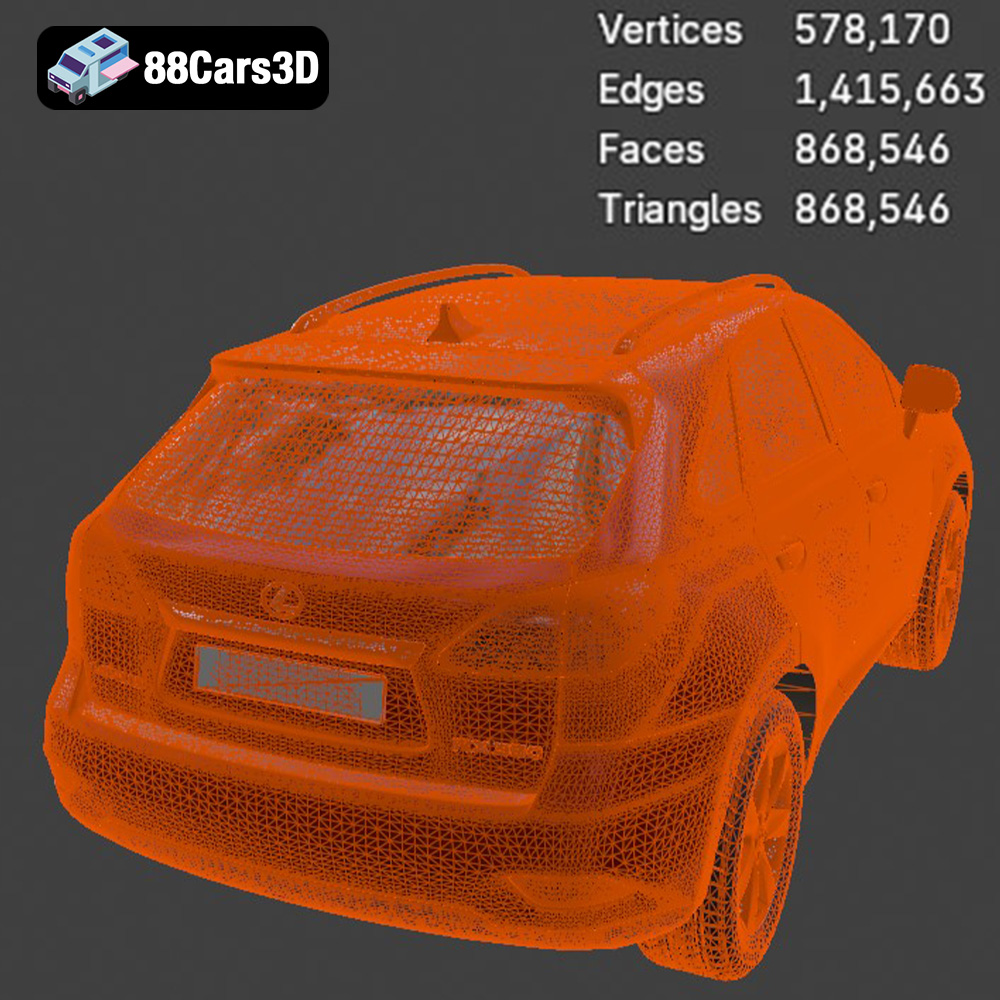
The product description highlights an optimized topology of approximately 200,000 triangles. This polycount is a critical technical specification. In game development, the number of triangles directly impacts GPU performance. A model with millions of polygons might look stunning in an offline render, but it would severely cripple frame rates in a real-time engine. Conversely, a model that’s too low-poly would appear blocky and unrealistic. The ~200k triangle count for the Lexus RX350 2010 3D Model strikes a perfect balance. It’s high enough to capture the elegant curves, intricate grille details, and interior features that define the RX350’s luxury aesthetic, yet optimized enough to ensure smooth performance in demanding real-time environments like Unreal Engine or Unity. This optimization extends to the detailed V6 engine bay, accurate headlamps, and alloy wheels, all contributing to visual realism without overburdening the rendering pipeline.
Beyond the raw polycount, the quality of the topology itself is crucial. Clean, quad-based topology (where possible, and effectively triangulated for game engines) prevents shading artifacts, facilitates deformation (if animated), and makes UV unwrapping more efficient. Proper UV mapping is essential for applying textures without stretching or distortion. For an automotive model, this means careful unwrapping of large, smooth surfaces like the body panels, ensuring consistent texture resolution, and neatly packing UV islands to maximize texture space. While not explicitly detailed in the product description, a “game-ready” model inherently implies well-executed UVs and optimized texture atlases to reduce draw calls and memory footprint. This attention to detail ensures that the high-resolution tire tread patterns and plush leather upholstery of the Lexus RX350 2010 3D Model display flawlessly.
Accuracy in 3D modeling is paramount, especially for automotive assets. The Lexus RX350 2010 3D Model boasts real-world scale accuracy based on actual vehicle chassis dimensions. This is not merely a cosmetic detail; it’s a fundamental requirement for believable simulations, architectural visualizations, and consistent integration into larger virtual environments. If a car model isn’t to scale, it will appear either too large or too small next to other assets, breaking immersion. For architects rendering a luxury home with a car in the driveway, or game developers ensuring proper collision detection and player perspective, precise scale is non-negotiable. Furthermore, accurate independent suspension layout and precise steering column setup are critical for realistic vehicle dynamics in simulators.
The versatility of a well-designed 3D car model truly shines in its ability to seamlessly integrate into various professional pipelines. The Lexus RX350 2010 3D Model, with its diverse file formats and optimized structure, is built for just this.
For game developers, the Lexus RX350 2010 3D Model is a prime candidate for integration into open-world games, racing titles, or even urban driving simulations. The inclusion of .fbx and specific “.unreal” optimized assets streamlines the import process into Unreal Engine and Unity. Once imported, developers can leverage the model’s optimized ~200k triangle count for excellent real-time performance. Key steps include:
For cinematic renders, marketing materials, or architectural visualizations, the Lexus RX350 2010 3D Model in .max or .blend format offers maximum flexibility. Artists can:
The rising demand for augmented and virtual reality experiences makes models like the Lexus RX350 2010 3D Model incredibly valuable. Its optimized geometry and the inclusion of the .glb format make it perfect for:
The balance of detail and performance ensures a smooth, immersive experience without lag, even on mobile AR devices.
The digital realm often inspires tangible creations. High-quality 3D car models aren’t just for screens; they can also be brought to life through 3D printing. The Lexus RX350 2010 3D Model is designed with this versatility in mind, offering an .stl format for physical fabrication, perfect for hobbyists, collectors, or even design validation.
Converting a high-detail digital model for 3D printing requires careful consideration. While the .stl format simplifies the geometry into triangles, ensuring the mesh is “manifold” (watertight, with no gaps or intersecting faces) is crucial for a successful print. For complex models like the Lexus RX350 2010, the process typically involves:
The product guide for the Lexus RX350 2010 3D Model provides excellent starting points for successful 3D printing:
One of the greatest advantages of investing in a high-quality 3D car model from a platform like 88cars3d.com is the immense creative freedom it offers. These aren’t just static images; they are malleable digital canvases ready for your artistic vision.
A professional 3D car model, such as the Lexus RX350 2010, comes with a robust material setup that allows for extensive customization. Artists can effortlessly:
The engineering of the Lexus RX350 2010 3D Model goes beyond static representation. Its technical advantages include proper pivot setup for steering, wheel rotation, and suspension travel, along with separately modeled wheels, suspension, and steering components. This meticulous separation is a godsend for animators:
Beyond individual model customization, a high-quality automotive asset serves as a central element for crafting compelling narratives and environments. The Lexus RX350 2010 3D Model, with its refined elegance, is perfect for:
This level of creative freedom and technical robustness is what differentiates truly professional 3D car models and justifies their investment for serious projects.
The journey from concept to a fully realized 3D automotive model is one of precision, technical expertise, and artistic vision. As we’ve explored, the demand for high-quality, versatile 3D car models is ever-growing, fueling industries from game development and film to architectural visualization and product design. The ability to access assets that are not only visually stunning but also technically optimized and easily adaptable across various software and applications is invaluable for professionals in these fields.
The Lexus RX350 2010 3D Model stands as a prime example of this commitment to excellence. Its meticulously crafted geometry, optimized polycount, real-world scale, and broad compatibility across multiple file formats (from .blend to .fbx and .unreal) make it an essential asset for any serious 3D artist or developer. Whether you’re aiming for photorealistic renders that capture the luxury of a Lexus, integrating it into a fast-paced game, or bringing it to life through 3D printing, this model offers the foundation for exceptional results. It embodies the blend of aesthetic fidelity and technical robustness that defines premium 3D assets available on platforms like 88cars3d.com, empowering creators to push the boundaries of digital and physical visualization.
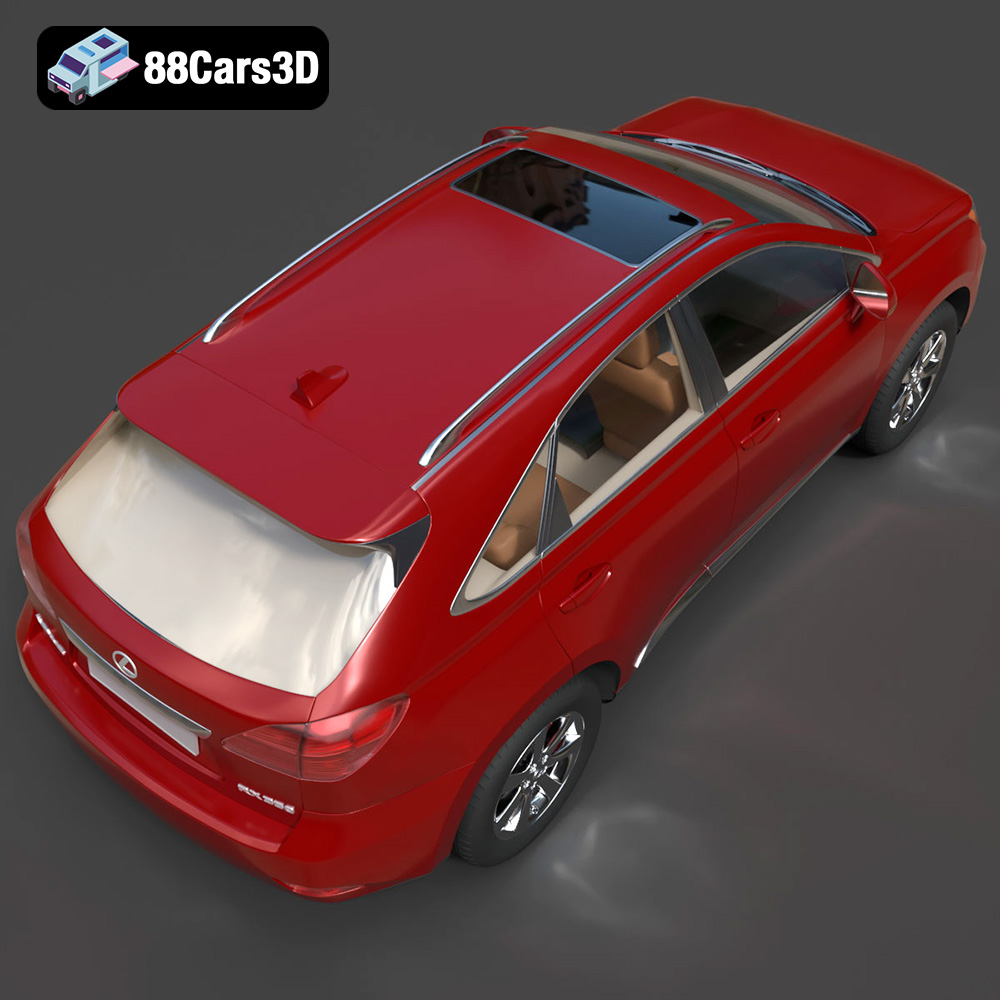
The Lexus RX350 2010 is a definitive representation of the luxury crossover SUV segment, bringing together refined elegance, advanced comfort, and robust versatility. Showcasing Lexus’s signature L-finesse design philosophy, this model features sweeping lines, a distinctive front grille, and an aerodynamic profile that masterfully blends the ruggedness of an SUV with the smooth styling of a premium sedan.
This 3D model is meticulously crafted to deliver exceptional visual fidelity while maintaining an optimized topology of approximately 200k triangles. Engineered for game-ready performance, it is perfectly suited for real-time applications such as game development, AR/VR experiences, and high-end automotive visualization without compromising on frame rates or rendering speeds.
Perfect for urban driving simulations, luxury lifestyle architectural visualizations, virtual dealership showrooms, and cinematic renders.
.blend, .fbx, .obj, .glb, .stl, .ply, .unreal, .max
Tags:
lexus, rx350, 2010, luxury-suv, crossover, suv, game-ready, low-poly, optimized, car-3d-model, vehicle-3d-model, game-asset, rendering, vr-ar, blend, fbx, obj, glb, stl, ply, unreal, maxBMW 328 Mille Miglia Touring Coupe 3D Model 3D Printable STL
$19.99
.2010
.blend
.crossover
.fbx
.glb
.lexus
.luxury suv
.max
.obj
.ply
.rendering
.stl
.unreal
car-3d-model
game asset
game-ready
low-poly
optimized
rx350
SUV
vehicle-3d-model
VR/AR