Mazda CX-30 Crossover SUV 3D Model – Driving Digital Excellence: The Mazda CX-30 3D Model for Automotive Rendering, Games, and Visualization

Driving Digital Excellence: The Mazda CX-30 3D Model for Automotive Rendering, Games, and Visualization

In the dynamic world of 3D visualization, the need for impeccably crafted digital assets is paramount. From breathtaking automotive renders that blur the line between reality and CGI, to immersive game environments and precise architectural visualizations, the quality of a 3D model can make or break a project. Automotive design, in particular, demands an acute attention to detail, a deep understanding of form, and an appreciation for the original designer’s intent. This is where high-quality 3D car models shine, serving as the foundation for endless creative possibilities.

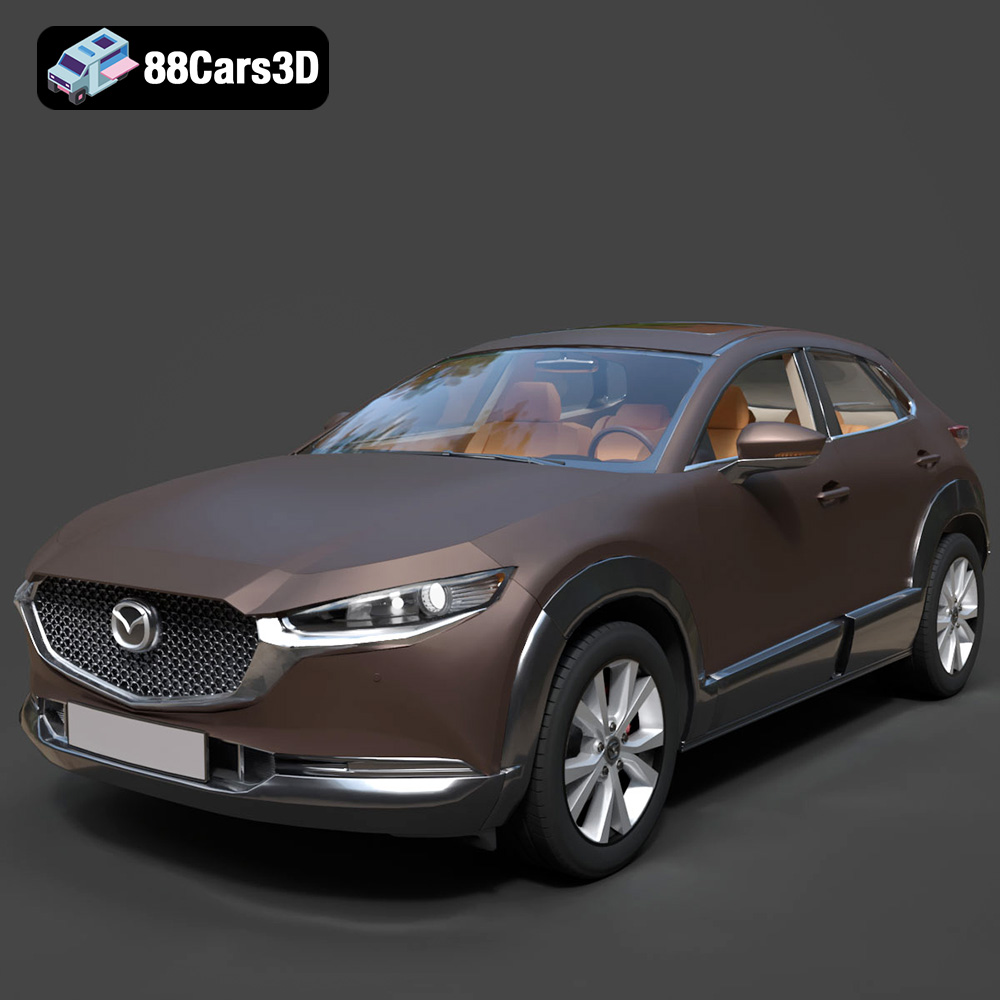
Today, we delve into a prime example of such a versatile and meticulously engineered asset: the Mazda CX-30 Crossover SUV 3D Model. This isn’t just a generic vehicle; it’s a digital twin crafted to embody the spirit and technical precision of Mazda’s acclaimed compact crossover. Whether you’re an architect needing to populate a suburban street scene with realistic traffic, a game developer seeking a hero car for your open-world title, or a visualization artist aiming for a lifestyle commercial mockup, this model, available on 88cars3d.com, offers an exceptional blend of visual fidelity and practical optimization.

Join us as we explore the technical intricacies, practical applications, and creative potential of integrating such a sophisticated 3D automotive asset into professional workflows.

The Art of Automotive Design in 3D: Capturing the Mazda CX-30’s Essence

Mazda’s “Kodo: Soul of Motion” design philosophy is a powerful statement, prioritizing fluidity, elegance, and the emotional connection between car and driver. Translating this organic, sculptural approach into a digital 3D model requires not just technical skill, but an artistic eye. The Mazda CX-30 is a testament to this philosophy, balancing the athletic grace of a hatchback with the robust presence of an SUV.

Kodo Design Philosophy and its Digital Translation

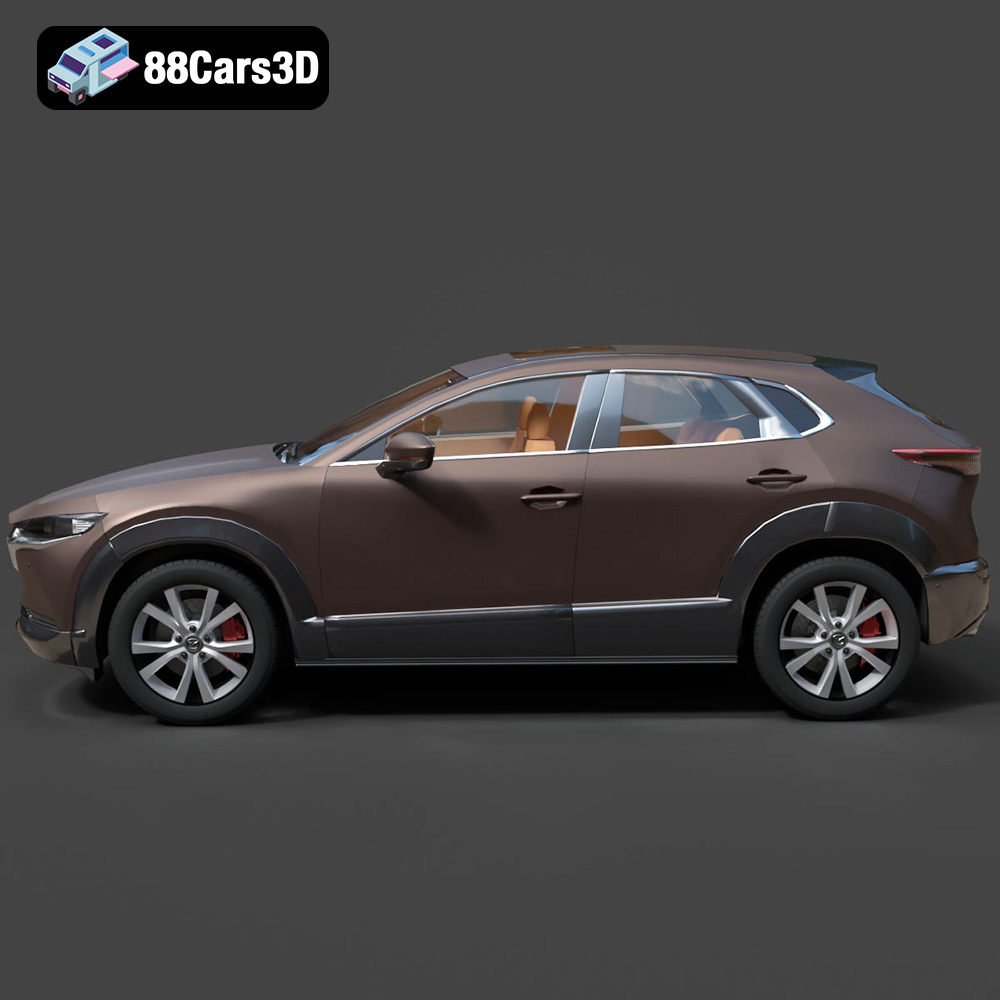
The core of Kodo design lies in its ability to capture movement, even when static. This is achieved through sweeping, minimalist lines that interact with light and shadow in a captivating dance. The Mazda CX-30 Crossover SUV 3D Model meticulously recreates these subtle nuances. The distinctive S-curve side panels, for instance, are not merely flat surfaces; they are sculpted to reflect ambient light and create dynamic contrasts that visually shrink the vehicle’s mass while emphasizing its muscular wheel arches.

This digital translation is critical for achieving photorealistic results in automotive rendering. When illuminated correctly, the model’s surfaces will inherently convey the designer’s original intent, adding depth and realism to any scene. The way the light rolls across the fenders or catches the edge of the roofline is as important in 3D as it is on the physical car, making precise topology and surface continuity paramount.

Precision in Interior and Exterior Detailing

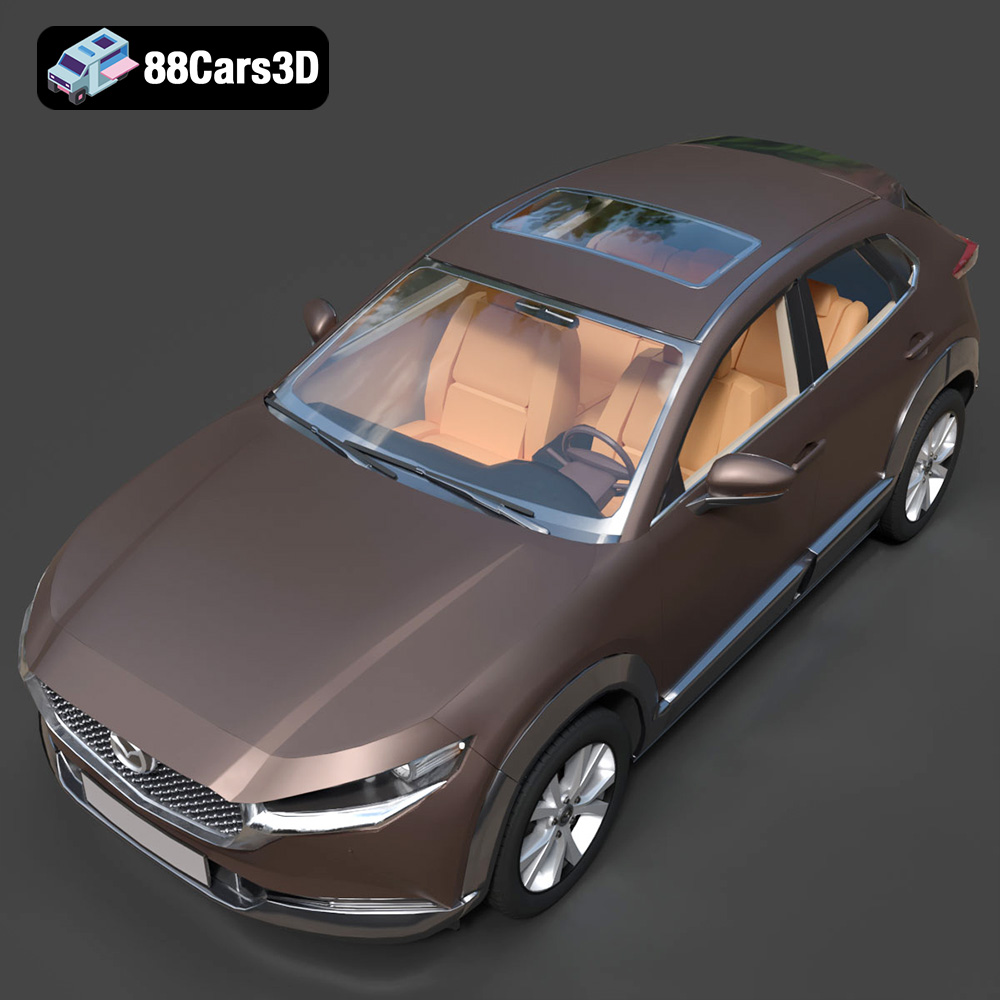
A truly high-quality 3D car model doesn’t just look good from a distance; it holds up under scrutiny. The Mazda CX-30 model excels in this regard, with an impressive level of detail both inside and out. On the exterior, you’ll find:

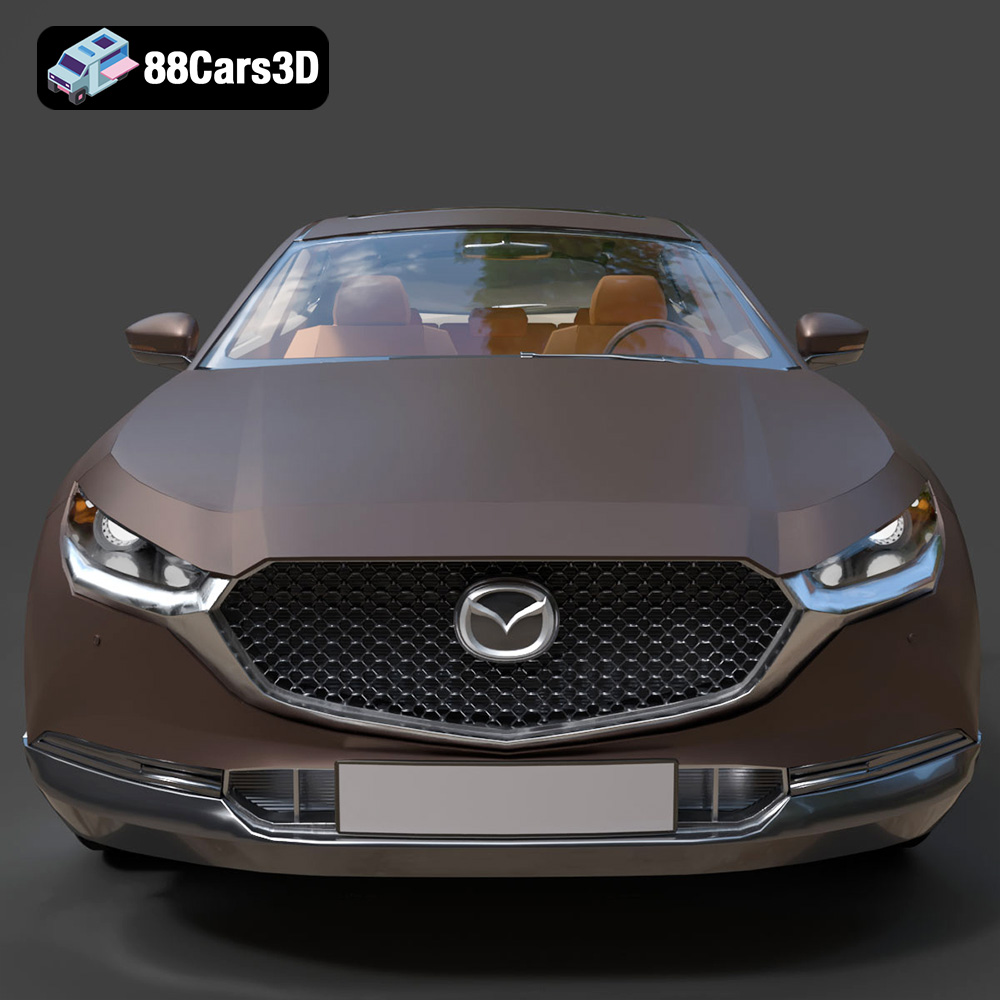
  • Signature Front Fascia: The deep-set triangular motif grille and “wing” motif extending into the sleek LED headlight housings are accurately modeled, giving the car its recognizable face.
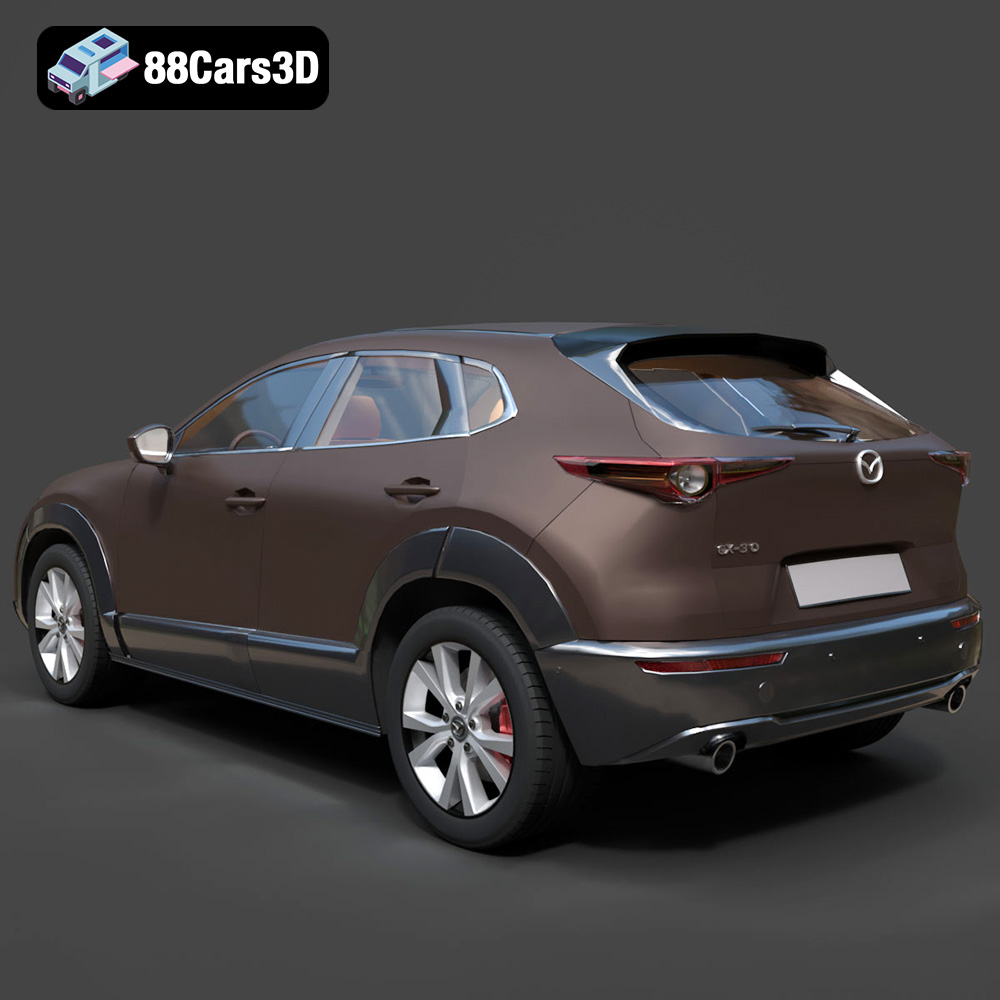
  • Dynamic Body Lines: The flowing aerodynamic contours, coupled with the characteristic rugged lower body cladding, are faithfully reproduced, balancing sophistication with an adventurous spirit.
  • Detailed Wheels and Tires: Factory-accurate alloy wheels (typically 18-inch designs) are wrapped in realistic street tires, providing essential visual anchors for any scene.
  • Rigging-Ready Components: Crucially, components like wheels, steering, and doors are separated, making the model instantly ready for rigging and animation in a game engine or a complex rendering sequence.

The interior, too, is a showcase of precision, adhering to Mazda’s “Ma” (empty space) philosophy inspired by Japanese architecture. This means a driver-centric, minimalist cabin layout that is both functional and aesthetically pleasing. Key interior features include:

  • Integrated Dashboard: The elegantly integrated 8.8-inch center display and wing-shaped hood are accurately represented.
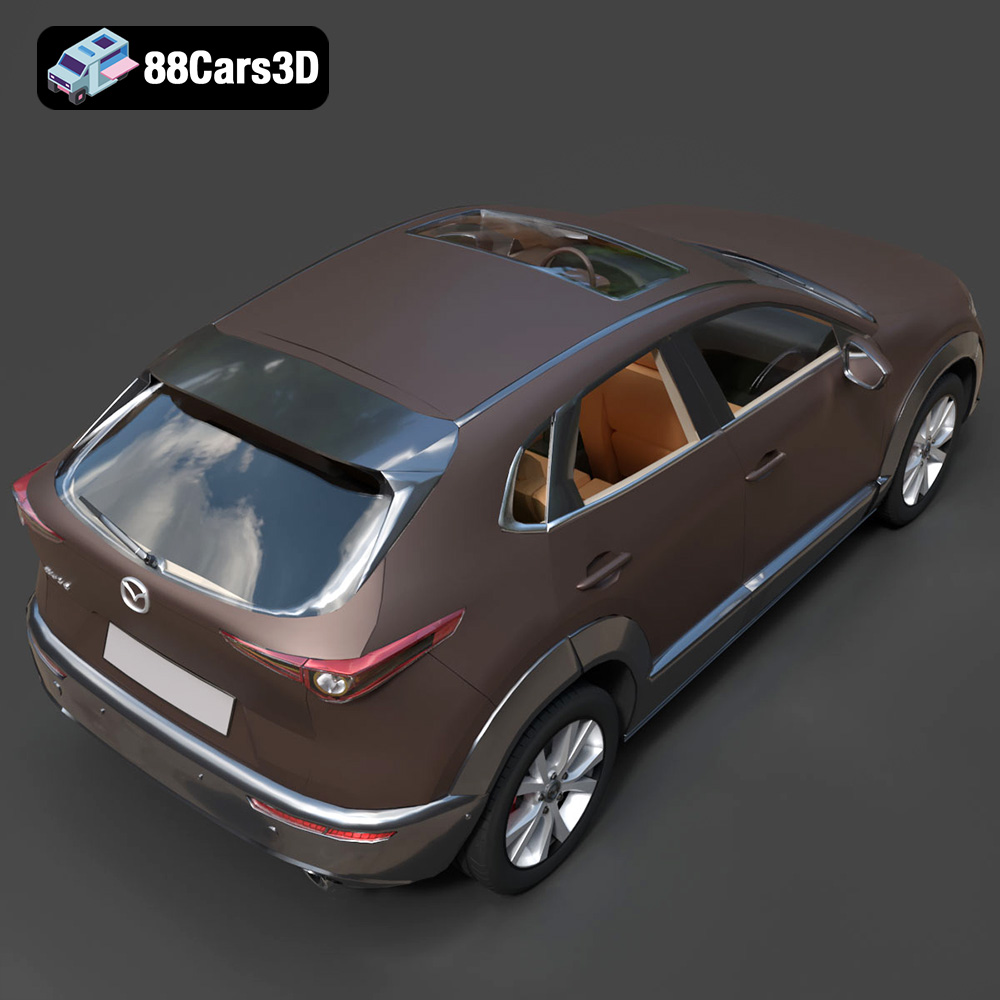
  • Seating Geometry: Realistic seating for a five-passenger layout features detailed stitching patterns, crucial for close-up interior shots or VR experiences.
  • Ergonomic Console: The center console, complete with gear shifter and rotary command knob representation, adds to the authenticity.

This optimized interior geometry ensures that the model looks fantastic whether viewed from a distance, through the windows in a complex architectural visualization, or up close in an immersive VR application.

Understanding 3D Model File Formats: A Technical Deep Dive

When working with 3D car models, understanding the various file formats is not just helpful; it’s essential for a seamless workflow across different software platforms and project requirements. The Mazda CX-30 Crossover SUV 3D Model provides a comprehensive suite of formats, each serving a specific purpose. Knowing which format to choose can significantly impact compatibility, performance, and the level of editability for your project.

Versatility for Diverse Workflows

The digital content creation landscape is incredibly diverse, encompassing everything from high-end photorealistic rendering in applications like 3ds Max to real-time interactive experiences in Unreal Engine or Unity, and even physical production through 3D printing. No single 3D file format can optimally serve all these needs. Therefore, a professional-grade asset like the Mazda CX-30 model comes packed with multiple formats, offering unparalleled flexibility to artists and developers. This multi-format approach ensures that regardless of your preferred software or target output, you have an appropriate, optimized version of the model ready to integrate.

Key Formats for 3D Car Models

Let’s break down the included file formats and their ideal use cases:

  • .blend (Blender): This is Blender’s native file format. If Blender is your primary 3D application, the .blend file is your go-to. It contains the entire scene, including the model’s geometry, materials, textures (packed within the file or linked), lighting, cameras, and even animation data. It offers full editability and is perfect for deep customization, shader development, or integrating the CX-30 into a Blender-based project.
  • .fbx (Filmbox): Developed by Autodesk, FBX is arguably the most widely adopted interchange format in the 3D industry, especially for game development and animation. It efficiently stores not only geometry and materials but also rigging, skinning, and animation data. This makes the .fbx version of the Mazda CX-30 ideal for importing into game engines like Unreal Engine and Unity, as well as other 3D applications such as Maya, Cinema 4D, or Houdini, ensuring that complex data transfers smoothly.
  • .obj (Wavefront OBJ): This is a universal geometry definition file format, one of the oldest and most widely supported. OBJ files store vertex positions, UV coordinates, normals, and face information, along with references to external .mtl (material) files. While it doesn’t support advanced features like animation or rigging, its simplicity and broad compatibility make it excellent for transferring static meshes between almost any 3D software. For simple scene assembly or initial geometry edits, .obj is a reliable choice.
  • .glb (GL Transmission Format Binary): GLB is the binary version of glTF, a royalty-free specification for the efficient transmission and loading of 3D scenes and models by applications. It packages textures, animations, and other data directly into a single file, making it highly optimized for web-based applications, augmented reality (AR), virtual reality (VR), and browser-based display. If you’re building an interactive configurator or an AR experience for the Mazda CX-30, the .glb format offers excellent performance and ease of deployment.
  • .stl (Stereolithography): STL is the standard file format for 3D printing. It represents a 3D model as a series of connected triangles, describing only the surface geometry of an object without color, texture, or other CAD attributes. The .stl version of the Mazda CX-30 allows hobbyists and designers to physically print the model at various scales, turning the digital asset into a tangible collectible.
  • .ply (Polygon File Format): PLY is a polygon file format primarily used to store 3D data from 3D scanners. It can store various properties for each vertex, face, and edge, including color, transparency, normals, texture coordinates, and even reliability information. While less common for direct artistic creation, its precision makes it valuable for certain technical applications or if the model were to be used in conjunction with scanned data or CAD workflows for analysis.
  • .unreal (Unreal Engine Asset): This indicates a file specifically prepared and optimized for Unreal Engine. Often, this might be an FBX that has undergone specific import settings, material setup, and possibly even collision geometry generation within Unreal, then saved as a native Unreal asset (.uasset). This provides an “engine-ready” asset, saving significant setup time for game developers looking to drop the Mazda CX-30 directly into their real-time environments.
  • .max (3ds Max): Like .blend for Blender, .max is the native file format for Autodesk 3ds Max. This file contains the complete 3ds Max scene, including all geometry, modifiers, materials, textures, lighting, cameras, and animation data. For professionals using 3ds Max for high-end rendering, architectural visualization, or complex animation sequences, the .max file provides the fullest level of control and editability over the Mazda CX-30 model.

This extensive range of formats truly underscores the versatility of the Mazda CX-30 3D Model, ensuring it’s not just a beautiful asset, but a highly functional one for virtually any digital project.

Optimizing 3D Car Models for Performance and Fidelity

The challenge in 3D asset creation is always balancing visual appeal with performance. A model that looks incredible but brings a system to its knees is impractical, while an overly simplified model lacks the realism needed for professional work. The Mazda CX-30 Crossover SUV 3D Model strikes this balance perfectly, operating in what artists often call the “Goldilocks Zone” of polygon count.

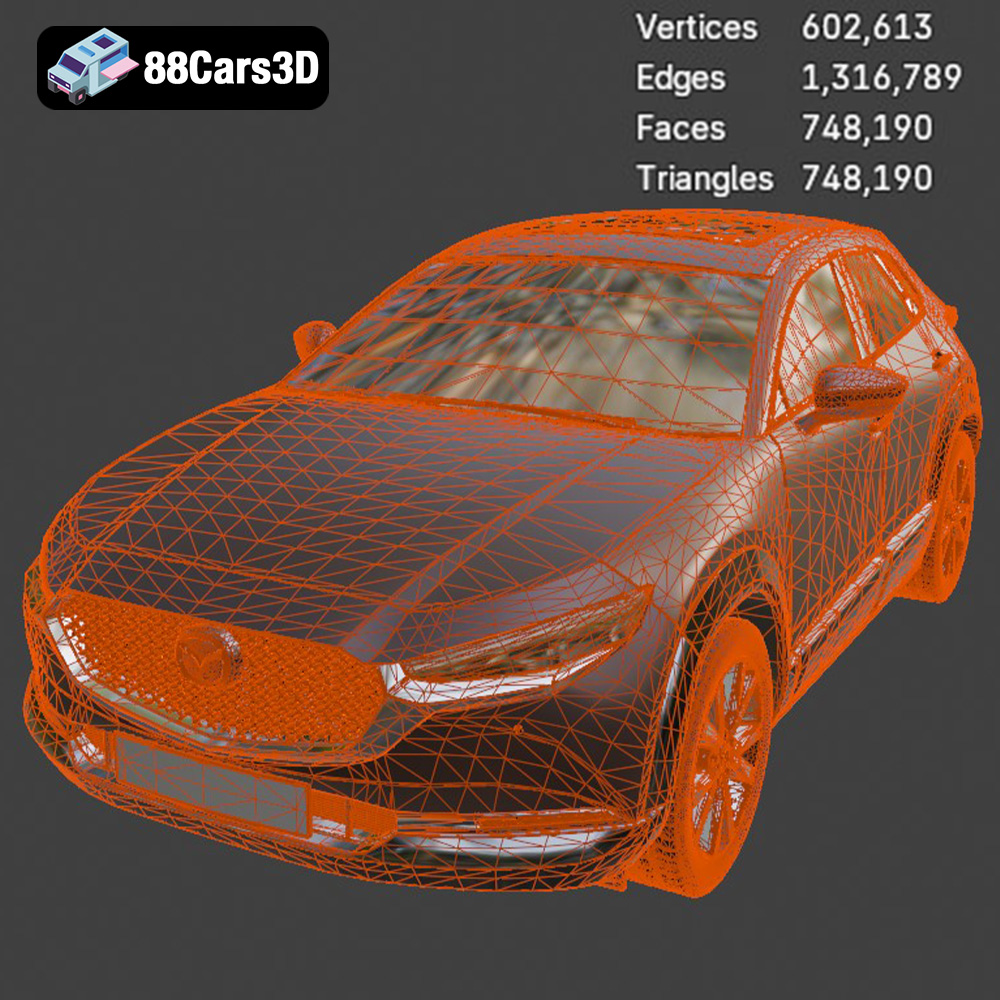
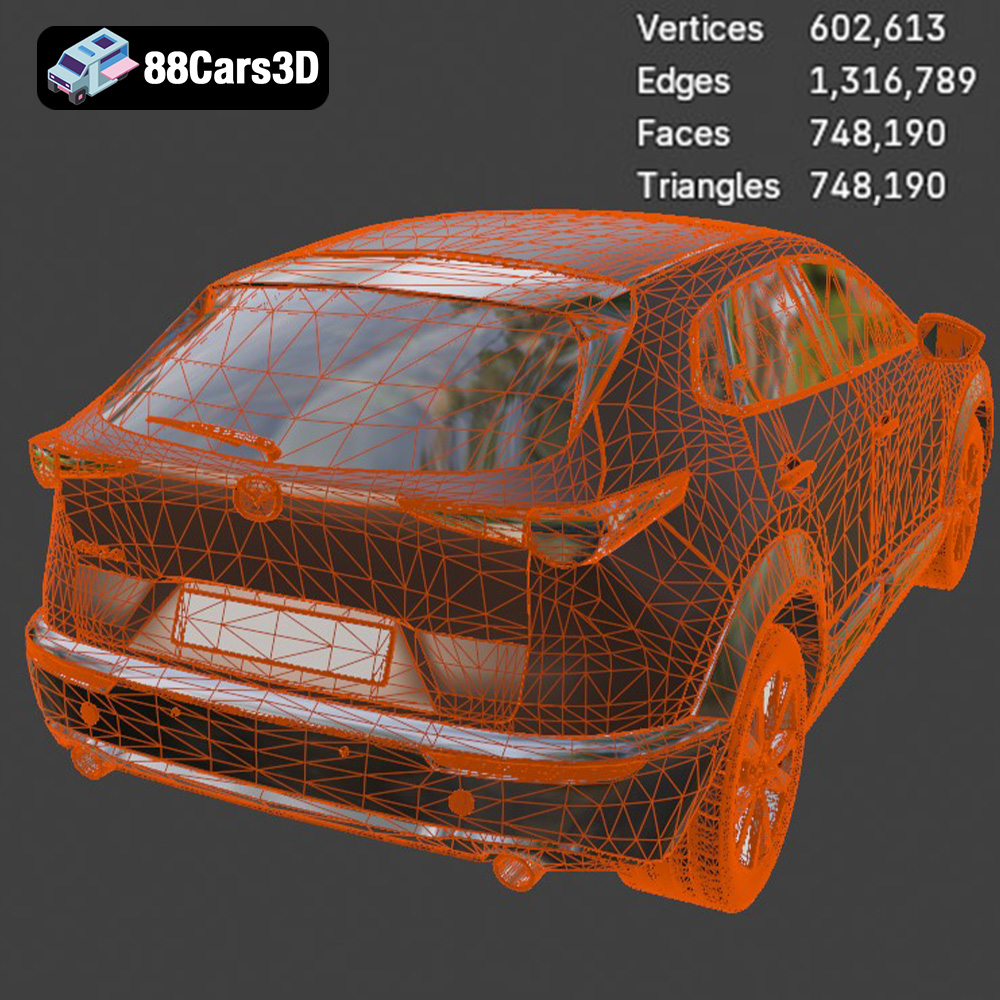
The “Goldilocks Zone” of Polygon Count (748k Triangles)

With just over 748,000 triangles, the Mazda CX-30 model is meticulously optimized. This polygon count is high enough to capture the intricate curves, sharp edges, and detailed components – like the grille mesh and headlight assemblies – that define the CX-30’s distinctive look. For high-end architectural visualization (ArchViz) or product rendering, where close-up shots and pristine surfaces are expected, this level of detail ensures that reflections are accurate and shadows fall naturally, contributing to a photorealistic final image.

Conversely, this polygon count is also carefully managed to remain efficient enough for real-time applications. Dropping a model with millions of polygons into a game engine can severely impact frame rates. At 748k triangles, the Mazda CX-30 can function as a “hero” vehicle in a game, allowing for interactive exploration or even driving, without causing significant performance bottlenecks. It can also serve as a high-quality background traffic asset, populating virtual cities with believable vehicles that enhance immersion without overburdening the engine. This careful balance saves countless hours of optimization work for developers and artists.

Structured Geometry for Animation and Customization

Beyond raw polygon count, the underlying structure of a 3D model is critical for its usability. The Mazda CX-30 model is designed with practical application in mind, featuring:

  • Separate Components: Key elements like wheels, individual doors, and steering components are modeled as distinct objects. This fundamental structural decision is vital for animation and interaction. Artists can easily rig the wheels for rotation, open and close doors for scene staging, or animate the steering mechanism for a driving sequence. This saves significant re-modeling and setup time.
  • Real-World Scale Accuracy: The model is built to real-world Mazda factory dimensions. This is essential for integration into any scene, ensuring that the car appears proportional to its environment, whether it’s parked next to a virtual building or driving on a simulated road. Scale accuracy removes guesswork and ensures consistency across diverse projects.
  • Proper Pivot Setup: The pivot points for elements like wheels and steering are correctly positioned. This might seem like a small detail, but it’s crucial for smooth and realistic animation. Incorrect pivots can lead to jerky rotations or difficult rigging, highlighting the thought put into the model’s professional readiness.

These technical advantages underscore why investing in a professionally crafted 3D model from sources like 88cars3d.com is a time-saving and quality-assurance decision for any serious 3D artist or developer.

Integrating the Mazda CX-30 Model into Professional Workflows

The versatility of the Mazda CX-30 Crossover SUV 3D Model truly shines when integrated into various professional pipelines. Its balanced topology, accurate detailing, and multi-format support make it a valuable asset for a wide range of creative and technical endeavors.

Architectural Visualization (ArchViz) with 3ds Max and V-Ray/Corona

In ArchViz, the goal is to create compelling and realistic depictions of unbuilt architecture. A key element in achieving this realism is context – populating scenes with believable everyday objects, and cars are indispensable. The Mazda CX-30 model, with its sophisticated Kodo design, serves as the ultimate “everyday premium” vehicle for such scenarios.

  • Scene Integration: Using the .max format, an ArchViz artist can easily import the CX-30 into a 3ds Max scene. It can be positioned in driveways, on city streets, or within parking garages to convey a sense of lived-in reality. Its mid-to-high poly count ensures that it looks fantastic even in hero shots that focus on the vehicle as part of the architectural narrative.
  • Material Setup: Leveraging advanced rendering engines like V-Ray or Corona Renderer, artists can apply sophisticated shaders to the CX-30 model. This includes realistic car paint (such as Mazda’s iconic Soul Red Crystal Metallic, which truly brings out the body’s sweeping curves), glass materials for windows, and rubber for tires. The interior detailing also allows for accurate material assignment to seats, dashboard, and trim, making it convincing even through windows.
  • Lighting and Environment: The model responds beautifully to realistic lighting setups, whether it’s a sunny daytime suburban scene or a moody, neon-lit urban nightscape. Its accurately sculpted surfaces will capture and reflect environmental light, seamlessly blending it into the rendered scene.

Game Development with Unreal Engine and Unity

For game developers, the challenge is always performance versus visual quality. The Mazda CX-30 model, available in .fbx and .unreal formats, is perfectly positioned to address this.

  • Import and Setup: The .fbx file can be directly imported into Unreal Engine or Unity. During import, developers can configure settings for material assignment, collision mesh generation, and level of detail (LOD) creation to ensure optimal performance. The pre-separated wheels and steering components are invaluable for rigging the vehicle to a physics system, allowing for realistic driving mechanics.
  • Role in Game Environments: The model’s balanced topology makes it suitable for various roles. It can function as a “hero car” for players to drive, featuring a detailed interior for first-person views, or as a high-quality background traffic asset, populating bustling open-world cities without overtaxing the game engine. Its real-world scale ensures it fits naturally within virtual urban landscapes.
  • Optimization for Real-time: While the model is already optimized, game developers can further refine it by generating lower-resolution LODs for distant views, creating custom collision meshes for precise physics, and baking complex lighting into textures for static objects, ensuring smooth gameplay even in demanding scenes. The native .unreal file often streamlines this process even further.

AR/VR and Interactive Experiences

Augmented Reality (AR) and Virtual Reality (VR) offer immersive ways to experience products. The Mazda CX-30 3D Model is an excellent candidate for these burgeoning applications.

  • Virtual Showrooms: Imagine a prospective customer exploring the CX-30 in a fully interactive VR showroom. They could walk around the car, open doors, and even sit inside, all rendered in real-time. The model’s detailed interior and exterior are optimized for this level of close interaction.
  • Web-based AR Configurators: Using the .glb format, the CX-30 can be integrated into a web-based AR application, allowing users to project the car onto their driveway via their smartphone, change paint colors, and customize features in real-time. The compact nature of .glb makes it ideal for fast loading and smooth performance in a browser environment.
  • Interactive Training: For automotive training simulations, the model can be used to visualize components, understand assembly processes, or demonstrate features in an interactive 3D environment, offering a richer experience than traditional 2D media.

Beyond Rendering: The Versatility of 3D Car Models

While photorealistic rendering and real-time game integration are primary uses, the utility of a meticulously crafted 3D car model like the Mazda CX-30 extends even further. Its inherent versatility allows for creative applications that transcend traditional digital media.

3D Printing the Mazda CX-30

The ability to transform a digital design into a tangible object is one of the most exciting aspects of 3D modeling. With the included .stl format, the Mazda CX-30 model is ready for 3D printing, opening up possibilities for hobbyists, collectors, and designers alike.

  • Converting to Physical Models: The .stl format is universally recognized by 3D printers. Users can print scale models of the Mazda CX-30, creating custom die-cast like replicas or prototypes for design studies. The recommended scales (1:24, 1:32, 1:43) are standard for model cars, allowing for integration into existing collections or dioramas.
  • Precision Printing: For the intricate details of the CX-30, such as the triangular motif grille and slender wheel spokes, resin printing is highly recommended. Its ability to achieve finer layer heights (0.04–0.12 mm) ensures that these delicate features are captured accurately. Proper wall thickness (1.2–2.0 mm) and infill (15–25%) contribute to a robust print.
  • Post-Processing and Customization: After printing, the real fun begins. With sanding, priming, and applying Mazda’s striking paint finishes – like the iconic Soul Red Crystal, Polymetal Gray, or Snowflake White Pearl – hobbyists can create highly personalized and professional-looking physical models that perfectly replicate the digital asset. Recommendations for supports and print orientation further guide a successful printing process.

Customization and Visual Storytelling

A high-quality 3D model isn’t just about faithful reproduction; it’s about providing a canvas for customization and storytelling. The Mazda CX-30 Crossover SUV 3D Model offers ample opportunities for artists to inject their creative vision.

  • Dynamic Material Maps: Beyond the default paint, artists can apply custom material maps. Imagine the CX-30 in a sleek matte finish, or a vibrant custom color not offered by the factory. The interior also provides opportunities for two-tone material maps, such as elegant black leather with rich brown accents, or a sporty red leather, tailoring the vehicle’s ambiance to suit any narrative.
  • Accessories and Environment: The model can be augmented with additional 3D assets to create specific scenes. Adding a sleek rooftop cargo box or crossbars immediately transforms the CX-30 into a rugged, weekend-adventure vehicle, perfect for lifestyle renders. Different types of license plates or custom decals can further personalize the car for specific regions or brand campaigns.
  • Lighting for Mood and Narrative: The way a vehicle is lit can dramatically alter its perceived personality. Adapting lighting for a sunny suburban driveway evokes a sense of everyday practicality and family life. In contrast, moody, neon-lit nighttime city streets can give the CX-30 a sophisticated, urban edge. The model’s well-defined geometry interacts beautifully with complex lighting scenarios, allowing for powerful visual storytelling through illumination.

These customization options empower artists to utilize the Mazda CX-30 model not just as a static object, but as a dynamic character within their digital narratives.

Choosing the Right 3D Car Model for Your Project

In a crowded marketplace of digital assets, discerning professionals understand that not all 3D car models are created equal. The difference between a generic, low-quality model and a meticulously crafted asset like the Mazda CX-30 Crossover SUV 3D Model can profoundly impact project quality, workflow efficiency, and ultimately, client satisfaction.

Quality, Accuracy, and Efficiency

When selecting 3D car models, quality and accuracy should be non-negotiable. A model that faithfully reproduces real-world proportions, design language, and intricate details ensures authenticity in your renders and simulations. The Mazda CX-30 model’s “Goldilocks zone” topology (748,190 triangles) represents a sweet spot, providing enough detail for stunning close-ups while remaining efficient for real-time applications.

Sourcing such high-quality assets from reputable platforms like 88cars3d.com offers significant advantages. It saves countless hours that would otherwise be spent on modeling, texturing, and optimizing. For a studio with tight deadlines, the ability to instantly download a professional-grade, animation-ready 3D car model can be a game-changer, allowing artists to focus on creative direction, scene composition, and final rendering, rather than foundational asset creation.

Future-Proofing Your Digital Automotive Library

Investing in well-structured, multi-format 3D models is also a strategy for future-proofing your digital asset library. As software evolves and new visualization techniques emerge, having models that are cleanly modeled, accurately scaled, and available in versatile formats like .blend, .fbx, .obj, .glb, .stl, .ply, .unreal, and .max ensures their longevity and adaptability. The Mazda CX-30 model exemplifies this, designed not just for current workflows but with an eye towards future integration into ever-evolving pipelines.

Conclusion

The world of 3D visualization continues to expand, demanding higher quality and greater versatility from digital assets. The Mazda CX-30 Crossover SUV 3D Model stands as a testament to what a professional-grade 3D car model can achieve. From its meticulous capture of Mazda’s “Kodo” design philosophy to its expertly balanced topology and comprehensive file format support, it is an invaluable tool for any professional.

Whether your project involves creating stunning architectural visualizations, crafting immersive game environments, developing interactive AR/VR experiences, or even fabricating physical prototypes through 3D printing, this model offers the fidelity, flexibility, and optimization required for excellence. It empowers artists and developers to streamline their workflows, enhance their creative output, and deliver results that truly resonate.

For those seeking to elevate their projects with premium 3D car models, exploring the curated selection at 88cars3d.com is a step towards achieving digital mastery and bringing visions to life with unparalleled realism.

Featured 3D Model

Mazda CX-30 Crossover SUV 3D Model

The Mazda CX-30 3D Model is an exceptionally accurate digital recreation of the highly acclaimed compact crossover. Embodying Mazda’s renowned “Kodo: Soul of Motion” design philosophy, the CX-30 artfully blends the athletic stance of a sporty hatchback with the rugged practicality and raised driving position of an SUV. This 3D model perfectly captures the sweeping, minimalist lines of the CX-30. It features the signature deep-set triangular motif grille, sleek LED headlight housings, the distinctive S-curve side panels designed to capture light and shadow, and the thick, protective lower body cladding that gives it an adventurous edge. Built with a beautifully balanced mid-to-high polygon topology (just over 748k triangles), it delivers fantastic visual fidelity for close-up architectural rendering while remaining highly efficient for use in real-time game engines or as high-quality background traffic. Perfectly balanced for ArchViz, background traffic, and game development. Includes .blend, .fbx, .obj, .glb, .stl, .ply, .unreal, and .max formats.

$19.99

View This Model

Product Image Gallery

Product Image
Product Image
Product Image
Product Image
Product Image
Product Image
Product Image
Product Image

Related Tags

.archviz

.blend

.crossover

.fbx

.mazda

.obj

.rendering

car-3d-model

compact-suv

cx-30

cx30

game-ready

kodo-design

mazda-cx30

mid-poly

traffic-car

Nick
Author: Nick

Lamborghini Aventador 001

🎁 Get a FREE 3D Model + 5% OFF

We don’t spam! Read our privacy policy for more info.

Leave a Reply

Your email address will not be published. Required fields are marked *