Get 20% OFF All Premium 3D & STL Models!

In the expansive and ever-evolving world of 3D visualization, the demand for highly detailed, optimized, and accurate assets is paramount. From the immersive landscapes of modern video games to the precision-driven simulations of engineering projects, a quality 3D model forms the backbone of any successful digital endeavor. When it comes to heavy industry and commercial vehicles, this need becomes even more pronounced. The sheer scale, mechanical complexity, and real-world presence of a vehicle like the Mercedes-Benz Actros Tipper 3-Axle 2011 require a digital representation that can withstand scrutiny and perform flawlessly across diverse applications.
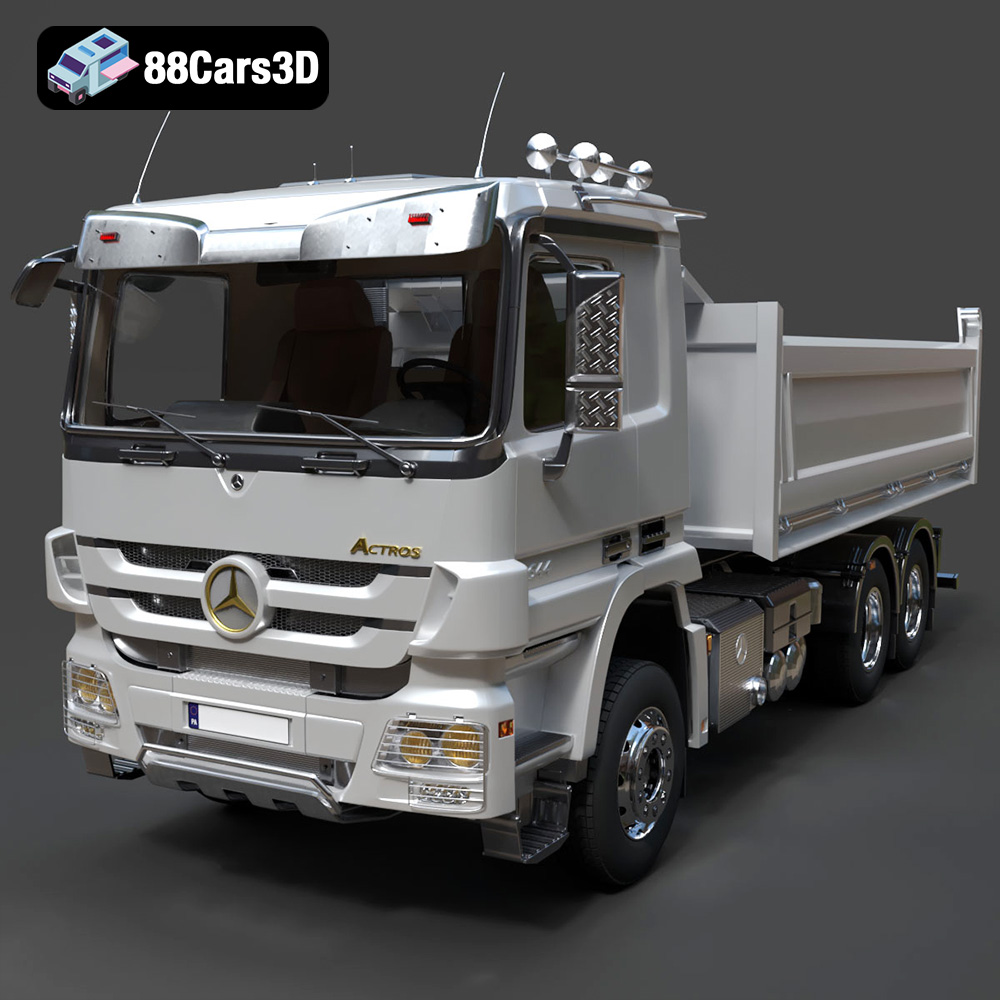
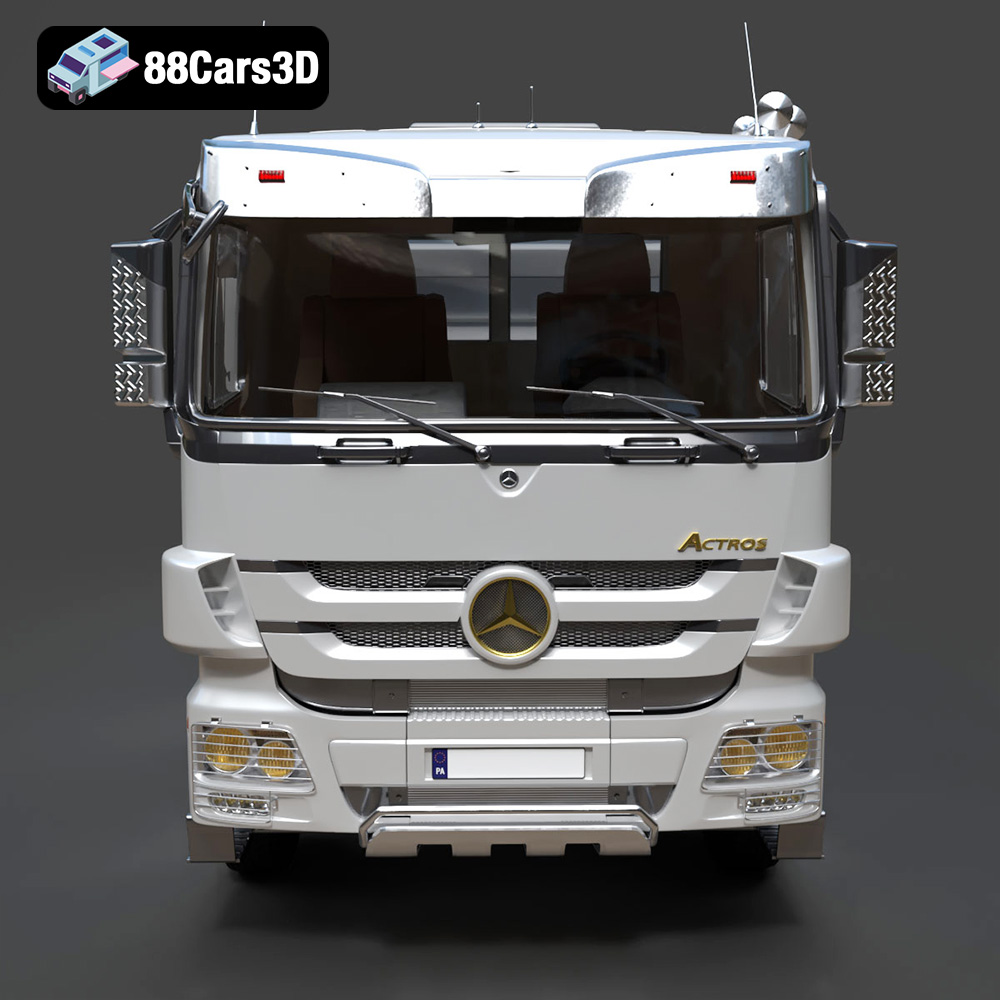
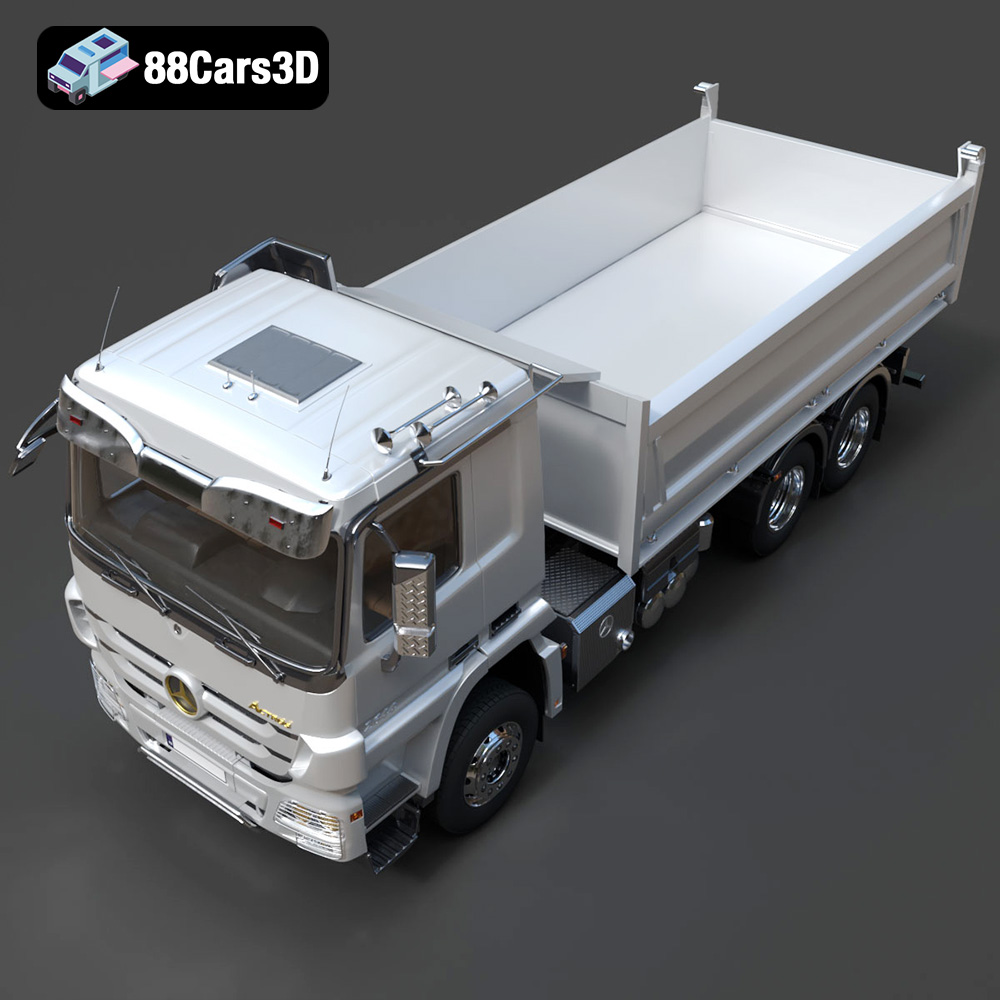
The Mercedes-Benz Actros Tipper, a global icon of robust engineering and reliability, embodies the workhorse spirit of construction and logistics. Its digital counterpart, a meticulously crafted 3D model, provides an invaluable asset for professionals across various industries. Whether you’re a game developer building a realistic trucking simulator, an architectural visualization specialist populating a construction site scene, or an AR/VR designer creating an interactive training module, the demand for a high-fidelity model that is also optimized for performance is critical. This comprehensive guide will explore the technical intricacies, versatile applications, and workflow benefits of incorporating such a powerful 3D model into your projects, using the impressive Mercedes-Benz Actros Tipper 3-Axle 2011 3D model as our prime example, available at 88cars3d.com.
The choice of a 3D model file format is not a trivial decision; it dictates compatibility, feature retention, and ultimately, the efficiency of your workflow. Different formats are optimized for specific purposes, from real-time rendering to 3D printing, and understanding their nuances is crucial for any serious 3D professional. The Mercedes-Benz Actros Tipper 3-Axle 2011 3D model from 88cars3d.com is supplied in a wide array of formats, ensuring maximum flexibility.
The .blend format is the native file type for Blender, a powerful open-source 3D creation suite. A .blend file typically contains the complete scene, including mesh data, materials, textures, lighting, camera setups, animations, and even physics simulations. This makes it an incredibly versatile format for users who work primarily in Blender, offering full editability and preserving all scene information. For the Actros Tipper, the .blend file would provide the ability to tweak every aspect of the model, from adjusting material nodes to modifying geometry or rigging additional components for bespoke animations. It’s ideal for in-depth customization and pipeline development within the Blender ecosystem.
.fbx (Filmbox) is a proprietary file format owned by Autodesk, widely adopted across the 3D industry as an interchange format, especially for animation. It excels at preserving complex scene data, including mesh geometry, materials (though sometimes requiring re-setup in the target application), textures, cameras, lights, and most importantly, animations and rigging. This makes .fbx indispensable for exporting assets like the Actros Tipper to game engines like Unreal Engine and Unity, or between different DCC (Digital Content Creation) applications such as Maya, 3ds Max, and Cinema 4D. Its robust support for skeletal animation and blend shapes ensures that moving parts like the tipper bed hydraulics and wheel rotations transfer accurately.
The .obj (Wavefront OBJ) format is one of the oldest and most universally supported 3D file formats. It’s a simple, text-based format primarily used for transferring mesh data (vertices, normals, UVs, and faces). While it doesn’t typically store animation or rigging data, it is excellent for ensuring cross-software compatibility of static models. If you need to import the Actros Tipper into a lesser-known application or a legacy system, .obj is often the most reliable choice. Material definitions are usually stored in an accompanying .mtl file.
.glb (GL Transmission Format Binary) is the binary version of glTF, an open standard developed by the Khronos Group. It’s specifically designed for efficient transmission and loading of 3D scenes and models in real-time applications, especially across the web, AR, and VR. A .glb file bundles geometry, materials, textures, animations, and even skeletal data into a single, self-contained file, reducing HTTP requests and improving load times. For deploying the Actros Tipper in a web-based configurator or a mobile AR experience, .glb offers unparalleled performance and ease of integration.
The .stl (Stereolithography) format is the de facto standard for 3D printing. It represents a 3D model as a collection of unconnected triangles (a tessellation of the surface). While it lacks color, texture, or material information, its simplicity makes it ideal for defining the geometry for additive manufacturing. For hobbyists or professionals looking to physically produce a scale model of the Actros Tipper, converting the detailed 3D model to .stl allows for direct input into slicing software for 3D printers, opening up possibilities for prototyping or display.
The .ply (Polygon File Format) format is designed to store 3D data from 3D scanners, CAD applications, and other sources, often including color information, transparency, and sometimes even normals and texture coordinates per vertex or face. It’s a more comprehensive mesh format than .obj for precision applications, often used in scientific computing, reverse engineering, and CAD workflows where accurate representation of complex surfaces is critical. For detailed analysis or high-fidelity geometric processing of the Actros Tipper, .ply can be a robust choice.
The inclusion of an .unreal specific asset indicates a model pre-configured and optimized for direct import into Unreal Engine. This often means textures are packed correctly, materials are set up with appropriate shaders (e.g., PBR metallic-roughness), and pivots are correctly aligned for skeletal meshes. For game developers or real-time visualization artists, having an .unreal ready file for the Actros Tipper significantly reduces setup time, allowing for immediate integration into an interactive environment with minimal adjustments.
Finally, the .max format is the native file type for Autodesk 3ds Max, another industry-leading DCC application, particularly strong in architectural visualization, animation, and game development. Like .blend, a .max file contains the complete scene information, including complex modifiers, lighting setups, V-Ray or Corona renderer materials, and intricate animation rigs. Providing the Actros Tipper in .max format ensures that professionals using 3ds Max can fully leverage the model’s structure, animate its components using 3ds Max’s powerful tools, and integrate it seamlessly into existing 3ds Max projects for high-end rendering or scene assembly.
A high-quality 3D model like the Mercedes-Benz Actros Tipper 3-Axle 2011 is not merely a static digital sculpture; it’s a dynamic asset capable of transforming professional workflows across a multitude of industries. Its inherent versatility stems from meticulous design and optimization.
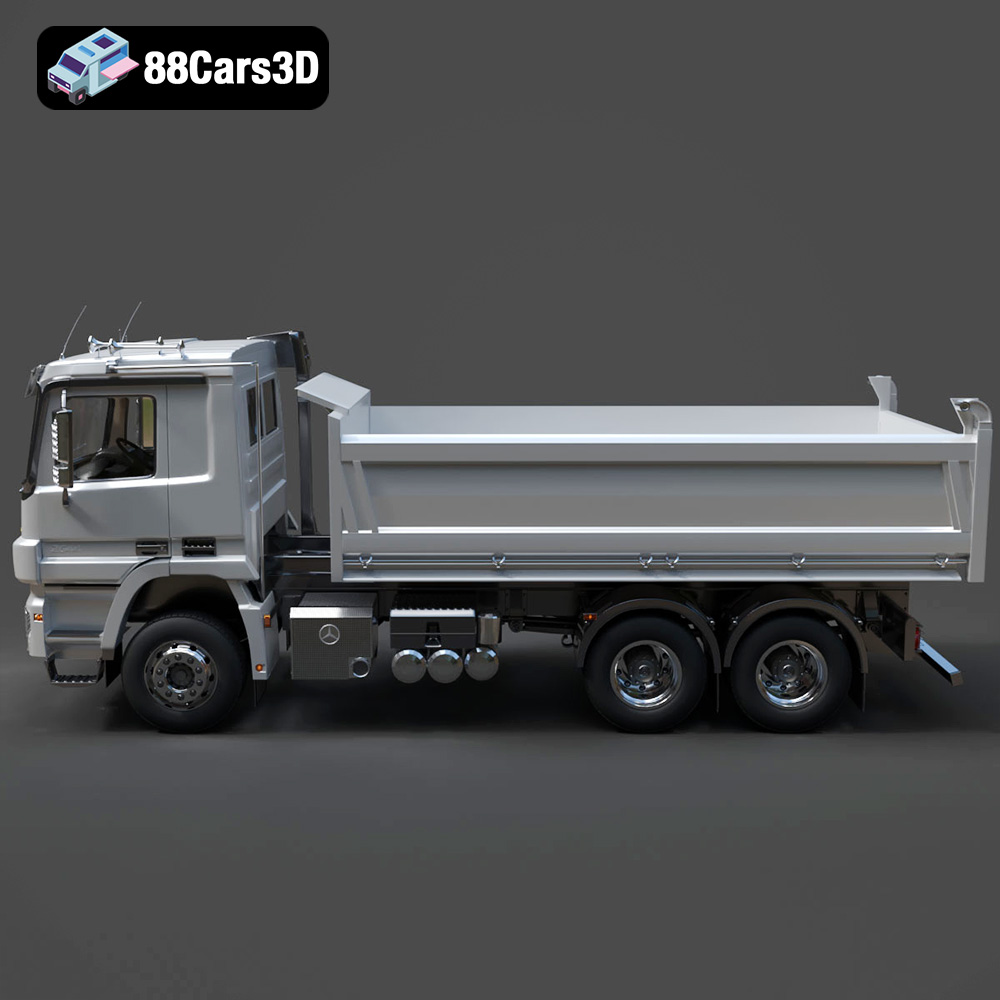
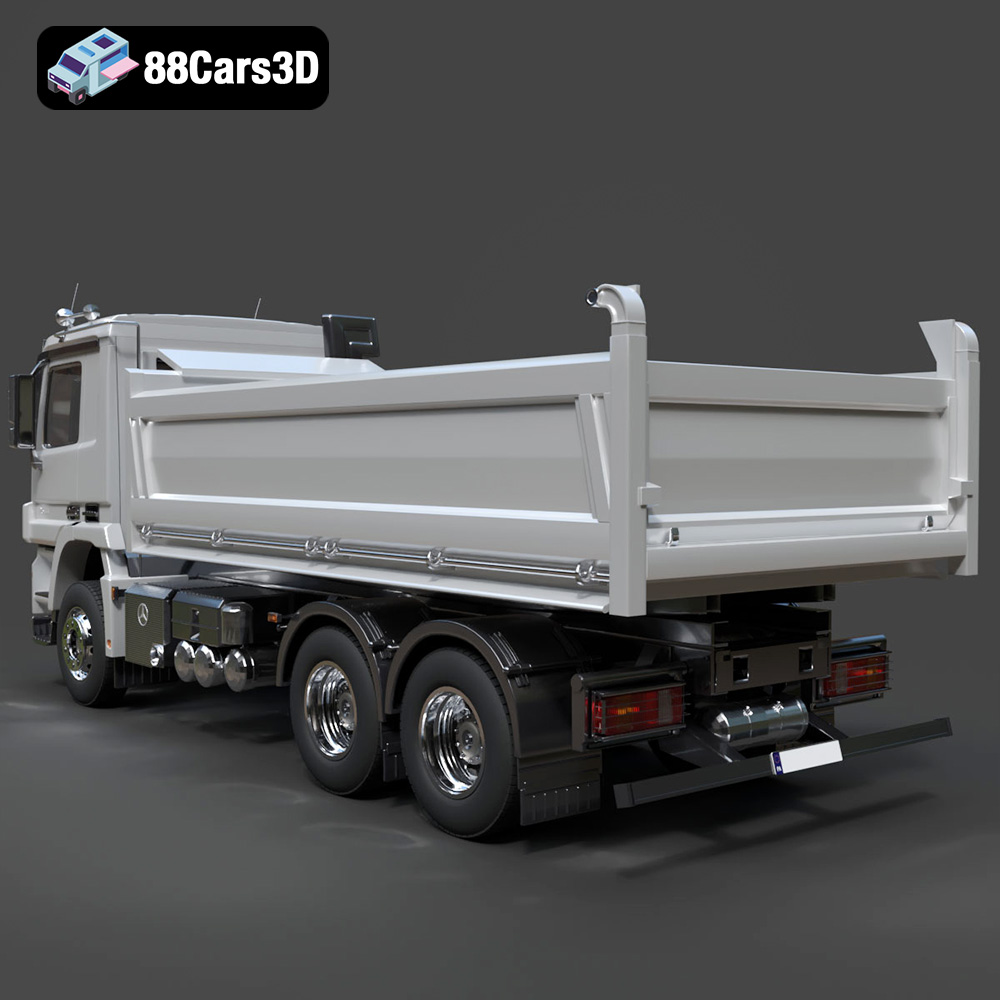
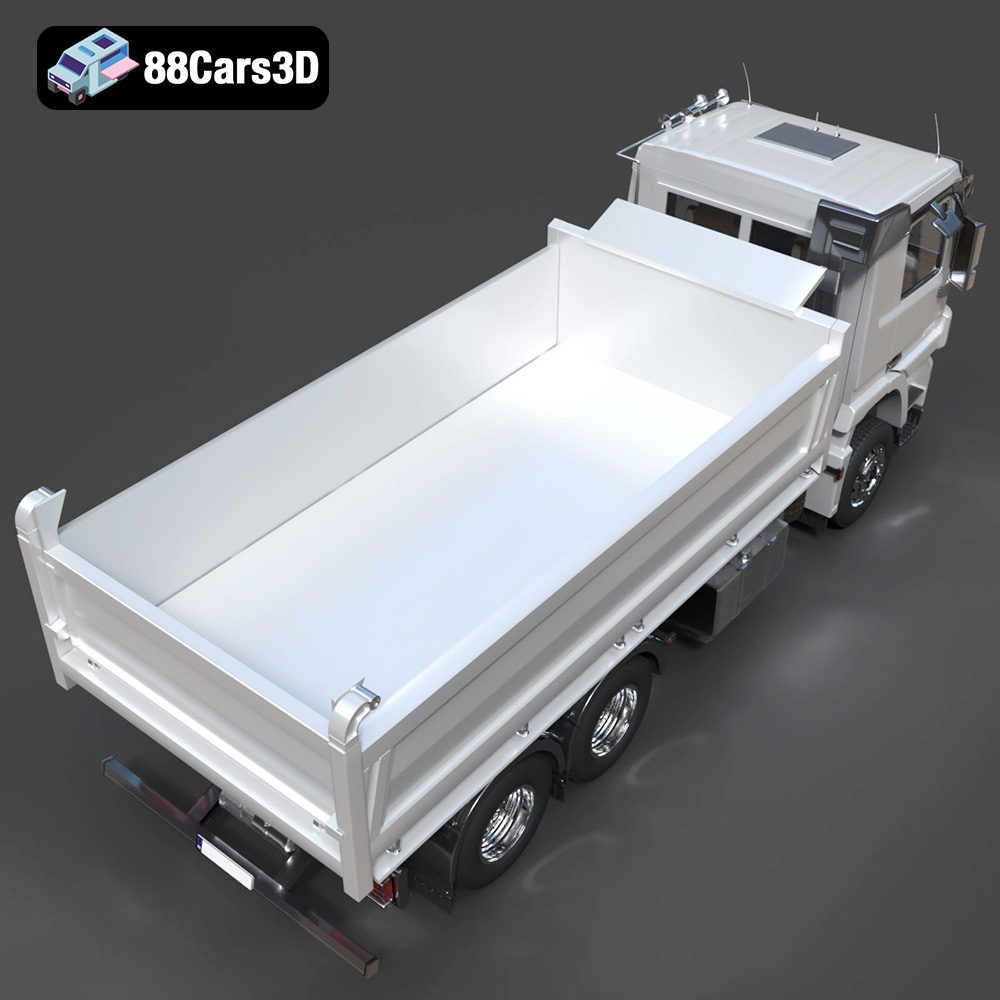
For game developers, the Actros Tipper is a dream asset. Its “game-ready & optimized” status, boasting approximately 150,000 triangles, hits the sweet spot for real-time engines like Unreal and Unity. This poly count is high enough to maintain incredible visual fidelity, capturing the muscular grille, detailed engine block, and rugged tires, yet optimized enough to ensure smooth frame rates even when multiple trucks populate a scene. The separate components—wheels, suspension, cab, tipper bed, and steering—are crucial. This allows for complex physics simulations and realistic animations: the suspension can compress over rough terrain, wheels can turn and spin, and the hydraulic tipper bed can realistically lift and dump its load. Imagine an open-world construction simulator or an industrial trucking game, where players interact with this level of detail. The inclusion of an optimized interior for first-person POV further enhances immersion, making it ideal for the cockpit experience of trucking simulators.
Augmented and Virtual Reality demand performance above all else. The optimized nature of the Actros Tipper 3D model makes it perfectly suited for immersive AR/VR applications. Companies can leverage this model to create virtual showrooms, allowing potential clients to explore the vehicle’s features in an interactive 3D space, perhaps even customizing its color and material finishes in real-time. For industrial training, a VR experience could simulate maintenance procedures, allowing technicians to practice operating the hydraulic tipper or inspecting powertrain components in a safe, virtual environment. The .glb format, specifically optimized for web and AR/VR, facilitates easy deployment on mobile devices or dedicated VR headsets, enabling accessible and powerful immersive experiences.
Beyond interactive environments, the Actros Tipper excels in static or animated rendering for commercial campaigns and industrial visualization. Architectural firms use such models to populate construction site visualizations, adding a layer of realism and context to proposed developments. Advertising agencies can create stunning photorealistic renders for brochures, billboards, or animated commercials, showcasing the vehicle’s rugged capability. With accurate real-world scale and properly set up pivots, animators can easily create compelling sequences of the truck navigating challenging terrains or demonstrating its heavy-duty dumping action. The detailed exterior features, including high-fidelity lighting (cab roof lights, primary headlamps, taillights), ensure that the model looks impressive under various studio lighting setups or environmental conditions, delivering powerful visual storytelling.
The creation of a truly professional 3D vehicle model involves more than just aesthetics; it’s a meticulous process of technical precision and optimization. The Mercedes-Benz Actros Tipper 3-Axle 2011 3D model showcases this technical mastery, designed from the ground up to meet demanding industry standards.
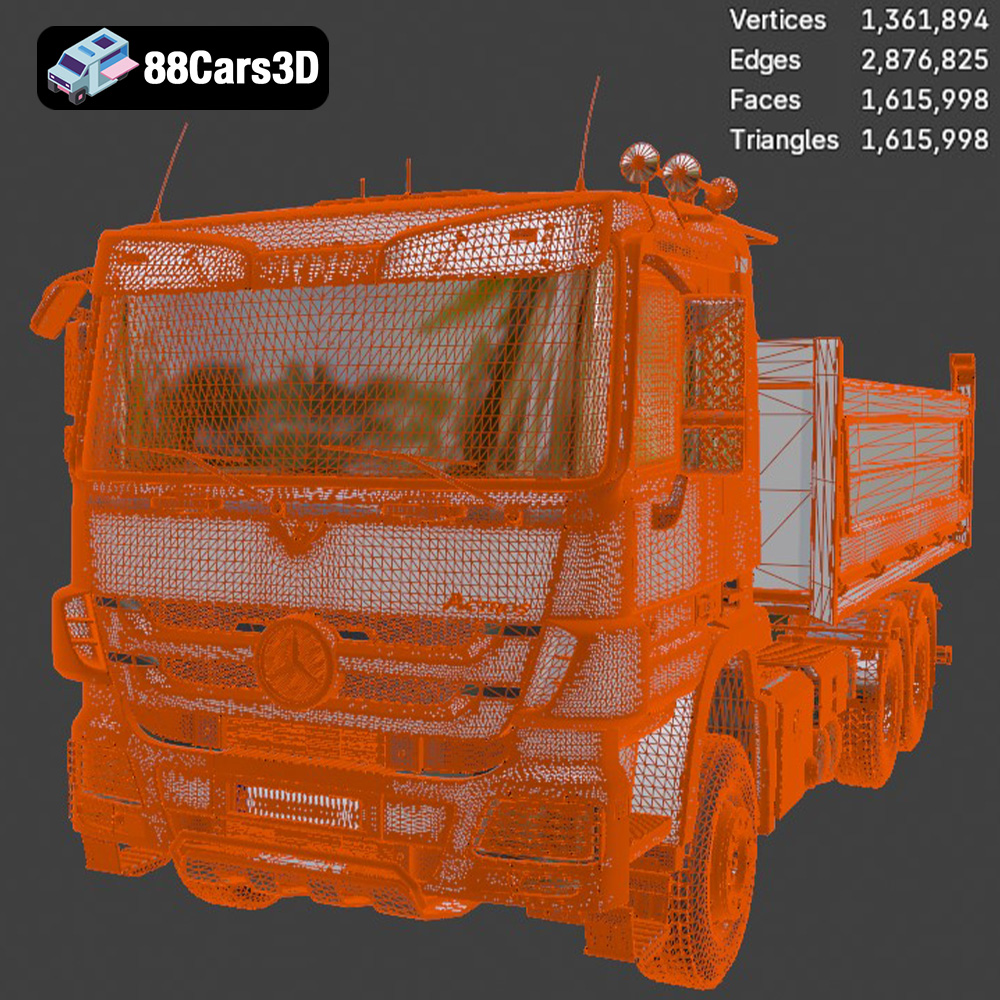
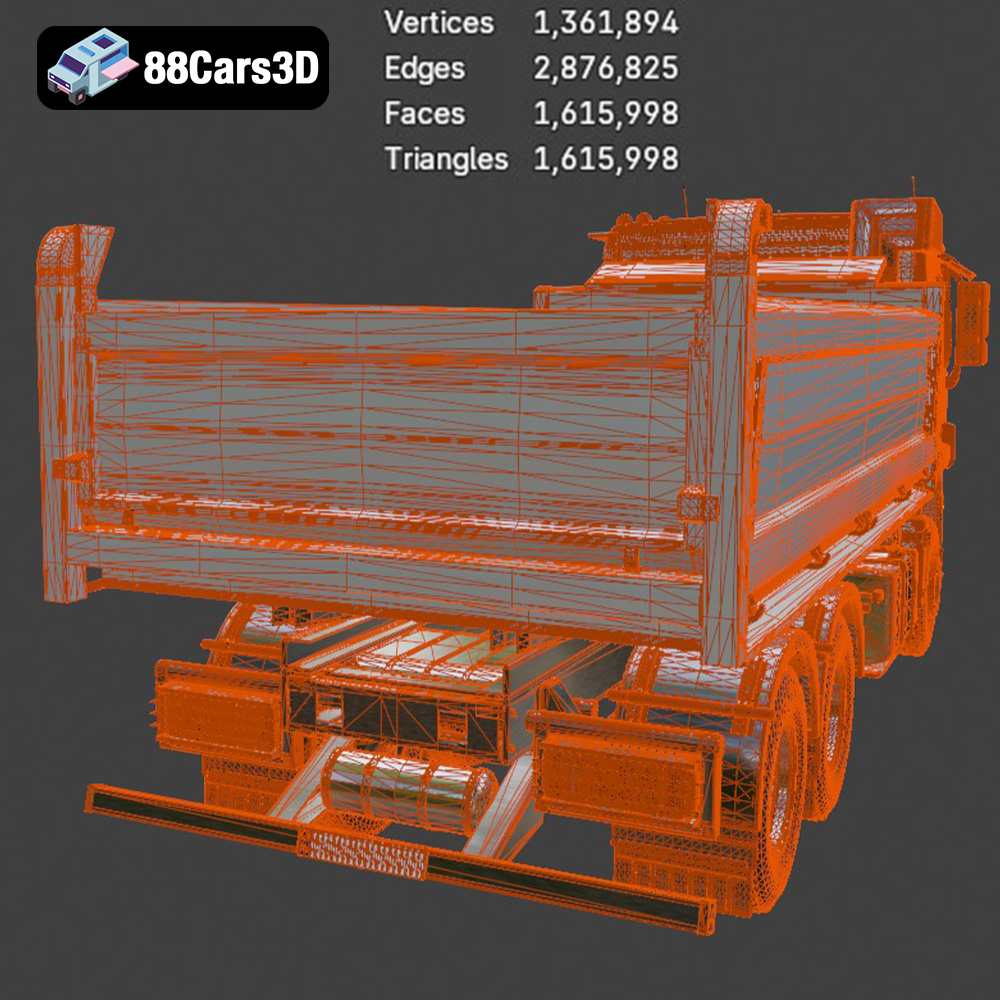
At the heart of any game-ready asset is its topology—the arrangement of vertices, edges, and faces that form the mesh. The Actros Tipper model boasts “optimized topology with an efficient triangle count,” around 150,000 triangles. This figure represents a careful balance: detailed enough to capture the complex curves and mechanical elements of a heavy-duty truck, yet lean enough to render efficiently in real-time engines. Poor topology can lead to rendering artifacts, complex UV unwrapping, and unnecessary performance drains. The clean, well-structured mesh of this model ensures smooth deformations during animation and efficient processing by GPUs, critical for maintaining high frame rates in interactive applications.
Accuracy is paramount for professional applications. The model’s “real-world scale accuracy” ensures it fits seamlessly into architectural scenes or interacts correctly with other scaled assets in a simulation. Furthermore, the “proper pivot setup for steering, wheel rotation, hydraulic bed lift, and suspension travel” is a game-changer for animators and riggers. Instead of spending valuable time identifying and setting pivots, these are pre-configured, allowing for immediate animation of functional parts. The clear separation of components like “wheels, suspension, cab, tipper bed, and steering” also simplifies the rigging process, enabling individual control and complex mechanical animations without destructive modifications.
While not explicitly detailed as “UVs” in the product description, the mention of “optimized topology” and “game-ready” strongly implies professional UV mapping. UV coordinates are essential for applying textures accurately to a 3D model’s surface. A well-laid-out UV map minimizes stretching, maximizes texture resolution, and facilitates efficient material creation, particularly for PBR (Physically Based Rendering) workflows. PBR materials—comprising maps like albedo, roughness, metallic, normal, and ambient occlusion—are crucial for achieving photorealistic results. The model’s inherent quality suggests that its material system is designed to leverage these PBR principles, allowing users to easily customize finishes, from matte to gloss, metallic, or even weathered looks, adapting the Actros Tipper to any environment or artistic vision.
The utility of a high-fidelity 3D model extends far beyond digital rendering and real-time applications. With the advent of accessible 3D printing technologies, the Mercedes-Benz Actros Tipper 3-Axle 2011 3D model can transcend the virtual realm and manifest as a tangible object, opening new avenues for display, prototyping, and educational purposes.
The inclusion of the .stl file format is a clear indication of the model’s suitability for 3D printing. The process involves converting the intricate mesh data into a format that slicing software can interpret, effectively translating the digital geometry into a series of printable layers. For enthusiasts and model makers, this means being able to produce highly detailed scale replicas of the iconic Actros Tipper. Imagine a finely printed model for a diorama, an office desk display, or even as a collectible for automotive enthusiasts.
Achieving a successful 3D print, especially for a complex model like the Actros Tipper, requires careful attention to print settings. The product description provides excellent guidelines:
Post-processing, involving sanding, priming, and painting with authentic factory or fleet colors and metallic finishes, transforms a raw print into a stunning, lifelike miniature. This application highlights the profound versatility of high-quality 3D car models like the Actros Tipper, bridging the gap between digital creation and physical manifestation.
The true value of a professional 3D asset lies not just in its initial quality, but in its adaptability and ease of integration into diverse creative projects. The Mercedes-Benz Actros Tipper 3-Axle 2011 3D model offers significant customization options, empowering artists and designers to tailor it precisely to their needs.
The ability to “change cab/tipper colors” is fundamental. Whether you need a corporate fleet livery, a weathered construction vehicle, or a vibrant show truck, adjusting the primary color is a simple yet powerful customization. Beyond color, the capacity to “modify tire textures” opens up possibilities for different scenarios—off-road mud variants for a rugged construction site versus cleaner, street-specific tires for a logistics simulation. Similarly, “adjust material finishes” allows for a wide range of looks: a factory-fresh gloss, a worn matte, or a metallic sheen can drastically alter the perceived age and usage of the vehicle. These material adjustments, typically handled through PBR texture maps, give artists precise control over how light interacts with the surface, achieving hyper-realistic results.
Integrating the Actros Tipper into a scene goes beyond just dropping it in. The model’s “high-fidelity lighting including cab roof lights, primary headlamps, and heavy-duty taillights” ensures it looks convincing in any environment. Artists can “adapt lighting for different environments”—from the harsh glare of a desert construction site to the soft glow of a twilight urban setting. This level of detail enhances realism and allows the model to become a seamless part of any virtual world. For game developers, this means the truck’s lights will dynamically illuminate the surroundings, adding to the immersion. For rendering artists, it ensures accurate light interaction and shadow casting, vital for photorealism.
Because the Actros Tipper model is optimized and features a clear hierarchy of separate components, it integrates effortlessly into larger, more complex scenes. Imagine populating a vast construction site in Unreal Engine with multiple Actros trucks, excavators, and other heavy machinery. Thanks to its efficient polycount and proper pivot setups, these assets can be instanced and animated without overburdening the system. This capability makes it an indispensable asset for creating rich, detailed environments in film, animation, or interactive media.
In a saturated market of 3D assets, distinguishing between mediocre and truly professional models is crucial for project success. Investing in high-quality 3D car models, such as the Mercedes-Benz Actros Tipper 3-Axle 2011 from 88cars3d.com, offers significant advantages that ripple throughout the entire production pipeline.
The most immediate benefit of a professional-grade model is the immense time saving. Creating a vehicle like the Actros Tipper from scratch, with its complex geometry, detailed interior, and accurate mechanical components, could take weeks or even months for a skilled 3D artist. By purchasing a pre-made, optimized asset, studios and individual designers can bypass this labor-intensive stage, redirecting valuable time and resources to other critical aspects of their project, such as level design, animation, or rendering passes. The inclusion of multiple file formats and game-ready optimization further reduces post-purchase setup time.
Low-quality or inaccurate 3D models can quickly detract from the realism and professionalism of a project. Whether it’s incorrect proportions, shoddy topology, or poor material setups, these flaws are immediately apparent. The Actros Tipper model, with its “accurate Mercedes-Benz Actros Tipper 3-Axle 2011 frame geometry and proportions” and “real-world scale accuracy,” guarantees an authentic representation. This level of realism is vital for projects where credibility is key, such as industrial training simulations, vehicle configurators, or high-end commercial advertisements. Quality assets reflect positively on the entire production, elevating its perceived value and impact.
A well-made 3D model is inherently scalable. Its optimized topology allows it to perform efficiently in real-time engines, but its underlying detail means it can also be used for high-resolution static renders. Furthermore, the clean mesh and proper component separation ensure that the model can be easily updated or modified as project requirements evolve. Whether adapting it for a new game engine, integrating it into an AR experience, or preparing it for 3D printing, a robust foundation ensures longevity and adaptability, maximizing the return on your investment in digital assets.
The Mercedes-Benz Actros Tipper 3-Axle 2011 3D model stands as a testament to the power of high-quality digital assets in today’s demanding creative and industrial landscapes. From its meticulous anatomical accuracy and optimized topology for game development to its versatile file format support for everything from AR/VR to 3D printing, this model embodies the technical excellence required by professionals. It streamlines workflows, enhances realism, and provides a robust foundation for diverse projects, making it an invaluable tool for anyone working with 3D car models or heavy-duty game assets.
By understanding the nuances of 3D model file formats and appreciating the engineering behind optimized digital assets, creators can make informed decisions that significantly impact their project’s efficiency and visual fidelity. The Mercedes-Benz Actros Tipper 3-Axle 2011 from 88cars3d.com is more than just a model; it’s a gateway to accelerating your creative endeavors and achieving unparalleled realism in your digital worlds.
The Mercedes-Benz Actros Tipper 3-Axle 2011 is a heavy-duty powerhouse, renowned globally for its robust engineering, exceptional payload capacity, and reliability in demanding construction and mining environments. This iconic commercial truck features a muscular front grille, a towering aerodynamic cab, a durable multi-axle chassis, and a heavy-duty hydraulic tipper body designed to handle the toughest payloads. This high-quality 3D model boasts optimized topology with an efficient triangle count, ensuring it is game-ready while maintaining incredible visual fidelity. Designed for maximum performance without sacrificing detail, it is perfectly suited for game development, AR/VR applications, commercial animations, and industrial visualization. Perfect for construction simulators, heavy equipment rendering, open-world industrial environments, and commercial fleet visualization.
$19.99
.2011
.actros
.blend
.fbx
.glb
.max
.obj
.ply
.rendering
.stl
.truck
.unreal
3-axle
actros-tipper
commercial-vehicle
construction-equipment
dump-truck
game asset
game-ready
heavy-duty
low-poly
mercedes-benz
optimized
tipper-truck
truck-3d-model
VR/AR