Get 20% OFF All Premium 3D & STL Models!

In the dynamic world of 3D visualization, game development, and interactive media, the demand for hyper-realistic and meticulously detailed automotive assets is ever-growing. From the sleek curves of a supercar to the robust utility of a family SUV, bringing vehicles to life in the digital realm requires a blend of artistic vision and technical precision. This pursuit of digital perfection is epitomized by models that not only look authentic but also perform flawlessly across various platforms and applications. Today, we’re diving deep into the craft behind creating such assets, using an exceptional example: the Mercedes-Benz GLB-Class Mk1 AMG Line 2019 3D model, a prime offering from 88cars3d.com.
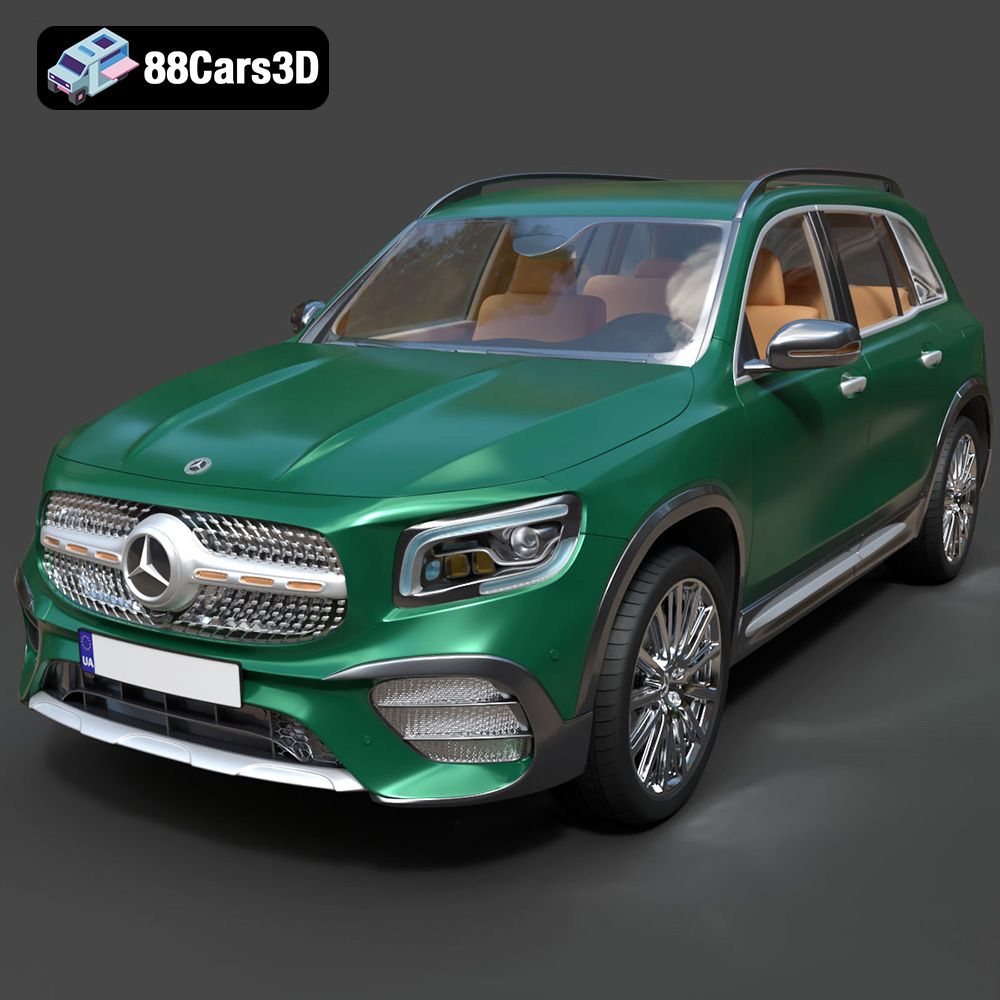
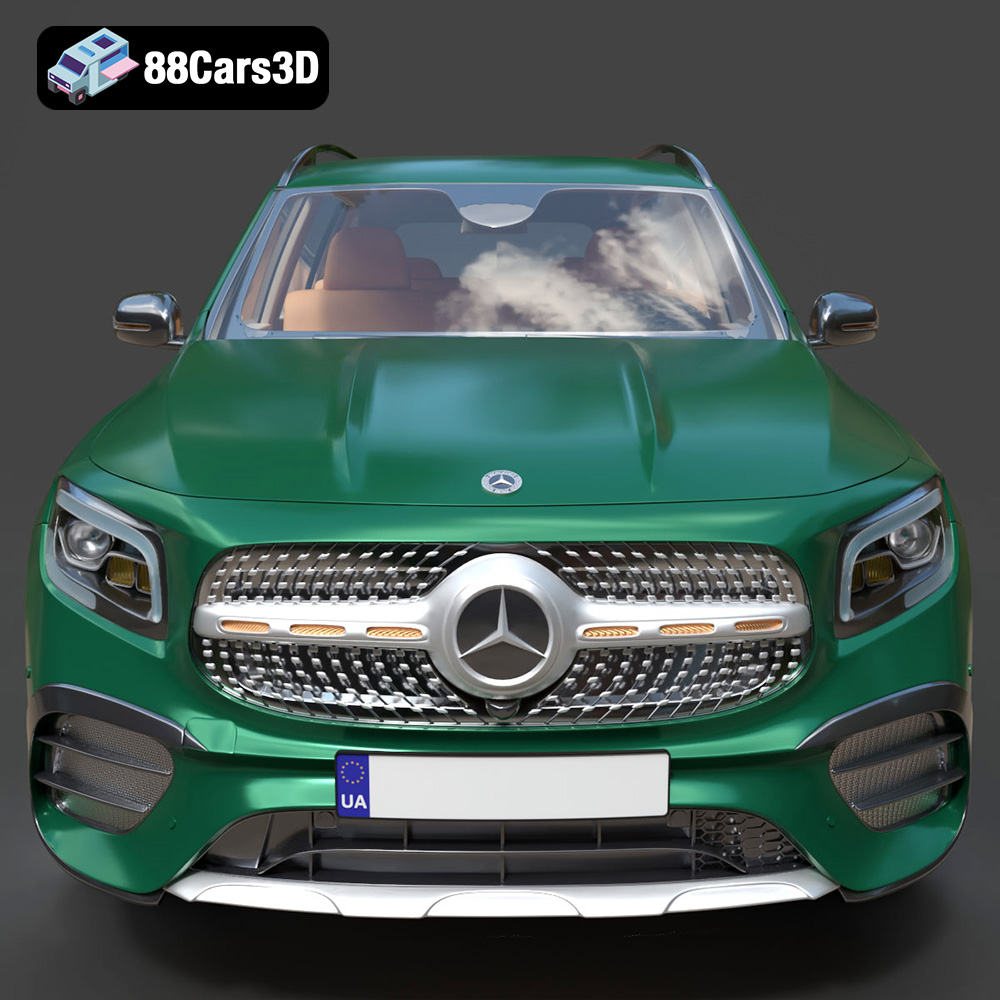
The Mercedes-Benz GLB-Class (Mk1) AMG Line 2019 represents a fascinating blend of compact crossover versatility and the undeniable luxury pedigree of its namesake. Its distinctive boxy silhouette, commanding stance, and aggressive AMG Line styling cues — including the signature diamond radiator grille, sporty front aprons, and prominent dual exhaust system — make it a compelling subject for digital recreation. Capturing these intricate details, from the high-detail LED High Performance headlamps to the authentic AMG 5-twin-spoke light-alloy wheels, requires an understanding of advanced modeling techniques, material science, and optimization strategies. This article will explore the journey of such a model, from its foundational design principles to its diverse applications in professional pipelines, highlighting how premium 3D car models like the GLB-Class empower creators to achieve unparalleled realism and performance.
The success of any 3D project often hinges on the judicious selection and understanding of file formats. Each format serves a specific purpose, offering unique advantages in terms of compatibility, data retention, and optimization for particular workflows. When acquiring a sophisticated 3D car model, such as the Mercedes-Benz GLB-Class Mk1 AMG Line 2019 from 88cars3d.com, you’ll often encounter a variety of file types, each tailored for different stages of the production pipeline. Let’s demystify these essential formats.
The .blend format is the native file type for Blender, the ubiquitous open-source 3D creation suite. A .blend file is a complete package, containing not just the mesh geometry but also materials, textures, lighting setups, camera positions, animations, and even scene configurations. For artists working primarily in Blender, this format offers maximum flexibility and editability. It’s ideal for those who wish to delve into the model’s construction, make significant modifications, or integrate it seamlessly into existing Blender projects without losing any scene data. The GLB-Class .blend file provides a fully editable scene, allowing artists to explore the intricate material nodes, lighting rigs, and hierarchical structures set up by the original creator.
.fbx (Filmbox) is arguably the most widely adopted proprietary file format for 3D content exchange, developed by Autodesk. Its strength lies in its ability to encapsulate not only geometry and materials but also animations, bones, and rigging information, making it ideal for game engines like Unreal Engine and Unity, as well as various 3D applications. When moving assets between different software or into a real-time environment, .fbx ensures that essential data like pivot points, UV maps, and basic material assignments are preserved. For the GLB-Class, an .fbx file is crucial for seamless integration into game development pipelines, ensuring that separate components like wheels and steering can be easily animated.
.obj (Wavefront OBJ) is a fundamental, widely supported geometry definition file format. While it doesn’t typically store animation or rigging data, it’s excellent for transferring static mesh geometry, UV coordinates, and material references across virtually any 3D software. Its simplicity ensures broad compatibility, making it a reliable choice for cross-software workflows. The GLB-Class .obj file, often accompanied by .mtl (material library) and texture files, provides a robust baseline for importing the model into applications for rendering or further modification, especially where animation is not the immediate concern.
.glb (GL Transmission Format Binary) is a modern, compact, and efficient format designed specifically for the transmission and loading of 3D scenes and models in web and AR/VR applications. It’s a binary version of the .gltf format, embedding all necessary data (geometry, textures, materials, animations) into a single file. This self-contained nature and optimization for real-time rendering make it perfect for showcasing the GLB-Class in immersive virtual showrooms, mobile AR experiences, or interactive web configurators, ensuring fast loading times and consistent visual quality.
.stl (STereoLithography) is the de facto standard for 3D printing. It describes only the surface geometry of a 3D object using a collection of triangular facets, without any color, texture, or material information. For hobbyists or professionals looking to bring the GLB-Class into the physical world, the .stl format is indispensable. The product description highlights its suitability for display-scale hobbyists and provides recommended settings like layer height and infill, making the GLB-Class a versatile asset beyond digital screens.
.ply (Polygon File Format, or Stanford Triangle Format) is a versatile format often used for storing 3D data from 3D scanners, CAD software, and other precision modeling applications. It can store not only geometry but also color, transparency, and sometimes even texture coordinates and normal vectors. While less common for general 3D asset exchange compared to .fbx or .obj, it’s valuable in applications requiring high precision or complex data associated with each vertex or face. For the GLB-Class, a .ply file might be useful in niche engineering or analytical visualization scenarios.
The .unreal format, or more accurately, the optimized asset structure for Unreal Engine, represents an asset that has been specifically prepared and configured for optimal performance within the Unreal Engine environment. This isn’t a single file type but rather a collection of imported assets (like .fbx for mesh, .tga or .png for textures) that are then organized and set up with materials, blueprints, and LODs (Levels of Detail) within an Unreal project. The GLB-Class model, described as game-ready and optimized for Unreal, implies that its mesh, PBR textures, and pivot setups are meticulously prepared for immediate integration into an Unreal project, minimizing setup time for developers.
Finally, .max is the native file format for Autodesk 3ds Max, a leading software for 3D modeling, animation, rendering, and visualization. Similar to .blend, a .max file saves the entire scene, including geometry, lights, cameras, materials, modifiers, and animation data. For professionals using 3ds Max, this format offers full editability and control over every aspect of the model and its scene. The GLB-Class .max file allows for detailed animation setups, advanced rendering passes, and deep customization within the 3ds Max ecosystem, leveraging its powerful toolset for high-end cinematic rendering or complex simulations.
Understanding these formats allows artists and developers to select the right tool for the job, ensuring seamless transitions between different stages of a project and maximizing the utility of premium 3D assets like those found on 88cars3d.com.
The Mercedes-Benz GLB-Class Mk1 AMG Line 2019 3D model isn’t just a digital replica; it’s a testament to the meticulous artistry and engineering required to translate real-world automotive design into a virtual asset that maintains fidelity and performance. Its detailed product description highlights a core philosophy: striking an impeccable balance between exceptional visual realism and efficient real-time performance.
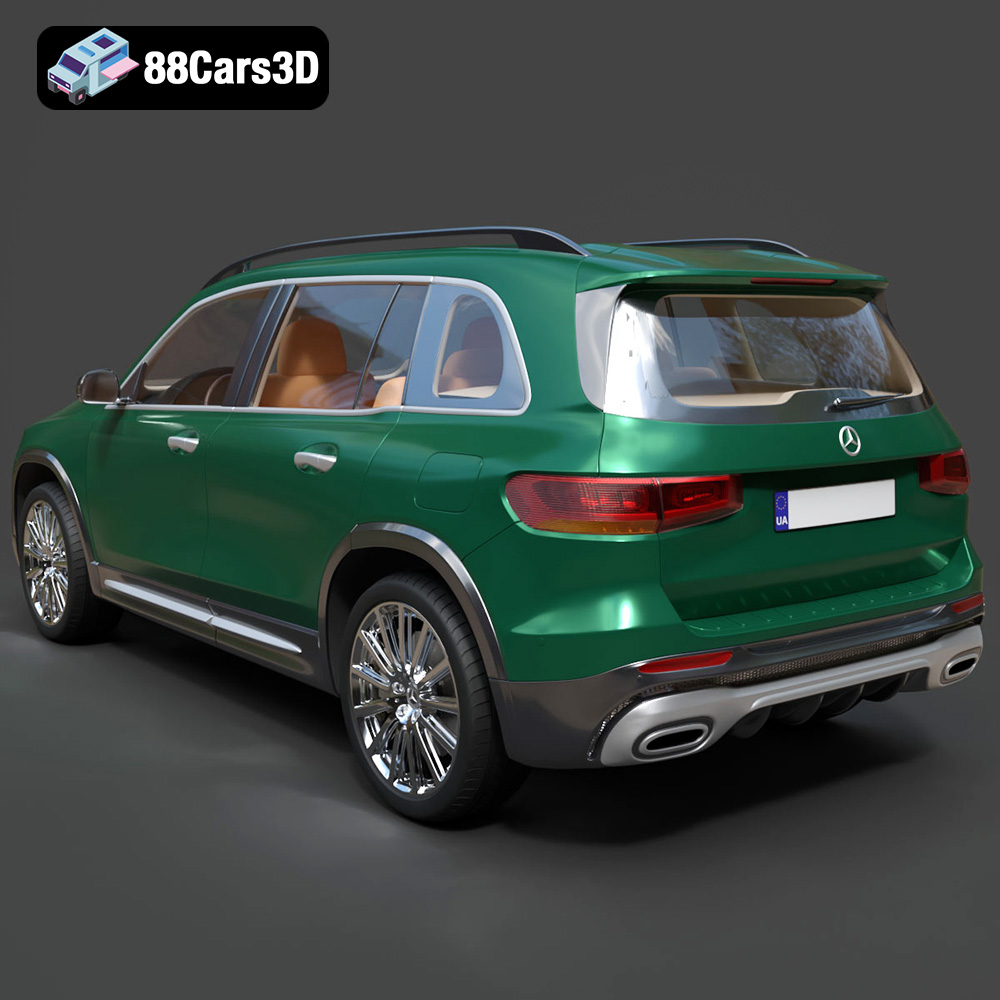
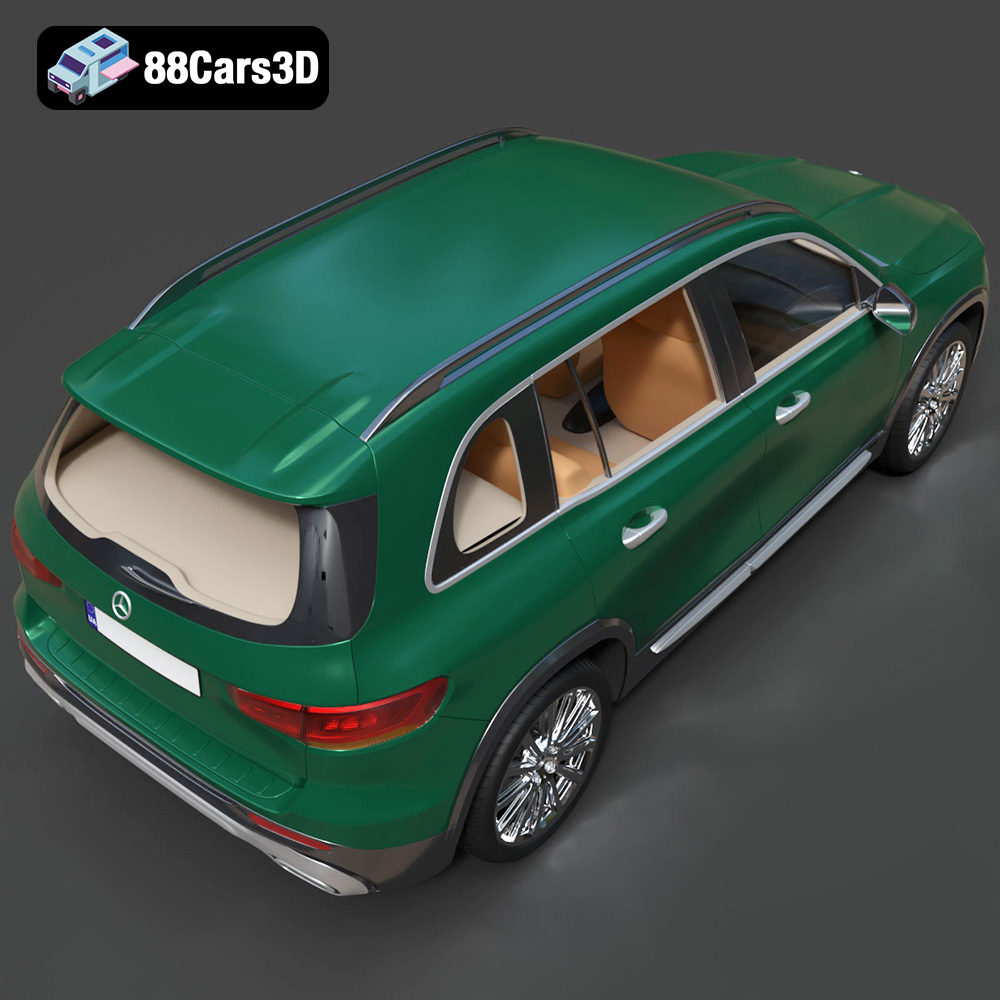
The exterior of this GLB-Class model captures every nuance of the AMG Line styling. From the accurate frame geometry and proportions, which are crucial for immediate recognition and realism, to the detailed engine block and undercarriage components, no detail is overlooked. The aggressive AMG-specific dual exhaust system and rear diffuser are rendered with precision, as are the high-detail LED High Performance headlamps and distinctive taillight clusters. The authentic AMG 5-twin-spoke light-alloy wheels and performance tires, coupled with sport-tuned suspension detailing, provide a level of visual fidelity that stands up to close inspection, whether in a high-resolution render or a real-time game engine.
Inside the cockpit, the attention to detail continues. Detailed sport seating with intricate stitching and contouring evokes the luxury experience. The Nappa leather multifunction sports steering wheel, complete with precise switchgear, and the accurate MBUX dual-screen digital instrument cluster and infotainment system are all faithfully recreated. The detailed central console, air vents, and pedals complete an interior optimized for first-person POV in gaming and VR simulations, offering an immersive experience to the user.
Beyond aesthetics, the technical specifications underpin the model’s versatility. With approximately 250,000 triangles, the model achieves a “game-ready” optimization that is ideal for real-time engines like Unreal and Unity, without sacrificing high-end visual realism. This polycount is a sweet spot, providing enough detail for modern visuals while ensuring smooth performance. Real-world scale accuracy, based on the actual vehicle chassis, is critical for realistic scene integration and physics simulations. Furthermore, proper pivot setups for steering, wheel rotation, and suspension travel are pre-configured, making the model incredibly easy to animate and integrate into interactive environments.
The inclusion of PBR (Physically Based Rendering) texturing is a major advantage. PBR materials accurately simulate how light interacts with surfaces, resulting in consistent and realistic appearances under various lighting conditions, a crucial factor for achieving photorealism in both renders and real-time applications. This level of technical consideration makes the Mercedes-Benz GLB-Class 3D model a premium asset for any professional workflow.
The true value of a versatile 3D asset like the Mercedes-Benz GLB-Class Mk1 AMG Line 2019 lies in its adaptability across various professional software packages and pipelines. Whether you’re a seasoned veteran in 3ds Max, a Blender enthusiast, or a game developer working in Unreal Engine, a well-structured model simplifies integration and enhances creative potential.
For artists leveraging Autodesk 3ds Max, the GLB-Class model, provided in the native .max format, offers unparalleled flexibility. Users can directly open the scene, which typically includes pre-configured materials, lighting, and possibly even basic rigging. This allows for immediate high-end rendering using engines like V-Ray or Corona Renderer. The separate wheels, suspension, and steering components are invaluable for creating sophisticated animations—from simple wheel rotations to complex suspension compression over uneven terrain. Artists can easily customize body colors, material finishes (matte, gloss, metallic, carbon fiber accents), and even adjust tire textures for specific scenes, making it perfect for automotive advertising, product visualization, or cinematic sequences.
Furthermore, 3ds Max’s robust toolset for scene management, camera animation, and particle effects can be used to place the GLB-Class within dynamic environments, adding dust trails, rain effects, or dramatic lens flares to enhance realism. The real-world scale accuracy ensures that environmental elements interact realistically with the vehicle.
Blender users benefit immensely from the included .blend file. This means the model is ready to go, complete with materials and potentially a studio lighting setup. Blender’s powerful Cycles and Eevee renderers can be immediately utilized to produce stunning images. For game development within Blender or for export to other engines, the optimized topology (~250,000 triangles) ensures the model performs well. Artists can easily modify the mesh, re-UV if needed, or create custom shader networks within Blender’s node-based material system. The separate components facilitate rigging for animation, which can then be exported via FBX for use in game engines or other 3D applications. Blender’s active community and extensive add-on ecosystem further extend the possibilities for customizing and enhancing the GLB-Class model for unique projects.
For game developers and real-time visualization specialists, the GLB-Class model is explicitly designed as “game-ready” and includes an optimized .unreal asset setup (likely implying a well-structured FBX export ready for import). The ~250,000 triangle count is ideal for modern game engines, allowing for multiple vehicles in a scene without significant performance drops. PBR texturing ensures that the vehicle looks consistent and realistic under Unreal Engine’s advanced lighting system, including dynamic global illumination and reflections. Proper pivot setups for steering, wheel rotation, and suspension travel mean developers can quickly integrate the model into a vehicle blueprint, setting up physics and interactive controls with minimal effort. This makes it an excellent asset for racing games, open-world environments, or interactive architectural visualizations where the GLB-Class can serve as a key element of scene composition.
The optimized geometry also supports the creation of LODs (Levels of Detail) within Unreal, further enhancing performance by switching to lower-polygon versions of the model when viewed from a distance, maintaining a smooth framerate in complex scenes. This comprehensive approach ensures that assets from 88cars3d.com are not just visually appealing but also technically sound for demanding real-time applications.
The versatility of a meticulously crafted 3D asset like the Mercedes-Benz GLB-Class Mk1 AMG Line 2019 extends far beyond traditional rendering. Its design, optimization, and included file formats unlock a wide array of possibilities across various innovative industries, underscoring the foresight in its creation.
In the realm of game development, the GLB-Class model truly shines. Its “game-ready” status and optimized polycount (~250,000 triangles) are critical for modern racing titles, open-world adventures, and immersive simulators. In a racing game, this optimization allows for multiple AI-controlled or player-driven vehicles on screen simultaneously without bogging down the game engine. For open-world games, the detailed exterior and interior mean players can explore the vehicle up close, experiencing the luxury and functionality from both third-person and first-person perspectives. The accurate pivot setups for steering and suspension are essential for creating believable driving physics, offering a realistic and engaging user experience. Whether it’s a high-speed pursuit or a leisurely drive through a digital cityscape, this 3D car model provides a robust foundation for captivating gameplay.
Game developers can take advantage of the separate wheel and steering components to animate realistic vehicle dynamics, and the PBR textures provide consistent visual quality across diverse in-game lighting conditions, from sun-drenched highways to dimly lit urban tunnels. Assets like these from 88cars3d.com significantly reduce development time, allowing studios to focus on core gameplay mechanics and narrative.
Augmented Reality (AR) and Virtual Reality (VR) are transforming how consumers interact with products, and automotive industries are at the forefront of this revolution. The GLB-Class model, especially in its .glb format, is perfectly suited for creating immersive virtual showrooms, interactive configurators, and mobile AR experiences. Imagine a prospective buyer exploring the GLB-Class in full 3D from the comfort of their home, customizing colors, examining interior details, and even placing the virtual car in their driveway using AR on their smartphone. The optimized geometry and PBR texturing ensure that the model looks stunning and performs smoothly in real-time AR/VR environments, where performance is paramount for user comfort and immersion.
These applications aren’t just for marketing; they extend to training simulations for mechanics, virtual design reviews for engineers, and interactive educational tools. The ability to “walk around” and “sit inside” a vehicle before it’s even manufactured offers unparalleled insight and engagement.
The inclusion of the .stl format broadens the model’s utility significantly, allowing hobbyists and professionals to transcend the digital realm and bring the GLB-Class into physical existence through 3D printing. While digital models typically have complex surfaces and details, converting them for manufacturing requires specific considerations. The product description provides crucial 3D print settings, such as recommended scales (1:12, 1:18, 1:24), layer height (0.04–0.12 mm for fine detail, suggesting resin printing), wall thickness, and infill. These guidelines are vital for achieving structural integrity and capturing fine details like the AMG Line’s aggressive styling cues.
Specific instructions like requiring supports for detailed parts (exhaust, mirrors, steering wheel) and print orientation advice (frame angled for integrity, wheels separately) demonstrate a deep understanding of the 3D printing process. Post-processing steps like sanding, priming, and applying authentic factory colors with metallic finishes allow for a display-quality model that can be proudly showcased. This capability turns a digital asset into a tangible collectible or a valuable prototype, showcasing the multifaceted utility of high-quality 3D car models.
In today’s fast-paced digital landscape, real-time rendering has become indispensable for everything from interactive product showcases to virtual production. The Mercedes-Benz GLB-Class Mk1 AMG Line 2019 3D model is specifically designed to excel in these environments, offering a potent combination of visual fidelity and performance efficiency.
At the heart of modern real-time visualization lies Physically Based Rendering (PBR). The GLB-Class model leverages PBR texturing to ensure that its materials — from the metallic sheen of the body paint to the intricate textures of the Nappa leather interior — react realistically to light in any environment. This means consistent, accurate visuals whether the car is bathed in harsh sunlight or illuminated by studio lights. The PBR workflow, typically involving albedo, normal, roughness, metallic, and ambient occlusion maps, provides a robust foundation for creating convincing surfaces without manual tweaking for every lighting scenario.
Coupled with PBR, the optimized geometry of ~250,000 triangles is crucial. This polycount strikes a balance that allows for high visual detail in close-up shots while remaining performant enough for real-time engines to render multiple instances or integrate into larger, complex scenes. Lower-poly details are intelligently baked into normal maps, giving the illusion of higher geometric detail without the performance cost. This meticulous optimization ensures smooth frame rates, vital for interactive experiences like configurators or walkthroughs, and is a hallmark of premium 3D car models.
Real-time rendering environments thrive on dynamic lighting. With the GLB-Class model, artists can experiment with various lighting setups – from high-dynamic-range image (HDRI) based studio lighting for pristine product shots to complex outdoor lighting scenarios with moving suns and volumetric clouds. The PBR materials ensure that the car’s surfaces respond naturally to these changes, producing accurate reflections and refractions.
For architectural visualizations, the GLB-Class can be seamlessly integrated into street scenes or parking lots, adding a touch of luxury and realism to static building renders. Its real-world scale and accurate proportions ensure it fits perfectly within any environment. For cinematics or animated sequences, the pre-set pivot points for wheels and steering allow for quick rigging and animation, bringing the vehicle to life as it navigates virtual roads or performs dynamic maneuvers. This capability makes the model an invaluable tool for designers, marketers, and animators looking to produce stunning, lifelike visual content quickly and efficiently.
Investing in high-quality 3D car models like the Mercedes-Benz GLB-Class Mk1 AMG Line 2019 from 88cars3d.com is more than just purchasing a digital asset; it’s an investment in efficiency, quality, and creative potential. These meticulously crafted models serve as foundational elements that elevate the professionalism and realism of any project, saving invaluable time and resources for artists and studios alike.
Creating a highly detailed, game-ready 3D car model from scratch is an incredibly time-consuming and technically demanding process. It requires expertise in modeling, UV mapping, texturing, material creation, optimization, and rigging—tasks that can take hundreds of hours for a single vehicle. By acquiring a premium, pre-optimized asset, designers, game developers, and visualization artists can bypass this intensive initial phase entirely. This allows them to allocate more time to creative direction, scene composition, animation, and fine-tuning, dramatically accelerating project timelines and reducing production costs. For smaller studios or freelance artists, this can be the difference between realizing an ambitious project and being bogged down by technical hurdles.
High-quality 3D car models, such as the GLB-Class available on 88cars3d.com, are developed by experienced professionals who understand the nuances of automotive design and the technical requirements of various 3D pipelines. This ensures a consistent level of quality across all aspects—from accurate proportions and intricate detailing to clean topology and PBR-calibrated materials. Such consistency is crucial for projects that demand photorealism and professional polish, guaranteeing that the vehicle will look superb in diverse lighting conditions and across different rendering engines. The inclusion of multiple file formats further ensures that the asset can be seamlessly integrated into virtually any professional workflow without compatibility issues or loss of critical data.
The versatility offered by a model like the Mercedes-Benz GLB-Class, with its diverse file formats and inherent optimization, expands the potential applications for any creative project. Whether it’s for game development, high-end rendering, AR/VR experiences, or even 3D printing, a single asset can serve multiple purposes. This allows creators to explore new mediums and expand their project scope without needing to rebuild or extensively modify the asset for each platform. For marketing agencies, this means they can use the same core model for a print advertisement, a real-time online configurator, and a VR showroom experience, maintaining brand consistency and maximizing the return on their digital asset investment. Ultimately, premium 3D car models are not just components; they are catalysts for innovation and efficiency in the digital creative industry.
The journey from a physical automobile to a versatile, high-fidelity 3D model is a complex interplay of art, engineering, and digital craftsmanship. The Mercedes-Benz GLB-Class Mk1 AMG Line 2019 3D model stands as a prime example of this intricate process, offering an asset that is not only visually stunning but also technically robust and adaptable for a myriad of applications. From its meticulously recreated exterior and interior features to its optimized polycount, PBR texturing, and extensive file format support, it embodies the excellence required in modern 3D production.
As we’ve explored, understanding the nuances of file formats, leveraging specialized software like 3ds Max, Blender, and Unreal Engine, and recognizing the model’s potential in game development, AR/VR, and even 3D printing are crucial for maximizing its value. For professionals seeking to elevate their projects with uncompromised realism and efficiency, premium 3D car models are an indispensable resource. They free up valuable time, ensure consistent quality, and open doors to innovative applications that push the boundaries of digital content creation. For those ready to integrate such excellence into their next endeavor, a visit to 88cars3d.com reveals a curated collection of assets designed to bring your digital visions to life, starting with this remarkable Mercedes-Benz GLB-Class.
Experience the perfect blend of rugged versatility and premium luxury with our meticulous 3D model of the Mercedes-Benz GLB-Class (Mk1) AMG Line 2019. This compact crossover SUV stands out with its distinctive boxy silhouette, commanding stance, and aggressive AMG Line styling cues, including the signature diamond radiator grille, sporty front aprons, and prominent dual exhaust system. Designed to encapsulate the modern elegance and muscular heritage of the Mercedes-Benz brand, this digital replica captures every striking curve and sophisticated detail. This high-fidelity, game-ready 3D model is meticulously crafted with optimized topology (~250,000 triangles), striking an impeccable balance between exceptional visual realism and efficient real-time performance. Designed for maximum versatility, the model features PBR texturing and precise structural proportions, making it a premium asset for game engines, high-end rendering, and immersive interactive media. Perfect for urban racing games, luxury vehicle configurators, architectural visualizations, and mobile AR experiences.
$19.99
.2019
.blend
.fbx
.glb
.luxury suv
.max
.obj
.ply
.rendering
.stl
.unreal
amg-line
car-3d-model
compact-suv
game asset
game-ready
glb-class
low-poly
mercedes-benz
optimized
VR/AR