Get 20% OFF All Premium 3D & STL Models!

In the dynamic world of 3D visualization, game development, and immersive experiences, the quality of your assets dictates the impact of your projects. For automotive enthusiasts and professionals alike, the quest for highly detailed, accurately represented, and versatile 3D car models is ceaseless. These digital replicas are the foundation for everything from cinematic renders and virtual showrooms to interactive game environments and cutting-edge AR/VR applications.
Achieving photorealism and seamless integration requires more than just a visually appealing model; it demands precision in geometry, meticulous texturing, and intelligent optimization. This pursuit of excellence is perfectly embodied by exceptional assets like the Mercedes-Benz GLB-Class (Mk1) AMG Line 2019 3D Model, a prime example of a premium asset engineered for a multitude of professional applications. Available at 88cars3d.com, this model exemplifies the blend of rugged versatility and premium luxury, digitally recreated to meet the highest industry standards. Whether you’re an architect visualizing a future urban landscape, a game developer populating an open-world city, or a designer creating a bespoke vehicle configurator, understanding the intricacies of such a model and its compatible formats is crucial for success.
The journey of a 3D model from concept to deployment involves navigating a landscape of diverse file formats, each with its unique strengths, limitations, and intended applications. Choosing the correct format is not merely a technical decision but a strategic one that can significantly impact workflow efficiency, model fidelity, and project compatibility. High-quality 3D car models, such as the Mercedes-Benz GLB-Class (Mk1) AMG Line 2019, are typically provided in an array of formats to ensure maximum versatility across various software and platforms.
The .blend format is the native file type for Blender, the powerful open-source 3D creation suite. A .blend file typically contains not just the mesh data but also materials, textures, lighting setups, animations, cameras, and even scene configurations. This makes it an ideal choice for artists who primarily work within Blender, offering full editability and access to all parameters of the model. For users acquiring a .blend file, it means they receive a complete, ready-to-render scene, allowing for deep customization and fine-tuning using Blender’s extensive toolset.
Autodesk’s .fbx (Filmbox) format has emerged as the de facto standard for 3D data interchange across various software and game engines like Unreal Engine and Unity. Its strength lies in its ability to store not only geometry but also animation, skeletal data, PBR (Physically Based Rendering) materials, textures, and even camera and light information in a single file. This comprehensive data packaging makes .fbx invaluable for real-time pipelines, enabling seamless transfer of complex animated models with their full material definitions, crucial for game assets and automotive rendering.
The .obj (Wavefront Object) format is one of the oldest and most widely supported 3D file formats. It primarily stores geometric data – vertices, normals, UV coordinates, and faces – and can reference external material files (.mtl) for color and texture information. While it lacks support for animation or advanced scene data, its universal compatibility across almost all 3D software makes it an excellent choice for basic mesh transfer. For archival purposes or when sharing just the fundamental geometry of a 3D car model, .obj remains a reliable option.
The .glb (GL Transmission Format Binary) is the binary version of the glTF format, designed for efficient transmission and loading of 3D scenes and models in web and real-time applications. It packages all assets – mesh, materials, textures, animations – into a single, self-contained file, making it highly optimized for browser-based viewers, AR (Augmented Reality), and VR (Virtual Reality) experiences. For developers creating interactive configurators or mobile AR apps featuring models like the Mercedes-Benz GLB-Class, .glb offers superior performance and ease of deployment.
The .stl (Stereolithography) format is the cornerstone of 3D printing. It represents a 3D model as a series of connected triangles (a tessellated surface mesh) without any color, texture, or material information. The primary concern for .stl files is that they must be “watertight” – meaning there are no gaps or holes in the mesh – to ensure a successful print. For hobbyists or professionals looking to bring the Mercedes-Benz GLB-Class from the digital realm into a physical model, a clean and optimized .stl file is essential.
The .ply (Polygon File Format) is another format primarily used to store 3D data, often originating from 3D scanners or CAD systems. It can store a wide range of data, including color per vertex, surface normals, and various properties beyond simple geometry. While less common for everyday artistic workflows compared to .fbx or .obj, .ply is valued in scientific, engineering, and architectural fields for its ability to capture highly detailed and precise mesh information, making it suitable for analysis or complex manufacturing processes.
While not a universal file extension in the same vein as .fbx, the term .unreal often refers to assets specifically prepared and optimized for direct import into Unreal Engine. This typically means an .fbx file that has undergone specific UV mapping, material setup, and perhaps even collision mesh generation tailored for Unreal Engine’s workflow. Such assets are designed to minimize import issues and maximize performance within the engine, allowing developers to quickly integrate high-quality 3D car models like the GLB-Class without extensive post-import cleanup.
The .max format is the native file type for Autodesk 3ds Max, a leading software for 3D modeling, animation, and rendering. Similar to .blend, a .max file contains the entire scene data, including geometry, materials (V-Ray, Corona, Arnold), textures, lighting, cameras, animation, and modifiers. For professionals working in architectural visualization, product design, or cinematic rendering who rely on 3ds Max, having the original .max file for a vehicle like the Mercedes-Benz GLB-Class offers unparalleled control over every aspect of the model and its scene setup.
Capturing the essence of a modern vehicle in 3D requires an extraordinary attention to detail, balancing aesthetic appeal with technical accuracy. The Mercedes-Benz GLB-Class (Mk1) AMG Line 2019 3D Model exemplifies this synthesis, providing a digital replica that is both visually stunning and highly functional. From its commanding stance to the intricate details of its AMG Line styling, every element has been meticulously translated into the 3D space, making it an invaluable asset for any project requiring premium automotive rendering or realistic game assets.
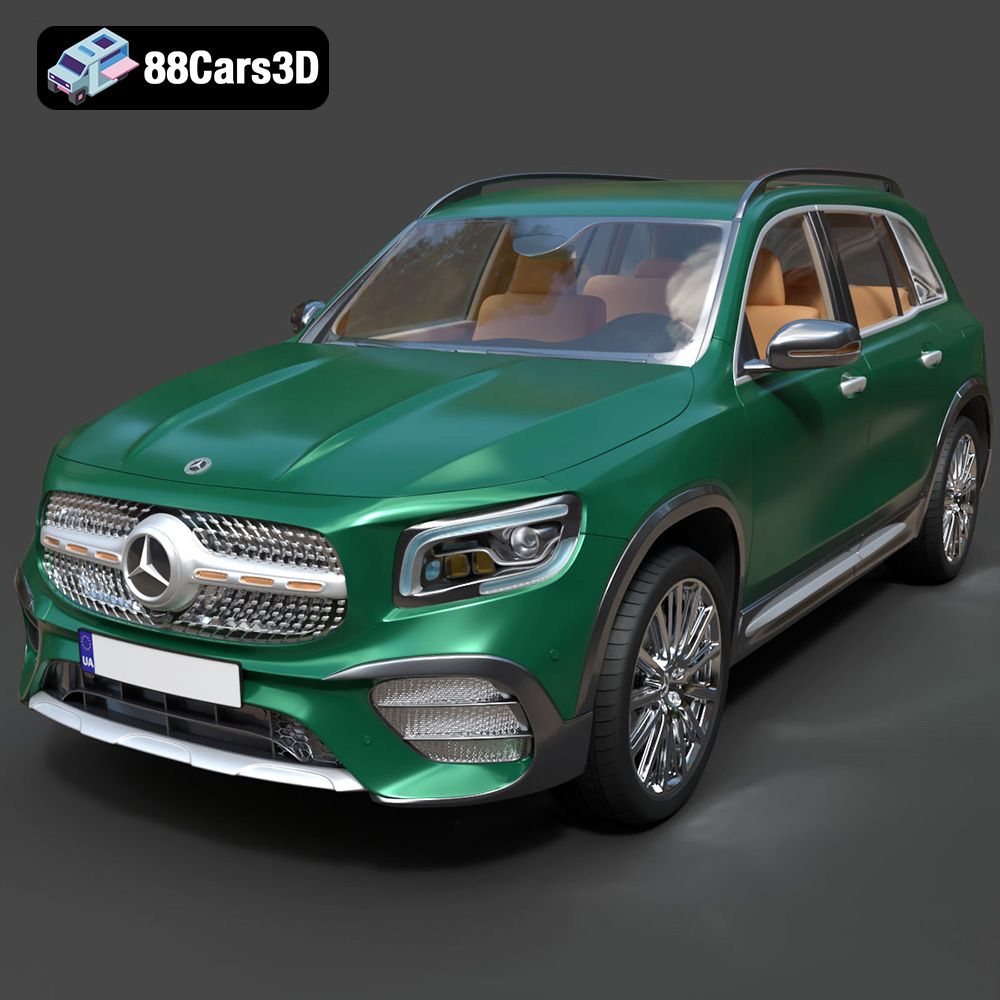
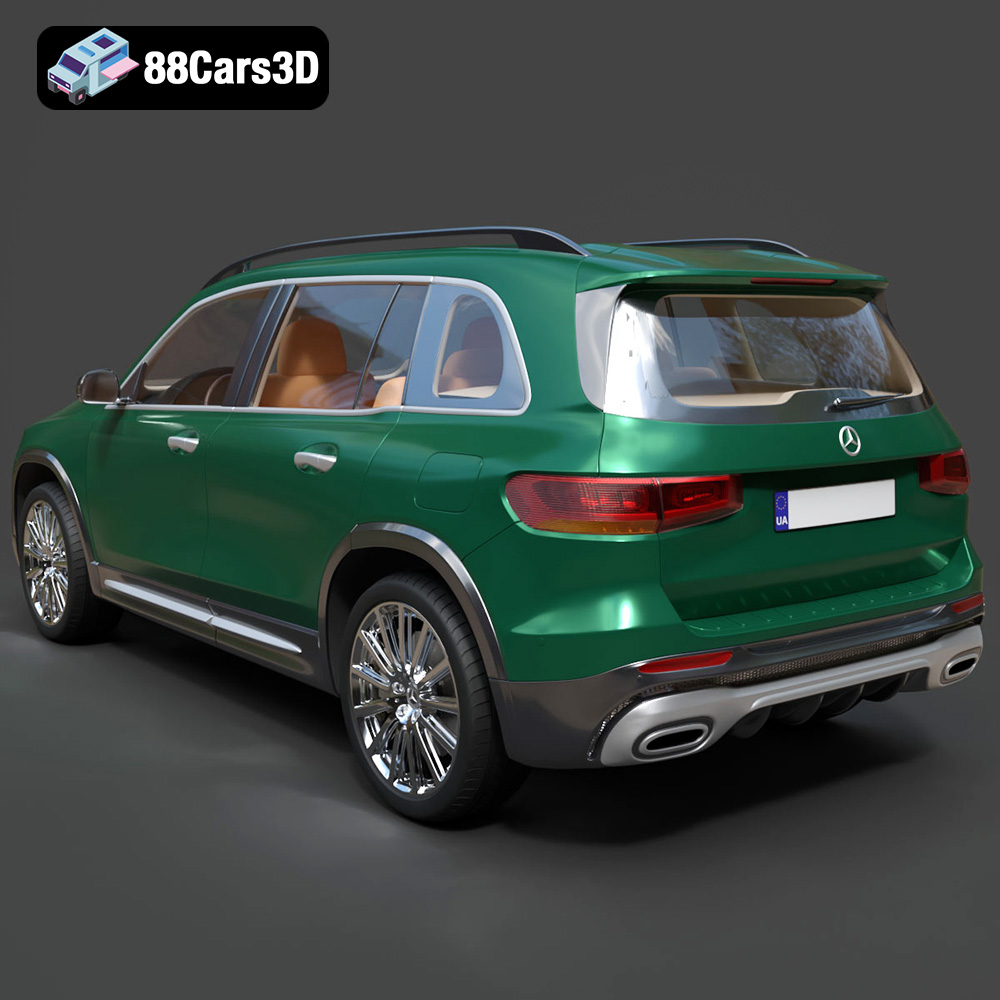
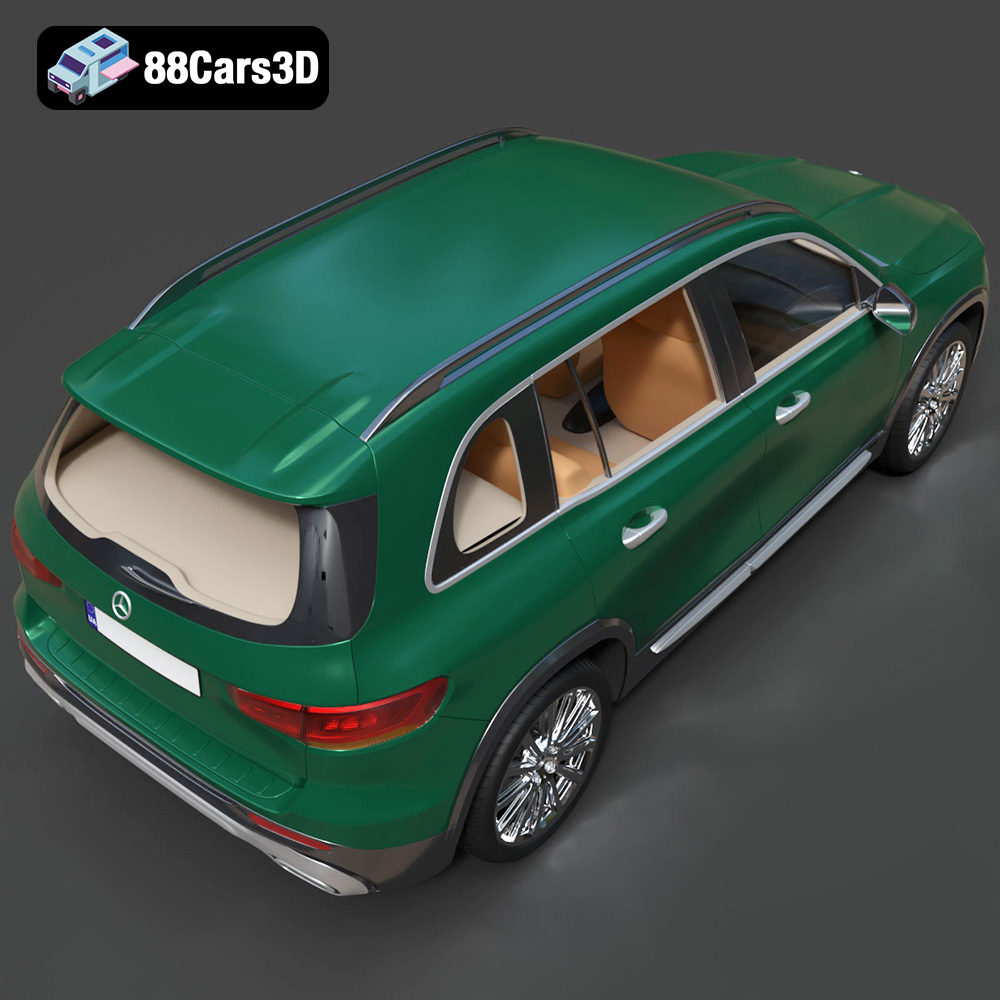
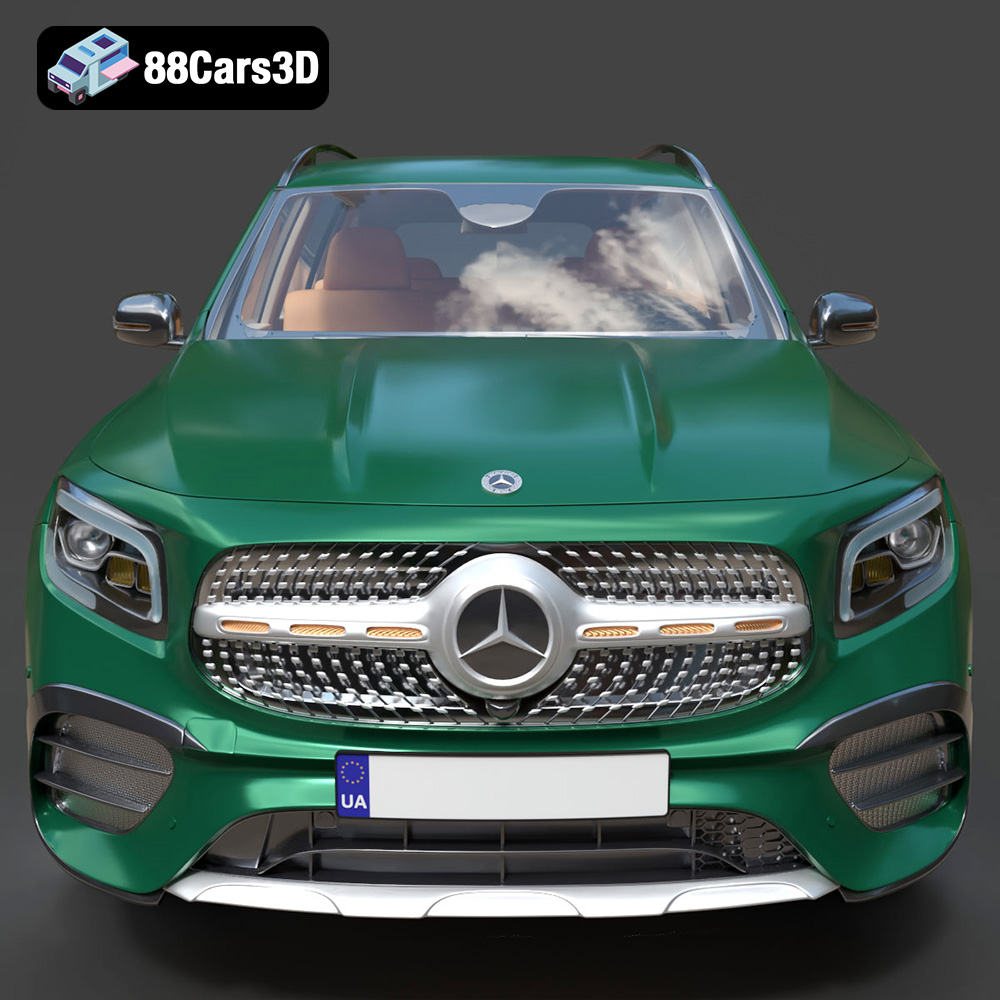
The exterior of the GLB-Class AMG Line is a study in modern automotive design, and this 3D model faithfully reproduces its distinctive characteristics. The signature diamond radiator grille, sporty front aprons, and prominent dual exhaust system are rendered with striking accuracy. High-detail LED High Performance headlamps and distinctive taillight clusters provide realism for both daytime and nighttime renders. Furthermore, the authentic AMG 5-twin-spoke light-alloy wheels and performance tires are accurately modeled, along with sport-tuned suspension detailing. The precise structural proportions and accurate Mercedes-Benz GLB-Class (Mk1) AMG Line frame geometry ensure that the model behaves and looks correct from every angle, vital for any serious automotive rendering or simulation.
Stepping inside the virtual cockpit of the GLB-Class reveals an equally impressive level of detail. The model features detailed sport seating with intricate stitching and contouring, reflecting the luxury and comfort of the real vehicle. The Nappa leather multifunction sports steering wheel with precise switchgear, along with the accurate MBUX dual-screen digital instrument cluster and infotainment system, are all meticulously recreated. Even the central console with touch controls, air vents, and pedals are highly detailed. This optimized geometry is particularly crucial for first-person POV in gaming and VR simulations, offering an immersive experience for virtual showrooms and realistic vehicle configurators where users can explore every facet of the interior.
Beyond its visual appeal, the true strength of a professional 3D car model lies in its technical specifications and how well it performs in various professional environments. The Mercedes-Benz GLB-Class (Mk1) AMG Line 2019 3D Model from 88cars3d.com is engineered for peak performance, striking a critical balance between high visual fidelity and efficient resource utilization.
A key advantage of this model is its “game-ready” optimization, featuring approximately 250,000 triangles. This polycount is a deliberate choice, striking a perfect balance for real-time engines like Unreal and Unity, ensuring exceptional visual realism without compromising frame rates. PBR (Physically Based Rendering) texturing provides realistic material responses under diverse lighting conditions, crucial for creating believable environments. Furthermore, the model boasts real-world scale accuracy, based on actual vehicle chassis dimensions, and proper pivot setup for steering, wheel rotation, and suspension travel. These technical advantages streamline integration into game development pipelines, minimizing the need for extensive post-purchase optimization.
The inherent technical quality and multiple file formats (including .fbx, .glb, .unreal, .max) make this GLB-Class model incredibly versatile. For game development, its optimized polycount makes it ideal for open-world games, racing titles, and simulators where performance is paramount. In the realm of AR/VR, the model’s precision and PBR materials are perfect for immersive virtual showrooms, vehicle configurators, and mobile AR experiences, allowing users to interact with a realistic representation of the car. For high-end rendering and visualization, such as brand campaigns, lifestyle scenes, or studio lighting setups, the model provides a robust foundation for producing stunning, photorealistic imagery. This adaptability underscores why investing in high-quality 3D car models is essential for any professional creative endeavor.
Integrating a complex 3D car model like the Mercedes-Benz GLB-Class (Mk1) AMG Line 2019 into professional workflows requires a solid understanding of software capabilities and best practices. The availability of multiple file formats is designed to cater to diverse needs, from artists seeking full control over every detail in a native scene to developers requiring seamless integration into real-time engines.
For artists working with 3ds Max or Blender, the inclusion of .max and .blend files, respectively, offers unparalleled flexibility. In 3ds Max, users can leverage the full power of its modeling and animation tools, alongside advanced rendering engines like V-Ray or Corona. This allows for intricate scene setups, custom lighting rigs, and sophisticated material adjustments to achieve hyper-realistic automotive rendering. Similarly, Blender users can open the .blend file and take advantage of Cycles or Eevee for rendering, modifying textures, adding environmental effects, or even animating complex sequences involving the car. The ability to access the native project files empowers artists to customize the model extensively, perhaps changing body colors to a specific shade like Mountain Grey or Cosmos Black, or fine-tuning material finishes to achieve matte, gloss, or metallic effects, as well as integrating carbon fiber accents.
When it comes to real-time applications, the .fbx and .unreal file formats are game-changers. For Unreal Engine and Unity developers, importing the .fbx file provides a robust starting point. The model’s optimized topology and PBR texturing ensure that materials translate accurately into the engine. Developers can then focus on setting up collision meshes, creating Level of Detail (LOD) groups to manage performance at varying distances, and implementing dynamic elements like animated wheels and suspension for realistic gameplay. The .unreal package (often a pre-configured .fbx or asset bundle) further simplifies this process by providing an engine-ready asset. For AR/VR experiences and web-based configurators, the .glb format becomes invaluable. Its single-file nature and efficient loading make it perfect for deployment on platforms that require optimized assets for quick streaming and interactive viewing, ensuring smooth performance even on mobile devices.
The versatility of a high-quality 3D model extends beyond digital screens. With advancements in 3D printing technology, these digital assets can now be transformed into tangible objects, offering a unique avenue for hobbyists and professionals alike. Furthermore, the inherent flexibility of well-structured 3D car models allows for extensive customization, empowering creators to adapt the asset to specific project needs.
The Mercedes-Benz GLB-Class (Mk1) AMG Line 2019 3D Model is convertible to the .stl format, making it suitable for 3D printing. This opens up possibilities for display-scale hobbyists to create physical replicas of their favorite vehicle. For optimal results, specific print settings are recommended: scales like 1:12, 1:18, or 1:24 are ideal for capturing detail, and resin printing is highly recommended for achieving the fine details of the GLB-Class’s exterior and interior. Layer heights between 0.04–0.12 mm ensure smooth surfaces. Crucially, supports will be required for intricate parts such as the exhaust system, mirrors, and steering wheel, and printing the frame angled for structural integrity, with wheels printed separately, helps achieve the best outcome. Post-processing with sanding, primer, and authentic factory colors with metallic finishes can elevate the printed model to a truly museum-quality piece.
A superior 3D model serves as a robust foundation for creative expression. With the GLB-Class model, users have extensive customization options. Beyond the core model, artists can easily change body colors to any desired shade, modify tire textures to represent street variants or rugged winter treads, and adjust material finishes from sleek matte to lustrous gloss or sophisticated metallic and carbon fiber accents. The ability to adapt lighting for different daytime or night-time environments further enhances its utility, allowing for dynamic scene creation. This level of creative control ensures that the Mercedes-Benz GLB-Class model can be seamlessly integrated into diverse narratives and visual styles, making it a truly adaptable asset for any automotive rendering project or game environment.
The modern landscape of 3D visualization, game development, and interactive media places an ever-increasing demand on the quality and versatility of digital assets. High-fidelity 3D car models, like the Mercedes-Benz GLB-Class (Mk1) AMG Line 2019, stand at the forefront of this evolution, offering an unparalleled blend of intricate detail, technical optimization, and broad compatibility across professional workflows. From its meticulous exterior and interior craftsmanship to its game-ready polycount and extensive file format support, this model is designed to empower creators across various industries.
Whether you’re developing immersive game assets, producing stunning automotive rendering, or exploring the frontiers of AR/VR, understanding the nuanced capabilities of such models and their corresponding file formats is paramount. The GLB-Class model’s adaptability, from cinematic renders in 3ds Max to real-time integration in Unreal Engine and even physical fabrication via 3D printing, underscores its value as a premium asset. By choosing well-crafted 3D car models from reputable sources like 88cars3d.com, professionals can significantly enhance their projects, saving valuable development time and delivering visually impactful results that truly resonate with their audience.
Experience the perfect blend of rugged versatility and premium luxury with our meticulous 3D model of the Mercedes-Benz GLB-Class (Mk1) AMG Line 2019. This compact crossover SUV stands out with its distinctive boxy silhouette, commanding stance, and aggressive AMG Line styling cues, including the signature diamond radiator grille, sporty front aprons, and prominent dual exhaust system. Designed to encapsulate the modern elegance and muscular heritage of the Mercedes-Benz brand, this digital replica captures every striking curve and sophisticated detail. This high-fidelity, game-ready 3D model is meticulously crafted with optimized topology (~250,000 triangles), striking an impeccable balance between exceptional visual realism and efficient real-time performance. Designed for maximum versatility, the model features PBR texturing and precise structural proportions, making it a premium asset for game engines, high-end rendering, and immersive interactive media. Perfect for urban racing games, luxury vehicle configurators, architectural visualizations, and mobile AR experiences.
$19.99
.2019
.blend
.fbx
.glb
.luxury suv
.max
.obj
.ply
.rendering
.stl
.unreal
amg-line
car-3d-model
compact-suv
game asset
game-ready
glb-class
low-poly
mercedes-benz
optimized
VR/AR