Get 20% OFF All Premium 3D & STL Models!

In the rapidly evolving world of digital visualization, the demand for high-fidelity 3D assets continues to surge. From groundbreaking video games to stunning architectural visualizations, immersive AR/VR experiences, and cinematic automotive rendering, the foundational element is often a meticulously crafted 3D model. Achieving photorealism and optimal performance requires a deep understanding of geometry, texturing, and file format versatility. Today, we’re diving into how a truly exceptional 3D car model can elevate projects, using the outstanding Mercedes-Benz GLB-Class Mk1 AMG Line 2019 3D model available on 88cars3d.com as our prime example. This digital replica is not just an aesthetic masterpiece but a technical marvel, designed to integrate seamlessly into a myriad of professional pipelines.
The pursuit of perfection in 3D car models involves balancing intricate detail with computational efficiency. Artists and developers constantly seek assets that deliver both visual splendor and smooth real-time performance. This balance is critical, whether you’re building an open-world racing game, a luxury car configurator for a showroom, or a high-end marketing animation. The featured Mercedes-Benz GLB-Class model perfectly exemplifies this philosophy, offering a game-ready asset that doesn’t compromise on the premium feel and aggressive styling of its real-world counterpart. Let’s explore the technical nuances and creative potential that such a sophisticated 3D asset unlocks for professionals across various industries.
The choice of file format is paramount in any 3D workflow, dictating compatibility, feature retention, and overall efficiency. A truly versatile 3D asset, like the Mercedes-Benz GLB-Class Mk1 AMG Line 2019 model from 88cars3d.com, provides a range of formats to suit specific project needs. Understanding each one is crucial for optimizing your pipeline.
The .blend file format is the native file type for Blender, one of the most powerful and popular open-source 3D content creation suites. When you receive a .blend file, you’re getting a fully editable scene, complete with materials, textures, lighting, camera setups, and often, animation rigs. For artists working primarily in Blender, this format offers the highest degree of flexibility for customization, material adjustments (PBR node setups), and scene integration. It preserves all the scene data, making it ideal for those who wish to delve deep into the model’s construction, make significant modifications, or integrate it into a larger Blender-based project with minimal friction.
FBX (Filmbox) is a proprietary file format owned by Autodesk, widely recognized as the industry standard for exchanging 3D data between different software applications, especially for game development and real-time pipelines. Its strength lies in its ability to store not just geometry and materials, but also animations, rigging, cameras, and lights. For Unreal Engine and Unity developers, .fbx is often the go-to format for importing complex animated models. It offers excellent compatibility and is highly optimized for performance in real-time environments, making it indispensable for game assets and AR/VR applications where efficient data transfer and rendering are critical.
OBJ (Object) is a universal 3D interchange format that has been around for decades. It’s renowned for its simplicity and wide support across virtually all 3D software. An .obj file primarily stores geometry (vertices, normals, UV coordinates, and faces) and references to external material files (.mtl). While it doesn’t support advanced features like animation or rigging, its widespread compatibility makes it an excellent choice for basic mesh transfer and cross-software collaboration. When you need to ensure a model can be opened and worked with in almost any 3D package, .obj is a reliable choice.
GLB (GL Transmission Format Binary) is the binary version of glTF, a royalty-free specification for the efficient transmission and loading of 3D scenes and models by applications. GLB files package textures and other assets directly into a single binary file, making them incredibly efficient for web-based 3D, AR (Augmented Reality), VR (Virtual Reality), and mobile applications. Its optimization for rapid loading and display makes it perfect for interactive web viewers, virtual showrooms, and social media filters where file size and performance are critical.
STL (Standard Tessellation Language) is the de facto standard file format for 3D printing. It represents a 3D model as a collection of triangular facets, defining the surface geometry without color or texture information. While simple, its ubiquity in the 3D printing world means that if you intend to bring a digital model into the physical realm, an .stl file is essential. For hobbyists and professionals looking to print miniature versions of the Mercedes-Benz GLB-Class, the .stl format ensures compatibility with most slicer software and 3D printers.
PLY (Polygon File Format or Stanford Triangle Format) is a versatile format often used for storing 3D data from 3D scanners and for applications requiring precision mesh representation. It can store a variety of properties beyond just geometry, including color, transparency, texture coordinates, normals, and even confidence values. While less common in everyday rendering pipelines, it’s highly valued in scientific, CAD, and analytical fields where exact data representation and additional vertex/face properties are crucial.
The inclusion of a dedicated .unreal format (often a packaged asset or a project file segment) signifies that the model is specifically prepared and optimized for direct integration into Unreal Engine. This often means pre-configured materials, collision meshes, LODs (Levels of Detail), and blueprint setups, saving developers significant time and effort in the asset import and setup process. It ensures that the Mercedes-Benz GLB-Class model will leverage Unreal Engine’s capabilities right out of the box for stunning real-time visualizations.
The .max file format is native to Autodesk 3ds Max, a leading software for 3D modeling, animation, rendering, and visualization. Similar to .blend, a .max file contains the entire scene, including geometry, modifiers, materials, textures, lighting, cameras, and animation data. For users of 3ds Max, this format provides the most comprehensive access to the original project structure, allowing for full artistic control, complex animation setups, and integration into high-fidelity V-Ray or Corona renders.
The Mercedes-Benz GLB-Class Mk1 AMG Line 2019 3D model is a testament to meticulous craftsmanship, designed to meet the rigorous demands of professional 3D artists and developers. Its appeal lies not just in its accurate representation, but in the intelligent optimization that makes it highly versatile.
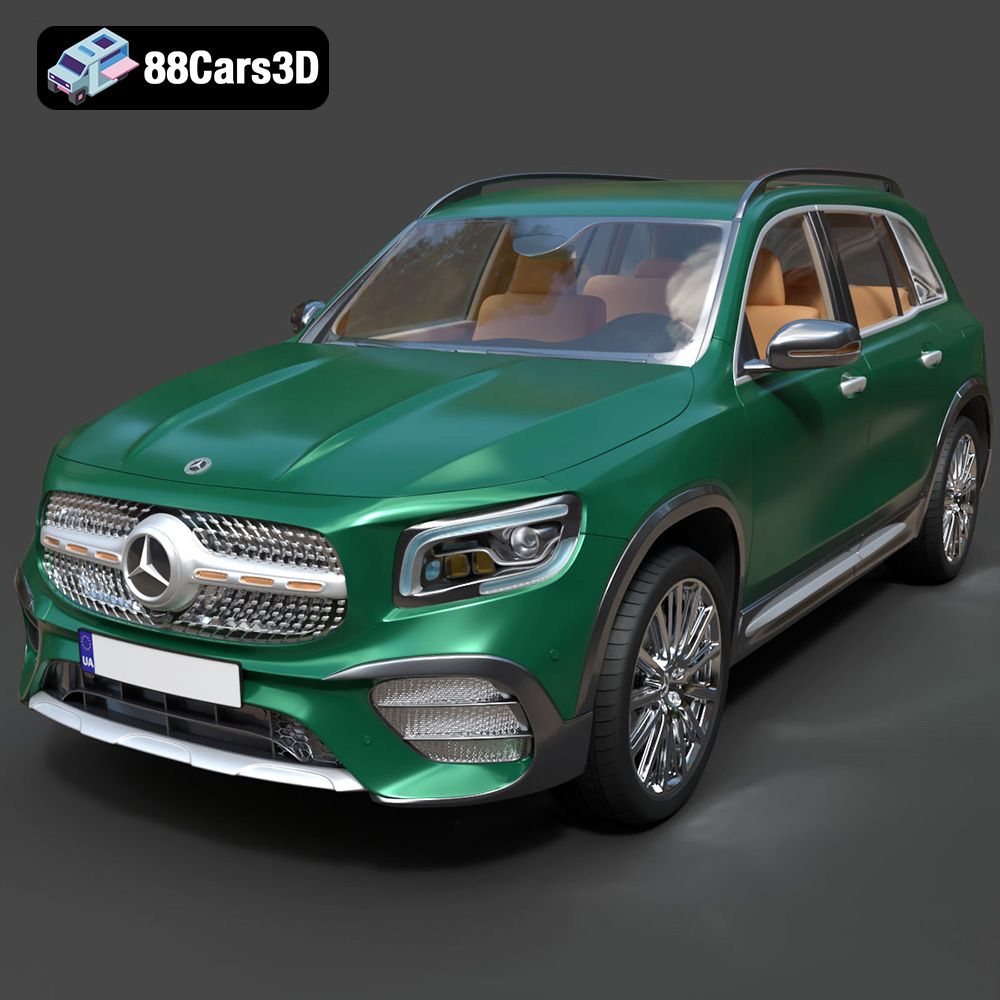
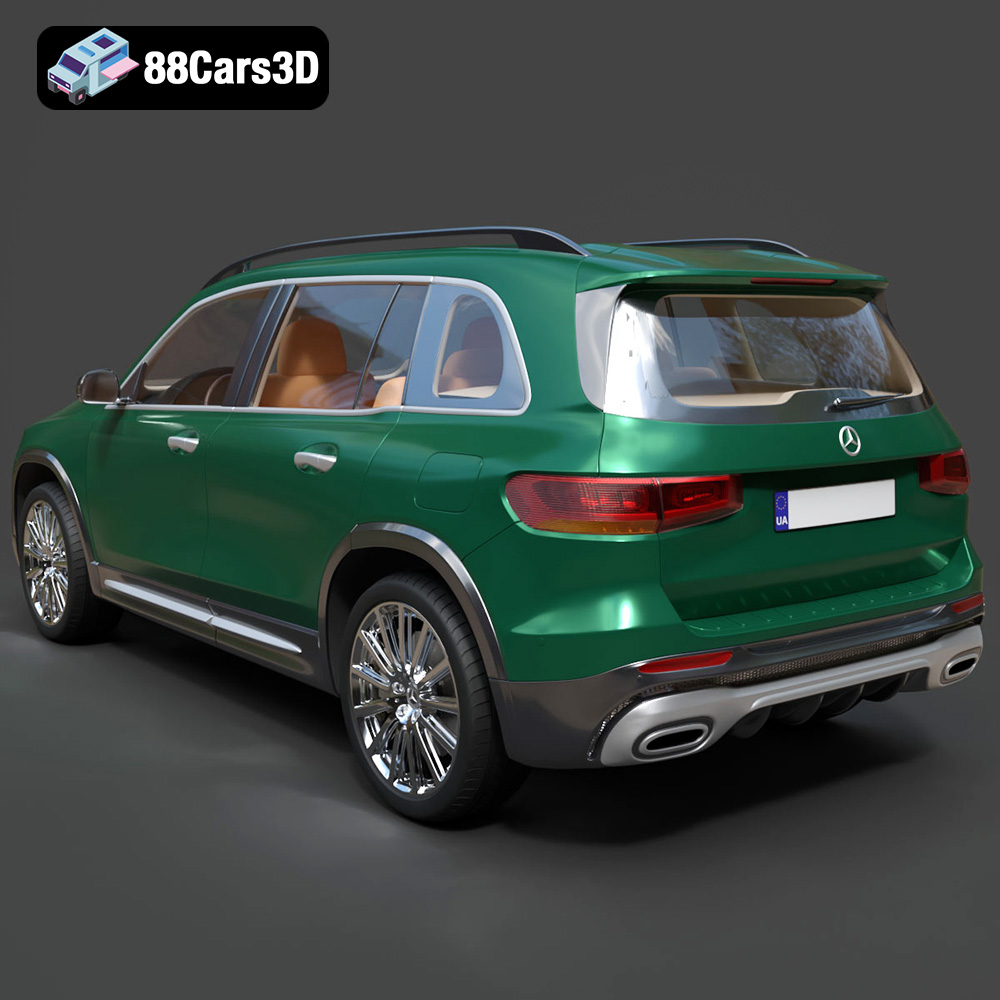
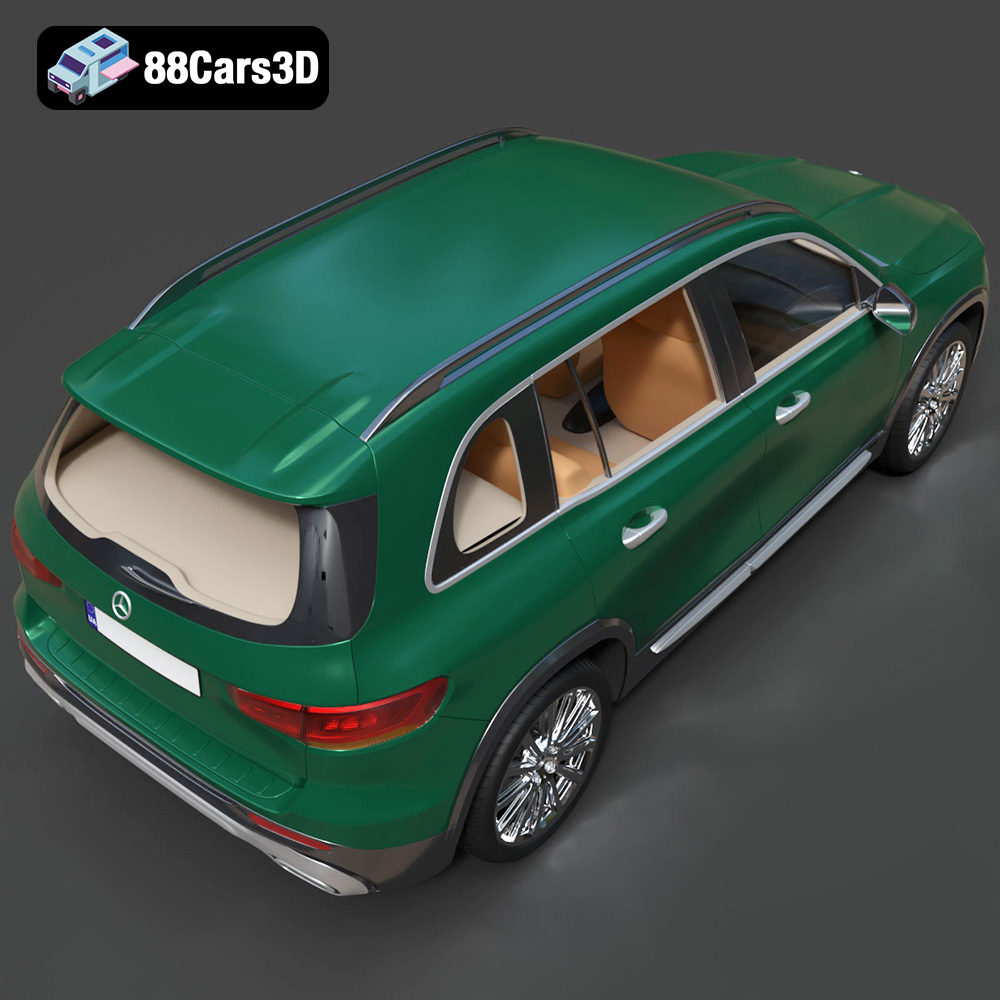
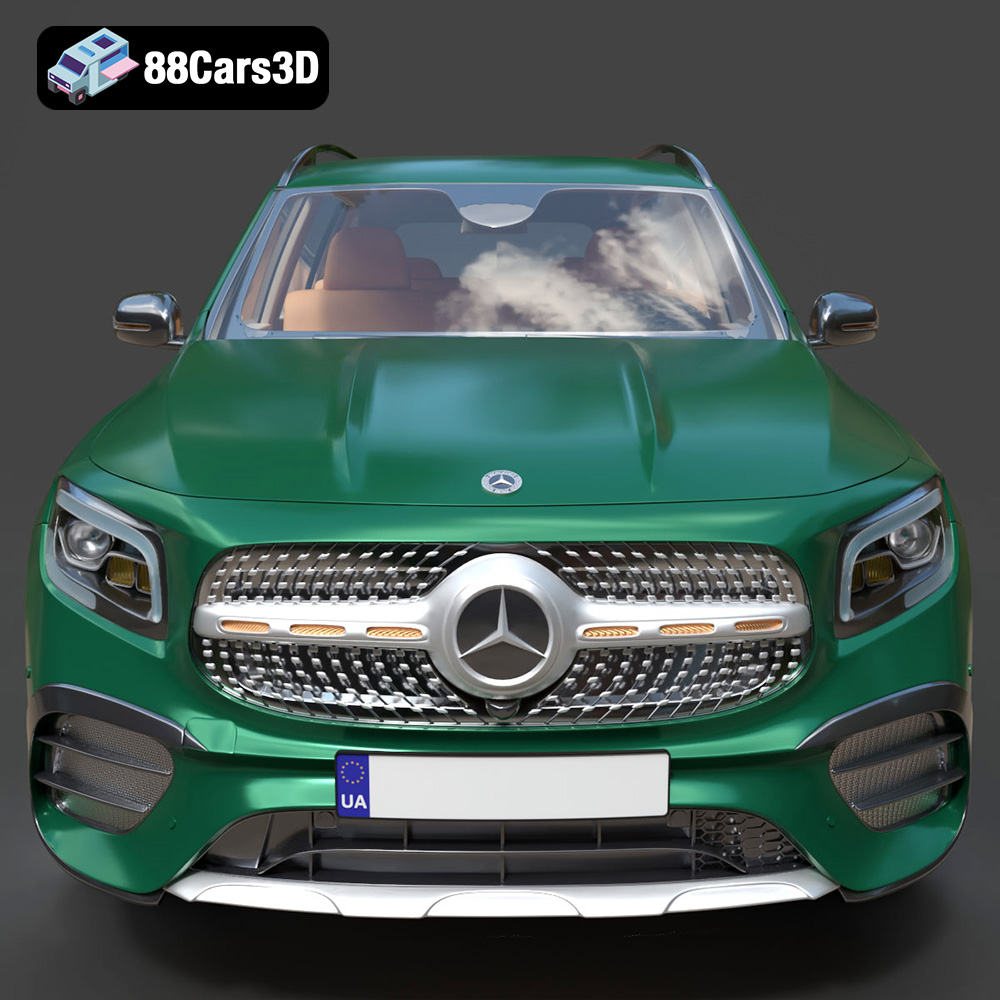
The primary goal in automotive 3D modeling is often visual authenticity, and this model delivers. It captures the distinctive boxy silhouette and commanding stance of the GLB-Class, enhanced by the aggressive AMG Line styling cues. From the signature diamond radiator grille to the sporty front aprons and prominent dual exhaust system, every curve and panel is accurately replicated. High-detail LED High Performance headlamps and authentic AMG 5-twin-spoke light-alloy wheels further enhance its photorealistic potential. The model includes separate components for wheels, suspension, and steering, enabling seamless animation for racing simulations or cinematic camera moves. This level of detail is crucial for high-end automotive rendering, where subtle reflections and accurate forms define the quality of the final image.
Beyond the exterior, the interior of a luxury vehicle like the Mercedes-Benz GLB-Class is equally important for creating truly immersive experiences. This 3D model doesn’t disappoint, featuring detailed sport seating with intricate stitching, a Nappa leather multifunction sports steering wheel with precise switchgear, and an accurate MBUX dual-screen digital instrument cluster and infotainment system. Even the central console, air vents, and pedals are modeled with care. This meticulous interior detailing makes the asset ideal for first-person POV in gaming, virtual showrooms where users can explore the cockpit, or realistic VR simulations, allowing for a deep sense of presence.
Underpinning the visual fidelity are robust technical specifications. The model boasts an optimized topology of approximately 250,000 triangles. This polycount strikes a near-perfect balance, providing exceptional visual realism without overburdening real-time game engines like Unreal and Unity. Real-world scale accuracy, based on the actual vehicle chassis, ensures correct proportions and seamless integration into architectural visualization scenes or other real-world scale environments. Proper pivot setups for steering, wheel rotation, and suspension travel are pre-configured, drastically reducing setup time for animators and game developers. The PBR texturing further enhances its versatility, ensuring consistent and realistic material responses under various lighting conditions, a critical feature for any modern rendering pipeline.
The true value of a premium 3D asset lies in its ability to streamline and enhance professional production pipelines. The Mercedes-Benz GLB-Class Mk1 AMG Line 2019 3D model is engineered with this principle in mind, making it an invaluable asset across multiple industries.
In game development, performance is king. The GLB-Class model’s optimized ~250,000 triangle polycount is explicitly designed for this environment, ensuring it runs smoothly in demanding open-world games, racing titles, and vehicle simulators without compromising visual quality. Its game-ready status, often indicated by clean topology, optimized UVs for PBR textures, and correct pivot points, means less work for developers. Importing into Unreal Engine or Unity is straightforward with the provided .fbx or .unreal formats, allowing designers to quickly integrate it into playable levels, test drive mechanics, or populate virtual cities. The animated components (wheels, steering, suspension) are crucial for dynamic gameplay, providing realistic vehicle physics and visual feedback.
For marketing campaigns, product showcases, or architectural visualizations, photorealism is non-negotiable. The detailed exterior and interior features of the GLB-Class model make it perfect for high-end automotive rendering. Whether using 3ds Max with V-Ray/Corona or Blender with Cycles/Eevee, artists can leverage the model’s accurate geometry and PBR materials to produce stunning visuals. Imagine the GLB-Class parked in front of a modern minimalist house in an arch-viz scene, or driving through a bustling city for a commercial. The ability to customize body colors and material finishes further enhances its utility, allowing artists to match brand guidelines or client specifications with ease, creating compelling lifestyle scenes or studio lighting setups.
The rise of Augmented and Virtual Reality creates new avenues for engaging audiences. The GLB-Class model, particularly in its .glb format, is ideal for immersive virtual showrooms where customers can explore the vehicle in 3D, or for mobile AR experiences that allow users to place the car in their real-world environment. Its optimized geometry ensures smooth performance on AR/VR platforms, which often have stricter computational limits than traditional rendering. Developers can create interactive configurators, allowing users to change colors, wheels, or interior trims in real-time, offering a highly personalized and engaging brand experience. This capability makes the model a powerful tool for luxury vehicle configurators and interactive product presentations.
Beyond digital screens, 3D printing offers a tangible way to appreciate the intricate designs of 3D car models. The Mercedes-Benz GLB-Class Mk1 AMG Line 2019 model is prepared for this, with its .stl format catering directly to physical prototyping and display-scale hobbyists.
Converting a complex digital model into a successful physical print requires careful planning. The provided .stl format means the model’s geometry is tessellated into triangles, ready for slicing software. Recommended scales (1:12, 1:18, 1:24) are crucial for balancing detail and printability. For fine details, such as the AMG grille or interior elements, resin printing (SLA/DLP) is highly recommended over FDM, allowing for layer heights as low as 0.04mm. Proper print orientation, with the frame printed at an angle for structural integrity and wheels separately, is essential to minimize support material and maximize detail capture. Understanding these settings ensures a smooth transition from screen to physical object.
Once printed, the real-world model often requires significant post-processing to achieve a showroom-quality finish. This typically involves sanding to remove layer lines or support marks, followed by priming to create a uniform surface for paint. For an authentic Mercedes-Benz GLB-Class replica, applying factory colors with metallic finishes is key. Advanced hobbyists might use airbrushing techniques for smooth gradients and realistic metallic flecks, and clear coats for a protective, glossy finish. Detailed parts like exhaust tips, mirrors, and the steering wheel often require careful painting and assembly. This meticulous approach to physical finishing transforms a printed object into a true miniature masterpiece.
A high-quality 3D model is not just a static representation; it’s a foundation for boundless creativity. The Mercedes-Benz GLB-Class Mk1 AMG Line 2019 model offers extensive customization options, empowering artists to tailor it to unique project requirements.
The model’s PBR texturing setup provides a robust base for material manipulation. Artists can easily change body colors, opting for classic Mercedes-Benz hues like Mountain Grey or Cosmos Black, or venturing into custom finishes like vibrant metallics or matte wraps. Modifying tire textures, from street variants to winter treads, adds another layer of realism depending on the scene’s context. Beyond color, adjusting material properties such as glossiness, reflectivity, and the presence of carbon fiber accents allows for subtle yet impactful variations in the car’s appearance. This flexibility is invaluable for configurators, marketing materials showing different trim levels, or personalized renders.
Lighting is crucial for bringing any 3D scene to life. With the GLB-Class model, artists can adapt lighting to different daytime or night-time environments, creating diverse moods and enhancing its visual appeal. Placing the car under studio lights will highlight its sleek contours, while integrating it into an outdoor HDRi (High Dynamic Range image) environment will allow it to naturally reflect its surroundings. The model’s accurate geometry and PBR materials react realistically to various light sources, from subtle ambient light to harsh direct sunlight or dramatic artificial illumination, ensuring it always looks its best. This adaptability makes the GLB-Class a versatile asset for any scene composition.
The Mercedes-Benz GLB-Class Mk1 AMG Line 2019 3D model represents the pinnacle of modern 3D asset development, perfectly balancing aesthetic fidelity with technical optimization. It stands as a prime example of a game-ready asset that also excels in high-end rendering, AR/VR, and even 3D printing applications. Its inclusion of a comprehensive range of file formats—from .blend and .max for full scene control to .fbx and .unreal for real-time engines, .glb for web, and .stl for printing—underscores its immense versatility for professionals across various digital design disciplines.
Investing in such a high-quality 3D car model from a reputable source like 88cars3d.com significantly reduces production time and elevates the visual standard of any project. Whether you’re a game developer crafting the next big racing title, an architect visualizing a new property, a marketing agency creating a compelling automotive campaign, or an enthusiast bringing a digital design to life through 3D printing, the GLB-Class model offers an unparalleled foundation. Its attention to detail, from exterior styling to interior features and technical optimizations, ensures that it’s not just a model, but a catalyst for creative excellence.
Experience the perfect blend of rugged versatility and premium luxury with our meticulous 3D model of the Mercedes-Benz GLB-Class (Mk1) AMG Line 2019. This compact crossover SUV stands out with its distinctive boxy silhouette, commanding stance, and aggressive AMG Line styling cues, including the signature diamond radiator grille, sporty front aprons, and prominent dual exhaust system. Designed to encapsulate the modern elegance and muscular heritage of the Mercedes-Benz brand, this digital replica captures every striking curve and sophisticated detail. This high-fidelity, game-ready 3D model is meticulously crafted with optimized topology (~250,000 triangles), striking an impeccable balance between exceptional visual realism and efficient real-time performance. Designed for maximum versatility, the model features PBR texturing and precise structural proportions, making it a premium asset for game engines, high-end rendering, and immersive interactive media. Perfect for urban racing games, luxury vehicle configurators, architectural visualizations, and mobile AR experiences.
$19.99
.2019
.blend
.fbx
.glb
.luxury suv
.max
.obj
.ply
.rendering
.stl
.unreal
amg-line
car-3d-model
compact-suv
game asset
game-ready
glb-class
low-poly
mercedes-benz
optimized
VR/AR