Get 20% OFF All Premium 3D & STL Models!

In the exhilarating world of automotive design, few names evoke the same level of respect and awe as the Nissan GTR R35 Nismo. This legendary machine, a pinnacle of Japanese engineering and performance, is a dream for enthusiasts and professionals alike. But beyond the asphalt, its allure extends deeply into the digital realm, where precision 3D models are indispensable tools for visualization, game development, and cinematic rendering. Crafting a digital representation that truly honors such an iconic vehicle requires not just skill, but an unwavering commitment to detail and technical excellence.
Imagine being able to integrate this powerhouse into your next game title, showcase it in a photorealistic advertisement, or dissect its aerodynamics in a virtual environment. This is where a high-quality 3D asset, such as the Nissan GTR R35 Nismo 3D Model, becomes an invaluable asset. It’s more than just a collection of polygons; it’s a meticulously engineered digital twin, ready to elevate your projects to professional standards. From the aggressive lines of its aerodynamic body kit to the intricate details of its interior, every element is designed to convey the true spirit of the Nismo. For professionals seeking unparalleled realism and flexibility, understanding the technical intricacies and available formats of such models is paramount. This deep dive will explore how a model of this caliber can seamlessly integrate into diverse workflows, enhancing everything from real-time applications to high-fidelity cinematic renders, and why sourcing such assets from reputable marketplaces like 88cars3d.com is crucial for success.
The creation of a compelling 3D car model is a fusion of artistic vision and engineering precision. When dealing with an icon like the Nissan GTR R35 Nismo, the stakes are even higher. Every curve, vent, and carbon fiber weave must be accurately translated into the digital space to maintain authenticity and deliver a truly professional result.
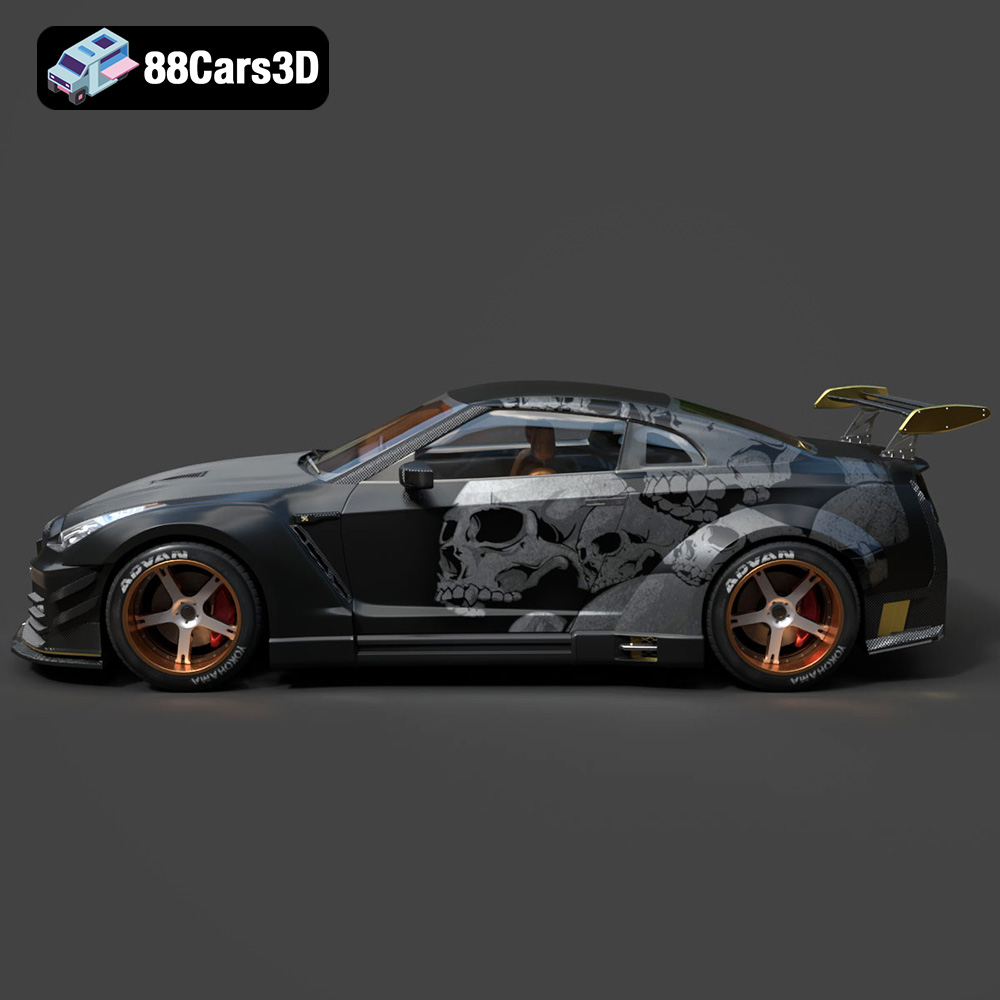
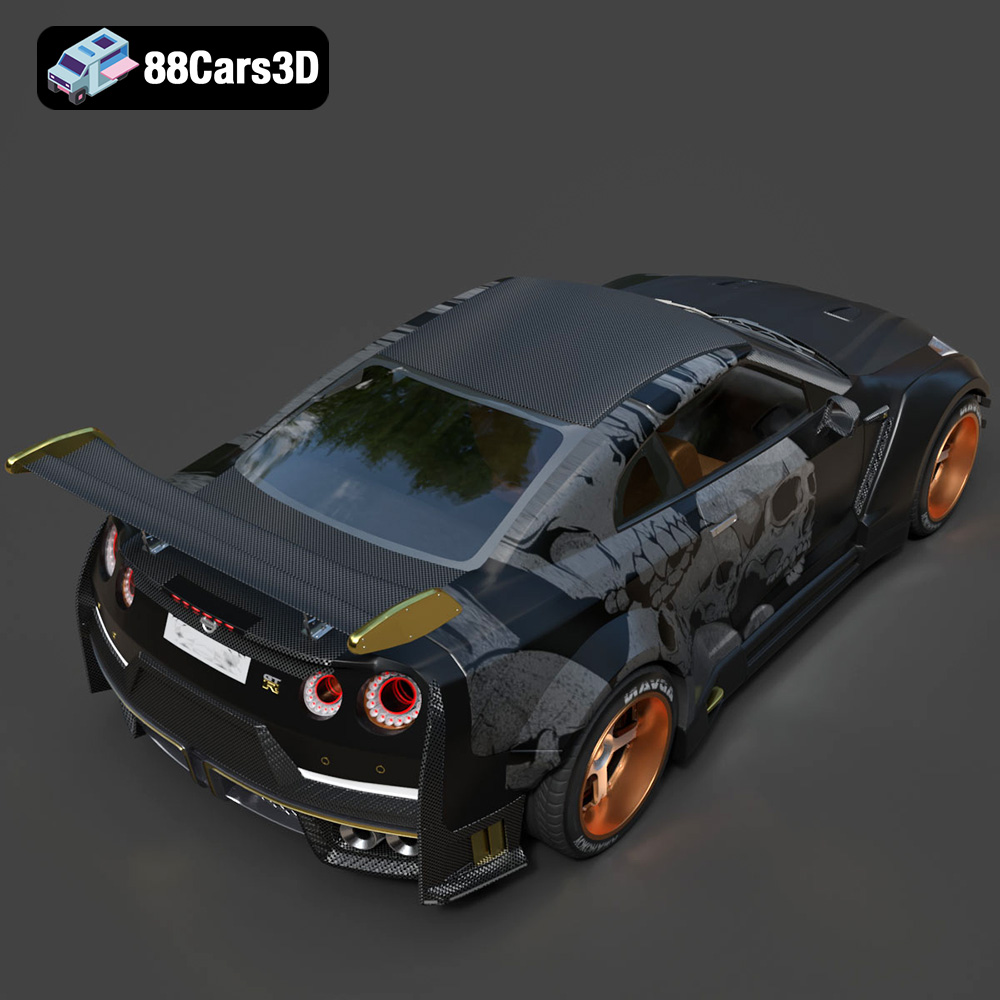
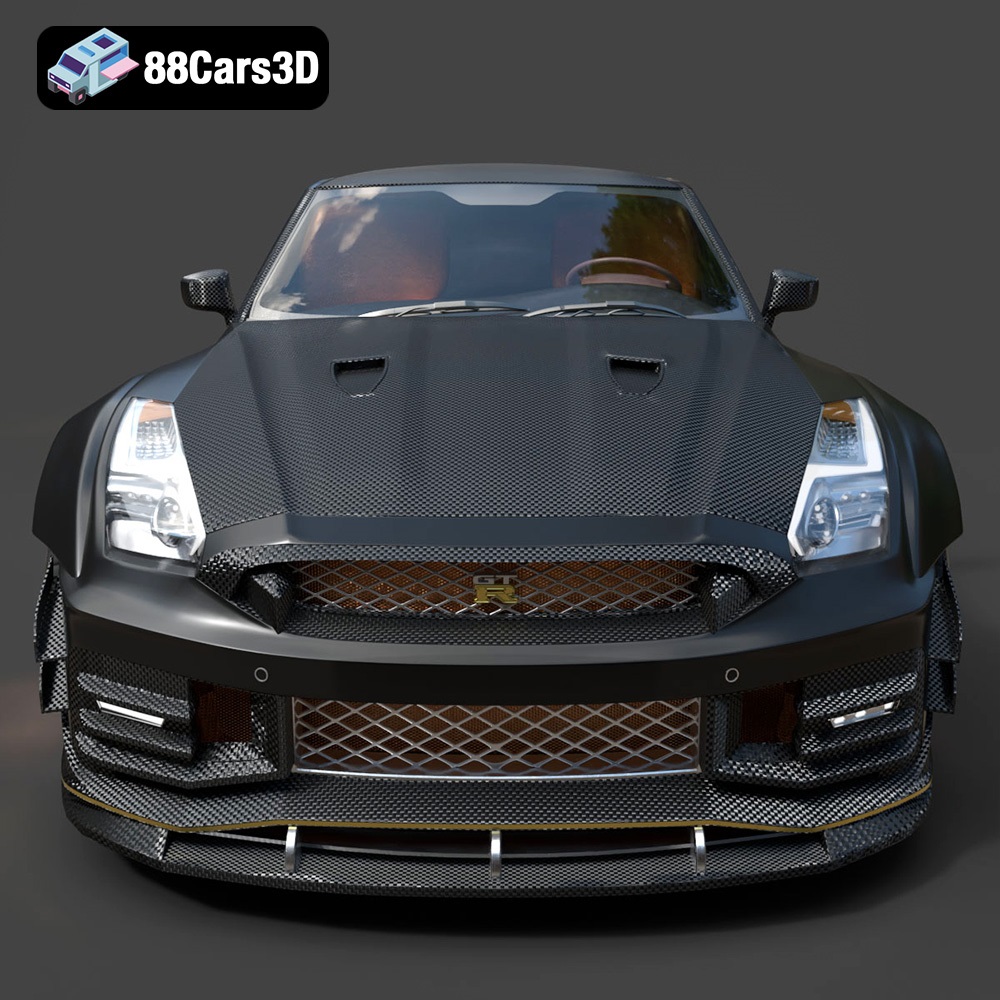
The real-world Nissan GTR R35 Nismo is defined by its track-focused aggression, widened stance, and functional aerodynamic elements. These are not merely aesthetic choices; they are performance-driven designs that contribute to its legendary capabilities. A high-quality 3D model must perfectly capture these characteristics. This means precise replication of the distinctive V-motion grille, the aggressive front splitter, the prominent rear wing, and the unique Nismo-specific wheels. Discrepancies in proportion or detail can instantly break immersion, especially in high-fidelity applications. The goal is to create a digital asset that immediately resonates with anyone familiar with the vehicle, conveying its power and prestige even in a static render.
The journey from a physical car to a digital 3D model involves several critical stages, each demanding meticulous attention. It typically begins with extensive reference gathering, including blueprints, photographs, and sometimes even laser scans of the actual vehicle. This data forms the foundation for 3D modeling, often starting with low-polygon base meshes and progressively adding detail through subdivision surfacing techniques. Clean topology, utilizing mostly quads, is essential for smooth deformations and efficient UV unwrapping. As the model takes shape, attention shifts to replicating intricate elements like headlamp assemblies, brake calipers, and interior components, ensuring that even under close scrutiny, the digital model holds up to the realism of its physical counterpart. This rigorous process is what distinguishes a professional-grade asset from a hastily constructed one.
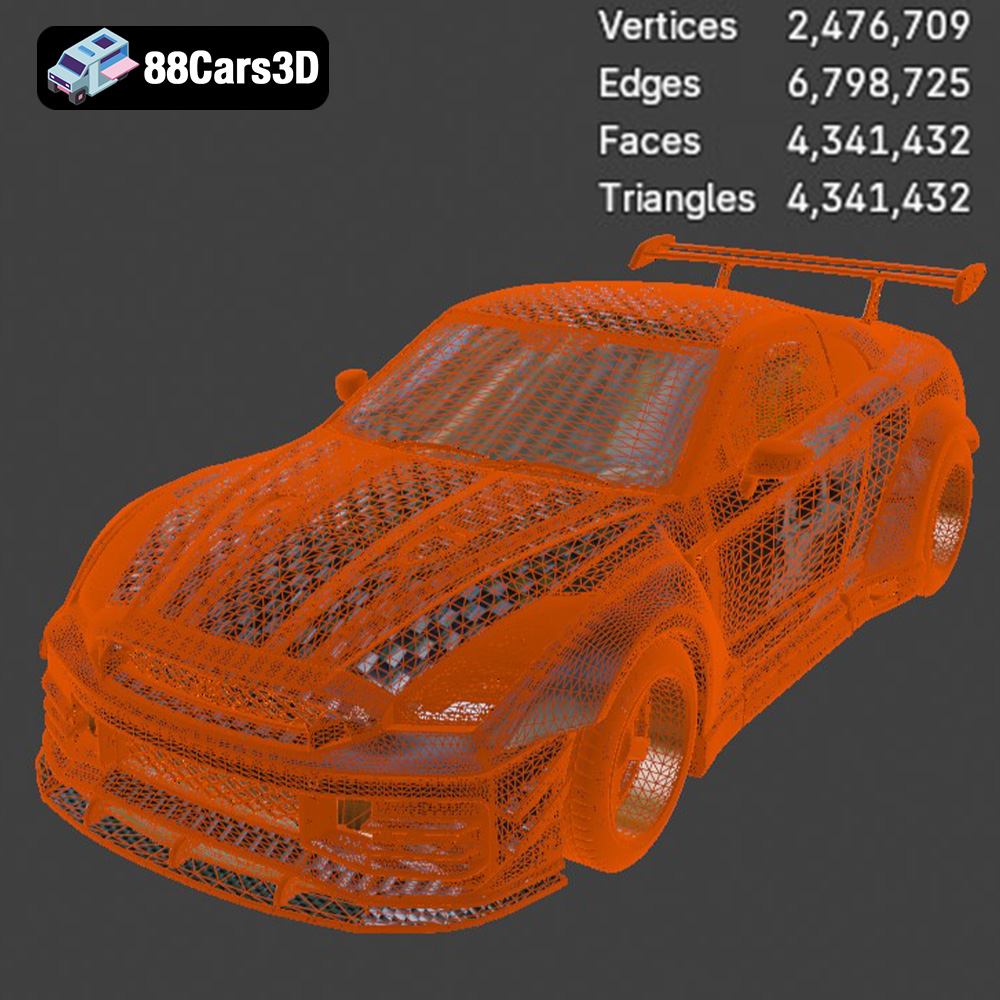
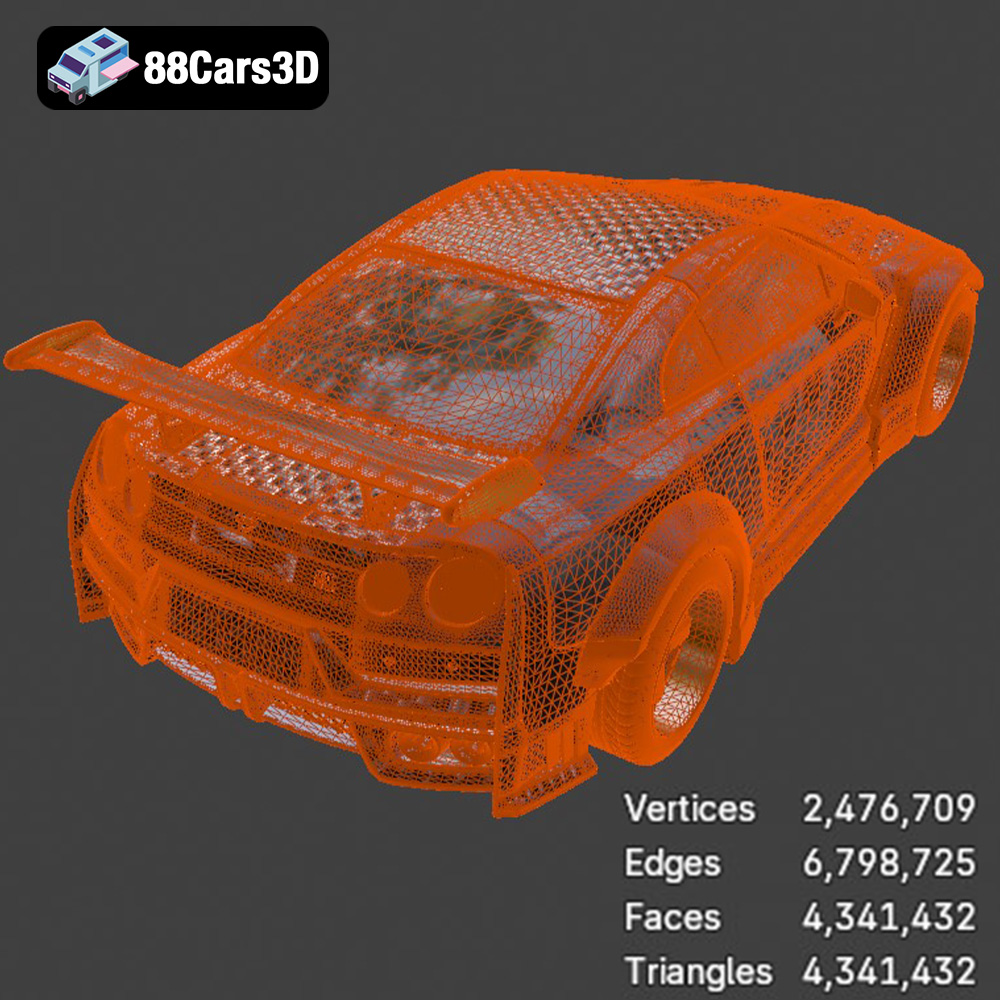
High-fidelity geometry refers not just to the number of polygons, but to their clean arrangement and efficient distribution. A model like the Nissan GTR R35 Nismo 3D Model exemplifies this with its optimized polygon structure. This optimization ensures that while the visual detail is breathtaking, the model remains manageable for various applications, from real-time game engines to demanding offline renderers. Features such as perfectly modeled carbon fiber aero components, the intricate wheel designs, and the fully modeled interior contribute significantly to the perceived realism. Clean geometry is also crucial for seamless UV mapping, which in turn allows for precise texture application, minimizing distortion and maximizing visual impact. Without this foundational accuracy, even the best textures and lighting cannot fully redeem a poorly constructed mesh.
The versatility of a professional 3D car model is significantly enhanced by its availability in a comprehensive suite of file formats. Each format serves a specific purpose, catering to different software ecosystems, project requirements, and output destinations. Understanding these distinctions is crucial for anyone working with 3D assets, as selecting the correct format can streamline workflows, preserve data integrity, and optimize performance. The Nissan GTR R35 Nismo 3D Model from 88cars3d.com, for instance, is offered in a wide array of formats, ensuring maximum compatibility for any professional pipeline.
The `.blend` file format is native to Blender, the powerful open-source 3D creation suite. When you acquire the Nissan GTR R35 Nismo 3D Model in `.blend` format, you’re getting a fully editable Blender scene. This typically includes not only the raw mesh data but also the materials, textures, lighting setup, and sometimes even basic animation rigs. It’s ideal for artists who primarily work in Blender, allowing for direct modification, rendering with Eevee or Cycles, and further customization without loss of data or needing to re-import assets. The `.blend` format maintains all scene information, making it perfect for iterative design and detailed project work.
Autodesk’s `.fbx` (Filmbox) format is one of the most widely supported 3D file formats, making it a cornerstone for interoperability between different software packages. It’s particularly ideal for real-time pipelines such as Unreal Engine and Unity. An `.fbx` file can encapsulate geometry, materials (with PBR maps), textures, rigging, animation, and even camera data. Its strength lies in its ability to transfer complex scene data while maintaining structural integrity, albeit sometimes requiring material re-setup in the destination software. For game developers, the `.fbx` version of the Nissan GTR R35 Nismo 3D Model is typically optimized for performance, with considerations for poly count and material channels.
The `.obj` (Wavefront OBJ) format is a universal 3D model format known for its simplicity and broad compatibility. It primarily stores geometric data (vertices, normals, UV coordinates) and can reference external `.mtl` (material) files for basic material properties and texture maps. While `.obj` doesn’t typically support advanced features like rigging or animation, its widespread adoption makes it an excellent choice for cross-software compatibility. It’s a reliable option for importing static models into virtually any 3D application for rendering, sculpting, or further manipulation, ensuring the Nissan GTR Nismo model is accessible to all.
The `.glb` (GL Transmission Format Binary) format is a relatively newer, highly optimized file format designed specifically for the efficient transmission and loading of 3D scenes and models in AR/VR applications, web-based viewers, and mobile platforms. It bundles geometry, materials, textures, and animation into a single compact file. Its binary nature and focus on PBR materials make it incredibly efficient for real-time applications where performance and rapid loading are critical. For showcasing the Nissan GTR R35 Nismo in an interactive web viewer or a mobile augmented reality experience, `.glb` is the format of choice.
The `.stl` (Stereolithography) format is the standard for 3D printing and rapid prototyping. Unlike other formats that store various geometric primitives, `.stl` represents a 3D model as a collection of unconnected triangular facets. While it lacks color, texture, or material information, its simplicity makes it universally compatible with 3D printers and slicing software. The `.stl` version of the Nissan GTR R35 Nismo 3D Model would be suitable for creating physical prototypes or collectible miniatures, offering a tangible representation of the digital asset.
The `.ply` (Polygon File Format) is a versatile format capable of storing a wide range of data, including vertices, faces, normals, color, and even transparency. It’s often used for scientific data, CAD applications, and 3D scanning, where precise mesh information is crucial. While less common for general 3D model exchange compared to `.fbx` or `.obj`, its ability to capture detailed polygon mesh data makes it valuable for analysis, reverse engineering, or niche visualization tasks.
The `.unreal` format denotes an asset that has been specifically configured and often directly exported or packaged for Unreal Engine. This often means the model has already been imported, had its materials set up using Unreal’s physically based rendering (PBR) system, potentially had LODs (Levels of Detail) generated, and even collision meshes created. This pre-configured state drastically reduces setup time for developers, offering a truly plug-and-play experience for integrating the Nissan GTR R35 Nismo into an Unreal Engine project.
Similar to `.blend` for Blender, the `.max` file format is native to Autodesk 3ds Max. It encompasses the entire scene data, including geometry, modifiers, materials (V-Ray, Corona, Standard), lighting, cameras, animation, and scene organization. The `.max` version of the Nissan GTR R35 Nismo 3D Model provides the ultimate flexibility for 3ds Max users, allowing for advanced rendering setups, complex animations, and detailed scene modifications, making it indispensable for high-end rendering and animation studios.
The real power of a versatile 3D asset like the Nissan GTR R35 Nismo 3D Model lies in its ability to seamlessly integrate into various professional workflows. Whether you’re a cinematic renderer, a game developer, or an AR/VR specialist, the availability of multiple file formats and the model’s inherent quality ensure a smooth transition into your pipeline.
For high-fidelity cinematic rendering, 3ds Max remains a cornerstone of the industry. The provided `.max` file for the Nissan GTR R35 Nismo 3D Model is a game-changer here. Artists can directly open the scene, which often includes pre-configured V-Ray or Corona Renderer materials, optimized lighting setups, and even camera paths. The workflow typically involves:
Real-time applications, particularly in game development, demand assets that are not only visually impressive but also highly optimized for performance. The Nissan GTR R35 Nismo 3D Model’s `.fbx` and `.unreal` formats are specifically tailored for this environment.
Augmented Reality (AR) and Virtual Reality (VR) experiences require assets that are lightweight yet visually compelling. The `.blend` and `.glb` formats cater directly to this need.
The true mark of a professional 3D car model lies in its underlying technical foundation. Beyond the visual appeal, factors like geometry, topology, materials, and scaling determine its usability and performance across diverse applications. The Nissan GTR R35 Nismo 3D Model is built with these professional considerations at its core.
The foundation of any good 3D model is its geometry. The Nissan GTR R35 Nismo 3D Model boasts “exceptionally clean geometry.” This means:
Materials and textures are the skin of the 3D model, bringing it to life with color, reflectivity, and surface detail. The GTR Nismo model is “equipped with realistic materials” and implies a Physically Based Rendering (PBR) workflow.
Maintaining real-world scale is often overlooked but is fundamental for seamless integration and accurate simulation. The product description emphasizes “accurate scaling,” which is vital for:
The utility of a high-quality 3D car model like the Nissan GTR R35 Nismo extends across a multitude of industries, driving innovation and enhancing visualization in practical applications.
In architectural visualization (ArchViz), a meticulously detailed vehicle can transform a static building render into a vibrant, lived-in scene. Imagine a luxurious showroom render, featuring the Nissan GTR R35 Nismo prominently displayed under ambient lighting, hinting at sophistication and dynamism. For product marketing, such a model is invaluable. Companies can create stunning virtual car configurators, interactive online showrooms, or high-impact advertisements without the expense and logistical challenges of physical photography. The GTR Nismo model can be placed in any environment, from a pristine studio to an exotic landscape, delivering compelling marketing collateral for global audiences.
The film and animation industries constantly seek photorealistic assets to populate their virtual worlds and enhance visual effects. The Nissan GTR R35 Nismo 3D Model, with its high-fidelity geometry and realistic materials, is perfectly suited for:
Beyond entertainment, accurate 3D models play a critical role in simulation and training environments. The “accurate scaling” and “seamless functionality in physics simulations” of the Nissan GTR R35 Nismo 3D Model are key advantages here.
In a rapidly evolving digital landscape, access to high-quality, technically sound 3D assets is not just an advantage; it’s a necessity for any professional looking to stand out. Generic or poorly optimized models can quickly derail a project, leading to increased development time, performance issues, and ultimately, a subpar final product. This is where specialized marketplaces like 88cars3d.com become indispensable.
88cars3d.com is dedicated to providing meticulously crafted 3D car models that meet the rigorous demands of various professional industries. The Nissan GTR R35 Nismo 3D Model is a prime example of the caliber of assets you can expect. Its “meticulous attention to detail,” “exceptionally clean geometry,” and “realistic materials” are hallmarks of professional production. By offering a comprehensive suite of file formats, from `.blend` for Blender enthusiasts to `.unreal` for game developers and `.max` for cinematic renderers, 88cars3d.com ensures that these models are not just visually impressive but also technically versatile and ready for immediate integration into virtually any pipeline. Investing in such premium assets from a trusted source means you’re acquiring a foundational element that will enhance your project’s visual fidelity, streamline your workflow, and ultimately deliver a more compelling and professional result.
The digital automotive world thrives on detail, precision, and performance, mirroring the very attributes celebrated in legendary vehicles like the Nissan GTR R35 Nismo. A high-quality 3D model of this iconic car is more than just an asset; it’s a gateway to creating immersive, photorealistic, and highly engaging experiences across a multitude of platforms. We’ve explored how its meticulous craftsmanship, from accurate aerodynamics to a fully modeled interior, serves as a robust foundation for diverse professional applications.
Understanding the nuances of various file formats—be it `.blend` for in-depth Blender projects, `.fbx` for broad game engine compatibility, or `.max` for high-end 3ds Max rendering—is critical for maximizing the utility and flexibility of such a model. The optimized geometry, PBR-ready materials, and accurate scaling ensure seamless integration into cinematic renders, game development environments, AR/VR experiences, and even 3D printing workflows. Whether you’re a designer looking to visualize a concept, a game developer building a new racing title, or a marketing professional crafting a virtual showroom, the technical excellence embodied in the Nissan GTR R35 Nismo 3D Model provides an unparalleled starting point.
Ultimately, leveraging professionally crafted assets like this empowers creators to push the boundaries of digital realism and efficiency. For those committed to delivering top-tier results, the Nissan GTR R35 Nismo 3D Model available at 88cars3d.com represents an investment in quality that will undoubtedly accelerate and elevate your next project.
Experience the precision and performance of a legendary track-focused vehicle with the Nissan GTR R35 Nismo 3D Model. Crafted with meticulous attention to detail, this digital asset perfectly captures the aggressive aerodynamics, widened stance, and iconic design language of the real-world counterpart. The authentic proportions and realistic exterior styling make it an essential addition to any professional digital automotive library. This model boasts exceptionally clean geometry and is equipped with realistic materials to ensure a seamless integration into your projects. Built to professional standards, the optimized polygon structure guarantees efficient performance across various digital platforms without compromising visual fidelity. Every element, from the carbon fiber aero components to the intricate wheel designs and fully modeled interior, has been constructed with exacting precision. Ideal for a multitude of applications, this vehicle asset is tailored for seamless use in game development, cinematic automotive rendering, immersive AR/VR experiences, and technical visualization. Its versatility and accurate scaling ensure it functions flawlessly in physics simulations and interactive showroom displays. The package provides a comprehensive suite of file formats to guarantee full compatibility with your preferred creative software: .blend – Editable Blender file with materials and lighting setup; .fbx – Game-engine ready format for Unreal Engine and Unity; .obj – Standard 3D model format compatible with all major software; .glb – Optimized for AR/VR and web-based visualization; .stl – Suitable for 3D printing and prototyping; .ply – Detailed polygon mesh for analysis and visualization; .unreal – Pre-configured for Unreal Engine use; .max – Editable 3ds Max file for rendering and animation.
$19.99
.arvr
.blend
.car3dmodel
.coupe
.fbx
.gameasset
.glb
.gtr
.max
.nismo
.nissan
.obj
.ply
.r35
.rendering
.simulation
.sportsCar
.stl
.supercar
.unreal