Get 20% OFF All Premium 3D & STL Models!

In the fast-paced world of digital creation, the demand for realistic, high-quality 3D assets is ever-growing. From blockbuster video games and cinematic visualizations to immersive virtual reality experiences and precision engineering simulations, the underlying asset quality dictates the final output. Among these, 3D car models stand as a cornerstone, embodying a unique blend of aesthetic design, mechanical complexity, and performance-driven engineering.
Automotive design has always pushed the boundaries of artistry and engineering. Translating this intricate balance into the digital realm requires not just technical skill, but an eye for detail and an understanding of the vehicle’s inherent character. A well-crafted 3D car model is more than just geometry; it’s a digital twin, capable of conveying the essence and power of its real-world counterpart. This is where premium resources like those found on 88cars3d.com become indispensable for professionals seeking to elevate their projects.
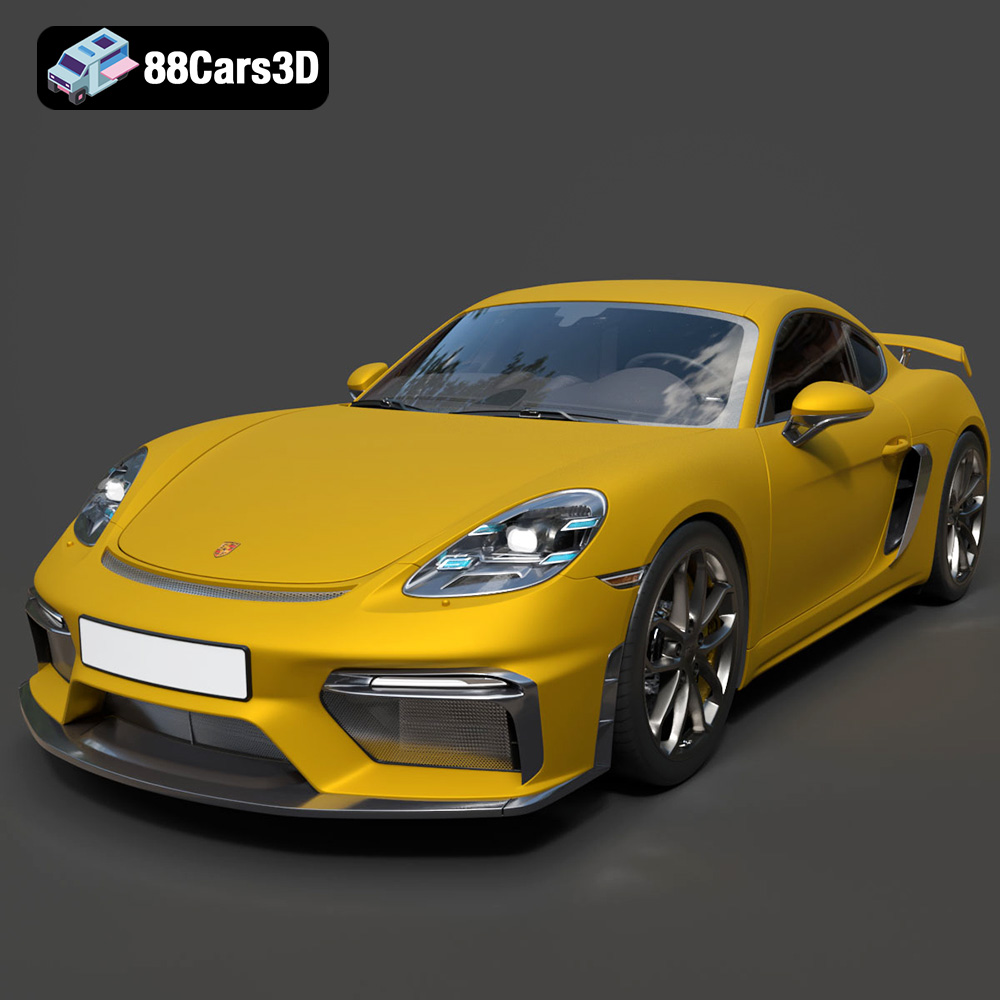
Today, we delve into a prime example of such digital craftsmanship: the Porsche 718 Cayman GT4 2020 3D Model. This particular asset represents a pinnacle of digital automotive design, capturing the aggressive aerodynamics, the sculpted lines, and the track-focused spirit of the legendary mid-engine sports car. It’s an asset built not just for visual appeal, but for robust functionality across a multitude of professional applications, from game development to advanced architectural visualization, and even precise 3D printing.
The versatility of a high-quality 3D model like the Porsche 718 Cayman GT4 2020 is significantly enhanced by its availability in multiple file formats. Each format serves a specific purpose, catering to different software ecosystems, project requirements, and end-use applications. Understanding these distinctions is crucial for anyone working with 3D assets to ensure optimal workflow and desired outcomes.
When you acquire a detailed 3D car model, such as the Porsche 718 Cayman GT4 from 88cars3d.com, you often receive a suite of formats. Knowing when to use each is key to maximizing efficiency and achieving the best results. For instance, a game developer will prioritize game-ready formats, while an architect might opt for a format optimized for photorealistic rendering, and a hobbyist might need one for 3D printing.
The Porsche 718 Cayman GT4 2020 3D Model is more than just a collection of polygons; it’s a meticulously crafted digital representation that embodies the spirit and technical prowess of its real-world counterpart. This asset is a testament to the level of detail and optimization required for professional 3D projects.
Every curve, vent, and aerodynamic element of the 718 Cayman GT4 has been faithfully recreated. The model features accurate frame geometry, body panels, and proportions, capturing the car’s aggressive stance. The front fascia, with its large cooling intakes and aerodynamic spoiler, is replicated with precision, as are the dual-pipe sport exhaust system and the aggressive rear diffuser—components crucial for both performance and aesthetics. Signature Porsche elements like the four-point LED headlights and tinted 3D taillights are rendered with stunning accuracy, ensuring that close-up shots maintain breathtaking visual fidelity. The precise alloy wheels, high-performance brake calipers, and slotted rotors are all individually modeled, even showcasing detailed suspension components visible through the wheel arches. This level of granular detail allows for incredibly realistic renders and dynamic simulations.
The digital craftsmanship extends into the cockpit, where the track-focused essence of the GT4 truly comes alive. The model boasts Alcantara sport bucket seats with detailed stitching, a GT sport steering wheel complete with a center top marker, and the iconic analog central tachometer complemented by a digital instrument cluster. Even the precise gear shifter, center console, and sport pedal assembly are carefully modeled. This attention to interior detail is crucial for creating immersive first-person perspectives in games or virtual reality experiences, providing an authentic sense of being behind the wheel.
Beyond its visual accuracy, a key advantage of this 3D model is its game-ready optimization. Carefully calculated triangle counts strike a perfect balance, ensuring maximum performance in real-time engines like Unreal and Unity without sacrificing the high-end visual realism necessary for cinematic renders. The model adheres to real-world scale accuracy, based on actual vehicle chassis data, guaranteeing correct proportions in any scene. Furthermore, proper pivot setups for steering, wheel rotation, and suspension travel are already integrated, significantly streamlining the animation process and making it truly “plug-and-play” for dynamic simulations.
The true power of a versatile asset like the Porsche 718 Cayman GT4 2020 3D Model lies in its seamless integration into diverse professional workflows. Whether you’re a game developer, an automotive design visualizer, or an AR/VR content creator, this model provides a robust foundation.
For game developers, the inclusion of .fbx and “unreal” formats is invaluable. When importing the Porsche GT4 into Unreal Engine or Unity, artists benefit from the optimized triangle count and proper pivot setups. This means less time spent on mesh cleanup and re-rigging, allowing developers to focus on gameplay mechanics and environmental design. In a racing simulator, for instance, the separate wheels, suspension, and steering components enable realistic physics simulations and nuanced animation. The model’s adherence to real-world scale ensures that it fits naturally within virtual environments, enhancing immersion for players. With pre-set LODs (Levels of Detail) often included in optimized game assets, performance can be managed efficiently across different platforms and graphical settings.
Architectural visualization studios and advertising agencies often rely on software like 3ds Max and Blender for stunning photorealistic renders. The .max and .blend files for the Porsche GT4 provide full editability, allowing artists to fine-tune materials, set up studio lighting, and craft compelling visual narratives. Imagine the GT4 placed within a sleek architectural rendering, reflecting the surrounding environment with its glossy finish, or featured in a lifestyle visual campaign where its aggressive stance complements a high-end product. The detailed geometry of the interior also allows for intricate close-up shots, showcasing the quality of the Alcantara seats and the GT sport steering wheel, crucial for high-impact marketing visuals.
Augmented Reality (AR) and Virtual Reality (VR) are transforming how we interact with products and environments. The Porsche 718 Cayman GT4 2020 3D Model, with its optimized geometry and .glb format, is perfectly suited for these immersive experiences. Developers can create virtual showrooms where potential buyers can explore the car in 3D, customize its colors, and even “sit” inside it using a VR headset. For AR, the .glb format facilitates seamless integration into mobile applications, allowing users to place a virtual GT4 in their driveway or living room, viewing it from any angle in real-time. These applications leverage the model’s high visual fidelity while maintaining the lightweight performance essential for mobile and web-based AR/VR platforms.
The versatility of the Porsche 718 Cayman GT4 2020 3D Model extends beyond digital screens, offering the exciting possibility of bringing the virtual car into the physical world through 3D printing. This provides hobbyists, collectors, and designers with a tangible representation of the digital asset.
To achieve a high-quality physical model, careful attention to 3D print settings is paramount. The .stl format is ideal for this purpose, providing the necessary triangulated mesh data. For the GT4, recommended scales typically range from 1:12 to 1:24, offering a good balance between detail and manageable print size. Using a resin printer is highly recommended over FDM for fine details, especially for delicate components like mirrors, air scoops, and the intricate exhaust system. A layer height of 0.04–0.12 mm will capture intricate features, while wall thicknesses of 1.2–2.0 mm ensure structural integrity. An infill of 20–30% is usually sufficient. Supports will be required for overhangs and detailed parts. Print orientation is critical; printing the main frame angled can improve structural integrity and reduce visible layer lines, while wheels should generally be printed separately for optimal detail and easier post-processing.
The journey from a raw 3D print to a display-worthy model involves several post-processing steps. Careful sanding is often necessary to remove support marks and smooth out any layer lines. Applying a high-quality primer creates a uniform surface ready for paint. The most exciting stage is painting, where authentic factory colors with metallic finishes can bring the model to life. Airbrushing allows for smooth, even coats and intricate detailing. This physical manifestation of the digital Porsche 718 Cayman GT4 becomes a unique piece of art, showcasing both the original digital craftsmanship and the skill of the 3D printer and model painter.
A truly professional 3D model isn’t just accurate; it’s also highly customizable. The Porsche 718 Cayman GT4 2020 3D Model offers a wide array of options for artists and designers to adapt it to specific project needs, making it a flexible asset from 88cars3d.com.
One of the most significant advantages of this digital asset is the ability to easily modify its appearance. Artists can change body colors to any hue imaginable, from iconic Porsche shades like Miami Blue or Guards Red to bespoke custom finishes. Material finishes can be adjusted from glossy to matte, metallic, or even incorporate carbon fiber textures on specific panels, allowing for unique visual expressions. Similarly, tire textures can be swapped between track slicks for a race-day look or street variants for a more everyday aesthetic. These customization options enable the GT4 model to fit seamlessly into diverse scenes and reflect various branding requirements or artistic visions.
Beyond static renders, the model is designed for dynamic animation. With separate wheels, suspension components, and steering parts, artists can animate realistic wheel rotation, independent suspension travel, and precise steering movements. The proper pivot setup already integrated into the model significantly speeds up the rigging and animation process. This makes the GT4 an excellent choice for cinematic sequences, virtual test drives, or interactive configurators where movement and responsiveness are key. Imagine a detailed camera animation following the car through a virtual landscape, showcasing its dynamic capabilities, or a slow-motion breakdown of its suspension system in action—all made possible by the intelligent modular design of the 3D model.
The digital realm offers unprecedented opportunities for creativity and precision, and the Porsche 718 Cayman GT4 2020 3D Model exemplifies the pinnacle of what a high-fidelity 3D asset can achieve. From its meticulously recreated exterior and immersive interior to its game-ready optimization and comprehensive file format support, this model is engineered to meet the rigorous demands of professional workflows across diverse industries.
Whether you are crafting a hyper-realistic automotive render in 3ds Max, developing an exhilarating racing game in Unreal Engine, building an interactive AR/VR experience with .glb, or even bringing a tangible piece of automotive art to life through 3D printing with .stl, this asset provides the perfect foundation. Its versatility, combined with intricate detail and thoughtful optimization, makes it an indispensable tool for designers, developers, and artists alike. For those seeking premium 3D car models that stand out in quality and adaptability, exploring the offerings at 88cars3d.com is a clear path to elevating your next project.
The 2020 Porsche 718 Cayman GT4 is a mid-engine track weapon that perfectly balances motorsport heritage with modern performance. Known for its naturally aspirated 4.0-liter flat-six engine, aggressive aerodynamics, and unmistakable Porsche styling, this sports car delivers a pure, unfiltered driving experience. From its prominent fixed rear wing and large functional air intakes to its dual sport exhaust system and aggressive rear diffuser, every element is meticulously designed for maximum downforce and cooling. This high-fidelity 3D model boasts exceptional topology and game-ready optimization, featuring carefully calculated triangle counts to ensure maximum performance without sacrificing detail. It maintains breathtaking visual fidelity suitable for close-up shots while remaining fully optimized for real-time rendering environments. Whether you are developing a high-speed racing simulator, crafting an immersive AR/VR showroom, or producing photorealistic cinematic animations, this digital asset provides the perfect foundation.
$19.99
.2020
.blend
.fbx
.glb
.max
.obj
.ply
.porsche
.rendering
.sports car
.stl
.unreal
718-cayman-gt4
car-3d-model
game asset
game-ready
low-poly
optimized
track-car
VR/AR