Get 20% OFF All Premium 3D & STL Models!

In the rapidly evolving world of digital media, the demand for high-fidelity 3D assets has never been greater. From captivating automotive rendering for advertising campaigns to immersive game environments and cutting-edge AR/VR experiences, the quality of a 3D model can significantly impact the final output. For professionals in these fields, sourcing or creating accurate, production-ready 3D car models is a critical initial step. These aren’t just simple props; they are complex digital sculptures that require meticulous attention to detail, robust engineering, and versatile compatibility.
The quest for realism in automotive visualization often begins with a model that perfectly balances aesthetic accuracy with technical precision. Whether you’re a seasoned 3D artist, a game developer, or an architect integrating vehicles into a scene, the right asset can dramatically streamline your workflow and elevate your project’s visual integrity. It’s about capturing the essence of a vehicle, down to its aerodynamic curves and intricate interior details, ensuring it stands up to the closest scrutiny.
Today, we delve into the world of professional 3D car models, exploring the technical nuances that make them invaluable assets. We’ll examine specific workflows, the importance of file formats, and how a meticulously crafted model like the Volkswagen ID4 2021 3D Model exemplifies the benchmark for quality, ready to integrate seamlessly into any demanding digital environment.
The digital age has transformed how we design, market, and experience automobiles. Manufacturers use 3D models for initial concept design, aerodynamic simulations, and virtual showrooms long before a physical prototype exists. Advertising agencies leverage them to create stunning, impossible-to-film scenarios. Game developers build entire virtual worlds populated with diverse vehicles, while AR/VR pioneers offer interactive test drives from the comfort of your home. Each application demands highly detailed, optimized 3D car models that accurately reflect real-world counterparts. The challenges lie in achieving photorealism, maintaining performance, and ensuring broad software compatibility.
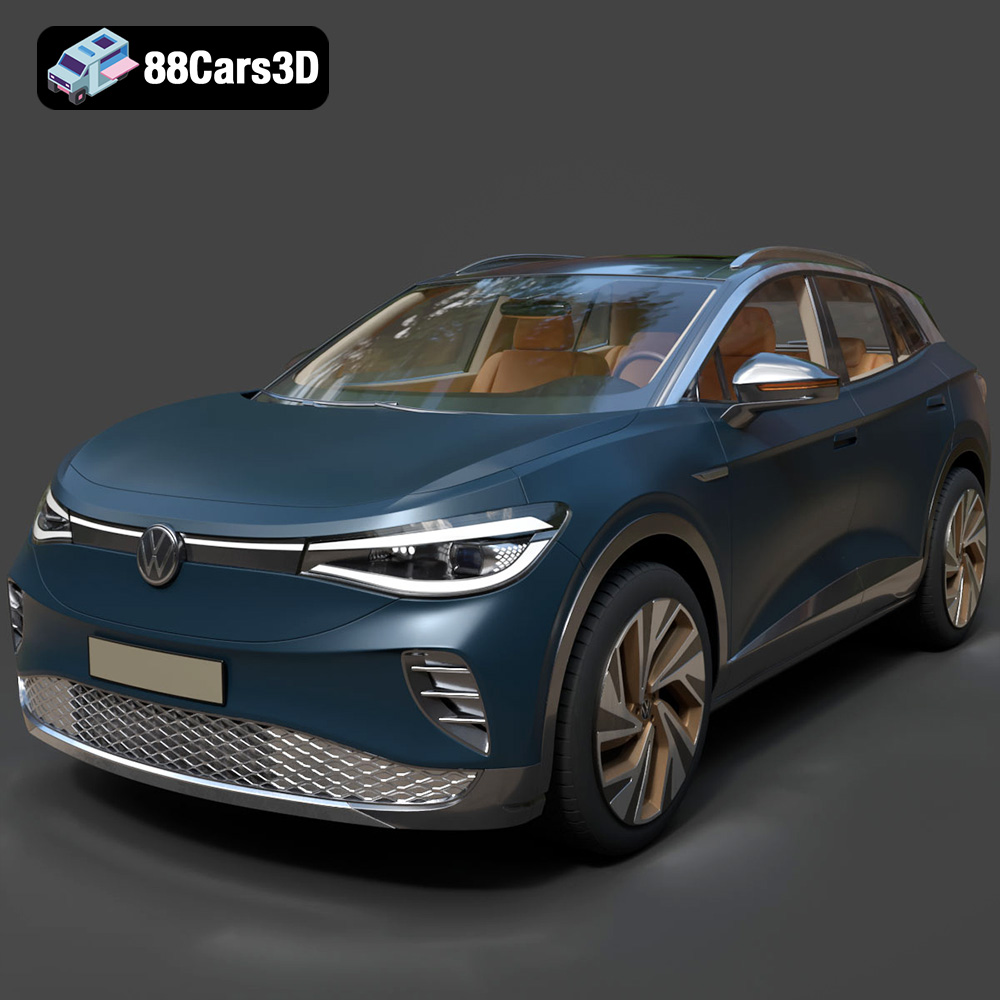
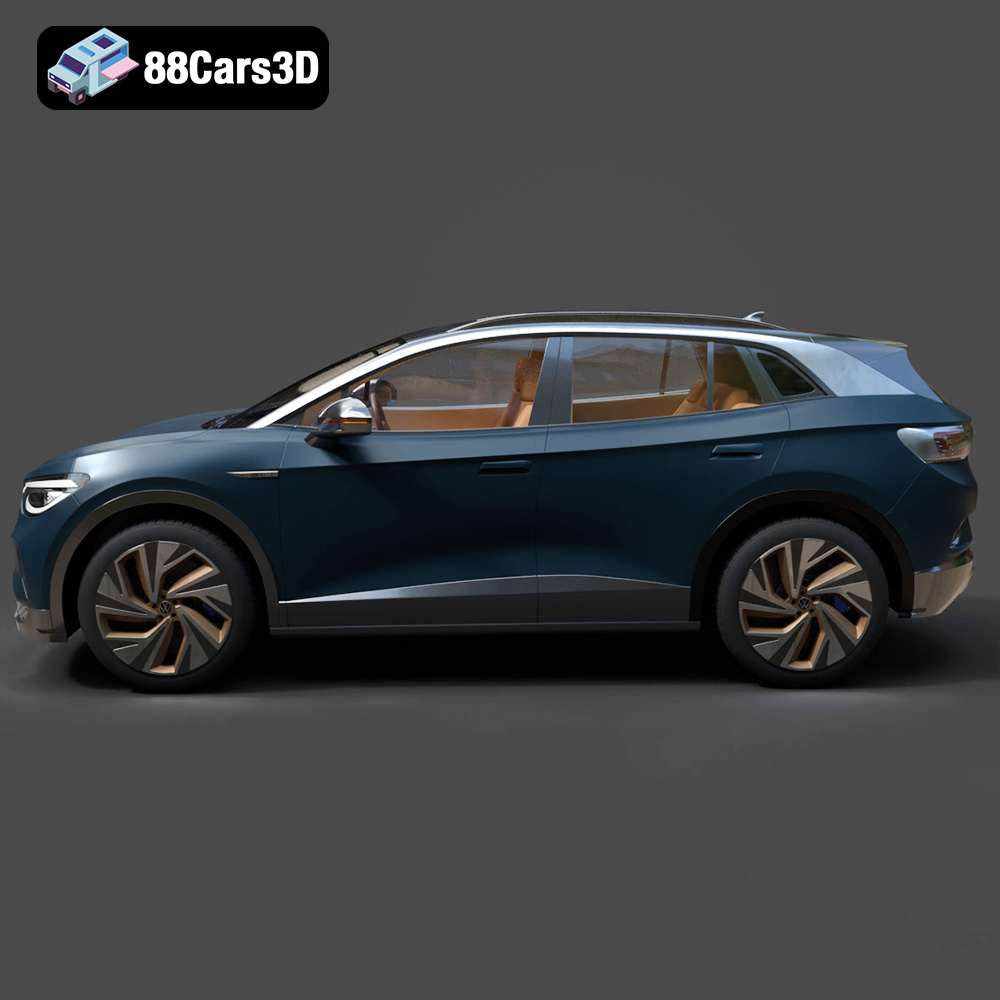
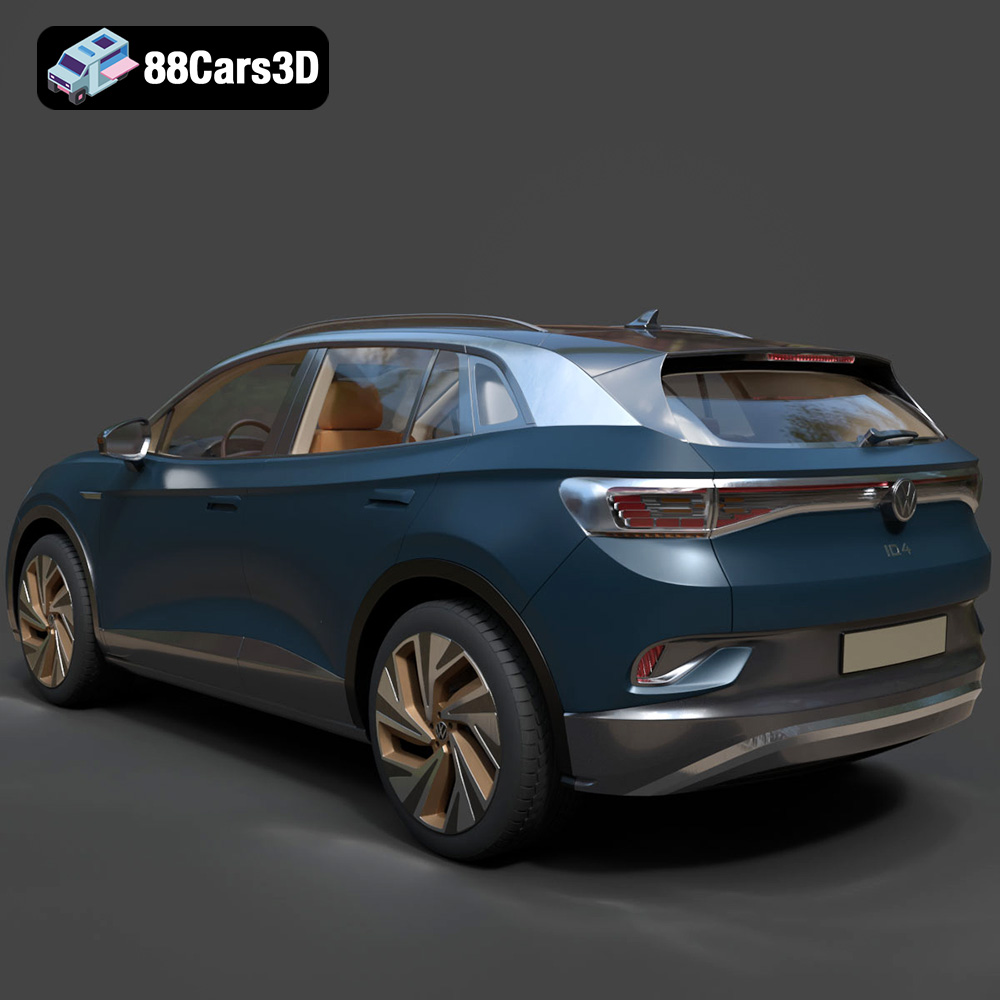
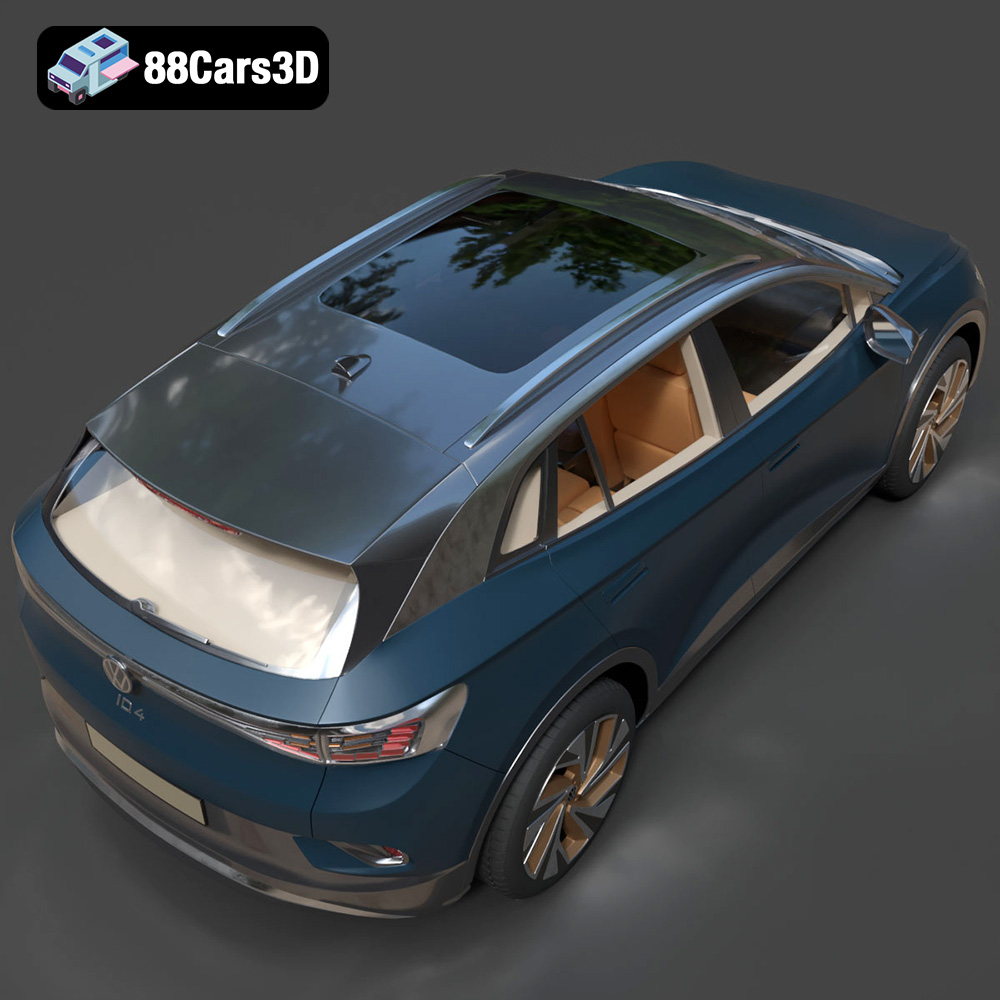
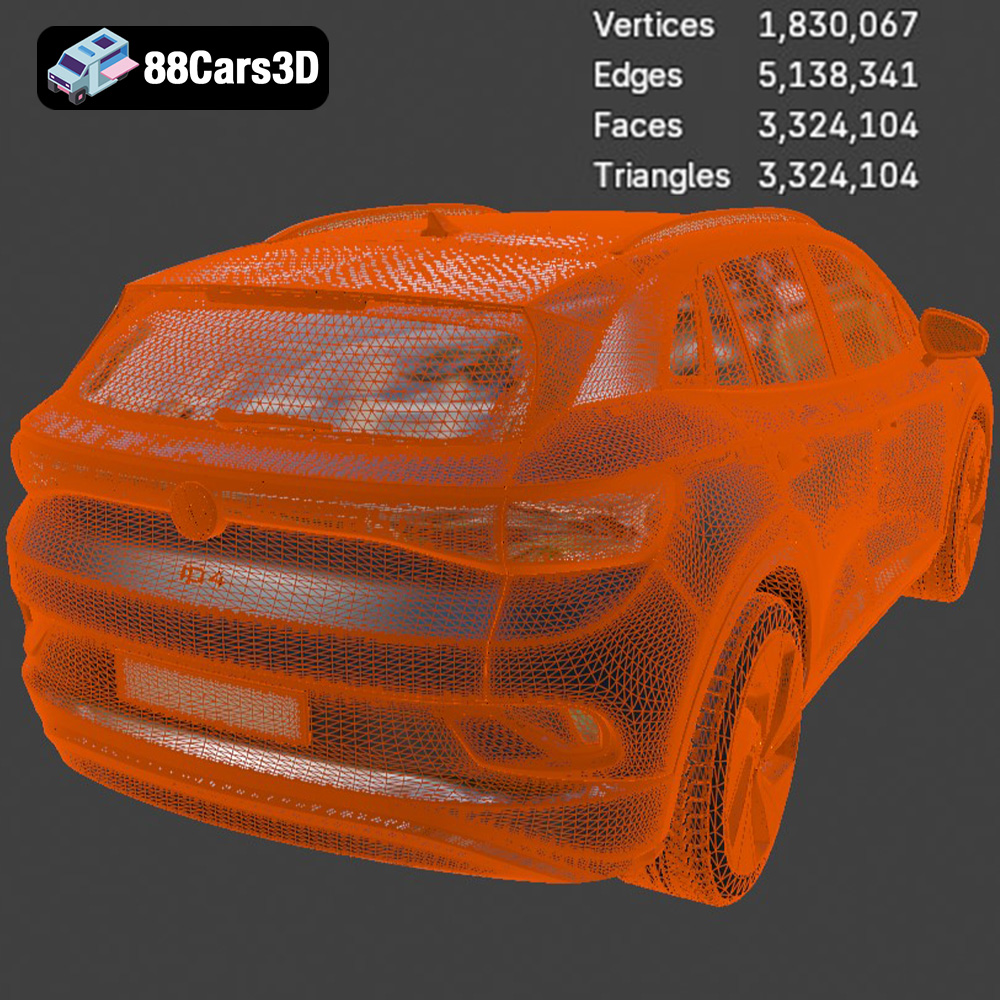
Against this backdrop, the Volkswagen ID4 2021 3D Model stands out as an exceptional example of a high-quality asset. This model offers an extensively detailed and accurate representation of the popular electric vehicle, capturing its modern design and aerodynamic curves with remarkable precision. Engineered with clean geometry, accurate proportions, and realistic materials, it ensures seamless integration into everything from high-resolution close-up shots to complex interactive simulations. It serves as an ideal foundation for automotive visualization, game development, rendering, AR/VR experiences, and interactive simulations, providing professional digital artists with a versatile and reliable resource.
One of the most critical aspects of working with 3D car models, or any 3D asset, is understanding the various file formats available. Each format has its strengths, weaknesses, and intended use cases, dictating how a model can be used across different software and pipelines. A comprehensive package, such as the Volkswagen ID4 2021 3D Model available on 88cars3d.com, often includes multiple formats to cater to diverse professional needs. Let’s break down the most common and essential formats:
The .blend format is Blender’s native file format. It’s incredibly powerful because it stores not just the mesh data, but also materials, textures, lighting setups, camera positions, animations, physics simulations, and even custom scripts. This makes it a complete scene package for Blender users. When a 3D car model like the Volkswagen ID4 comes in .blend, it typically means it’s ready to render out of the box with all shaders and lighting pre-configured for cycles or Eevee, offering maximum editability and flexibility within the Blender ecosystem.
.fbx (Filmbox) is a proprietary file format owned by Autodesk and has become the de facto industry standard for 3D data interchange, particularly for animation, game development, and real-time pipelines. It excels at transferring geometry, materials (often as basic PBR setups), textures, animations, skinning, and camera data between different 3D applications like 3ds Max, Maya, Blender, and game engines such as Unreal Engine and Unity. Its robust support for animation and hierarchal structures makes it ideal for animated car sequences or vehicles with moving parts within a game. The Volkswagen ID4’s .fbx version is optimized for this purpose, ensuring smooth integration into these demanding environments.
The .obj (Wavefront OBJ) format is one of the oldest and most universally supported 3D file formats. It’s a simple, human-readable text-based format that primarily stores geometry (vertices, normals, texture coordinates, and faces) and references external material files (.mtl) for basic color and texture information. While it doesn’t support animation or advanced material setups, its strength lies in its widespread compatibility. Almost every 3D software can import and export .obj files, making it excellent for cross-software mesh transfer when complex data like rigging or animation isn’t required. For the Volkswagen ID4, the .obj provides a clean, raw mesh for any application.
.glb (GL Transmission Format Binary) is the binary version of glTF, a royalty-free specification for 3D scene and model transmission from the Khronos Group. It’s specifically optimized for efficient loading and rendering of 3D models in web browsers, AR (Augmented Reality), and VR (Virtual Reality) applications. A single .glb file can contain mesh data, materials, textures, animations, and skeletal information, making it self-contained and easy to distribute. Its compact size and suitability for real-time applications make it perfect for showcasing the Volkswagen ID4 in interactive web viewers or AR experiences on mobile devices.
.stl (Stereolithography) is a standard file format used for 3D printing and rapid prototyping. It describes only the surface geometry of a 3D object using a mesh of triangular facets, without any color, texture, or material information. While not suitable for rendering or animation, it’s essential for taking a digital model like the Volkswagen ID4 and turning it into a physical object. If you need to print a scale model of the ID4, the .stl file is what you’ll use to prepare it for your 3D printer.
The .ply (Polygon File Format) is another format for storing 3D data, particularly useful for scanned data, engineering, and scientific applications. It supports both polygon meshes and point clouds, and can store additional properties like color, transparency, normals, texture coordinates, and even reliability information for each vertex or face. While less common in typical rendering workflows than FBX or OBJ, its ability to store detailed attribute information makes it valuable for precise analysis or niche visualization requirements of the Volkswagen ID4 model.
The .unreal format, or more accurately, assets that are “pre-configured for Unreal Engine use,” typically refers to a collection of files (often FBX, textures, materials, and Blueprints) that have been specifically prepared and optimized for direct import into Unreal Engine. This means materials are set up with appropriate PBR shaders, meshes are optimized for real-time performance, and potentially even collision meshes or LODs (Levels of Detail) are included. For a 3D car model like the Volkswagen ID4, having an Unreal-ready package significantly reduces setup time for game developers and real-time artists, allowing for immediate integration into an Unreal project.
The .max format is the native file format for Autodesk 3ds Max. Similar to .blend for Blender, a .max file stores the entire scene, including geometry, modifiers, materials, textures, lighting, cameras, animations, and render settings. This provides the most comprehensive and editable version of the 3D car model for artists working within 3ds Max, allowing for complete customization, animation, and advanced rendering setups. The Volkswagen ID4’s .max file offers maximum flexibility for artists using this powerful industry-standard software.
Achieving photorealistic automotive rendering is an art form that blends technical proficiency with artistic vision. The foundation of any stunning render lies in the quality of the 3D car model itself. The Volkswagen ID4 2021 3D Model provides an exceptional starting point, designed with the core principles necessary for high-end visualization.
At the heart of any 3D model is its geometry – the collection of vertices, edges, and faces that define its shape. For automotive rendering, “clean geometry” is paramount. This means a well-organized mesh with efficient polygon distribution, smooth curves, and no overlapping or intersecting faces. The topology, or the flow of the polygons, should be optimized for smooth subdivisions, preventing artifacts when using render-time subdivision surfaces (like OpenSubdiv in 3ds Max or Blender). The Volkswagen ID4 model, with its “clean geometry” and “accurate proportions,” ensures that reflections and highlights behave realistically, without visual distortions.
Equally critical are the UV coordinates. UV mapping is the process of flattening the 3D surface of a model into a 2D space, allowing textures to be applied accurately. Professional 3D car models feature clean, non-overlapping UV layouts with minimal distortion. This is vital for applying high-resolution textures for paint, tires, glass, and interior fabrics, ensuring they appear crisp and natural. Without proper UVs, even the best textures will look stretched or pixelated.
Modern photorealistic rendering relies heavily on Physically Based Rendering (PBR) materials. PBR shaders simulate how light interacts with surfaces in the real world, based on physical properties like metallicness, roughness, albedo (base color), and normal maps. A high-quality 3D car model like the Volkswagen ID4 comes with PBR-ready materials, meaning its textures and shaders are set up to respond correctly to light in renderers like V-Ray, Corona, Cycles, Arnold, or Redshift. This includes intricate details like multi-layered car paint with clear coat, realistic tire rubber with micro-detail normal maps, reflective chrome accents, and transparent glass with accurate refraction. The included materials for the ID4 model are designed to deliver “exceptional realism” right out of the box.
Even the most perfect 3D car model won’t look realistic without compelling lighting. Automotive rendering often employs High Dynamic Range Image (HDRI) maps to simulate real-world lighting environments, providing accurate reflections and ambient light. Studio setups use a combination of area lights and targeted spot lights to emphasize specific contours and details. Combining these with global illumination techniques allows the light to bounce realistically around the scene, creating soft shadows and nuanced reflections. For a model like the Volkswagen ID4, meticulous lighting can highlight its “aerodynamic curves” and “modern design,” transforming it from a static object into a vibrant, living vehicle within a scene.
The transition of 3D car models from high-fidelity rendering to real-time game engines and interactive applications presents a unique set of challenges and requirements. Performance is paramount, and every polygon, every texture, and every shader operation must be optimized. The Volkswagen ID4 2021 3D Model is specifically designed with “game-engine ready” formats, ensuring it can perform effectively in these demanding environments.
For game development, raw poly count, while important, isn’t the only metric. A high-poly model designed for cinematic rendering must be optimized for real-time performance. This involves several techniques:
The Volkswagen ID4 3D Model, with its “clean geometry” and “game-engine ready format,” implies that these considerations have been taken into account, making it a valuable asset for game developers.
Unreal Engine is a powerhouse for real-time visualization and game development. Importing a 3D car model like the Volkswagen ID4 into Unreal requires a specific workflow to ensure optimal performance and visual quality.
The demand for interactive 3D experiences is skyrocketing. AR/VR applications, interactive product configurators, and driving simulations all rely on performant 3D assets. The Volkswagen ID4’s inclusion of a .glb file format underscores its suitability for these cutting-edge uses.
The versatility of a high-quality 3D car model extends across numerous professional pipelines, touching every stage of a product’s lifecycle from initial concept to marketing. The Volkswagen ID4 2021 3D Model is an invaluable tool for professionals looking to enhance their creative and technical outputs.
In automotive advertising, visual impact is everything. High-quality 3D car models allow agencies to create stunning visuals without the logistical complexities and costs of physical car shoots.
Before a single physical component is manufactured, 3D models play a critical role in product development and visualization.
The film and animation industry constantly seeks realistic assets to populate digital sets and enhance visual effects.
For any professional in 3D visualization, the decision to purchase a pre-made 3D model versus creating one from scratch boils down to efficiency, quality, and cost. Premium online marketplaces like 88cars3d.com specialize in providing high-quality 3D car models, and the Volkswagen ID4 2021 3D Model exemplifies the significant advantages this offers.
Building a complex 3D car model from the ground up can take hundreds, if not thousands, of hours for a skilled artist. This involves meticulous blueprint matching, precise polygon modeling, intricate UV mapping, and extensive material development. By acquiring a production-ready asset like the Volkswagen ID4 from 88cars3d.com, artists and studios can instantly save this immense amount of time, allowing them to focus on the creative aspects of their projects – lighting, composition, animation, and scene development. This translates directly into reduced project timelines and lower labor costs, making projects more feasible and profitable.
When you purchase a model from a reputable source, you benefit from a level of quality assurance that might be hard to achieve consistently across multiple projects internally. The Volkswagen ID4 2021 3D Model, described with “clean geometry, accurate proportions, and realistic materials,” signifies that it has been crafted by experts with attention to industry standards. The inclusion of multiple file formats (.blend, .fbx, .obj, .glb, .stl, .ply, .unreal, .max) ensures compatibility and ease of use across various software pipelines, guaranteeing that the model is versatile and robust enough for diverse professional applications. This consistency in quality ensures that your final output will always meet professional standards, regardless of the specific software or platform you are targeting.
The realm of 3D automotive visualization is constantly pushing the boundaries of realism and interactivity. Whether for blockbuster game titles, high-impact advertising campaigns, or innovative AR/VR experiences, the quality of your 3D assets is the cornerstone of success. A meticulously crafted 3D car model, such as the Volkswagen ID4 2021 3D Model, offers not just a digital representation, but a robust technical foundation ready for the most demanding professional workflows.
By understanding the technical specifications, file format nuances, and integration strategies across various software like 3ds Max, Blender, and Unreal Engine, artists can unlock the full potential of these assets. The detailed geometry, PBR-ready materials, and versatile format options provided ensure that the Volkswagen ID4 2021 3D Model is an exceptional resource for creating stunning automotive renders, compelling game assets, and immersive interactive experiences. Investing in high-quality 3D car models from trusted sources like 88cars3d.com empowers professionals to streamline their creative process, achieve unparalleled realism, and ultimately, drive their projects forward with confidence and precision.
Experience exceptional realism with the Volkswagen ID4 2021 3D Model. This extensively detailed model perfectly captures the aerodynamic curves and modern design of the popular electric vehicle, providing an accurate representation suitable for professional digital environments. Engineered with precision, this model features clean geometry, accurate proportions, and realistic materials. The intricately modeled interior and exterior elements ensure seamless integration into close-up shots and demanding digital scenes. Ideal for a wide range of professional applications, this model is perfect for automotive visualization, game development, rendering, AR/VR experiences, and interactive simulations.
$19.99
.arvr
.blend
.car3dmodel
.crossover
.electricvehicle
.ev
.fbx
.gameasset
.glb
.id4
.max
.obj
.ply
.rendering
.simulation
.stl
.unreal
.volkswagen
SUV