Get 20% OFF All Premium 3D & STL Models!

In today’s rapidly evolving digital landscape, the demand for hyper-realistic and versatile 3D assets has never been higher. From breathtaking cinematic renderings and immersive game environments to cutting-edge AR/VR experiences and precise engineering simulations, high-quality 3D models are the foundational elements driving innovation. Automotive design and visualization, in particular, stand at the forefront of this digital revolution, requiring meticulous attention to detail and technical precision.
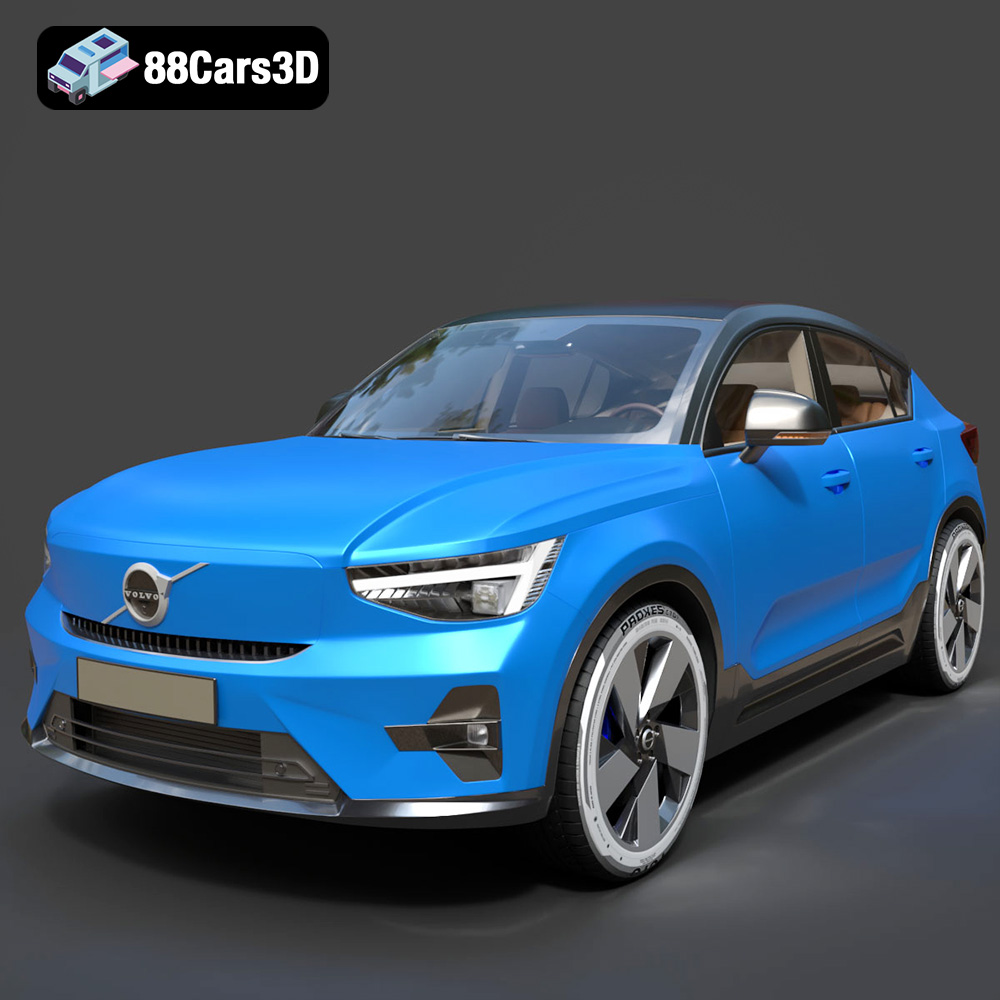
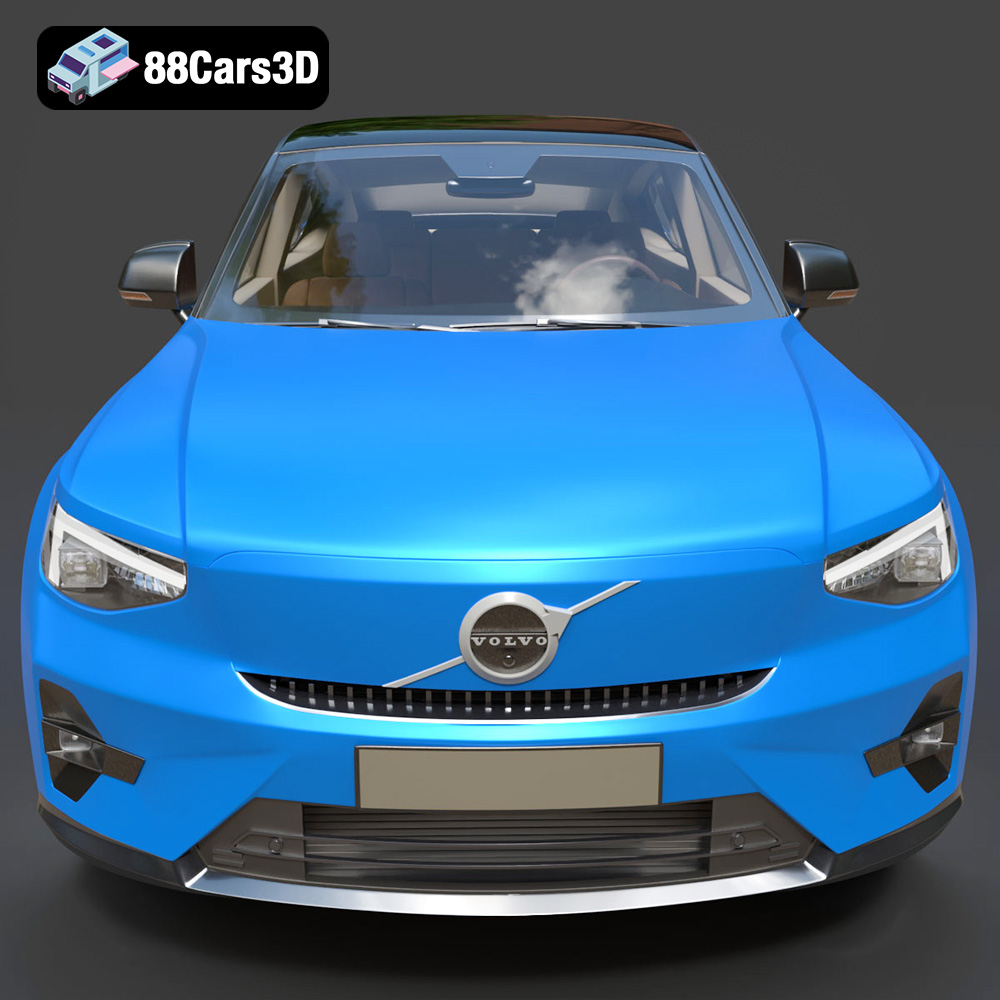
Professionals in these fields understand that the difference between a good project and an exceptional one often hinges on the quality of their assets. This is where expertly crafted 3D car models become indispensable. Imagine bringing an electric crossover, like the sophisticated Volvo C40 Recharge, to life with such fidelity that it’s almost indistinguishable from its physical counterpart. This level of realism, combined with optimized performance and broad compatibility, is precisely what the Volvo C40 Recharge 3D Model offers, providing an unparalleled asset for any digital endeavor.
Whether you’re an automotive designer showcasing future concepts, a game developer populating a vibrant open world, or a marketing specialist creating compelling visuals, the right 3D model can dramatically elevate your output. Let’s delve into the technical intricacies and workflow advantages that premium 3D car models, exemplified by assets found on marketplaces like 88cars3d.com, bring to the creative and technical pipeline.
The versatility and utility of a 3D model are often defined by the file formats it supports. Each format is engineered for specific purposes, carrying different types of data and offering unique advantages in various workflows. A comprehensive asset, such as the Volvo C40 Recharge 3D Model, provides a wide array of formats, ensuring seamless integration into virtually any professional pipeline. Understanding these formats is crucial for optimizing your projects, guaranteeing compatibility, and maximizing efficiency.
The .blend format is Blender’s native file type, storing an entire Blender scene. This includes not just the mesh geometry, but also materials, textures, lighting setups, cameras, animations, rigging, and even scene metadata. Its primary advantage is its fully editable nature within Blender, offering artists complete control over every aspect of the model. When you acquire a .blend file, you’re getting a complete working project, ready for detailed modifications, re-lighting, or animation development. It’s ideal for those who primarily use Blender and require the utmost flexibility for customization and advanced rendering using Cycles or Eevee.
Autodesk’s .fbx (Filmbox) format has become an industry-standard for exchanging 3D data between different software applications. Its strength lies in its ability to encapsulate not only mesh and UV data but also materials, textures (often embedded or referenced), animations, cameras, and even skeletal deformation information. For game developers using Unreal Engine or Unity, .fbx is often the go-to format due to its robust support for animation and clean integration into real-time pipelines. While highly versatile, users should be mindful of version compatibility issues that can sometimes arise between different software packages.
The .obj (Wavefront OBJ) format is one of the oldest and most widely supported 3D file formats. It’s renowned for its simplicity and cross-software compatibility. An .obj file primarily stores geometric data – vertices, faces, UV coordinates, and normals – often accompanied by a separate .mtl (material) file for basic material properties. While it doesn’t support animation or advanced scene data like lights or cameras, its universal acceptance makes it an excellent choice for basic mesh exchange when compatibility is paramount. It’s a reliable workhorse for integrating models into almost any 3D application for rendering or sculpting.
The .glb (GL Transmission Format Binary) is an increasingly vital format, especially in the realms of Augmented Reality (AR), Virtual Reality (VR), and web-based 3D visualization. It’s a binary version of GLTF, designed to be a compact, single-file asset containing all necessary data – geometry, materials, textures, animations – directly embedded. This makes it incredibly efficient for streaming and rapid loading in browser environments or on mobile AR/VR devices, where performance and file size are critical. For showcasing a product like the Volvo C40 Recharge in an interactive web viewer or a mobile AR app, .glb is the optimized choice.
When it comes to additive manufacturing, the .stl (Stereolithography) format reigns supreme. It describes only the surface geometry of a 3D object as a collection of unconnected triangles, without any color, texture, or material information. While simplistic, this makes it ideal for 3D printing, as printers primarily need the exact shape for fabrication. The Volvo C40 Recharge 3D Model in .stl format allows engineers and hobbyists to create physical prototypes or scale models, bridging the gap between digital design and tangible reality.
The .ply (Polygon File Format) is often used for storing 3D data from 3D scanners or for CAD/CAM applications. It can store a wider range of properties than .obj or .stl, including color, transparency, and often more complex data per vertex or face. While not as universally used for general asset exchange as .fbx or .obj, it’s highly valued in scientific, engineering, and cultural heritage applications where precise geometric data with additional attributes is critical. For detailed analysis or high-fidelity CAD integration of the Volvo C40 Recharge, .ply can be an invaluable format.
Specifically tailored for Epic Games’ Unreal Engine, the .unreal format (or often a prepared asset within an Unreal project structure) implies a model that has been pre-configured and optimized for direct import and use within the engine. This means materials are set up with PBR (Physically Based Rendering) shaders, textures are correctly linked, and often includes LODs (Levels of Detail), collision meshes, and proper scaling. For developers, an .unreal asset significantly reduces setup time, allowing the Volvo C40 Recharge to be dropped directly into an interactive scene or simulation with minimal fuss.
Autodesk’s .max is the native file format for 3ds Max, a powerful 3D modeling, animation, and rendering software. Similar to .blend, a .max file contains the entire scene, including geometry, materials (often V-Ray or Corona materials for high-end rendering), lighting, cameras, animation, and modifiers. It offers the full power and flexibility of 3ds Max for complex projects, especially in architectural visualization, product rendering, and animation. For high-fidelity automotive renderings of the Volvo C40 Recharge, the .max file provides the foundation for stunning visuals.
By offering this comprehensive suite of formats, the Volvo C40 Recharge 3D Model ensures that users across different disciplines and software preferences can leverage its quality without compatibility roadblocks.
Creating a truly exceptional 3D car model is an intricate process that goes far beyond simply pushing vertices around. It demands a deep understanding of automotive design, precise technical execution, and an artist’s eye for detail. The Volvo C40 Recharge 3D Model exemplifies this synthesis of art and engineering, meticulously crafted to achieve both visual realism and practical utility.
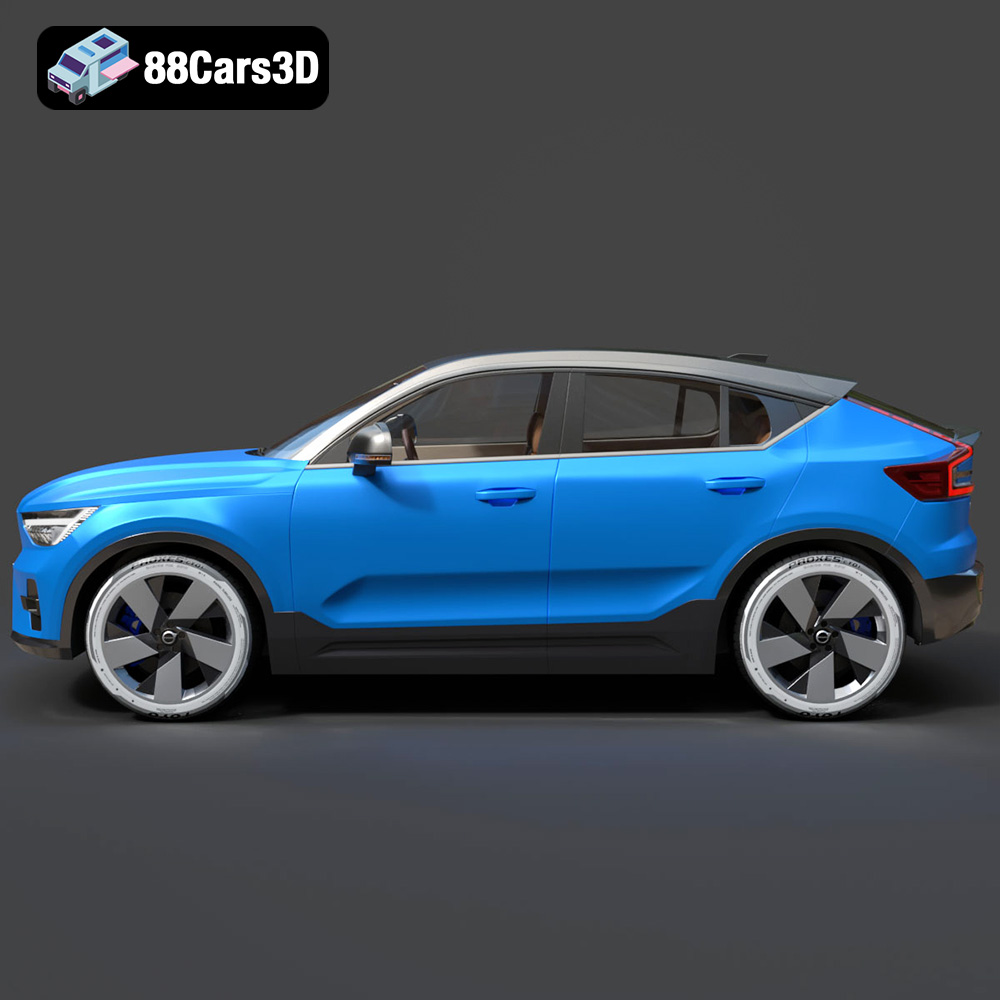
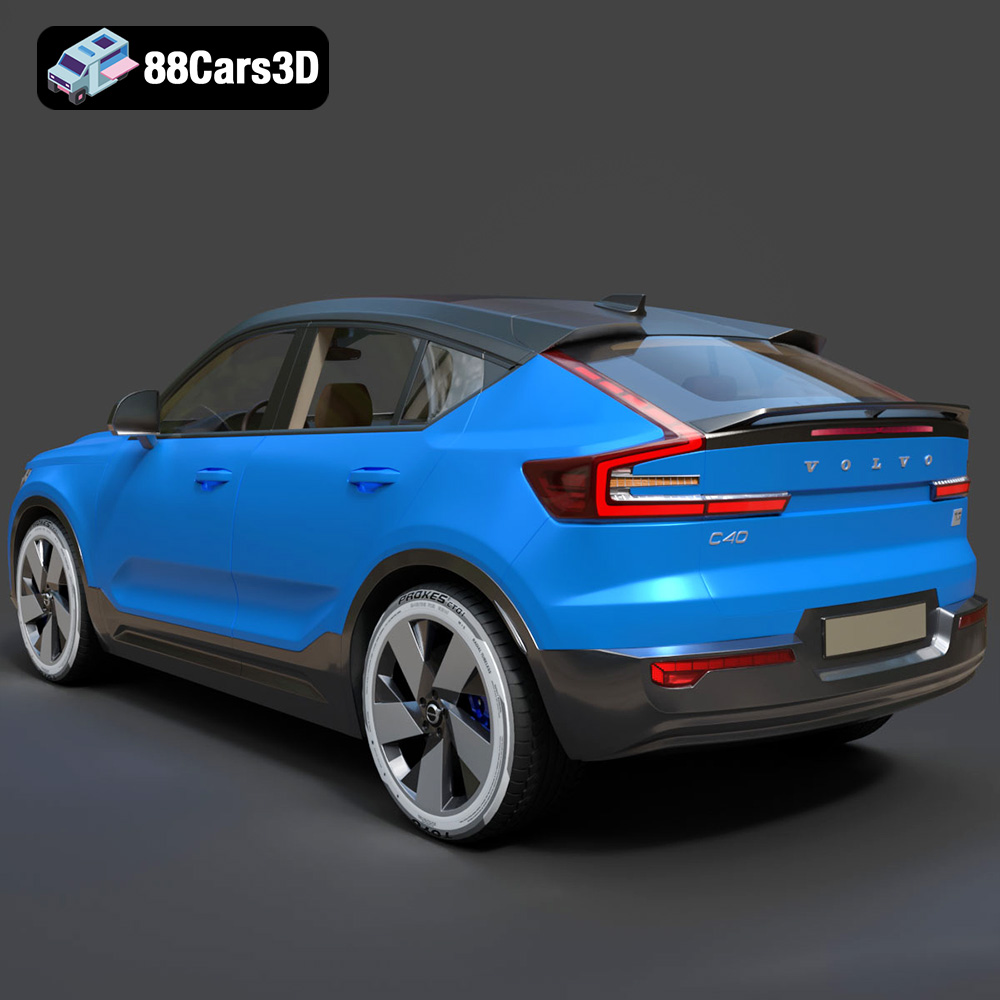
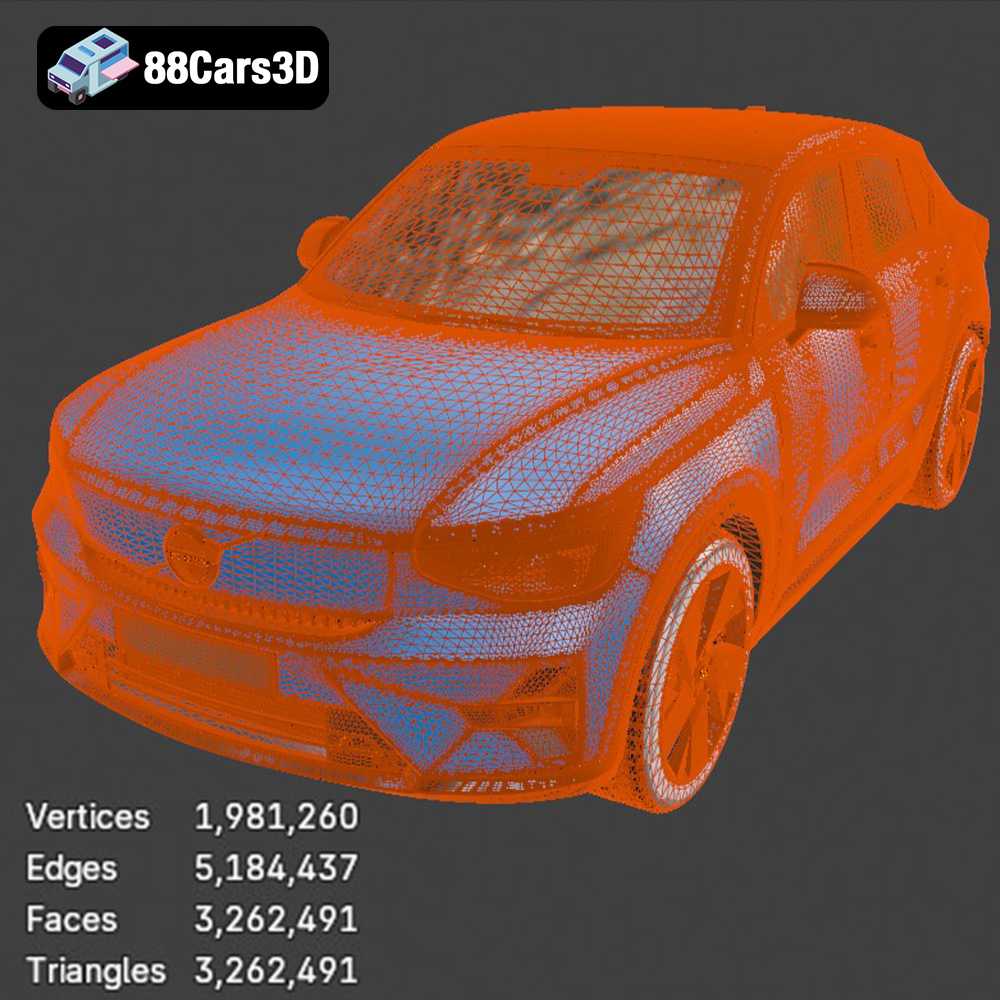
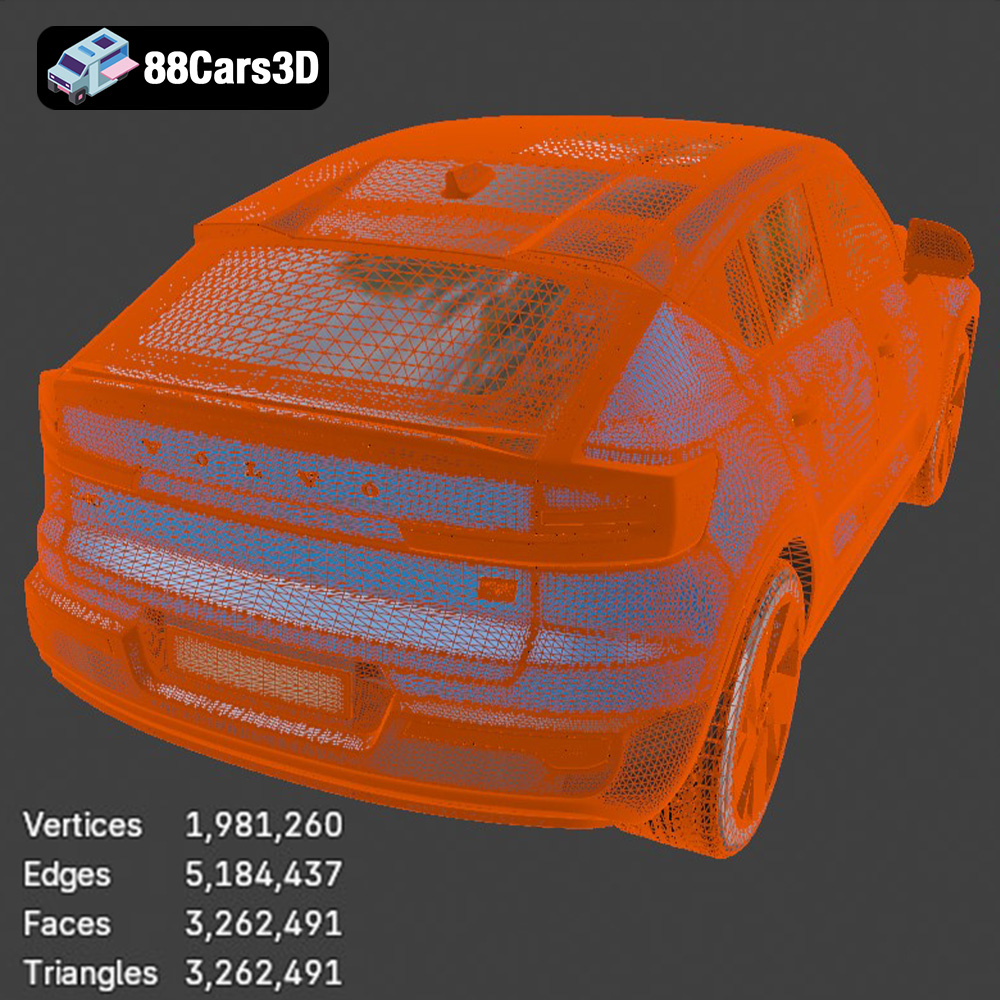
The foundation of any realistic 3D vehicle model is its accuracy. The Volvo C40 Recharge 3D Model boasts incredibly accurate proportions, mirroring the actual vehicle’s distinctive aesthetic. This isn’t achieved by chance; it requires careful blueprint analysis, reference image studies, and precise measurement translation into the 3D space. Coupled with this is clean, optimized geometry. Good topology is paramount – ensuring the mesh flows smoothly, supports complex deformations (if animated), and subdivides cleanly for high-resolution renders. This means a judicious balance of polygon count for efficiency without sacrificing the curvature and sharp lines characteristic of modern car design. Subsurface modeling techniques are often employed to achieve this level of detail.
Realistic textures are what truly bring a 3D model to life. The Volvo C40 Recharge model features realistic textures, indicative of a Physically Based Rendering (PBR) workflow. This involves creating a suite of texture maps – albedo (color), roughness, metallic, normal, ambient occlusion – that accurately simulate how light interacts with different material surfaces. Flawless UV mapping is critical for this process. UVs are the 2D coordinates that tell the 3D software how to project a 2D texture onto the 3D surface. A clean, non-overlapping UV layout is essential for textures to appear seamless, without stretching or distortion, and to allow for custom liveries or material variations to be applied effortlessly.
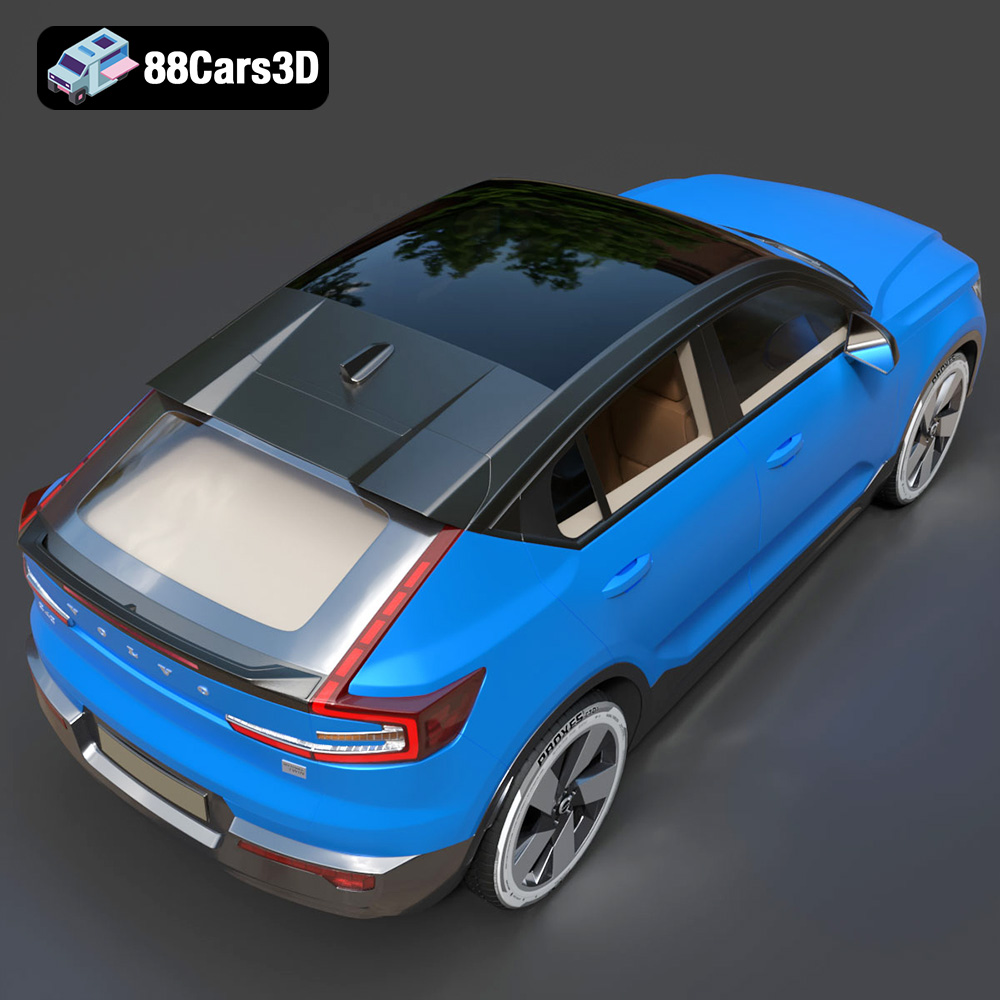
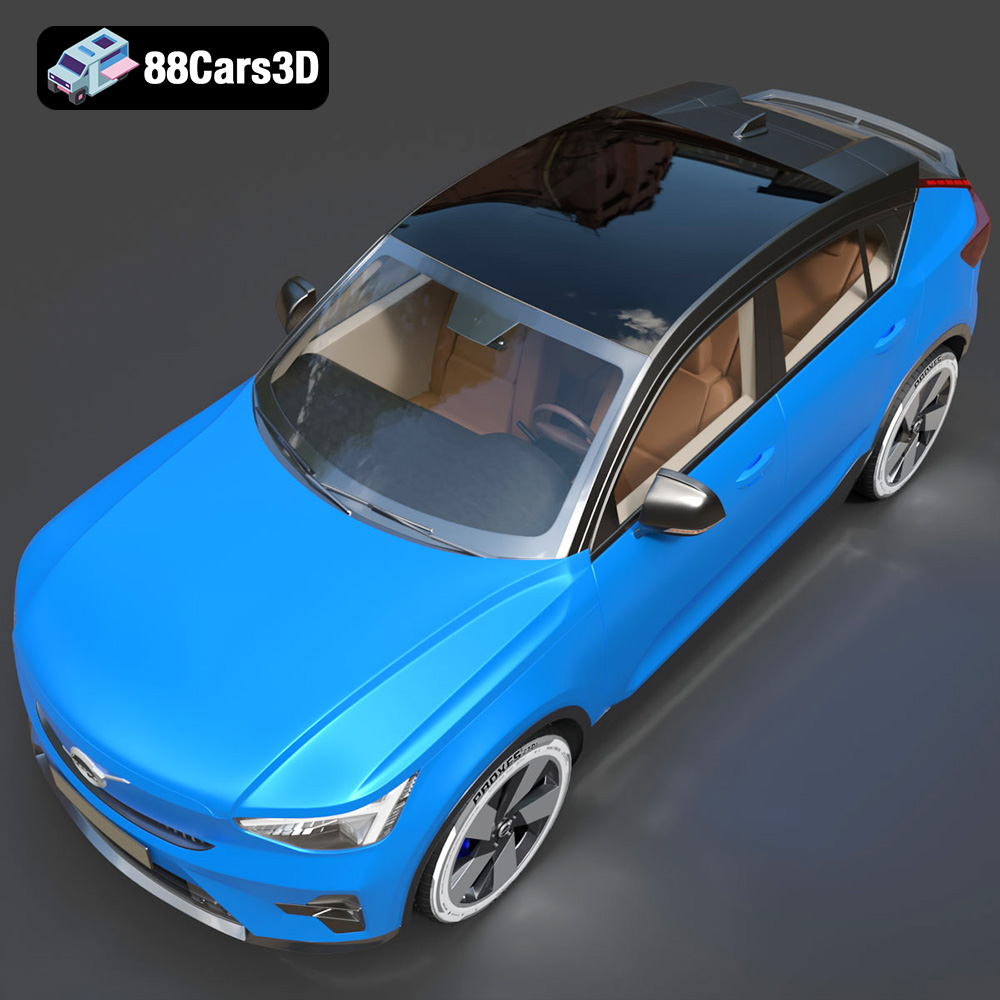
Many 3D car models focus solely on the exterior. However, for true versatility, a fully modeled interior is a game-changer. The Volvo C40 Recharge 3D Model distinguishes itself by presenting a detailed interior, complete with dashboard components and seating. This level of detail makes the model suitable for close-up shots, interior renders, and immersive experiences like virtual car configurators or VR walkthroughs. Every button, stitch, and surface within the cabin contributes to a heightened sense of realism, significantly enhancing its value for professional visualization tasks.
The true measure of a high-quality 3D asset is its seamless integration into diverse professional workflows. The Volvo C40 Recharge 3D Model, with its optimized structure and multiple file formats, is designed precisely for this purpose, serving a wide array of industries from advertising to engineering.
For automotive marketing and visualization, hyper-realistic rendering is key. With its .max (3ds Max) and .blend (Blender) files, the Volvo C40 Recharge model provides artists with native access to powerful rendering engines like V-Ray, Corona Renderer (for 3ds Max), and Cycles or Eevee (for Blender). The process typically involves:
Beyond static renders, the Volvo C40 Recharge 3D Model is perfect for interactive product visualization. Imagine a potential buyer exploring different paint colors, wheel options, or interior trims in real-time on a website or showroom kiosk. Using the .glb format, the model can be integrated into web-based configurators, allowing customers to customize their ideal C40 Recharge and view it from any angle, fostering a more engaging and informative purchasing experience.
While often associated with visual arts, 3D car models also play a vital role in engineering and simulation. The .ply and .stl formats of the Volvo C40 Recharge allow engineers to use the model for aerodynamic studies, crash simulations (using specialized FEA software), or even manufacturing prototyping via 3D printing. The accurate geometry ensures that simulations yield reliable data, aiding in design validation and optimization before physical prototypes are ever built.
The rise of real-time engines like Unreal Engine and Unity has revolutionized interactive experiences, making high-quality, optimized 3D car models essential for captivating users. The Volvo C40 Recharge 3D Model is perfectly poised to excel in these demanding environments.
For game developers, the availability of .fbx and .unreal formats for the Volvo C40 Recharge is a significant advantage. These formats are optimized for direct import into game engines, minimizing the need for extensive re-texturing or geometry cleanup. Key considerations for game development include:
Imagine the Volvo C40 Recharge seamlessly integrated into an urban racing game or a realistic driving simulator, contributing to an immersive and visually stunning experience.
Augmented Reality (AR) and Virtual Reality (VR) are transforming how we interact with digital content. The Volvo C40 Recharge 3D Model, particularly in its .glb format, is an ideal asset for these emerging platforms. Developers can create:
The optimized nature of the .glb file ensures smooth performance on a variety of AR/VR hardware, from powerful headsets to mobile devices.
Achieving both stunning visual fidelity and optimal performance is a delicate balance in 3D production. A well-constructed 3D asset like the Volvo C40 Recharge 3D Model considers this from its inception, providing a foundation that can be adapted for various demands.
The “clean, optimized geometry” of the Volvo C40 Recharge 3D Model is key to its versatility. For high-end cinematic renders, a higher poly count is acceptable, ensuring smooth curves and intricate details. However, for real-time applications like games or AR/VR, excessive polygons can cripple performance. A well-designed model offers a balanced poly count that can be further optimized with techniques like polygon reduction or the generation of LODs, allowing it to scale from high-detail close-ups to distant background elements.
Efficient UV mapping and texture usage are critical for performance, especially in game engines. The model’s “intelligently organized structure” likely includes optimized UV layouts that maximize texture space and minimize draw calls. Techniques like texture atlasing, where multiple smaller textures are combined into one larger texture, can further enhance real-time performance by reducing the number of materials and texture maps the GPU needs to manage.
The use of realistic textures implies a consistent PBR workflow. This consistency is vital when transferring assets between different software and engines. While high-fidelity renders might use complex shader networks, real-time engines benefit from streamlined PBR materials that accurately represent surfaces with fewer calculations. A good 3D model provides a strong PBR base that can be easily adapted, ensuring that the Volvo C40 Recharge maintains its visual integrity across all target platforms.
In the dynamic world of 3D visualization, the quality of your foundational assets can make or break a project. The Volvo C40 Recharge 3D Model stands as a testament to what a meticulously crafted, technically robust, and universally compatible 3D car model can offer. From its accurate proportions and clean geometry to its detailed interior and comprehensive range of file formats, it provides a versatile solution for an extensive array of professional applications.
Whether you are producing photorealistic automotive renderings in 3ds Max, developing immersive game environments in Unreal Engine, or creating interactive AR/VR experiences, this model delivers outstanding performance and visual fidelity. Its intelligent design and extensive format support mean less time spent on preparation and more time dedicated to creativity and innovation.
Investing in high-quality 3D car models like the Volvo C40 Recharge means equipping yourself with assets that empower your vision, streamline your workflow, and elevate the final output of your projects. Explore this model and many other premium 3D car models at 88cars3d.com, and take the next step in enhancing your digital creations.
Discover the exceptional realism of the Volvo C40 Recharge 3D Model. Carefully crafted to mirror the actual vehicle, this 3D asset provides incredibly accurate proportions, sleek styling, and realistic textures ideal for any digital environment. Featuring clean, optimized geometry and an intelligently organized structure, this model ensures seamless integration into your workflow. The exterior perfectly captures the distinctive aesthetic of the modern electric crossover, while the fully modeled interior presents detailed dashboard components and seating, enhancing its suitability for close-up shots and immersive experiences. Whether you are developing cutting-edge video games, producing hyper-realistic automotive renderings, building interactive AR/VR applications, or conducting simulations, this versatile 3D model delivers outstanding performance and visual fidelity. Available in a comprehensive range of industry-standard file formats to suit any pipeline: .blend – Editable Blender file with materials and lighting setup; .fbx – Game-engine ready format for Unreal Engine and Unity; .obj – Standard 3D model format compatible with all major software; .glb – Optimized for AR/VR and web-based visualization; .stl – Suitable for 3D printing and prototyping; .ply – Detailed polygon mesh for analysis and visualization; .unreal – Pre-configured for Unreal Engine use; .max – Editable 3ds Max file for rendering and animation.
$19.99
.arvr
.blend
.c40
.car3dmodel
.crossover
.electriccar
.ev
.fbx
.gameasset
.glb
.max
.obj
.ply
.recharge
.rendering
.simulation
.stl
.unreal
.volvo
SUV