Get 20% OFF All Premium 3D & STL Models!

In the fast-paced world of digital creation, high-fidelity 3D assets are the lifeblood of groundbreaking projects. From cinematic spectacles and immersive game worlds to cutting-edge architectural visualizations and interactive product configurators, the demand for realistic and performant 3D models continues to soar. Automotive design, in particular, stands at the forefront of this digital revolution, requiring models that not only look authentic but also function seamlessly across diverse platforms and applications. The ability to source, integrate, and optimize these assets is a critical skill for any professional in the industry.
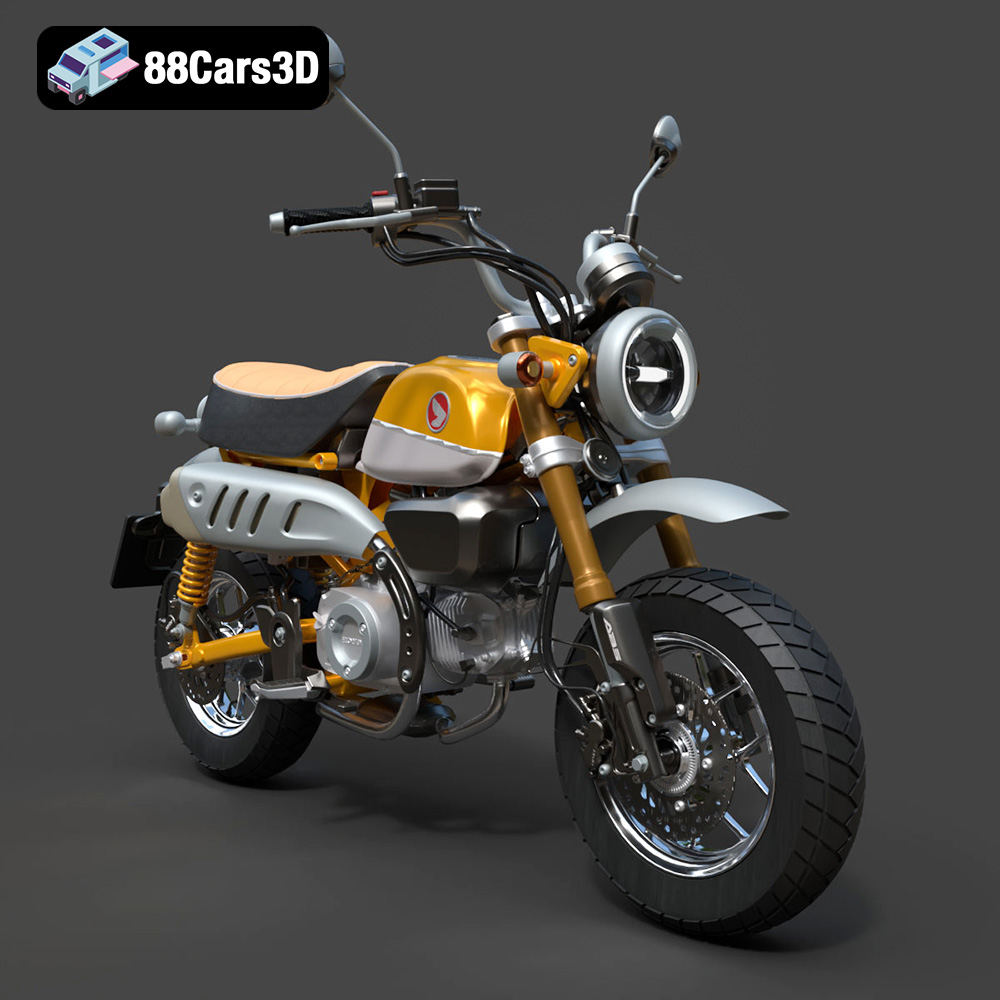
Imagine needing a distinct, characterful vehicle to populate a vibrant city scene in a video game, or to serve as a focal point in a sleek product animation. Generic models often fall short, lacking the unique charm and intricate details that elevate a project from good to exceptional. This is where specialized assets truly shine, offering unparalleled quality and versatility. A prime example of such an asset is the Honda Monkey 125 2019 3D Model, a meticulously crafted digital representation that embodies superior realism and an iconic design, ready to integrate into your next ambitious project. Its clean geometry, realistic materials, and optimized polygon count make it an invaluable addition for artists and developers striving for excellence.
The digital landscape of 3D modeling is rich with a multitude of file formats, each designed with specific purposes, compatibilities, and technical characteristics in mind. Selecting the correct format is paramount for ensuring seamless integration, optimal performance, and preserving the integrity of your 3D assets across various software and pipelines. Understanding these distinctions is a fundamental aspect of working with professional 3D car models like the Honda Monkey 125 2019.
The `.blend` file format is the native project file for Blender, the powerful open-source 3D creation suite. When you encounter a `.blend` file, you are getting a fully editable Blender scene. This typically includes not just the mesh data, but also materials, textures, lighting setups, cameras, animations, physics simulations, and even custom scripts. For artists whose primary workflow revolves around Blender, this format offers maximum flexibility. You can easily modify geometry, tweak shaders, adjust lighting, or even dissect the construction of the model to learn from its topology. The Honda Monkey 125 2019 3D Model, for instance, includes a `.blend` file with materials and a lighting setup, making it an ideal starting point for immediate rendering or further customization within Blender.
`.fbx` (Filmbox) is arguably one of the most widely adopted proprietary 3D file formats, developed by Autodesk. Its strength lies in its ability to store a comprehensive range of 3D data, including geometry, materials (with texture references), animations, skeletal rigs, and scene hierarchies, all in a single file. This makes `.fbx` an indispensable bridge between different 3D software applications and, crucially, between DCC (Digital Content Creation) tools and real-time game engines like Unreal Engine and Unity. When exporting to `.fbx`, careful attention must be paid to export settings to ensure all desired data is included and correctly interpreted by the target application. For game development, the `.fbx` format included with the Honda Monkey 125 2019 is game-engine ready, ensuring efficient import and setup.
`.obj` (Wavefront OBJ) is a foundational, non-proprietary 3D geometry definition file format. It’s a universal standard, widely supported across virtually all 3D software due to its simplicity. An `.obj` file primarily contains vertex positions, UV coordinates, normals, and face definitions. Material properties are usually defined in a separate `.mtl` (material library) file referenced by the `.obj`. While excellent for transferring static mesh data, `.obj` does not inherently support animation, rigging, or complex scene data. It’s best suited for exchanging basic 3D geometry cleanly and effectively, making it a reliable choice for cross-software compatibility, as provided with the Honda Monkey 125 2019.
`.glb` (GLB, Binary glTF) is the binary version of the glTF (GL Transmission Format) standard, which is rapidly becoming the “JPEG of 3D.” Developed by the Khronos Group, glTF is designed for efficient transmission and loading of 3D scenes and models by applications. `.glb` files package all assets (geometry, textures, animations, materials) into a single file, making them highly portable and optimized for real-time applications, especially AR (Augmented Reality), VR (Virtual Reality), and browser-based 3D viewers. Its compact nature and robust support for physically based rendering (PBR) materials make it an excellent choice for modern interactive experiences. The Honda Monkey 125 2019 3D Model includes a `.glb` file specifically optimized for these cutting-edge applications.
`.stl` (stereolithography) is almost universally used for 3D printing, CAD (Computer-Aided Design), and rapid prototyping. It describes only the surface geometry of a 3D object using a mesh of triangular facets. It does not contain color, texture, or material information. The key requirement for a successful `.stl` model is that it must be “watertight” – meaning it has no holes or gaps in its mesh that would prevent it from being a solid object. For anyone looking to physically prototype the Honda Monkey 125 2019, the included `.stl` file provides the necessary clean geometry.
`.ply` (Polygon File Format or Stanford Triangle Format) is another format for storing 3D data, often used in academia and for scanned data. It can store a wide range of properties for each vertex, face, and edge, including color, transparency, normals, texture coordinates, and confidence values. While less common in general DCC workflows than `.fbx` or `.obj`, its flexibility in storing detailed mesh information makes it valuable for applications requiring precise data, such as scientific visualization, reverse engineering, or high-fidelity geometric analysis. The `.ply` file with the Honda Monkey 125 2019 offers a detailed polygon mesh for such specialized visualization and analysis needs.
The `.unreal` format (or more accurately, Unreal Engine assets package) signifies a pre-configured asset specifically designed for direct import and optimal performance within Unreal Engine. This often means the model has already been processed with appropriate materials, textures, collision meshes, LODs (Levels of Detail), and potentially even blueprint functionality, adhering to Unreal Engine’s strict asset pipeline requirements. Using an `.unreal` file significantly reduces the setup time and potential conversion issues, allowing developers to immediately drop the asset into their scene and begin working. The Honda Monkey 125 2019 includes a pre-configured `.unreal` file, demonstrating its readiness for real-time environments.
Similar to `.blend` for Blender, `.max` is the native project file format for Autodesk 3ds Max, a widely used professional software for 3D modeling, animation, rendering, and visualization. A `.max` file contains all scene data, including geometry, materials, textures, lighting, cameras, animations, and modifiers. It provides full editability within 3ds Max, making it the preferred format for users of this software who need to modify, animate, or render the model using 3ds Max’s extensive toolset and rendering engines like V-Ray or Corona Renderer. The inclusion of a `.max` file for the Honda Monkey 125 2019 ensures maximum flexibility for professionals working within the 3ds Max ecosystem.
Achieving photorealism in 3D automotive rendering goes far beyond simply having accurate geometry. It’s a symphony of meticulous detailing, intelligent material work, and a deep understanding of light interaction. The Honda Monkey 125 2019 3D Model exemplifies this dedication to quality, offering a production-ready asset that stands up to the closest scrutiny.
The foundation of any believable 3D model is its geometry. The Honda Monkey 125 2019 model boasts clean geometry, meaning the mesh is well-optimized, free of artifacts, and uses efficient polygon distribution. This translates into smooth surfaces and sharp edges where needed, without unnecessary polygon counts that can bog down a scene. Crucially, the model captures the iconic essence and unique design of the original vehicle with accurate proportions. This isn’t just about visual appeal; it’s about maintaining real-world scale and dimension, which is vital for simulations, AR/VR experiences, and ensuring the model looks correct when placed alongside other assets. Every component, from the handlebars to the exhaust, is meticulously structured to reflect the real-world counterpart.
Beyond the mesh, realistic materials are what truly bring a 3D model to life. The Honda Monkey 125 2019 features realistic materials that accurately represent the various surfaces of the motorcycle – the metallic sheen of the frame, the subtle reflections on the painted bodywork, the texture of the seat, and the transparency of the lights. These materials typically employ Physically Based Rendering (PBR) workflows, utilizing maps like Albedo (color), Normal (surface detail), Roughness (micro-surface imperfections), Metallic (metallic vs. dielectric), and sometimes Ambient Occlusion for added depth. The professional standard of these materials ensures that the model reacts accurately to different lighting conditions, making it suitable for high-end rendering in various engines without extensive material re-setup.
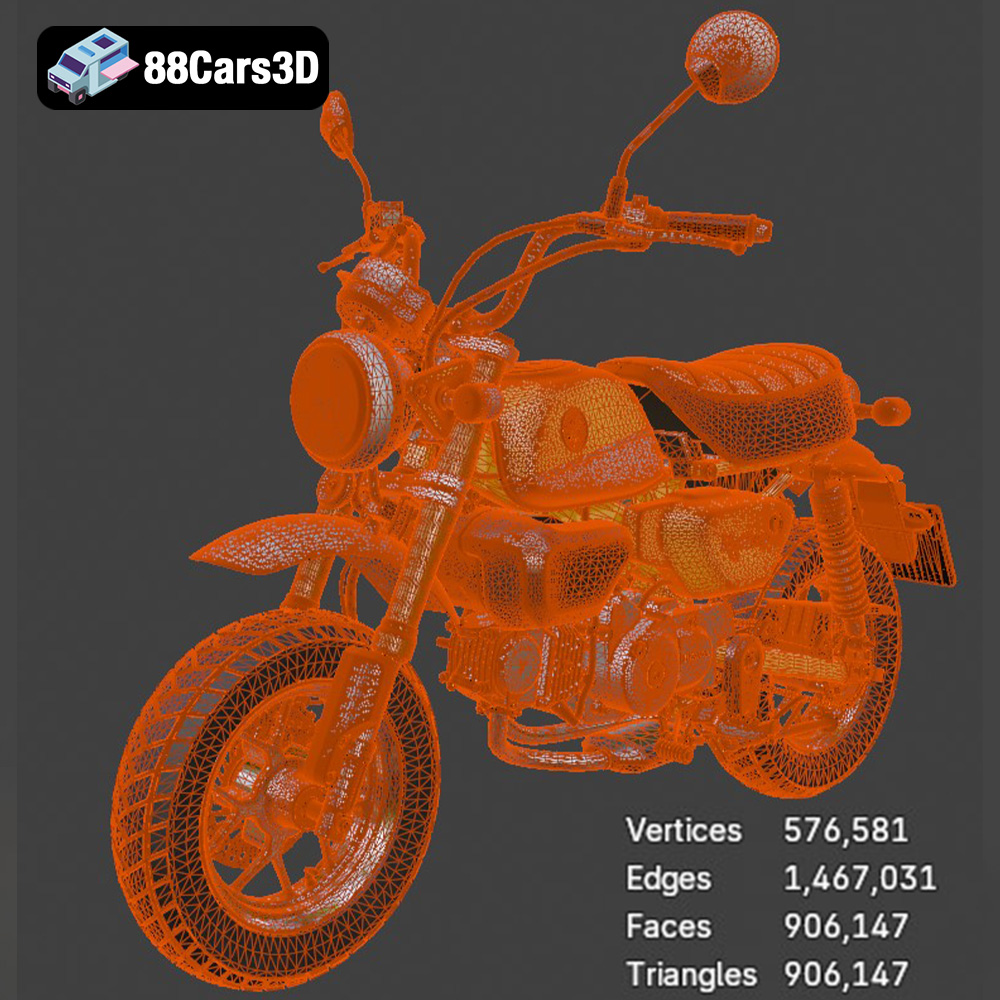
While realism is key, performance cannot be overlooked, especially for interactive applications. The Honda Monkey 125 2019 3D Model strikes a balance with an optimized polygon count. This means the model is detailed enough for close-up renders but lean enough to be efficiently integrated into complex scenes, game engines, or real-time simulations without causing significant performance overhead. For game development, this optimization is crucial for maintaining high frame rates. For rendering, it means faster viewport navigation and potentially quicker render times without sacrificing visual fidelity. This balance makes the asset incredibly versatile for a wide range of applications, from high-resolution cinematics to AR/VR experiences.
Integrating a high-quality 3D asset like the Honda Monkey 125 2019 into a professional pipeline involves a series of steps tailored to the target application and software. The versatility of file formats included with models from 88cars3d.com streamlines this process significantly.
For 3ds Max users, the inclusion of a `.max` file is a game-changer. Importing the Honda Monkey 125 2019 is as simple as opening the file. Once loaded, artists can immediately leverage 3ds Max’s robust toolset for scene setup. This often involves positioning the motorcycle within an environment, adding lighting (e.g., V-Ray Sun & Sky or HDRI maps), and setting up cameras for desired shots. The editable nature of the `.max` file allows for further modifications, such as adjusting materials for specific renderers like V-Ray or Corona, applying animation to wheels or suspension, or even customizing details if required. The clean topology of the model ensures that subdivision modifiers (like Turbosmooth) can be applied cleanly for ultra-high-resolution renders without introducing artifacts.
Blender artists benefit immensely from the `.blend` file. Opening the Honda Monkey 125 2019 in Blender provides an immediate, ready-to-render scene, complete with materials and a lighting setup. This significantly cuts down on initial setup time. Artists can then fine-tune materials for Cycles or Eevee, pose the motorcycle using simple pivots, or integrate it into larger architectural visualization scenes or product showcases. The open-source nature of Blender, combined with the comprehensive `.blend` file, empowers artists with full control to adapt the model to any creative vision, whether it’s for still renders, animated sequences, or even interactive presentations within Blender’s viewport.
The `.fbx` and `.unreal` formats are crucial for game developers. Importing the `.fbx` file for the Honda Monkey 125 2019 into Unreal Engine or Unity is a straightforward process. Developers will typically import the mesh, textures, and materials, then assemble them within the engine’s material editor. For Unreal Engine, the `.unreal` file takes this a step further, potentially offering a fully configured asset ready to be dragged and dropped into a level. This could include pre-set collision meshes, optimized LODs (Levels of Detail) to manage performance at varying distances, and even basic blueprint functionality for interactive elements. This level of preparation saves countless hours, allowing development teams to focus on gameplay mechanics and environment building rather than asset preparation.
A truly versatile 3D model transcends static renders, finding its utility across a broad spectrum of digital and physical applications. The Honda Monkey 125 2019 3D Model is designed with this versatility in mind, offering formats and optimizations tailored for diverse needs.
The rise of Augmented Reality (AR) and Virtual Reality (VR) demands 3D assets that are not only visually compelling but also highly optimized for real-time performance. The `.glb` format included with the Honda Monkey 125 2019 is specifically optimized for these environments. `.glb` files are compact and efficiently streamable, making them ideal for mobile AR apps, web-based VR experiences, and interactive configurators. Imagine showcasing the Honda Monkey 125 in a virtual showroom, allowing users to inspect it from every angle, or placing it virtually in their driveway using an AR application. The model’s clean geometry and efficient material setup ensure smooth interactivity and a high level of visual fidelity, crucial for maintaining user immersion.
For game developers, the Honda Monkey 125 2019 offers a ready-made solution for populating virtual worlds. Whether it’s a prop in an open-world adventure, a drivable vehicle in a racing game, or part of a detailed environment in a simulator, its optimized polygon count and game-engine-ready formats (.fbx, .unreal) are invaluable. Game development requires a meticulous approach to performance, often involving the creation of multiple Levels of Detail (LODs) to swap models with fewer polygons at a distance, and robust collision meshes for realistic interactions. The clean base mesh of this model makes it an excellent starting point for further game-specific optimization, ensuring it performs well across various gaming platforms.
The utility of 3D models extends into the physical realm through 3D printing. The `.stl` file format provided for the Honda Monkey 125 2019 is specifically geared towards this application. Engineers, designers, or hobbyists can use this file to 3D print a physical prototype of the motorcycle, whether for concept validation, scale models, or even custom parts. The `.stl` format simplifies the model into a mesh of triangles, a universal language for 3D printers. The quality of the original model’s geometry ensures that the printed output will accurately reflect the digital design, maintaining accurate proportions and details suitable for physical prototyping or model-making.
The balance between stunning visuals and efficient performance is a constant challenge in 3D production. High-quality 3D assets, such as those found on 88cars3d.com, are developed with this delicate equilibrium in mind, offering crucial features that simplify optimization for artists and developers.
Effective UV mapping is fundamental for applying textures correctly and efficiently. Good UVs ensure that textures are not stretched or distorted across the model’s surface and that material details are accurately represented. For game assets, efficient UV packing, often using texture atlases (combining multiple smaller textures into one larger image), is critical. This reduces draw calls, which significantly improves real-time performance. A well-prepared model like the Honda Monkey 125 2019 will have clean UVs, making it easy to apply new textures or optimize existing ones without tedious rework. Some advanced assets even provide separate UV channels – one for color/detail textures and another for lightmaps, crucial for baked lighting in game engines.
The “optimized polygon count” of the Honda Monkey 125 2019 is a key indicator of its production readiness. While high poly counts can create incredible detail, they can quickly overwhelm real-time engines or increase render times. Professionals often manage this by creating Levels of Detail (LODs) – progressively simpler versions of the same model that are swapped in as the camera moves further away. Starting with an optimized base mesh greatly simplifies the LOD creation process. Artists can efficiently generate lower poly versions from a clean, well-structured original without introducing unwanted artifacts or having to manually clean up geometry. This systematic approach ensures both visual fidelity up close and robust performance at a distance.
Physically Based Rendering (PBR) has become the gold standard for material creation, delivering consistent and realistic results across different rendering engines and lighting conditions. PBR materials accurately simulate how light interacts with surfaces in the real world, using maps like Albedo, Normal, Roughness, and Metallic. The realistic materials included with the Honda Monkey 125 2019 are designed with PBR principles, ensuring that whether you’re rendering in Cycles, V-Ray, or running it in Unreal Engine, the visual outcome will be highly consistent and photorealistic. This universal approach simplifies asset exchange and reduces the need for extensive material conversion, saving valuable production time.
In any demanding creative industry, time is money, and quality is non-negotiable. This is particularly true in 3D production pipelines where complex projects can easily get bogged down by subpar assets or tedious manual labor. Sourcing production-ready 3D car models offers an undeniable strategic advantage.
Developing a highly detailed 3D vehicle from scratch is an incredibly time-consuming and resource-intensive endeavor. It requires expert modelers, texture artists, and a significant investment in software and hardware. By utilizing pre-made, high-quality assets like the Honda Monkey 125 2019 3D Model, studios and individual artists can dramatically reduce their production timelines. Instead of spending weeks on modeling and texturing a vehicle, that time can be reallocated to scene composition, animation, lighting, or other creative aspects that add unique value to the project. This efficiency allows teams to meet tighter deadlines and deliver projects faster without compromising on visual quality.
When you acquire a professional 3D model, you’re not just buying geometry and textures; you’re investing in expertise and quality assurance. Assets from reputable marketplaces like 88cars3d.com adhere to professional standards for clean geometry, optimized topology, accurate UVs, and PBR materials. This consistency is vital, especially when integrating multiple assets into a single scene or project. A poorly constructed model can introduce rendering artifacts, performance bottlenecks, or compatibility issues. Conversely, a high-standard model like the Honda Monkey 125 2019 ensures a smooth integration and predictable results, contributing to a cohesive and polished final product across all your automotive rendering needs.
While there is an upfront cost to purchasing premium 3D models, it is almost always significantly more cost-effective than developing them in-house. Consider the salaries of skilled artists, software licenses, and the time spent on design iterations. Purchasing a meticulously crafted asset for a fraction of that cost allows businesses to allocate their internal resources to core competencies and unique creative challenges. This strategic sourcing empowers smaller studios and freelancers to compete with larger organizations by accessing top-tier assets without the prohibitive overhead, making exceptional 3D car models accessible to a wider audience.
The landscape of 3D production is continually evolving, demanding assets that are not only visually stunning but also technically robust and versatile. High-quality 3D car models serve as foundational elements across a multitude of industries, from immersive game development and photorealistic architectural visualization to interactive AR/VR experiences and detailed product simulations. Understanding the nuances of different file formats, optimizing for performance, and appreciating the meticulous craftsmanship behind each asset are key to leveraging their full potential.
The Honda Monkey 125 2019 3D Model stands as a testament to this commitment to excellence. Its carefully crafted details, clean geometry, realistic materials, and optimized polygon count make it an exceptional choice for any professional seeking reliability and visual fidelity. With a comprehensive suite of file formats, including .blend, .fbx, .obj, .glb, .stl, .ply, .unreal, and .max, this model ensures maximum compatibility and streamlines workflows across various software and applications. By choosing such production-ready assets, artists and developers can significantly accelerate their projects, maintain professional standards, and focus their creative energy on bringing their visions to life. Explore this model and other premium 3D car models at 88cars3d.com to elevate your next project.
Experience superior realism with the Honda Monkey 125 2019 3D Model. This carefully crafted digital asset delivers exceptional detailing, capturing the iconic essence and unique design of the original vehicle. The model features clean geometry and realistic materials, ensuring a professional standard for any project. Every component is meticulously structured, offering accurate proportions and an optimized polygon count for seamless integration into complex scenes. Perfect for a wide range of applications, this versatile 3D model is ideal for game development, professional rendering, AR/VR experiences, and immersive visual simulations. Whether you are creating a dynamic cinematic sequence or an interactive showroom, this asset provides the reliability and visual fidelity required. The following file formats are included to ensure maximum compatibility: .blend – Editable Blender file with materials and lighting setup; .fbx – Game-engine ready format for Unreal Engine and Unity; .obj – Standard 3D model format compatible with all major software; .glb – Optimized for AR/VR and web-based visualization; .stl – Suitable for 3D printing and prototyping; .ply – Detailed polygon mesh for analysis and visualization; .unreal – Pre-configured for Unreal Engine use; .max – Editable 3ds Max file for rendering and animation.
$19.99
.arvr
.blend
.car3dmodel
.fbx
.gameasset
.glb
.honda
.max
.minibike
.monkey125
.motorcycle
.obj
.ply
.rendering
.simulation
.stl
.unreal