Get 20% OFF All Premium 3D & STL Models!

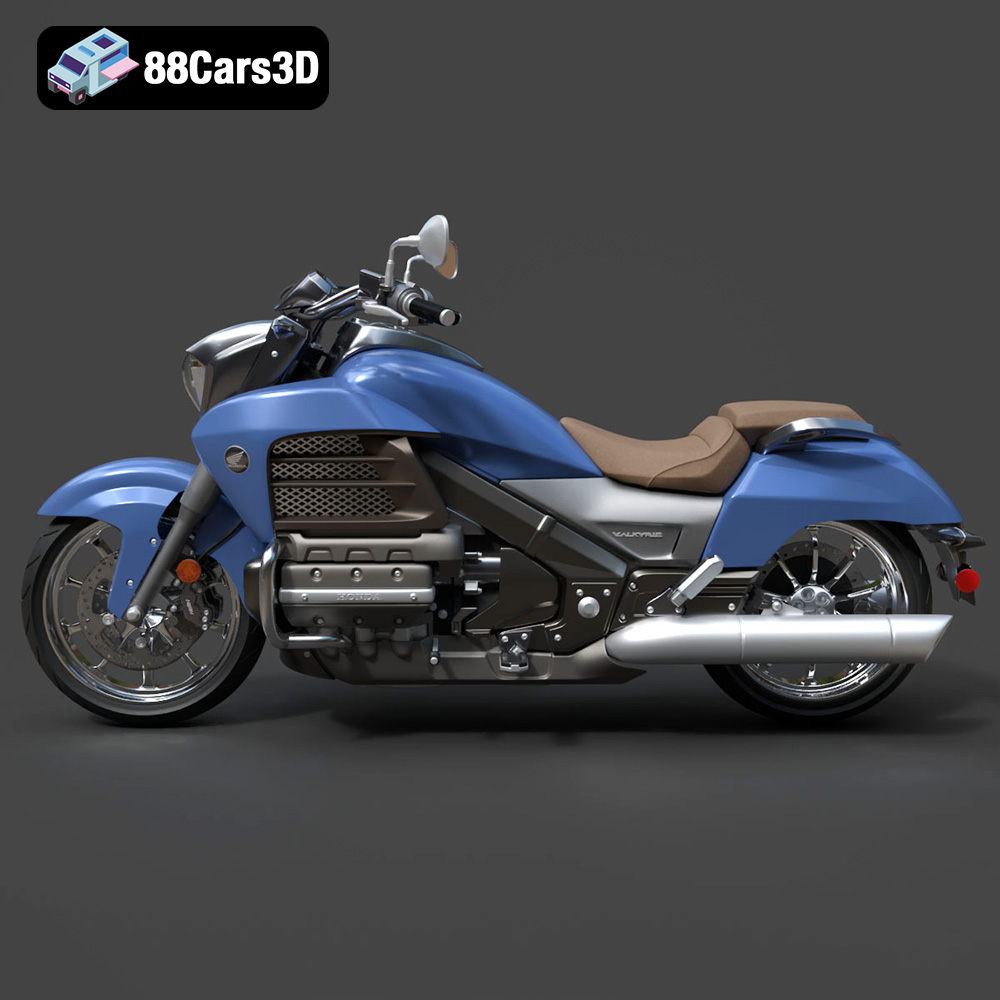
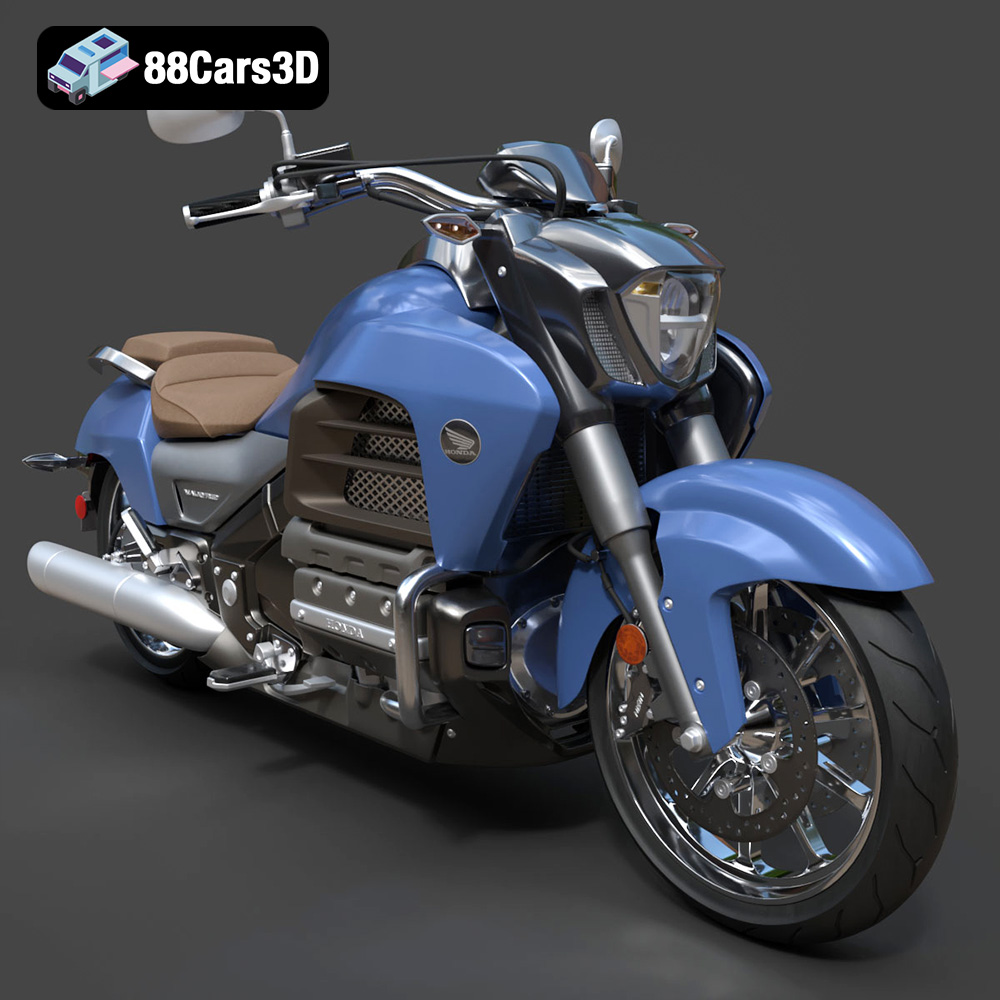
The Honda Valkyrie GL1800C 2015 is an iconic motorcycle, a fusion of power and cruiser aesthetics. Bringing this machine to life through 3D printing is an exciting project that allows enthusiasts to own a scaled replica with incredible detail. This guide will walk you through the entire 3D printing process, from pre-print preparation to post-processing, ensuring a successful and satisfying outcome. We’ll cover material selection, optimal printer settings, and troubleshooting tips to help you create a stunning 3D printed Honda Valkyrie GL1800C 2015. High-quality 3D models like this one can be found at online marketplaces such as 88cars3d.com.
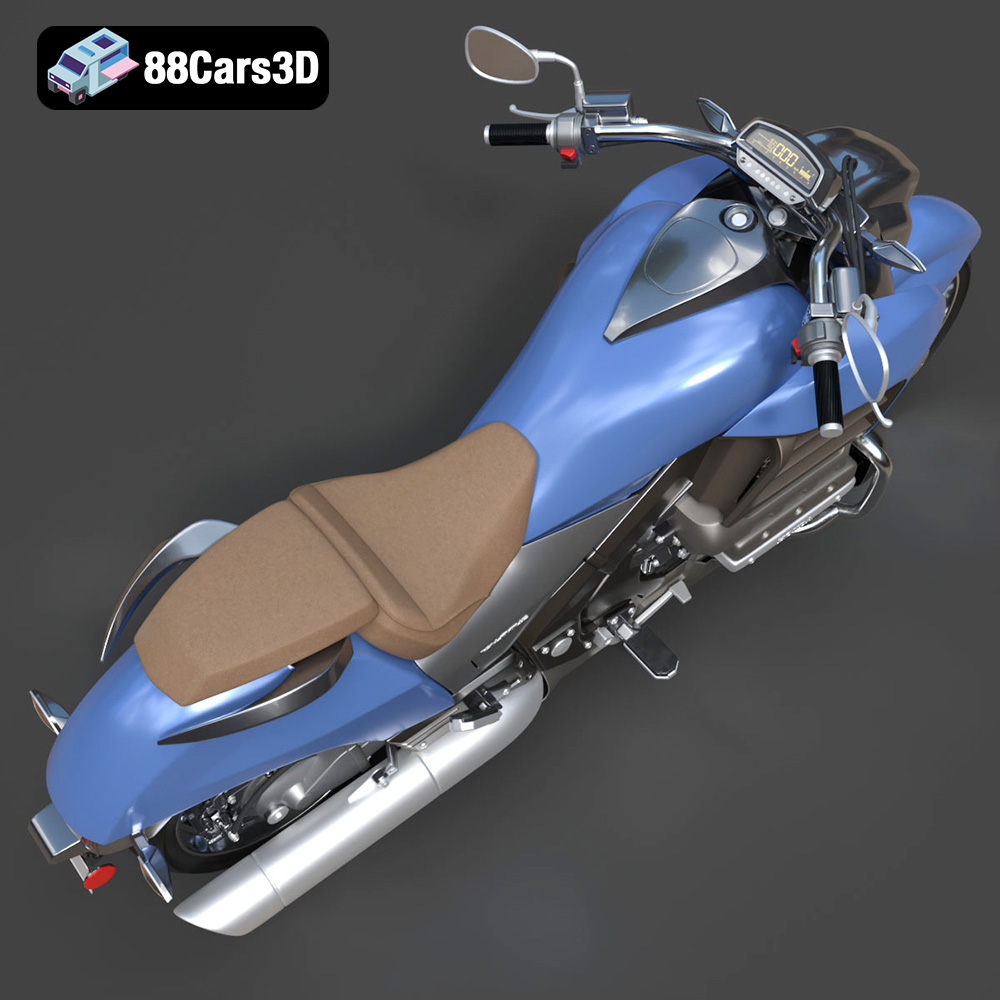
Before diving into the printing process, it’s crucial to understand the model’s intricacies. The Honda Valkyrie GL1800C 2015, available as a 3D model, often features complex geometries and fine details that can present challenges for 3D printing. This model likely includes details such as the engine components, exhaust system, intricate bodywork, and possibly even interior elements. Inspecting the model in your slicing software will reveal potential overhangs, thin walls, and intricate areas that require careful consideration.
The Valkyrie’s design inherently involves numerous curved surfaces and complex mechanical components. Identify areas that might require significant support structures. Consider whether the model is separated into parts for easier printing and assembly. If the model is a single piece, you might need to split it using software like Blender or Meshmixer to optimize printability.
Determine the desired scale of your 3D printed model. A larger scale allows for finer details to be reproduced, but it also increases print time and material consumption. Smaller scales may require simplification of certain features. Test prints of small sections can help determine the optimal scale for balancing detail and printability.
Choosing the right file format is paramount for a successful 3D printing experience. Different formats offer varying levels of detail, compatibility, and suitability for additive manufacturing.
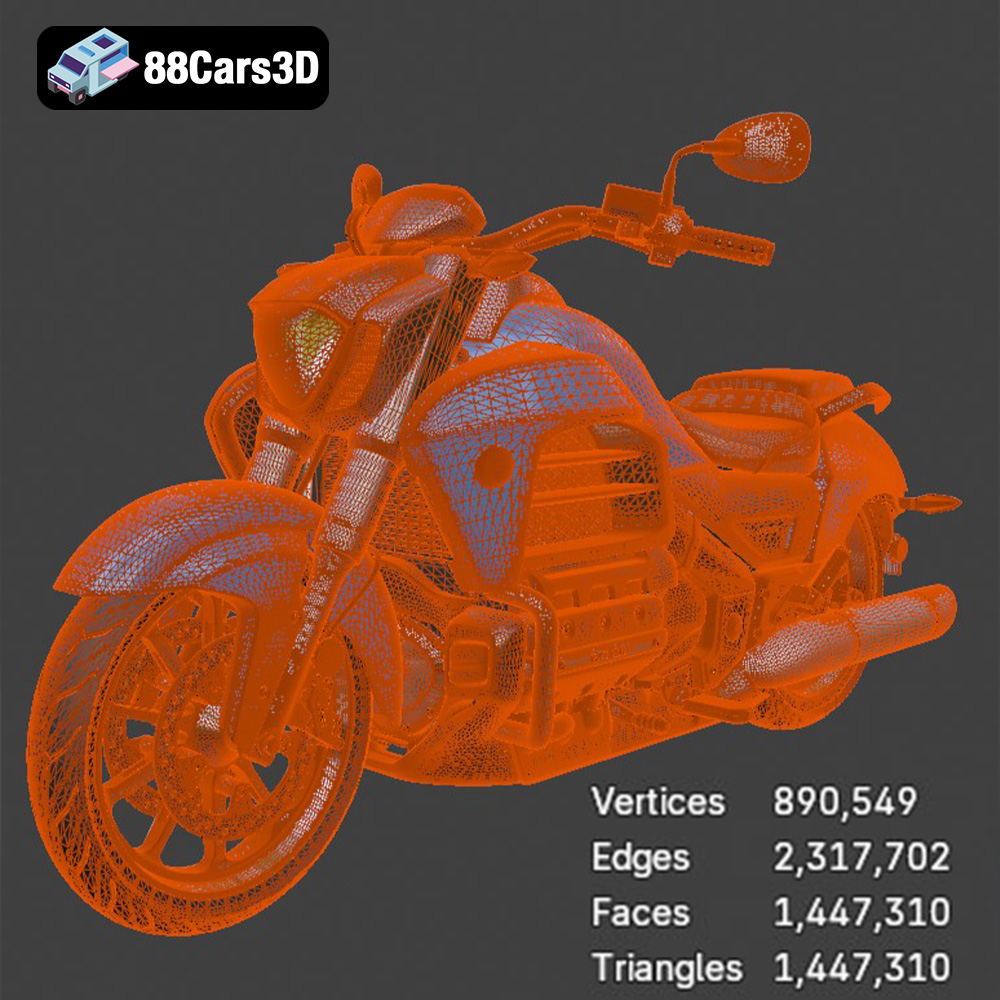
The .stl (Stereolithography) format is the workhorse of 3D printing. It represents the 3D model’s surface geometry as a mesh of triangles. This simplicity makes it universally compatible with virtually all 3D printing software and hardware. However, .stl files only store geometric data; they do not contain information about color, texture, or materials. When preparing an .stl file for printing, it’s crucial to ensure the mesh is watertight (closed) and free of errors like self-intersections or flipped normals. Slicing software analyzes the .stl file and converts it into a series of instructions (G-code) for the 3D printer to follow. Optimizing the triangle count in the .stl file is important. A higher triangle count results in a more detailed surface but also increases file size and processing time. Conversely, a lower triangle count can lead to faceted surfaces. For the Honda Valkyrie GL1800C 2015, ensuring the .stl file captures the curvature of the bodywork and the intricate details of the engine is critical. You might need to adjust the export settings in your 3D modeling software to achieve the right balance between detail and file size. 3D models on 88cars3d.com often include optimized .stl files.
The .obj (Object) format is another widely used format, but unlike .stl, it can store color and texture information along with the geometry. This makes it suitable for 3D printing with multi-material printers capable of producing colored prints. However, not all 3D printers support colored printing, and the .obj format can be more complex to process than .stl.
The .ply (Polygon File Format) is designed to store 3D data acquired from 3D scanners. It’s capable of representing complex geometries with high precision, making it suitable for applications requiring very detailed reproductions. However, .ply files can be quite large, and compatibility with slicing software may vary.
The .blend format is the native file format for Blender, a popular open-source 3D modeling software. It stores the entire scene, including geometry, materials, textures, lighting, and animation data. This is incredibly useful if you want to modify the Honda Valkyrie GL1800C 2015 model before 3D printing it. You can adjust the model’s scale, add custom details, or split it into separate parts for easier printing. Before 3D printing, you must export the model from Blender to a 3D printable format like .stl.
The .fbx (Filmbox) format is a proprietary format developed by Autodesk, widely used in the gaming and film industries. It supports geometry, materials, textures, and animation data. While primarily used for transferring models between different software applications, some advanced slicing software can import .fbx files to retain material information for multi-material printing.
The .glb (GL Transmission Format Binary) is a binary file format that represents 3D models in a compact and efficient manner. It’s often used for displaying 3D models on the web and in augmented reality (AR) applications. While not directly used for 3D printing, .glb files can be helpful for previewing the model’s appearance before committing to the printing process.
Similar to .blend, .max is the native file format for 3ds Max, another professional 3D modeling software. It contains the entire scene data, allowing for extensive modifications to the model before exporting to a 3D printable format.
Choosing the right material is crucial for achieving the desired aesthetic and functional properties of your 3D printed Honda Valkyrie GL1800C 2015 model.
PLA is a popular choice for beginners due to its ease of printing and biodegradability. It’s a relatively strong material suitable for creating aesthetically pleasing models. However, PLA has low heat resistance, which can be a drawback if the model is exposed to high temperatures. For the Valkyrie, PLA is excellent for creating the main body components and non-functional parts.
PETG offers a good balance of strength, flexibility, and heat resistance. It’s more durable than PLA and can withstand higher temperatures. PETG is a good option for parts that require some flexibility or are exposed to moderate heat. Consider using PETG for parts like the fenders or exhaust components.
ABS is a strong and heat-resistant material commonly used in automotive and engineering applications. It requires a heated bed and an enclosed printer to prevent warping. ABS is ideal for parts that need to withstand significant stress or high temperatures, such as engine components or structural elements. However, it can be more challenging to print than PLA or PETG due to its tendency to warp.
Resin 3D printing offers exceptional detail and smooth surfaces. It’s perfect for creating intricate parts with fine features, like the Valkyrie’s engine or badges. However, resin prints tend to be more brittle than filament-based prints and may require post-curing. There are various types of resins available, including standard resins, tough resins, and flexible resins, each with different properties.
Achieving a high-quality 3D print of the Honda Valkyrie GL1800C 2015 requires careful adjustment of printer settings.
Layer height directly affects the print quality and print time. Lower layer heights (e.g., 0.1mm) result in smoother surfaces and finer details but increase print time. Higher layer heights (e.g., 0.2mm) print faster but sacrifice some detail. For the Valkyrie, consider using a lower layer height for visible parts like the bodywork and a higher layer height for internal structures or parts that will be hidden.
Infill density determines the internal structure of the 3D print. Higher infill densities increase the strength and weight of the model but also increase print time and material consumption. Lower infill densities result in lighter prints with less strength. For the Valkyrie, a moderate infill density (15-25%) is usually sufficient for most parts. Areas that require more strength, such as mounting points or structural elements, can benefit from higher infill densities (50-75%).
Support structures are necessary for printing overhangs and complex geometries. Choose a support structure type that is easy to remove and doesn’t damage the surface of the model. Zig-zag or tree supports are often good options. Optimize support placement to minimize material usage and print time. Consider using support blockers to prevent supports from generating in areas where they are not needed.
The orientation of the model on the print bed can significantly impact print quality and the need for support structures. Experiment with different orientations to minimize overhangs and maximize surface quality. For the Valkyrie, orienting the bodywork with the flattest surface facing down can reduce the need for supports.
Proper pre-print preparation is essential for a successful 3D printing outcome. This involves slicing the model and repairing any potential errors.
Slicing software converts the 3D model into a series of layers that the 3D printer can understand. Popular slicing software options include Cura, Simplify3D, and PrusaSlicer. Each software offers different features and settings, so choose one that you are comfortable with and that suits your needs.
Before slicing, it’s important to repair any errors in the 3D model. Software like Meshmixer or Netfabb can identify and fix common issues such as non-manifold edges, flipped normals, and holes in the mesh. Repairing these errors ensures that the slicing software can generate a correct toolpath.
Within your slicing software, experiment with settings like print speed, temperature, and retraction to optimize print quality for your specific printer and material. Conduct test prints to fine-tune these settings and identify any potential issues.
Post-processing is the final step in the 3D printing process, involving techniques to refine the surface finish and assemble the model.
Carefully remove support structures using tools like pliers, knives, or sandpaper. Be cautious not to damage the surface of the model during support removal.
Sanding is used to smooth out layer lines and imperfections on the surface of the 3D print. Start with coarse sandpaper (e.g., 220 grit) and gradually move to finer grits (e.g., 400, 600, 800 grit) to achieve a smooth finish. Wet sanding can help reduce dust and improve the sanding process.
Apply a primer coat to the sanded surface to prepare it for painting. The primer helps to fill in any remaining imperfections and provides a better surface for the paint to adhere to. Choose a paint that is compatible with the material you used to print the model. Apply thin, even coats of paint to achieve a professional finish.
If the model consists of multiple parts, assemble them using glue or fasteners. Ensure that the parts fit together properly and that the assembly is strong and durable.
Even with careful preparation, you may encounter some common 3D printing issues. Here are some solutions:
Warping occurs when the corners of the print lift off the print bed. This is often caused by poor bed adhesion or temperature fluctuations. To prevent warping, ensure that the print bed is clean and level, use a heated bed (if your printer has one), and enclose the printer to maintain a consistent temperature.
Stringing occurs when the printer extrudes material while moving between different parts of the print. This can be caused by excessive retraction distance or temperature. To reduce stringing, adjust the retraction settings in your slicing software and lower the printing temperature.
Layer delamination occurs when the layers of the print separate from each other. This can be caused by poor layer adhesion or insufficient cooling. To prevent layer delamination, increase the printing temperature, reduce the cooling fan speed, and ensure that the layers are properly bonded together.
Elephant foot is when the bottom layers of a print are wider than the rest of the print. This is typically caused by the nozzle being too close to the bed on the first layer, or the bed temperature being too high. Correct bed leveling and temperature settings can resolve this.
By carefully following these guidelines, you can successfully 3D print a stunning replica of the Honda Valkyrie GL1800C 2015. This process requires patience, experimentation, and attention to detail, but the result is a rewarding and unique creation. Remember to check out 88cars3d.com for high-quality 3D models optimized for printing!
Experience the realistic precision of the Honda Valkyrie GL1800C 2015 3D Model. This authentic digital replica accurately captures the powerful stance and intricate mechanical details of the renowned motorcycle.
$19.99
.arvr
.blend
.car3dmodel
.cruiser
.fbx
.gameasset
.gl1800c
.glb
.honda
.max
.motorcycle
.obj
.ply
.rendering
.simulation
.stl
.unreal
.valkyrie