Get 20% OFF All Premium 3D & STL Models!

The world of 3D visualization is a dynamic landscape, constantly pushing the boundaries of realism and interactivity. For professionals in automotive design, game development, architectural visualization, and even product marketing, high-quality 3D car models are not just assets; they are the foundation upon which compelling experiences are built. The ability to accurately represent a vehicle, from its sleek exterior lines to the intricate details of its interior, is paramount in capturing audience attention and conveying design intent.
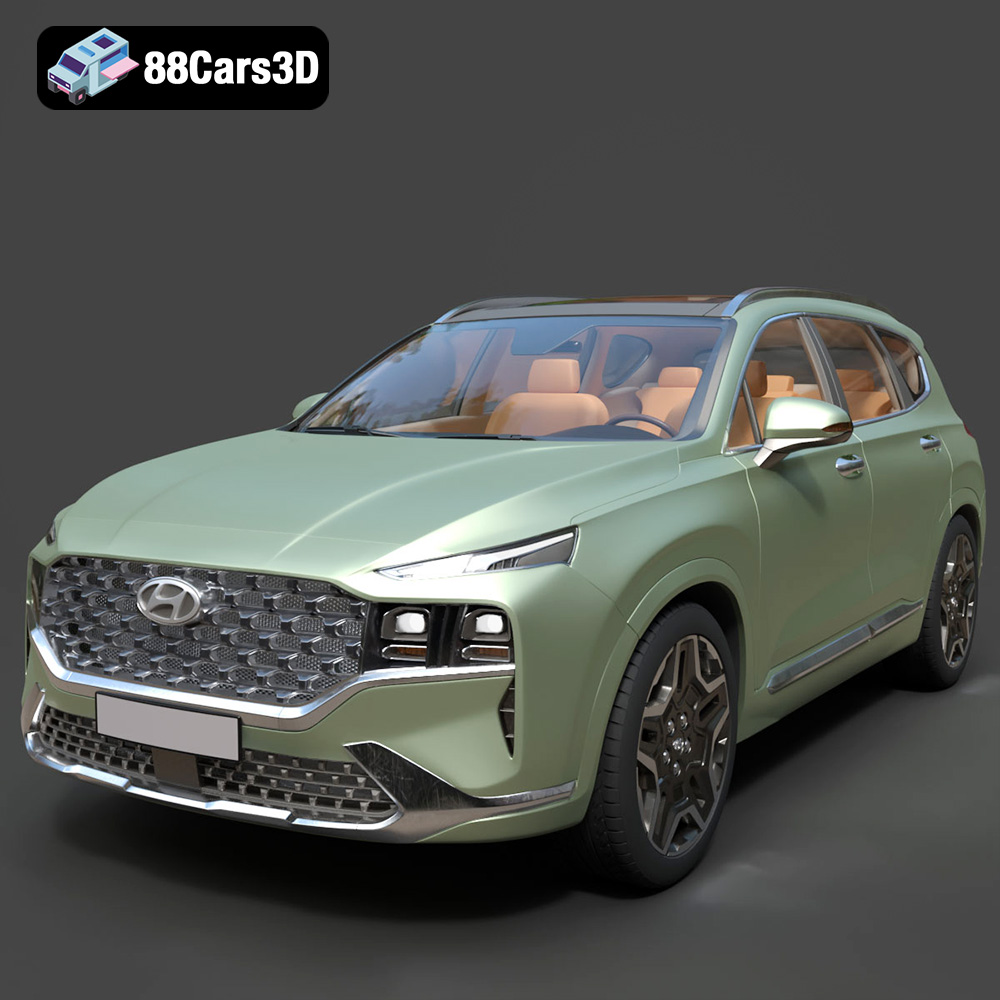
In this comprehensive guide, we’ll delve into the technical intricacies of working with 3D car models, exploring advanced rendering techniques, optimization strategies for real-time applications, and diverse use cases that extend beyond traditional visualization. We’ll highlight how meticulously crafted assets, such as the Hyundai Santa Fe 2021 3D Model available on 88cars3d.com, empower artists and developers to achieve stunning results with unparalleled efficiency. Whether you’re aiming for a photorealistic automotive rendering or integrating a vehicle into an immersive virtual reality experience, understanding the underlying technology and best practices is crucial.
The versatility of a 3D car model largely depends on the file formats it supports. Each format is designed with specific applications and software compatibility in mind, offering unique advantages. When acquiring assets, particularly high-fidelity 3D car models like the Hyundai Santa Fe 2021, understanding these distinctions is crucial for a smooth workflow.
The .blend format is the native file type for Blender, a powerful open-source 3D creation suite. A .blend file typically encapsulates an entire scene, including not just the mesh data, but also materials, textures, lighting setups, cameras, animations, and even physics simulations. For artists working primarily in Blender, this format offers maximum editability and preserves all aspects of the original creator’s scene. This means you can easily tweak materials, adjust lighting, or modify the geometry directly. For the Hyundai Santa Fe 2021 3D Model, the .blend file provides a fully editable scene with pre-configured materials and lighting, making it an excellent starting point for custom renders or animations within Blender.
.fbx (Filmbox) is a proprietary file format owned by Autodesk and is widely regarded as the industry standard for exchanging 3D data between various software applications. Its strength lies in its ability to store not only geometry and materials but also animations, rigs, cameras, and lights in a single file. This makes it incredibly versatile for pipelines involving multiple software packages, such as moving a model from 3ds Max to Unreal Engine or Unity. For game developers, .fbx is often the go-to format for importing assets, as it’s optimized for real-time applications, offering a good balance of detail and performance. The Hyundai Santa Fe 2021 model’s .fbx version is specifically tailored to be game-engine ready, ensuring seamless integration into demanding interactive environments.
The .obj (Wavefront OBJ) format is one of the oldest and most universally supported 3D file formats. It’s a simple, text-based format that primarily stores geometry (vertices, normals, texture coordinates) and references external material files (.mtl). While it doesn’t support advanced features like animation or rigging, its widespread compatibility makes it a safe bet for cross-software transfers when only the mesh and basic material assignments are needed. If you’re unsure about the target software’s compatibility, .obj is a reliable fallback. It’s an excellent choice for static renders and general-purpose 3D editing across virtually any 3D package.
.glb (GLB format for glTF) is a relatively newer format gaining rapid traction, especially for web-based 3D, augmented reality (AR), and virtual reality (VR) applications. It’s a binary version of the glTF (GL Transmission Format) and is designed to be a compact, efficient, and runtime-agnostic format for the transmission of 3D scenes and models. A .glb file packages everything – geometry, materials, textures, animations – into a single, self-contained file, making it ideal for fast loading and display in browsers, AR viewers, and VR platforms. The Hyundai Santa Fe 2021 3D Model’s .glb version is specifically optimized for these performance-critical, real-time interactive experiences.
.stl (STereoLithography) is the most common file format for 3D printing. It represents a 3D model as a series of connected triangles, essentially describing the surface geometry without any color, texture, or material information. While simple, this “triangulated mesh” approach is universally understood by 3D printers and slicing software. For prototyping or creating physical scale models of vehicles, the .stl format of the Hyundai Santa Fe 2021 3D Model provides the necessary data for accurate physical reproduction.
.ply (Polygon File Format) is another format primarily used to store 3D data, often originating from 3D scanners or CAD software. Unlike .stl, .ply can store more complex information per vertex, such as color, transparency, and even normal vectors, making it suitable for more detailed data representation. It’s particularly useful in scientific visualization, reverse engineering, and applications where precise polygonal mesh data is required for analysis or high-fidelity visualization, offering greater precision than .obj in some cases.
The .unreal format signifies an asset that has been specifically packaged and optimized for direct import and use within Unreal Engine. This often means textures are correctly mapped, materials are set up with appropriate shaders (e.g., PBR), and potentially even collision meshes or LODs (Levels of Detail) are pre-configured. This format dramatically streamlines the workflow for Unreal Engine artists and developers, minimizing the setup time. The Hyundai Santa Fe 2021 3D Model’s .unreal file ensures immediate integration into your Unreal projects, leveraging the engine’s powerful rendering capabilities right out of the box.
Finally, the .max format is the native file type for Autodesk 3ds Max, a leading software for 3D modeling, animation, and rendering. Similar to .blend, a .max file contains the complete scene, including geometry, materials, lighting, cameras, and animation data. For professionals using 3ds Max for automotive rendering or animation, having the native .max file offers the highest level of flexibility and editability, allowing for detailed modifications and leveraging all the powerful features of 3ds Max. The Hyundai Santa Fe 2021 .max file is perfect for those who want full control over the model in a professional studio environment.
Automotive rendering is a specialized field where the pursuit of photorealism meets technical mastery. It’s not just about creating a pretty picture; it’s about conveying the vehicle’s design, its material quality, and its presence as if it were a physical object. The quality of your 3D car models, such as the Hyundai Santa Fe 2021 3D Model, forms the bedrock of this endeavor.
The key to realistic automotive rendering lies in the meticulous creation and application of materials. Modern rendering workflows heavily rely on Physically Based Rendering (PBR), which accurately simulates how light interacts with surfaces in the real world. This involves using texture maps for parameters like Albedo (color), Roughness (specularity), Metallic (reflectivity), Normal (surface detail), and sometimes Ambient Occlusion. For a car, this means precisely replicating the metallic flakes in paint, the subtle reflections on glass, the texture of tire rubber, and the sheen of leather upholstery.
A high-quality 3D model like the Hyundai Santa Fe 2021 comes equipped with realistic and high-resolution materials, pre-configured for PBR workflows. This significantly reduces setup time and ensures that when rendered in engines like V-Ray, Corona Renderer, Octane, or even real-time engines like Unreal Engine’s Lumen, the vehicle reacts to light in a physically accurate manner, resulting in stunning, lifelike visuals.
Lighting is the soul of any render, and for automotive scenes, it’s critical. Dynamic range, color temperature, and the quality of shadows are paramount. Professionals often employ High Dynamic Range Images (HDRIs) for realistic environment lighting, which provides both rich lighting information and subtle reflections. Beyond HDRIs, strategic placement of virtual studio lights (area lights, dome lights) is used to highlight specific design curves, create dramatic reflections on the car’s bodywork, and emphasize interior details.
Techniques such as “light painting” involve using focused lights to bring out reflections along the car’s contours, making it appear more sculpted and dynamic. Understanding how different materials, like metallic paint versus matte plastic, scatter and reflect light differently is crucial for fine-tuning your lighting setup. The clean geometry of professional 3D car models ensures that these complex lighting interactions are computed accurately, leading to flawless reflections and crisp shadows that elevate the realism of the final render.
Game development places unique demands on 3D assets. While visual fidelity is critical, it must be balanced with performance to ensure smooth gameplay at high frame rates. 3D car models destined for games, such as the Hyundai Santa Fe 2021 3D Model, need to be rigorously optimized without sacrificing visual quality.
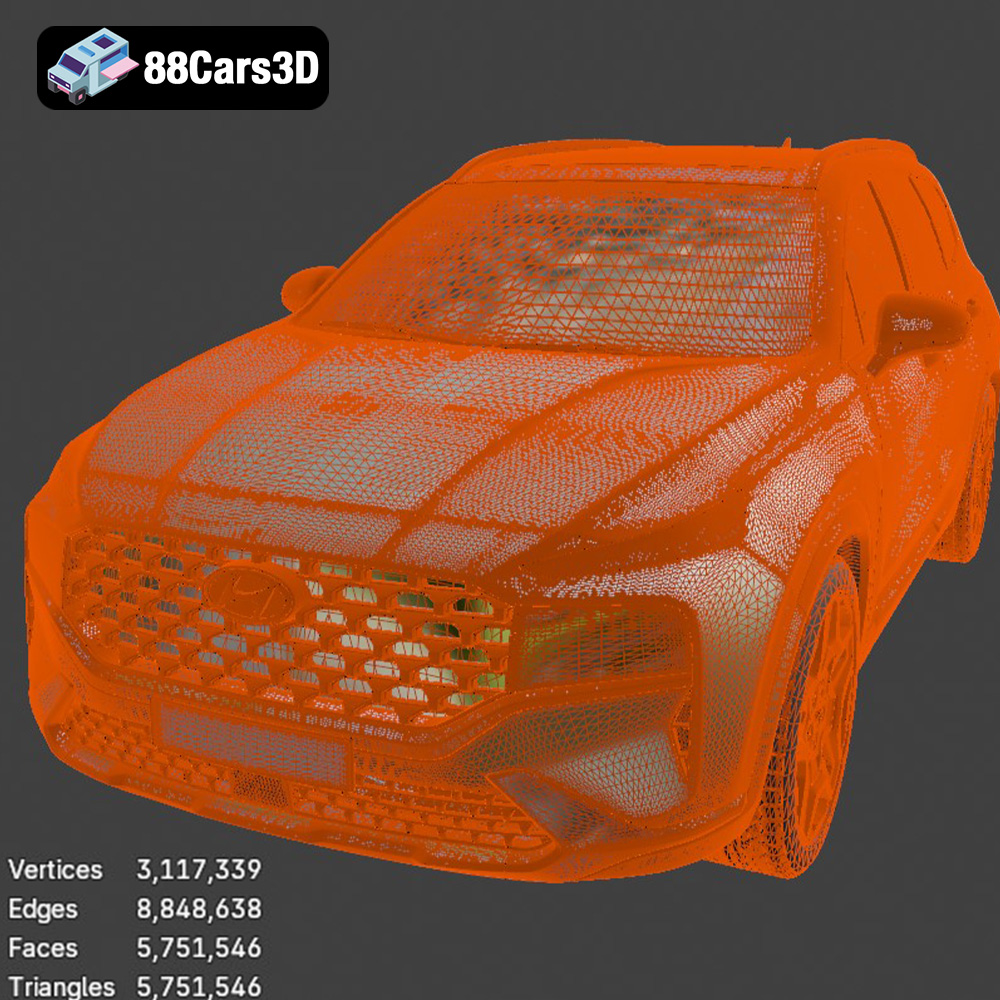
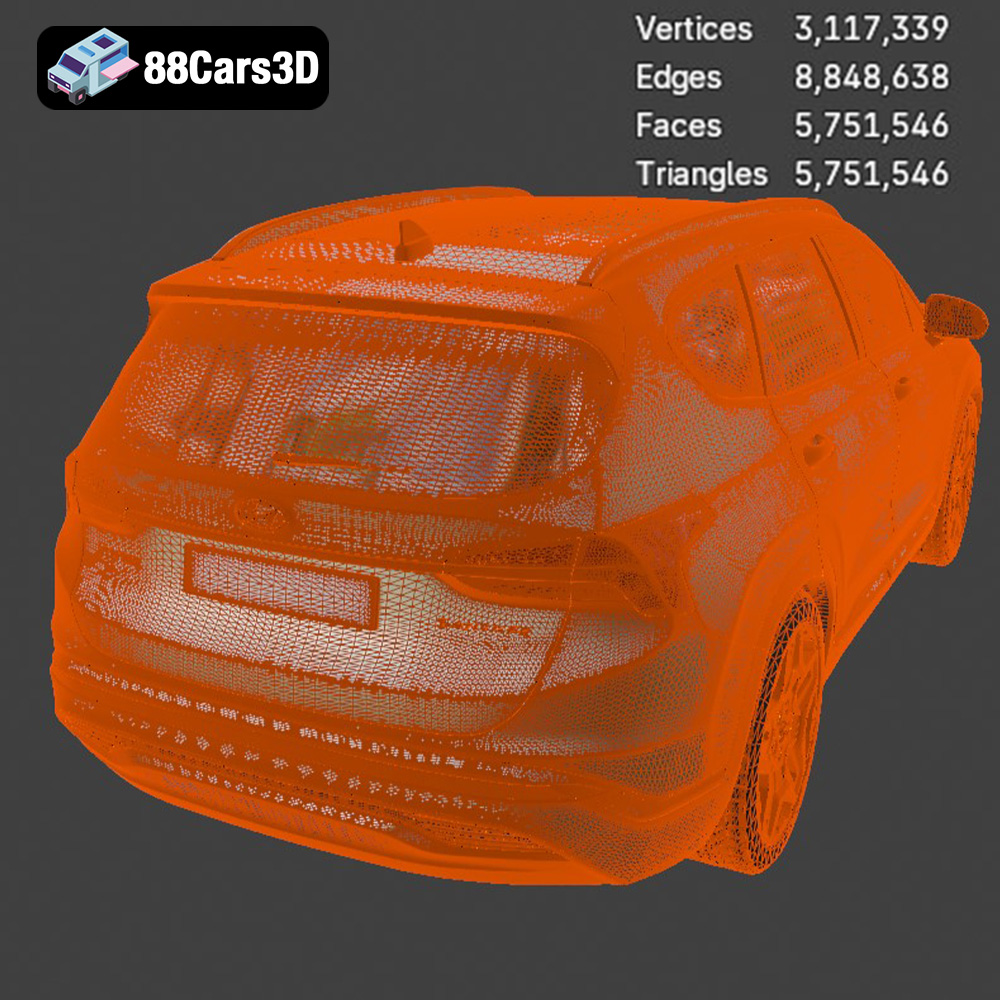
The primary concern for game assets is polygon count. High-poly models, while great for offline rendering, can quickly overwhelm a game engine. This necessitates a careful optimization process that often involves creating multiple Levels of Detail (LODs). An LOD system swaps out higher-polygon models for lower-polygon versions as the camera moves further away from the object, significantly reducing the computational load. Efficient UV mapping is also crucial for texture resolution and memory usage, as multiple texture maps (Albedo, Normal, Roughness, Metallic, etc.) need to be applied accurately.
Clean and optimized geometry, a key feature of the Hyundai Santa Fe 2021 3D Model, means it’s built with game development in mind. This includes a well-structured mesh that is easier to generate LODs from, and often, pre-existing clean UV layouts that minimize texture distortion and allow for efficient texture packing. Collision meshes, which are simplified proxy meshes used for physics interactions, are another vital component for realistic driving simulations.
For Unreal Engine developers, the Hyundai Santa Fe 2021 3D Model comes with both an .fbx and a dedicated .unreal file. The .fbx format provides a robust way to import the model, complete with mesh data, skeletal information (if the car is rigged for doors, wheels, etc.), and PBR-ready material assignments. Upon import, artists can quickly create master materials and instances, leveraging Unreal’s powerful material editor to fine-tune appearances, add car paint shaders, and set up realistic glass. Unreal’s Lumen global illumination system and Nanite virtualized geometry can handle incredibly detailed assets, making it possible to push visual boundaries even with high-quality models.
The .unreal file offers an even more streamlined experience, often containing pre-configured static meshes, materials, and possibly even Blueprints for basic interactivity (like opening doors or turning on lights). This drastically reduces setup time, allowing developers to immediately integrate the SUV into their game world, create realistic physics simulations, or use it as a centerpiece in an immersive virtual showroom. This focus on game-engine readiness is a hallmark of professional-grade 3D car models from marketplaces like 88cars3d.com.
The utility of high-quality 3D car models extends far beyond traditional rendering and game development. Augmented Reality (AR), Virtual Reality (VR), and 3D printing represent exciting frontiers where detailed 3D assets are transforming industries, from product showcasing to rapid prototyping.
AR and VR offer unprecedented ways to interact with 3D models. Imagine a potential car buyer using an AR app to “place” a full-scale Hyundai Santa Fe 2021 in their driveway, rotating it, changing colors, and even peeking inside – all before visiting a dealership. In VR, users could “sit” inside the car, explore its features, or even take it for a virtual test drive in a simulated environment. For these applications, performance is paramount, and the models must be optimized for real-time interaction on various devices, from high-end VR headsets to mobile phones.
The .glb format, included with the Hyundai Santa Fe 2021 3D Model, is particularly suited for AR/VR and web-based visualization. Its compact size and single-file nature allow for fast loading and efficient rendering in web browsers (using WebGL) and dedicated AR/VR platforms. This makes it ideal for developing interactive car configurators, virtual showrooms, or training simulations where users need to explore the vehicle in a truly immersive way.
While the focus of 3D car models is often digital, their application in the physical world through 3D printing is equally transformative. Designers can use an .stl file, such as the one provided with the Hyundai Santa Fe 2021 3D Model, to create tangible scale models for design reviews, aerodynamic testing, or even as high-fidelity promotional items. This allows for rapid iteration of physical prototypes, significantly shortening development cycles in the automotive industry.
The .ply format, offering more precise mesh data, can be utilized in more technical applications, such as reverse engineering, quality control, or integration into Computer-Aided Manufacturing (CAM) workflows. While less common for direct consumer-level 3D printing, its ability to carry richer geometric information makes it valuable for specialized engineering and analytical tasks where the precise surface data of the vehicle is critical for physical manufacturing or evaluation processes.
In a competitive industry, time is money, and quality is king. Sourcing professional-grade 3D car models like the Hyundai Santa Fe 2021 3D Model from reputable marketplaces like 88cars3d.com can be a game-changer for individuals and studios alike. These assets are not merely objects; they are meticulously engineered digital replicas designed to integrate seamlessly into diverse production pipelines.
The alternative to purchasing a pre-made, high-quality 3D model is to create one from scratch. This process involves significant time and expertise, encompassing modeling, UV mapping, texturing, material setup, and optimization. For a complex subject like a modern car, this can easily take hundreds of hours for a single artist. By acquiring a professionally designed model, you instantly save this development time, allowing your team to focus on higher-level creative tasks such as scene composition, animation, or interactive logic development.
Furthermore, “clean and optimized geometry” means fewer headaches down the line. Models with messy topology, non-manifold geometry, or poor UVs can lead to rendering artifacts, difficulties in rigging, and poor performance in real-time applications. Professional assets are built to avoid these issues, ensuring a smooth and efficient workflow from the moment you import them into your chosen software.
Consider an architectural visualization project where a new building design needs to be showcased in a realistic urban environment. Populating the scene with believable vehicles, such as the Hyundai Santa Fe 2021, adds scale, realism, and a sense of bustling life. Architects and visualization artists can drop these models directly into their scenes, knowing that the realistic materials and accurate proportions will enhance the overall presentation without requiring extensive modifications.
In product design, high-quality 3D car models are invaluable for marketing and configurator tools. Imagine a website where customers can customize their new Hyundai Santa Fe, viewing it from every angle, changing paint colors, and selecting different wheel options in real-time. This requires a robust 3D model that can handle dynamic material changes and render efficiently in a browser environment. The availability of multiple formats, from .max for high-end rendering to .glb for web interactivity, positions a product like the Hyundai Santa Fe 2021 3D Model as a versatile tool for various professional applications.
The journey through 3D automotive visualization is one that demands precision, technical understanding, and access to superior assets. From the fundamental choice of file format to the nuanced art of lighting and the critical demands of real-time performance, every step contributes to the final impact of your 3D project. The availability of meticulously crafted 3D car models, such as the Hyundai Santa Fe 2021 3D Model, empowers professionals across industries to achieve their creative and technical goals with remarkable efficiency and fidelity.
Investing in high-quality 3D assets is an investment in your project’s success. It means less time troubleshooting, more time creating, and ultimately, a more polished and professional end product. Whether you’re an automotive designer, a game developer, an arch-viz artist, or exploring the frontiers of AR/VR, leveraging expertly created models provides an invaluable advantage. Explore the range of premium 3D car models at 88cars3d.com and elevate your next project with the precision and realism it deserves.
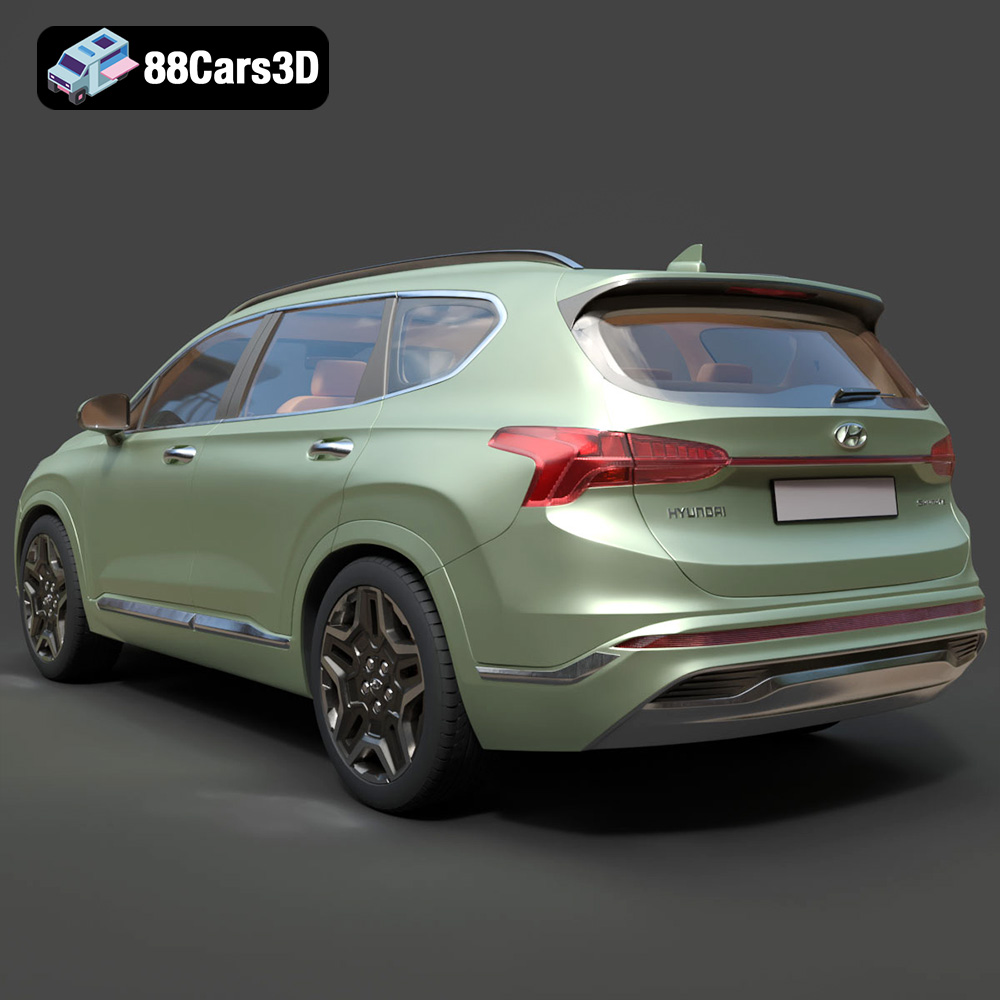
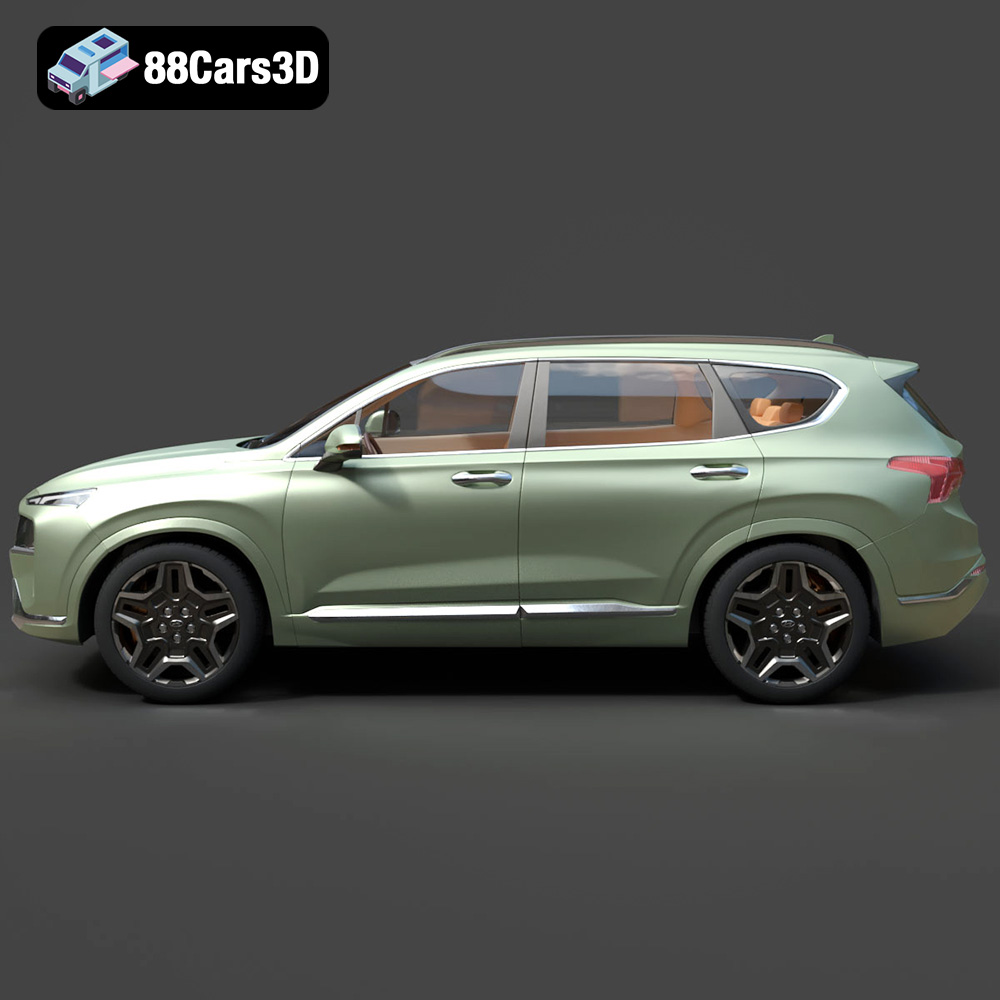
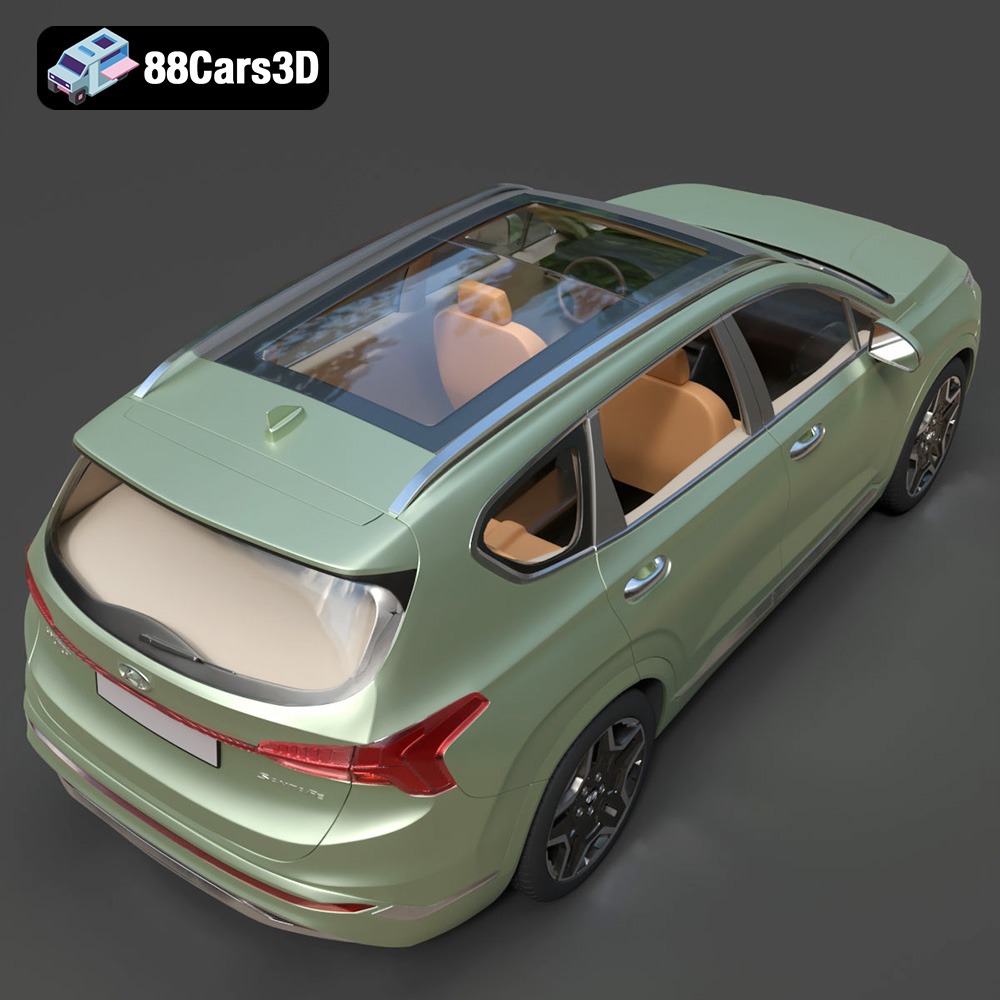
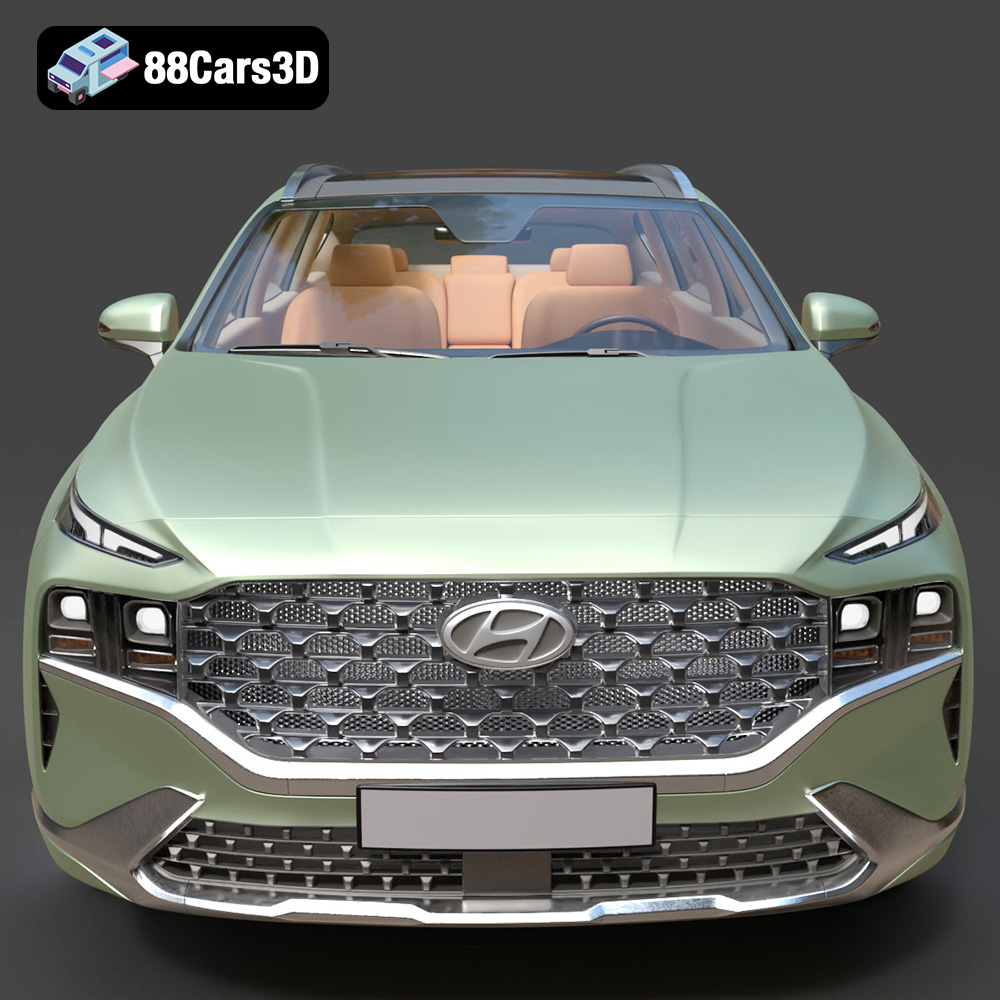
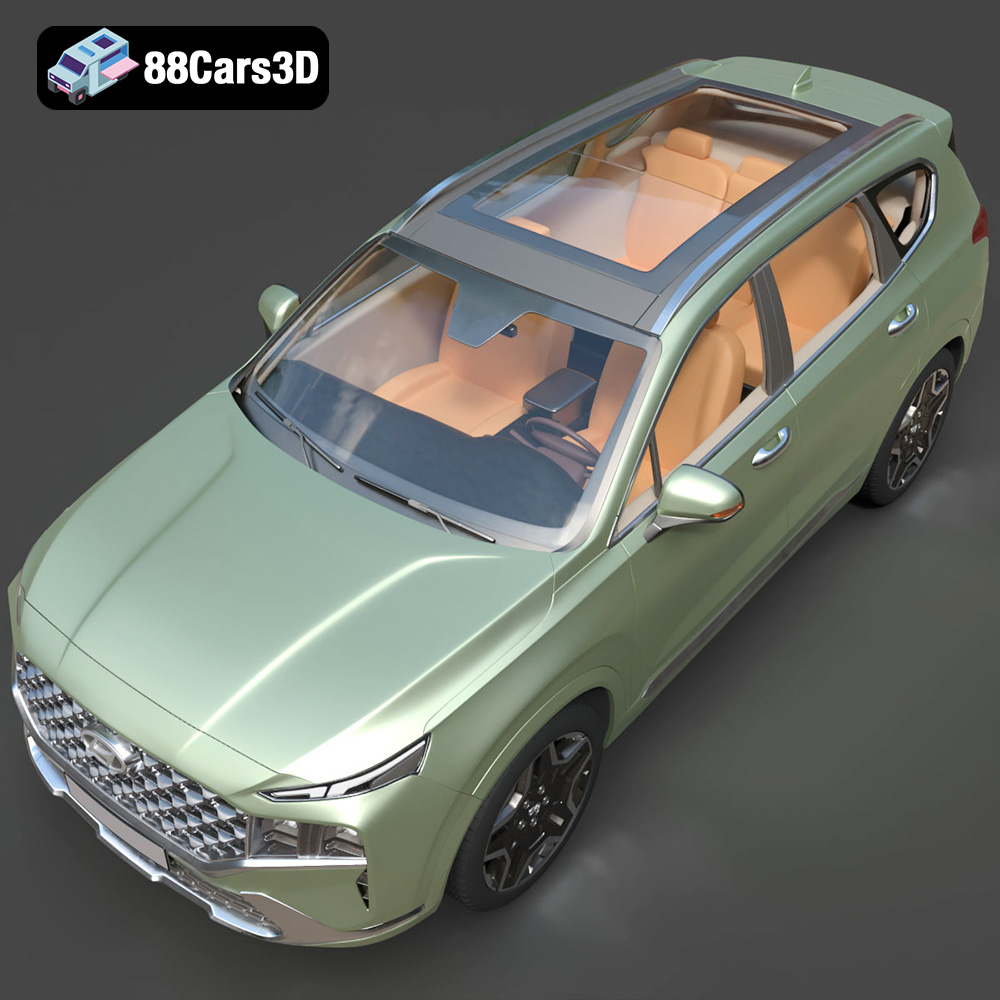
Experience the realism of the Hyundai Santa Fe 2021 3D Model, meticulously crafted for exceptional detail and accuracy. This model offers clean geometry, realistic materials, and a professional-grade design, making it ideal for a wide range of applications.
Key features of this 3D model include:
This 3D model is perfect for various applications, including:
The following file formats are included:
$19.99
.arvr
.blend
.car3dmodel
.fbx
.gameasset
.glb
.hyundai
.hyundaisantafe
.max
.obj
.ply
.rendering
.santafe
.simulation
.stl
.unreal
SUV