Get 20% OFF All Premium 3D & STL Models!

In the fast-evolving landscape of digital content creation, the demand for hyper-realistic and technically robust 3D assets has never been higher. From breathtaking cinematic sequences and immersive game worlds to precise architectural visualizations and advanced AR/VR experiences, the quality of your 3D models dictates the caliber of your final output. Among these, high-fidelity 3D car models stand out as particularly challenging to create from scratch, often requiring hundreds of hours of expert modeling, texturing, and optimization.
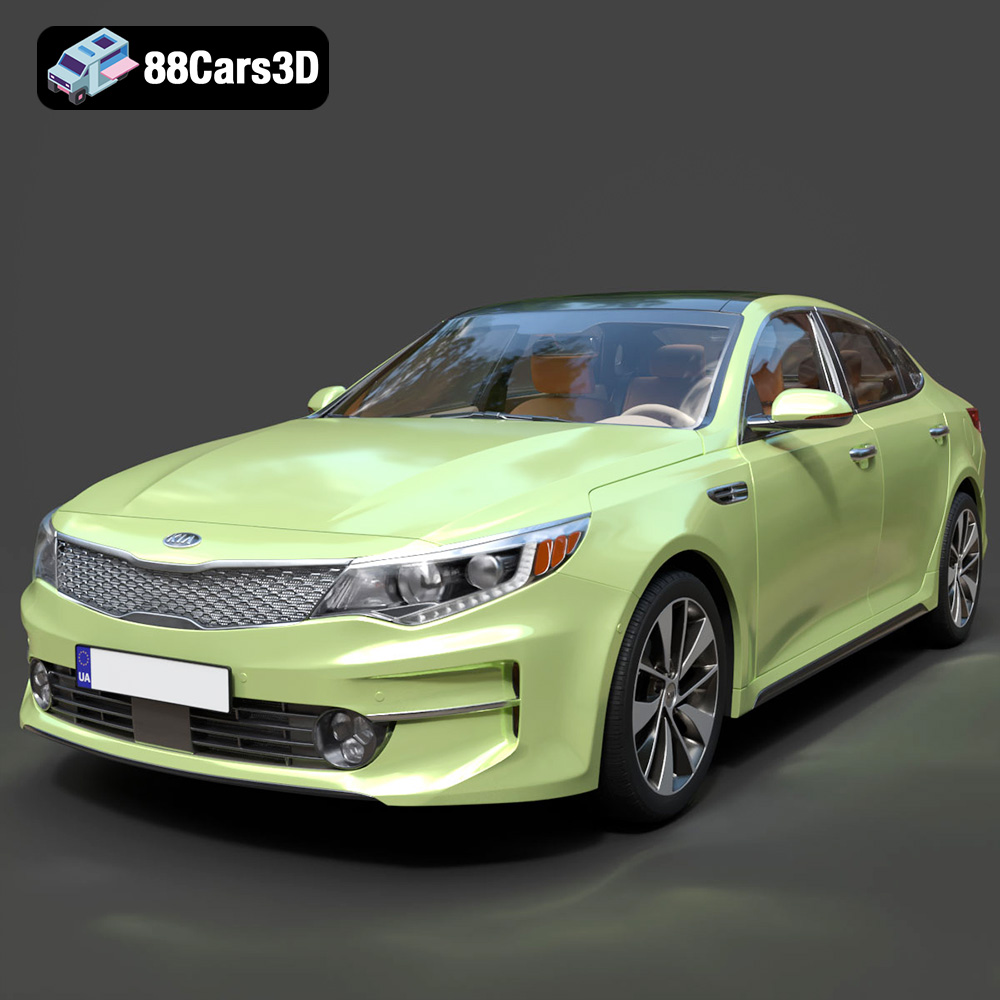
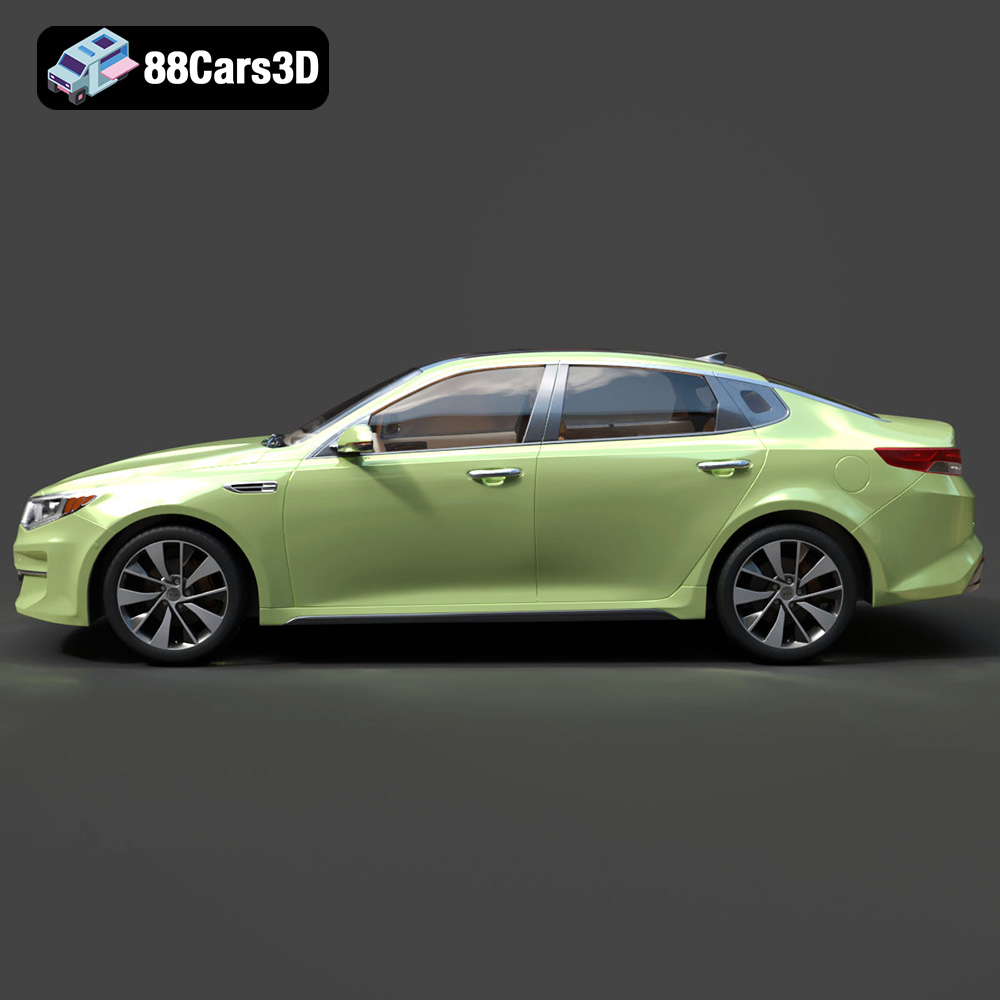
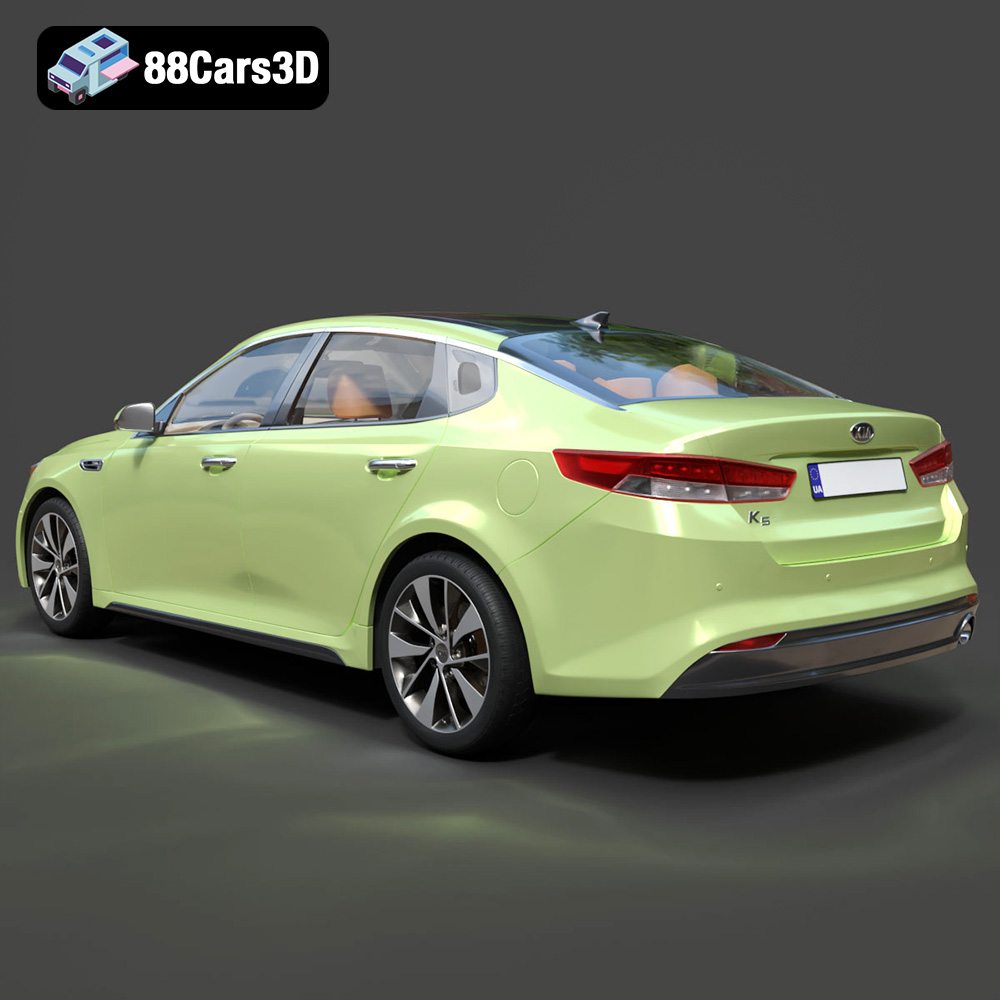
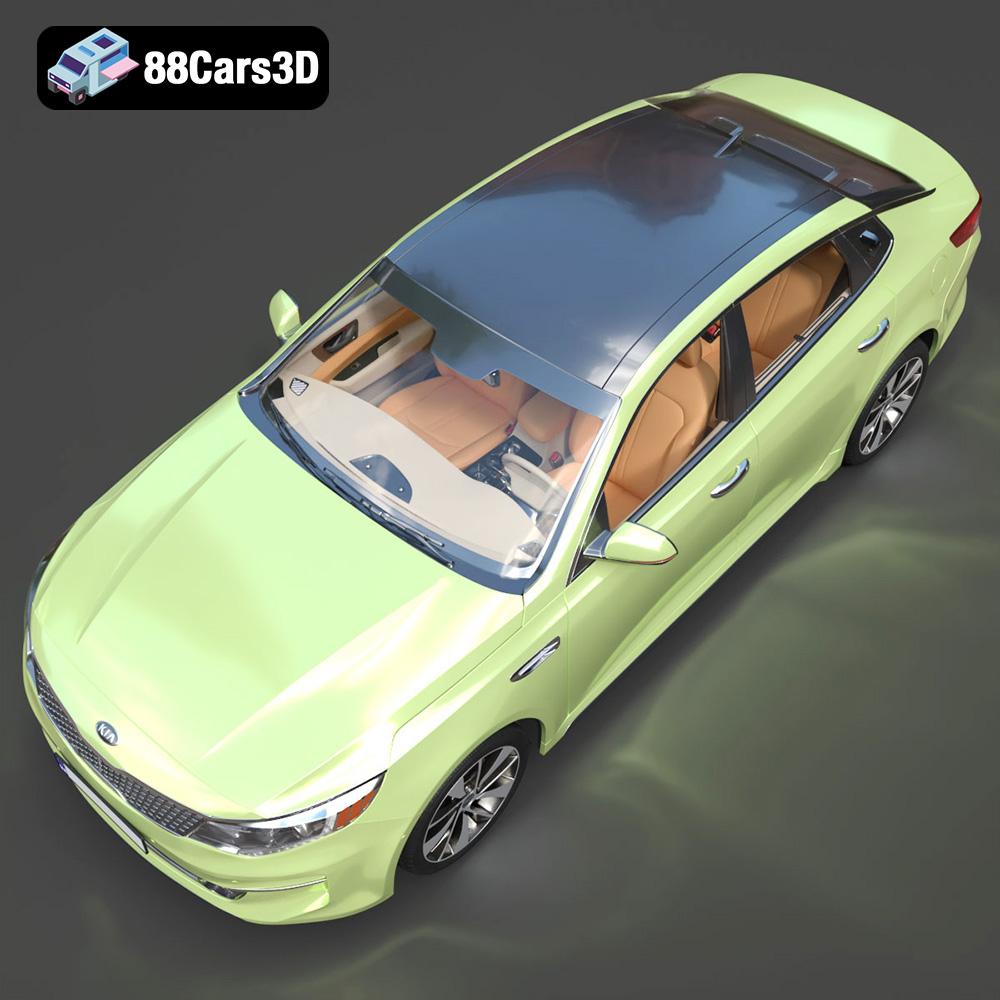
This is where carefully crafted, ready-to-use assets become indispensable. Imagine having immediate access to a meticulously detailed vehicle that not only looks stunning but is also engineered for seamless integration across diverse platforms. The Kia K5 MX 2016 3D Model is an exemplary case in point, offering unparalleled detail and precision. This model captures the sleek exterior lines and a fully modeled interior, making it an outstanding digital asset for demanding projects. Built with clean geometry and professional-grade polygon structuring, it includes realistic materials and textures designed for seamless integration, holding up perfectly under close-up shots and complex lighting scenarios. Whether for automotive rendering, game development, AR/VR, or professional visualization, this versatile model from 88cars3d.com provides the exact technical specifications needed for a smooth workflow.
The choice of file format is a critical technical decision that impacts compatibility, feature retention, and overall workflow efficiency across various 3D applications and engines. Understanding the strengths and weaknesses of each format included with high-quality 3D car models, such as the Kia K5 MX 2016, is essential for professional artists and developers.
The .blend file is native to Blender, a powerful open-source 3D creation suite. When you acquire a .blend file, you are not just getting a mesh; you are receiving a complete, editable Blender project. This typically includes the model’s geometry, modifiers, materials (often PBR-based using Cycles or Eevee render engines), lighting setups, cameras, and sometimes even animations or rigging. For artists who primarily work in Blender, this format offers the highest degree of flexibility for further modifications, rendering, or custom scene integration. It preserves all the scene’s internal data structures, allowing for complete non-destructive editing.
Developed by Autodesk, the .fbx (Filmbox) format is a widely adopted proprietary file format for 3D content interchange. It excels at transferring comprehensive 3D data, including models, animation, cameras, and lights, between various 3D software applications and game engines. Its robust support for animations, skeletal rigs, and PBR material definitions makes it the de facto standard for game development in engines like Unreal Engine and Unity. When optimizing 3D car models for real-time environments, .fbx is often the preferred choice due to its efficient handling of complex scene data and widespread compatibility.
The .obj (Wavefront OBJ) format is one of the oldest and most universally supported 3D file formats. It is a simple, text-based format primarily used to describe 3D geometry – vertices, normals, UV coordinates, and faces. While it doesn’t typically store advanced scene data like animation or complex material nodes, it’s incredibly reliable for exporting and importing basic mesh data across virtually all 3D software. For simple mesh transfer or as a fallback option when other formats fail, .obj remains an invaluable tool, especially when ensuring broad compatibility for 3D car models.
.glb (GLB file format) is the binary representation of glTF (GL Transmission Format), a relatively new open standard for 3D content delivery. Optimized for efficient transmission and loading of 3D scenes and models by applications, it’s particularly well-suited for web-based 3D, AR (Augmented Reality), and VR (Virtual Reality) experiences. A single .glb file packages the 3D model, textures, animations, and shaders into one self-contained asset, making it incredibly easy to integrate into browsers, mobile apps, and immersive platforms with minimal overhead.
The .stl (Standard Tessellation Language or Stereolithography) format is the standard for 3D printing. It describes only the surface geometry of a 3D object using a collection of interconnected triangles, without any color, texture, or material information. For designers and engineers looking to bring their digital 3D car models into the physical world through additive manufacturing, an optimized .stl file is crucial. It requires manifold geometry (watertight mesh) to ensure successful print outcomes.
.ply (Polygon File Format or Stanford Triangle Format) is a file format for storing 3D data, typically from 3D scanners. It can store a variety of properties, including color, transparency, surface normals, and texture coordinates, per vertex or per face. While less common for general artistic interchange than .fbx or .obj, .ply is valued in scientific and engineering applications, CAD software, and for representing high-density point clouds or detailed polygonal meshes for analysis and visualization.
The .unreal format, specifically mentioned for assets like the Kia K5 MX 2016, signifies a project file or asset package specifically configured for Unreal Engine. This often means the model has already been imported into Unreal, had its materials set up with Unreal’s PBR pipeline, and potentially includes pre-configured LODs (Levels of Detail), collision meshes, and even blueprints for interaction. This format offers a “plug-and-play” experience, dramatically accelerating integration into Unreal Engine projects and saving significant development time.
The .max file is the native file format for Autodesk 3ds Max, a leading software for 3D modeling, animation, rendering, and visualization. Similar to .blend for Blender users, a .max file provides the full scene data, including geometry, materials (often V-Ray, Corona, or Arnold shaders), lighting setups, camera views, and animation data. For professionals relying on 3ds Max for high-end automotive rendering or complex animations, this format provides the utmost control and flexibility for customization and final output.
The inclusion of such a comprehensive array of formats with the Kia K5 MX 2016 3D Model underscores its versatility and professional-grade quality, ensuring that users can leverage this asset effectively regardless of their preferred software or target application.
Automotive rendering stands at the pinnacle of photorealistic 3D visualization. It demands an intricate understanding of physical materials, complex lighting, and camera optics to create images indistinguishable from photographs. A premium 3D car model, such as the Kia K5 MX 2016, is the foundational element that makes achieving this level of realism possible.
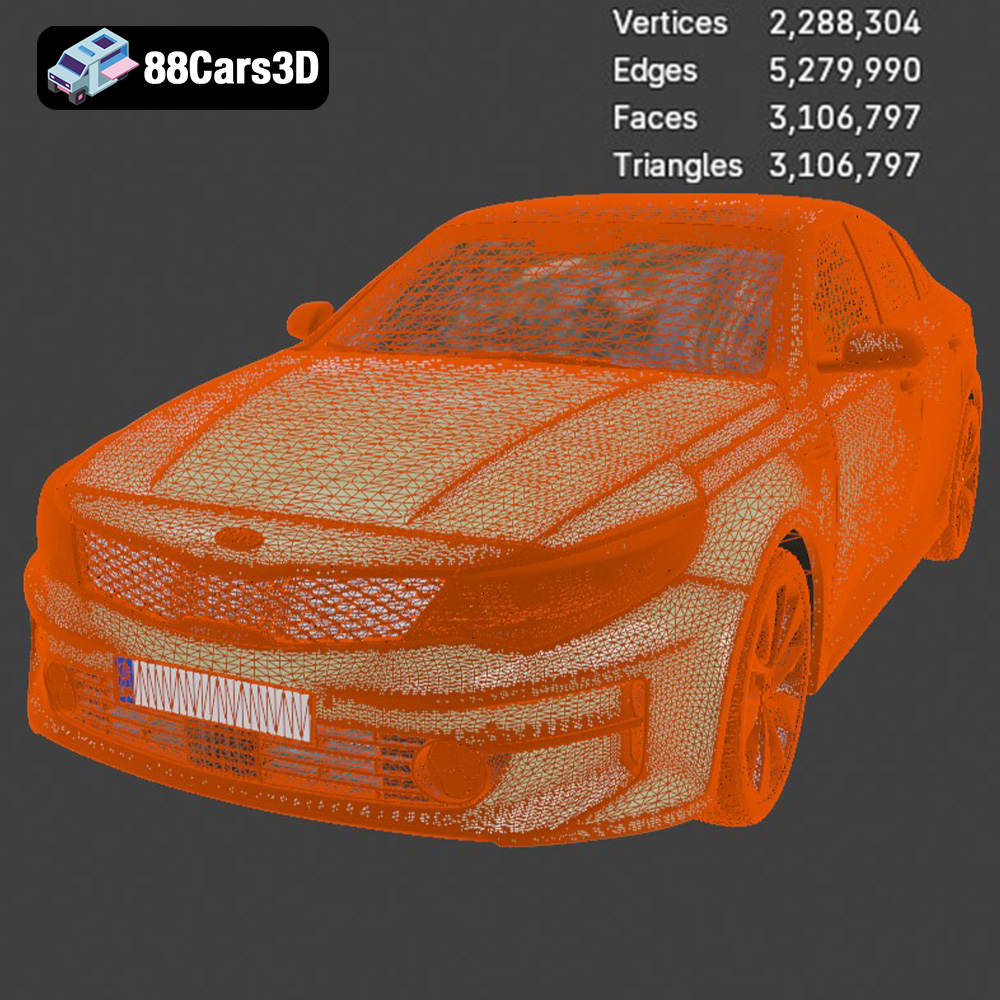
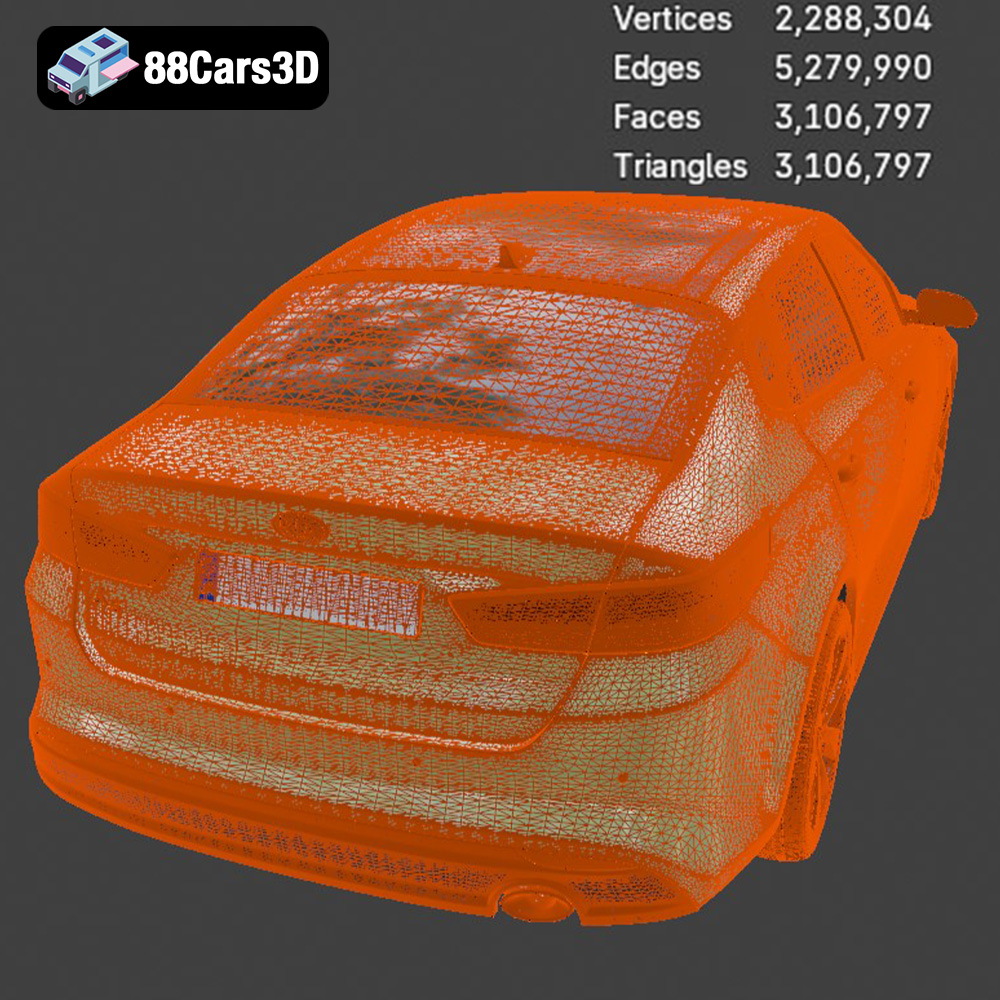
The core of any stunning render begins with immaculate geometry. High-quality 3D car models feature clean, subdivision-ready topology with an optimal poly count that balances detail with performance. This allows for smooth reflections and accurate contours without visible faceting. For the Kia K5 MX 2016, meticulous attention to detail means crisp body lines, accurately modeled interior components, and well-executed UV unwrapping. This ensures textures map correctly without stretching or distortion. Modern automotive renders rely heavily on PBR (Physically Based Rendering) textures, which accurately simulate how light interacts with surfaces based on properties like albedo (base color), roughness, metallic, and normal maps. The inclusion of realistic materials and textures in the Kia K5 MX 2016 model means less setup time and more focus on creative direction.
Lighting is arguably the most critical component in bringing a 3D car model to life. Professional automotive rendering often utilizes High Dynamic Range Images (HDRIs) to accurately replicate real-world lighting conditions, capturing subtle color shifts and intensities from various environments. Studio lighting setups, combining area lights, spotlights, and reflectors, are also crucial for showcasing a vehicle’s design under controlled conditions, highlighting specific features or aerodynamic curves. The Kia K5 MX 2016 3D Model, with its pristine surfaces and accurate material definitions, reacts beautifully to these complex lighting scenarios, producing believable reflections and refractions that convey depth and realism.
Artists often gravitate towards industry-standard software like Autodesk 3ds Max or Blender for high-end rendering. The Kia K5 MX 2016 model comes with both .max and .blend files, pre-configured for these environments. In 3ds Max, combined with renderers like V-Ray or Corona, artists can leverage advanced material editors, complex lighting systems, and powerful post-processing tools to achieve cinematic results. Similarly, Blender users can utilize Cycles or Eevee, benefiting from its integrated node-based material system and robust rendering capabilities. The ready-to-render setup within these native files significantly streamlines the workflow, allowing artists to dive straight into refining camera angles and lighting, rather than spending hours on model preparation.
The demands of game development present a unique set of challenges for 3D assets, primarily focused on performance, optimization, and seamless integration into real-time engines. High-quality 3D car models like the Kia K5 MX 2016 are invaluable game assets when correctly prepared.
For game engines, raw model detail must be carefully managed to maintain smooth frame rates. This involves intelligent poly count reduction, often utilizing LODs (Levels of Detail), where simpler versions of the model are swapped in when the car is further from the camera. Effective texture atlasing minimizes draw calls, and carefully crafted collision meshes ensure realistic physics interactions without relying on overly complex geometry. The Kia K5 MX 2016 3D Model is designed with professional-grade polygon structuring, implying a foundation suitable for optimization, and its inclusion of game-engine-ready formats like .fbx and .unreal demonstrates this forward-thinking approach.
Unreal Engine and Unity are the leading platforms for real-time interactive experiences. Importing 3D car models into these engines requires specific attention to scale, pivot points, and material setup. The .fbx format is a cornerstone for this process, efficiently carrying mesh, skeletal, and animation data. Critically, the Kia K5 MX 2016 3D Model offers a dedicated .unreal file, indicating it’s already pre-configured for Unreal Engine. This means materials are likely set up with Unreal’s PBR workflow, textures are correctly applied, and potential LODs are integrated, dramatically reducing the setup time for game developers. This “plug-and-play” capability is a significant advantage, allowing teams to focus on gameplay mechanics and interactivity rather than asset preparation.
Beyond static representation, game vehicles are dynamic elements. They need to integrate with physics engines for realistic driving, feature functional doors, wheels that spin, and potentially even customizable paint jobs or upgrades. A well-constructed 3D car model provides the clean hierarchy and separate mesh elements necessary to rig these components for animation and physics. The robust structure of the Kia K5 MX 2016 allows developers to implement complex interactive features, enhancing the player experience whether in a racing simulator, an open-world adventure, or an architectural walkthrough.
Augmented Reality (AR), Virtual Reality (VR), and advanced visualization projects demand 3D models that are not only high-fidelity but also exceptionally optimized for real-time performance on a wide range of devices. The Kia K5 MX 2016 3D Model is perfectly positioned for these cutting-edge applications.
AR/VR environments impose stringent performance budgets. Models must have streamlined geometry, efficient texture usage, and minimal draw calls to maintain high frame rates and prevent motion sickness. The .glb format, included with the Kia K5 MX 2016, is a key enabler here. Its compact, self-contained nature makes it ideal for streaming over networks and quick loading in AR/VR applications and web browsers, offering excellent visual quality while adhering to performance constraints. This optimization ensures a smooth, immersive experience whether the model is viewed on a mobile AR app, a VR headset, or directly in a web browser.
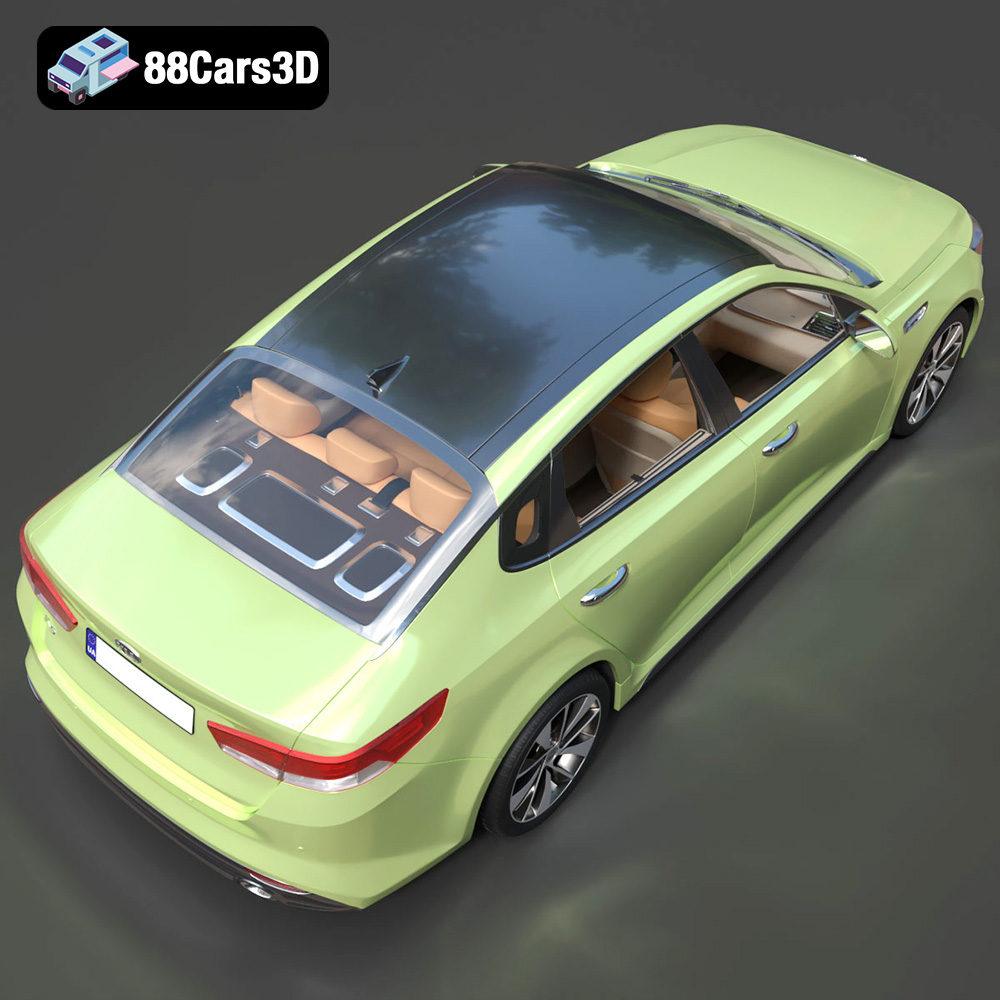
In architectural visualization (ArchViz), 3D car models are essential for adding realism, scale, and context to digital environments. Placing a highly detailed vehicle like the Kia K5 MX 2016 into an architectural scene instantly brings it to life, simulating real-world usage and enhancing the emotional appeal of a design. For product demonstrations, especially in the automotive industry, 3D models allow for interactive showcases where potential customers can explore a vehicle’s features in 3D, customize colors, or even “sit inside” using VR. The Kia K5 MX 2016’s fully modeled interior makes it particularly valuable for such interactive product experiences, offering a level of immersion that static images cannot match.
The utility of high-quality 3D car models extends beyond digital screens into the realm of physical creation. 3D printing and advanced prototyping leverage precise 3D data to bring concepts into the tangible world. The Kia K5 MX 2016 3D Model offers formats crucial for these applications.
For 3D printing, models require specific preparation. The geometry must be “manifold,” meaning it is watertight with no gaps or intersecting faces, ensuring the printer can correctly interpret the volume to be created. Wall thickness must also be sufficient to prevent breakage, and the model needs to be scaled accurately to real-world dimensions. The .stl format, included in the Kia K5 MX 2016 package, is the industry standard for sending models to 3D printers. While it typically requires some cleanup and optimization from a high-detail rendering model, having a clean, well-structured base model significantly simplifies the conversion process, enabling rapid prototyping or the creation of physical scale models.
The .ply format, a less common but powerful inclusion, is particularly valuable for engineering, scientific analysis, and reverse engineering workflows. It can store not just geometry but also properties like color, transparency, and often more precise vertex and face normal data. This makes it suitable for applications where the model might undergo structural analysis, aerodynamic simulations, or be used as a reference for CAD modeling. While the Kia K5 MX 2016 is primarily an artistic asset, its availability in .ply expands its potential to projects requiring a precise polygonal representation for technical evaluation or integration into specialized software.
The decision to utilize pre-made, high-quality 3D car models like the Kia K5 MX 2016 from a reputable marketplace such as 88cars3d.com is often driven by a crucial blend of time, cost, and quality considerations. Professional studios and independent artists alike face tight deadlines and budget constraints, making efficient workflows paramount.
For independent artists, freelancers, or small studios, creating a complex 3D car model from scratch is an enormous undertaking. It can consume weeks, if not months, of dedicated effort from a skilled 3D artist. By investing in a high-quality, production-ready asset like the Kia K5 MX 2016 3D Model, these creators can dramatically cut down their production timelines. Instead of modeling and texturing, they can immediately focus on scene composition, lighting, animation, or game logic, significantly accelerating their project delivery and allowing them to take on more work or pursue more ambitious creative visions. This efficiency is critical for maintaining competitiveness in a demanding market.
Even large studios with dedicated asset teams benefit from leveraging curated marketplaces. Integrating pre-made 3D car models into their pipeline frees up internal resources to focus on proprietary assets, unique characters, or highly specialized environments. For example, a marketing agency working on an automotive campaign might need a specific car for a background element or a secondary shot. Rather than commissioning a costly internal model from scratch, they can quickly source the Kia K5 MX 2016 3D Model from 88cars3d.com, ensure it meets their quality standards, and integrate it into their render farm within hours. This strategy not only maintains high fidelity across all assets but also allows studios to scale their production capabilities without proportional increases in artist headcount.
The true value of an asset like the Kia K5 MX 2016 lies in its versatility and technical excellence. It’s not just a mesh; it’s a meticulously engineered digital product designed to perform optimally across various professional applications. From the clean topology for smooth subdivisions in automotive rendering, to the optimized formats for real-time game development, and the specific configurations for AR/VR, every aspect contributes to a streamlined workflow. This comprehensive approach means fewer headaches, less troubleshooting, and more time for creative exploration, making it a sound investment for any serious 3D professional seeking to enhance their projects with premium 3D car models.
The landscape of 3D content creation continues its trajectory towards ever-increasing realism and interactivity. For professionals navigating this complex terrain, access to high-quality 3D car models is no longer a luxury but a fundamental necessity. The detailed technical specifications, robust geometry, and versatile file formats encapsulated in models like the Kia K5 MX 2016 3D Model represent the pinnacle of digital automotive artistry and engineering.
Whether your goal is to produce breathtaking automotive rendering, integrate dynamic vehicles into cutting-edge game assets, build immersive AR/VR experiences, or even explore the possibilities of 3D printing and engineering analysis, the foundational quality of your 3D assets dictates your ultimate success. The Kia K5 MX 2016, with its sleek exterior, fully modeled interior, and meticulous construction, is designed to meet and exceed these demanding standards, providing a professional-grade asset ready for immediate deployment across any platform.
By leveraging expertly crafted 3D models, artists and developers can significantly enhance their workflows, save invaluable time, and elevate the visual fidelity of their projects. Explore the comprehensive selection of premium 3D models available at 88cars3d.com to discover assets that empower your creative vision and drive your projects forward.
Discover unparalleled detail with the Kia K5 MX 2016 3D Model, engineered to deliver exceptional realism and precision. This model captures the sleek exterior lines and the fully modeled interior of the dynamic sedan, making it an outstanding digital asset for demanding projects.
Built with clean geometry and professional-grade polygon structuring, this 3D vehicle includes realistic materials and textures designed for seamless integration. The meticulous attention to detail ensures it holds up perfectly under close-up shots and complex lighting scenarios.
Whether you are working on game development, automotive rendering, AR/VR experiences, or professional visualization, this versatile model provides the exact technical specifications needed for a smooth workflow across various platforms.
$19.99
.arvr
.blend
.car3dmodel
.fbx
.gameasset
.glb
.k5
.kia
.max
.mx
.obj
.ply
.rendering
.sedan
.simulation
.stl
.unreal