Get 20% OFF All Premium 3D & STL Models!

In the rapidly evolving landscape of digital content creation, the demand for highly detailed and functionally accurate 3D models is more critical than ever. From blockbuster video games to cutting-edge architectural visualizations and immersive AR/VR experiences, professional 3D assets form the backbone of compelling digital realities. For industries reliant on heavy machinery and logistics, such as construction, mining, and transportation, replicating real-world vehicles with precision in a digital environment offers unparalleled advantages.
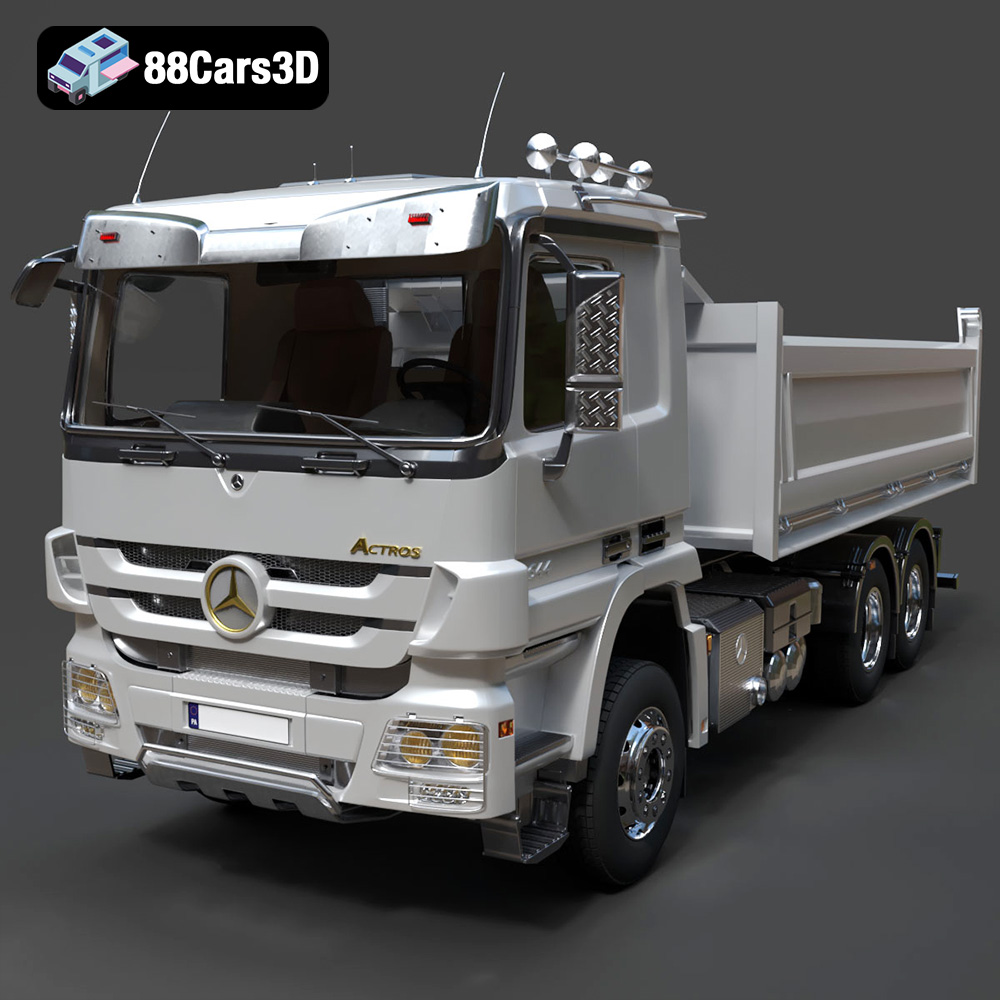
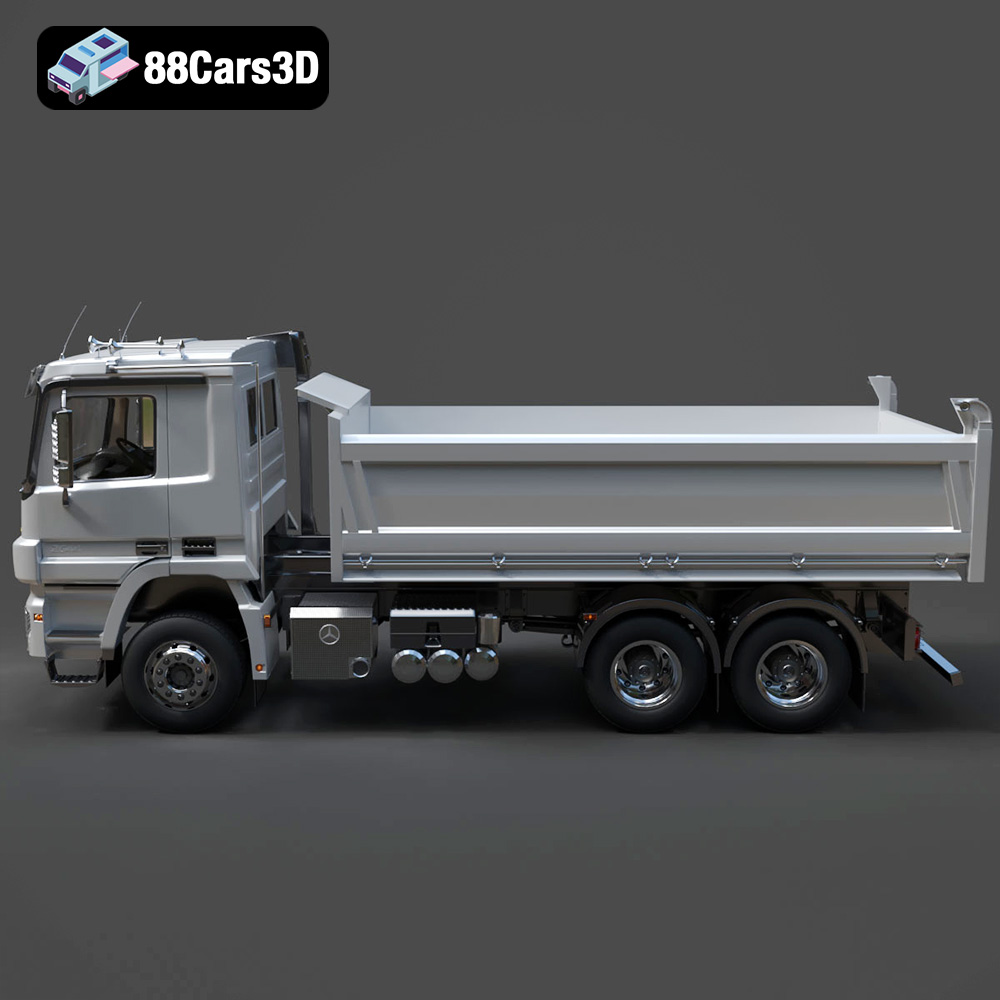
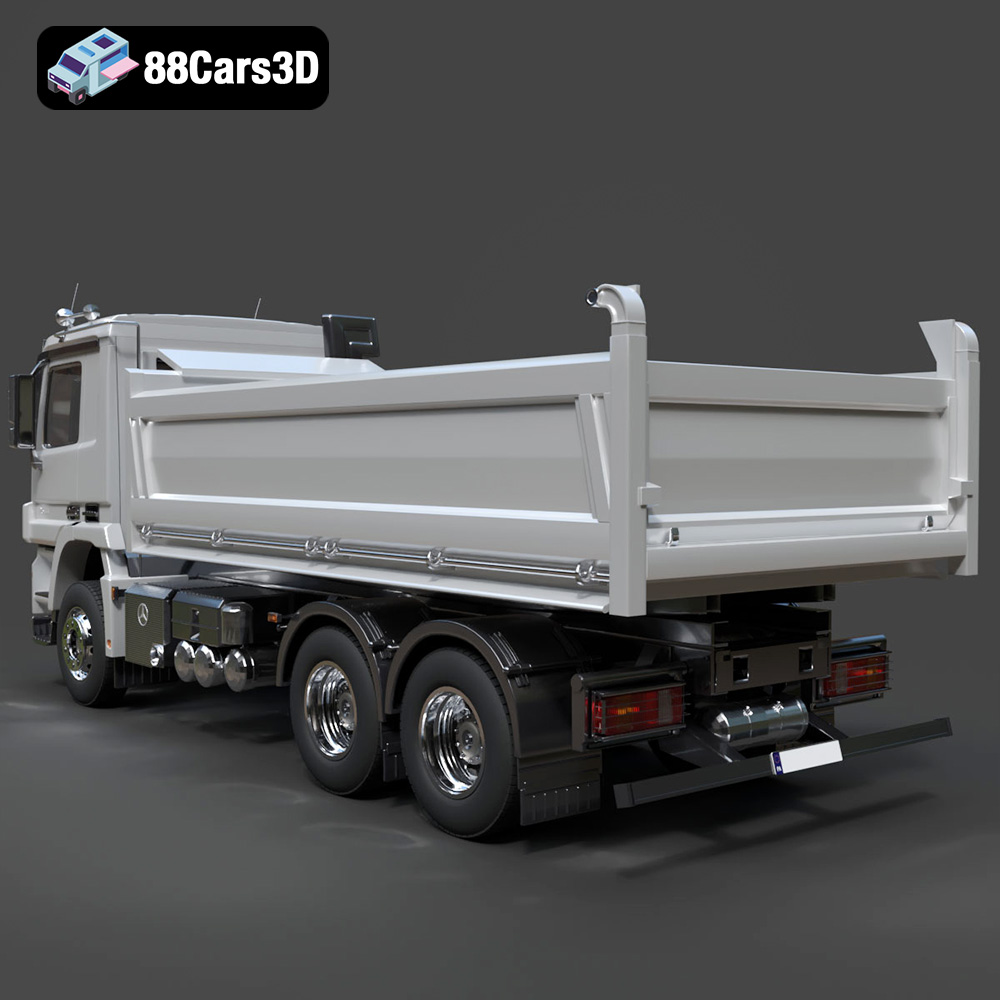
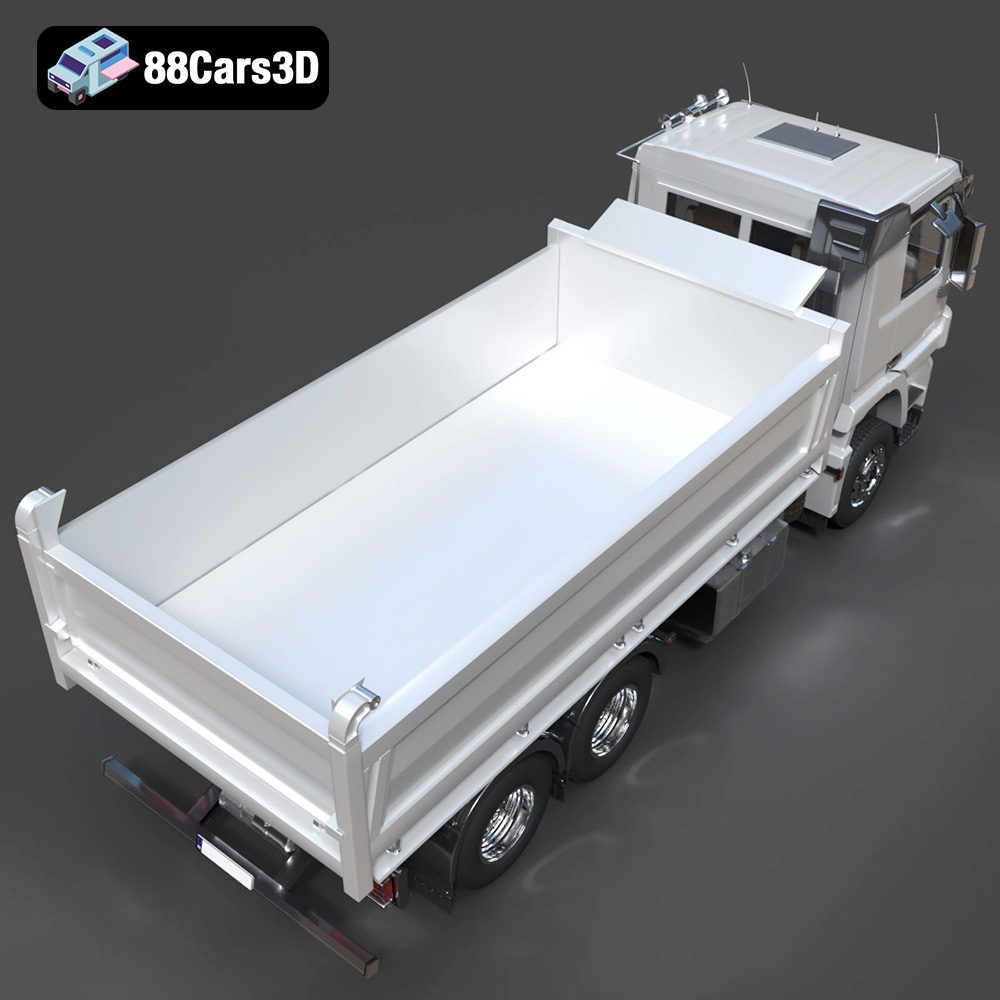
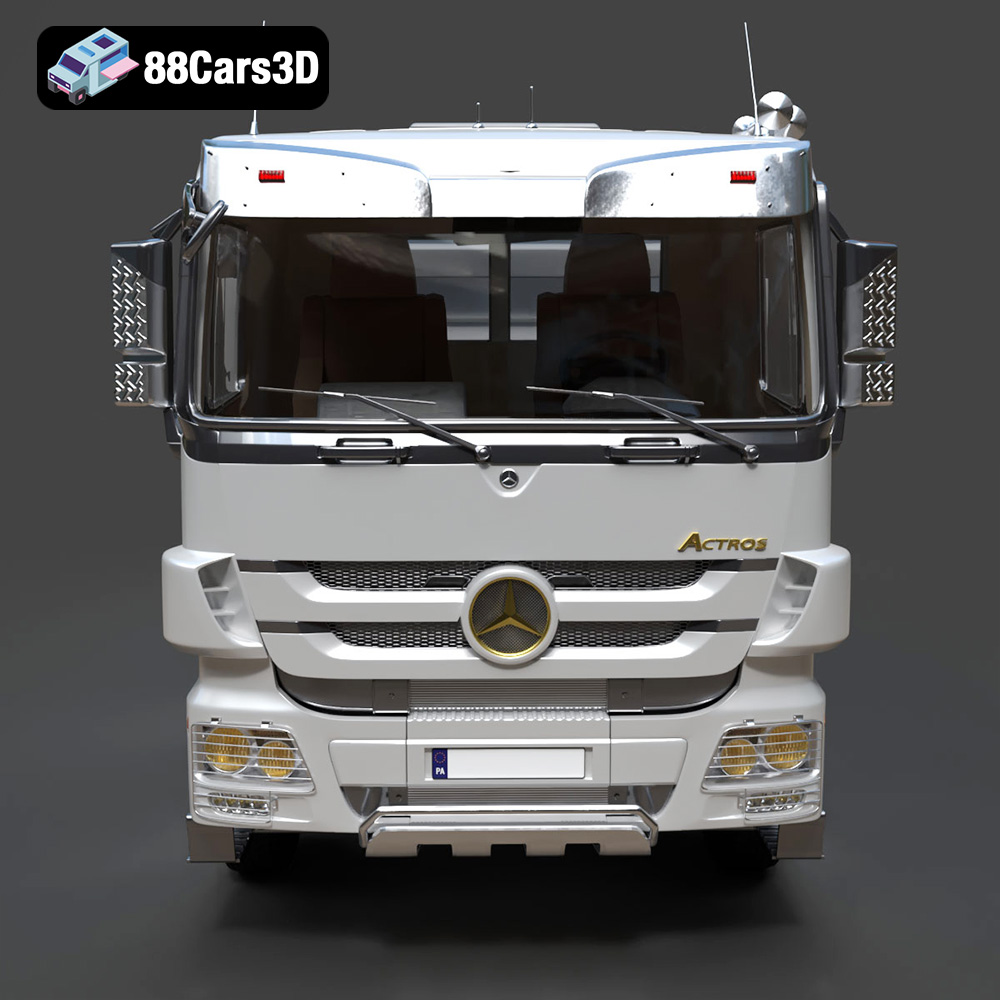
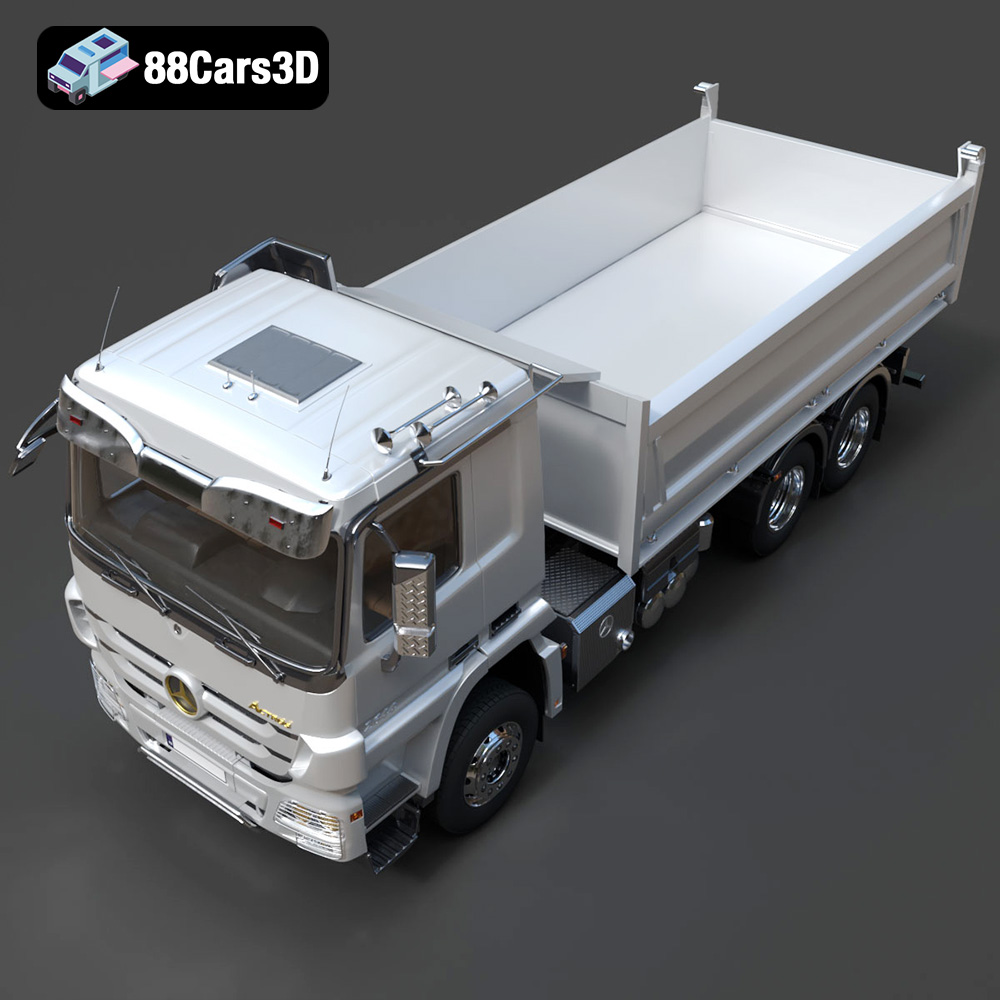
Imagine simulating complex construction projects, training new operators in a virtual environment, or developing next-generation trucking simulators. These applications all require robust, high-quality 3D models that accurately represent their real-world counterparts. This is where specialized assets like the Mercedes-Benz Actros Tipper 3-Axle 2011 3D model come into play. Renowned globally for its unwavering reliability and formidable payload capacity, the Mercedes-Benz Actros Tipper is a powerhouse in demanding construction and mining environments. Its digital twin, available at 88cars3d.com, encapsulates this reputation, offering artists and developers a meticulously crafted asset designed for peak performance and visual fidelity across a multitude of platforms.
This article delves into the technical intricacies of working with professional 3D car models, exploring file formats, integration into popular software, and real-world applications. We’ll highlight how an optimized asset like the Mercedes-Benz Actros Tipper 3-Axle 2011 provides a foundational element for diverse digital projects, ensuring both visual excellence and technical efficiency.
The world of 3D modeling is vast, and with it comes a myriad of file formats, each designed with specific purposes, compatibilities, and technical advantages. Selecting the correct format is paramount for a smooth workflow, ensuring optimal performance, visual integrity, and seamless integration into your chosen software or engine. When acquiring a versatile 3D asset like the Mercedes-Benz Actros Tipper 3-Axle 2011 3D model, understanding the nuances of its available formats is key.
The .blend format is the native file type for Blender, an open-source 3D creation suite. A .blend file typically encapsulates the entire scene, including the 3D model geometry, materials, textures, lighting setups, camera positions, animations, and even physics simulations. This makes it ideal for users who primarily work within Blender, offering full editability and retaining all project data. For the Mercedes-Benz Actros Tipper 3-Axle 2011, the .blend file provides a complete, ready-to-render or animate scene, allowing for deep customization and iteration within Blender’s powerful environment.
Autodesk’s .fbx (Filmbox) format has become an industry standard for exchanging 3D data between various applications. It’s highly versatile, supporting geometry, materials, textures, animations, and even skeletal deformation. .fbx is particularly favored for real-time pipelines, making it the go-to choice for game engines like Unreal Engine and Unity. Its robust support for animation data ensures that complex rigs, like the separate wheels, suspension, and hydraulic tipper bed mechanisms of the Actros, transfer accurately, providing a solid foundation for game development and cinematics.
The .obj (Wavefront Object) format is one of the oldest and most widely supported 3D file formats. It’s a universal solution for cross-software compatibility, containing mesh geometry (vertices, normals, texture coordinates, faces) and often accompanied by an .mtl (Material Template Library) file for basic material definitions. While .obj doesn’t typically store animation or rigging data, its simplicity and widespread support make it excellent for static model exchange and a reliable fallback when other formats encounter issues. It’s a foundational choice for integrating the Mercedes-Benz Actros Tipper into almost any 3D application.
The .glb (GL Transmission Format Binary) is an increasingly popular format, especially for AR, VR, and browser-based applications. It’s a binary version of the glTF format, designed for efficient transmission and loading of 3D scenes and models. A single .glb file can contain models, animations, and textures, making it a self-contained and highly optimized package. For showcasing the Mercedes-Benz Actros Tipper 3-Axle 2011 in an interactive web viewer or deploying it in a mobile AR experience, .glb offers superior performance and ease of use.
Stereolithography, or .stl, is the de facto standard for 3D printing. It represents a 3D model as a collection of unconnected triangular facets, defining only the surface geometry without color, texture, or material information. For hobbyists or professionals looking to physically manifest the Mercedes-Benz Actros Tipper 3-Axle 2011 as a scale model or diorama piece, the .stl format is essential. The product’s description even details recommended print settings, from scale to support requirements, ensuring a successful physical output.
The .ply (Polygon File Format) is another format for storing 3D data, often used for scanned data, CAD, and scientific applications where precision and detailed mesh information are critical. It can store a wide range of properties beyond just geometry, including color, transparency, normals, and even confidence values. While less common for general game assets, .ply can be valuable for niche applications requiring high fidelity and detailed surface information of the Actros model for engineering analysis or precise replication.
While not a standalone file extension in the traditional sense, “unreal” typically refers to an asset packaged or specifically prepared for import into Unreal Engine, often as part of an Unreal project file or content pack. This indicates that the 3D model, such as the Mercedes-Benz Actros Tipper 3-Axle 2011, has been optimized, has proper material setups (PBR), collision meshes, LODs (Levels of Detail), and potentially even Blueprints for quick integration. This format guarantees the least friction for developers working in Unreal, leveraging its powerful real-time capabilities without extensive setup.
Similar to .blend for Blender, .max is the native file format for Autodesk 3ds Max, a leading software for 3D modeling, animation, and rendering. A .max file contains the complete scene, including geometry, modifiers, materials, textures, lighting, cameras, and animation data. For professionals utilizing 3ds Max for high-fidelity automotive rendering or complex animation sequences of the Actros, this format provides full control and access to all editable components and project settings.
The Mercedes-Benz Actros Tipper 3-Axle 2011 is not merely a static 3D model; it’s a meticulously engineered digital asset designed to meet the rigorous demands of professional production environments. Its robust construction and iconic presence in the real world are mirrored by its technical superiority in the digital realm, making it an invaluable asset for a wide range of projects.
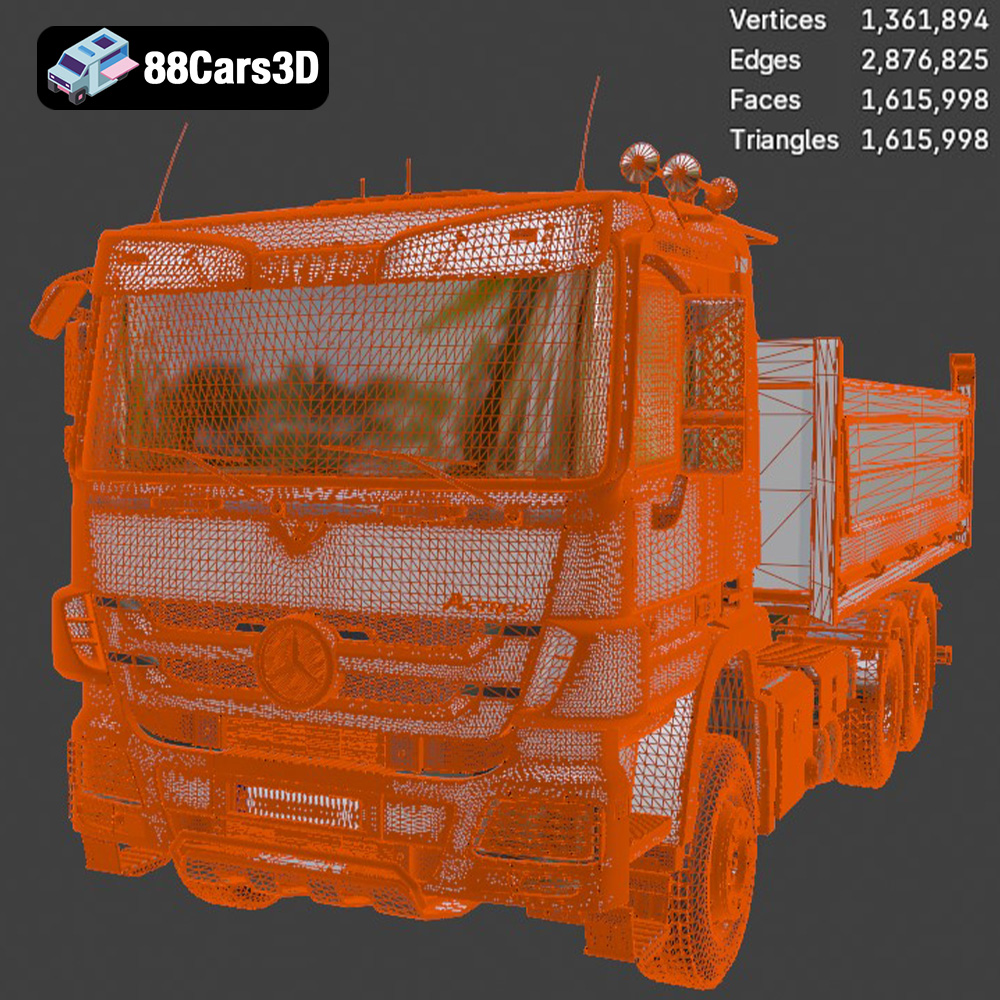
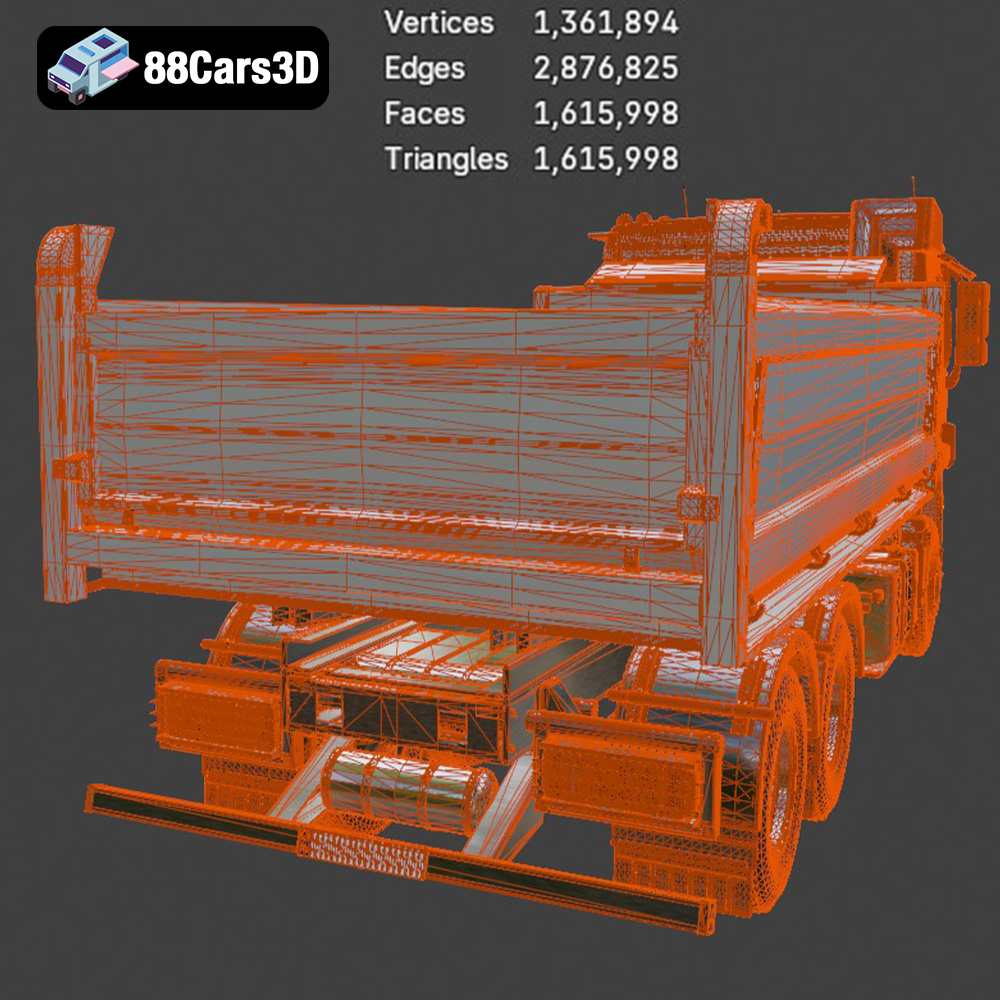
A key advantage of this Actros 3D model is its optimized topology. With approximately 150,000 triangles, it strikes an exceptional balance between visual realism and real-time performance. This “game-ready” optimization means it can be seamlessly integrated into demanding game engines like Unreal and Unity without significant performance overhead, crucial for maintaining high frame rates in open-world environments or detailed simulators. The clean, efficient mesh ensures smooth deformation during animation and accurate silhouette representation, even at varying distances. This attention to detail prevents unnecessary polygon counts while retaining the distinctive muscular grille, aerodynamic cab, and rugged chassis of the real vehicle.
The model’s fidelity extends far beyond its overall shape. Every significant component of the Mercedes-Benz Actros Tipper 3-Axle 2011 has been carefully replicated. Exterior features include accurate frame geometry, detailed heavy-duty diesel engine block components, authentic commercial exhaust systems, and high-fidelity lighting (cab roof lights, primary headlamps, taillights). The dual-wheel rear axles, rugged commercial off-road tires, multi-leaf spring suspension, and hydraulic tipper bed mechanisms are all present and accounted for. Internally, the cockpit boasts an ergonomic driver’s seat, accurately scaled steering wheel, a detailed dashboard, instrument cluster, and authentic control layouts including pedals, shifters, and hydraulic bed levers. This level of detail ensures that whether viewed from an exterior cinematic shot or a first-person cockpit perspective in a trucking simulator, the experience is immersive and believable.
Beyond static representation, the Actros 3D model is built for dynamic interaction. Critical components such as the wheels, suspension, cab, tipper bed, and steering are separated and properly pivoted. This allows for straightforward animation, enabling realistic steering, wheel rotation, suspension travel, and the iconic hydraulic bed lift. Adhering to real-world scale accuracy is another technical advantage, ensuring that the model integrates seamlessly into scenes with other vehicles, environments, or architectural elements without requiring tedious scaling adjustments. This precision is essential for simulation accuracy and visual consistency across projects.
For game developers, the quality and optimization of 3D game assets directly impact performance, visual appeal, and player immersion. Incorporating a heavy-duty vehicle like the Mercedes-Benz Actros Tipper 3-Axle 2011 into a game environment requires a strategic approach, focusing on engine compatibility, optimization, and interaction.
The Mercedes-Benz Actros Tipper 3-Axle 2011 3D model is explicitly designed to be game-ready, making it ideal for both Unreal Engine and Unity. When importing the .fbx or .unreal formats into these engines, developers typically follow a streamlined workflow. First, the mesh is imported, often with pre-configured materials that adhere to PBR (Physically Based Rendering) standards. Textures (albedo, normal, roughness, metallic, ambient occlusion) are assigned to ensure realistic surface properties under various lighting conditions. Next, the model’s separate components are rigged or set up for animation within the engine’s animation system. For the Actros, this means connecting the wheels to physics-based vehicle systems, setting up the steering, and scripting the hydraulic tipper mechanism. Collision meshes are then generated or imported to ensure accurate physical interaction with the game world, allowing for realistic driving and dynamic environmental responses.
While the Mercedes-Benz Actros Tipper 3-Axle 2011 boasts an optimized ~150,000 triangle count, further performance considerations are often necessary for large-scale games. Developers can implement Levels of Detail (LODs) to swap out higher-poly versions of the model for simpler ones when the vehicle is far from the camera, significantly reducing rendering overhead. Instancing multiple identical Actros trucks in a scene also improves performance by allowing the engine to draw them efficiently. Batching materials, optimizing texture sizes, and using efficient shaders are additional techniques to ensure that even a fleet of heavy-duty trucks doesn’t bog down the game’s frame rate. The clean topology of the 88cars3d.com model makes these optimizations much easier to implement effectively.
Creating a truly immersive experience with a vehicle like the Actros requires robust interactive systems. In trucking simulators, this involves advanced vehicle physics that accurately simulate mass, traction, suspension dynamics, and engine power. Developers can integrate the Actros’s separate wheels and suspension components into a physics-based vehicle rig, allowing for realistic handling over varying terrains. The hydraulic tipper bed can be animated and controlled by player input, adding a layer of functional gameplay. Even the detailed cockpit, with its authentic control layout, provides an excellent foundation for first-person POV in trucking simulators, allowing for interactive dashboards and functional levers that enhance player agency and realism.
Beyond real-time game engines, high-quality 3D car models are essential for stunning automotive rendering and visualization projects. From advertising campaigns to industrial presentations, presenting vehicles with photorealistic accuracy is paramount. The Mercedes-Benz Actros Tipper 3-Axle 2011 3D model provides an excellent foundation for achieving such results in industry-standard rendering software.
For artists working in 3ds Max or Blender, the .max or .blend formats of the Actros model offer a complete scene ready for advanced rendering. In 3ds Max, artists can utilize powerful renderers like V-Ray or Corona to achieve hyper-realistic results. This involves setting up complex material networks using PBR textures (albedo, normal, roughness, metallic, displacement) to accurately simulate paint, rubber, glass, and metal finishes. Advanced lighting setups, including HDRI environments and targeted studio lights, are crucial for highlighting the vehicle’s form and details. Similarly, Blender users can leverage Cycles or Eevee renderers, employing node-based material creation to replicate real-world properties. The model’s inherent detail, from the heavy-duty engine block to the commercial instrument cluster, truly shines when brought to life with proper lighting and advanced material definitions.
The realism of an automotive rendering is not solely dependent on the vehicle model; the environment plays a crucial role. For the Mercedes-Benz Actros Tipper 3-Axle 2011, this could mean placing it within a construction site scene, a bustling industrial yard, or a pristine virtual studio. In 3ds Max, artists can import CAD data for architectural elements, populate scenes with debris, and use scattering tools for realistic ground cover. In Blender, procedural environment generation and asset libraries can quickly build complex backdrops. Studio lighting setups, often involving multiple softboxes and key lights, are used to emphasize contours and reflective surfaces, making the vehicle look as though it’s been professionally photographed. The ability to customize cab and tipper colors, modify tire textures, and adjust material finishes (matte, gloss, metallic, weathered) provides endless creative freedom for diverse visualization needs.
The animation-ready structure of the Actros model, with its separated and properly pivoted components, makes it perfect for commercial campaigns and product demonstrations. Animators can create dynamic sequences showcasing the tipper bed’s hydraulic lift, the suspension articulating over uneven terrain, or the wheels turning as the truck navigates a complex site. Camera animations can highlight specific features, such as the detailed engine block or the ergonomic cockpit. These animations are invaluable for marketing materials, industrial training videos, or showcasing product capabilities to potential clients, adding a dynamic and engaging layer to visualization efforts. The precision of the 88cars3d.com model ensures that every animated movement is smooth and convincing.
The applications of high-quality 3D car models extend beyond traditional screens, venturing into the immersive realms of Augmented Reality (AR) and Virtual Reality (VR), and even the tangible world of 3D printing. Industrial vehicles like the Mercedes-Benz Actros Tipper 3-Axle 2011 are particularly well-suited for these innovative technologies.
AR/VR applications offer unprecedented opportunities for industrial sectors. Imagine a construction company using an AR app to overlay a virtual Mercedes-Benz Actros Tipper onto a real construction site, allowing planners to visualize logistics or test vehicle clearance before deployment. In VR, the detailed cockpit of the Actros provides an excellent foundation for immersive training simulators, where new operators can learn to control the vehicle’s complex functions, including the hydraulic bed levers and steering, in a safe, risk-free environment. The .glb format is particularly beneficial for these applications due to its optimization for mobile and real-time viewing, ensuring smooth performance on headsets and AR-enabled devices. Virtual showrooms and configurators also benefit immensely, allowing customers to explore the vehicle’s features and customization options in an interactive, engaging manner.
The ability to convert the Mercedes-Benz Actros Tipper 3-Axle 2011 3D model into an .stl format opens up the exciting possibility of physical replication through 3D printing. Hobbyists, collectors, or even engineering firms can produce highly detailed scale models for display, prototyping, or diorama building. The provided 3D print settings are invaluable, recommending specific scales (1:24, 1:32, 1:50), layer heights, wall thickness, infill, and crucially, support requirements for intricate parts like the exhaust, mirrors, and hydraulic rams. Resin printing is specifically recommended for fine details, ensuring that the muscular front grille and multi-leaf spring suspension are accurately reproduced. This bridge between the digital and physical world offers a unique way to interact with and appreciate the precision of the 3D model.
In any professional creative pipeline, time is a precious commodity. Building complex, high-fidelity 3D models like the Mercedes-Benz Actros Tipper 3-Axle 2011 from scratch is a time-consuming and resource-intensive endeavor. This is where specialized marketplaces like 88cars3d.com provide immense value, offering ready-to-use, professionally crafted 3D assets that accelerate production schedules and elevate project quality.
Acquiring pre-optimized 3D car models from a reputable source significantly reduces development time and costs. Instead of spending weeks on modeling, texturing, and optimizing a heavy-duty truck, developers and artists can download a game-ready asset like the Actros and immediately integrate it into their projects. The fact that the model already boasts an efficient triangle count (~150,000) and proper pivot setups means less work is required for performance tuning and animation rigging. This allows creative teams to focus their efforts on core gameplay mechanics, environmental storytelling, or advanced rendering techniques, rather than foundational asset creation.
The guarantee of quality and broad compatibility is another major benefit. Professional 3D car models, especially those from platforms like 88cars3d.com, are built to rigorous standards, ensuring clean geometry, accurate scale, and PBR-ready materials. The availability of multiple file formats—including .blend, .fbx, .obj, .glb, .stl, .ply, .unreal, and .max—ensures seamless integration into virtually any major 3D software or real-time engine. This eliminates the headaches associated with format conversions, missing textures, or scale discrepancies, providing a reliable foundation for any project, from high-end rendering to mobile AR applications.
While ready-to-use, professional assets also offer extensive customization options. The Mercedes-Benz Actros Tipper 3-Axle 2011 3D model allows for easy modification of cab and tipper colors, adjustment of material finishes (matte, gloss, metallic, weathered), and adaptation of lighting for different environments. This flexibility ensures that while the core asset is standardized and high-quality, it can be tailored to fit specific branding, aesthetic requirements, or project themes. Whether it’s a vibrant fleet for a logistics simulator or a weathered, battle-hardened truck for a post-apocalyptic game, the base model provides the perfect canvas for creative expression.
The digital realm continues to expand its influence across industries, and the demand for meticulously crafted 3D assets like the Mercedes-Benz Actros Tipper 3-Axle 2011 3D model is at an all-time high. From the detailed exterior features and optimized interior of its cab to its game-ready topology and extensive file format support, this model exemplifies the quality required for professional applications in game development, automotive rendering, AR/VR, and even 3D printing.
Understanding the technical specifications, file formats, and integration workflows discussed here empowers creators to leverage such assets to their fullest potential. Whether you’re building an immersive trucking simulator in Unreal Engine, crafting a photorealistic commercial visualization in 3ds Max, or developing an AR training module, the precision and versatility of the Actros model provides a critical advantage. By choosing high-quality, pre-optimized 3D car models from trusted sources like 88cars3d.com, artists and developers can significantly enhance their workflows, accelerate production, and ultimately deliver more compelling and performant digital experiences. The Mercedes-Benz Actros Tipper 3-Axle 2011 is more than just a model; it’s a testament to digital engineering excellence, ready to drive your next project forward.
The Mercedes-Benz Actros Tipper 3-Axle 2011 is a heavy-duty powerhouse, renowned globally for its robust engineering, exceptional payload capacity, and reliability. This high-quality 3D model boasts optimized topology and is game-ready, ideal for game development, AR/VR, and industrial visualization.
$19.99
.2011
.actros
.blend
.fbx
.glb
.max
.obj
.ply
.rendering
.stl
.truck
.unreal
3-axle
actros-tipper
commercial-vehicle
construction-equipment
dump-truck
game asset
game-ready
heavy-duty
low-poly
mercedes-benz
optimized
tipper-truck
truck-3d-model
VR/AR