Get 20% OFF All Premium 3D & STL Models!

In the dynamic worlds of automotive design, cinematic rendering, immersive game development, and cutting-edge visualization, the quality of your 3D assets is paramount. A truly exceptional 3D model doesn’t just represent an object; it embodies a meticulously crafted digital twin, capable of conveying intricate details and fostering deep immersion. Producing such high-fidelity assets from scratch is a formidable task, demanding significant time, specialized skills, and advanced software expertise. This is precisely where expertly pre-built 3D car models become not just convenient, but absolutely essential for professionals aiming for the pinnacle of digital realism.
Imagine the challenge: replicating every curve, every reflection, every subtle nuance of a modern vehicle, ensuring clean topology for smooth deformations, optimized UVs for precise texture application, and robust material setups for photorealistic rendering across diverse platforms. This is a monumental undertaking. For designers, artists, and developers, leveraging a high-quality, production-ready asset can drastically cut down development cycles, free up valuable resources, and significantly enhance the final output. It allows creators to focus on the artistic direction, narrative, or interactive experience rather than getting bogged down in the fundamental model construction. Products like the Mercedes-Benz EQB-001 3D Model exemplify this commitment to excellence, offering an unparalleled foundation for any digital project.
The versatility and utility of a 3D model are often defined by the file formats it supports. Each format is designed with specific applications, compatibilities, and data structures in mind. Understanding these distinctions is crucial for selecting the right asset for your project and ensuring a seamless workflow across different software packages and pipelines. The Mercedes-Benz EQB-001 3D Model, available at 88cars3d.com, provides a comprehensive suite of formats, catering to virtually every professional need.
The .blend format is Blender’s native file type, containing a complete scene with meshes, materials, textures, lighting, cameras, animation data, and even physics simulations. Its primary advantage is its fully editable nature within Blender, a powerful open-source 3D content creation suite. For artists deeply integrated into the Blender ecosystem, a .blend file offers the highest degree of flexibility for customization, rigging, animation, and rendering with Cycles or Eevee. The Mercedes-Benz EQB-001 3D Model’s .blend file comes pre-configured, meaning you can open it and immediately start working with a well-organized scene.
FBX (Filmbox) is a proprietary file format developed by Autodesk, widely regarded as the industry standard for exchanging 3D data between different software applications, especially in game development and animation pipelines. It excels at preserving complex scene data including meshes, materials, textures, animations, and skeletal data. Its robust support in game engines like Unreal Engine and Unity makes the .fbx version of the Mercedes-Benz EQB-001 3D Model ideal for real-time applications where performance and accurate data transfer are critical. It acts as a reliable bridge, ensuring consistent asset integration.
The .obj (Wavefront OBJ) format is one of the oldest and most universally supported 3D file formats. It’s renowned for its simplicity and wide compatibility, making it an excellent choice for basic mesh data exchange. An .obj file primarily stores geometric information (vertices, faces, normals, UV coordinates) and can reference external .mtl (material) files for basic material properties. While it doesn’t support animation or rigging, its universal nature ensures that the Mercedes-Benz EQB-001 3D Model can be imported into virtually any 3D software package, serving as a reliable fallback or a starting point for complex scene development.
GLB (GL Transmission Format Binary) is a binary version of the glTF format, designed for efficient transmission and loading of 3D scenes and models in web and real-time applications. It packages all model data (geometry, materials, textures, animations) into a single, self-contained file, making it highly suitable for AR/VR experiences, online configurators, and browser-based 3D viewers. The .glb version of the Mercedes-Benz EQB-001 3D Model is perfectly optimized for these emerging technologies, offering fast loading times and a streamlined integration process for interactive digital environments.
STL (Stereolithography) is a ubiquitous file format used primarily for 3D printing and rapid prototyping. It represents 3D surfaces as a collection of unconnected triangular facets. While it doesn’t store color or material information, its simplicity makes it the go-to format for sending models to 3D printers. The .stl variant of the Mercedes-Benz EQB-001 3D Model opens up possibilities for physical prototyping, scale models, or even custom parts, demonstrating its utility beyond purely digital realms.
PLY (Polygon File Format) is another format for storing 3D data, often used for scanned 3D objects or point cloud data. It can store a wide range of properties for each vertex and face, including color, normals, transparency, and texture coordinates. While less common for general asset exchange than FBX or OBJ, it’s favored in scientific, engineering, and research fields for its ability to store detailed mesh information, making it suitable for precise analysis or visualization of the Mercedes-Benz EQB-001’s geometry.
This specific format refers to assets pre-configured and optimized for direct integration into Unreal Engine projects. This can involve not just the mesh data, but also pre-set materials, collision meshes, LODs (Levels of Detail), and blueprint configurations. The .unreal version of the Mercedes-Benz EQB-001 3D Model significantly reduces setup time for Unreal Engine developers, allowing for immediate placement and interaction within a virtual environment, a crucial advantage for game development and high-fidelity real-time simulations.
The .max format is the native scene file for Autodesk 3ds Max, a leading software for 3D modeling, animation, rendering, and visualization. Similar to .blend, it contains a complete scene with all objects, materials, lights, cameras, and animation data, offering full editability within 3ds Max. For professionals relying on 3ds Max for their architectural visualization, product rendering, or animation projects, the .max version of the Mercedes-Benz EQB-001 3D Model provides an uncompromised starting point, ready for high-end rendering with V-Ray, Corona, or Arnold.
Photorealistic rendering of vehicles is a cornerstone of modern automotive marketing, design reviews, and cinematic production. It demands an intricate balance of pristine geometry, accurate material properties, sophisticated lighting, and meticulous post-processing. A high-quality 3D car model, such as the Mercedes-Benz EQB-001 3D Model, is the critical first step in this demanding process, providing the fidelity required for truly convincing visuals.
Achieving realism in a vehicle render goes far beyond the basic diffuse and specular maps. Modern physically-based rendering (PBR) workflows require precise calibration of material properties like metallicness, roughness, clear coat layers, and subsurface scattering for elements like paint, glass, rubber, chrome, and intricate interior fabrics. The Mercedes-Benz EQB-001 3D Model is crafted with “highly realistic materials,” implying a sophisticated PBR setup that reacts accurately to light, mirroring the complex interplay of reflections and refractions seen on a real car. This foundation dramatically speeds up the material setup phase, allowing artists to fine-tune rather than build from scratch.
The way light interacts with a vehicle’s surface is paramount to its perceived realism. Studio lighting setups, HDR environment maps (HDRI), and physically accurate light sources are all crucial. Artists utilize advanced rendering engines like V-Ray, Corona Renderer (within 3ds Max), or Cycles (within Blender) to simulate global illumination, caustics, and volumetric effects. Integrating a detailed 3D car model like the EQB-001 into these environments means that its accurate proportions and clean normals will capture light and shadows correctly, resulting in believable reflections and an authentic sense of scale and presence. This becomes evident in architectural visualizations where the car needs to seamlessly integrate into a rendered street scene or driveway.
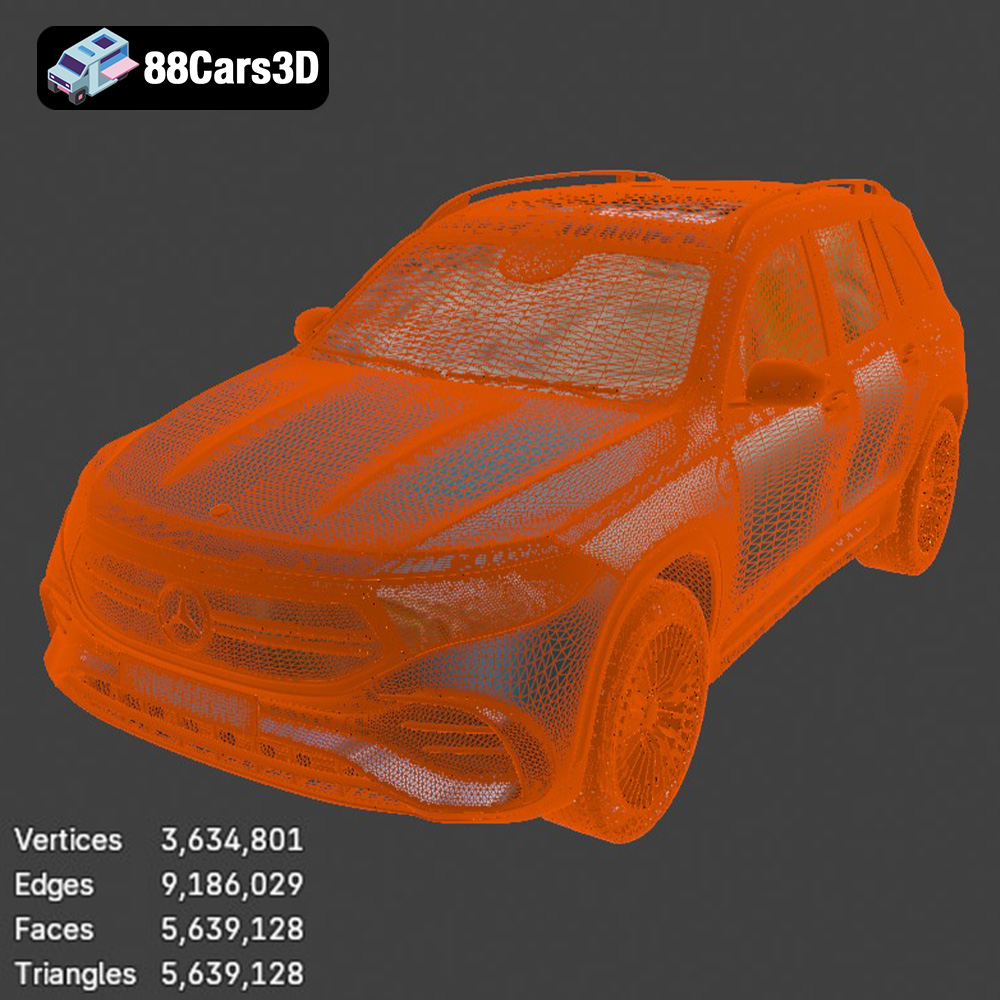
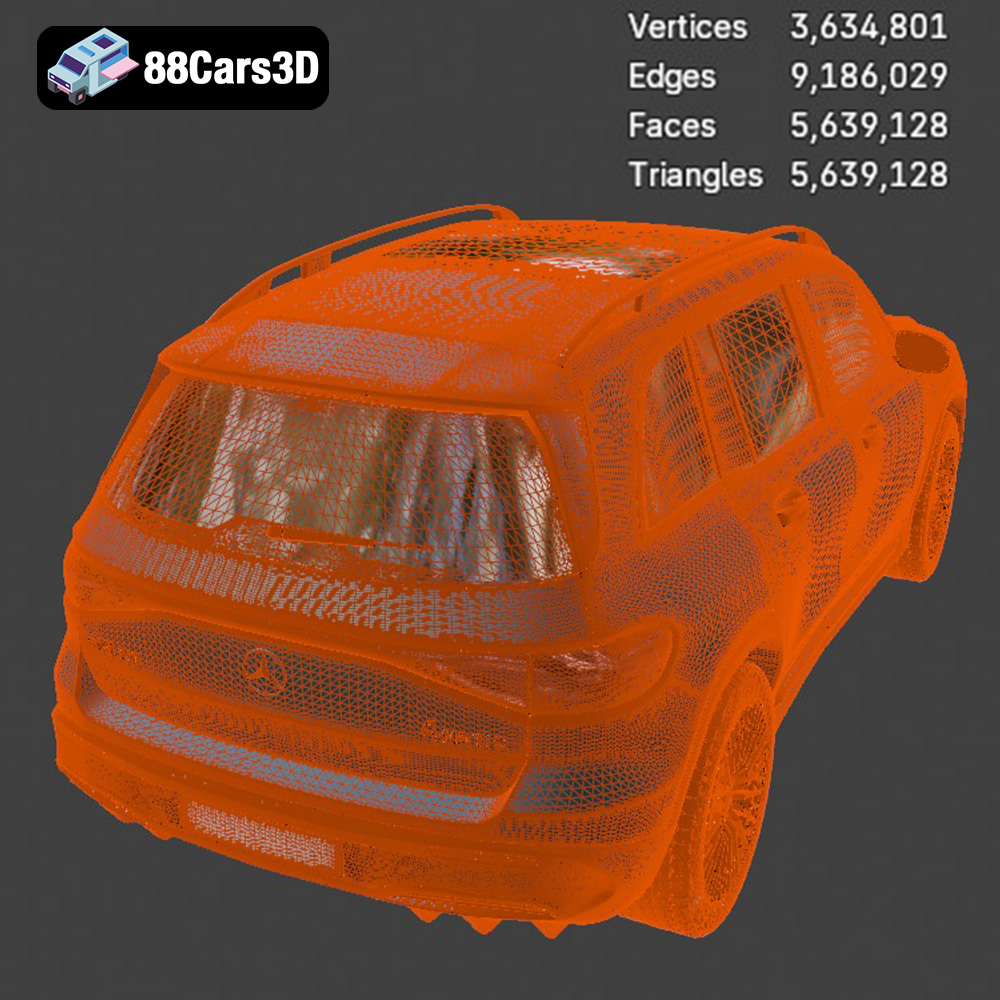
For studios producing high-volume automotive marketing content or detailed design explorations, efficiency is key. Starting with a model that boasts “impeccably clean geometry” and “seamless mesh flow” means less time spent on mesh repair, retopology, or UV unwrapping. This allows artists to immediately focus on artistic considerations like camera angles, composition, and advanced rendering techniques such as depth of field, motion blur, and lens flares. The availability of native .max and .blend files with pre-configured materials further streamlines this process, enabling artists to jump directly into scene assembly and final rendering with confidence in the underlying asset quality.
Game development presents a unique set of challenges for 3D assets, primarily revolving around performance optimization, real-time rendering, and interactive fidelity. While photorealism is increasingly important, it must be balanced with strict polycount budgets, efficient draw calls, and dynamic lighting considerations. High-quality 3D car models are vital for creating immersive virtual worlds, whether it’s a racing simulator, an open-world adventure, or an interactive training application.
For game engines like Unreal Engine and Unity, a 3D car model must be highly optimized. This includes an appropriate polycount that balances visual detail with rendering efficiency, well-organized UV maps for texture atlases, and carefully crafted collision meshes. The “game-engine ready format” (.fbx and .unreal) of the Mercedes-Benz EQB-001 3D Model suggests it has been prepared with these optimizations in mind. This often includes baked normal maps to simulate high-detail geometry on lower-poly meshes, ensuring smooth performance without sacrificing visual quality. LODs (Levels of Detail) are also crucial, allowing the engine to swap out higher-poly versions of the car for simpler ones as it moves further from the camera, further enhancing frame rates.
Modern games often require more than just an exterior shell. Fully modeled interiors, functional doors, wheels, and steering mechanisms are essential for player immersion. A premium model will have these elements separated and properly pivoted for easy rigging and animation. For instance, the EQB-001’s “precisely detailed” interior elements mean that if a game requires players to enter the vehicle, the transition will be seamless and visually compelling. Game developers can then use physics-based components for realistic driving dynamics and interactive scripts for opening doors or activating lights, creating a truly engaging player experience.
The inclusion of specific .fbx and .unreal formats for the Mercedes-Benz EQB-001 3D Model is a significant advantage for game developers. The .fbx format facilitates smooth import into both Unreal Engine and Unity, retaining material assignments and scene hierarchy. The dedicated .unreal file takes this a step further, often providing a pre-configured asset with blueprints, materials, and potentially even basic physics setups ready to drop into an Unreal project. This direct integration dramatically cuts down on the technical work required post-import, allowing developers to focus on gameplay mechanics, level design, and further artistic refinement.
Augmented Reality (AR) and Virtual Reality (VR) are transforming how we interact with digital content, offering immersive experiences that blur the lines between the real and virtual. Automotive brands are increasingly utilizing AR/VR for interactive showrooms, virtual test drives, and product configurators. High-fidelity, optimized 3D car models are the fundamental building blocks for these captivating applications.
AR/VR environments demand incredibly efficient assets, often even more stringent than traditional game development, due to the need for sustained high frame rates (typically 90fps or higher per eye) to prevent motion sickness. This necessitates highly optimized geometry, efficient textures, and streamlined material setups. The “optimized for AR/VR and web-based visualization” .glb format of the Mercedes-Benz EQB-001 3D Model is perfectly suited for this, providing a lightweight, self-contained asset that loads quickly and performs smoothly within demanding real-time engines and web-based viewers. Its clean geometry ensures that even when viewed up close in VR, the model maintains its integrity without visible tessellation artifacts.
Imagine a customer in a virtual showroom, able to walk around the Mercedes-Benz EQB-001, change its paint color, open doors, and even sit inside – all in real-time. This level of interactivity is powered by well-structured 3D models with easily accessible components and material slots. Developers can hook into these elements using scripting languages (e.g., C++ in Unreal, C# in Unity, JavaScript for web AR) to create dynamic configurations. The detailed interior and exterior elements of the EQB-001 model provide a rich foundation for such interactive experiences, giving potential buyers an unparalleled preview of the vehicle.
The .glb format’s efficiency is particularly beneficial for web AR experiences, which are accessible directly through a mobile browser without app downloads. This allows for broad reach and instant engagement. A high-quality model like the EQB-001 ensures that even on mobile devices, the virtual car appears realistic and engaging, leveraging the device’s camera to place the digital model seamlessly into the real world. This capability opens up new avenues for marketing and customer engagement, demonstrating the product in a highly personal and interactive context.
While 3D car models primarily serve digital purposes, their utility extends into the physical realm through 3D printing. This technology enables designers and engineers to transform virtual designs into tangible objects, offering a powerful tool for rapid prototyping, scale model creation, and even functional part manufacturing. A robust and accurate 3D model is crucial for successful 3D printing outcomes.
3D printing requires models to be “manifold,” meaning they must be solid objects with no holes or self-intersecting geometry. The “impeccably clean geometry” of the Mercedes-Benz EQB-001 3D Model is a significant advantage here, as it minimizes the need for extensive mesh repair before printing. The .stl format, which is a staple for 3D printing, strips away material information, focusing solely on the watertight surface geometry, making the EQB-001’s .stl variant ready for immediate slicing and printing. Engineers can use this to create physical mock-ups to assess ergonomics, fit, and finish long before committing to expensive manufacturing processes.
For automotive designers, creating physical scale models has always been a critical step in the design process. 3D printing streamlines this by allowing rapid iteration and precise replication of digital designs. A highly detailed 3D model like the EQB-001 can be scaled down and printed to produce miniature replicas for display, design reviews, or even as collectible items. Furthermore, specific components of the model, such as a wheel design or a headlight assembly, could be isolated and printed for functional prototyping and testing, allowing for real-world evaluation of digital concepts.
In a competitive digital landscape, efficiency and quality are two sides of the same coin. The decision to invest in premium 3D assets, such as those available on 88cars3d.com, is ultimately a strategic one aimed at optimizing workflows, enhancing output quality, and delivering projects on time and within budget. The Mercedes-Benz EQB-001 3D Model embodies these advantages, offering a versatile and high-fidelity solution for diverse professional applications.
Creating a highly detailed 3D car model from scratch can take hundreds of hours for a skilled artist. This involves painstaking polygon modeling, UV unwrapping, texturing, and material setup. By acquiring a production-ready asset like the Mercedes-Benz EQB-001 3D Model, studios and individual artists bypass this entire arduous process. The time saved can be redirected to other critical project aspects, such as animation, scene composition, visual effects, or iterative design refinements, leading to significant cost savings and faster project turnaround times.
The “professional quality” mentioned in the description of the EQB-001 model refers to more than just visual appeal. It encompasses clean topology, proper mesh optimization, consistent scaling, and robust material definitions – all hallmarks of an asset ready for professional production. This consistency is vital, especially when integrating the model into larger projects or across different stages of a pipeline. Knowing that the base asset is technically sound allows artists to build upon it with confidence, ensuring that the final output meets the highest industry standards.
Furthermore, having a library of consistent, high-quality 3D car models, like those offered at 88cars3d.com, allows studios to maintain a uniform level of excellence across all their projects. Whether it’s for an automotive configurator, a VR experience, or an advertising campaign, the foundation of premium assets ensures a professional look and feel.
The extensive range of file formats available for the Mercedes-Benz EQB-001 3D Model – including .blend, .fbx, .obj, .glb, .stl, .ply, .unreal, and .max – makes it an incredibly versatile asset. This means the same core model can be deployed in a myriad of scenarios without needing extensive conversions or re-works. A design studio can use the .max file for high-resolution marketing renders, while the game development team leverages the .fbx or .unreal formats for real-time simulations, and the AR/VR department utilizes the .glb for interactive web experiences. This multi-purpose adaptability maximizes the return on investment for a single asset, proving its value across an organization’s entire digital workflow.
The digital landscape for automotive visualization, game development, and interactive experiences is continuously evolving, demanding ever-increasing levels of realism and efficiency. In this demanding environment, the strategic integration of high-quality 3D car models is no longer a luxury but a fundamental necessity. Assets like the Mercedes-Benz EQB-001 3D Model, available at 88cars3d.com, represent the pinnacle of professional-grade digital assets.
From its impeccably clean geometry and realistic materials to its comprehensive array of file formats, the EQB-001 model is engineered to seamlessly integrate into virtually any professional workflow. Whether your goal is to produce breathtaking photorealistic renders in 3ds Max, build an immersive game environment in Unreal Engine, create an interactive AR/VR experience with .glb, or even bring your designs to life through 3D printing with .stl, this model provides the robust, high-fidelity foundation you need. By leveraging such expertly crafted 3D car models, artists and developers can significantly reduce production time, maintain unparalleled quality, and focus their creative energy on bringing their unique visions to life, pushing the boundaries of what’s possible in digital realism.
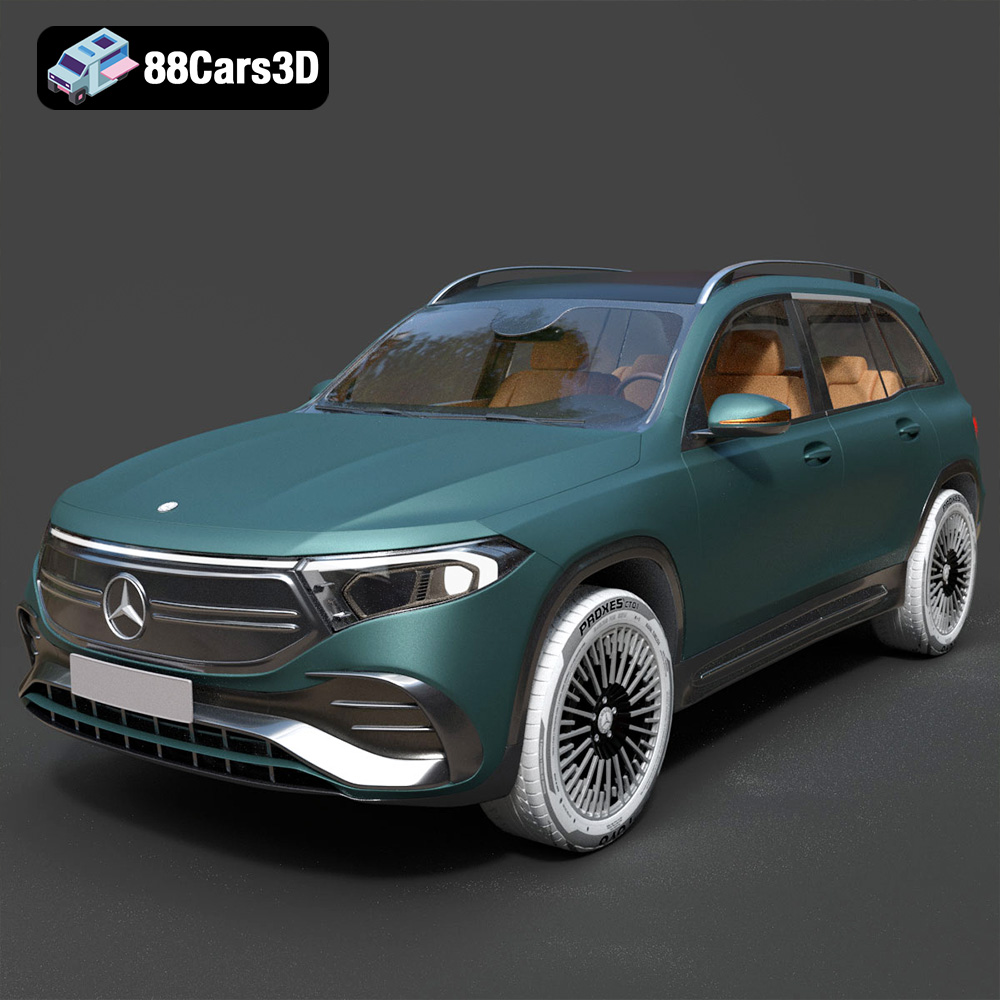
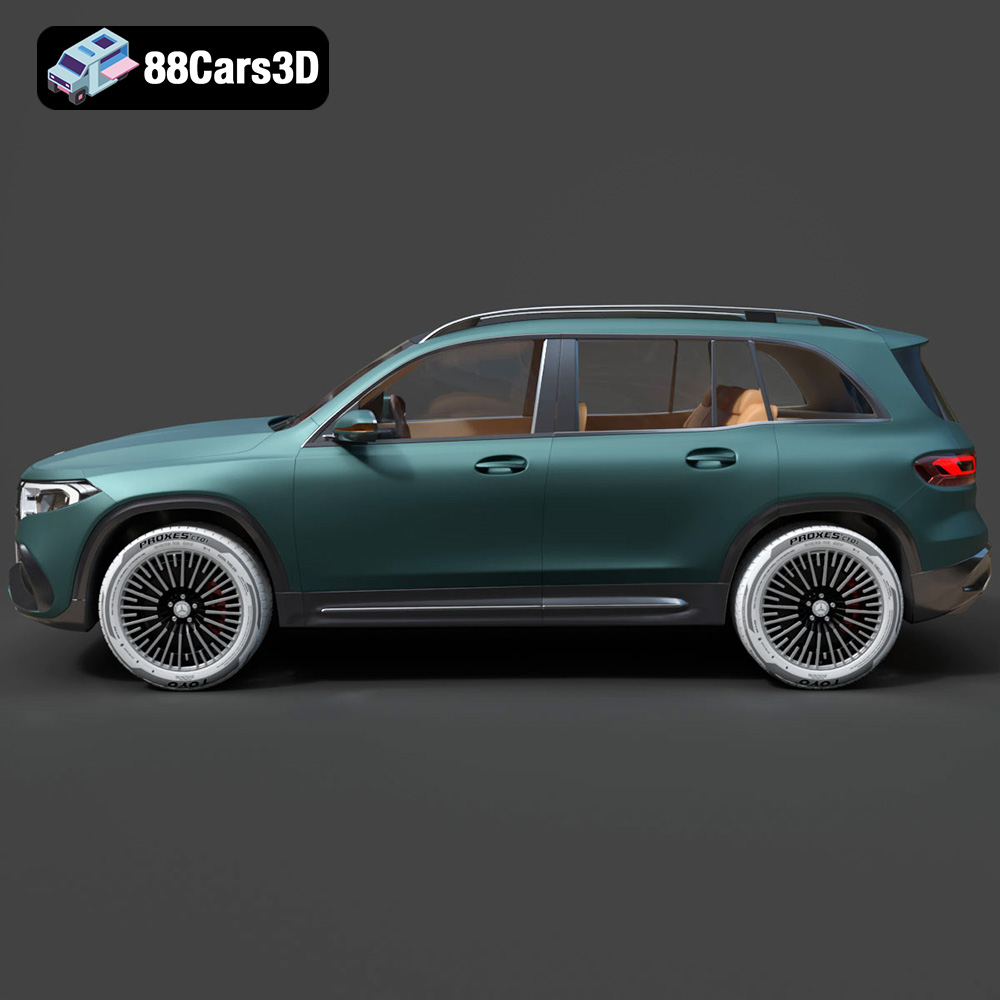
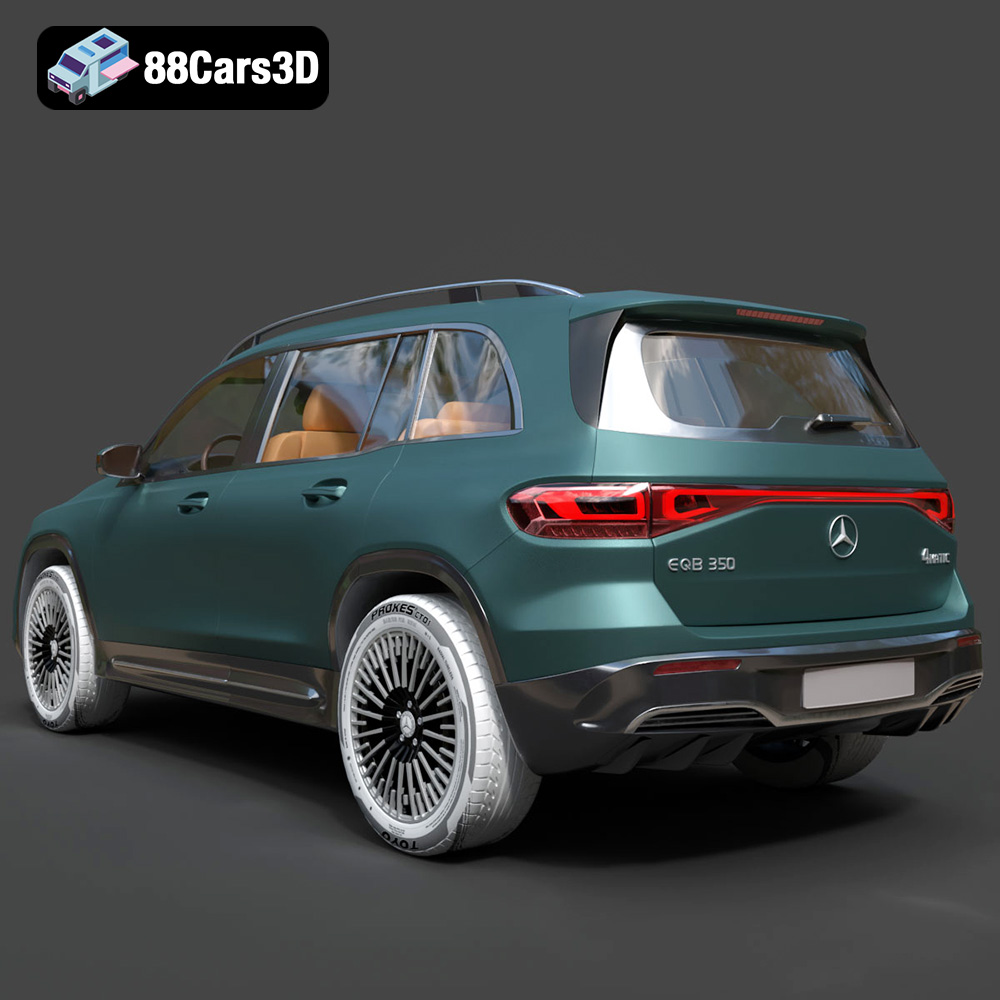
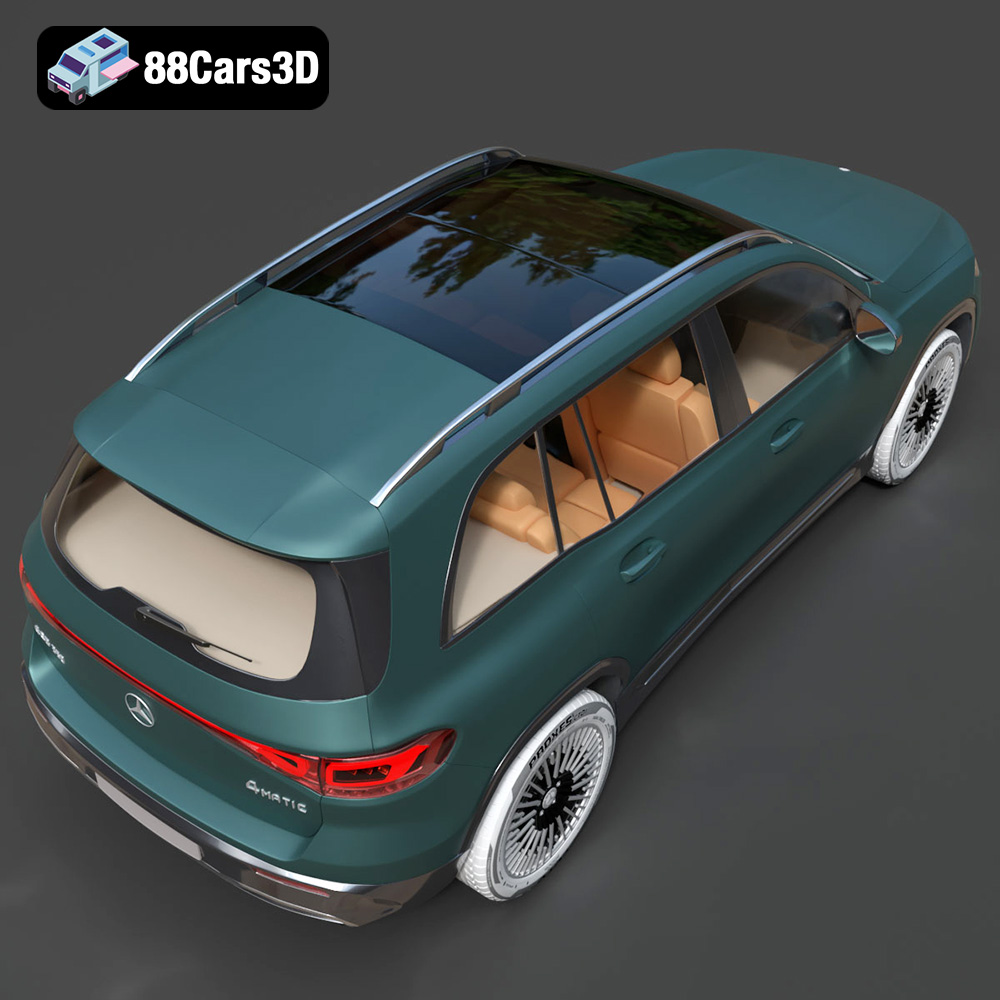
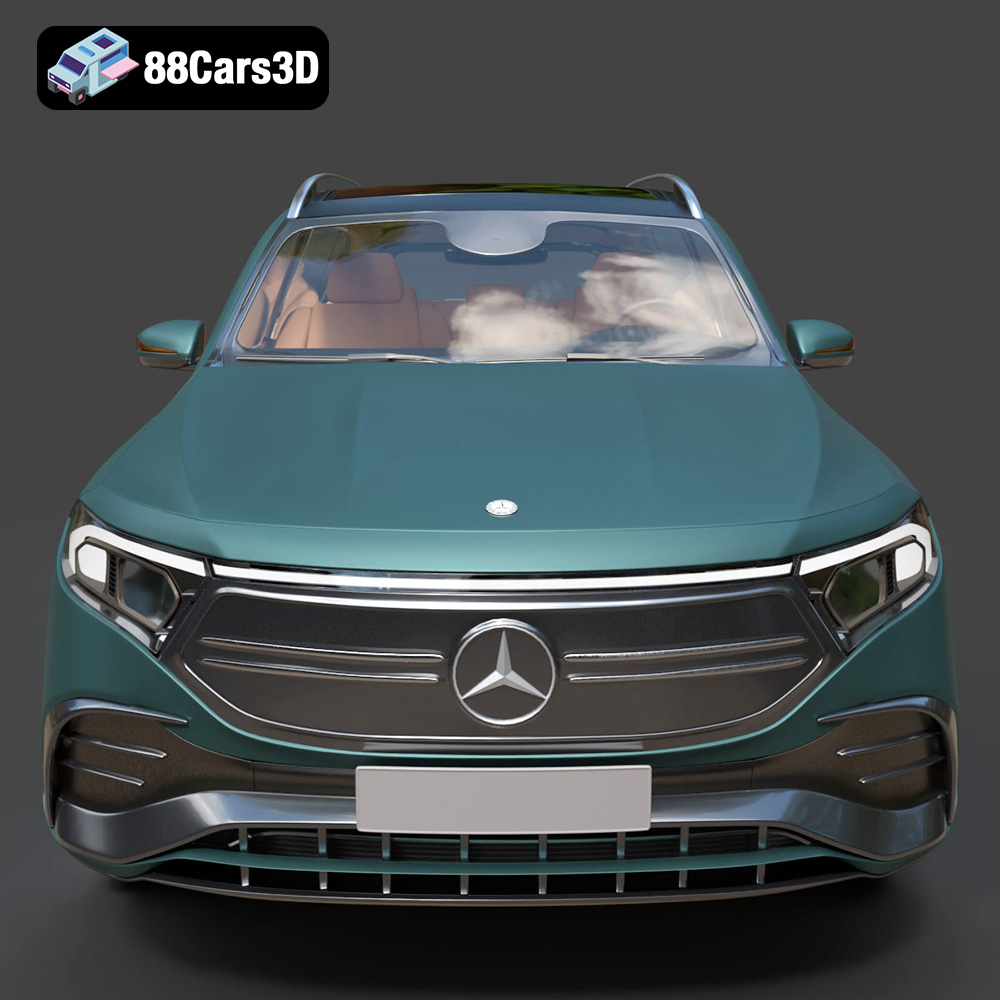
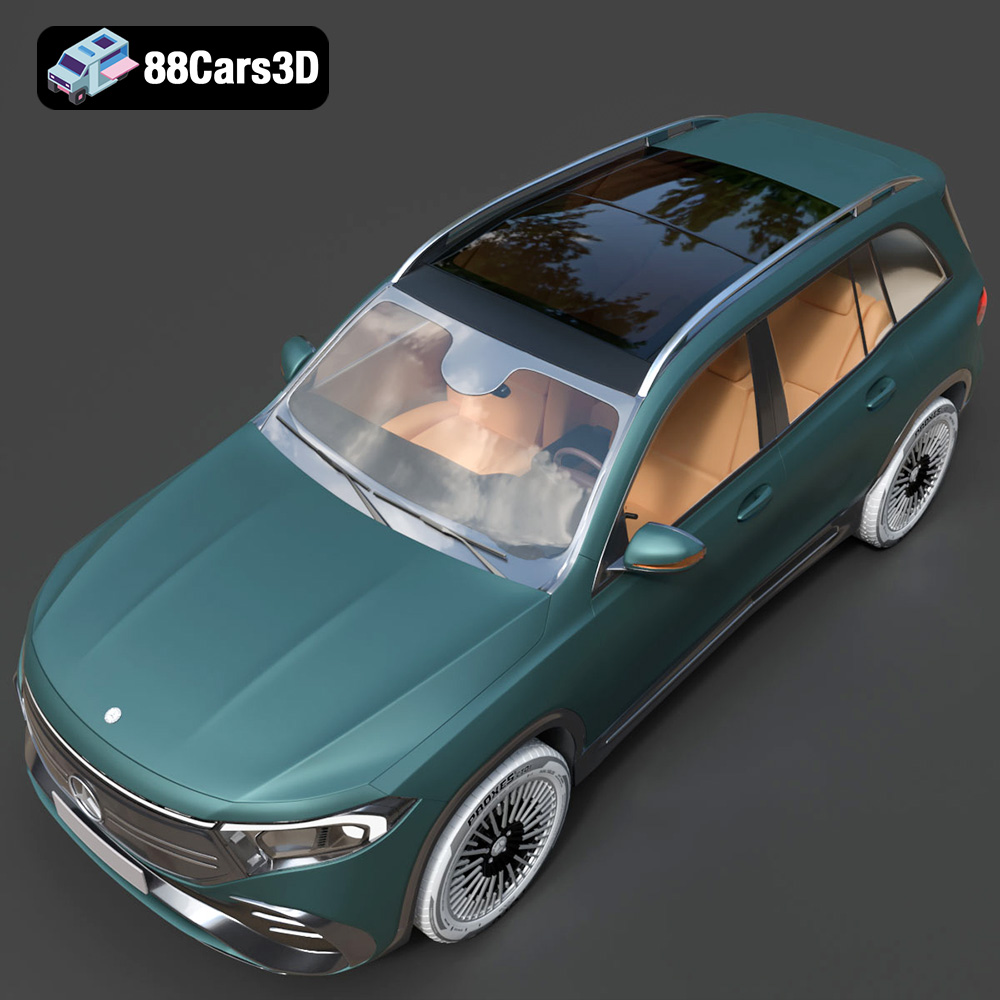
Discover the ultimate level of detail and realism with the Mercedes-Benz EQB-001 3D Model. Carefully crafted to replicate the true design of this modern vehicle, this model ensures precision and authenticity for any digital project. Engineered with professional quality in mind, the 3D model features impeccably clean geometry, seamless mesh flow, and highly realistic materials. Every exterior contour and interior element is precisely detailed to provide an exceptionally immersive visual experience. Perfect for a wide range of applications, this vehicle is an excellent choice for video game development, cinematic rendering, architectural visualization, and AR/VR experiences. Whether you are building an interactive simulation or generating photorealistic marketing materials, this 3D model seamlessly integrates into your workflow. Available file formats include: .blend – Editable Blender file with materials and lighting setup, .fbx – Game-engine ready format for Unreal Engine and Unity, .obj – Standard 3D model format compatible with all major software, .glb – Optimized for AR/VR and web-based visualization, .stl – Suitable for 3D printing and prototyping, .ply – Detailed polygon mesh for analysis and visualization, .unreal – Pre-configured for Unreal Engine use, .max – Editable 3ds Max file for rendering and animation.
$19.99
.arvr
.blend
.car3dmodel
.electriccar
.eqb
.eqb001
.ev
.fbx
.gameasset
.glb
.max
.mercedes
.mercedesbenz
.obj
.ply
.rendering
.simulation
.stl
.unreal
SUV