Get 20% OFF All Premium 3D & STL Models!

In the fast-paced world of digital creation, the demand for realistic, high-fidelity 3D assets is ever-increasing. From blockbuster games and photorealistic architectural visualizations to immersive AR/VR experiences and detailed product simulations, the quality of your 3D models can make or break a project. Automotive subjects, in particular, present a unique challenge, requiring an exquisite blend of technical precision and artistic flair to capture the sleek lines, intricate mechanics, and powerful presence of a vehicle.
Today, artists, developers, and designers rely on readily available, production-ready assets to accelerate their workflows without compromising on visual fidelity. This is where marketplaces like 88cars3d.com become indispensable, offering a curated selection of premium 3D models designed to meet professional standards. Among their impressive collection, the RiMO SiNUS iON-001 Kart 3D Model stands out as a prime example of an asset crafted to deliver both visual impact and technical versatility, ready to be integrated into a multitude of digital environments.
When working with 3D models, especially complex automotive rendering and game assets, understanding the various file formats is paramount. Each format serves a specific purpose, offering unique advantages for different stages of the production pipeline, from initial modeling to final deployment. Choosing the correct format ensures compatibility, optimizes performance, and preserves critical data.
The .blend file is the native format for Blender, a powerful open-source 3D creation suite. When you acquire a .blend file, you’re not just getting the raw mesh data; you’re typically receiving a fully editable Blender scene. This often includes the model itself, complete with materials (often PBR setups), textures, UV mapping, lighting configurations, camera setups, and even potential animations or rigging. For those who primarily work in Blender, this format offers unparalleled flexibility. Artists can easily modify geometry, tweak materials, adjust lighting, and adapt the scene to their specific creative vision without any loss of information or translation issues. The RiMO SiNUS iON-001 Kart, provided as a .blend file, allows for deep customization within Blender, from paint schemes to environmental lighting.
.fbx (Filmbox) is a proprietary file format developed by Autodesk, widely regarded as the industry standard for exchanging 3D data between different software applications. Its strength lies in its ability to store a comprehensive range of 3D data, including mesh geometry, materials, textures, animations, rigging, and even light and camera information, all within a single file. This makes .fbx incredibly versatile for game development, architectural visualization, and film production. It’s particularly ideal for real-time pipelines like Unreal Engine and Unity, where efficient data transfer and animation support are crucial. The .fbx version of the RiMO SiNUS iON-001 Kart would be the go-to choice for seamless integration into game engines.
The .obj (Wavefront Object) format is a simple, universal 3D model format that has been around for decades. It stores geometry data (vertices, normals, texture coordinates, and faces) and can reference external material files (.mtl) for color and basic texture information. While it doesn’t support advanced features like animation or rigging, its simplicity ensures near-universal compatibility across almost all 3D software packages. When you need a foundational 3D model that can be opened and manipulated in any major application without hassle, .obj is a reliable choice. It acts as a robust fallback for cross-software compatibility for assets like the RiMO SiNUS iON-001 Kart.
.glb (GLB format, an evolution of glTF) is a relatively newer format specifically designed for efficient transmission and loading of 3D scenes and models in web and real-time applications. It packages all necessary assets – geometry, materials, textures, and animations – into a single, compact file, making it perfect for augmented reality (AR), virtual reality (VR), and browser-based 3D viewers. Its optimization for rapid display and smaller file sizes makes it an excellent choice for interactive experiences where performance is critical. For showcasing the RiMO SiNUS iON-001 Kart in a web configurator or an AR application, .glb is the definitive format.
.stl (STereoLithography) is the de facto standard file format for 3D printing. It represents 3D models as a series of connected triangles, describing only the surface geometry of an object without color, texture, or material information. Its strength lies in its straightforward representation, making it universally compatible with 3D printing software and hardware. While not ideal for rendering, an .stl version of the RiMO SiNUS iON-001 Kart allows for physical prototyping or creating miniature replicas, transforming a digital asset into a tangible object.
The .ply (Polygon File Format) is a flexible format often used for storing 3D data from 3D scanners, CAD software, and other applications that require precise polygon mesh information. It can store a variety of properties including color, transparency, surface normals, texture coordinates, and even reliability information for each vertex and face. It’s particularly useful for scientific data, engineering analysis, and applications where detailed mesh integrity is paramount. For highly detailed analysis or specific CAD workflows involving the RiMO SiNUS iON-001 Kart, the .ply format provides a robust data set.
The .unreal file (often referring to a .uasset or a specifically prepared Unreal Engine project structure) signifies an asset that has been pre-configured and optimized for direct use within Unreal Engine. This often means textures are properly imported and assigned, materials are set up using Unreal’s physically based rendering (PBR) system, collision meshes might be included, and the asset is ready to be dropped into a level. This saves immense development time, as the often-complex process of getting an external model game-ready is already complete. The RiMO SiNUS iON-001 Kart’s .unreal file ensures a drag-and-drop experience for developers.
Like .blend for Blender, .max is the native file format for Autodesk 3ds Max, a leading 3D modeling, animation, and rendering software. A .max file contains the entire scene, including geometry, modifiers, materials, textures, lighting, cameras, animation data, and more. For 3ds Max users, this format offers full editability and control over every aspect of the model and its environment, making it perfect for high-end rendering projects, detailed animations, and complex scene setups. For those utilizing 3ds Max for their automotive rendering, the RiMO SiNUS iON-001 Kart’s .max file is invaluable.
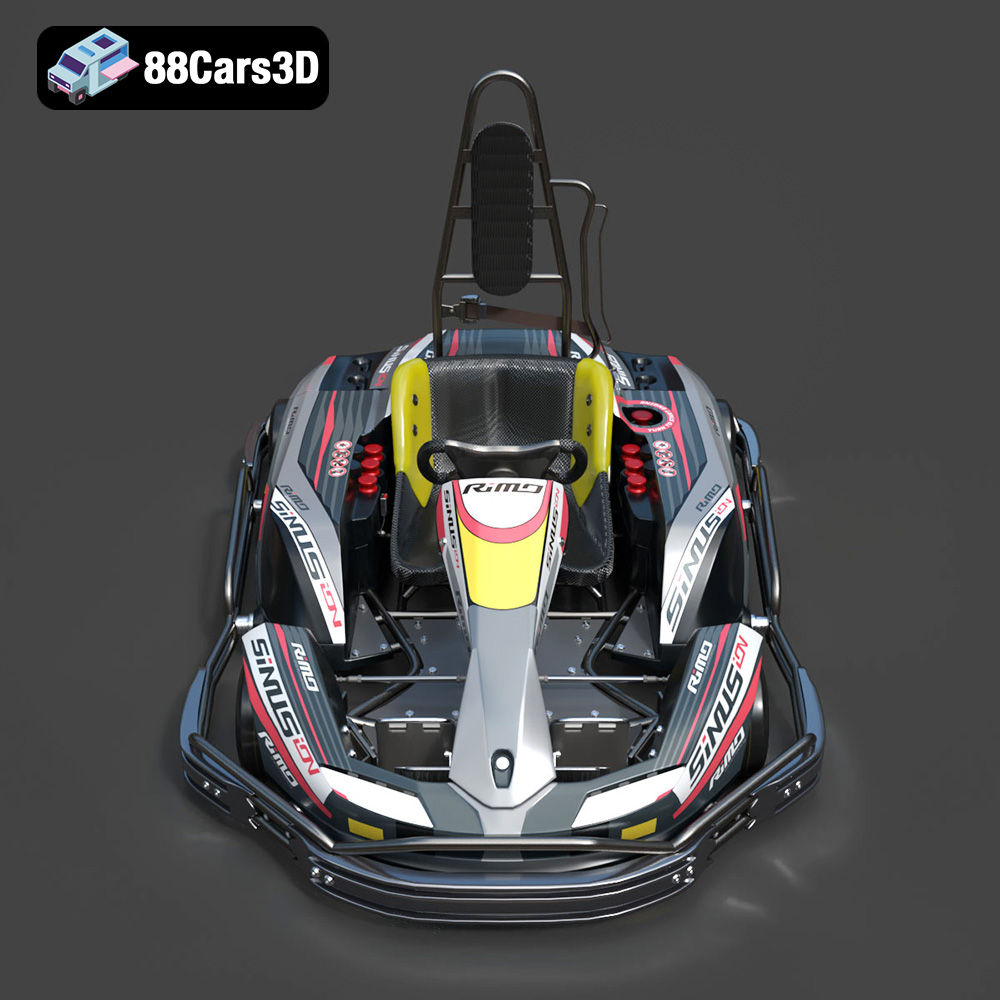
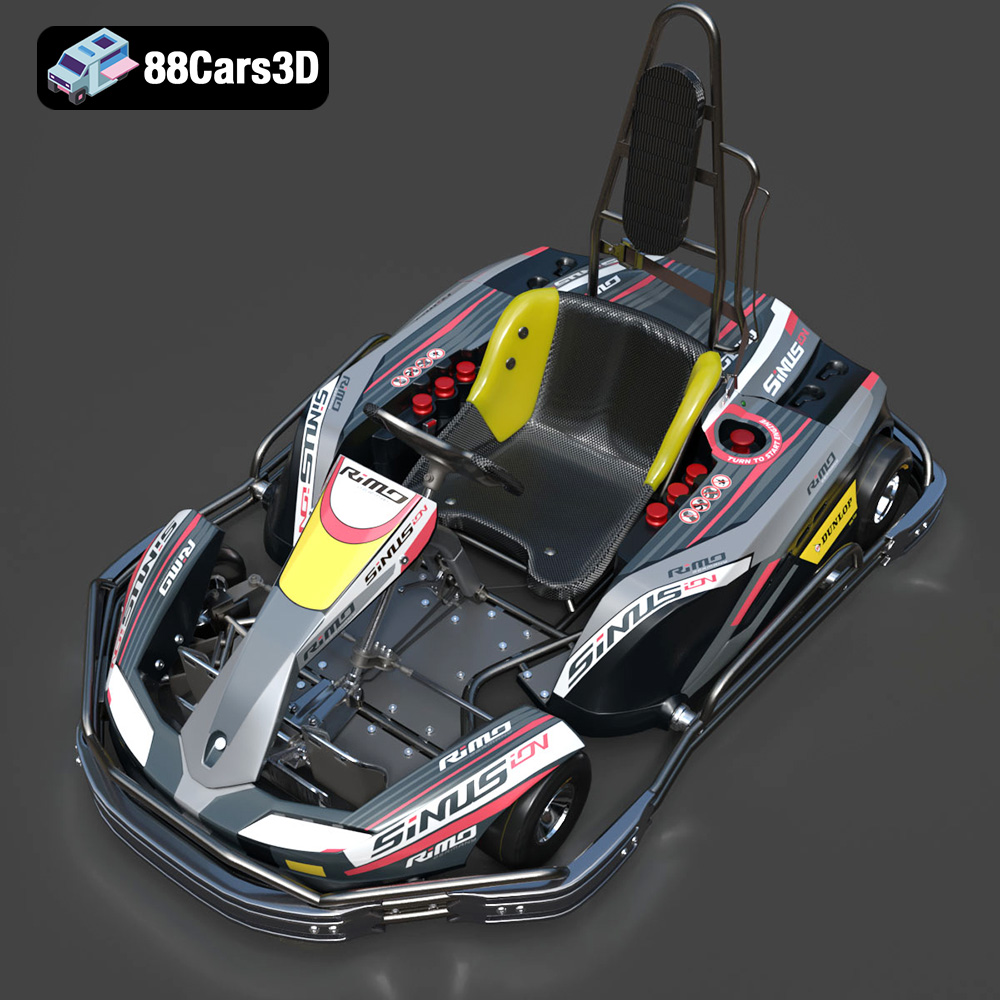
The RiMO SiNUS iON-001 Kart 3D Model exemplifies what a high-quality, production-ready automotive asset should be. It’s not merely a representation of a kart; it’s a meticulously crafted digital twin designed for peak performance across various digital mediums. This model from 88cars3d.com is a testament to the level of detail and versatility professional 3D artists and developers demand.
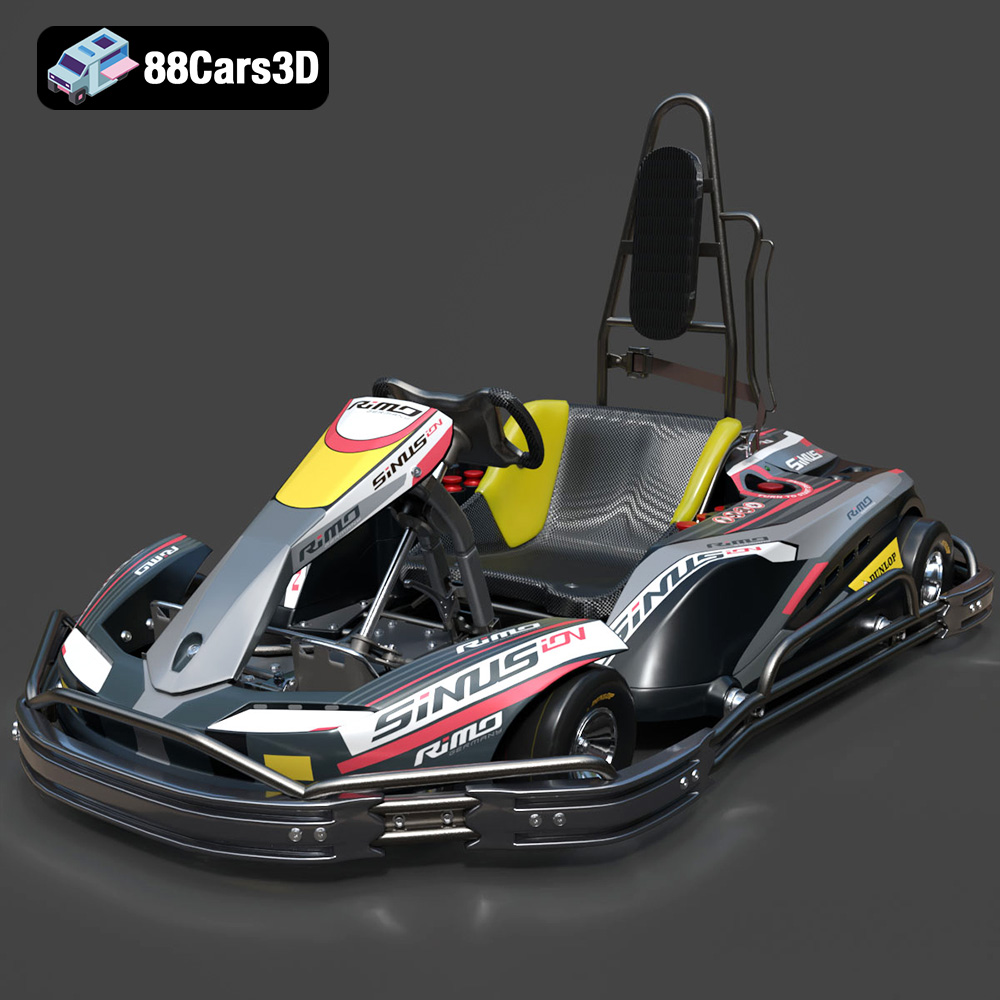
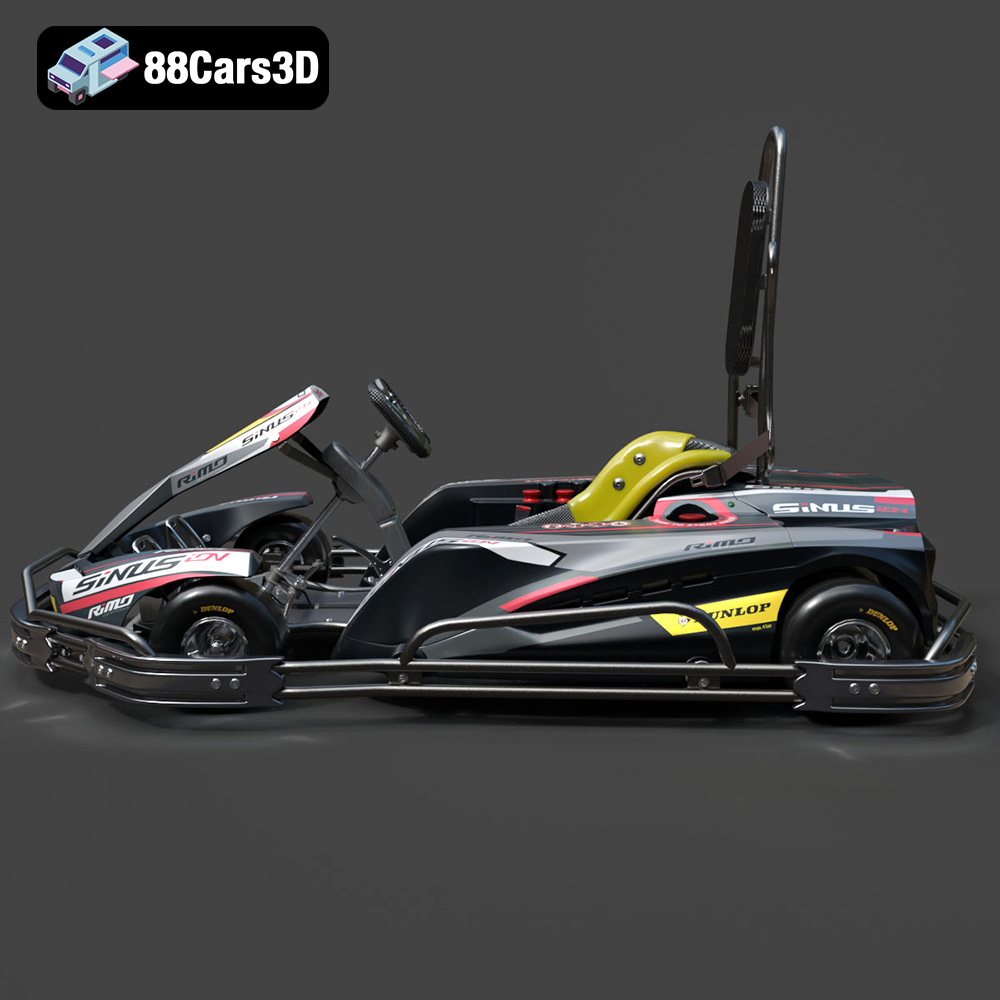
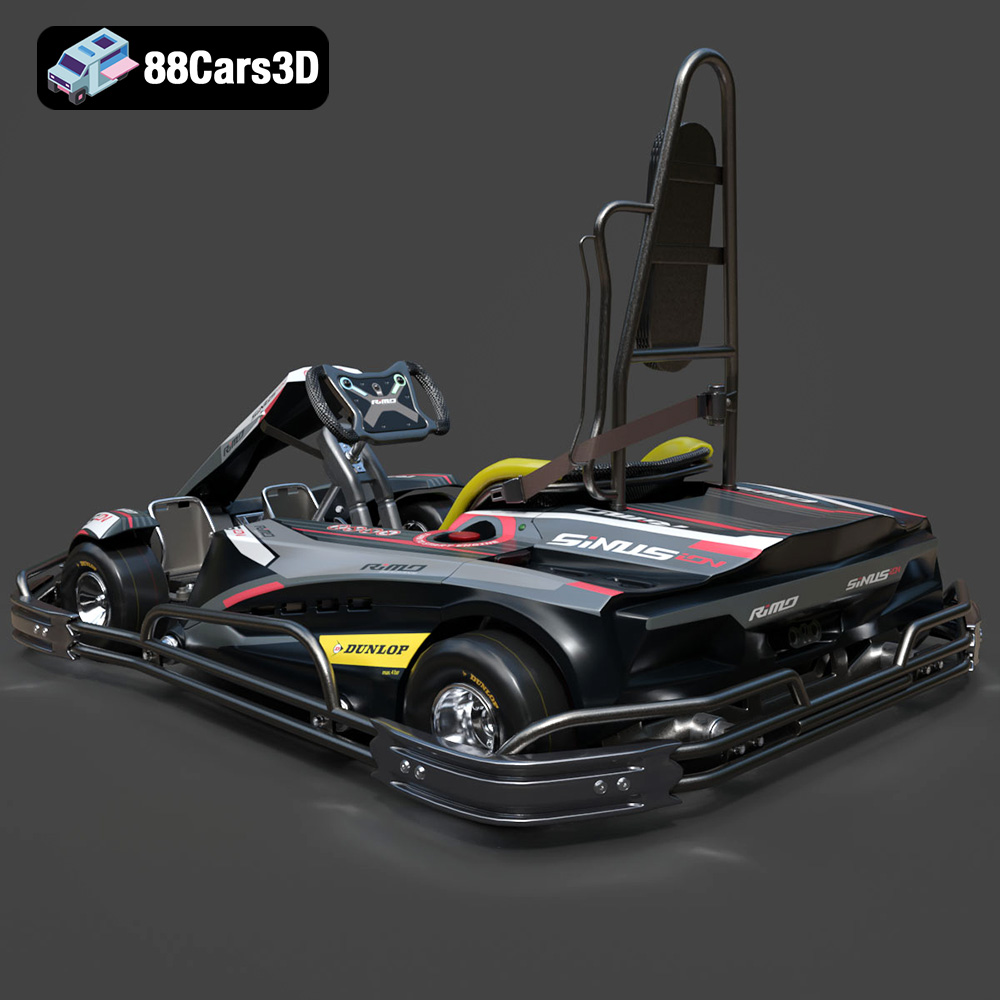
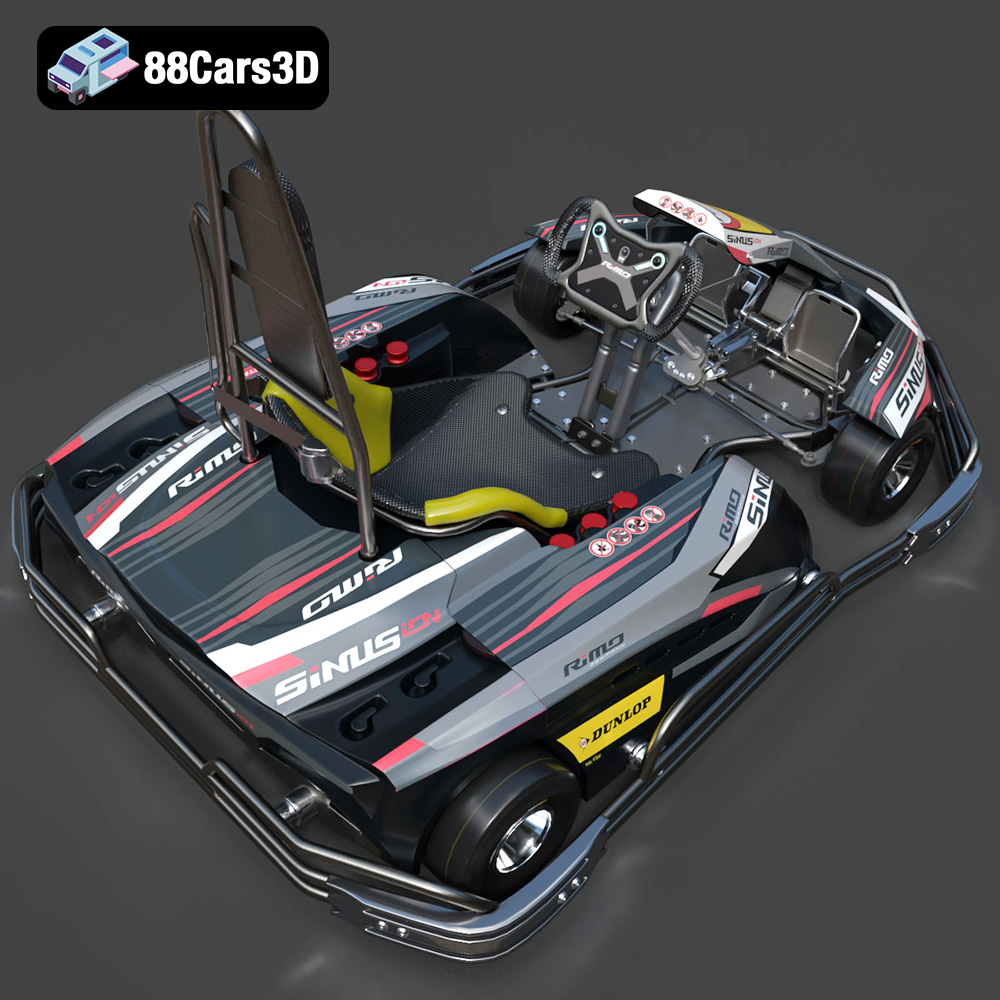
The description highlights “precision” and capturing the “essence of speed and agility.” In 3D modeling, this translates to accurate proportions, crisp edges where needed, and smooth curves that convey aerodynamic design. For a kart, this means faithfully recreating its low-slung chassis, exposed engine (or battery pack in this electric model), racing tires, and steering assembly. Such attention to detail ensures that whether the kart is static in a rendering or speeding around a virtual track, it maintains a believable and exciting presence.
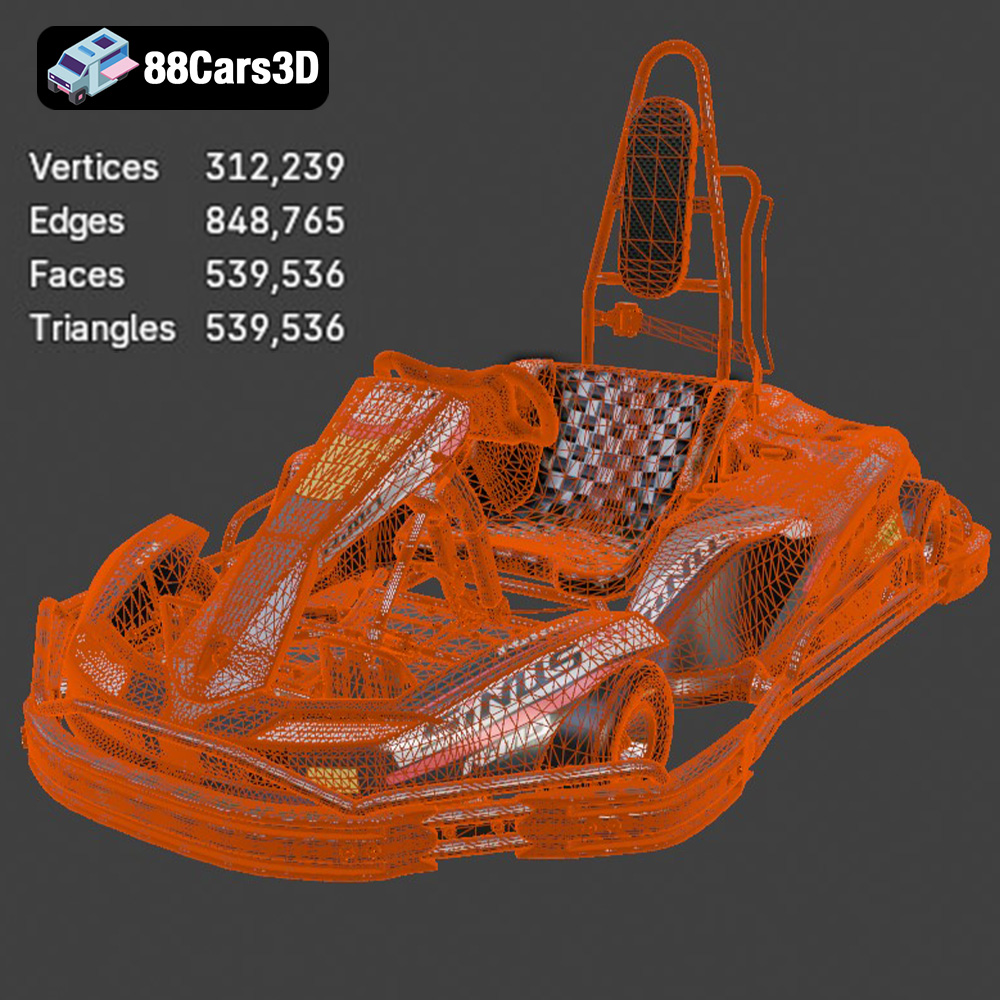
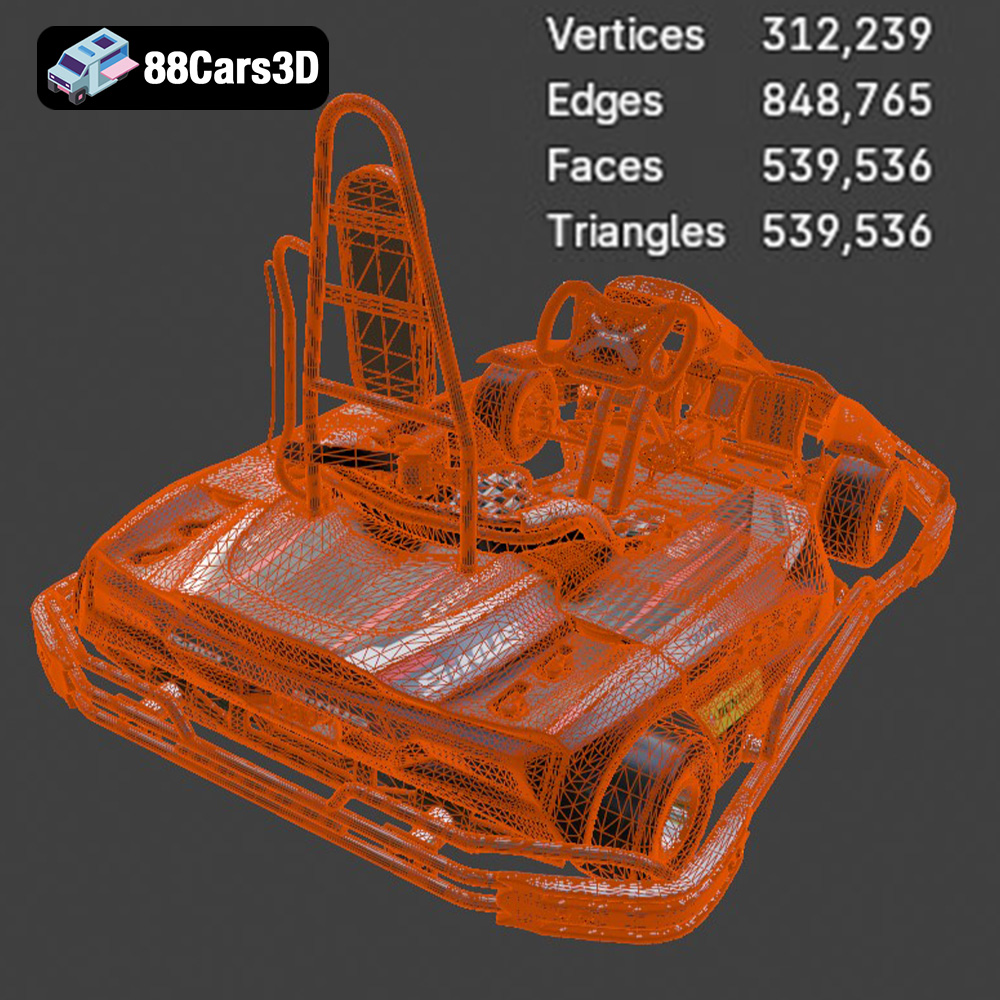
Under the hood, a professional 3D model is defined by its clean geometry and well-executed materials. “Clean geometry” implies an optimized mesh with efficient polygon distribution, avoiding unnecessary complexity while retaining detail. This is crucial for maintaining performance in real-time applications and ensuring smooth subdivision for high-quality renders. Realistic materials, often achieved through physically based rendering (PBR) workflows, accurately simulate how light interacts with surfaces, providing authentic reflections, roughness, and color. The RiMO SiNUS iON-001 Kart model leverages these principles, ensuring its metallic chassis, rubber tires, and plastic components react to light just as they would in the real world.
The strength of this kart model lies in its stated versatility. Designed for game development, rendering projects, AR/VR experiences, and visualization, it means the model has been created with a balance of detail and optimization. For game engines, it would likely feature a manageable poly count and efficient UV mapping for texture atlases. For high-end rendering, the same base model could support additional subdivision for extreme close-ups, showcasing every rivet and decal. This multi-purpose design approach significantly reduces the need for multiple model versions, streamlining production pipelines for diverse projects.
The utility of a premium 3D car model like the RiMO SiNUS iON-001 Kart extends across numerous professional fields. Its design for versatility ensures seamless integration into workflows ranging from entertainment to industrial design.
For game developers, 3D car models are the heart of racing simulations and open-world environments. The RiMO SiNUS iON-001 Kart, provided in game-engine ready formats like .fbx and .unreal, simplifies the integration process significantly. Developers can drag and drop the asset, apply physics properties, and get straight to level design and gameplay scripting. Optimized geometry and well-structured UVs are critical here, ensuring smooth performance even with multiple karts on screen. This model could be the star of an arcade racer, a realistic karting simulator, or an interactive training module.
In advertising, product design, and architectural visualization (ArchViz), photorealistic rendering is paramount. High-quality 3D car models are essential for populating scenes, showcasing design concepts, or creating compelling marketing materials. The RiMO SiNUS iON-001 Kart, with its realistic materials and clean topology (available in .max or .blend), is ideal for generating stunning visuals in a variety of environments, from glossy studio shots to dynamic outdoor scenes.
Augmented Reality (AR) and Virtual Reality (VR) demand highly optimized yet visually engaging 3D assets to create truly immersive experiences. The .glb format, specifically designed for these applications, ensures the RiMO SiNUS iON-001 Kart can be seamlessly integrated into AR apps for product visualization or VR simulations for training and entertainment. Its optimized nature minimizes loading times and maintains frame rates, crucial for preventing motion sickness and enhancing user engagement.
The true value of a professional 3D model like the RiMO SiNUS iON-001 Kart lies in its underlying technical execution. Understanding these details is crucial for leveraging the asset to its full potential.
A “highly detailed” model doesn’t necessarily mean an excessively high polygon count. Instead, it signifies smart polygon distribution. Critical areas like the driver’s seat, steering wheel, and wheel hubs should have sufficient polygons to hold their shape and detail, while flat surfaces can be more economical. For a game asset, the poly count must be balanced against performance targets – often requiring LOD (Level of Detail) variations where the model automatically switches to a lower poly version when viewed from a distance. For high-end rendering, the base mesh can be cleanly subdivided to achieve ultra-smooth surfaces.
Modern rendering relies heavily on PBR materials, which simulate how light behaves in the real world. The RiMO SiNUS iON-001 Kart’s “realistic materials” indicate a PBR setup, typically including texture maps for:
These maps, combined with the correct shader settings in your chosen software (Blender, 3ds Max, Unreal), allow for consistent and convincing visuals under any lighting conditions.
A well-designed 3D car model should also offer scalability. This means it can be used in a scene where it’s a small background element, or blown up for a hero shot without significant loss of quality. Modularity implies that components might be separated (e.g., wheels, steering wheel, chassis) allowing for customization, animation, or even destruction effects in a game. The RiMO SiNUS iON-001 Kart likely adheres to these principles, giving artists maximum control.
To illustrate the practical impact of high-quality 3D car models, let’s consider a few hypothetical but realistic scenarios where the RiMO SiNUS iON-001 Kart would be invaluable.
A small indie game studio wants to create a fast-paced mobile kart racing game. Time and budget are tight. Instead of modeling a kart from scratch, which could take weeks, they source the RiMO SiNUS iON-001 Kart 3D Model from 88cars3d.com. Using the .fbx and .unreal files, they quickly import the model into their engine. The optimized mesh ensures smooth framerates on mobile devices, and the PBR materials make the kart look vibrant and appealing. They can focus their resources on track design, AI, and gameplay mechanics, significantly accelerating their development timeline and allowing them to launch a polished product much faster.
An architecture firm is designing a cutting-edge indoor karting facility. To impress clients and investors, they need photorealistic renderings of the proposed interior, complete with karts on the track. They utilize the .max file of the RiMO SiNUS iON-001 Kart. In 3ds Max, they integrate the kart into their architectural scene, setting up realistic studio lighting and dynamic action poses. The clean topology allows for smooth subdivisions for extreme close-ups, showcasing the kart’s detail and the facility’s ambiance. The resulting renders are visually stunning, helping to secure funding and enthusiastic buy-in for the project.
A vocational training institution wants to develop an interactive VR simulation to teach students about kart mechanics and maintenance without requiring physical karts. The .glb file of the RiMO SiNUS iON-001 Kart is perfect for this. Imported into a VR development environment, the model allows students to virtually walk around, inspect components, and even interact with parts (if rigged for interaction). The optimized format ensures a smooth, nausea-free VR experience, making the learning process engaging and effective.
Selecting the right 3D car models is a critical decision that impacts project timelines, budgets, and final quality. When evaluating assets, consider these factors:
Investing in high-quality 3D assets upfront saves considerable time and resources in the long run, allowing you to focus on creativity and innovation rather than grappling with substandard models. The RiMO SiNUS iON-001 Kart is a testament to the value of a well-made asset.
The world of 3D content creation thrives on efficiency and quality. High-fidelity 3D car models are not just static objects; they are dynamic assets that power immersive experiences, compelling visualizations, and cutting-edge simulations. From the meticulous detail required for automotive rendering to the optimized performance demanded by game assets and AR/VR applications, every aspect of a 3D model contributes to the final impact of a project.
The RiMO SiNUS iON-001 Kart 3D Model stands as an excellent example of an asset engineered for professional use. Its clean geometry, realistic PBR materials, and extensive file format support (from .blend and .max for detailed scene work to .fbx and .unreal for game development, and .glb for web/AR/VR) ensure it is ready for virtually any digital challenge. By choosing expertly crafted models from trusted sources like 88cars3d.com, artists and developers can streamline their workflows, enhance their creative output, and deliver truly outstanding results across all platforms.
Whether you’re crafting the next big racing title, producing a stunning automotive commercial, or developing an interactive product configurator, the right 3D assets are your foundation for success. The RiMO SiNUS iON-001 Kart is more than just a model; it’s a gateway to accelerating your creative vision and achieving unparalleled realism.
Experience the thrill of the race with this highly detailed 3D model of the RiMO SiNUS iON-001 Kart. Crafted with precision, this model captures the essence of speed and agility, making it perfect for a variety of applications. This 3D model features clean geometry and realistic materials, ensuring a visually stunning representation. Every detail has been meticulously recreated to provide a professional-quality asset that stands out. Ideal for game development, rendering projects, AR/VR experiences, and visualization, this RiMO SiNUS iON-001 Kart 3D model is versatile and ready to enhance your projects. Whether you’re creating a racing game, a simulation, or a presentation, this model delivers exceptional quality and realism.
$19.99
.arvr
.blend
.car3dmodel
.fbx
.gameasset
.glb
.kart
.max
.obj
.ply
.rendering
.rimo
.simulation
.sinusion001kart
.stl
.unreal