Get 20% OFF All Premium 3D & STL Models!

In the vast landscape of 3D modeling, few creations capture the spirit of adventure and rugged capability quite like a meticulously crafted off-road vehicle. For designers, game developers, architects, and visualization artists, the availability of high-quality 3D models can dramatically accelerate workflows and elevate project realism. Imagine bringing to life the untamed spirit of overland exploration, the thrill of a post-apocalyptic saga, or the intricate details of a bespoke automotive design. This is precisely where a premium asset like the Custom Off-Road BMW R1150GS Adventure Sidecar 3D Model truly shines.
This exceptional model is more than just a digital replica; it’s a testament to precision engineering and artistic dedication, ready to be deployed across a spectrum of professional applications. From hyper-realistic automotive rendering to immersive game assets and even physical 3D prints, this BMW R1150GS Adventure with its integrated sidecar offers unparalleled versatility. Its carefully balanced topology, game-ready optimization, and authentic material finishes make it an indispensable tool for anyone seeking to push the boundaries of digital content creation. Let’s delve into the technical prowess and diverse applications that make such a detailed 3D car model a cornerstone for creative projects.
When acquiring a sophisticated 3D model like the Custom Off-Road BMW R1150GS Adventure Sidecar, understanding the various file formats it comes in is crucial. Each format serves a specific purpose, offering unique advantages for different stages of the production pipeline, from initial modeling to final rendering, game integration, or even 3D printing. The versatility of a model packaged with multiple formats, as is the case with this premium asset from 88cars3d.com, significantly enhances its utility for professionals.
The .blend format represents a fully editable Blender scene. For artists deeply integrated into the Blender ecosystem, this is often the most valuable format. It contains not just the mesh geometry, but also materials, textures, lighting setups, cameras, animation data, and even modifiers or custom properties. This allows for deep customization, modification, and re-exporting, making it ideal for projects that require significant iteration or bespoke adjustments to the model’s rigging, textures, or even geometry. It’s the closest you can get to the original artist’s working file.
.fbx (Filmbox) is arguably the most widely adopted format for exchanging 3D data between different software applications. Developed by Autodesk, it’s particularly ideal for real-time pipelines like Unreal Engine and Unity. An FBX file can encapsulate geometry, materials (with texture references), animations, skinning, and rigging information. Its robustness and broad compatibility make it the go-to choice for exporting game assets, ensuring that complex models with animations transfer seamlessly between modeling software and game engines.
The .obj (Wavefront OBJ) format is a universal standard, prized for its simplicity and wide cross-software compatibility. It primarily stores geometric data – vertices, normals, UV coordinates, and faces. While it doesn’t typically store animation or rigging information, it’s excellent for static mesh exchange and ensures that the core structure of a 3D model can be opened and worked on in almost any 3D application. Materials are usually referenced via an accompanying .mtl (material template library) file, which points to texture maps.
.glb (GL Transmission Format Binary) is the binary version of glTF, a royalty-free specification for the efficient transmission and loading of 3D scenes and models by applications. It’s highly optimized for AR (Augmented Reality), VR (Virtual Reality), and browser-based display, making it perfect for interactive web viewers, virtual showrooms, and mobile AR experiences. A GLB file bundles everything—model, textures, and animations—into a single, self-contained file, which is crucial for quick loading and deployment in real-time web and XR environments.
.stl (Stereolithography) is the de facto standard for 3D printing. This format represents a 3D model as a series of connected triangles, describing only the surface geometry of an object without color, texture, or material information. While not visually rich, its simplicity makes it universally understood by 3D printers and slicing software. For hobbyists or professionals looking to convert the digital BMW R1150GS into a physical display piece, the .stl version is essential, requiring careful preparation to ensure printability.
.ply (Polygon File Format or Stanford Triangle Format) is a versatile format for storing 3D data, particularly useful for high-resolution scan data, CAD, or scientific analysis. It can store various properties beyond just geometry, such as color, transparency, normals, texture coordinates, and even reliability information for each polygon. While less common for typical game assets, its precision makes it valuable for specialized applications where data integrity and detailed analysis are paramount.
The .unreal format, or more accurately, assets packaged and ready for direct import into Unreal Engine, signifies a model that has likely been optimized, textured, and sometimes even set up with basic materials and collision meshes specifically for Unreal’s architecture. This saves significant time for game developers, allowing for a drag-and-drop workflow with minimal post-import setup, ensuring the Custom Off-Road BMW R1150GS Adventure Sidecar 3D Model looks and performs optimally within the engine.
Similar to .blend for Blender, the .max format is the native project file for Autodesk 3ds Max. It contains all scene information, including geometry, materials, lighting, cameras, animations, and modifiers. For professionals working within a 3ds Max pipeline, this format offers the highest degree of flexibility for deep editing, re-texturing, animation, and high-fidelity rendering with V-Ray or Corona. It allows for complete control over every aspect of the model for advanced automotive rendering and visualization projects.
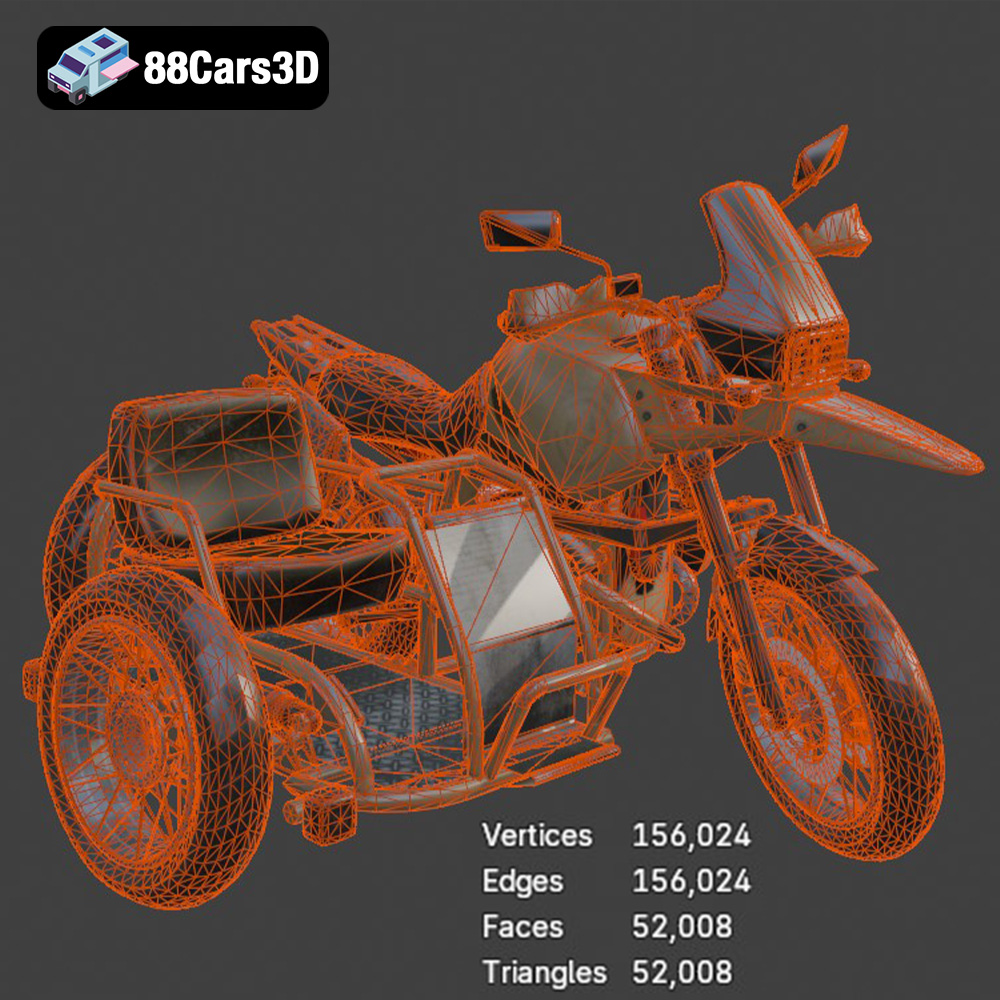
The true value of a premium 3D car model lies in its meticulous construction and adherence to real-world detail. The Custom Off-Road BMW R1150GS Adventure Sidecar 3D Model exemplifies this, offering a balance between visual fidelity and performance efficiency. It’s not just about polygon count, but how those polygons are utilized, how textures are mapped, and how materials react to light.
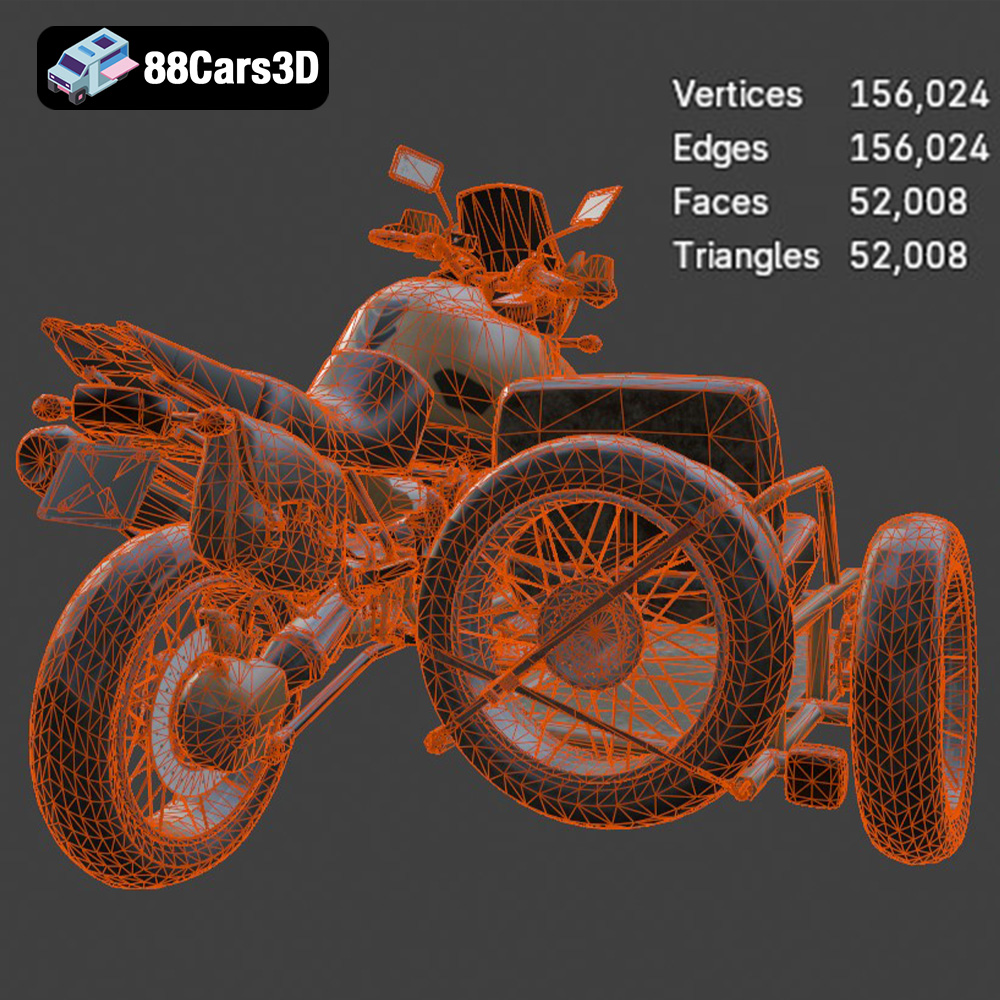
With approximately 180,000 triangles, this model strikes a perfect balance for professionals. For game developers, this polycount is optimized for real-time engines like Unreal and Unity, ensuring high-end visual realism without sacrificing frame rates. Each polygon is carefully placed to define the BMW’s iconic silhouette, the rugged curves of its crash bars, and the distinctive lines of the sidecar. The clean, quad-based topology (implied by “well-balanced topology”) ensures smooth deformation if rigged for animation and facilitates easy subdivision for even higher detail in cinematic renders if needed.
The model boasts carefully mapped textures and realistic material finishes, indicating a robust Physically Based Rendering (PBR) workflow. PBR materials accurately simulate how light interacts with surfaces in the real world, translating to believable reflections, refractions, and diffuse properties. This includes separate maps for albedo (color), roughness, metallic, normal, and ambient occlusion. The “carefully mapped textures” implies excellent UV unwrapping, which is critical. Good UVs ensure that textures are applied without stretching or distortion, allowing for high-resolution details like tire treads, paint imperfections, or worn leather to appear crisp and realistic across all surfaces of the motorcycle and sidecar.
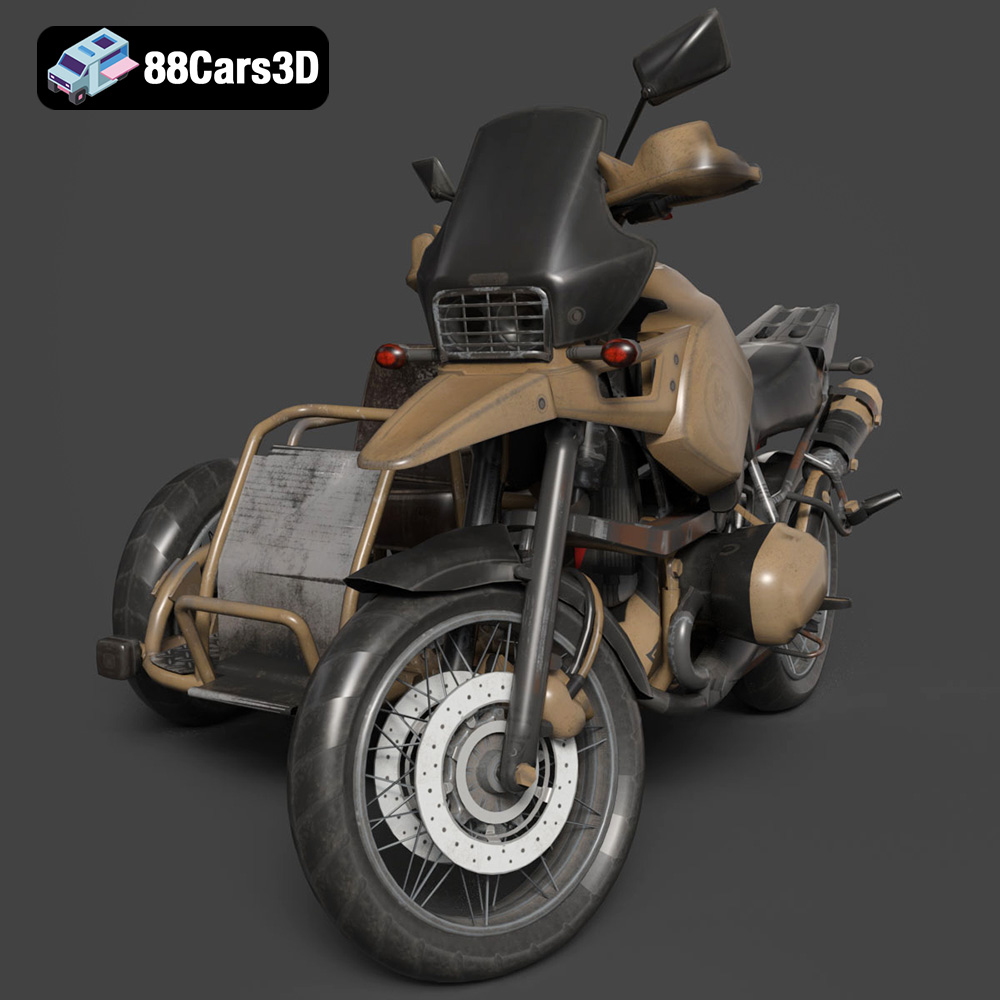
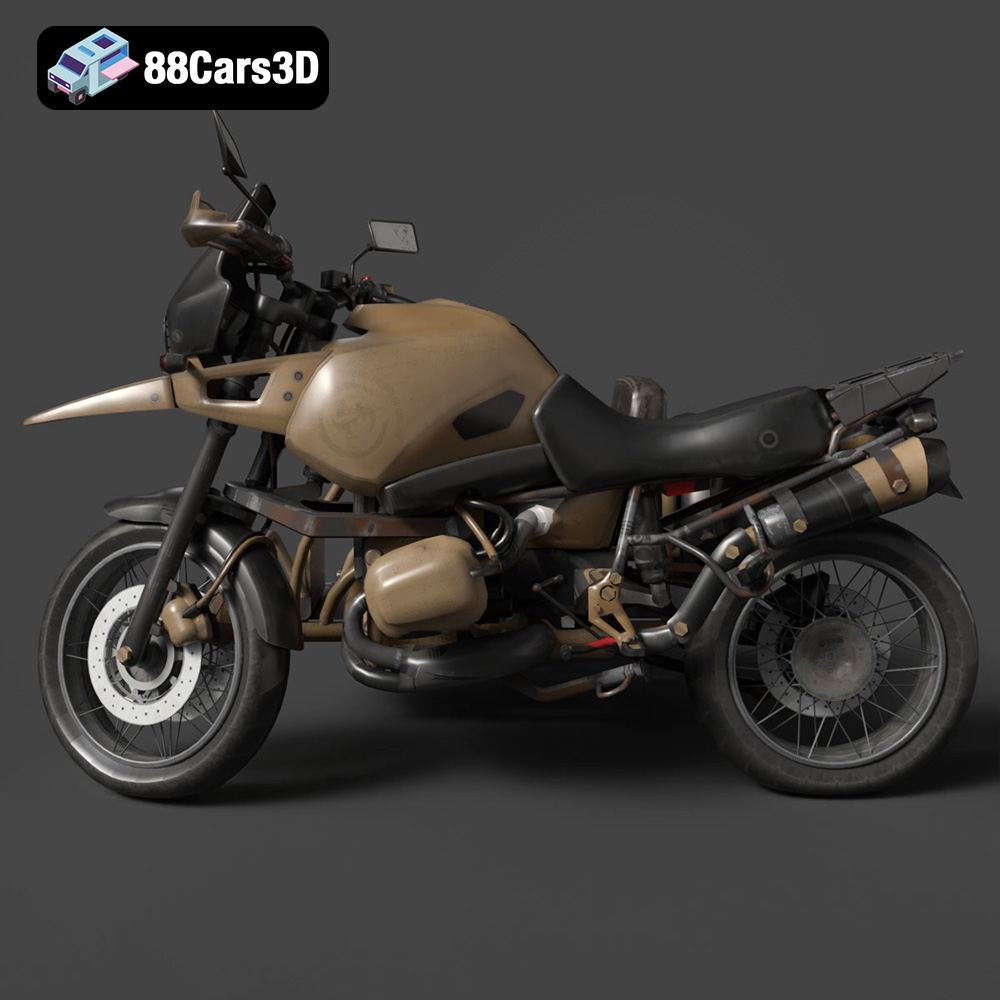
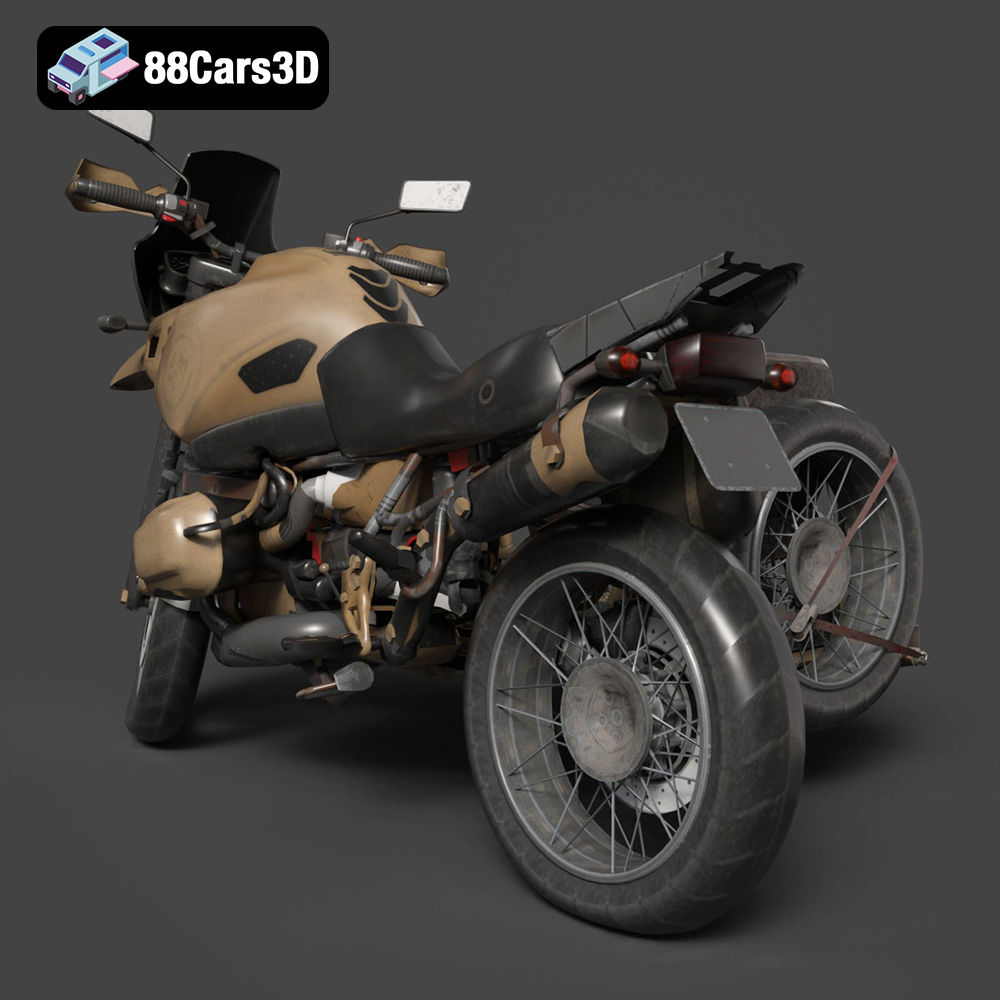
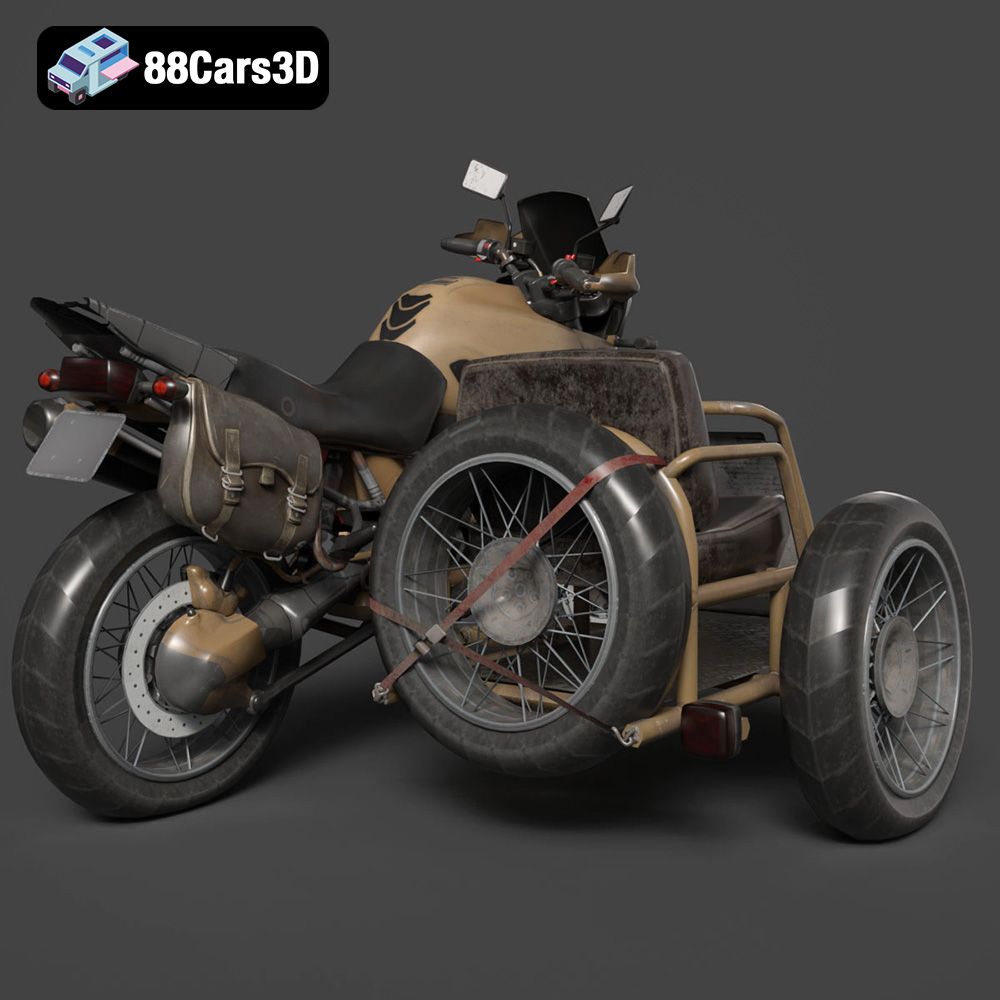
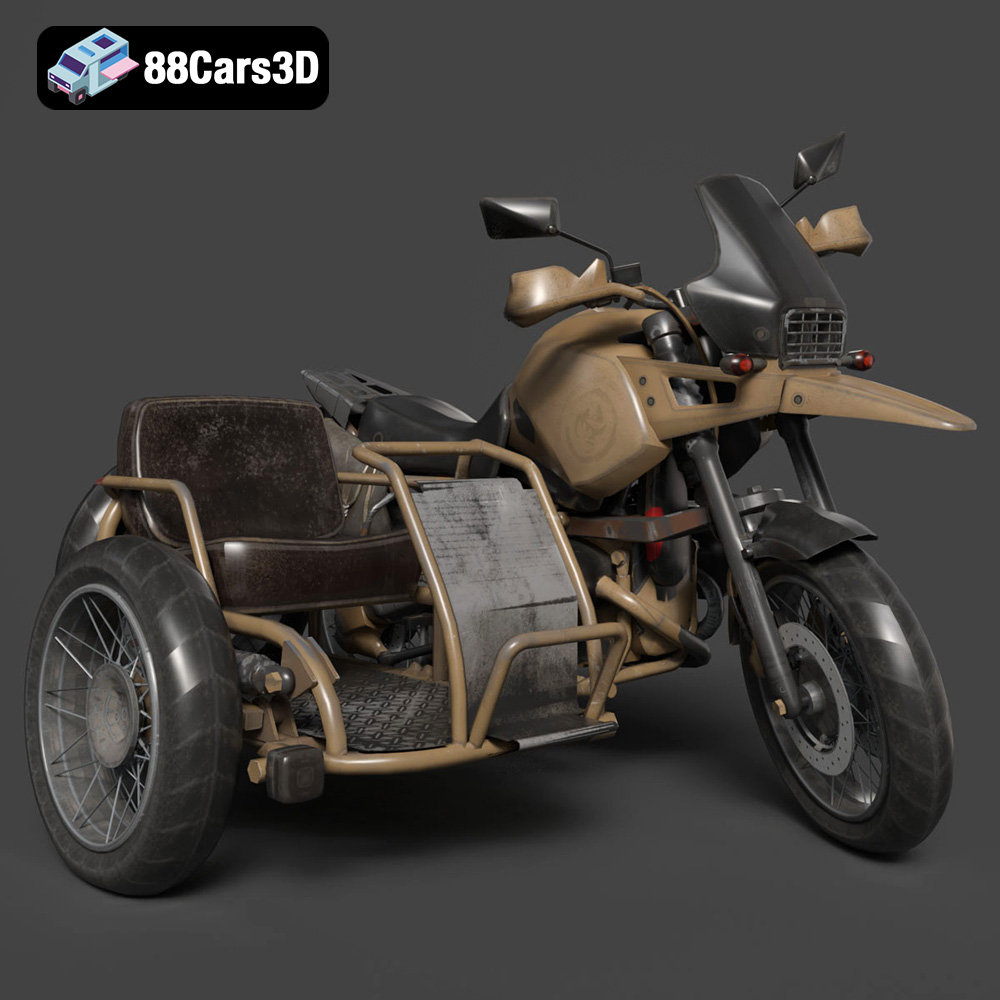
Beyond surface appearance, the model captures the essence of the BMW R1150GS Adventure. The detailed 1,130cc horizontally opposed boxer twin engine block is a highlight, a mechanical marvel in itself. High-clearance exhaust systems, wire-spoke wheels with aggressive knobby tires, the distinctive asymmetric headlights, and even the Telelever front and Paralever rear suspension systems are all accurately modeled. This attention to mechanical detail extends to the cockpit, with ergonomic saddles, wide enduro handlebars, and a detailed analog instrument cluster. Such precision ensures that the model holds up under close scrutiny, whether for a hero shot in an automotive rendering or a first-person perspective in a game.
For game developers, 3D car models like the Custom Off-Road BMW R1150GS Adventure Sidecar are essential game assets that define player experience and environmental realism. The model’s “game-ready & optimized” status is a significant advantage, streamlining the integration process into popular engines.
The inclusion of an .fbx file format makes this model incredibly versatile for game development. Importing the FBX directly into Unreal Engine or Unity is a straightforward process. The FBX typically carries not just the mesh, but also the applied materials and references to texture maps. Developers can then quickly set up PBR materials within the engine, utilizing the provided albedo, normal, metallic, roughness, and ambient occlusion maps to achieve photorealistic results that are optimized for real-time rendering. The “unreal” specific file further suggests an asset already tailored for minimal setup in Epic’s engine.
The stated 180,000 triangles represent an optimal polycount for a detailed hero vehicle in modern game engines. This allows for rich visual quality without overburdening the rendering pipeline, crucial for maintaining high frame rates, especially on diverse hardware. Further optimization techniques can be applied, such as creating Level of Detail (LOD) meshes for distant views, or utilizing efficient collision meshes, which are often derived from the main mesh. The model’s clean topology also aids in generating accurate collision geometry, preventing frustrating in-game physics glitches and ensuring the sidecar interacts realistically with the game world.
The technical specifications mention “separate wheels, suspension, and steering components for animation” and “proper pivot setup for steering, wheel rotation, and suspension travel.” This is invaluable for game development. Developers can easily rig the sidecar model to allow for dynamic wheel rotation, independent suspension movement reacting to terrain, and realistic steering. This level of granular control enables immersive gameplay mechanics, whether it’s navigating treacherous off-road trails in a simulator or performing stunts in an open-world adventure game, making the BMW R1150GS Adventure feel alive and responsive.
Beyond interactive environments, high-quality 3D car models are the bedrock of compelling automotive rendering and product visualization. The Custom Off-Road BMW R1150GS Adventure Sidecar 3D Model provides an excellent foundation for stunning static renders and dynamic animations, making it an ideal asset for marketing campaigns, editorial features, and virtual showcases.
Using software like 3ds Max (with the .max file) or Blender (with the .blend file), artists can place the BMW R1150GS Sidecar model within a custom studio environment. This involves setting up sophisticated lighting rigs, such as HDR (High Dynamic Range) image-based lighting for realistic reflections and global illumination, or strategic area lights to highlight specific features. The model’s realistic material finishes truly come alive under professional lighting setups, revealing the metallic sheen of the paint, the texture of the knobby tires, and the intricate details of the engine. Composing the scene with careful camera angles and depth of field can transform a simple model into an evocative visual narrative.
Achieving photo-realistic results hinges on advanced rendering techniques available in leading software. With ray tracing renderers like V-Ray, Corona Renderer, or Cycles (Blender), artists can simulate complex light bounces, subsurface scattering (for materials like rubber), and precise reflections. The detailed geometry and PBR textures of the BMW model ensure that every bolt, weld, and surface imperfection contributes to a believable image. Whether it’s showcasing the vehicle in a rugged outdoor setting or a clean studio backdrop, the model’s inherent quality provides the raw material for breathtaking automotive rendering that rivals photography.
For brands and marketing agencies, high-fidelity 3D car models are revolutionizing product visualization. Imagine a virtual showroom where potential customers can explore every angle of the Custom Off-Road BMW R1150GS Adventure Sidecar, zooming into the engine details or examining the sidecar’s rugged construction. These interactive experiences, built upon expertly crafted 3D assets, provide a level of engagement far beyond traditional photography. Companies can use such models for configurators, allowing customers to customize paint colors, accessories, and tire types in real-time, providing a truly immersive and personalized marketing tool.
The versatility of the Custom Off-Road BMW R1150GS Adventure Sidecar 3D Model extends into emerging technologies, enabling new forms of interaction and even tangible creations. Its optimized design makes it suitable for augmented reality and virtual reality experiences, while its clean geometry allows for physical manifestation through 3D printing.
The inclusion of the .glb format makes this model exceptionally well-suited for AR/VR applications. In augmented reality, users can place the BMW R1150GS Sidecar virtually into their real-world environment via a smartphone or tablet, envisioning it parked in their driveway or cruising through their living room. In virtual reality, the model can be the centerpiece of an immersive garage environment, a digital museum exhibit, or a virtual test drive. The model’s optimized polycount ensures smooth performance in these demanding real-time environments, providing a fluid and engaging user experience that truly brings the adventure rig to life.
For enthusiasts and collectors, the ability to convert this intricate 3D car model into a physical object via 3D printing is a significant draw. The .stl format is specifically provided for this purpose. The product description offers detailed 3D print settings, which are crucial for success: recommended scales (1:12, 1:18, 1:24), layer height (0.04–0.12 mm, with resin printing recommended for fine details), wall thickness, infill, and crucially, support requirements for complex parts like the exhaust, mirrors, and handlebars. Following these guidelines ensures that the printed model accurately reflects the digital design, allowing for the creation of display-quality scale models that capture every nuance of the Custom Off-Road BMW R1150GS Adventure Sidecar.
A truly professional 3D model isn’t just about initial quality; it’s about adaptability. The Custom Off-Road BMW R1150GS Adventure Sidecar 3D Model offers significant customization options, ensuring it can evolve with project needs and remain a valuable asset for years to come.
The ability to change body and tank colors, modify tire textures (e.g., off-road vs. street variants), and adjust material finishes (matte, gloss, metallic) provides immense creative freedom. Using the .blend or .max files, artists can easily access and modify the material nodes, applying custom paint jobs, weathered effects for a post-apocalyptic scene, or a pristine, factory-fresh look for a product launch. This flexibility ensures the model can be tailored to fit any aesthetic requirement or narrative context, from a rugged explorer to a show-stopping display piece.
The comprehensive range of included file formats (.blend, .fbx, .obj, .glb, .stl, .ply, .unreal, .max) speaks volumes about the model’s future-proofing. Whether a project pivots from a game engine to an architectural visualization suite, or from a virtual experience to a physical prototype, the appropriate file format is readily available. This adaptability minimizes rework and maximizes efficiency, making this BMW R1150GS Sidecar a truly versatile and long-term investment for any professional working with 3D car models.
The Custom Off-Road BMW R1150GS Adventure Sidecar 3D Model is a prime example of how meticulous craftsmanship in digital asset creation can empower a vast array of creative and technical projects. Its blend of high visual fidelity, game-ready optimization, and comprehensive file format support positions it as an invaluable resource for game developers, automotive rendering specialists, AR/VR content creators, and even 3D printing enthusiasts. From the intricate details of its boxer twin engine to the robust architecture of its sidecar, every aspect is designed for professional utility.
This model not only saves countless hours of development time but also ensures a consistent level of quality across different platforms and applications. For professionals seeking premium 3D car models that deliver on both aesthetic realism and technical performance, platforms like 88cars3d.com offer an essential marketplace. The Custom Off-Road BMW R1150GS Adventure Sidecar is more than just a model; it’s a gateway to bringing your most adventurous digital visions to life, ready to conquer any virtual or physical terrain you throw its way.
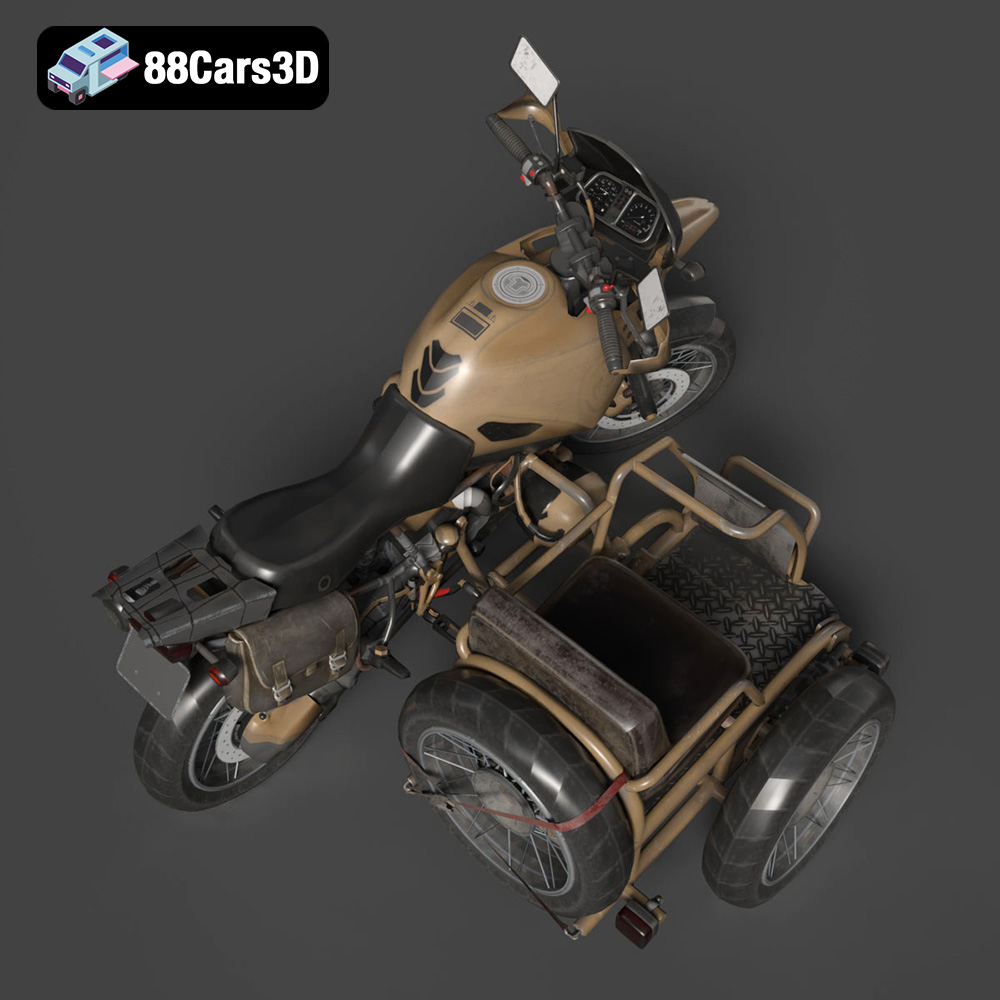
The Custom Off-Road BMW R1150GS Adventure Sidecar represents the pinnacle of overland exploration and rugged dual-sport capability. Renowned for its iconic boxer twin engine and indestructible shaft drive, this customized adventure rig integrates a heavy-duty passenger sidecar, transforming it into an ultimate all-terrain expedition vehicle. Key visual elements include the massive dual-sport fuel tank, aggressive knobby tires, robust crash bars, and the distinctive asymmetric headlights that define the GS lineage.
This premium 3D model is meticulously crafted to deliver exceptional visual fidelity while maintaining optimal performance. With a well-balanced topology and game-ready optimization, it ensures high-quality real-time rendering without sacrificing frame rates. The model boasts carefully mapped textures, realistic material finishes, and accurately modeled mechanical components, making it an outstanding asset for game development, AR/VR applications, animation, and digital visualization.
Perfect for post-apocalyptic survival games, off-road racing simulators, overland expedition visualizations, and immersive VR garage environments.
.blend, .fbx, .obj, .glb, .stl, .ply, .unreal, .max
Tags:
bmw, r1150gs, adventure, sidecar, off-road, custom, motorcycle-3d-model, game-ready, low-poly, optimized, game-asset, rendering, vr-ar, blend, fbx, obj, glb, stl, ply, unreal, maxMercedes Benz CLS 500 3D Model 3D Printable STL
$19.99
.adventure
.blend
.bmw
.custom
.fbx
.glb
.max
.obj
.ply
.rendering
.sidecar
.stl
.unreal
game asset
game-ready
low-poly
motorcycle-3d-model
off-road
optimized
r1150gs
VR/AR