Get 20% OFF All Premium 3D & STL Models!

In the rapidly evolving world of digital content creation, the demand for high-quality 3D assets is insatiable. From photorealistic cinematic sequences to immersive game environments and cutting-edge architectural visualizations, precise and efficient 3D car models are absolutely crucial. These assets form the backbone of countless projects, demanding not only visual fidelity but also robust technical construction. Imagine bringing a piece of automotive history to life, perfectly replicated down to the finest detail. This is precisely what professional-grade assets, such as the impressive GAZ 21-001 3D Model, enable artists and developers to achieve.
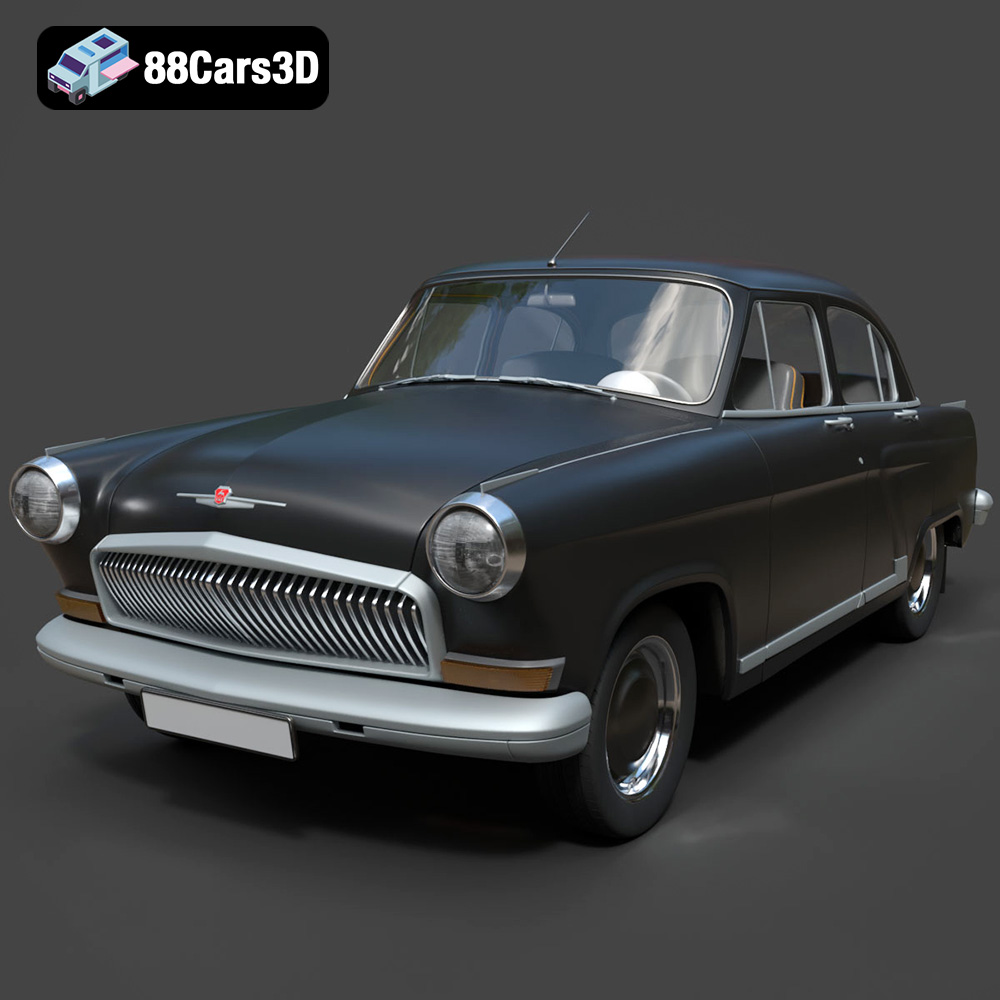
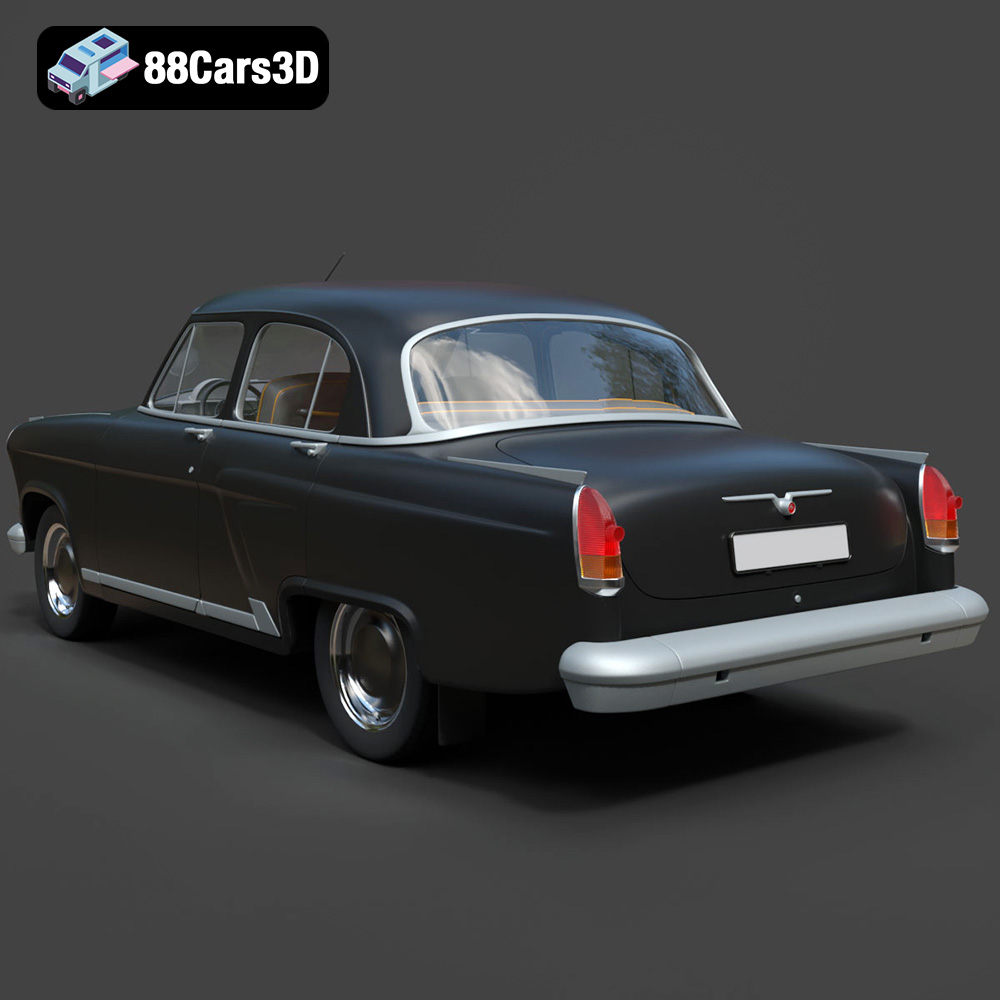
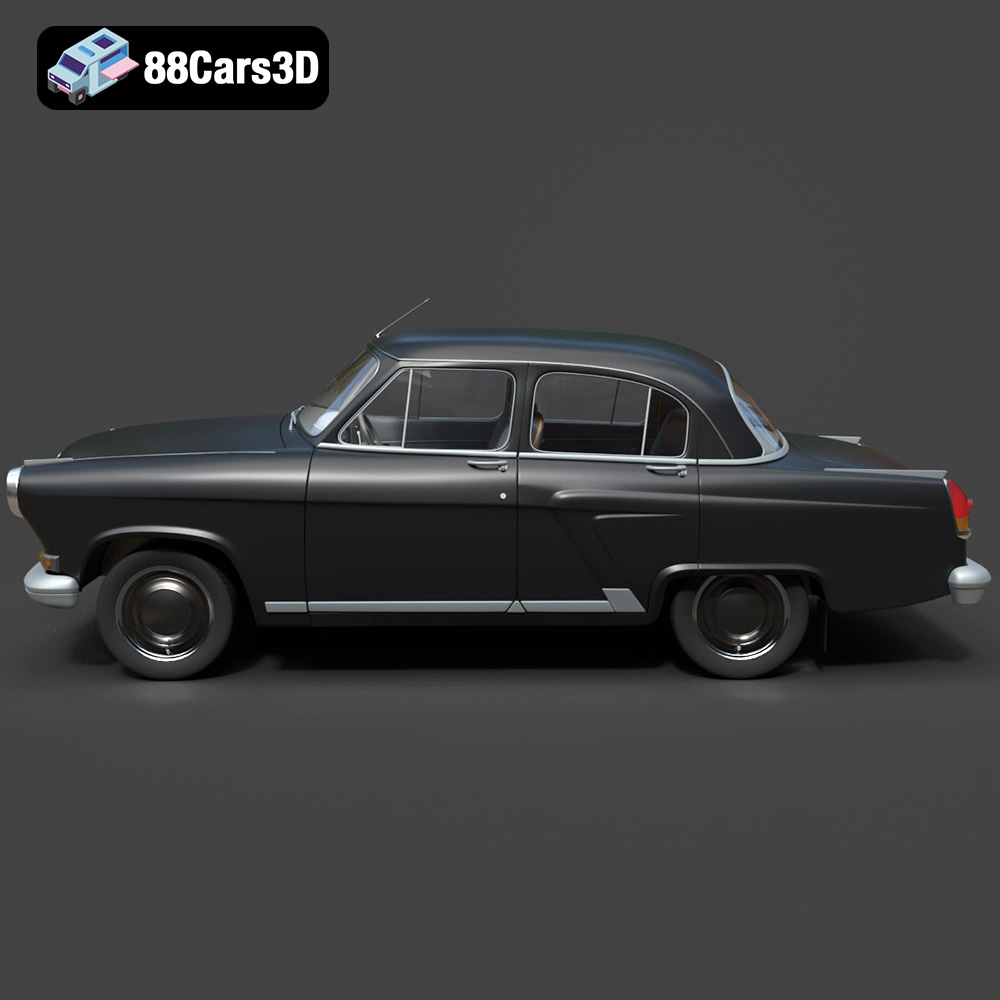
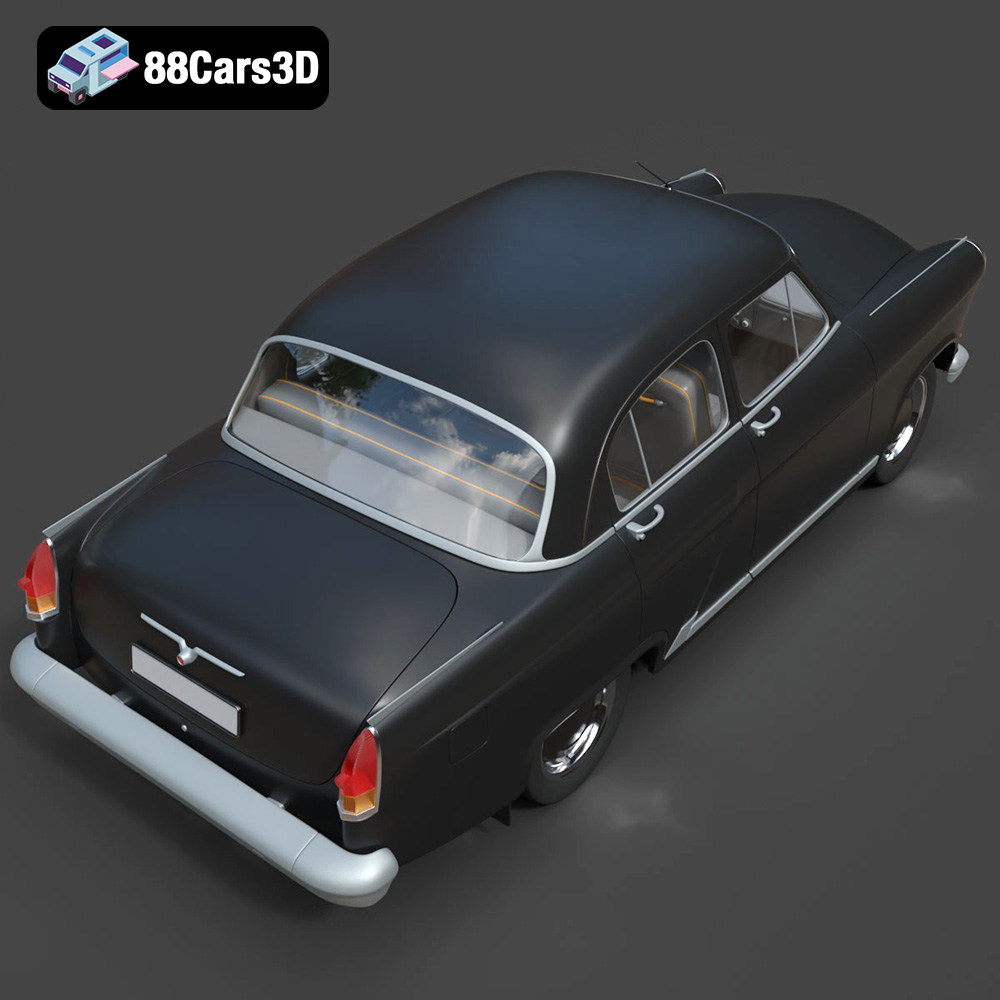
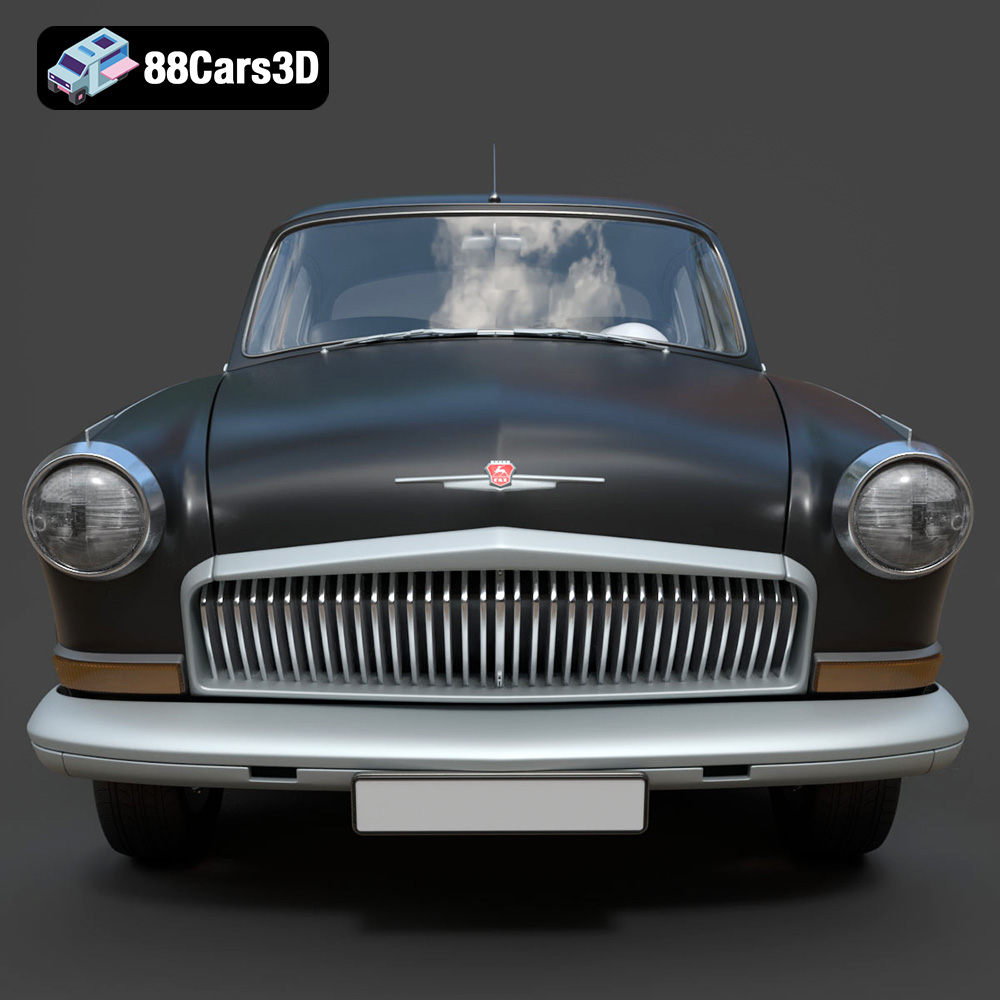
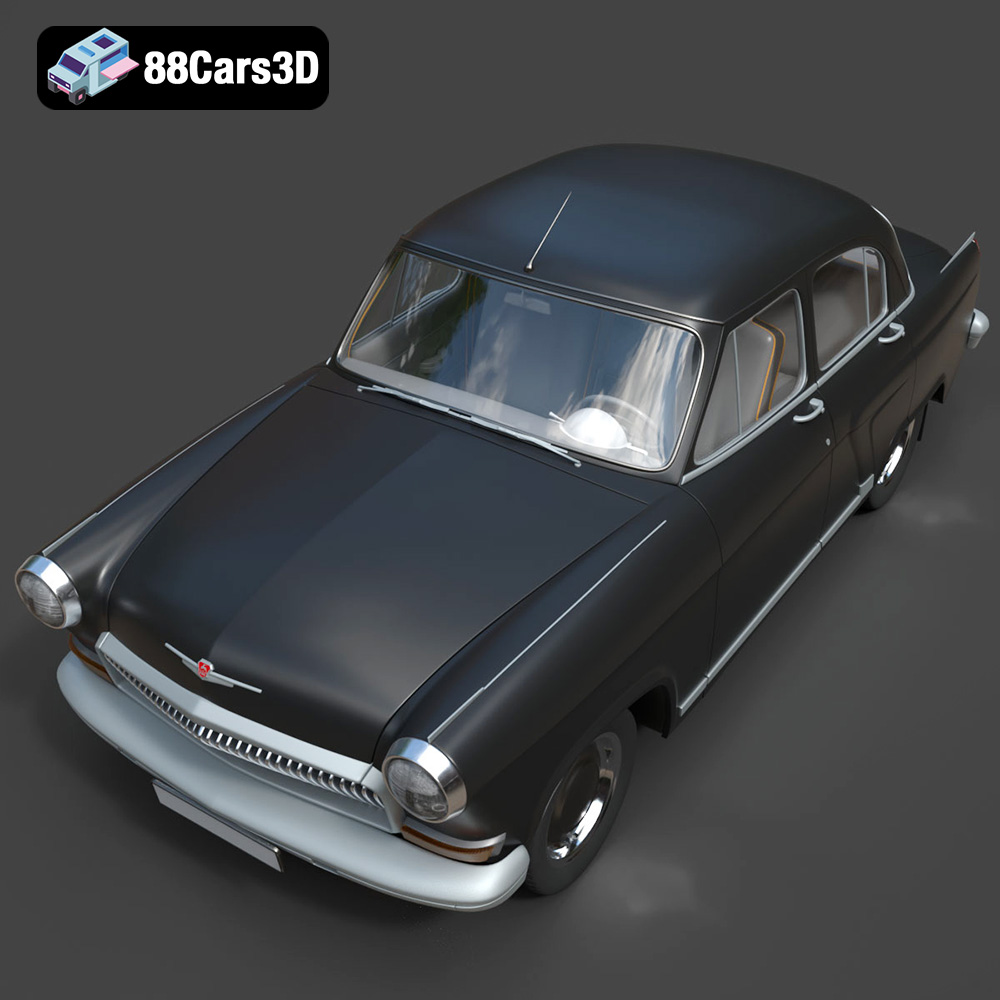
The GAZ 21-001 is more than just a classic car; it’s an icon, a symbol of a bygone era that continues to captivate enthusiasts. Recreating such a vehicle in three dimensions requires an understanding of intricate design, material behavior, and optimization for diverse applications. The GAZ 21-001 3D Model featured on 88cars3d.com exemplifies this dedication to precision. It’s not merely a static object but a versatile digital tool crafted with clean geometry, accurate proportions, and realistic materials, poised for seamless integration into virtually any professional workflow. This article will explore the technical nuances behind utilizing such sophisticated 3D car models, detailing their application across various industries and highlighting why a well-constructed asset like the GAZ 21-001 is an invaluable addition to any digital arsenal.
The true versatility of a high-quality 3D model, such as the GAZ 21-001, lies not only in its visual fidelity but also in the array of file formats it supports. Each format is designed with specific use cases in mind, offering unique advantages for different stages of a production pipeline, whether it’s for automotive rendering, game assets, or specialized applications. Understanding these formats is critical for optimizing workflows and ensuring maximum compatibility.
The .blend format is Blender’s native file type, encapsulating an entire scene, including mesh data, materials, textures, lighting, cameras, animations, and even physics simulations. For artists working primarily in Blender, receiving the GAZ 21-001 3D Model in .blend format means instant access to a fully editable scene. This allows for straightforward adjustments to materials, lighting setups, or even minor topological modifications without loss of fidelity. It’s ideal for those who wish to render the model within Blender’s Cycles or Eevee engines or to integrate it deeply into a Blender-centric project.
FBX (Filmbox) is a proprietary file format owned by Autodesk and is widely considered an industry standard for 3D data interchange between different software applications. Its strength lies in its ability to store a comprehensive range of 3D data, including geometry, materials, textures (though often referenced externally), animations, rigging, and even camera and light data. For game development, especially when targeting Unreal Engine or Unity, the .fbx version of the GAZ 21-001 is ideal due to its robust support for skeletal animation, LODs (Levels of Detail), and efficient mesh importing. It ensures that the model, its hierarchy, and its initial material assignments translate accurately across platforms.
The .obj (Wavefront Object) format is one of the oldest and most universally supported 3D file formats. It is primarily known for storing geometry data (vertices, normals, texture coordinates, and faces) and references to external material files (.mtl). While it doesn’t support advanced features like animation or rigging, its widespread compatibility makes it a safe choice for transferring basic mesh data between virtually any 3D software. The .obj version of the GAZ 21-001 would be perfect for scenarios where you need to import the core geometry into a less common application or as a fallback for maximum software compatibility, providing a clean base for further work.
GLB (GL Transmission Format Binary) is the binary version of glTF, an open-standard, royalty-free specification for the efficient transmission and loading of 3D scenes and models by applications. .glb files are self-contained, including all geometry, materials, textures, and animation data within a single file. This makes them highly optimized for web-based applications, augmented reality (AR), and virtual reality (VR) experiences, where file size and loading speed are paramount. The GAZ 21-001 in .glb format is perfect for embedding in websites, creating AR filters, or developing lightweight VR scenes, ensuring efficient performance and visual quality.
STL (STereoLithography) is the de facto standard file format for 3D printing. It represents a 3D model as a series of connected triangles (a tessellation) without any color or texture information. Crucially, for 3D printing, the mesh must be “manifold,” meaning it has no holes or non-watertight geometry. Providing the GAZ 21-001 in .stl format means it has been prepared and optimized for physical output, allowing designers to create physical prototypes or miniature replicas of this classic vehicle. This format emphasizes geometric accuracy and integrity for fabrication.
PLY (Polygon File Format, or Stanford Triangle Format) is another common file format for storing 3D data, particularly from 3D scanners. It can store a variety of properties including color, transparency, normals, texture coordinates, and even reliability information. While less common for general asset exchange than FBX or OBJ, .ply is excellent for precision mesh data, often used in CAD, scientific visualization, or scenarios requiring detailed geometric analysis. The GAZ 21-001 in .ply offers an incredibly detailed representation of its surface geometry, suitable for specific analytical or high-fidelity reproduction tasks.
The “.unreal” format isn’t a standalone file type in the traditional sense, but rather implies a model that has been specifically prepared and configured for direct import and optimal performance within Unreal Engine. This often means pre-set material instances, proper scaling, collision meshes, LODs already configured, and potentially even a basic blueprint setup for interaction. For game developers leveraging Unreal Engine, the GAZ 21-001 in this “engine-ready” state dramatically reduces setup time, allowing for immediate integration into real-time environments and accelerating the development of immersive game assets.
Similar to .blend for Blender, .max is the native file format for Autodesk 3ds Max. It stores the complete scene, including all models, hierarchies, materials, textures, lighting, cameras, and animation data specific to the 3ds Max environment. For artists and studios whose primary 3D package is 3ds Max, receiving the GAZ 21-001 in .max format ensures complete editability and access to the original scene setup. This is invaluable for high-end automotive rendering, animation, and integration into large-scale visualization projects that leverage 3ds Max’s powerful rendering capabilities with engines like V-Ray or Corona.
The availability of the GAZ 21-001 3D Model in such a comprehensive range of formats underscores its professional construction and the foresight of its creators. This multi-format support ensures that regardless of your preferred software or project requirements, you have a solid, adaptable asset at your fingertips from 88cars3d.com.
Automotive rendering is a specialized field that demands an exceptional level of detail and realism. Whether for marketing, design visualization, or cinematic sequences, the goal is to create images indistinguishable from photographs. The GAZ 21-001 3D Model, with its meticulous construction, provides an excellent foundation for achieving stunning results.
In a professional rendering pipeline, 3ds Max often serves as the primary hub, complemented by powerful renderers like V-Ray or Corona. The .max file for the GAZ 21-001 ensures that all scene data, including high-resolution textures and complex material shaders, are preserved and ready for immediate use. To achieve photorealism, artists focus on several key areas:
The GAZ 21-001 3D Model’s robust construction significantly streamlines this process, allowing artists to focus on artistic interpretation rather than fixing underlying model issues.
Blender has emerged as a powerhouse in 3D content creation, offering both the physically unbiased Cycles renderer for production-quality results and the real-time Eevee renderer for interactive visualization. The .blend file for the GAZ 21-001 provides a fully editable scene, ready for either engine.
The availability of the GAZ 21-001 in its native Blender format makes it highly adaptable for Blender users looking to produce high-quality automotive renders, whether they prioritize speed or ultimate fidelity.
Integrating 3D car models into game engines like Unreal Engine and Unity presents a unique set of challenges, primarily centered around performance and interactivity. Game assets must be visually appealing while maintaining a low computational footprint. The GAZ 21-001 3D Model is built with these considerations in mind.
For Unreal Engine, the .fbx and the specifically prepared “.unreal” formats of the GAZ 21-001 are indispensable. When importing, several steps are crucial for optimal performance and appearance:
The “engine-ready” Unreal version found on 88cars3d.com significantly reduces the technical overhead, allowing game developers to focus on gameplay and immersive experiences.
Effective game asset development relies on stringent performance optimization. The GAZ 21-001’s design inherently supports these optimizations:
Ultimately, a high-quality 3D car model like the GAZ 21-001 serves as a robust starting point, enabling game artists to implement these optimizations efficiently and produce visually stunning, performant game assets.
The utility of professional 3D car models extends far beyond traditional rendering and game development. Emerging technologies like Augmented Reality (AR), Virtual Reality (VR), and 3D printing are increasingly relying on precisely crafted digital assets, and the GAZ 21-001 3D Model is perfectly suited for these innovative applications.
AR and VR environments demand highly optimized, yet visually rich, 3D assets. The .glb format is tailor-made for these applications due to its efficiency and self-contained nature:
The optimized nature of the GAZ 21-001 for AR/VR means it can serve as a compelling interactive exhibit, an educational tool, or a core asset for immersive virtual showrooms.
The ability to transform a digital model into a physical object opens up new avenues for prototyping, scale modeling, and even manufacturing custom parts. The .stl and .ply formats of the GAZ 21-001 are crucial here.
The inclusion of these specialized formats underscores the comprehensive nature of the GAZ 21-001 3D Model, making it a truly versatile asset for both digital and physical applications.
The true measure of a professional 3D car model lies in its underlying technical construction. Beyond superficial aesthetics, factors like topology, UV mapping, and material fidelity dictate how flexible, performant, and realistic the asset will be across various applications. The GAZ 21-001 3D Model from 88cars3d.com excels in these critical technical aspects.
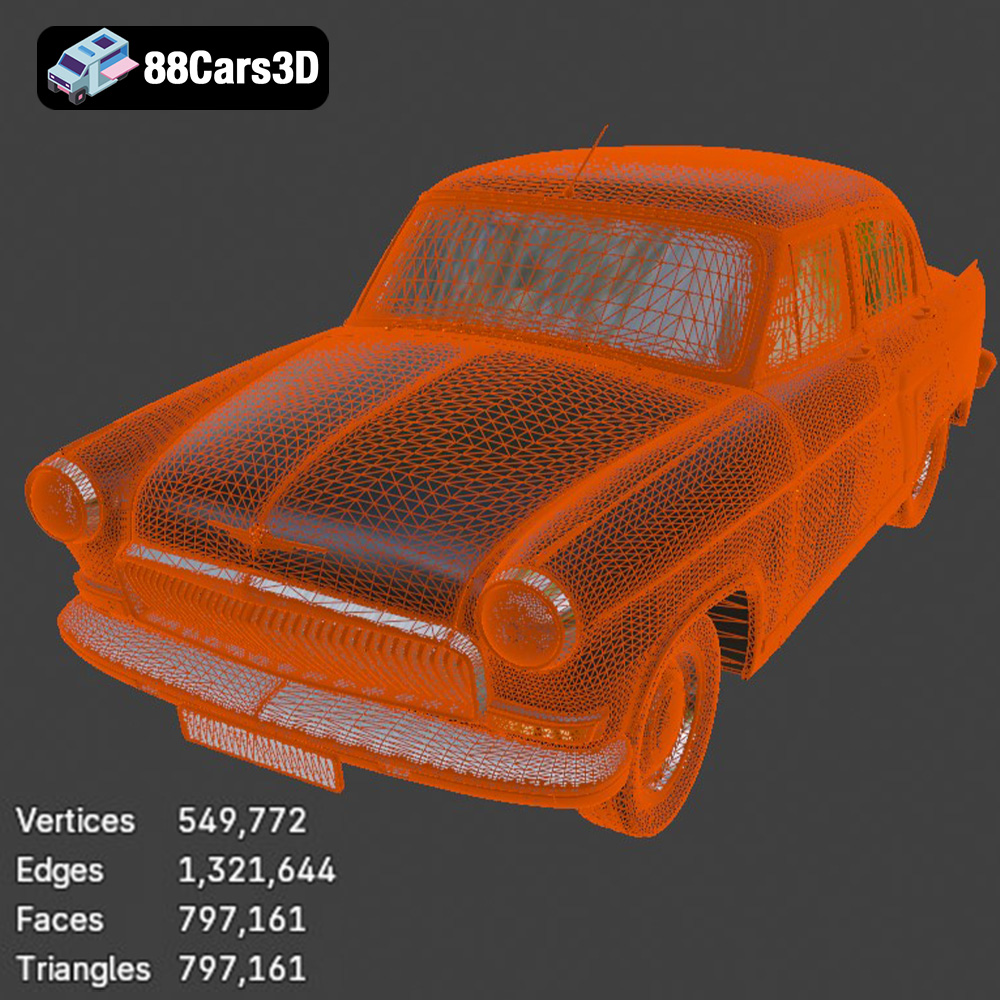
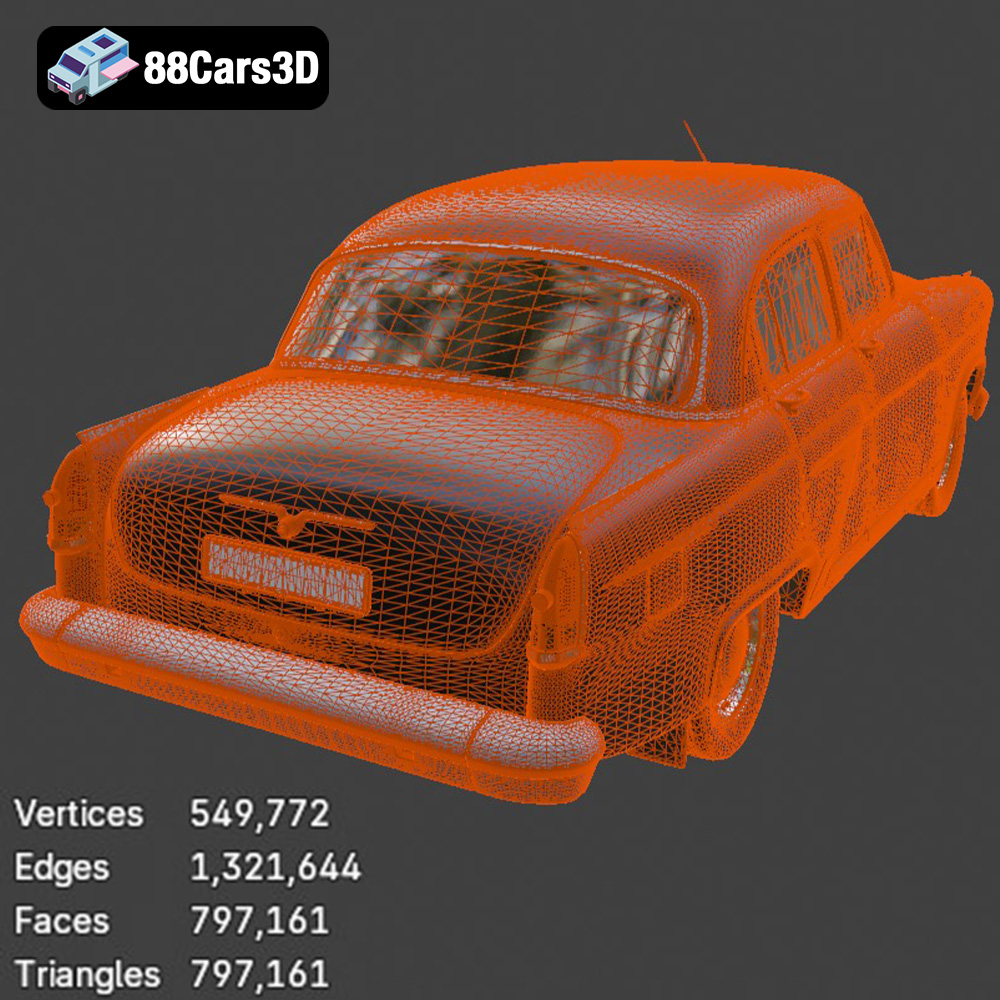
At the heart of any high-quality 3D model is its topology – the arrangement of vertices, edges, and faces that form the mesh. The GAZ 21-001 boasts clean geometry, which is a significant advantage:
This technical foundation means the GAZ 21-001 is not just visually appealing but also a joy to work with, offering flexibility for modifications, rigging, and seamless texturing.
The realism of any 3D model hinges on its materials. The GAZ 21-001 is described as having “realistic materials that accurately reflect light and environment,” which implies the use of a Physically Based Rendering (PBR) workflow.
This attention to technical detail ensures that the GAZ 21-001 3D Model stands as a premium asset, ready to elevate any professional project requiring an iconic classic vehicle.
In the dynamic landscape of 3D production, the foundation of any successful project is the quality of its assets. The GAZ 21-001 3D Model stands as a testament to meticulous craftsmanship and technical excellence, providing a powerful resource for professionals across various industries. From the intricacies of photorealistic automotive rendering in 3ds Max and Blender to the demanding performance requirements of game assets in Unreal Engine, and the innovative frontiers of AR/VR and 3D printing, this model proves its worth through robust construction and versatile file format support.
Its clean geometry, professional UV mapping, and accurate PBR materials ensure that whether you’re creating a stunning cinematic sequence, building an immersive game world, or prototyping a physical replica, the GAZ 21-001 delivers unparalleled fidelity and ease of integration. The comprehensive range of formats, including .blend, .fbx, .obj, .glb, .stl, .ply, .unreal, and .max, guarantees compatibility with virtually any professional pipeline, making it an incredibly flexible investment. For designers, artists, and developers seeking premium 3D car models that blend historical accuracy with modern technical standards, the GAZ 21-001 3D Model from 88cars3d.com is an exceptional choice, ready to accelerate your creative vision.
Experience precision and realism with the GAZ 21-001 3D Model. This meticulously modeled digital asset delivers an accurate representation of the iconic classic vehicle, offering realistic materials, accurate proportions, and professional detailing suitable for a wide variety of digital projects. Key features include clean geometry for optimal performance, realistic materials that accurately reflect light and environment, and professional construction that ensures seamless integration into any scene. The model’s topology is carefully planned, making it ideal for close-up shots as well as dynamic background placement. Perfect for diverse applications, this model excels in game development, architectural rendering, AR/VR experiences, film production, and visual simulations. Whether you are building an interactive environment or producing realistic still visualizations, this asset provides the necessary fidelity and ease of use.
$19.99
.21001
.arvr
.blend
.car3dmodel
.classiccar
.fbx
.gameasset
.gaz
.glb
.max
.obj
.ply
.rendering
.sedan
.simulation
.stl
.unreal
.vintagecar