Get 20% OFF All Premium 3D & STL Models!

In the dynamic worlds of game development, cinematic rendering, virtual reality, and product visualization, the quality of 3D assets is paramount. A meticulously crafted 3D model can elevate a project from ordinary to extraordinary, providing the foundational realism and detail that professional productions demand. We’re not just talking about any digital vehicle; we’re exploring the impact of truly authentic 3D car models that stand up to the closest scrutiny, whether in a high-fidelity render or a real-time game engine.
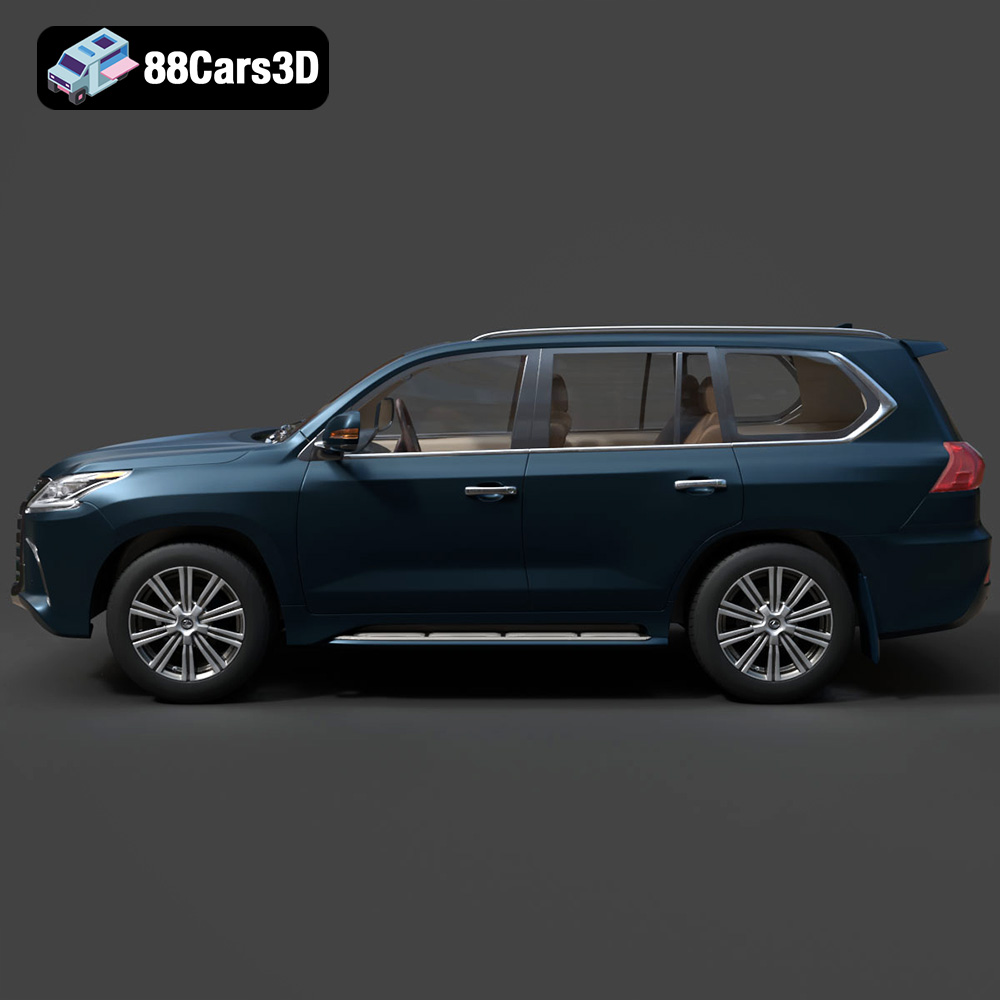
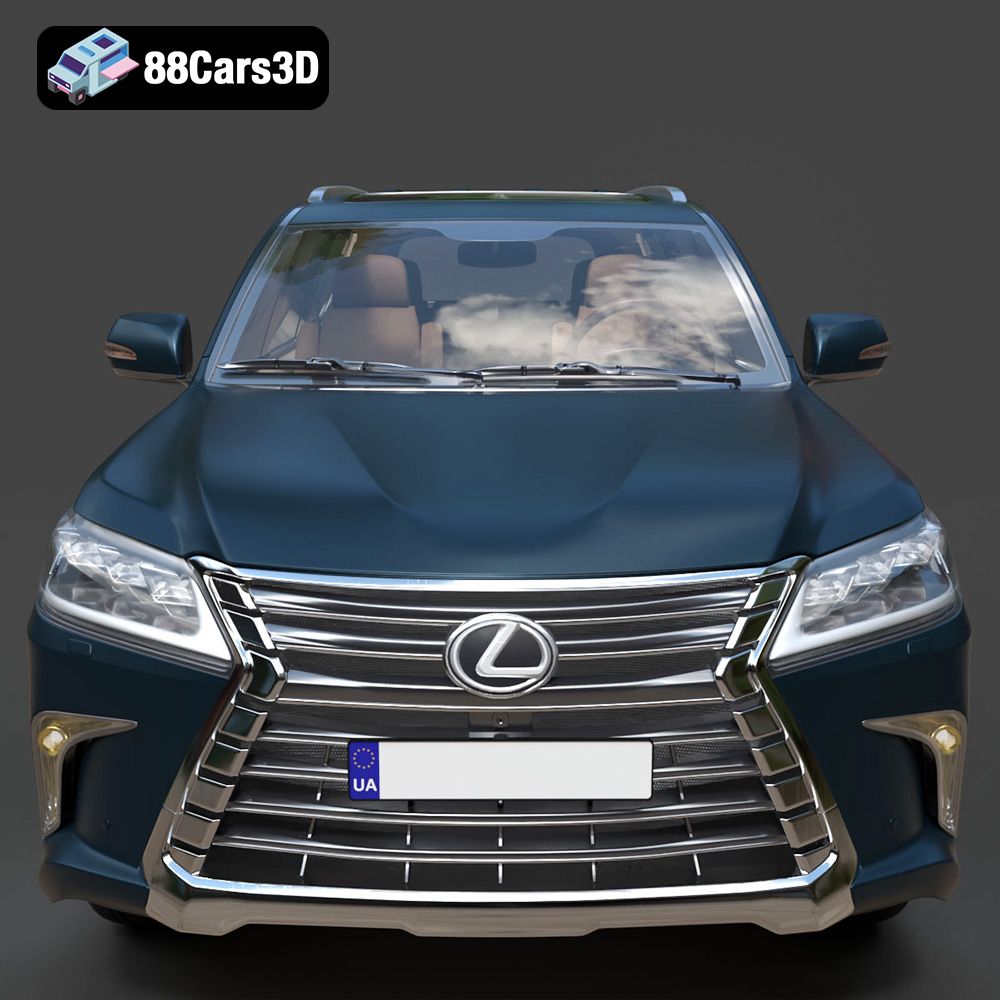
Today, we’re taking a deep dive into an exemplary asset that embodies this pursuit of perfection: the Lexus LX Mk3f J200 2016 3D Model. This specific model is a prime example of how luxury, capability, and technical precision can be captured digitally, offering creators a powerful tool for a multitude of applications. Available on 88cars3d.com, this asset encapsulates the iconic third facelift of the acclaimed J200 generation, bringing its bold spindle grille, sharp L-shaped LED lighting signatures, and robust, imposing stance to life with stunning accuracy. Its comprehensive design and optimization make it a versatile asset for any designer or developer looking to integrate a high-end luxury SUV into their project.
Creating a high-quality 3D car model is a complex blend of artistic skill and technical engineering. It requires an understanding of automotive design, topology optimization, material science, and rendering techniques. The Lexus LX Mk3f J200 2016 3D Model is a testament to this intricate process, offering a digital replica that is both visually stunning and functionally optimized.
Authenticity starts with accurate proportions and precise geometry. For the Lexus LX J200, this means replicating every curve, panel line, and design element of the real-world vehicle. The model features accurate Lexus LX Mk3f J200 frame geometry and proportions, ensuring that its digital counterpart carries the same imposing presence as the physical SUV. Details extend to the distinctive dual exhaust outlets and a meticulously detailed undercarriage, elements often overlooked but crucial for realism in close-up shots or interactive environments. The signature L-shaped LED headlights, daytime running lights, and taillights are not merely textures but are geometrically represented and ready for advanced lighting setups, capturing the vehicle’s unique visual signature.
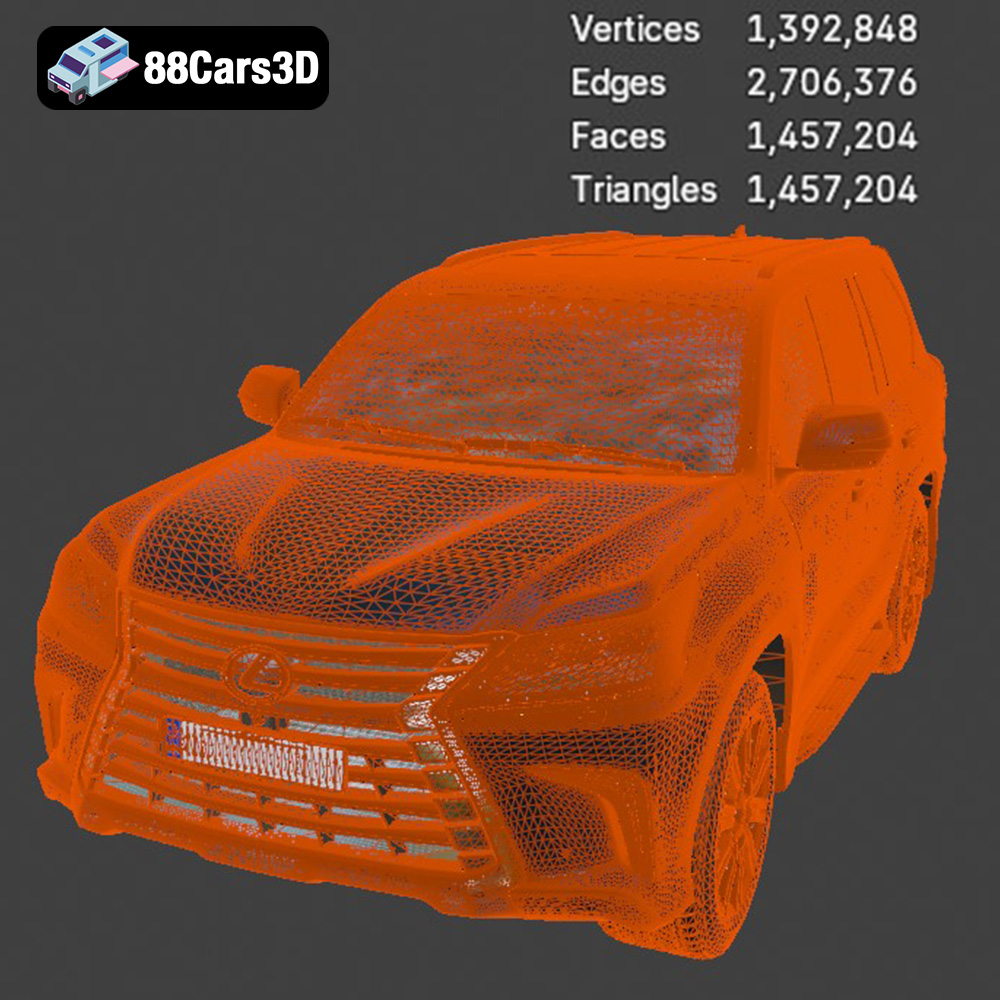
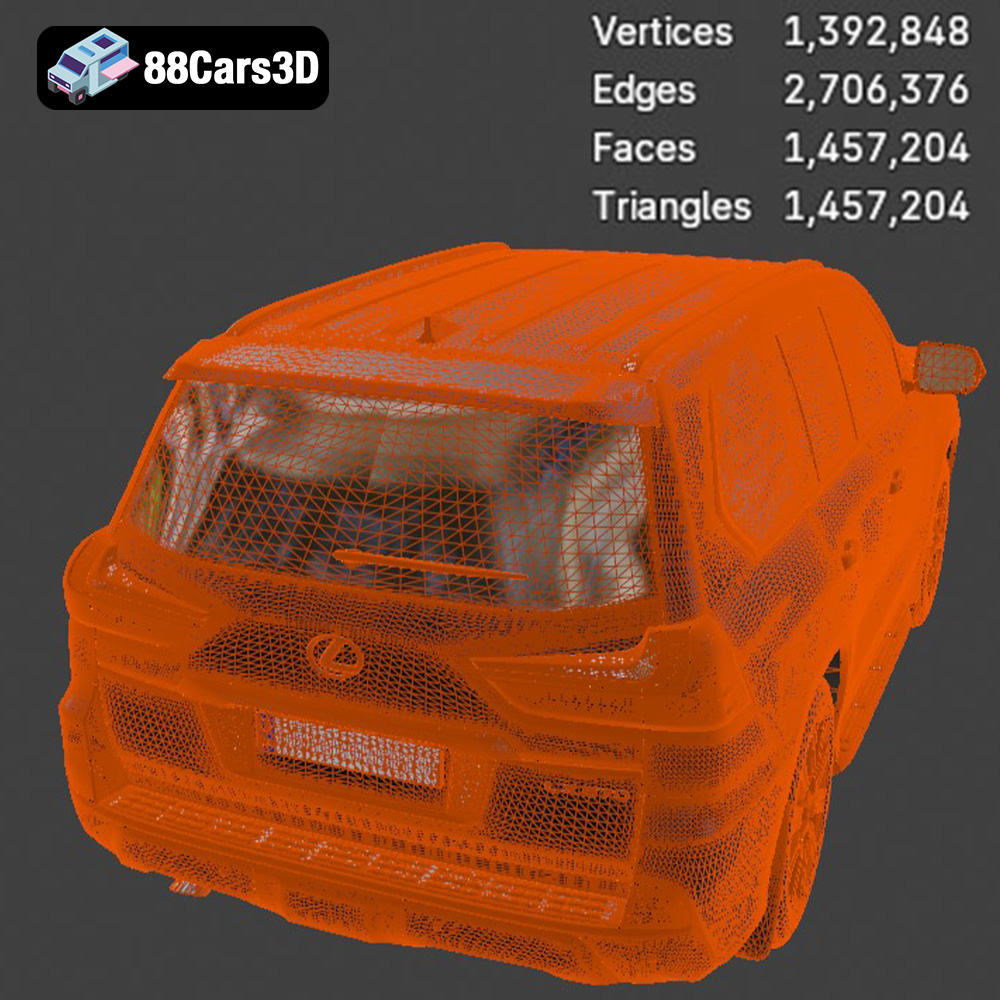
One of the most significant challenges in 3D car modeling, especially for game development and real-time applications, is striking the perfect balance between visual fidelity and performance. The Lexus LX Mk3f J200 2016 3D Model achieves this by maintaining a game-ready optimization with approximately 500k triangles. This triangle count is carefully chosen to provide high-end visual realism without overburdening real-time engines like Unreal or Unity. It ensures crisp exterior paneling, smooth curves, and high-quality topology that performs efficiently while still looking superb.
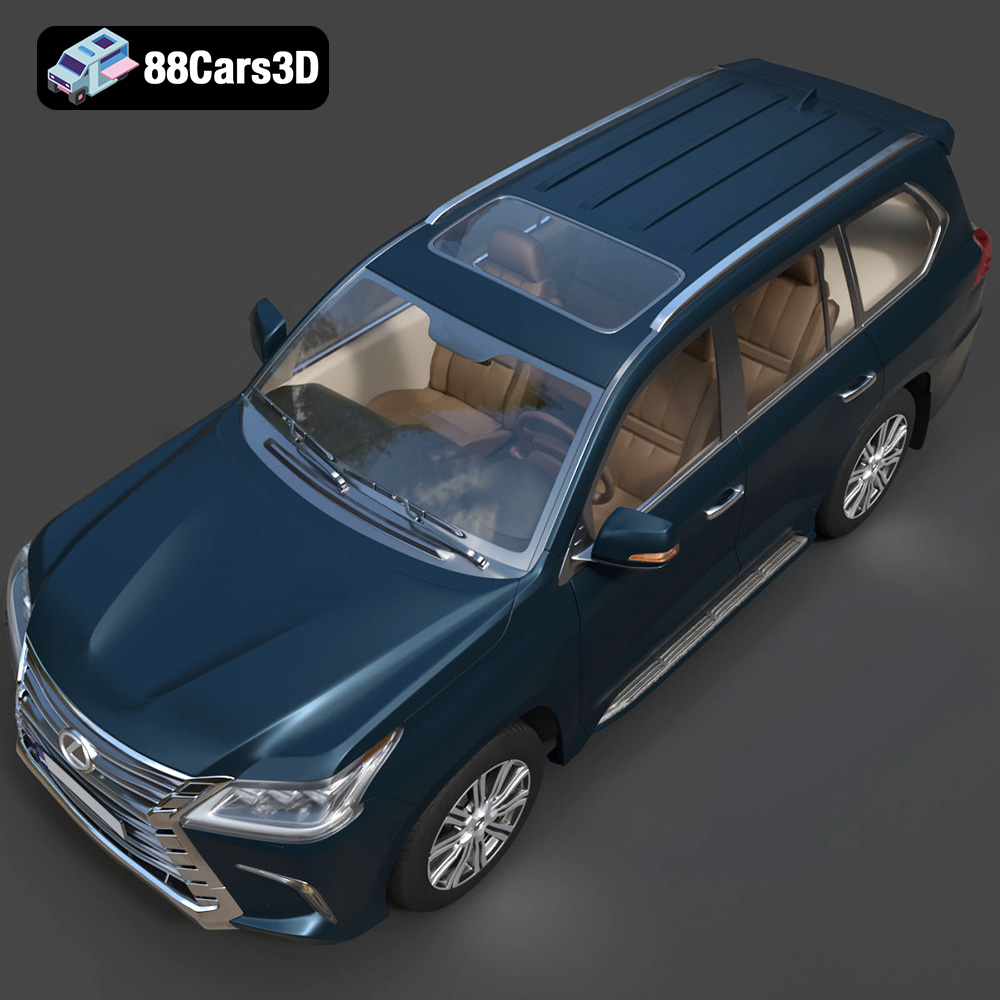
A truly comprehensive 3D car model doesn’t stop at the exterior. The interior, or cockpit, is often a focal point for simulations, AR/VR experiences, and first-person game perspectives. This model boasts premium quilted leather seating and luxury trim details, an accurate multi-function steering wheel with wood-grain accents, and a detailed analog and digital instrument cluster. The center console layout, including the infotainment screen, shift lever, and off-road controls, is faithfully recreated. Furthermore, the detailed suspension components reflect the robust body-on-frame architecture, and separate wheels, suspension, and steering components are set up for realistic animation, adding another layer of authenticity and versatility for various professional workflows.
The choice of file format for a 3D model is crucial, determining its compatibility, feature retention, and suitability for specific applications. The Lexus LX Mk3f J200 2016 3D Model is provided in a wide array of formats, ensuring maximum flexibility across diverse professional pipelines. Understanding these formats is key to leveraging the full potential of such high-quality 3D car models.
The .blend format is Blender’s native file type. It’s incredibly powerful because it stores an entire Blender scene, including all mesh data, materials, textures, lighting, camera setups, animations, physics simulations, and even scripts. For users working primarily within Blender, this format offers the most flexibility. You can open the .blend file and have immediate access to the original project, allowing for extensive customization, re-rigging, re-texturing, or integrating the Lexus LX J200 directly into an existing Blender scene with all its materials intact. It’s ideal for artists who want to delve deep into the model’s construction or extend its functionality within the Blender ecosystem.
.fbx (Filmbox) is an industry-standard 3D asset exchange format developed by Autodesk. It’s revered for its ability to store not just geometry and materials but also skeletal animations, blend shapes, and camera data. This makes it an ideal choice for importing models into game engines like Unreal Engine and Unity, as well as other 3D applications such as 3ds Max, Maya, or Cinema 4D. The .fbx format is designed for efficiency in real-time pipelines, ensuring that the Lexus LX Mk3f J200 model’s approximately 500k triangles and optimized UVs transfer seamlessly, maintaining visual fidelity and performance characteristics. It’s the go-to format for cross-software compatibility in animation and game development.
The .obj (Wavefront OBJ) format is one of the oldest and most universally supported 3D file formats. It’s a simple, text-based format primarily used to store 3D geometry (vertices, normals, texture coordinates, and faces). While it doesn’t typically store animation or rigging data, it’s excellent for static mesh exchange between virtually any 3D software. When you need to ensure basic geometry and UV mapping are preserved across different applications, .obj is a reliable choice. It’s often accompanied by an .mtl (Material Template Library) file, which defines basic material properties and texture references, making it a robust option for artists who need broad compatibility and simple, clean geometry.
.glb (GL Transmission Format Binary) is an increasingly popular format, especially optimized for AR, VR, and browser-based 3D display. It’s the binary version of glTF, designed to be a compact, self-contained file that includes geometry, materials, textures, and animations. Its efficiency and ease of integration into web-based applications (using WebGL) and mobile AR/VR platforms make it perfect for virtual showrooms, online configurators, and immersive experiences featuring models like the Lexus LX Mk3f J200. The .glb format is streamlined for rapid loading and rendering, crucial for interactive and real-time web environments.
.stl (Stereolithography) is the de facto standard for 3D printing. It represents a 3D model as a collection of unconnected triangular facets, making it ideal for defining the surface geometry of physical objects. While it doesn’t store color or texture information, its simplicity makes it universally compatible with 3D printing software (slicers). The Lexus LX Mk3f J200 3D Model, when converted to .stl, is ready for physical production, allowing hobbyists and professionals to print display-scale replicas. For even higher precision, .ply (Polygon File Format) can be used. It supports storing properties like color, transparency, and normals per vertex or face, making it suitable for scientific data or high-fidelity CAD outputs, although less common for general 3D printing than .stl. It’s often used for scanned data and maintains highly accurate mesh information.
The inclusion of .unreal implies an asset specifically structured and optimized for direct import into Unreal Engine projects, potentially with pre-configured materials, collision meshes, and LODs (Levels of Detail). This dramatically speeds up integration for game developers. Similarly, .max refers to the native 3ds Max project file. Like .blend for Blender, a .max file provides full access to the original project within 3ds Max, including all modifiers, lights, and animation setups. For users of 3ds Max, this means the highest level of editability and control over the Lexus LX Mk3f J200 model, ideal for professional animation, architectural visualization, and high-end rendering projects. These native formats ensure that the asset can be fully exploited by users of these specific industry-leading software packages, leveraging their unique features and workflows.
The true value of a versatile 3D asset like the Lexus LX Mk3f J200 2016 3D Model lies in its adaptability across various professional workflows. From conceptualization to final production, this model is designed to streamline integration and enhance visual output in several key industries.
For game developers, the Lexus LX J200 is specifically “game-ready & optimized” with its ~500k triangle count. In Unreal Engine or Unity, this model can be directly imported via the .fbx or .unreal formats. Developers can then apply engine-specific materials, set up physically based rendering (PBR) textures, and configure collision meshes. The properly set up pivots for steering, wheel rotation, and suspension travel are critical for implementing realistic vehicle physics and animation within the game engine. This allows for seamless integration into open-world games, racing titles, or even automotive simulators, where dynamic movement and interaction are essential. Its optimized geometry ensures smooth performance even in demanding scenes with multiple vehicles or complex environments.
Architectural visualization studios and advertising agencies often require the highest level of visual fidelity for still renders and animations. Here, the .max and .blend formats prove invaluable. In 3ds Max, artists can leverage V-Ray or Corona Renderer to achieve photorealistic results, adjusting lighting, reflections, and material properties to perfection. The Lexus LX J200’s detailed exterior and interior features, including quilted leather and wood-grain accents, truly shine under these renderers. Similarly, Blender users can utilize Cycles or Eevee to create stunning visualizations, exploiting the fully editable .blend file to tweak every aspect from camera angles to custom paint finishes. This flexibility makes it ideal for brand campaigns, lifestyle scenes, and creating convincing studio lighting setups that showcase the vehicle’s luxury.
The burgeoning fields of AR (Augmented Reality) and VR (Virtual Reality) demand optimized, high-quality models that can render smoothly on diverse hardware. The Lexus LX Mk3f J200 3D Model, particularly in its .glb format, is perfectly suited for these applications. Imagine an immersive virtual showroom where prospective buyers can walk around, inspect the vehicle’s interior, and even change colors in real-time. For mobile AR experiences, the optimized geometry ensures quick loading times and stable performance on smartphones and tablets, allowing users to place the luxury SUV in their real-world environment. Its real-world scale accuracy is also crucial for believable AR/VR applications, making the digital car feel truly present.
Behind the glossy renders and seamless game integration of high-quality 3D car models lies a foundation of precise technical specifications and meticulous optimization. These details dictate not just how good a model looks, but how efficiently it performs across different platforms and applications. The Lexus LX Mk3f J200 2016 3D Model excels in this arena, offering a robust set of features tailored for demanding production environments.
The “game-ready & optimized” tag is not just marketing jargon; it signifies a deliberate engineering choice. With approximately 500,000 triangles, the Lexus LX J200 model strikes a critical balance. For real-time engines like Unreal Engine and Unity, a model with excessively high polygon counts can cripple performance, leading to low frame rates and unresponsive experiences. Conversely, too few triangles can result in blocky, unrealistic visuals. A ~500k triangle count for a detailed vehicle model provides enough geometric detail to convey smooth curves, intricate panel lines, and the overall luxurious aesthetic of the Lexus LX, while remaining well within the performance budgets for modern games and interactive simulations. This optimization extends to efficient UV mapping, which ensures textures are applied accurately without stretching or wasted space, contributing to both visual quality and rendering speed.
Accuracy in scale is non-negotiable for realistic rendering, simulation, and AR/VR experiences. The Lexus LX J200 3D Model is built with real-world scale accuracy, based on the actual vehicle chassis. This means that when imported into a scene, it will have the correct dimensions, interacting believably with other real-world scaled assets. Furthermore, its articulation is meticulously set up: proper pivot points are defined for steering, wheel rotation, and suspension travel. This is crucial for animators and game developers who need to simulate realistic vehicle movement without complex manual rigging. The separate components for wheels, suspension, and steering allow for dynamic, independent motion, making the model highly versatile for cinematic sequences, driving simulations, and physics-based interactions.
High-quality topology is only half the battle; superior materials and textures complete the visual package. While specific texture resolutions aren’t detailed in the product description, the mention of “high-quality topology” and “incredible visual fidelity” implies well-defined UV maps ready for PBR (Physically Based Rendering) workflows. PBR materials, comprising albedo (color), metallic, roughness, normal, and ambient occlusion maps, are essential for achieving photorealistic surfaces. They accurately simulate how light interacts with different materials, from the reflective metallic paint of the exterior to the soft, diffuse properties of the premium quilted leather interior. The ability to customize body colors, tire textures, and material finishes (matte, gloss, metallic) further enhances its utility, allowing artists to adapt the model to specific brand palettes or environmental lighting conditions while maintaining a consistent level of realism.
The Lexus LX Mk3f J200 2016 3D Model isn’t just a collection of polygons; it’s a versatile digital asset designed to empower creators across numerous industries. Its meticulous detail and optimization open doors to a wide range of practical and innovative applications.
Consider the expansive landscapes of modern open-world games. Developers require a vast array of vehicles that are both visually appealing and performant. The Lexus LX J200, with its ~500k triangle optimization, is an ideal candidate for such environments. Its game-ready status means it can be dropped into an Unreal or Unity project with minimal tweaking, instantly adding a high-end luxury SUV to virtual cityscapes or rugged off-road terrains. For racing titles or detailed driving simulators, the accurate pivot setups for steering and suspension are indispensable, providing the foundational mechanics for realistic handling and physics. Players can experience the legendary 5.7-liter V8 engine’s spirit even in a virtual realm.
Architects and interior designers frequently need to populate their virtual scenes with realistic vehicles to convey scale, context, and lifestyle. The Lexus LX J200 fits perfectly into these visualization pipelines. Imagine a luxury villa render featuring the elegant SUV parked in the driveway, or a high-end shopping mall concept with the Lexus positioned prominently. Its detailed exterior and interior features contribute significantly to the overall realism of such scenes, enhancing client presentations and marketing materials. Similarly, for product visualization, placing a luxury item next to a recognizable vehicle like the Lexus LX can instantly elevate its perceived value and target audience.
The automotive industry is increasingly embracing digital solutions to showcase vehicles, especially with the rise of online sales and virtual experiences. The Lexus LX Mk3f J200 3D Model is tailor-made for virtual showrooms and online configurators. Using AR/VR technology or even just web-based 3D viewers (thanks to formats like .glb), potential customers can explore the vehicle in a highly interactive manner. They can rotate it 360 degrees, open doors to inspect the premium quilted leather seating, and even customize body colors and wheel designs in real-time. This interactive capability provides an engaging, personalized shopping experience that transcends static images or videos.
Beyond digital screens, the physical world also benefits from detailed 3D models. For automotive enthusiasts, model makers, or collectors, the ability to 3D print a scaled replica of their favorite vehicle is a significant draw. The Lexus LX J200 3D Model can be converted to .stl format, making it suitable for 3D printing. With recommended settings for layer height, wall thickness, and supports, hobbyists can bring this digital luxury SUV into tangible form. Resin printing is recommended for capturing the fine details, such as the intricate grille, distinct headlights, and authentic wheel design, allowing for a high-quality physical display model that can be post-processed and painted to match factory colors.
A truly professional 3D car model offers more than just stunning visuals out-of-the-box; it provides a robust foundation for extensive customization. The Lexus LX Mk3f J200 2016 3D Model is built with adaptability in mind, allowing artists and developers to tailor it to specific project requirements, branding, and creative visions. This flexibility is a key advantage, ensuring the asset remains valuable across diverse scenarios.
One of the most immediate and impactful customization options is changing the vehicle’s body color. The Lexus LX J200 model allows for easy modification of its primary color, enabling artists to replicate authentic factory finishes or experiment with custom hues and metallic effects. Beyond the paint, the underlying material properties can be adjusted. Users can switch between matte, gloss, or metallic finishes to achieve different aesthetic qualities, from a stealthy satin look to a vibrant, highly reflective surface. This also extends to interior elements, where the appearance of leather, wood grain, and various trim details can be fine-tuned to match specific luxury benchmarks or fictional designs. Furthermore, the model supports modifications to tire textures, allowing for a quick swap between aggressive off-road variants and sleek street-focused treads, instantly altering the vehicle’s character and intended use.
The appearance of any 3D model is profoundly influenced by its surrounding lighting and environment. A high-quality asset like the Lexus LX J200 is designed to react realistically to various lighting scenarios. Artists can adapt the lighting setup to portray different times of day (e.g., golden hour for a luxurious glow, stark midday sun for sharp reflections), weather conditions (rainy, foggy), or even entirely different fictional planets. Its detailed geometry and PBR-ready materials ensure that reflections, shadows, and ambient occlusion respond accurately to these environmental changes. This capability is crucial for automotive rendering, where presenting a vehicle in its best light, or specific contextual lighting, is often a core objective.
The Lexus LX Mk3f J200 model’s construction, with separate wheels, suspension, and steering components, provides a significant degree of modularity. This isn’t just for basic animation; it opens up possibilities for more dynamic and interactive scenes. For instance, in a game, these modular parts can be subject to individual damage models, allowing for realistic deformation or detachment in collisions. In a configurator, individual parts like wheels, brake calipers, or even external accessories could be swapped out by the user in real-time. This level of component separation reduces rework and facilitates complex interactive features, making the asset suitable for advanced simulations and user-driven experiences where the vehicle needs to be more than just a static prop.
The world of 3D modeling demands assets that are not only visually captivating but also technically robust and versatile. The Lexus LX Mk3f J200 2016 3D Model stands as a prime example of an asset that meets these high standards, offering a meticulously crafted digital replica of a luxury SUV ready for a diverse array of professional applications. From the intricate details of its exterior and interior to its game-ready optimization and comprehensive file format support, this model is built to excel in demanding production environments.
Whether you’re developing an immersive open-world game, crafting high-end automotive renders for an advertising campaign, designing an interactive AR/VR showroom, or even 3D printing a display-scale model, the Lexus LX J200 provides an exceptional foundation. Its balanced triangle count, real-world scale, precise articulation, and extensive customization options ensure it seamlessly integrates into your existing workflows in 3ds Max, Blender, Unreal Engine, and beyond. This is the caliber of 3D car models that truly empowers creativity and elevates project quality.
For artists and developers seeking top-tier 3D assets that blend luxury with technical precision, the Lexus LX Mk3f J200 2016 3D Model, along with many other high-quality selections, is available on 88cars3d.com. Invest in assets that are built to perform and inspire, and bring your automotive visions to life with unparalleled realism and efficiency.
Experience luxury and capability with the highly detailed Lexus LX Mk3f J200 2016 3D model. This game-ready and optimized asset captures the iconic third facelift of the J200 generation, featuring a bold spindle grille, L-shaped LED lighting, and a robust stance. With ~500k triangles, detailed interior, and accurate proportions, it’s perfect for game development, AR/VR, rendering, and 3D printing. Includes .blend, .fbx, .obj, .glb, .stl, .ply, .unreal, and .max formats for versatile integration.
$19.99
.2016
.blend
.fbx
.glb
.lexus
.luxury suv
.lx
.max
.obj
.ply
.rendering
.stl
.unreal
car-3d-model
game asset
game-ready
j200
low-poly
mk3f
optimized
SUV
VR/AR