Get 20% OFF All Premium 3D & STL Models!

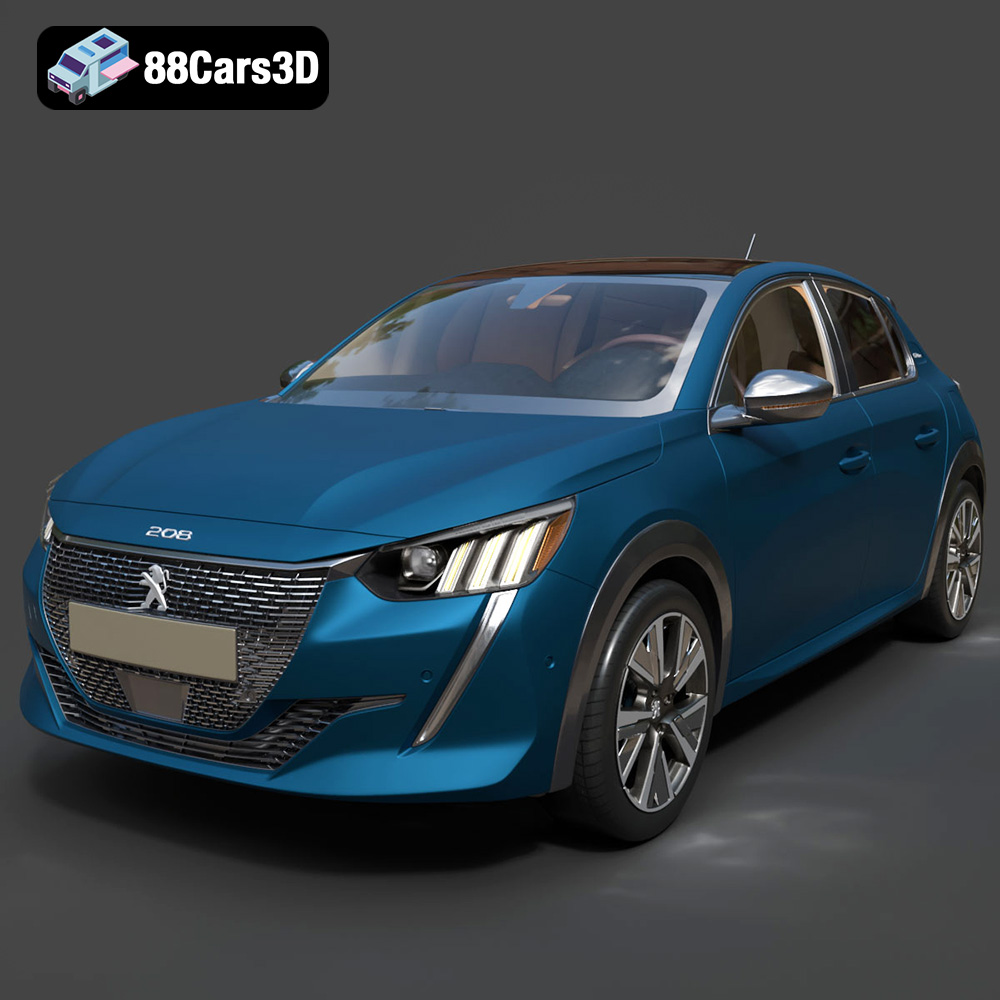
In today’s fast-paced digital landscape, the demand for realistic, high-fidelity 3D assets is paramount across various industries, from automotive design and game development to architectural visualization and immersive AR/VR experiences. A truly exceptional 3D model goes beyond mere visual representation; it embodies precision, optimized performance, and versatility, becoming a cornerstone for professional projects. Capturing the essence of modern automotive design, the 2020 Peugeot 208 redefined the compact hatchback segment with its bold, aggressive styling and sporty proportions. This vehicle, featuring striking ‘saber-tooth’ LED daytime running lights, a muscular sculpted hood, and an elegant gloss-black rear light cluster fascia, stands out in any urban setting, embodying contemporary European car design.
Professionals seeking to integrate such a distinctive vehicle into their projects require a 3D model that mirrors this real-world excellence. The meticulously crafted Peugeot 208 2020 3D model is a prime example of such an asset, boasting an optimized topology of approximately 120k triangles. This ensures flawless game-ready performance without compromising visual fidelity, making it ideal for high-end rendering and real-time engines. It delivers crisp reflections, accurate ambient occlusion, and an immaculate flow of polygons tailored for both performance and close-up cinematic shots. This article will delve into the technical intricacies and broad applications of such high-quality 3D car models, demonstrating how assets like the Peugeot 208 2020 3D model from 88cars3d.com empower creators and innovators.
Creating a truly photorealistic and performant 3D car model is a sophisticated blend of artistic skill and engineering precision. It involves meticulous attention to detail, from capturing the intricate curves of the bodywork to ensuring accurate scale and functional components. For automotive professionals, game developers, and visualization artists, the quality of a 3D model directly impacts the realism and credibility of their final output.
The success of a 3D car model often hinges on its ability to accurately replicate the unique identifiers of its real-world counterpart. In the case of the 2020 Peugeot 208, these include its signature ‘fang’ LED DRLs, the prominent Peugeot lion emblem on the grille, and the distinctive 3-claw taillight integration. A high-quality model will feature these elements with anatomical correctness, ensuring that the vehicle is instantly recognizable and visually appealing.
While visual fidelity is critical, a model’s underlying technical structure – its topology – determines its performance, especially in real-time applications. An optimized model finds the perfect balance between detail and polygon count. The Peugeot 208 2020 3D model, with its approximately 120k triangle count, exemplifies this balance. This ‘game-ready’ optimization ensures smooth performance in engines like Unreal and Unity without sacrificing the visual realism required for high-end rendering.
Real-world scale accuracy, based on actual vehicle chassis dimensions, is another non-negotiable technical specification. This ensures that the model integrates seamlessly into architectural visualizations, city scenes, or simulations without appearing disproportionate. Furthermore, proper pivot setup for steering, wheel rotation, and suspension travel is essential for realistic animation, a critical feature for any dynamic application.
The world of 3D modeling relies heavily on a diverse array of file formats, each designed with specific purposes, compatibilities, and technical characteristics. Choosing the correct format is crucial for workflow efficiency, data integrity, and achieving desired outcomes, whether for high-fidelity rendering, real-time game development, or 3D printing. The Peugeot 208 2020 3D model offers a comprehensive suite of formats, catering to virtually any professional need.
For artists and studios working within specific software ecosystems, native file formats offer the most flexibility and preserve the greatest amount of data. However, universal formats are indispensable for sharing assets across different platforms.
For interactive applications like video games, AR/VR, and real-time visualization, formats optimized for performance and asset pipelines are critical.
Beyond visual media, 3D models serve critical functions in manufacturing and engineering analysis.
Understanding these file formats allows users to make informed decisions, ensuring the Peugeot 208 2020 3D model is utilized to its fullest potential across all intended applications.
The true value of a versatile 3D asset lies in its seamless integration into diverse professional pipelines. Whether you’re a seasoned 3D artist, an indie game developer, or an architectural visualizer, the Peugeot 208 2020 3D model is engineered to enhance your workflow.
For cinematic visuals and advertising campaigns, rendering a car model requires meticulous setup to achieve photorealism. Software like 3ds Max and Blender, paired with powerful renderers such as V-Ray, Corona, or Cycles, are the tools of choice.
Game development and interactive experiences demand models that are not only visually appealing but also highly performant in real-time engines. Unreal Engine is a dominant force in this arena.
The versatility of a high-quality 3D car model like the Peugeot 208 2020 transcends single-use cases, finding valuable applications across a multitude of industries.
For game developers, the Peugeot 208 2020 3D model is a treasure trove. Its game-ready optimization means it can be directly dropped into virtual environments without extensive rework. Whether it’s populating a bustling city street in an open-world RPG, serving as a playable vehicle in a racing simulator, or being featured in a casual driving game, its balanced polycount ensures both visual fidelity and smooth performance. The detailed interior, with its ergonomic i-Cockpit layout and digital 3D instrument cluster, is perfect for first-person perspectives, enhancing player immersion. Its real-world scale and proper pivot setup are crucial for accurate physics simulations, providing a believable driving experience.
Architects and urban planners frequently use 3D car models to breathe life into their renderings and immersive presentations. Placing the Peugeot 208 3D model in an architectural visualization street scene immediately grounds the environment in realism, providing scale and context. For virtual showrooms or configurators, the model’s high detail and customization options (like changing body colors or material finishes) make it an ideal candidate for AR/VR applications. Imagine walking around a virtual Peugeot 208, opening doors, and changing its color in real-time through an AR app – the .glb format is especially suited for this, offering optimized performance for mobile and web-based AR experiences.
Marketing and advertising agencies leverage 3D models for stunning brand campaigns and product showcases, eliminating the need for expensive physical photography. The Peugeot 208 3D model is excellent for creating lifestyle scenes, studio lighting setups, and promotional videos. Its crisp reflections and accurate ambient occlusion ensure that it looks fantastic under any lighting condition, from a sun-drenched coastal drive to a dramatic studio shot. This level of detail and control allows brands to present their products in the most compelling way possible, creating visually rich content that resonates with audiences.
Beyond its core applications, the Peugeot 208 2020 3D model offers flexibility for customization and even transformation into a physical object.
One of the significant advantages of a well-structured 3D model is its inherent customizability. Artists and designers can easily change the body colors of the Peugeot 208 to match various brand palettes or client specifications. Modifying tire textures to represent summer versus all-season variants can add another layer of realism depending on the scene’s context. Adjusting material finishes—from a sleek gloss to a sporty matte or a luxurious metallic—can dramatically alter the car’s perceived character. Furthermore, adapting the model’s lighting and environment allows it to seamlessly fit into any scene, from a gritty urban backdrop to a pristine showroom, ensuring the Peugeot 208 3D model is always perfectly presented.
For enthusiasts, designers, or anyone requiring a physical prototype, the Peugeot 208 2020 3D model is convertible to the .stl format, making it suitable for 3D printing. This opens up opportunities for display-scale hobbyists to bring the digital model into the physical world. However, 3D printing requires specific considerations:
The digital realm thrives on detail, accuracy, and efficiency, making high-quality 3D car models indispensable tools for modern creative and technical endeavors. The Peugeot 208 2020 3D model stands as a testament to this, offering an expertly crafted asset that bridges the gap between stunning visual fidelity and optimized performance. From its meticulously recreated ‘saber-tooth’ LED DRLs and ergonomic i-Cockpit to its game-ready topology and broad file format compatibility, this model empowers professionals across game development, automotive rendering, AR/VR, and 3D printing.
Whether you’re developing the next big racing title, visualizing an architectural marvel, or creating a virtual showroom, the versatility and technical excellence of this Peugeot 208 3D model from 88cars3d.com significantly streamline workflows and elevate the final product. Investing in such a comprehensive and adaptable 3D asset ensures that your projects not only meet but exceed contemporary industry standards, driving innovation and delivering immersive experiences for your audience.
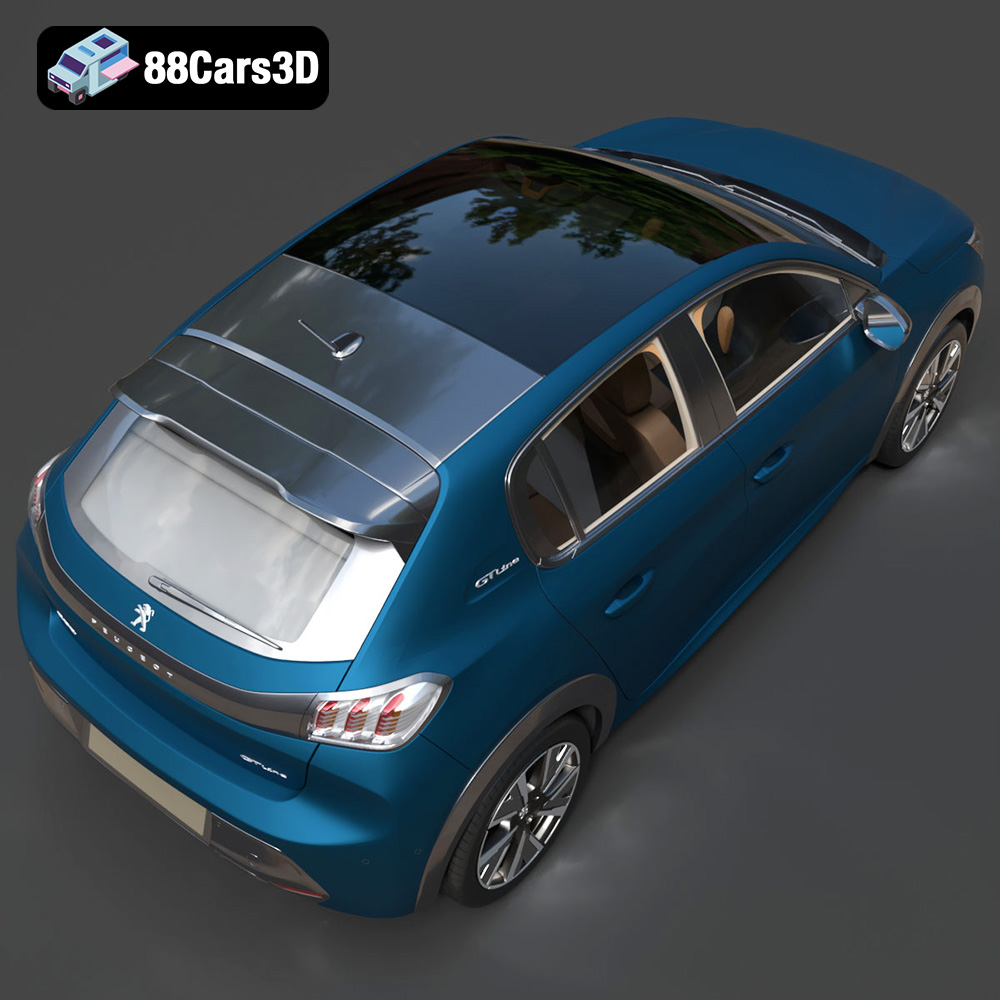
The 2020 Peugeot 208 redefined the modern compact hatchback segment with its bold, aggressive styling and sporty proportions. Featuring the striking ‘saber-tooth’ LED daytime running lights, a muscular sculpted hood, and an elegant gloss-black rear light cluster fascia, this vehicle stands out in any urban setting. Its dynamic stance and streamlined profile perfectly capture the essence of contemporary European car design. This meticulously crafted 3D model boasts an optimized topology of approximately 120k triangles, ensuring flawless game-ready performance without compromising visual fidelity. Designed for high-end rendering and real-time engines, it delivers crisp reflections, accurate ambient occlusion, and an immaculate flow of polygons tailored for both performance and close-up cinematic shots. Perfect for modern city driving games, architectural visualization street scenes, VR automotive showrooms, and commercial lifestyle rendering.
$19.99
.2020
.208
.blend
.fbx
.glb
.hatchback
.max
.obj
.peugeot
.ply
.rendering
.stl
.unreal
car-3d-model
city-car
compact-car
game asset
game-ready
low-poly
optimized
VR/AR