Get 20% OFF All Premium 3D & STL Models!

In the realm of 3D modeling, capturing the essence of an iconic vehicle goes far beyond simply replicating its shape. It involves a deep understanding of design, engineering, and the subtle nuances that give a machine its character. For automotive enthusiasts and digital artists alike, the allure of classic vehicles, whether cars or motorcycles, often lies in their timeless design and the stories they evoke. Bringing these legends into the digital space opens up a world of possibilities, from breathtaking cinematic renders to immersive virtual experiences and even physical prototypes.
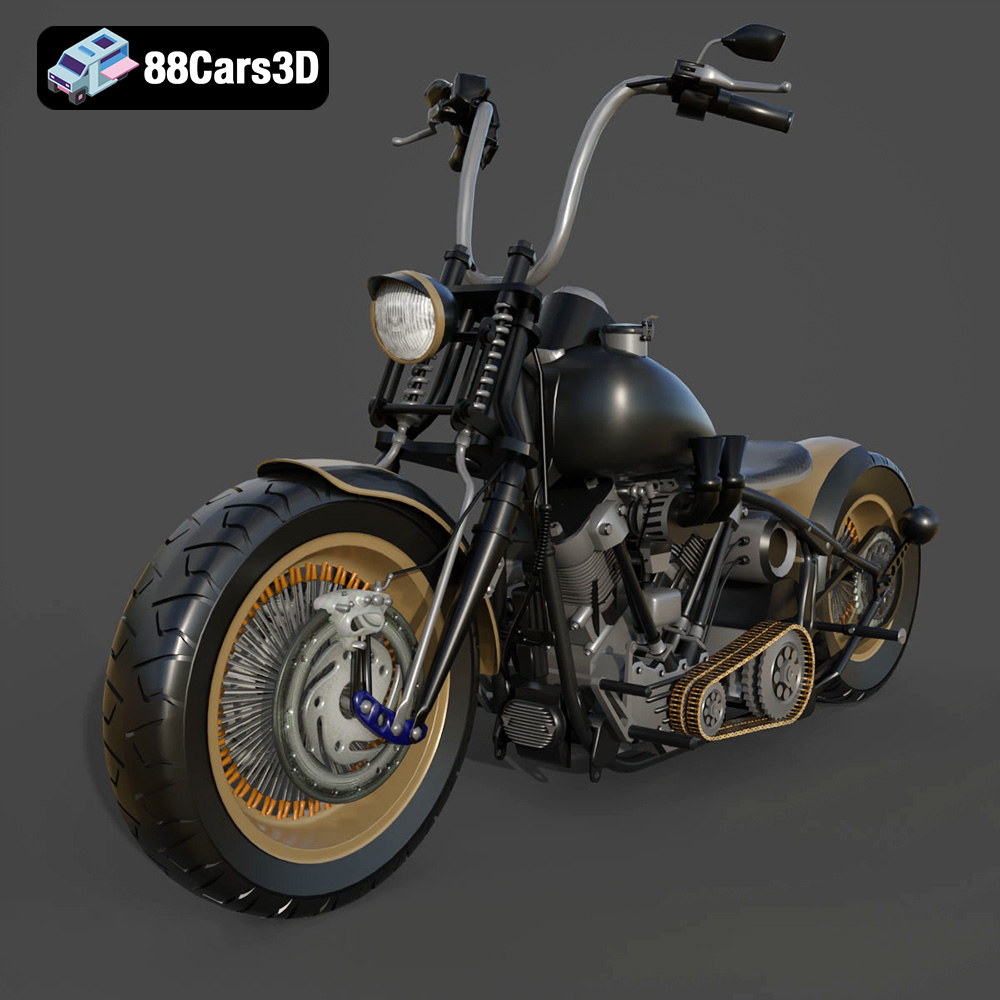
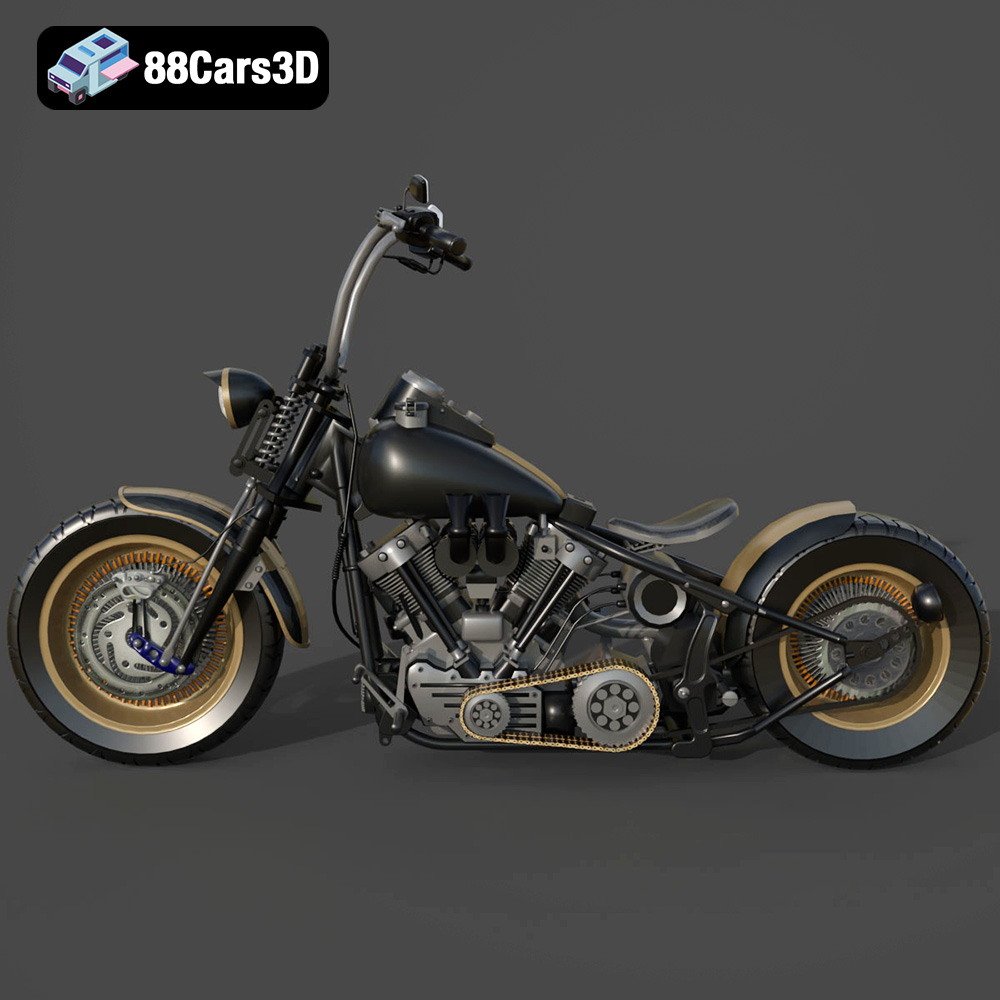
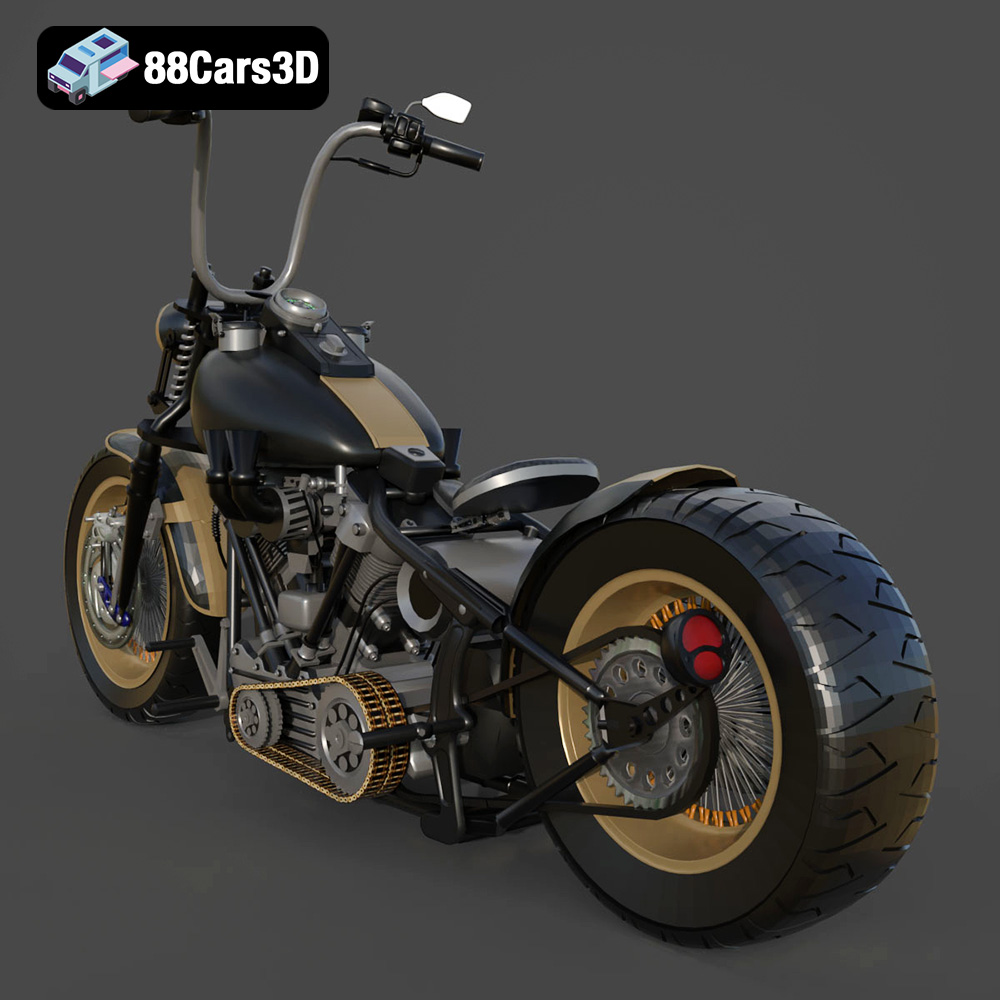
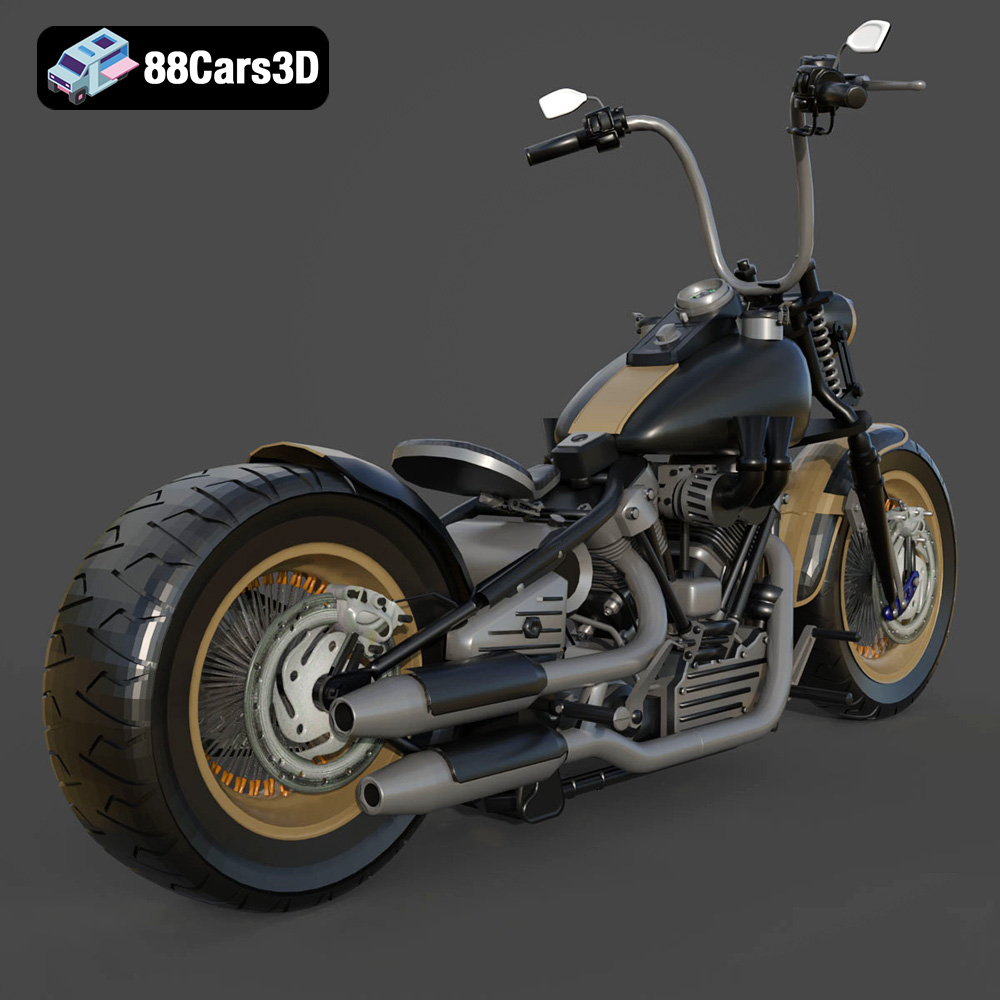
Today, we delve into the meticulous craft required to immortalize such a legend, focusing on a truly remarkable asset: the Harley Davidson Knucklehead 3D model available on 88cars3d.com. This isn’t just a generic motorcycle model; it’s a testament to professional-grade precision, designed to capture the legendary engine, sweeping lines, and mechanical intricacies that define this vintage masterpiece. Whether you’re a game developer seeking authentic game assets, a visualization artist aiming for hyper-realism in automotive rendering, or an AR/VR creator building immersive worlds, understanding the technical depth behind such a model is crucial for leveraging its full potential.
The versatility of a 3D model is often defined by the file formats it supports. Each format is engineered for specific purposes, offering unique advantages in terms of compatibility, data retention, and optimization for various pipelines. Understanding these differences is paramount for any professional working with 3D car models, game assets, or intricate automotive rendering projects. The Harley Davidson Knucklehead 3D model, for instance, comes equipped with a comprehensive suite of formats, ensuring its adaptability across virtually any professional workflow.
The .blend format is the native file type for Blender, an incredibly powerful open-source 3D creation suite. A .blend file typically contains not just the raw mesh data, but also materials, textures, lighting setups, camera information, animations, and even physics simulations. For artists heavily invested in Blender, this format provides a fully editable scene, allowing for deep customization, adjustments to shading networks, and integration into existing Blender projects with minimal friction. It’s the ideal choice for those who need to modify the model extensively or use Blender’s advanced rendering capabilities like Cycles or Eevee.
.fbx (Filmbox) is arguably the most widely adopted proprietary 3D file format for exchanging 3D data between various software applications. Developed by Autodesk, it excels at retaining crucial information beyond just geometry, including animation, rigging, skinning, blend shapes, lights, and cameras. For game developers, particularly those working with Unreal Engine or Unity, .fbx is often the go-to format due to its robust support for game-engine ready assets. It ensures a smooth transition of the Harley Davidson Knucklehead 3D model into real-time environments, preserving its material assignments and UV mapping.
The .obj (Wavefront OBJ) format is a universal, open-standard 3D geometry definition file. While it typically stores only vertex positions, UV coordinates, normals, and polygonal faces (and can reference external material .mtl files), its simplicity makes it incredibly compatible across virtually all 3D software packages. When you need a reliable way to transfer just the raw mesh data of the Knucklehead model between different platforms without complex animation data, .obj is an excellent, lossless choice.
.glb (GL Transmission Format Binary) is the binary version of glTF (GL Transmission Format), designed as an efficient, interoperable format for the transmission and loading of 3D scenes and models by applications. It’s particularly optimized for web-based 3D, augmented reality (AR), and virtual reality (VR) experiences due to its compact size and single-file structure (embedding textures and other assets). For displaying the Harley Davidson Knucklehead 3D model directly in a web browser or integrating it into an AR app, .glb offers superior performance and ease of deployment.
.stl (Stereolithography) is the most common file format for 3D printing. It represents a 3D model as a series of connected triangles (a tessellation) that describe the surface geometry without color, texture, or other CAD attributes. When physical prototyping or creating collectibles of the Harley Davidson Knucklehead is the goal, the .stl format provides the clean, manifold mesh data required by 3D printers.
The .ply (Polygon File Format, or Stanford Triangle Format) is a file format for storing three-dimensional data from 3D scanners. It can store a list of vertices, faces, and other properties such as color and transparency. While less common for general asset exchange, .ply is valuable for scientific visualization, precision engineering, or when the model’s exact polygonal structure with potential additional vertex data (like per-vertex color) is critical, making it suitable for certain CAD or analytical applications.
The .unreal format, or rather, assets that are “Unreal Engine-ready,” refers to models that have been specifically pre-configured and optimized for direct import and use within Unreal Engine. This often means the .fbx file has been exported with Unreal’s specific scale and axis conventions, PBR materials are correctly set up, and potential collision meshes or LODs are included. For professionals building immersive game worlds or architectural visualization experiences in Unreal, an “Unreal-ready” Harley Davidson Knucklehead 3D model saves significant integration time and ensures optimal performance and visual fidelity right out of the box.
Similar to .blend for Blender, .max is the native project file format for Autodesk 3ds Max, a leading software for 3D modeling, animation, rendering, and visualization. A .max file encapsulates the entire scene, including geometry, modifiers, materials, textures, lighting, cameras, animation, and rendering settings. For studios and artists who rely on 3ds Max for high-end automotive rendering or detailed animations, having the Harley Davidson Knucklehead available as a .max file provides the ultimate flexibility for deep edits, custom rigging, or integration into complex scene files.
The availability of such a diverse array of formats for the Harley Davidson Knucklehead 3D model on 88cars3d.com underscores its professional utility and the foresight of its creators in addressing the varied demands of the 3D industry.
Automotive rendering is a specialized discipline that demands exceptional attention to detail, from the reflections on polished chrome to the subtle textures of leather and rubber. For a classic like the Harley Davidson Knucklehead, capturing its vintage charm in a photorealistic render requires mastery of materials, lighting, and camera work. High-quality 3D car models are the foundation for these breathtaking visuals.
The journey to photorealism begins with accurate materials. Modern rendering engines like V-Ray, Corona, Arnold, and Cycles leverage Physically Based Rendering (PBR) workflows, which mimic how light interacts with surfaces in the real world. For a model like the Harley Davidson Knucklehead, this means meticulously crafted PBR textures for everything: the deep metallic flake in the paint, the aged patina on the engine’s chrome, the rubber of the tires, and the supple leather of the seat. Each material needs its own set of maps – Albedo (color), Normal (surface detail), Roughness (specularity spread), Metallic (metallic vs. dielectric), and sometimes Height or Ambient Occlusion maps.
Lighting is equally critical. Professional automotive rendering often employs complex studio lighting setups, high-dynamic-range imaging (HDRI) environments for realistic reflections, and targeted spotlights to accentuate contours and details. The precise geometry and meticulously configured materials of a premium asset like the Knucklehead 3D model allow these lighting conditions to interact realistically, resulting in stunning visual fidelity. The model’s clean UV maps ensure that textures wrap seamlessly, preventing unsightly distortions that can break the illusion of realism.
Imagine a scenario where a client requires a series of marketing images for a classic motorcycle exhibition. Using the Harley Davidson Knucklehead 3D model in 3ds Max, an artist can begin by importing the provided .max file, which often includes a foundational material setup. The next step involves refining these materials. For instance, the distinctive “knuckle” valve covers might receive a custom brushed metal material with subtle anisotropic reflections to simulate machining marks. The chrome exhaust pipes would be enhanced with a high-reflectivity, low-roughness material, perhaps with a slight yellow tint to suggest age. The tires would feature a complex rubber material with visible tread patterns and subtle dust accumulation.
With materials tuned, the artist sets up a studio lighting environment, perhaps a classic three-point light setup combined with an HDRI of an open garage or a sun-drenched road. Cameras are positioned to highlight the bike’s iconic silhouette, its detailed engine, and unique chrome elements. The model’s optimized polygon count ensures that even with complex subdivisions for close-up shots, rendering times remain manageable while maintaining exceptional detail. The final output would be high-resolution images, indistinguishable from professional photography, showcasing the timeless beauty of the Knucklehead.
In the fast-paced world of game development, balancing visual fidelity with real-time performance is a constant challenge. Game assets, including 3D car models and motorcycle models, must be meticulously optimized to run smoothly on diverse hardware while still delivering an immersive experience. The Harley Davidson Knucklehead 3D model is designed with these demands in mind, making it an excellent candidate for AAA game titles and interactive simulations.
For game engines like Unreal Engine and Unity, optimization is key. This involves several critical steps:
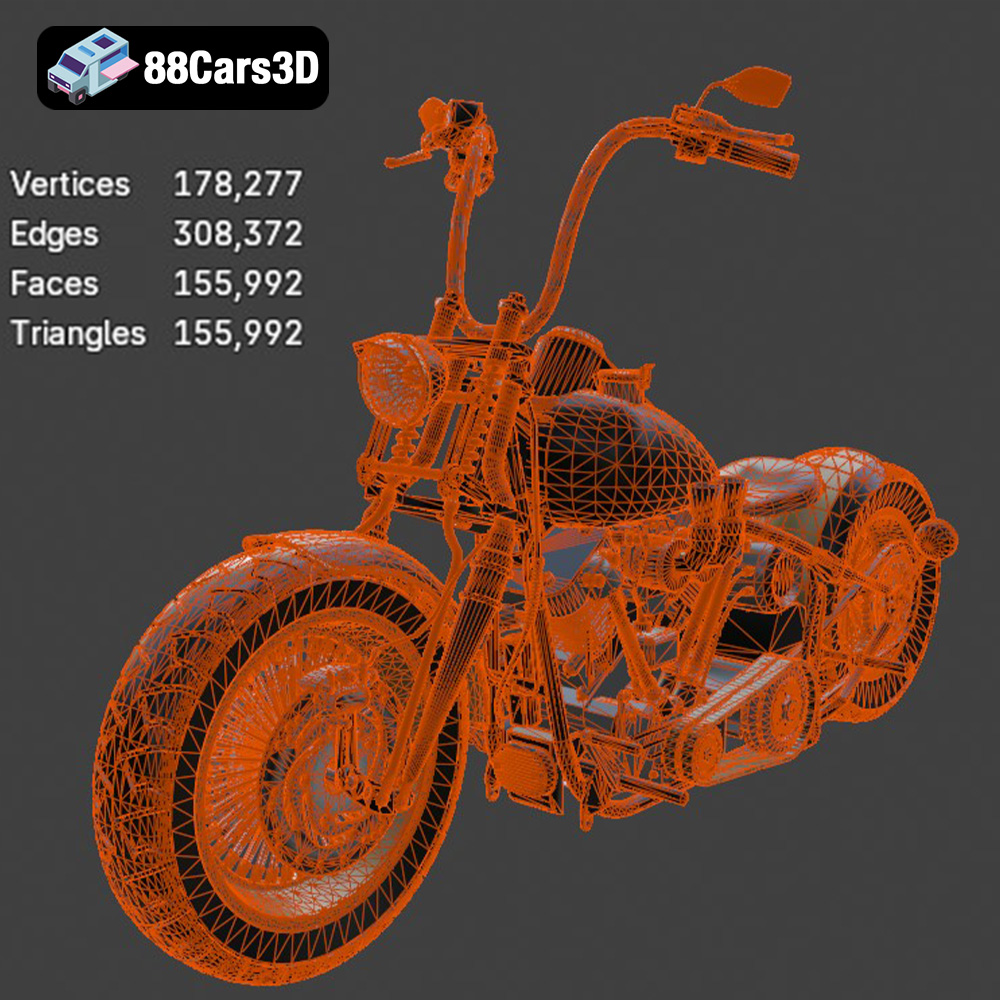
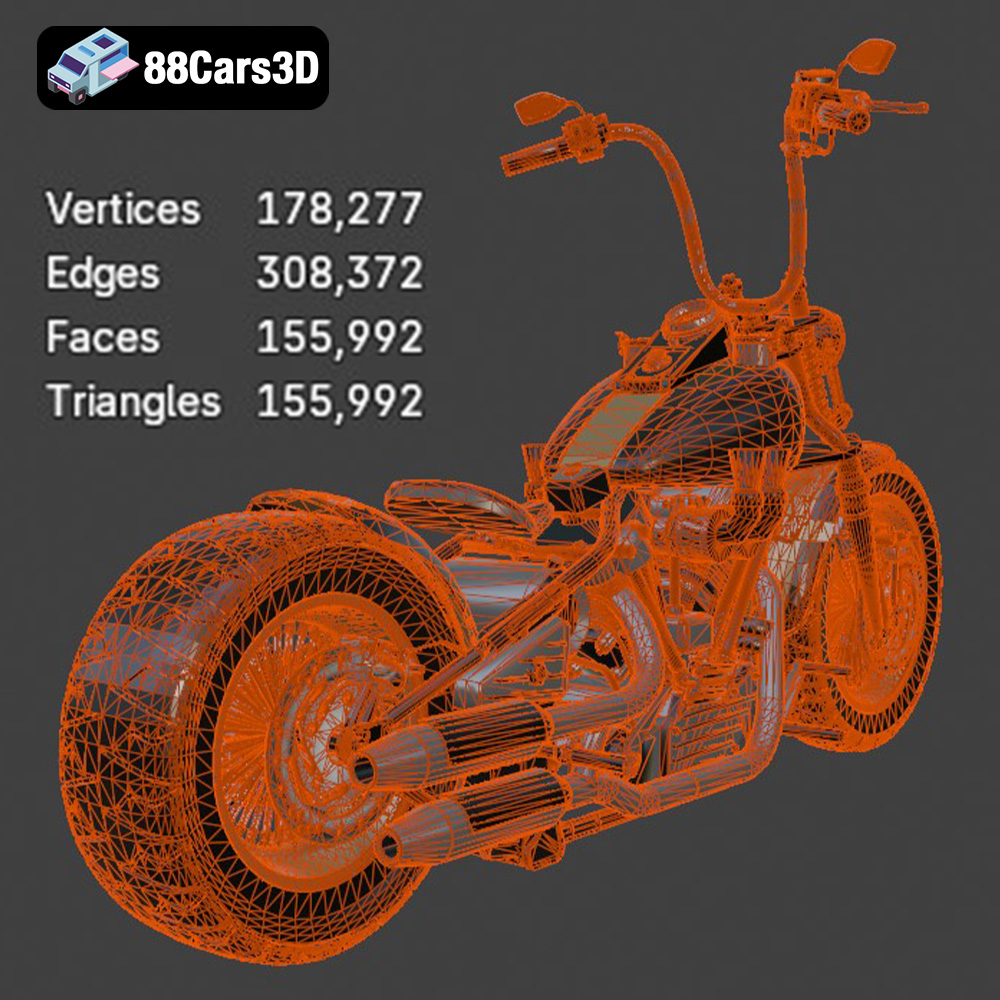
Polygon Count: While high-fidelity renders can tolerate millions of polygons, game assets require optimized polygon counts. The description of the Knucklehead model mentions an “optimized polygon count,” indicating it’s built to maintain visual detail without excessively burdening the GPU. Often, multiple Levels of Detail (LODs) are created – lower-poly versions of the model that swap in when the bike is further from the camera, dramatically improving performance.
PBR Textures: As in rendering, PBR textures are essential for realism in games. Textures need to be efficiently packed (e.g., using texture atlases) and appropriately sized (e.g., 2K or 4K maps depending on asset importance) to minimize memory usage while providing visual richness.
Collision Meshes: For interactive objects, simplified collision meshes are necessary. These invisible meshes define the physical boundaries of the object, allowing players to interact with it realistically without the computational cost of simulating collisions on the detailed visual mesh.
UV Maps: Clean, non-overlapping UV maps are crucial for applying textures efficiently and preventing artifacts. The Knucklehead model’s “carefully structured meshes and UV maps” ensure this critical requirement is met, facilitating seamless texture application within the engine.
Consider a game developer integrating the Harley Davidson Knucklehead 3D model into an open-world racing or adventure game. The .fbx format is ideal here, as it preserves material assignments and hierarchy for easy import into Unreal Engine or Unity. The developer can leverage the “Unreal-ready” nature of the asset to streamline the import process, often requiring minimal adjustments to materials within the engine.
For in-game use, the model’s optimized geometry means it can be placed freely within the game world. If it’s a primary player vehicle, additional work might involve setting up a physics asset for realistic suspension and handling, implementing a damage system, and potentially rigging its wheels and handlebars for animation. For static background elements or non-playable vehicles, the asset’s out-of-the-box quality provides immediate visual richness, saving countless hours of modeling and texturing. The clean geometry ensures that shadows cast by the bike are accurate, and reflections on its surface behave correctly in real-time global illumination setups.
The utility of high-quality 3D assets extends far beyond traditional rendering and game development. Augmented Reality (AR), Virtual Reality (VR), and 3D printing represent burgeoning fields where meticulously crafted models find innovative applications. The Harley Davidson Knucklehead 3D model, with its array of supported formats, is perfectly positioned for these cutting-edge uses.
AR and VR experiences demand models that are not only visually appealing but also highly optimized for real-time interaction and deployment on diverse hardware, including mobile devices and VR headsets. The .glb format is the undisputed champion for these applications. Its compact, self-contained nature (embedding textures and other data) makes it incredibly efficient for streaming over the web or loading quickly within an AR/VR application.
Imagine a virtual showroom where prospective buyers can interact with a life-sized Harley Davidson Knucklehead in VR, examining its intricate engine details from every angle. Or an AR app that projects the Knucklehead onto your driveway, allowing you to walk around and appreciate its scale and design before making a purchase. The “optimized for AR/VR” claim for the Knucklehead model means it’s built to deliver smooth frame rates and high visual quality in these demanding, interactive environments, making it a valuable asset for virtual tours, product showcases, and interactive educational content.
The ability to transition a digital model into a physical object opens up entirely new avenues. This is where the .stl and .ply formats come into play.
3D Printing with .stl: For enthusiasts or designers looking to create a physical miniature, a detailed prototype, or even custom parts, the .stl file of the Harley Davidson Knucklehead 3D model is indispensable. A clean .stl ensures a “manifold” mesh – meaning it’s watertight and has no holes or inverted normals – which is critical for successful 3D printing. A professional model like this would allow for high-resolution prints, capturing the iconic curves, engine fins, and frame details that define the Knucklehead, transforming a digital asset into a tangible collectible or a design study tool.
Precision with .ply: While .stl is the most common for direct printing, the .ply format offers additional data capabilities, sometimes including per-vertex color or other properties useful for more advanced manufacturing or analysis. In cases where the physical model needs to be rigorously analyzed or used for precise reverse engineering from a digital scan to a physical prototype, .ply can offer a more robust data set for specific industrial or scientific applications, ensuring every minute detail of the Knucklehead is accurately represented.
In any professional 3D production pipeline, time is a critical resource. Developing a highly detailed 3D car model from scratch can take hundreds of hours, demanding significant expertise in modeling, texturing, and optimization. This is where premium, pre-built assets, such as the Harley Davidson Knucklehead 3D model from 88cars3d.com, prove their immense value.
Imagine a studio tasked with creating a commercial featuring a classic motorcycle, or a game studio building a virtual museum. If they had to model the Harley Davidson Knucklehead from blueprints and reference images, the initial modeling phase alone could consume weeks. By investing in a professionally crafted 3D model, teams can bypass this lengthy initial stage and immediately jump into integration, scene setup, animation, and rendering.
A high-quality asset brings several advantages:
This level of readiness allows artists and developers to focus their creative energy on storytelling, composition, and interaction, rather than getting bogged down in foundational asset creation.
Marketplaces like 88cars3d.com specialize in providing these high-caliber assets, becoming invaluable resources for studios and independent creators alike. The emphasis on “professional-grade precision,” “clean geometry,” and “meticulously configured materials” for the Harley Davidson Knucklehead 3D model highlights the commitment to quality found on platforms such as 88cars3d.com. This ensures that when you acquire a 3D car model, you are getting an asset that meets industry standards, ready to be dropped into a serious production pipeline.
For projects requiring multiple vehicles, such as an automotive visualization project or a game with a diverse vehicle roster, sourcing consistent, high-quality 3D models from a reputable vendor ensures visual cohesion and technical reliability across the board. The Harley Davidson Knucklehead serves as a prime example of an asset that delivers maximum visual fidelity without compromising performance, embodying the core values that make a marketplace like 88cars3d.com a go-to for professionals seeking top-tier 3D models.
The journey from a legendary motorcycle to a versatile 3D asset is a testament to the power of digital craftsmanship and the evolving landscape of creative industries. The Harley Davidson Knucklehead 3D model is far more than just a collection of polygons; it’s a meticulously engineered digital twin, ready to ignite imaginations across a multitude of applications. From stunning photorealistic renders that evoke nostalgia and cinematic grandeur, to optimized game assets that bring iconic vehicles into interactive virtual worlds, its utility is boundless.
We’ve explored how its professional-grade precision, clean geometry, and multi-format availability make it an indispensable tool for automotive rendering, game development, AR/VR experiences, and even 3D printing. Understanding the nuances of each file format, from the comprehensive .max and .blend files to the game-ready .fbx and web-optimized .glb, empowers professionals to select the right tool for their specific needs, ensuring seamless integration and optimal performance.
Ultimately, assets like the Harley Davidson Knucklehead 3D model streamline production workflows, elevate visual quality, and foster innovation across the entire 3D ecosystem. Whether you’re an industry veteran or an aspiring artist, investing in high-quality 3D car models from reputable sources like 88cars3d.com is a direct investment in the success and visual impact of your projects. The legacy of the Knucklehead lives on, not just on the open road, but now, with exceptional detail, in the limitless expanse of the digital realm.
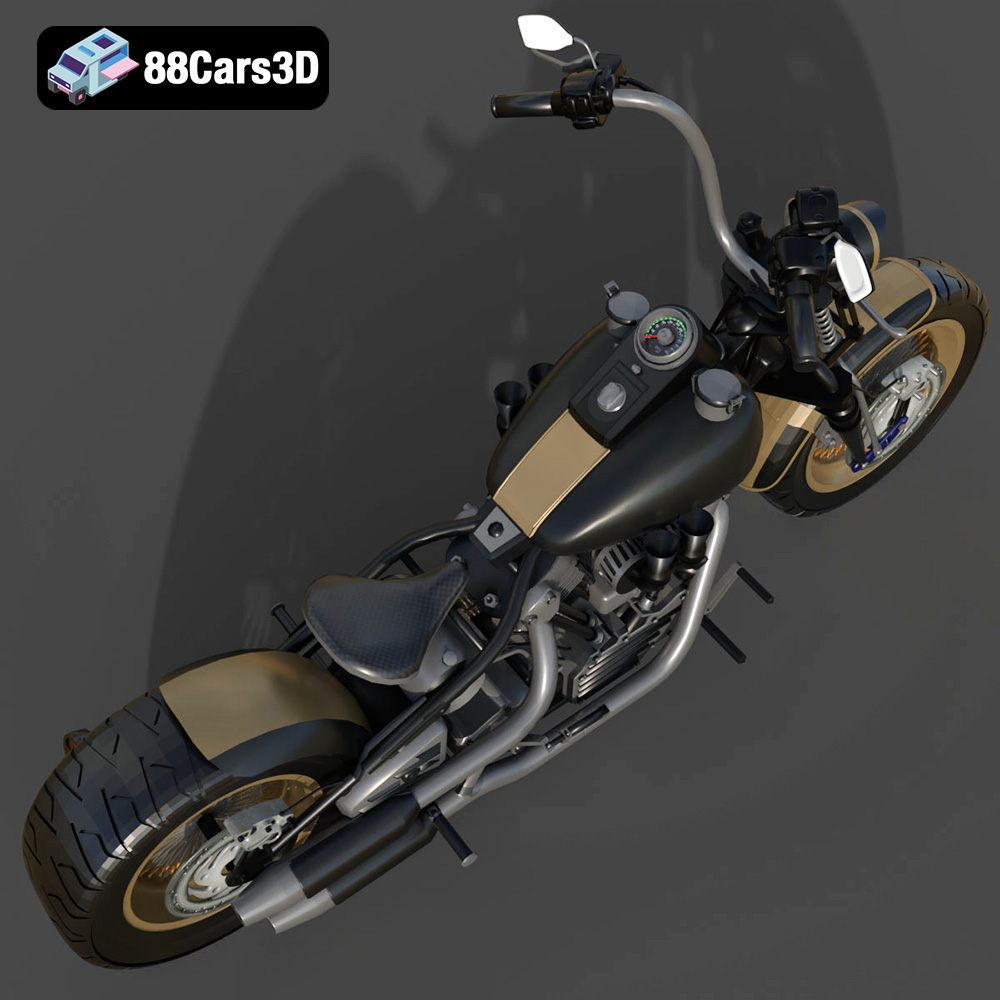
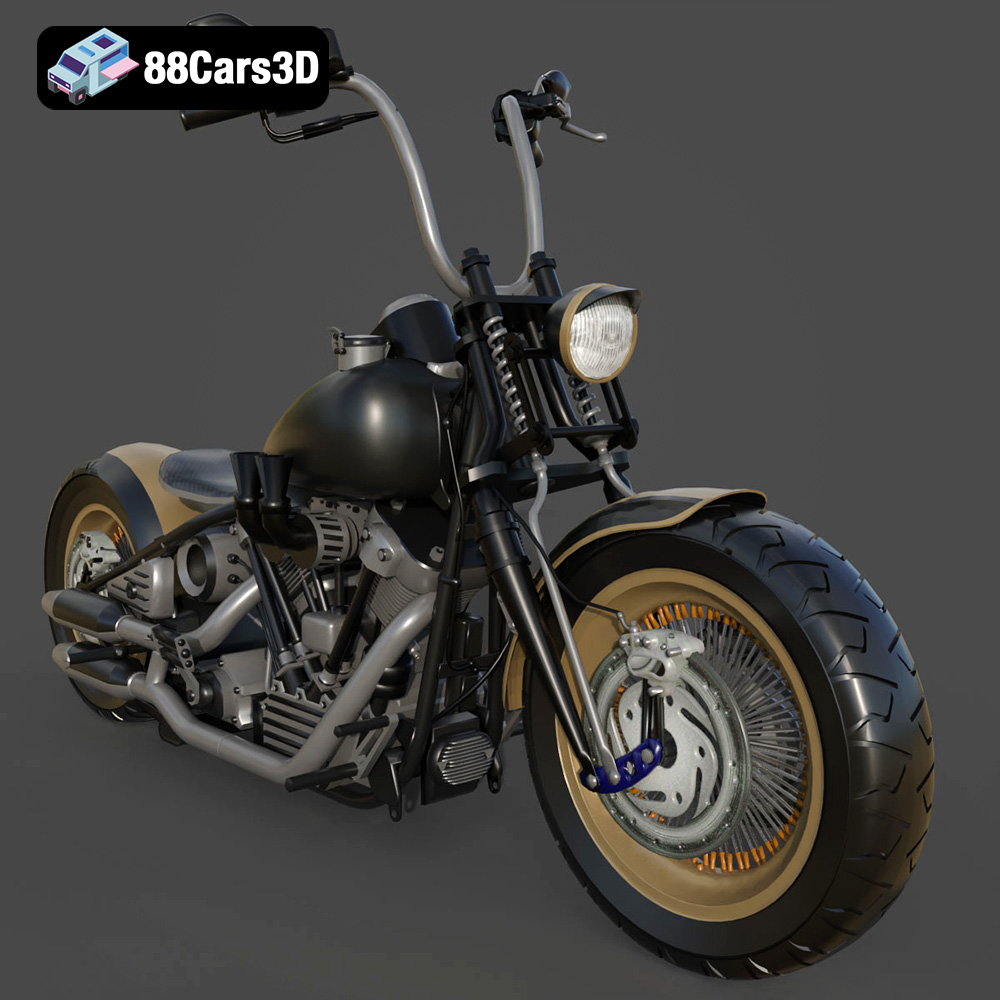
Experience the iconic design of the classic American motorcycle with the Harley Davidson Knucklehead 3D model. Designed for exceptional realism, this asset perfectly replicates the legendary engine, sweeping lines, and mechanical intricacies that make this vintage bike a timeless masterpiece. Built with professional-grade precision, the model features clean geometry, an optimized polygon count, and meticulously configured materials. Every component, from the distinct knuckle valve covers to the detailed chassis and instrumentation, has been crafted to deliver maximum visual fidelity without compromising performance. This versatile 3D model is ideal for a wide range of applications, including AAA game development, cinematic rendering, architectural visualization, and immersive AR/VR experiences. The carefully structured meshes and UV maps ensure seamless integration into any professional production pipeline.
$19.99
.arvr
.blend
.car3dmodel
.classicmotorcycle
.cruiser
.fbx
.gameasset
.glb
.harleydavidson
.knucklehead
.max
.motorcycle
.obj
.ply
.rendering
.simulation
.stl
.unreal