Get 20% OFF All Premium 3D & STL Models!

In the dynamic world of 3D visualization, automotive models stand as a cornerstone for a myriad of industries. From captivating advertising campaigns and immersive game environments to precise architectural visualizations and advanced simulations, high-quality 3D car models are indispensable assets. The demand for realism, optimization, and versatility has never been higher, pushing artists and developers to seek out assets that seamlessly integrate into complex pipelines while delivering uncompromising visual fidelity.
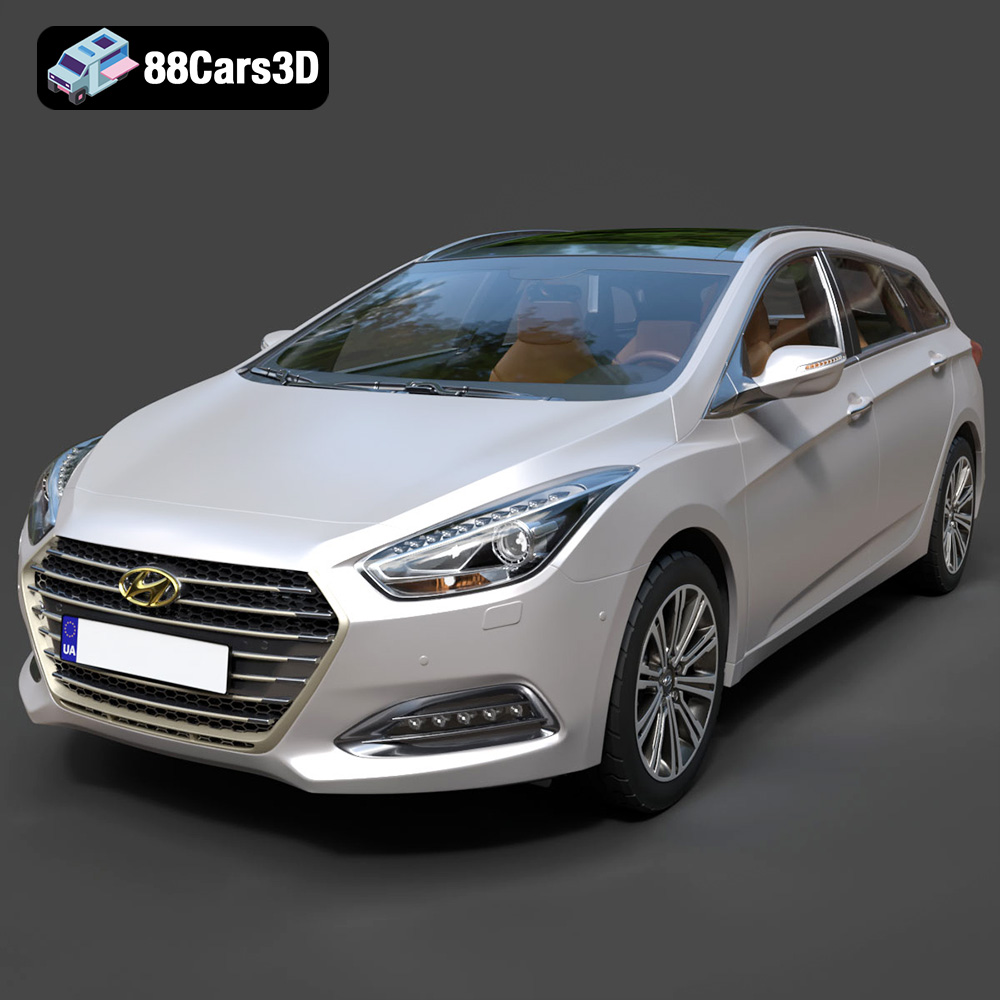
Today, we delve into the intricate details of what makes a truly exceptional 3D vehicle asset, exploring its applications across various professional domains. We’ll examine the technical specifications, workflow considerations, and the sheer creative potential unlocked by well-crafted models. Our focus will be on a prime example of such an asset: the Hyundai i40 Wagon 2015 3D Model. This meticulously crafted digital representation of a popular estate vehicle embodies the precision and adaptability required by modern 3D projects, offering clean geometry, realistic materials, and a comprehensive suite of file formats for diverse software compatibility. Whether you’re an automotive designer, a game developer, or an architectural visualizer, understanding the nuances of such assets is key to elevating your digital creations.
The choice of a 3D model file format is paramount, dictated by the specific software, pipeline, and intended application. A single 3D model, such as the Hyundai i40 Wagon 2015, often needs to be available in multiple formats to cater to different professional needs, ensuring maximum compatibility and efficiency. Here’s a detailed breakdown of the common formats and their optimal use cases:
The .blend format is the native file type for Blender, a powerful open-source 3D creation suite. When a 3D car model like the Hyundai i40 Wagon 2015 is provided in .blend, it signifies a fully editable scene. This includes not just the raw mesh data, but also the applied materials (often using Blender’s Cycles or Eevee render engines), lighting setups, camera positions, and any modifiers or animation data. This format is ideal for Blender artists who require full control over the asset, allowing for easy modifications, retexturing, or integration into existing Blender projects without any loss of data fidelity that might occur during conversion.
Developed by Autodesk, the .fbx (Filmbox) format has become an industry standard for interoperability, especially within game development. It’s renowned for its ability to store not only 3D model data (meshes, UVs, normals) but also animation, cameras, lights, and material assignments in a single file. For assets like the Hyundai i40 Wagon 2015, .fbx is the go-to for importing into game engines like Unreal Engine and Unity. Its robust nature ensures that complex hierarchies, rigging, and animation curves are preserved, making it invaluable for creating dynamic game assets and cinematic sequences.
The .obj (Wavefront OBJ) format is one of the oldest and most widely supported 3D file formats. It’s a universal standard, compatible with virtually every 3D software application, from 3ds Max and Maya to Blender and Cinema 4D. An .obj file primarily stores geometric data – vertices, faces, normals, and UV coordinates – and references external material files (typically .mtl files). While it doesn’t support animation or rigging, its widespread compatibility makes it excellent for static model exchange. If you need to bring the Hyundai i40 Wagon 2015 into an obscure or specialized 3D application, .obj is often the safest bet.
.glb (GLB for glTF Binary) is the binary version of the GL Transmission Format (glTF), a modern, royalty-free specification for 3D scenes and models. glTF is designed for efficient transmission and loading of 3D models in web-based applications, augmented reality (AR), and virtual reality (VR) environments. A .glb file encapsulates the 3D model, textures, and animations into a single self-contained file, making it highly portable and performant. For showcasing the Hyundai i40 Wagon 2015 in an interactive web viewer or an AR experience on a mobile device, .glb offers superior optimization and ease of deployment.
The .stl (STereoLithography) format is the standard file type for 3D printing. It represents a 3D model as a series of connected triangles (a triangular mesh) without any color, texture, or material information. Its simplicity makes it universally accepted by 3D printers and slicing software. While it doesn’t capture visual fidelity, it’s crucial for prototyping and creating physical replicas. If your project involves bringing the Hyundai i40 Wagon 2015 into the physical realm, for scale models or rapid prototyping, the .stl format is essential.
The .ply (Polygon File Format, or Stanford Triangle Format) is a file format for storing three-dimensional data from 3D scanners. It can store a wider range of properties, including color, transparency, surface normals, and texture coordinates, beyond what .stl offers. It’s often used in scientific and engineering applications, particularly for representing scanned data, CAD models, or for precision mesh analysis. For detailed visualization or reverse engineering tasks involving the Hyundai i40 Wagon 2015, .ply provides a more comprehensive geometric representation than .obj or .stl.
While not a traditional open standard, the term .unreal often refers to an asset that has been specifically configured and optimized for use within Unreal Engine. This might involve an .fbx file prepped with specific naming conventions, LODs (Levels of Detail) already set up, PBR (Physically Based Rendering) materials configured in a separate Unreal project file, or even an exported Unreal asset package. For developers working with the Hyundai i40 Wagon 2015, having an .unreal-ready file means significant time savings on import, material setup, and optimization, allowing for immediate deployment in real-time simulations or games.
The .max format is the native scene file for Autodesk 3ds Max, a leading software for 3D modeling, animation, and rendering. Similar to .blend for Blender, a .max file contains all scene data: geometry, materials, textures, lighting, cameras, animation, and scene settings. This format is crucial for 3ds Max users who need full editability and access to the original scene setup for the Hyundai i40 Wagon 2015, whether for advanced rendering with V-Ray or Corona, complex animation sequences, or integration into architectural visualizations directly within the 3ds Max ecosystem.
Providing a model like the Hyundai i40 Wagon 2015 in such a comprehensive suite of formats, as offered by 88cars3d.com, underscores its versatility and value across virtually all professional 3D pipelines.
Automotive rendering is an art form that demands meticulous attention to detail, from the curvature of the bodywork to the subtle reflections on the paint. High-quality 3D car models like the Hyundai i40 Wagon 2015 are the foundation upon which stunning photorealistic images are built, serving as critical assets for advertising, product showcases, and design validation.
Achieving photorealism in rendering starts with advanced material and texture workflows. The Hyundai i40 Wagon 2015 3D Model features realistic materials, which typically means a Physically Based Rendering (PBR) setup. PBR materials accurately simulate how light interacts with surfaces, using properties like albedo (base color), roughness, metallic, normal, and ambient occlusion maps. For the car’s paint, a complex multi-layered shader might be used, simulating clear coat, metallic flakes, and subtle imperfections. Details like tire rubber, window glass, and chrome accents are crucial, each requiring specific PBR texture sets to react authentically to environmental lighting. Utilizing these pre-configured materials saves countless hours of setup time for artists in software like 3ds Max, Blender, or Cinema 4D.
Effective lighting is the soul of any photorealistic render. When working with a detailed 3D car model, artists employ a combination of HDRI (High Dynamic Range Image) environment maps for realistic global illumination and strategically placed area lights or spotlights to highlight specific features. For the Hyundai i40 Wagon 2015, an HDRI might simulate an outdoor scene with natural sunlight and reflections, while additional studio-style lights can emphasize its sleek contours and body lines. The clean geometry of the model ensures that light interacts correctly with its surfaces, producing accurate shadows, reflections, and refractions, which are paramount for automotive aesthetic.
The role of 3D car models extends beyond pure automotive showcases. They are indispensable for architectural visualization (ArchViz), where they populate street scenes, driveways, and parking lots, adding scale, realism, and a sense of lived-in authenticity to rendered buildings and environments. Integrating the Hyundai i40 Wagon 2015 into an ArchViz scene involves careful consideration of scale, context, and consistency of lighting. Its “well-proportioned dimensions” make it easy to place accurately within a scene, ensuring it doesn’t look out of place next to a newly rendered home or commercial building. Artists using 3ds Max or Blender can quickly import the model and adjust its materials to match the overall scene’s aesthetic, enhancing the narrative of the architectural design.
Game development and real-time interactive experiences demand not only visual fidelity but also stringent performance optimization. A 3D car model, such as the Hyundai i40 Wagon 2015, must strike a delicate balance between detail and efficiency to ensure smooth frame rates and responsive gameplay.
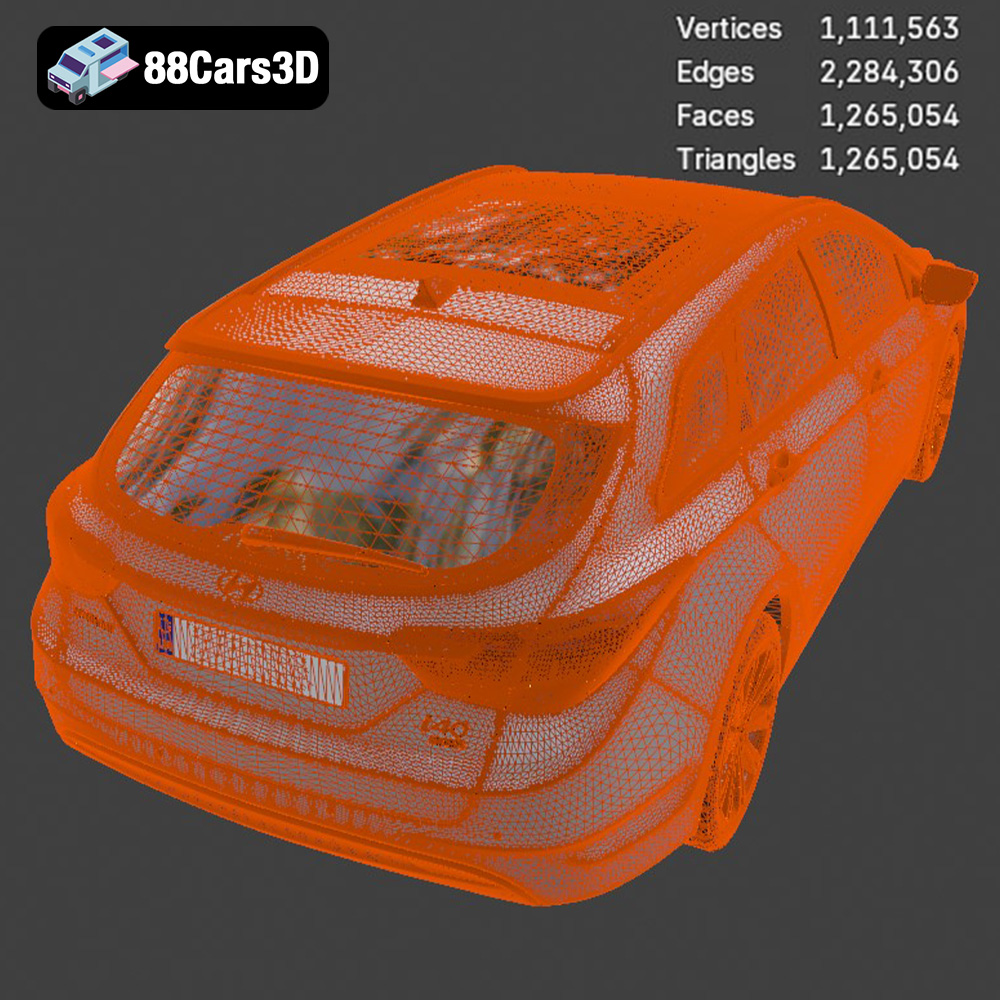
The “optimized performance” of a game-ready asset hinges heavily on its polygon count. High-fidelity models used for cinematic renders can have millions of polygons, which is unfeasible for real-time engines. Game assets are meticulously optimized, often employing a system of LODs (Levels of Detail). This means the Hyundai i40 Wagon 2015 might have a high-poly version for close-up shots, a medium-poly for general gameplay, and a low-poly version for distant views, dynamically swapping between them based on the camera’s distance. This ensures that the engine only renders necessary detail, significantly reducing the computational load. Professional models from sources like 88cars3d.com are typically structured with game development in mind, providing clean topology that can be easily decimated for LOD generation.
Physically Based Rendering (PBR) is the industry standard for texturing in modern game engines like Unreal Engine and Unity. PBR materials ensure that assets look consistent under varying lighting conditions, providing a predictable and realistic appearance. For the Hyundai i40 Wagon 2015, this means a suite of texture maps (Albedo, Normal, Roughness, Metallic, Ambient Occlusion) that accurately describe its surface properties. These maps are authored to respond correctly to the engine’s lighting calculations, resulting in realistic paint reflections, tire grip, and glass transparency regardless of the game environment. This attention to PBR workflow is critical for maintaining visual quality across diverse real-time scenarios.
Integrating a 3D car model into Unreal Engine requires a specific workflow to harness its full potential. The Hyundai i40 Wagon 2015, being “game-engine ready” and available in .fbx and .unreal formats, streamlines this process. Developers typically import the .fbx file, which carries the mesh, UVs, and often a basic material structure. Once in Unreal, dedicated PBR materials are created using the provided texture maps, connecting them to parameters like Base Color, Roughness, and Metallic. The “unreal” specific file might even come as an asset package with pre-configured blueprints for basic car functionality, collision meshes, and optimized LODs already set up, saving substantial development time and ensuring the model looks and performs as intended within the powerful real-time environment.
The utility of high-fidelity 3D car models extends far beyond traditional rendering and game development, finding critical applications in emerging technologies like Augmented Reality (AR), Virtual Reality (VR), and even physical production through 3D printing.
AR/VR technologies thrive on optimized 3D assets that can be rendered smoothly in real-time while maintaining visual quality. The Hyundai i40 Wagon 2015 3D Model, with its “optimized for AR/VR” .glb format, is perfectly suited for these immersive experiences. In AR, users can place a digital representation of the i40 Wagon into their physical environment, viewing it from all angles, opening doors, or even changing its color, all in real-time on a mobile device. For VR, the model can be integrated into virtual showrooms, driving simulations, or interactive product presentations, allowing users to explore the vehicle in a fully immersive digital space. The .glb format ensures lightweight, efficient loading and rendering, crucial for maintaining fluidity in interactive AR/VR applications where performance is paramount.
While often associated with visual mediums, 3D models can also bridge the gap to the physical world through 3D printing. The availability of the Hyundai i40 Wagon 2015 in .stl format makes it “suitable for 3D printing and prototyping.” Designers, engineers, and hobbyists can use this format to create physical scale models for design review, educational purposes, or even as collectibles. This allows for tangible interaction with the digital design, helping to identify potential design flaws or simply appreciate the vehicle’s form in a physical manifestation. The .stl format, being a tessellated mesh, is universally accepted by 3D slicers and printers, providing a direct pipeline from digital asset to physical object, enabling rapid prototyping and tangible representation of the car’s exterior design.
In any professional 3D production pipeline, the quality of your assets directly impacts the final output and the efficiency of your workflow. Relying on professional-grade 3D car models, such as those available on 88cars3d.com, offers significant advantages over attempting to create every asset from scratch.
Creating a high-quality 3D car model from the ground up, with accurate dimensions, clean topology, and production-ready materials, is an incredibly time-consuming and labor-intensive process. It requires specialized skills in modeling, UV mapping, texturing, and often rigging and optimization. By acquiring a pre-made, professionally crafted asset like the Hyundai i40 Wagon 2015 3D Model, studios and individual artists can save hundreds of hours of development time. This allows them to allocate resources to more critical or creative aspects of their projects, meeting tight deadlines and increasing overall production efficiency. The immediate availability of multiple file formats further eliminates time spent on complex format conversions or compatibility issues.
Accuracy is paramount in automotive visualization. Details like the curvature of a fender, the spacing of panel lines, and the proportion of the wheels are critical for realism. Professional 3D model marketplaces like 88cars3d.com ensure that their models are “carefully crafted to represent the sleek contours and practical elegance” of the real vehicle. This precision means that the Hyundai i40 Wagon 2015 will integrate seamlessly into projects without appearing distorted or inaccurate. The “meticulously detailed exterior and well-proportioned dimensions” provided by an expert modeler guarantee that the asset meets the rigorous standards expected in high-end rendering, game development, and AR/VR applications, delivering an uncompromising visual experience right out of the box.
To truly appreciate the versatility of a high-quality 3D asset like the Hyundai i40 Wagon 2015, it’s helpful to envision its application in various real-world scenarios across different industries.
Imagine an online automotive configurator where potential buyers can customize their dream car. The Hyundai i40 Wagon 2015 3D Model would be a perfect foundational asset for such a project. Utilizing the .glb format for web-based interactivity, the model could be loaded quickly, allowing users to dynamically change paint colors, wheel designs, or interior trim. Its clean geometry ensures that material changes are applied flawlessly, providing an engaging and realistic customization experience. Developers could leverage its optimized nature to deliver a smooth, interactive visualization directly in a web browser or a mobile application, enhancing the car-buying experience.
For a short film or a commercial requiring a realistic car chase or a serene family drive, the Hyundai i40 Wagon 2015 in its .max or .blend format offers full creative control. Animators could rig the doors, wheels, and suspension for dynamic movement, while artists could set up complex lighting scenarios to capture dramatic reflections on its surfaces. The “exceptional realism” of the model ensures that it holds up to extreme close-ups and high-resolution renders, blending seamlessly with live-action footage or other CGI elements. This flexibility makes it invaluable for production studios looking for ready-to-animate, visually stunning vehicles.
Educational institutions or commercial driving schools often utilize advanced driving simulators for training and research. The Hyundai i40 Wagon 2015, with its “game-engine ready format for Unreal Engine and Unity,” is an ideal asset for populating such simulations. Developers could import the .fbx or .unreal versions directly, configuring it with realistic physics properties, collision meshes, and interactive elements. Its optimized performance ensures that multiple vehicles can be rendered simultaneously without compromising the simulator’s frame rate, providing a realistic and immersive training environment for new drivers or for testing autonomous driving algorithms.
The world of 3D modeling is continually evolving, with increasing demands for realism, versatility, and efficiency across a broad spectrum of industries. High-quality 3D car models are at the forefront of this evolution, serving as critical assets for everything from photorealistic rendering and immersive game development to innovative AR/VR experiences and tangible 3D prints. The Hyundai i40 Wagon 2015 3D Model exemplifies what a professional-grade asset should be: meticulously crafted, geometrically clean, equipped with realistic materials, and available in a comprehensive suite of file formats to meet the diverse needs of modern digital artists and developers.
By understanding the technical nuances of various file formats and appreciating the meticulous effort behind creating such optimized assets, professionals can significantly enhance their workflows, save valuable time, and elevate the quality of their final output. Whether you’re a seasoned professional or an aspiring artist, investing in reliable and versatile 3D car models from trusted sources like 88cars3d.com is a foundational step towards achieving unparalleled visual excellence and production efficiency in your projects.
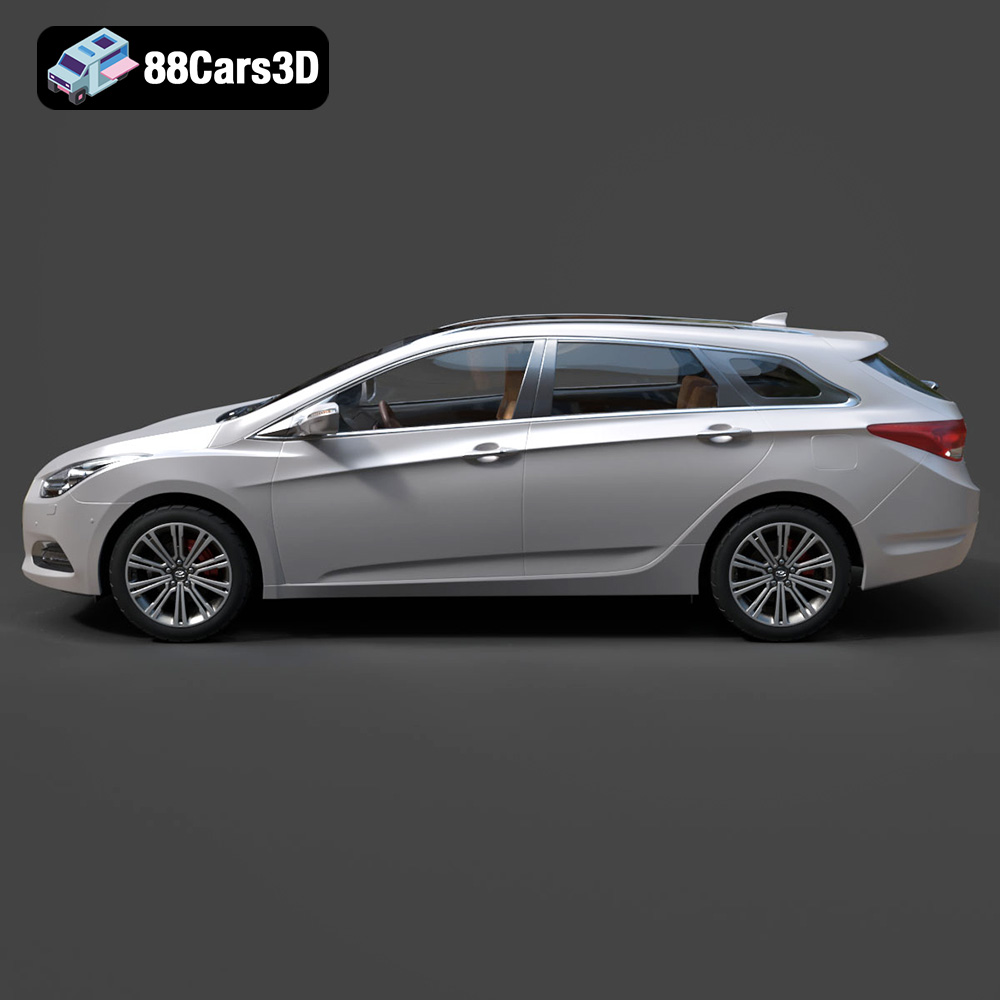
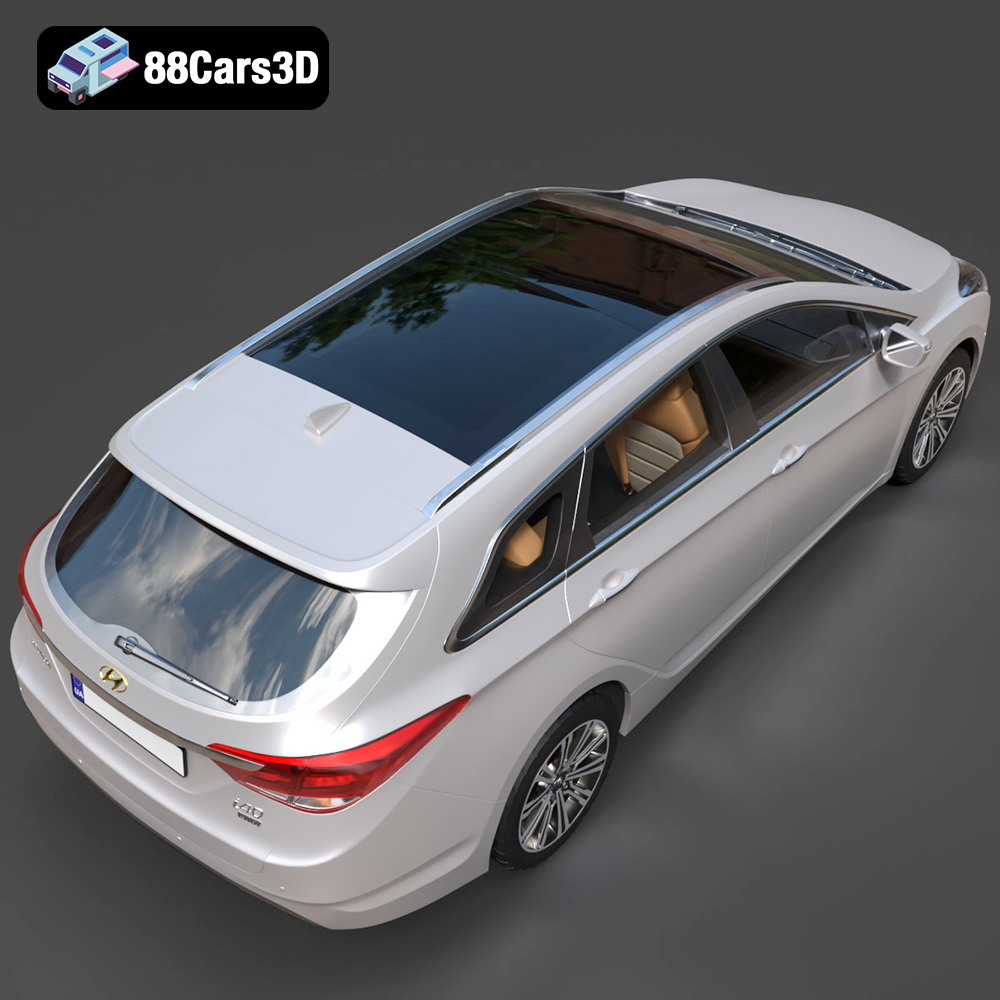
Experience true-to-life automotive design with the Hyundai i40 Wagon 2015 3D Model. Carefully crafted to represent the sleek contours and practical elegance of this popular estate vehicle, this digital asset delivers exceptional realism for any demanding project.
Constructed with professional precision, the model features clean geometry and realistic materials. The meticulously detailed exterior and well-proportioned dimensions ensure seamless integration into digital environments, offering an uncompromising visual experience while maintaining optimized performance.
Perfectly suited for a wide range of professional applications, this vehicle asset is ideal for game development, cinematic rendering, architectural visualization, and immersive AR/VR experiences. Whether deployed in dynamic interactive simulations or static professional renders, its versatile design meets the rigorous standards of 3D artists and developers.
Available in a comprehensive suite of file formats to guarantee compatibility across diverse software pipelines:
Tags:
.hyundai, .i40, .wagon, .stationwagon, .estate, .familycar, .car3dmodel, .rendering, .simulation, .gameasset, .arvr, .blend, .fbx, .obj, .glb, .stl, .ply, .unreal, .max
$19.99
.arvr
.blend
.car3dmodel
.estate
.familycar
.fbx
.gameasset
.glb
.hyundai
.i40
.max
.obj
.ply
.rendering
.simulation
.stationwagon
.stl
.unreal
.wagon