Get 20% OFF All Premium 3D & STL Models!

In the fast-evolving world of digital visualization, the demand for high-quality, meticulously crafted 3D assets is paramount. From blockbuster film productions and immersive video games to cutting-edge architectural visualization and interactive AR/VR experiences, professional-grade 3D car models serve as the backbone for creating compelling digital realities. They allow artists, designers, and developers to bring visions to life with unparalleled realism and efficiency.
The pursuit of photorealism requires not just artistic skill but also a deep understanding of technical specifications and diverse software ecosystems. Whether you’re a seasoned 3D artist seeking to enhance your automotive rendering projects or a game developer looking for optimized game assets, the quality of your base models directly impacts the final output. This is where a model like the Jaguar XFR-S 2014 3D Model truly shines, offering a foundation of precision and detail that meets the most rigorous industry standards. It exemplifies the blend of aesthetic fidelity and technical robustness necessary for modern production pipelines.
Navigating the landscape of 3D model file formats can be complex, but understanding their individual strengths and typical use cases is crucial for any professional workflow. The choice of format often dictates compatibility, feature preservation, and optimization for a specific task, whether it’s automotive rendering, game development, or 3D printing. The Jaguar XFR-S 2014 3D Model, for instance, comes packaged with a comprehensive suite of formats, ensuring maximum flexibility for diverse applications.
The .blend format is Blender’s native file type, encapsulating an entire scene with all its components: meshes, materials, textures, lighting, cameras, animations, physics simulations, and even scripts. For users deeply integrated into the Blender ecosystem, a .blend file offers unparalleled flexibility. It’s fully editable, allowing artists to dissect every aspect of the model, from adjusting specific vertices on the Jaguar XFR-S’s sleek chassis to tweaking the PBR material nodes for its paintwork or interior upholstery. This format is ideal for artists who want full creative control, making it perfect for custom animations, detailed renders within Blender’s Cycles or Eevee engines, or further modifications to the model’s geometry and rig.
Autodesk’s .fbx (Filmbox) format has become an industry staple for data exchange between various 3D applications, and especially for real-time engines like Unreal Engine and Unity. It’s a robust format capable of storing not just mesh data (vertices, faces, UVs, normals) but also hierarchies, animations, blend shapes, skinning information, and basic material properties. For game developers or those needing to transfer models between software like 3ds Max, Maya, and Blender, .fbx is often the go-to. It excels at preserving scene information during export, making it ideal for incorporating the Jaguar XFR-S 2014 3D Model into a game level or an animated sequence in a different software environment without significant loss of data fidelity.
The .obj (Wavefront OBJ) format is one of the oldest and most universally supported 3D file formats. It’s a simple, text-based format primarily used for transferring geometric data (vertices, UV coordinates, vertex normals, and faces). While it supports basic material definitions via an accompanying .mtl file, it doesn’t store advanced features like animation, rigging, or complex PBR materials. Its strength lies in its widespread compatibility; almost every 3D software can import and export .obj files. This makes it an excellent choice for basic mesh transfer or as a fallback when more complex formats present issues. For artists focusing solely on the pure form and topology of the Jaguar XFR-S, .obj provides a clean, easily accessible mesh.
.glb (GL Transmission Format Binary) is the binary version of glTF, specifically designed for efficient transmission and loading of 3D scenes and models in web and real-time applications, including AR/VR. It packages all necessary data—geometry, materials, textures, animations—into a single, self-contained file. This optimization makes it incredibly fast to load and display, crucial for web browsers, mobile AR apps, and virtual showrooms. The .glb format is perfectly suited for showcasing the Jaguar XFR-S 2014 3D Model in an interactive web viewer or deploying it in an augmented reality application where performance and quick loading times are paramount.
The .stl (STereoLithography) format is the standard for 3D printing. It describes only the surface geometry of a 3D object using a collection of triangular facets. It contains no color, texture, or material information, focusing purely on the form factor. While not used for rendering, an .stl version of the Jaguar XFR-S allows for the creation of physical prototypes, scale models, or even custom car parts using additive manufacturing. For designers wanting to physically hold their digital creation, .stl is the indispensable choice.
The .ply (Polygon File Format or Stanford Triangle Format) is a file format for storing 3D data from 3D scanners. It can store a variety of properties including color, transparency, surface normals, and texture coordinates. Unlike .obj, .ply files can also store attributes for each vertex or face. This makes it useful for scientific visualization, CAD analysis, or working with point cloud data, though it’s less common for general artistic workflows. It offers a detailed polygon mesh for precise analysis or visualization of complex surfaces.
The .unreal format, or more accurately, an Unreal Engine-ready asset package, indicates that the model has been specifically prepared and configured for direct import and optimal performance within Unreal Engine. This often means textures are correctly linked, materials are set up as Unreal’s physically-based materials, and potentially, LODs (Levels of Detail) are pre-generated. For developers working with Unreal Engine, having a pre-configured asset like the Jaguar XFR-S 2014 3D Model significantly reduces setup time and ensures it performs as expected in a real-time environment, adhering to the engine’s rendering pipeline best practices.
The .max format is Autodesk 3ds Max’s native project file. Similar to .blend for Blender, a .max file contains all scene data—geometry, materials, lights, cameras, animations, modifiers, and plugins—specific to 3ds Max. It’s the ideal format for users of 3ds Max who require full editing capabilities, especially for high-fidelity architectural visualization (ArchViz) renders or cinematic animations. For detailed automotive rendering projects, working with the .max file of the Jaguar XFR-S allows artists to leverage 3ds Max’s powerful rendering engines like V-Ray or Corona, along with its extensive animation toolset, for creating stunning, photorealistic visuals.
Creating photorealistic automotive renderings is a blend of artistic vision and technical mastery. It’s about more than just a good model; it’s about how light interacts with surfaces, the subtle reflections, and the immersive environment. The Jaguar XFR-S 2014 3D Model provides an excellent canvas for achieving these results due to its meticulous construction.
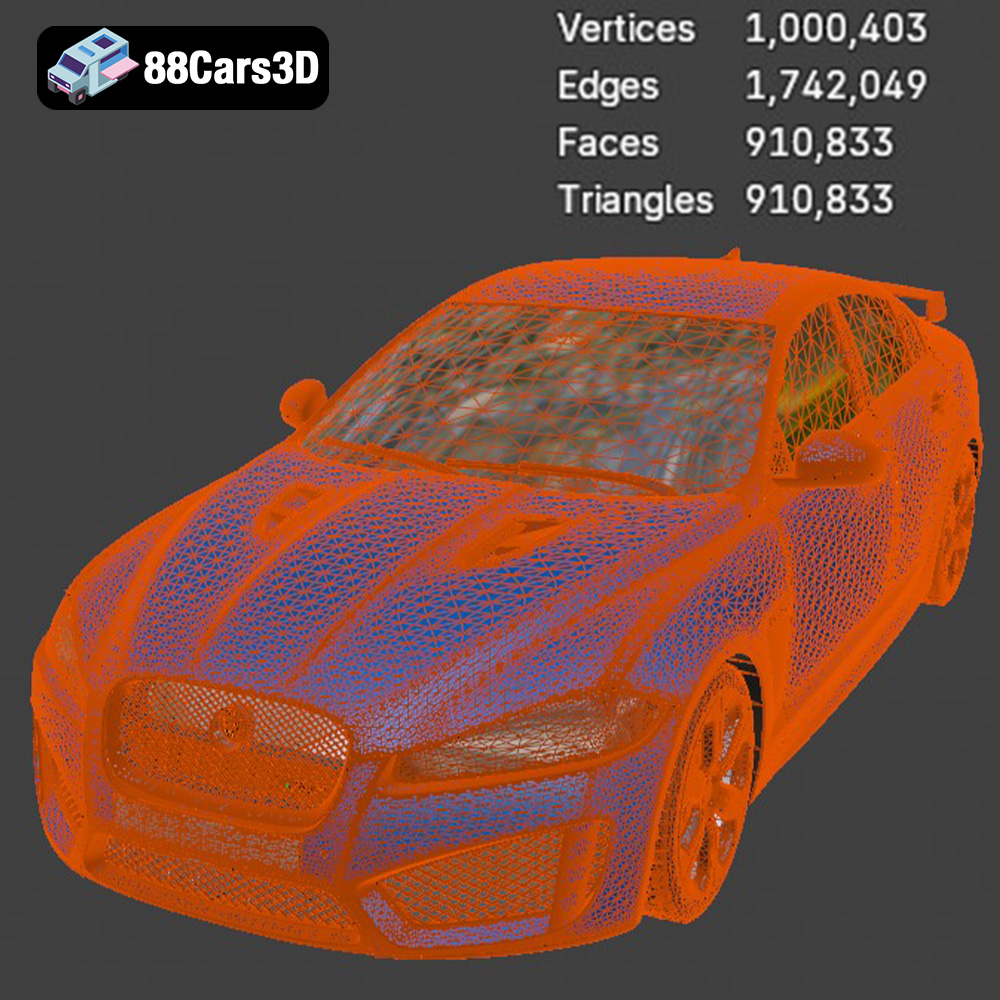
At the core of any high-fidelity render is immaculate geometry and topology. The Jaguar XFR-S model boasts clean, optimized geometry, meaning its polygon count is efficient enough for performance while retaining smooth, accurate curves and sharp creases that define the vehicle’s aggressive styling. Meticulously crafted realistic materials are equally crucial. This involves setting up physically based rendering (PBR) textures for paint, glass, chrome, and interior fabrics, ensuring they react to light precisely as they would in the real world. Every scratch of the clear coat, every glint off the alloy wheels, and the subtle sheen of the leather interior contributes to the overall illusion of reality.
No matter how detailed a 3D car model is, it won’t look realistic without proper lighting. Automotive rendering frequently utilizes High Dynamic Range Images (HDRIs) to simulate real-world lighting environments, casting accurate reflections and subtle color tints onto the vehicle’s surfaces. Combining HDRIs with carefully placed virtual lights (key lights, fill lights, rim lights) helps to accentuate the car’s contours and materials. For the Jaguar XFR-S, a studio setup with softbox lighting can highlight its elegant lines, while an outdoor urban environment will showcase its road presence and dynamic reflections.
Even after a render is complete, post-production in software like Photoshop or Affinity Photo is vital. This stage involves adding subtle effects such as chromatic aberration, depth of field, motion blur, color grading, and bloom to further enhance realism and visual appeal. Minor adjustments to contrast and saturation can dramatically impact the mood and perceived realism, bringing the rendered Jaguar XFR-S closer to a photograph.
For game developers, 3D car models are central to creating immersive driving experiences, open-world environments, and engaging cinematics. The Jaguar XFR-S 2014 3D Model, with its game-engine-ready formats, is designed to seamlessly integrate into modern game development pipelines.
Game assets require a delicate balance between visual fidelity and performance. An “optimized polygon count” for the Jaguar XFR-S means it’s detailed enough to look great but efficient enough to not bog down game engines. Advanced game development workflows often utilize Levels of Detail (LODs). These are progressively simpler versions of the model that automatically switch in based on the camera’s distance, ensuring high detail up close and optimized performance from afar. UVs must be clean for texture baking, and materials often need to be configured for game engine PBR shaders.
Beyond visual representation, game assets need to interact realistically within the game world. This involves creating collision meshes (often simplified versions of the visual mesh) that define the car’s physical boundaries. Developers then assign physics properties—mass, friction, suspension—to simulate realistic driving dynamics for the Jaguar XFR-S, allowing it to collide, drift, and accelerate authentically within the game engine.
Modern game engines like Unreal Engine and Unity are capable of stunning real-time visuals. High-quality 3D car models, complete with detailed interiors and exteriors, allow for realistic reflections, dynamic lighting, and advanced shader effects. Furthermore, models designed for customization can feature separate components (wheels, spoilers, paint zones) that players can modify, enhancing replayability and immersion. The included .unreal and .fbx formats for the Jaguar XFR-S ensure it’s ready for these demanding real-time environments.
The utility of professional 3D car models extends far beyond traditional screens, opening up new frontiers in immersive technologies and physical prototyping. The Jaguar XFR-S 2014 3D Model, thanks to its versatile file formats, is ideally suited for these cutting-edge applications.
Augmented Reality (AR) and Virtual Reality (VR) are transforming how we interact with products. Imagine stepping into a virtual showroom where you can explore the Jaguar XFR-S in full 3D, walk around it, open its doors, and even sit inside, all before it’s physically manufactured or available. The .glb format is critical here, allowing for lightweight, efficient rendering on mobile devices and VR headsets. This creates powerful marketing tools, allowing potential buyers to personalize and experience the car in a highly interactive and engaging way.
3D printing offers a tangible bridge between the digital and physical worlds. The inclusion of an .stl file for the Jaguar XFR-S allows designers to create accurate physical prototypes or scale models. This is invaluable for automotive design firms for form studies, wind tunnel testing (with appropriate modifications), or simply for creating promotional collectibles. From rapid prototyping to creating intricate scale replicas, the .stl format ensures direct compatibility with additive manufacturing processes.
High-fidelity 3D car models also play a significant role in educational and training simulations. Mechanic training, driving simulators, and even accident reconstruction benefit immensely from accurate digital representations. Trainees can interact with virtual engines, practice maintenance procedures, or learn defensive driving techniques in a safe, controlled digital environment, all powered by precise 3D assets like the Jaguar XFR-S.
In today’s fast-paced production environments, efficiency is key. Leveraging pre-made, high-quality 3D assets can dramatically streamline workflows, saving valuable time and resources while maintaining professional standards. This is where platforms like 88cars3d.com become indispensable, offering a curated selection of premium models.
Building a complex 3D car model from scratch, especially one as detailed as the Jaguar XFR-S, can take hundreds of hours for even experienced artists. By utilizing a pre-made asset, studios and individual artists can bypass this laborious modeling phase and jump directly into texturing, lighting, animation, or integration into their projects. This accelerates production timelines for everything from commercials to game levels, allowing teams to focus on creative direction rather than foundational modeling.
While a model like the Jaguar XFR-S comes “game-ready” with formats like .fbx and .unreal, professional workflows often require further tailoring. This might involve generating additional custom LODs to hit specific performance targets, optimizing UV layouts for specific texture atlases, or adjusting material instances to match a project’s unique rendering pipeline in Unreal Engine or Unity. The availability of native editable files like .blend and .max provides the ultimate flexibility for these deep customizations.
Online marketplaces like 88cars3d.com serve as critical hubs for professional assets. They provide access to a vast library of high-quality 3D car models, ensuring that artists and developers can find the exact vehicle they need, pre-vetted for quality and compatibility. By sourcing models from a trusted platform, users can significantly reduce potential integration issues and focus on their core creative tasks, knowing their assets are professionally prepared.
The sheer volume of 3D models available online can be overwhelming. Making the right choice, especially for mission-critical projects, hinges on understanding the nuances of quality, versatility, and technical integrity. A model like the Jaguar XFR-S 2014 3D Model from 88cars3d.com exemplifies what to look for.
Quality in a 3D car model is multi-faceted. It encompasses clean topology free of errors, accurate scale and proportions, meticulous detailing on both the exterior and interior, and professional material setups that ensure photorealistic rendering. The “fully modeled interior and detailed exterior” of the Jaguar XFR-S model means it holds up under close-up shots, an essential trait for cinematic or architectural visualization projects where every detail counts.
A truly valuable 3D asset is versatile. It should be suitable for a range of applications—from a static render in a product catalog to a dynamic asset in a racing game, or an interactive element in an AR experience. The comprehensive list of included file formats (.blend, .fbx, .obj, .glb, .stl, .ply, .unreal, .max) for the Jaguar XFR-S ensures this versatility. This means a single purchase can serve multiple project requirements, maximizing its return on investment.
While free or cheap models might seem appealing, they often come with hidden costs: bad topology, missing textures, unoptimized poly counts, or incompatible formats, leading to significant rework. Investing in a premium 3D model, such as those found on 88cars3d.com, provides a reliable foundation. It saves countless hours of modeling and cleanup, ensures a professional final output, and allows artists to focus on artistic direction rather than technical troubleshooting.
The journey from concept to compelling visual output in 3D production is complex, demanding both artistic skill and technical precision. High-quality 3D car models are indispensable tools in this process, serving as the foundational elements for everything from stunning automotive rendering to immersive game environments and innovative AR/VR experiences. The Jaguar XFR-S 2014 3D Model stands as a testament to what a professional-grade asset should be: meticulously crafted, optimized for performance, and versatile across multiple industry-standard formats.
By offering clean geometry, realistic materials, and a comprehensive suite of file formats, this model empowers artists and developers to achieve their creative visions with efficiency and fidelity. Whether you’re integrating it into a real-time engine with its .fbx or .unreal versions, rendering a cinematic sequence in 3ds Max or Blender, or even producing a physical prototype via .stl, the Jaguar XFR-S provides a robust and reliable solution. For those seeking to elevate their projects with top-tier 3D car models, exploring the curated selection at 88cars3d.com is a definitive step towards professional excellence and streamlined production.
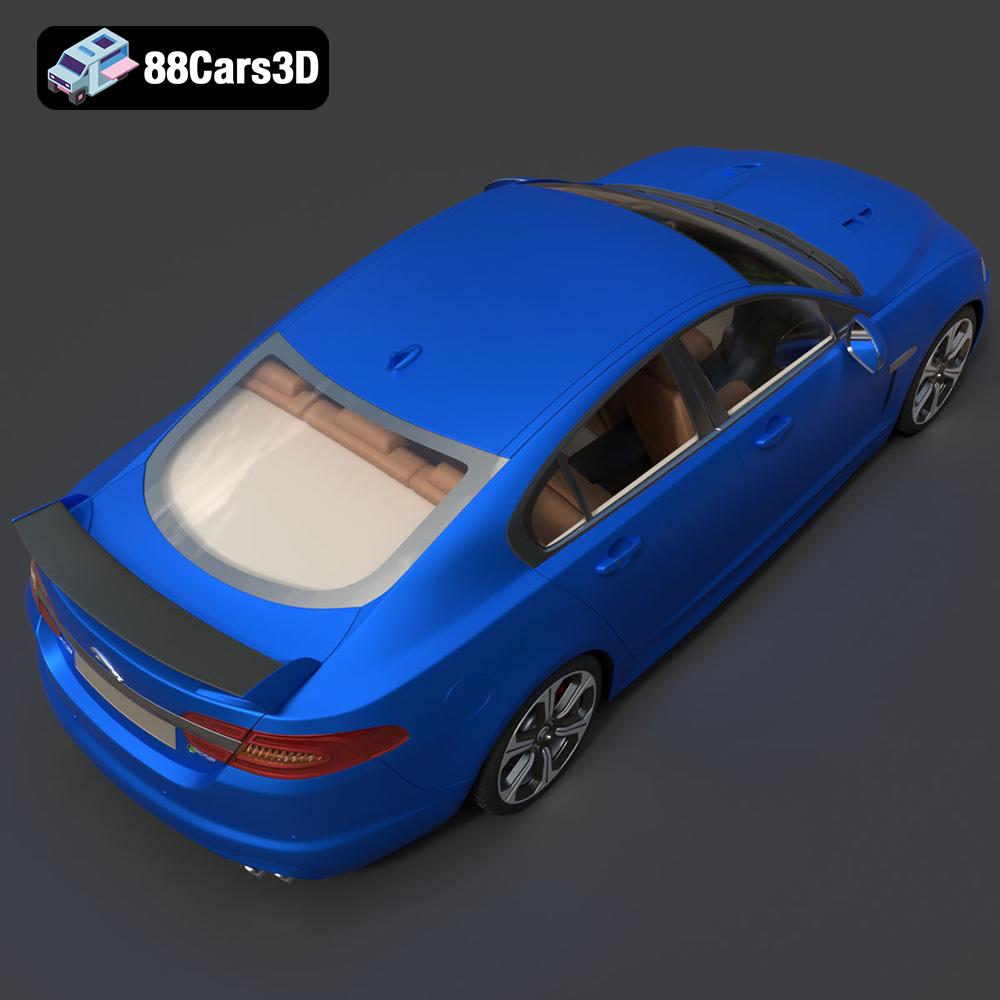
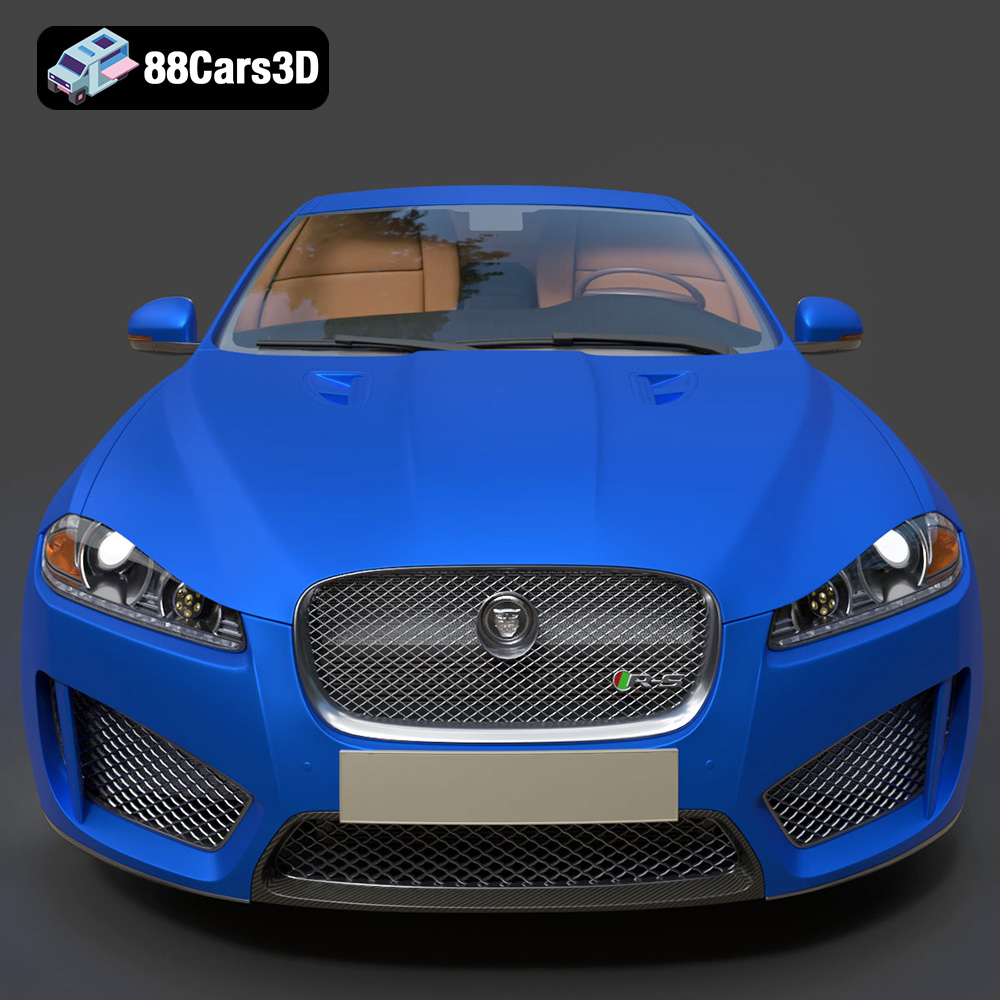
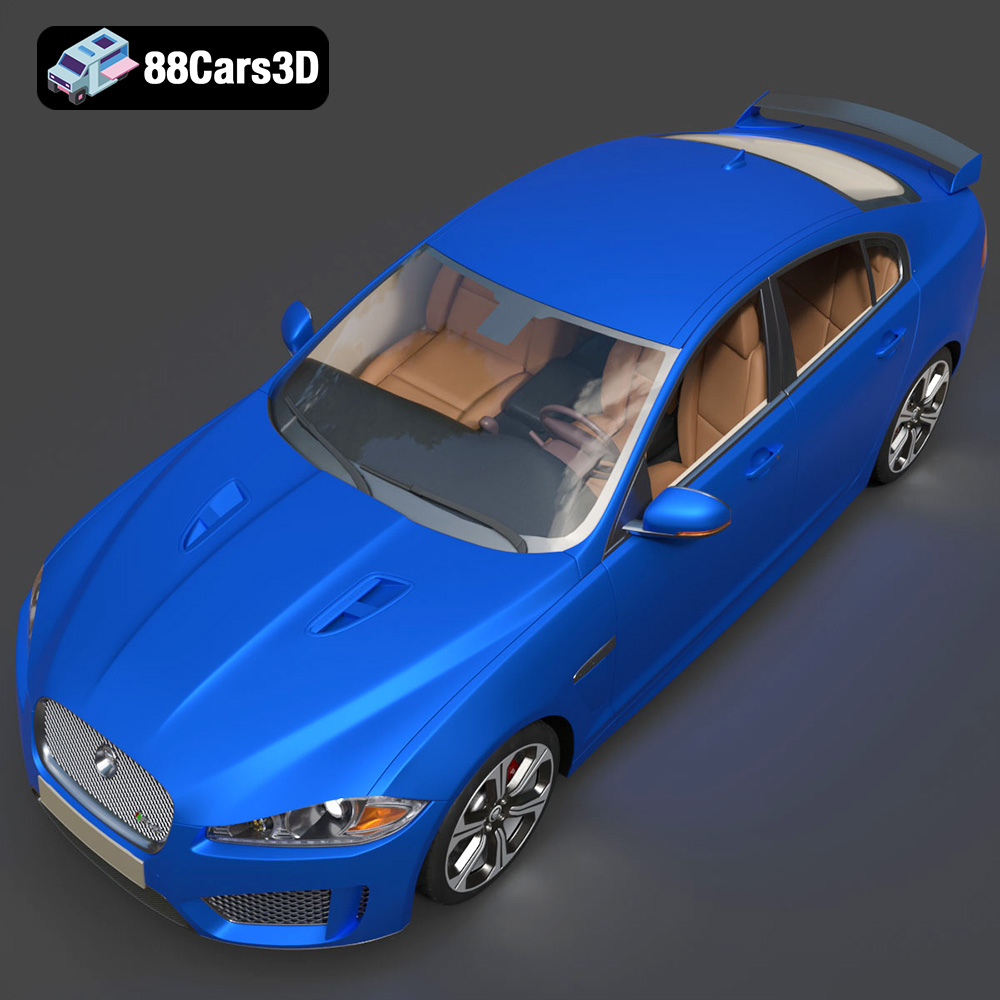
The Jaguar XFR-S 2014 3D Model delivers an exceptionally realistic representation of the iconic performance sedan. Designed with precision, this asset captures the aggressive styling, aerodynamic profile, and distinct characteristics of the XFR-S. Featuring clean geometry, meticulously crafted realistic materials, and an optimized polygon count, this model ensures professional-grade performance. The fully modeled interior and detailed exterior make it versatile for close-up shots and expansive scenes. Perfectly suited for game development, architectural visualization, cinematic rendering, and AR/VR applications, it provides a seamless integration into any production pipeline.
$19.99
.arvr
.blend
.car3dmodel
.fbx
.gameasset
.glb
.jaguar
.luxurycar
.max
.obj
.ply
.rendering
.sedan
.simulation
.sportssedan
.stl
.unreal
.xfrs