Get 20% OFF All Premium 3D & STL Models!

In the vast and rapidly evolving landscape of digital visualization, the demand for high-quality 3D assets has never been more critical. From cinematic masterpieces to immersive virtual reality experiences and groundbreaking game development, the foundation of every compelling digital environment lies in meticulously crafted models. Professionals constantly seek assets that not only impress visually but also integrate seamlessly into complex production pipelines, offering both artistic freedom and technical efficiency.
The standards for realism and performance in 3D content are continually being pushed. Artists, designers, and developers are no longer content with mere approximations; they require models that can withstand intense scrutiny, perform optimally in real-time engines, and provide the flexibility needed for diverse projects. Whether it’s the intricate mechanics of a vehicle or the sleek lines of a futuristic spacecraft, the underlying geometry, textures, and material definitions are paramount.
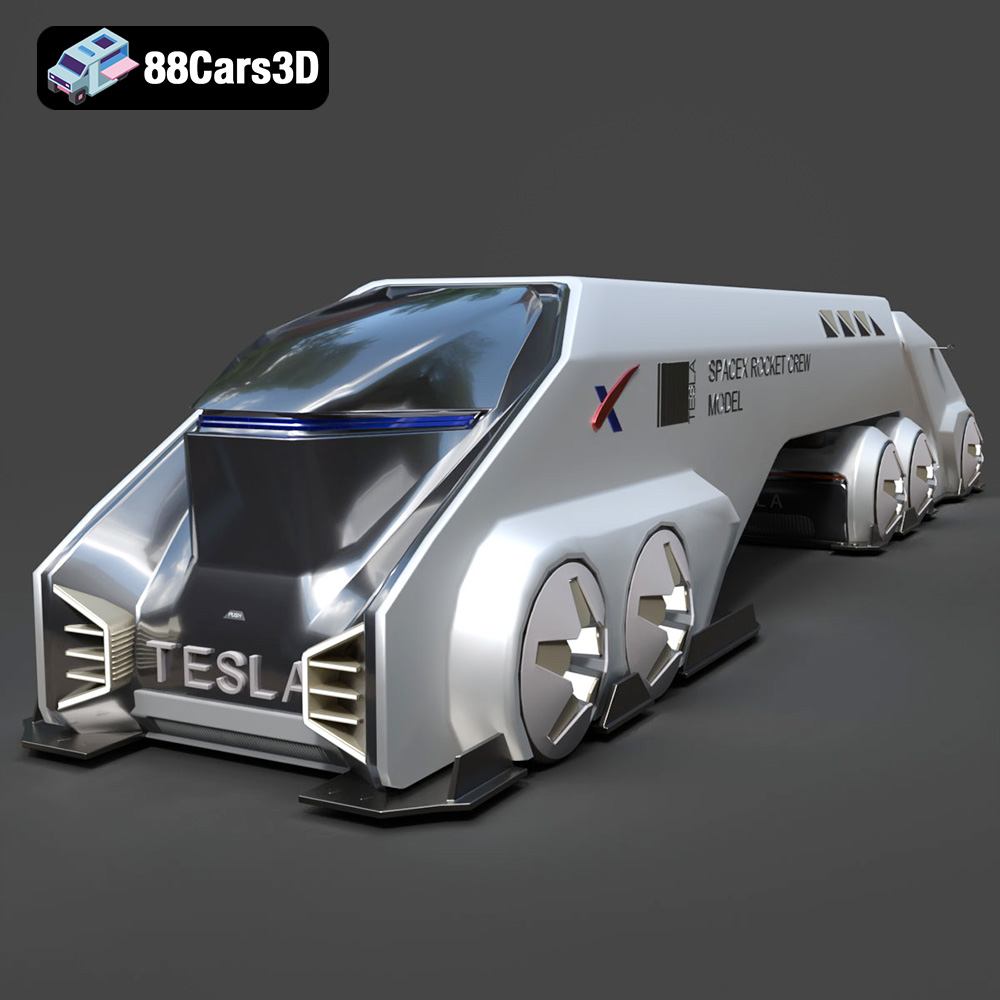
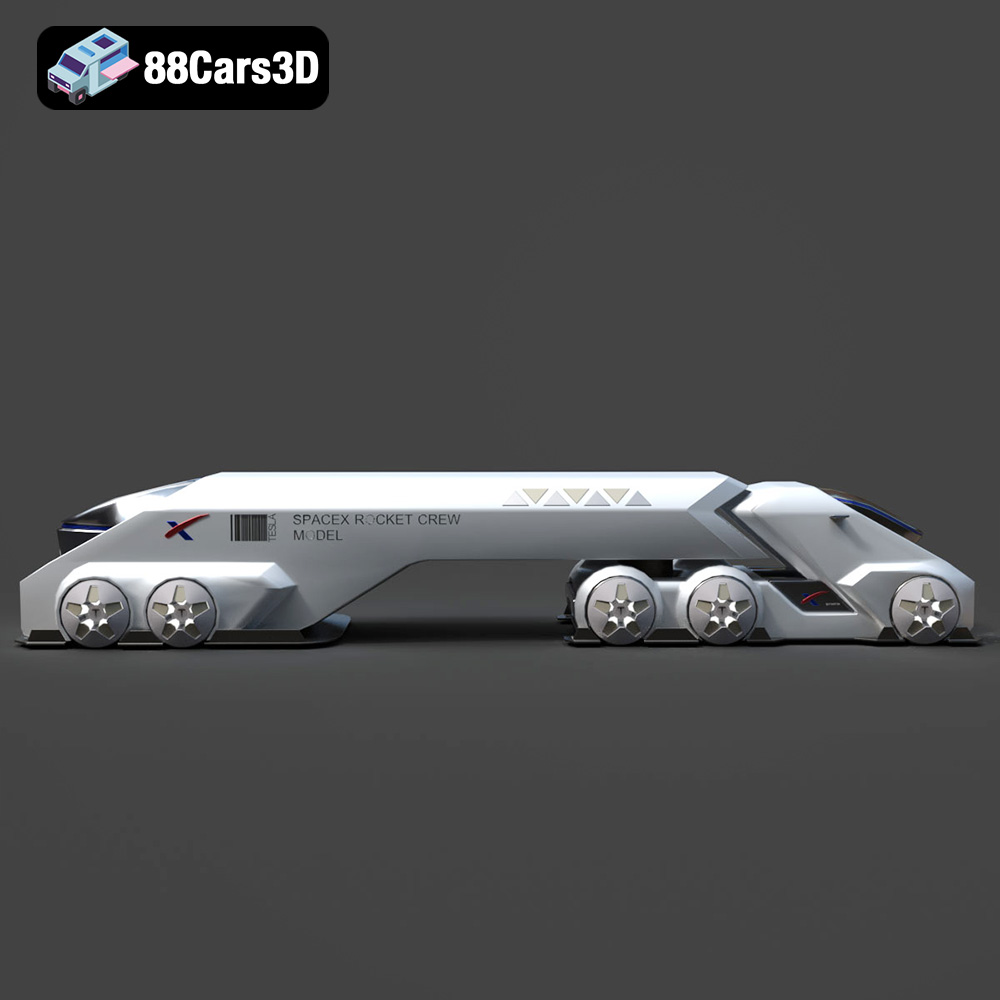
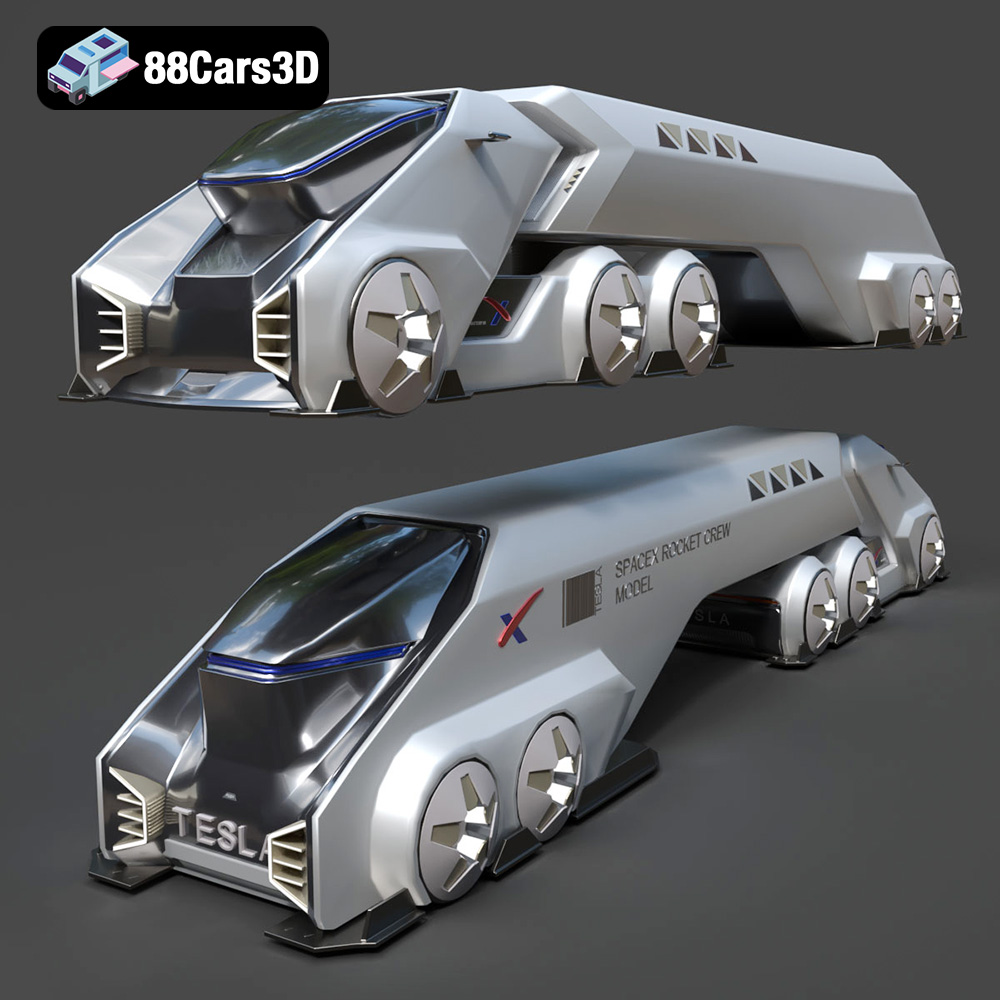
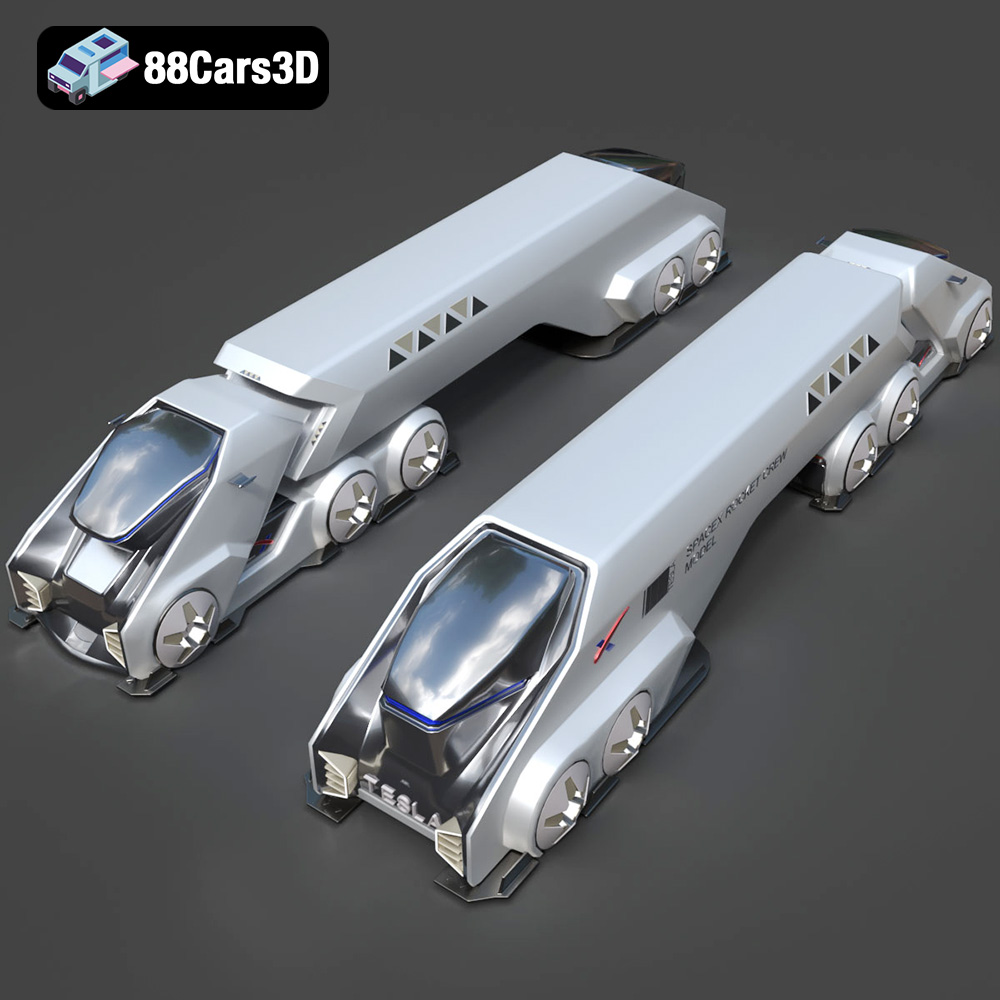
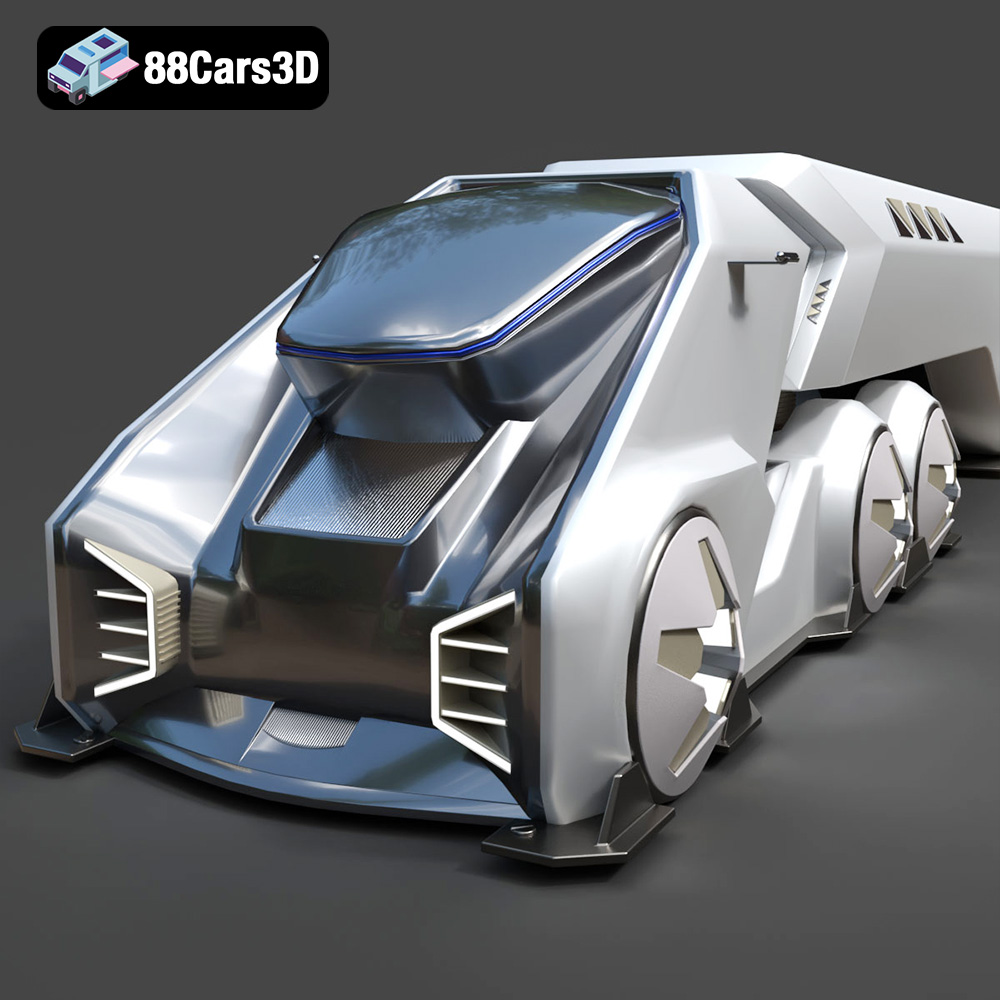
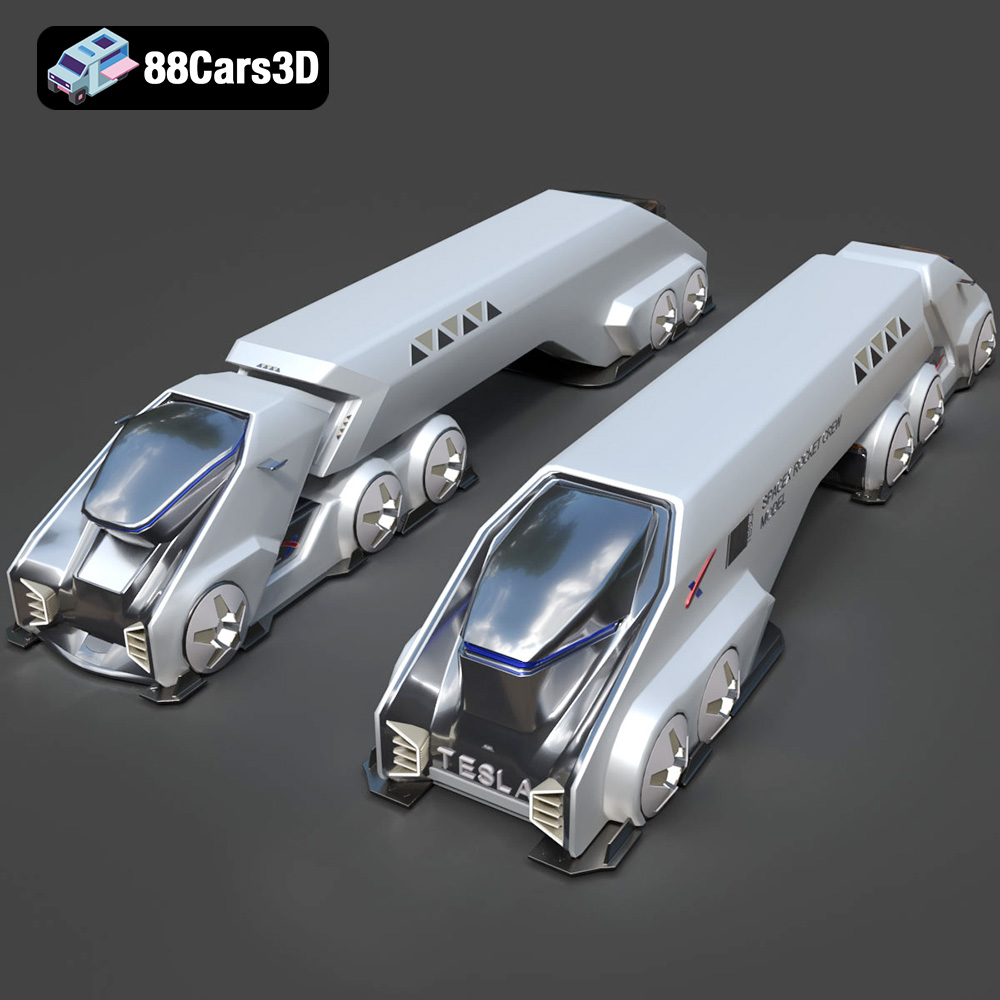
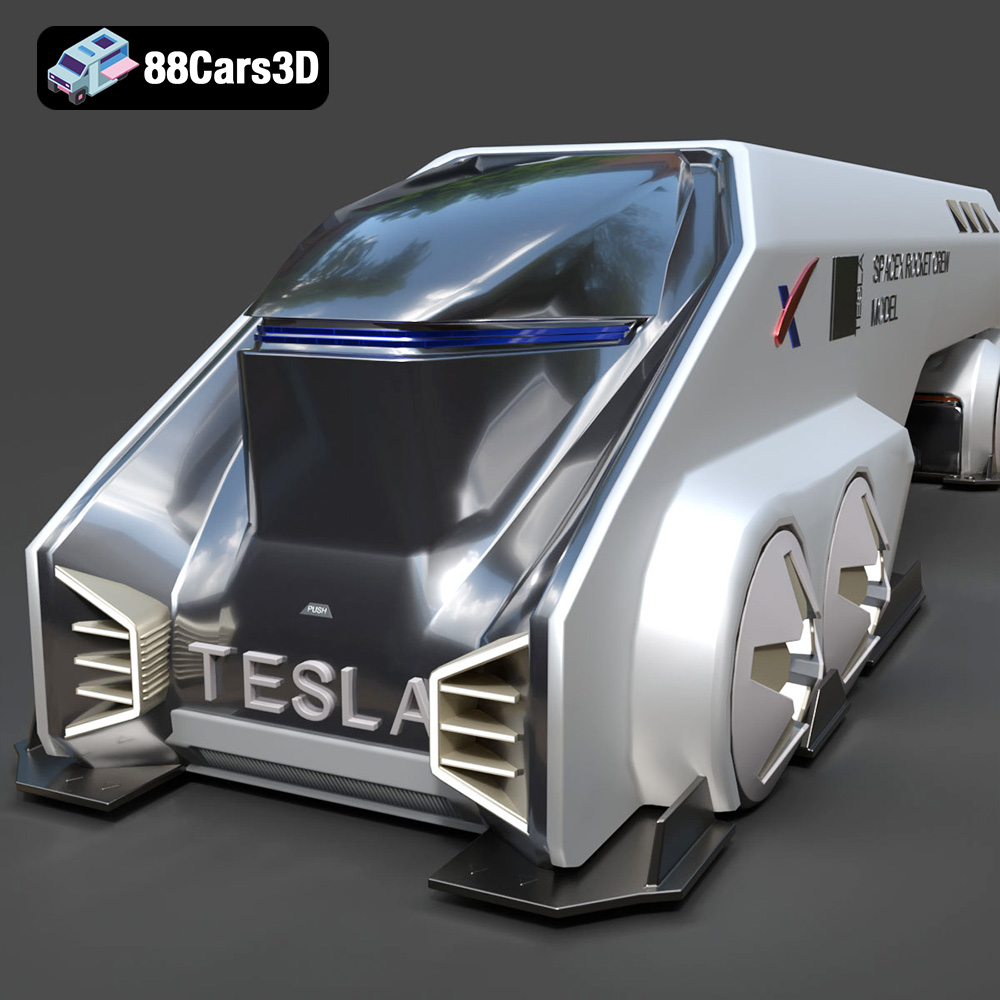
It is within this demanding environment that the Tesla Space Rocket-001 3D Model emerges as a stellar example of professional-grade asset creation. This model is not just a digital representation; it’s a testament to precision engineering in the 3D space. Accurately capturing the futuristic design and structural elements, it provides a robust foundation for dynamic rendering and interactive environments. Its clean geometry, realistic materials, and optimized topology ensure that it stands up to close-up renders and complex lighting setups, all while maintaining optimal system performance across various engines. For professionals seeking top-tier 3D models, assets like the Tesla Space Rocket-001 from 88cars3d.com represent an invaluable resource for elevating projects to new heights.
The choice of file format for a 3D model is far more than a minor technicality; it dictates compatibility, workflow efficiency, and the successful integration of an asset into a project. Different formats are optimized for distinct purposes, ranging from fully editable scenes to real-time engine deployment and physical manufacturing. Understanding these distinctions is crucial for any professional working with 3D assets.
The .blend format is Blender’s native file type. It encapsulates an entire Blender scene, including all 3D objects, meshes, materials, textures, animations, lighting, cameras, and even physics simulations. This format is ideal for users deeply embedded in the Blender ecosystem, offering maximum editability and preserving all scene data. When you acquire a .blend file like that offered for the Tesla Space Rocket-001, you gain access to the full creative project, allowing for extensive modifications, scene re-composition, or leveraging existing lighting setups for immediate rendering.
.fbx (Filmbox) is an Autodesk-developed format widely considered the industry standard for exchanging 3D data between various software applications, especially within game development and film production pipelines. It supports geometry, materials, textures, animations, and even rigging. Its strength lies in its ability to transfer complex scene data while maintaining integrity across platforms like Maya, 3ds Max, Unity, and Unreal Engine. For the Tesla Space Rocket-001, an .fbx file would be game-engine ready, facilitating quick import and setup in real-time environments. The .obj (Wavefront OBJ) format, while older, remains a universal workhorse. It primarily stores geometry (vertices, normals, texture coordinates, and faces) and references external material (.mtl) files for color and texture information. Its simplicity ensures broad compatibility with virtually all 3D software, making it an excellent fallback or starting point for cross-software workflows, though it lacks support for animation or advanced scene data.
.glb (GL Transmission Format Binary) is specifically designed for efficient transmission and loading of 3D scenes and models in web and AR/VR applications. It’s a binary version of glTF, consolidating the 3D model, textures, and animations into a single file, making it highly optimized for performance in browser-based viewers, augmented reality experiences, and virtual reality platforms. This format is perfect for showcasing the Tesla Space Rocket-001 in an interactive web viewer or an immersive AR/VR demo. .ply (Polygon File Format or Stanford Triangle Format) is a precision mesh format primarily used for storing 3D data from 3D scanners, CAD software, or scientific visualization. It can store various properties for each vertex (like color and normals) and face, making it suitable for detailed analysis, reverse engineering, or high-fidelity visualization where mesh accuracy is paramount.
.stl (Standard Tessellation Language) is the de facto standard for 3D printing and rapid prototyping. It describes only the surface geometry of a 3D object using a collection of interconnected triangles, without any color, texture, or material information. While simplistic, its widespread adoption makes it essential for taking a digital model like the Tesla Space Rocket-001 from concept to a physical prototype. This format is crucial for engineers and designers looking to fabricate scale models or test physical ergonomics.
The .unreal format, often referring to an Unreal Engine-ready asset package (like a UAsset or a collection of files specifically structured for Unreal), signifies a model that has been pre-configured for direct import and optimal use within the Unreal Engine ecosystem. This can include optimized meshes, material instances, PBR textures, LODs (Levels of Detail), and even basic collision setups, dramatically accelerating integration into game environments or real-time architectural visualization projects. Similarly, .max is the native file format for Autodesk 3ds Max, one of the most powerful 3D modeling, animation, and rendering software suites. A .max file for the Tesla Space Rocket-001 provides the complete editable scene, allowing artists full control over rigging, animation, complex rendering setups, and advanced material customization, making it invaluable for professional animation studios and visualization experts. The availability of such diverse, high-quality formats on 88cars3d.com ensures that assets like the Tesla Space Rocket-001 are accessible and workflow-ready for virtually any project.
Creating a 3D model that excels in both visual realism and technical performance is a delicate balance between artistic vision and scientific precision. For an asset like the Tesla Space Rocket-001, every polygon, texture, and material definition plays a critical role in its perceived quality and utility across various platforms, from photorealistic renders to real-time interactive experiences.
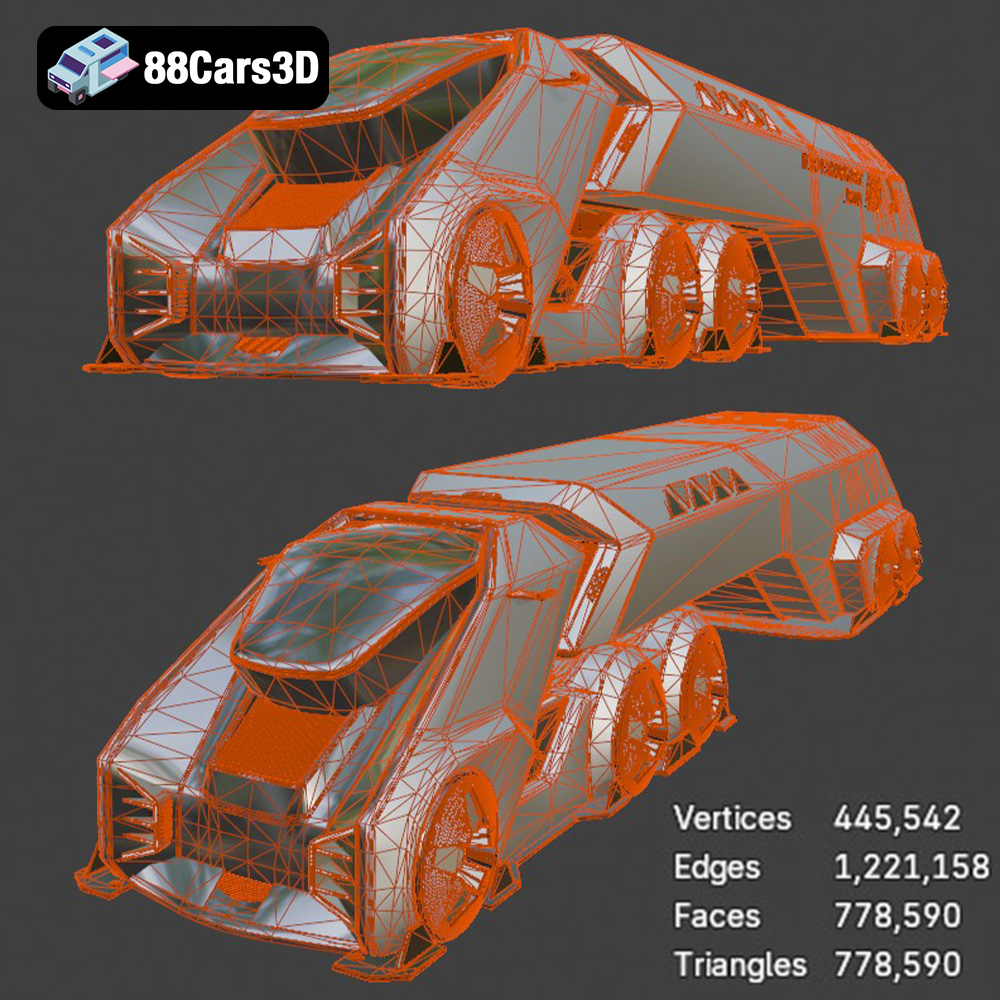
At the heart of any excellent 3D model is its topology – the arrangement of vertices, edges, and faces that define its surface. Good topology ensures smooth deformations for animation, efficient UV mapping, and clean shading. For complex objects like a spacecraft, this means avoiding stretched polygons, n-gons (faces with more than four sides), and ensuring an optimal polygon count. “Clean geometry” isn’t just an aesthetic term; it means the model is lightweight enough for real-time applications (e.g., game assets or AR/VR), yet dense enough in critical areas to hold intricate details for close-up renders. Techniques like retopology are often employed to simplify meshes from high-resolution sculpts, creating a performance-friendly base mesh that retains visual fidelity.
Visual realism stems heavily from realistic materials and textures. Modern workflows heavily rely on Physically Based Rendering (PBR), which simulates how light interacts with surfaces in the real world. This involves defining properties like albedo (base color), roughness, metallic, normal, and ambient occlusion maps. For the Tesla Space Rocket-001, “realistic materials” implies that its metallic surfaces will reflect light accurately, its panels will show subtle wear or discoloration, and its glass elements will refract light convincingly. The quality of these textures, often high-resolution (e.g., 4K or 8K), directly contributes to the model’s ability to stand up to close-up renders without pixelation or blurriness.
While often overlooked by enthusiasts, professional 3D artists understand the critical importance of UV mapping. UVs are 2D coordinates that tell a 3D software how to project a 2D texture onto the 3D surface of a model. “Optimized topology” often goes hand-in-hand with “clean UVs.” Well-laid-out UVs minimize texture stretching, reduce seams, and efficiently utilize texture space, which is vital for both visual quality and memory performance. For intricate models, multiple UV sets might be used, allowing for different levels of detail or specific texture types to be applied to various parts of the model.
The true value of a professional 3D asset lies in its seamless integration into diverse production pipelines. The Tesla Space Rocket-001 3D Model is designed with this versatility in mind, offering multiple formats that cater to a wide array of industry-standard software and applications. Its robust design makes it suitable for everything from intricate automotive rendering scenes to dynamic game development and immersive VR experiences.
For studios focused on high-quality cinematic renders and detailed visualizations, the .max and .blend formats offer unparalleled flexibility. In 3ds Max, artists can leverage its powerful V-Ray or Corona render engines to create stunning photorealistic imagery. The editable .max file allows for complete control over the rocket’s components, enabling complex animation sequences – perhaps a launch sequence or orbital maneuver – with intricate camera paths and sophisticated lighting setups. Similarly, in Blender, the .blend file allows artists to take full advantage of Cycles or Eevee renderers. The pre-packaged materials and lighting setup provide an excellent starting point, allowing artists to quickly drop the rocket into a scene, adjust environmental lighting, and begin rendering high-resolution stills or animated sequences for presentations, advertisements, or short films.
The gaming industry and real-time visualization sectors thrive on efficiency and performance. The inclusion of .fbx and .unreal formats for the Tesla Space Rocket-001 is a game-changer for developers. The .fbx file can be directly imported into Unreal Engine, where its optimized topology and PBR-ready materials allow for quick setup. Developers can easily create material instances, apply physics, and integrate the rocket into existing game levels or interactive simulations. The .unreal format likely offers an even more streamlined process, potentially providing a fully configured asset ready to be dragged and dropped into a project, complete with LODs (Levels of Detail) for performance scaling and collision meshes, crucial for a realistic interactive experience, especially in fast-paced game environments. This level of preparation significantly reduces development time and ensures optimal performance even for complex scenes, akin to how expertly crafted 3D car models are integrated into racing simulations.
Beyond traditional rendering and game development, the Tesla Space Rocket-001 also shines in more niche yet equally demanding applications. For cinematic pre-visualization, the model can be rapidly deployed in real-time engines to block out scenes, test camera angles, and visualize complex effects before costly production begins. In Virtual Reality (VR) and Augmented Reality (AR), the optimized .glb format is essential. This compact, efficient format ensures smooth performance and quick loading times, critical for immersive experiences. Imagine a VR tour of a futuristic space station where the Tesla Space Rocket-001 is a central showpiece, or an AR application that places the rocket directly into a user’s living room, allowing for interactive exploration. Its clean geometry and optimized textures ensure that these experiences are fluid and visually compelling.
The utility of a high-quality 3D asset like the Tesla Space Rocket-001 extends far beyond traditional rendering. Its precision and adaptability open doors to a multitude of innovative applications, demonstrating the broad impact that expertly crafted 3D models have across various industries. This is true for all high-quality vehicle models, whether they are 3D car models or spacecraft.
In game development, the Tesla Space Rocket-001 serves as an ideal game asset. Its optimized topology and PBR-ready materials mean it can be directly integrated into various game engines, from high-fidelity AAA titles to mobile applications. Developers can use it as a primary vehicle for player interaction, a key environmental prop, or even as part of a cinematic in-game sequence. The ability to customize and animate such a detailed model allows for a rich array of interactive experiences, from space exploration games to futuristic combat simulations. Its “game-engine ready” status means less time spent on optimization and more on creative implementation.
For scientific research and educational purposes, precise 3D models are invaluable. The Tesla Space Rocket-001 can be utilized in simulations to visualize complex aerodynamic forces, propulsion systems, or orbital mechanics. Researchers can study its design in virtual environments, run virtual wind tunnel tests, or simulate launch trajectories. Educational institutions can leverage the model to teach concepts of spacecraft design, engineering, and space travel in an engaging, interactive format. The .ply format, in particular, can be useful for detailed mesh analysis in engineering software.
Before physical production begins, concept artists and industrial designers rely heavily on 3D models to iterate and refine their ideas. The Tesla Space Rocket-001, as a detailed concept, provides an excellent foundation for further design exploration. Designers can modify its existing structure, experiment with new components, or even create variations of the spacecraft. Furthermore, the .stl format makes it perfectly suited for 3D printing, allowing for rapid physical prototyping. This enables designers to hold a tangible representation of their concept, identify potential ergonomic or structural issues, and make informed decisions early in the design phase, significantly reducing costs and accelerating development cycles, much like how automotive designers prototype new 3D car models.
In a competitive digital landscape, the distinction between good and exceptional often comes down to the quality of the underlying assets. For professionals, investing in premium 3D models is not just about aesthetics; it’s about efficiency, reliability, and ultimately, delivering a superior final product. 88cars3d.com stands as a reliable source for such high-caliber assets.
The Tesla Space Rocket-001 3D Model exemplifies the commitment to professional standards found at 88cars3d.com. Every model is crafted with “clean geometry, realistic materials, and optimized topology.” This attention to detail means that artists and developers receive assets that are not only visually impressive but also technically sound. They are built to perform, minimizing the need for extensive cleanup or optimization, thereby saving valuable production time and resources. This level of quality is consistent across their range, including their extensive collection of high-fidelity 3D car models.
Whether your project demands a futuristic spacecraft, a classic automobile, or a modern vehicle, the marketplace offers a diverse selection to meet varying needs. The availability of models in a “comprehensive range of file formats” ensures maximum compatibility with your preferred workflow, be it 3ds Max for architectural rendering, Blender for indie game development, or Unreal Engine for cutting-edge simulations. This versatility, combined with high-quality execution, makes 88cars3d.com a go-to resource for premium 3D assets that are truly production-ready.
The digital realm is an infinite canvas, and the tools we use to bring our visions to life are as critical as the ideas themselves. The Tesla Space Rocket-001 3D Model is a prime example of an asset that transcends mere visual appeal, offering a robust, technically sound foundation for a multitude of professional applications. Its detailed design, optimized topology, and comprehensive format support make it an indispensable tool for anyone operating at the forefront of 3D visualization, from automotive rendering specialists exploring new vehicle designs to game developers crafting immersive universes.
From dynamic cinematic sequences in 3ds Max and Blender to high-performance real-time environments in Unreal Engine, and even tangible 3D prints via .stl, this model empowers creators to push boundaries. It streamlines workflows, reduces development overhead, and ensures that the final output maintains a consistent level of excellence. In an industry where precision and performance are paramount, investing in assets like the Tesla Space Rocket-001 from 88cars3d.com is not just a choice, but a strategic advantage, enabling you to launch your creative projects to unprecedented digital heights.
Discover the Tesla Space Rocket-001 3D Model, a highly detailed digital asset crafted for professional visual projects. This model accurately captures the futuristic design and structural elements of the Tesla Space Rocket-001, providing a robust foundation for dynamic rendering and interactive environments. Engineered with precision, this model features clean geometry, realistic materials, and optimized topology. The fully textured components ensure that it stands up to close-up renders and complex lighting setups while maintaining optimal system performance across different engines. Ideal for diverse applications, this model is perfectly suited for video game development, architectural rendering, immersive AR/VR experiences, and detailed technical visualization. Available in a comprehensive range of file formats to integrate seamlessly into your preferred workflow:
$19.99
.arvr
.blend
.car3dmodel
.concept
.fbx
.gameasset
.glb
.max
.obj
.ply
.rendering
.rocket
.simulation
.spacecraft
.spacerocket
.stl
.tesla
.unreal