Get 20% OFF All Premium 3D & STL Models!

In the vast landscape of 3D visualization, few subjects command as much passion and meticulous detail as automotive design. From sleek modern supercars to rugged off-roaders, 3D car models serve as the backbone for everything from high-fidelity game environments and immersive AR/VR experiences to breathtaking cinematic renders and precise engineering simulations. But among the endless parade of vehicles, certain classics stand out, not just for their design, but for the stories they tell and the eras they define.
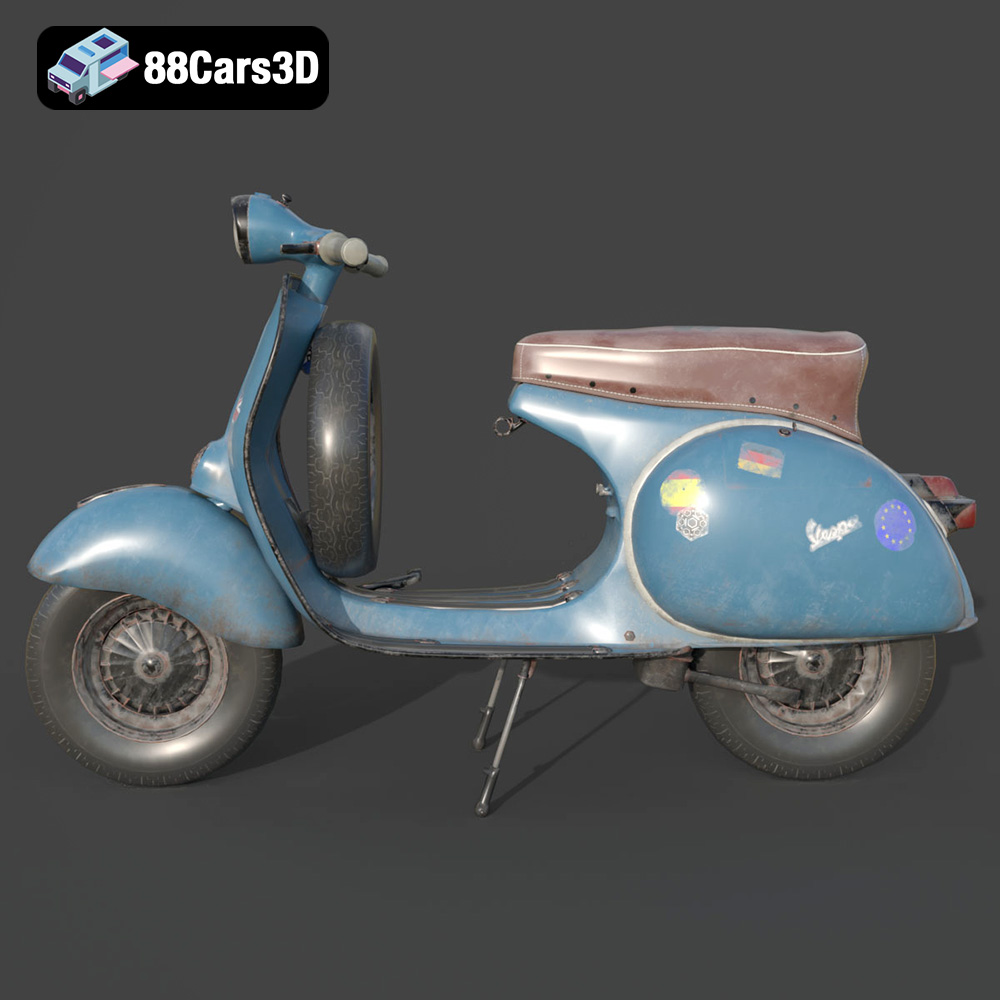
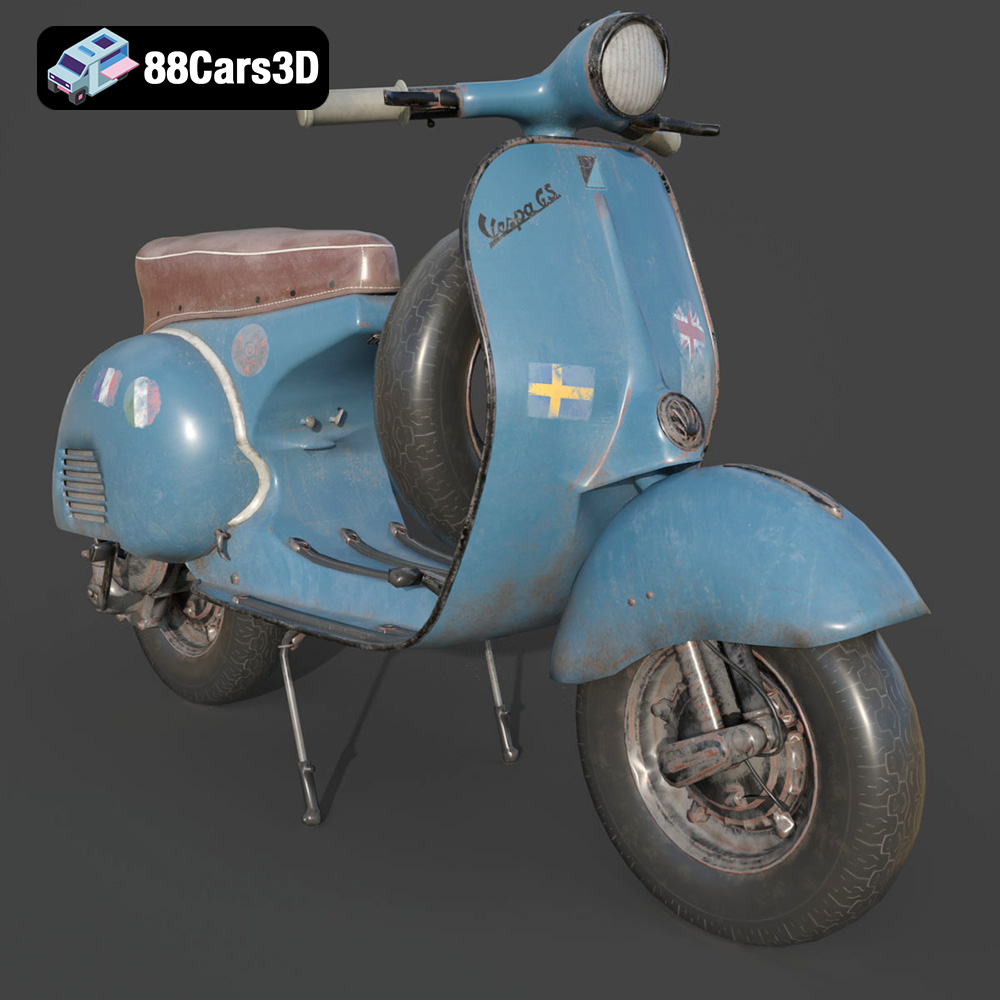
One such icon is the Vespa GS 150. A symbol of post-war Italian elegance, freedom, and innovation, the Gran Sport redefined what a scooter could be. Its aerodynamic curves, signature leg shield, and spirited 150cc engine captured hearts globally. Recreating such a legendary machine in a digital format demands not only technical expertise but a deep appreciation for its heritage. This is where a meticulously crafted asset like the Vespa GS 150 3D Model truly shines, offering creators an authentic, game-ready, and highly detailed representation of this timeless classic. Whether for a vintage street scene, a historical game title, or a virtual showroom, the precision and versatility of such a model are paramount to delivering a truly convincing digital experience.
The success of any 3D project often hinges on selecting the correct file format. Different formats are optimized for various purposes, from real-time engine integration and archival storage to 3D printing and web-based applications. Understanding their strengths and limitations is crucial for any professional working with 3D car models, especially when sourcing high-quality assets like the Vespa GS 150 3D Model, which offers a comprehensive suite of options.
By offering this diverse range of formats, the Vespa GS 150 3D Model from 88cars3d.com empowers artists and developers to integrate this classic scooter seamlessly into virtually any project, ensuring optimal performance and fidelity regardless of the target platform or software.
Recreating a classic vehicle like the Vespa GS 150 in 3D is a meticulous endeavor, blending historical accuracy with modern 3D modeling best practices. It’s about more than just geometry; it’s about translating the soul of the machine into a digital form that resonates with authenticity.
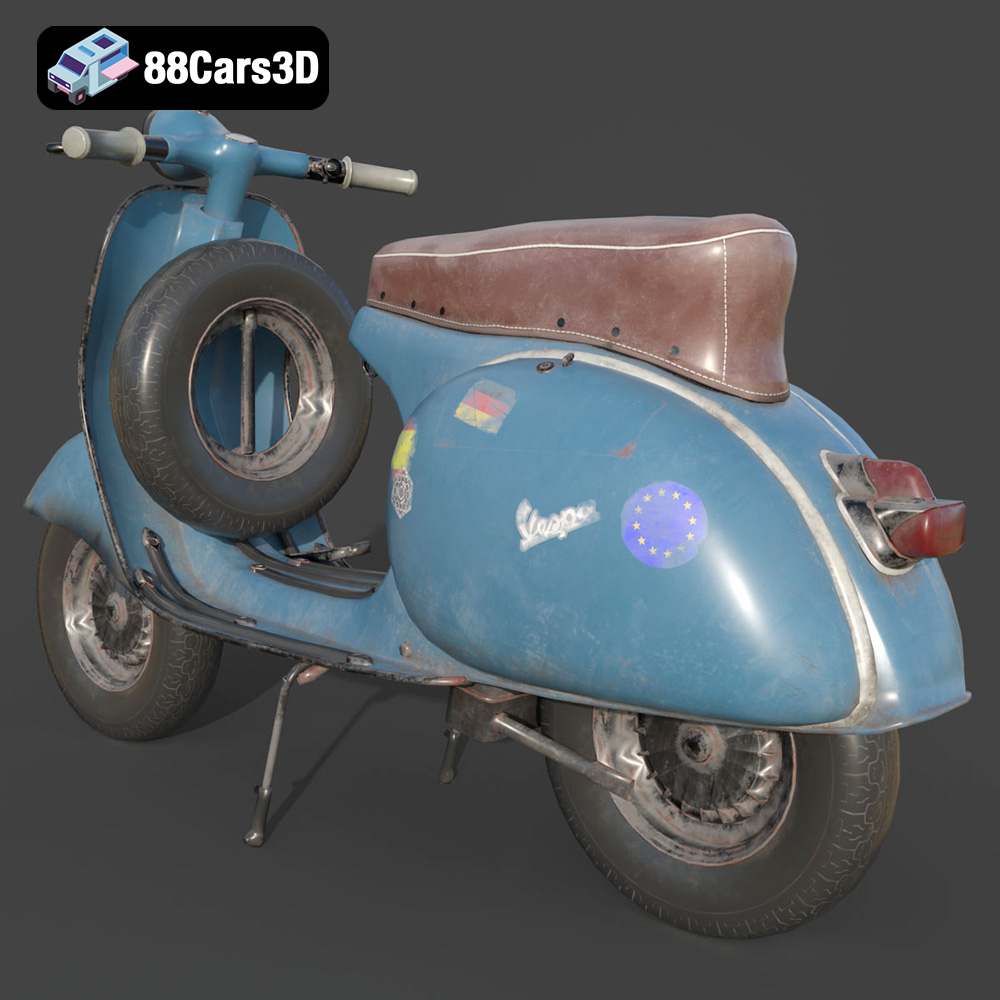
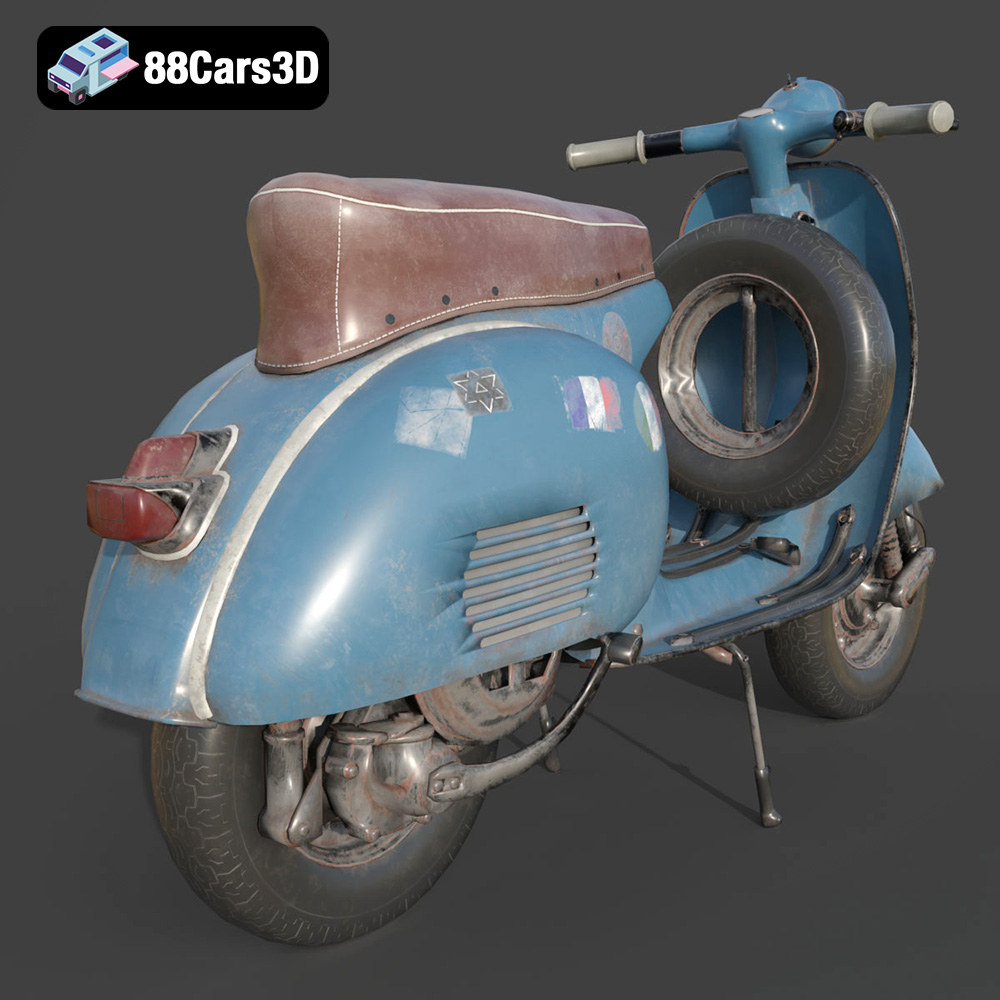
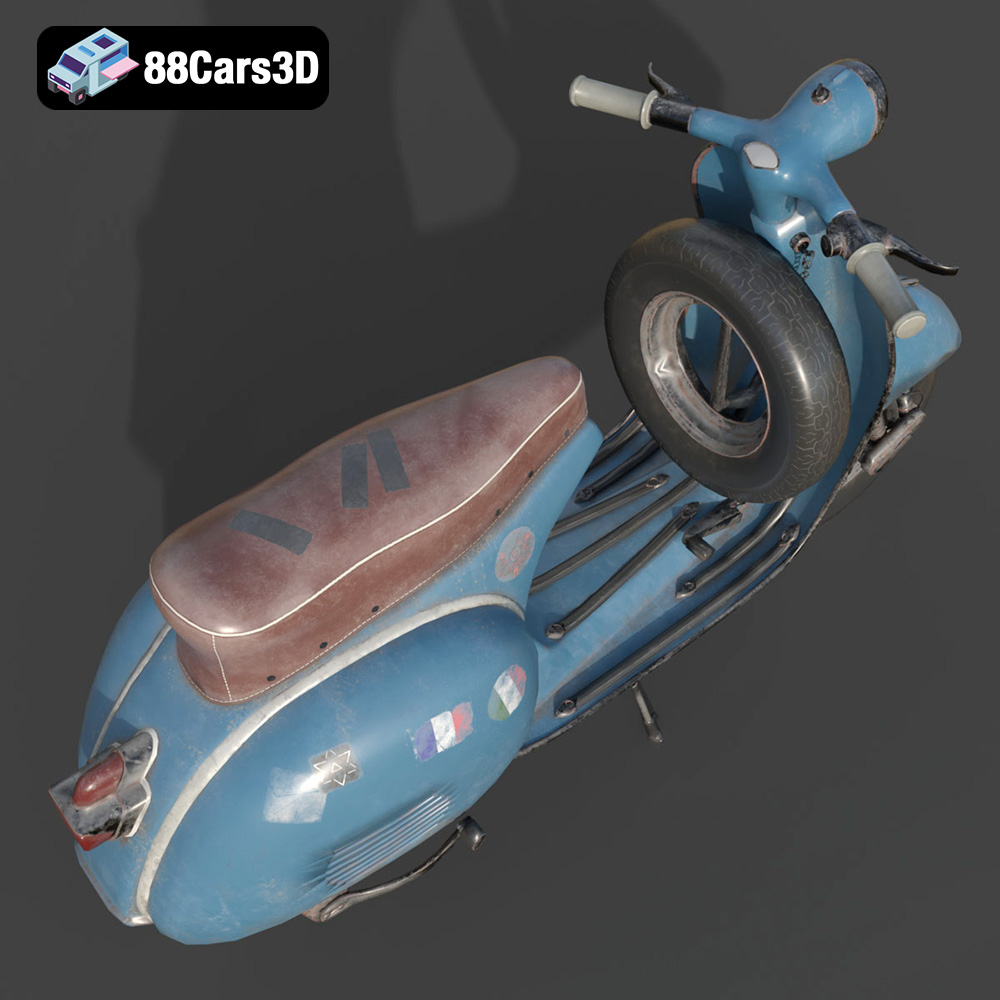
The challenge with automotive rendering and game assets lies in capturing the minute details that define a vehicle’s character. For the Vespa GS 150 3D Model, this means a rigorous adherence to the original design. The model accurately reproduces the Vespa GS 150’s distinctive unibody frame geometry, its iconic swept-back leg shield, and the rounded side panels that give it its timeless silhouette. Even the engine block doesn’t escape scrutiny, featuring the intricate 150cc 2-stroke casing and cooling fins, alongside the classic sweeping exhaust system with authentic muffler details.
Attention extends to smaller, yet crucial, elements: the authentic round headlamp, sleek teardrop taillight, and the 10-inch wheels with period-correct tread patterns and hubcaps. The signature front trailing-link suspension is also accurately modeled, not just for visual fidelity but also for potential animation. Inside the cockpit, the classic dual saddle or long bench seat details are rendered with rich texturing, complemented by the detailed tubular handlebars, integrated speedometer, original Piaggio-style instrument cluster, and accurate hand grips, clutch/brake levers, and floorboard footbrakes. This level of detail ensures the model is suitable for close-up renders and even first-person views in gaming, providing an immersive experience.
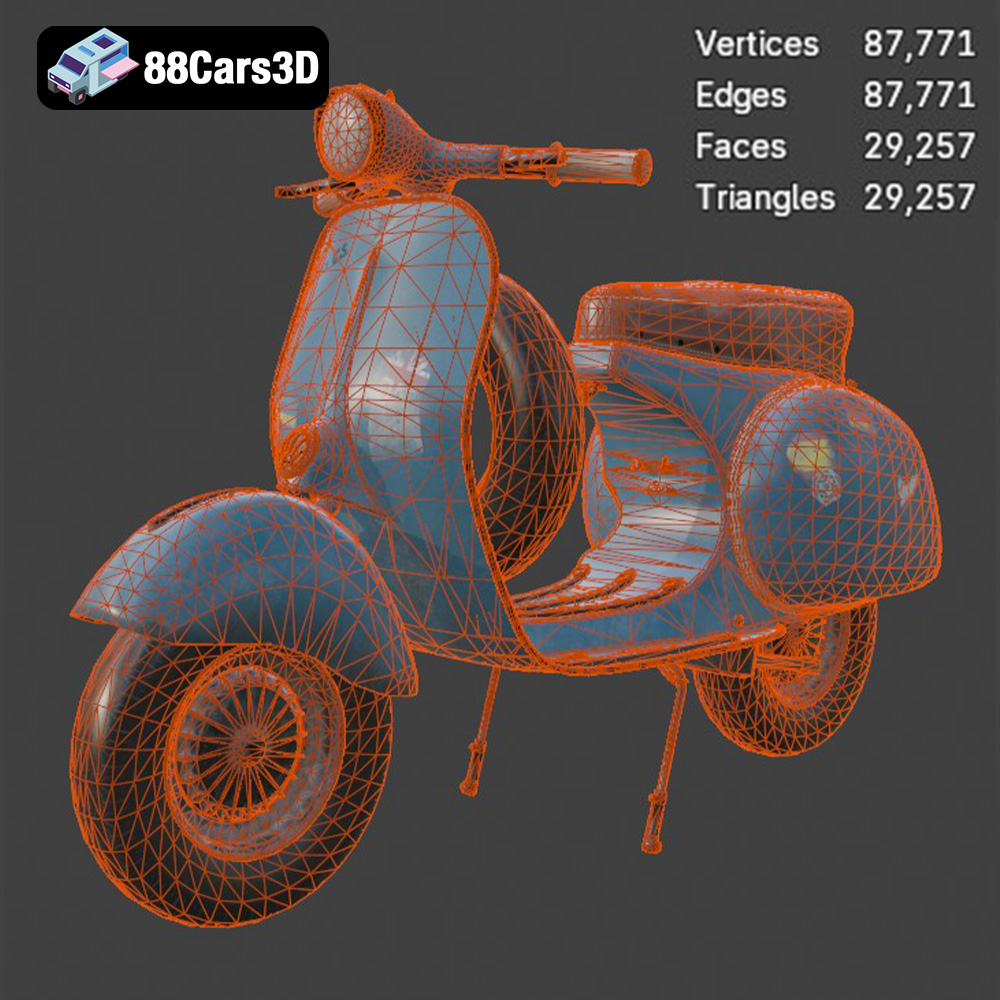
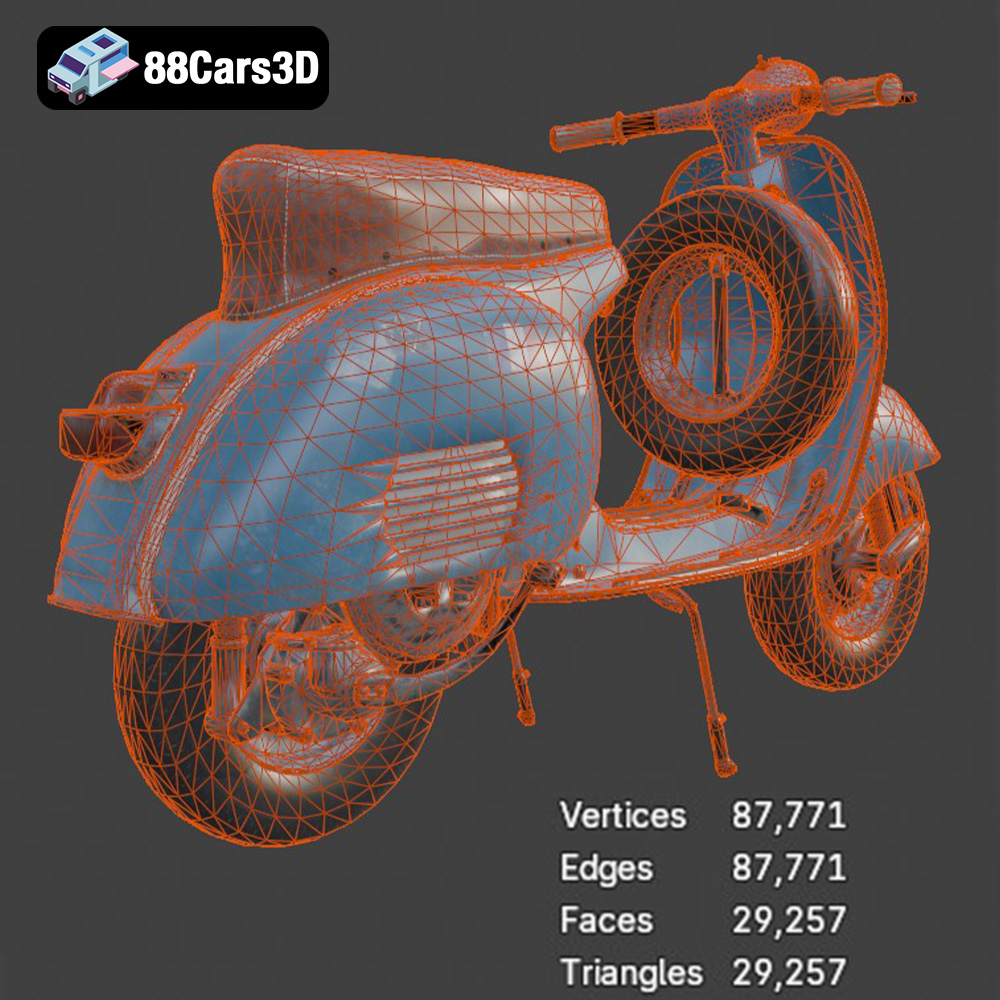
One of the most significant technical advantages of the Vespa GS 150 3D model is its optimized topology. With approximately 200,000 triangles, it strikes a perfect balance. This poly count is low enough to be considered “game-ready,” ensuring excellent performance in real-time engines like Unreal and Unity, where frame rates are paramount. Yet, it’s high enough to maintain exceptional visual realism, making it suitable for high-end rendering and visualization projects where close-ups and intricate details are scrutinized. This optimization means that developers and artists don’t have to compromise between visual quality and performance, allowing for seamless integration into diverse projects without extensive re-topology work. The real-world scale accuracy, based on actual vehicle chassis, further enhances its utility across professional applications.
High-quality 3D car models are versatile assets that find homes in a multitude of industries. The Vespa GS 150 3D model’s technical specifications and multi-format availability make it a prime candidate for a range of professional applications, from interactive experiences to static visualizations.
For game developers, the demand for authentic and optimized vehicle assets is constant. The Vespa GS 150 3D model, with its ~200,000 triangles, is perfectly suited for open-world games, racing titles, and simulators. Its optimized polycount ensures smooth frame rates, while the detailed geometry maintains visual appeal. Crucially, features like separate wheels, suspension, and steering components, combined with proper pivot setups, mean the model is ready for advanced animation and physics implementation in engines like Unreal Engine and Unity. Artists can quickly integrate it into their game worlds, apply custom shaders, and get it rolling with minimal fuss. The included .fbx and .unreal formats are specifically tailored for these real-time pipelines, streamlining the development process significantly.
Beyond interactive experiences, the Vespa GS 150 3D model excels in high-fidelity rendering for marketing, advertising, and architectural visualization. Its meticulous detailing and accurate proportions make it an ideal subject for studio lighting setups, brand campaigns, and lifestyle scenes. Imagine this classic scooter parked elegantly in a European street scene, or showcased in a virtual showroom with stunning ray-traced reflections. Tools like 3ds Max (supported by the .max file) and Blender (with the .blend file) allow artists to leverage powerful rendering engines like V-Ray, Corona, and Cycles to produce photorealistic imagery that captures the timeless allure of the Vespa GS 150. The ability to easily change body/tank colors, modify tire textures, and adjust material finishes opens up endless possibilities for creative expression and specific client needs.
Augmented Reality (AR) and Virtual Reality (VR) are transforming how we interact with digital content. For automotive applications, this means immersive virtual showrooms, interactive configurators, and mobile AR experiences. The Vespa GS 150 3D model, especially in its optimized .glb format, is a perfect fit for these emerging technologies. Its efficient file size and PBR material support ensure quick loading times and high visual quality on various devices, from VR headsets to smartphones. Users can explore the scooter from every angle, customize its colors in real-time, or even place it virtually in their own driveway through AR, creating engaging and memorable brand interactions. This makes the model an invaluable asset for companies looking to innovate in digital marketing and customer engagement.
The journey of a 3D model doesn’t always end on a screen. For enthusiasts and professionals alike, the ability to convert a digital asset into a physical object through 3D printing offers a unique tactile connection to the design. The Vespa GS 150 3D Model, available in .stl format, bridges this gap, allowing for the creation of stunning physical replicas.
Converting a complex 3D car model for 3D printing requires careful consideration of scale, part separation, and structural integrity. The Vespa GS 150 model is designed with this in mind, with recommendations for scaling (1:12, 1:18, 1:24) to suit different display purposes. The model’s optimized geometry helps ensure that it translates well into a solid object. For complex assemblies like the Vespa, parts are often separated digitally to facilitate easier printing and assembly. For instance, the product description wisely suggests printing the frame angled for structural integrity and printing wheels separately, which is a common best practice to achieve higher detail and reduce the need for excessive supports.
Achieving a high-quality 3D print of an intricate model like the Vespa GS 150 demands specific print settings. For fine details, resin printing is highly recommended over FDM, allowing for layer heights as low as 0.04–0.12 mm, which captures the delicate curves and small components like cooling fins and instrument cluster details. Appropriate wall thickness (1.2–2.0 mm) and infill (20–30%) are suggested to ensure both structural strength and efficient material use. Supports are almost always required for overhangs and intricate parts like the exhaust, mirrors, and handlebars. Post-processing, including sanding to smooth layer lines, priming for an even surface, and applying authentic factory colors with metallic finishes, is crucial to elevate a raw print into a museum-worthy display piece. This tangible representation enhances the value of the digital asset, making it not just a visual tool but a physical collectible.
A truly professional 3D asset provides a strong foundation, but its real power lies in its adaptability. The Vespa GS 150 3D model offers extensive customization options, enabling artists and developers to tailor it precisely to their creative vision or project requirements.
The ability to manipulate materials and textures is fundamental to achieving specific aesthetic goals. With the Vespa GS 150 model, artists can effortlessly change body and tank colors to replicate factory finishes, explore custom paint jobs, or even experiment with unique materials like matte, gloss, or metallic variations. This flexibility is invaluable for brand campaigns that require specific color palettes or for games where vehicle customization is a key feature. Changing tire textures, for instance, allows for quick transformation from a street-ready scooter to a vintage rally contender. The robust UV mapping inherent in such a high-quality model ensures that any new textures or materials are applied seamlessly without distortion, providing a clean canvas for artistic expression.
Beyond static renders, the Vespa GS 150 3D model is designed for dynamic integration. Its separate wheels, suspension, and steering components, coupled with proper pivot setups, make it animation-ready straight out of the box. This means animators can easily rig the scooter for realistic movement, from steering and leaning to wheel rotation and suspension compression. This is critical for game cinematics, interactive simulations, and architectural visualizations where vehicles need to appear in motion. Furthermore, its real-world scale accuracy and optimized geometry facilitate effortless integration into larger scenes, whether it’s populating a bustling digital cityscape with a touch of retro charm or placing it as a hero asset in a virtual showroom. This adaptability saves significant development time and broadens the creative possibilities for any project utilizing this exceptional 3D asset from 88cars3d.com.
The world of 3D modeling thrives on detail, accuracy, and versatility, especially when it comes to beloved automotive subjects. The Vespa GS 150 is more than just a scooter; it’s a cultural touchstone, and its digital rendition demands a level of craftsmanship that few assets achieve. The Vespa GS 150 3D Model stands out as a testament to this principle, offering an impeccably detailed, game-ready asset that beautifully balances visual fidelity with optimized performance.
From its ~200,000 triangle topology ensuring seamless integration into real-time game engines like Unreal and Unity, to its exhaustive suite of file formats (.blend, .fbx, .obj, .glb, .stl, .ply, .unreal, .max) catering to every conceivable workflow, this model is a powerhouse for artists, developers, and enthusiasts. Whether you’re aiming for photorealistic automotive rendering, designing immersive AR/VR experiences, crafting engaging game assets, or even 3D printing a tangible piece of history, the Vespa GS 150 3D model provides the foundational quality and flexibility required. It simplifies complex tasks, accelerates production, and ultimately allows creators to focus on their artistic vision. Investing in such a high-quality asset from 88cars3d.com ensures that your projects, regardless of their scale or scope, are grounded in excellence and steeped in authentic detail.
The Vespa GS 150 (Gran Sport) is widely regarded as one of the most beautiful and iconic scooters ever produced. Known for its elegant aerodynamic curves, historical significance as the first mass-market sports Vespa, and unparalleled Italian styling, this classic masterpiece defined a generation. It features the signature swept-back leg shield, rounded side panels, and the distinctive 150cc two-stroke engine layout. This high-quality 3D model features a well-optimized topology (~200,000 triangles), ensuring exceptional visual fidelity while maintaining game-ready performance. The model is meticulously crafted to capture the essence of the classic scooter, making it a perfect asset for close-up renders, real-time engines, and detailed environment populating. Perfect for classic European street scenes, retro lifestyle visualizations, virtual showrooms, and historic racing games.
$19.99
.blend
.fbx
.glb
.max
.obj
.ply
.rendering
.scooter
.stl
.unreal
.vespa
classic-scooter
game asset
game-ready
gs-150
low-poly
motorcycle-3d-model
optimized
retro-scooter
scooter-3d-model
VR/AR